The Top Materials Used for Dental Implants: A Comprehensive Guide to Success with Titanium and Zirconia
Dental implants replace missing teeth by acting as artificial tooth roots that anchor a prosthetic crown, and the material selected for the implant directly affects biological integration, durability, and visible results. This guide explains what dental implants are, how osseointegration works, and why material choice — primarily titanium and zirconia — matters for long-lasting dental implants and patient satisfaction. Readers will learn the main implant components, the material properties that drive success, how titanium and zirconia compare across strength, biocompatibility, and aesthetics, and when alternative materials like PEEK or other ceramics may apply. Practical decision factors such as bone density, soft-tissue thickness, allergy history, lifestyle habits, and budget considerations are presented in a clear decision matrix to prepare you for a clinical discussion. Finally, the article outlines how to choose the right material for your case and explains how Affordable Dentist Near Me of Waco supports patients with free implants consultation and affordable pricing plans for Dental Implants in Waco. If you want a patient-friendly, evidence-oriented explanation before scheduling care, read on for side-by-side comparisons, practical scenarios, and concise FAQ-style answers tailored to dental implant decisions.
What Are Dental Implants and Why Does Material Choice Matter?
Dental implants are engineered restorative dentistry devices that mimic natural tooth roots, replacing missing teeth with a fixture implanted into the jawbone that supports an abutment and a crown. The mechanism that makes implants successful is osseointegration, a biological process in which bone cells attach to the implant surface, creating a stable, long-term foundation for chewing and speech. Material properties such as surface chemistry, corrosion resistance, and mechanical strength determine how well an implant integrates with bone and resists long-term forces, directly affecting implant success rate and longevity. Choosing the right material also influences soft-tissue response around the implant, the risk of peri-implant inflammation, and the visible color or “show-through” in thin gums — all important for patients seeking both function and aesthetics. Understanding these basic concepts sets up the more detailed comparison of titanium and zirconia that follows, where clinical performance and patient-specific factors are balanced to guide material selection.
What Are the Main Components of Dental Implants?
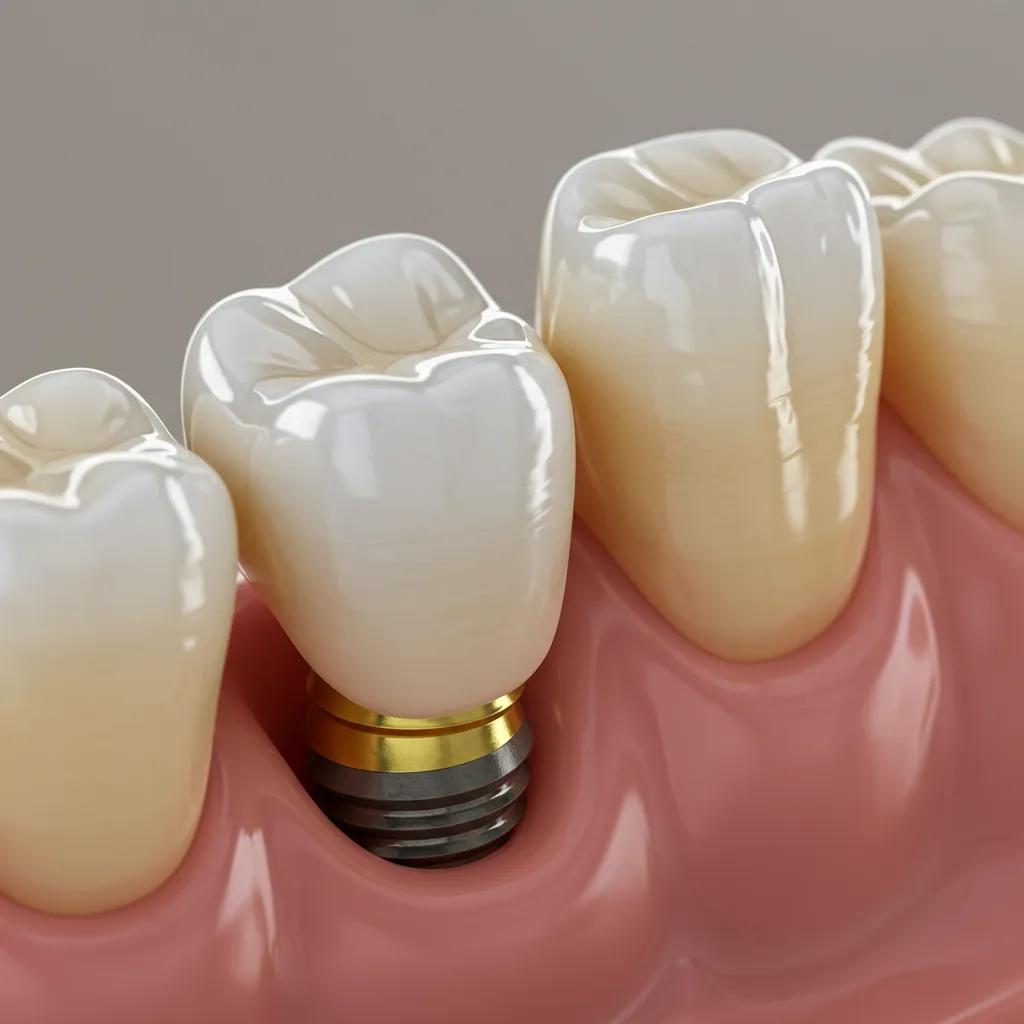
A modern dental implant system consists of three primary components: the fixture (implant post), the abutment, and the crown, and each component may use different materials depending on clinical needs. The fixture, which is surgically placed into the jawbone, is most commonly made from titanium or zirconia because these materials offer favorable biocompatibility and stability necessary for osseointegration. The abutment connects the implant fixture to the crown and can be titanium, zirconia, or a hybrid design; abutment material affects soft-tissue contact and visible esthetics in the smile zone. The crown is the visible restorative piece and is typically ceramic or porcelain-fused-to-metal, chosen for wear resistance and color match; crown material affects chewing efficiency and aesthetic outcome. Knowing which part is made from which material helps patients and clinicians plan restorative workflows and anticipate long-term maintenance needs, which leads directly into how material influences clinical success and longevity.
How Does Implant Material Affect Success and Longevity?
Material affects the biological and mechanical mechanisms that determine implant survival: osseointegration, corrosion or wear, fracture risk, and plaque affinity all hinge on the implant’s composition and surface characteristics. Titanium’s surface treatments promote bone cell attachment and resist corrosion, supporting high long-term success rates, while zirconia’s ceramic surface offers low plaque adherence and tooth-like color with growing clinical evidence of durability. Mechanical concerns differ: titanium has high fatigue resistance under repeated masticatory loads, making it reliable in posterior regions, whereas zirconia can be susceptible to predictable fracture patterns in particular designs if not selected carefully for high-load cases. Long-term outcomes also depend on host factors — oral hygiene, bone quality, smoking, and systemic health — which interact with the chosen material to influence peri-implant health. These interactions frame the clinical trade-offs between titanium and zirconia discussed next, beginning with why titanium remains widely used.
Why Are Titanium Dental Implants Considered the Gold Standard?
Titanium dental implants have been the mainstay of implantology because titanium combines mechanical strength, excellent corrosion resistance, and a long clinical track record that supports high survival rates. As a material, titanium forms a stable oxide layer that promotes osseointegration and resists biodegradation in the oral environment, making titanium implants highly predictable for both single crowns and multi-unit restorations. Clinicians rely on titanium’s restorative versatility — it accepts a wide range of prosthetic connections and surface modifications — which simplifies planning across diverse cases from front-to-back teeth. While aesthetic considerations sometimes favor metal-free options, titanium’s balance of durability, established evidence base, and restorative compatibility keeps it the default choice for many implant indications, particularly where high bite forces are expected. With this foundation in mind, the following subsections break down titanium’s specific properties, its osseointegration behavior, and the practical pros and cons patients should weigh.
What Are the Key Properties of Titanium Implants?
Titanium’s primary material strengths include high tensile strength, fatigue resistance, and corrosion resistance due to a passivating oxide layer that minimizes ion release and surface degradation. Surface engineering — such as controlled roughening, micro-texturing, and bioactive coatings — enhances bone cell attachment and speeds osseointegration, improving early stability and long-term fixation. Titanium’s mechanical performance makes it compatible with a wide range of abutment connections and restorative systems, allowing flexibility in prosthetic design and easier management of complex cases. Clinically, these properties translate into predictable load-bearing capacity and high survival rates across many patient profiles, which is why titanium dental implants remain a widely taught and used option in restorative dentistry.
How Does Osseointegration Work with Titanium?
Osseointegration with titanium is a biological cascade that begins with osteogenic cells migrating to a prepared implant surface, followed by matrix deposition and mineralization that bonds bone to the implant without intervening fibrous tissue. Titanium’s surface chemistry and microtopography influence cell signaling and protein adsorption, promoting stable bone apposition over weeks to months and creating rigid fixation capable of withstanding functional loads. Clinicians monitor primary stability at placement and secondary stability as bone remodels around the implant; favorable osseointegration minimizes micromotion that could otherwise compromise the bone-implant interface. Historical and contemporary clinical evidence demonstrates titanium’s consistent ability to osseointegrate across many patient scenarios, which supports its reputation as the gold standard for long-lasting dental implants.
What Are the Pros and Cons of Titanium Dental Implants?
Titanium implants offer several clear advantages: proven long-term success, strong mechanical resilience, restorative versatility, and extensive evidence supporting predictable outcomes. However, titanium has potential drawbacks in specific aesthetic situations — thin gingival biotypes can reveal a grayish hue through tissue, creating a tooth-root shadow that some patients find undesirable in the anterior smile zone. Rarely, patients may report metal sensitivity or allergic-type reactions; while uncommon, this possibility motivates alternatives for metal-allergy dental implant options. Cost-wise, titanium systems are often cost-effective due to widespread manufacturer availability and established workflows, balancing value for many patients. These trade-offs set the stage for examining zirconia as a metal-free alternative that prioritizes aesthetics and soft-tissue response.
What Makes Zirconia Dental Implants a Popular Metal-Free Alternative?
Zirconia dental implants are monolithic ceramic implants that provide a tooth-colored, metal-free option valued for aesthetics, low plaque affinity, and favorable soft-tissue responses around the emergence profile. Chemically a stabilized ceramic, zirconia offers a natural color that eliminates the risk of grey show-through and can improve visual outcomes in patients with thin gingiva or high aesthetic demands in the front teeth. Zirconia’s hypoallergenic profile makes it an attractive metal-allergy dental implant option, and its surface characteristics often lead to lower biofilm accumulation compared to some metallic surfaces. With these attributes in mind, the subsections below outline zirconia’s unique properties, aesthetic benefits, and limitations to help patients decide whether a metal-free implant fits their needs.
What Are the Unique Properties of Zirconia Implants?
Zirconia is a high-strength ceramic with a natural tooth-like shade that resists corrosion, provides low surface roughness that can reduce plaque accumulation, and demonstrates good biocompatibility with peri-implant soft tissues. Unlike metals, zirconia is radiopaque in different ways and has distinct fracture mechanics that require implant designs optimized for tensile and bending loads; manufacturers have improved material processing to increase toughness and reliability. The ceramic surface tends to present lower bacterial adhesion in laboratory studies, which may support healthier soft-tissue margins over time, and many patients who express concern about metals appreciate zirconia’s metal-free composition. Material variations exist across products — for example, two-piece zirconia systems versus one-piece designs — and these differences influence restorative flexibility and clinical indications. These material attributes feed directly into how zirconia performs in visible smiles and in patient comfort.
How Do Zirconia Implants Compare in Aesthetics and Patient Comfort?
Zirconia’s primary aesthetic advantage is its white color, which blends with natural tooth shades and eliminates metallic graying under thin gums, producing a more lifelike emergence profile for anterior restorations. Soft-tissue response around zirconia often appears favorable, with some clinical observations showing stable gingival margins and healthy peri-implant mucosa that contribute to a natural-looking final result. Patient comfort may improve when metal sensitivity is a concern, since zirconia is metal-free and perceived as hypoallergenic by many; this perception can increase patient confidence and reduce anxiety about foreign-body reactions. However, the restorative workflow for zirconia may be more limited in complex multi-unit cases or when angulation corrections are required, so comfort and aesthetics must be balanced with pragmatic restorative planning.
What Are the Advantages and Limitations of Zirconia Implants?
Zirconia’s advantages include superior aesthetics in the smile zone, low plaque affinity, and an attractive option for patients seeking metal-free dental implants, while limitations include potentially higher cost, less restorative versatility in some two-piece designs, and a need for careful case selection in high-load posterior sites. Ceramic brittleness historically limited zirconia to one-piece designs, but recent product innovations and manufacturing techniques have expanded indications and improved fracture resistance for selected systems. Cost and clinician familiarity can influence availability and pricing, and long-term comparative data remains smaller than titanium’s vast evidence base, prompting clinicians to reserve zirconia for cases where aesthetics or metal sensitivity are primary drivers. For many patients, these trade-offs are acceptable when a natural appearance and reduced biofilm affinity are prioritized.
How Do Titanium and Zirconia Dental Implants Compare?
A direct comparison helps patients and clinicians match material strengths to clinical needs: titanium typically excels in mechanical durability and restorative flexibility, while zirconia shines in aesthetics and metal-free applications. The comparison below organizes major attributes such as strength, aesthetics, biocompatibility, maintenance, and cost to provide a clear decision guide for front-to-back teeth and single versus multi-unit restorations. Each attribute affects clinical indications: titanium is often preferred in posterior load-bearing sites and multi-unit prostheses, whereas zirconia is frequently chosen for single-tooth anterior implants where soft-tissue aesthetics are paramount. The table that follows summarizes these distinctions across key attributes to facilitate quick clinical planning and patient understanding.
Different materials show distinct performance profiles across clinical attributes:
Material
Attribute
Clinical Note
Titanium
Strength & fatigue resistance
High tensile strength and proven fatigue performance for posterior and multi-unit cases
Zirconia
Aesthetics & soft-tissue response
Tooth-colored ceramic reduces visible discoloration and may lower plaque affinity
Titanium
Restorative versatility
Compatible with many abutment systems and angulation corrections
Zirconia
Metal-allergy alternative
Metal-free option for patients concerned about metal sensitivity
This table highlights that titanium and zirconia are complementary options rather than universally superior choices; selection depends on the specific attribute priorities for each case. With the high-level picture clear, the next subsections dig into durability, cost and longevity, and patient-centered decision scenarios to refine material selection.
What Are the Differences in Durability and Strength?
Titanium generally offers superior fracture resistance and fatigue performance under repetitive masticatory loads, making it the more reliable choice for posterior teeth and full-arch work where occlusal forces are greatest. Zirconia has improved in toughness through material engineering and is suitable for many single-tooth and limited-load indications, but clinicians remain cautious in high-load or bruxism-prone patients because ceramic fracture mechanics differ from metal ductility. Clinical evidence indicates high survival rates for both materials in appropriate indications, though titanium’s longer track record provides broader long-term data, which informs surgical planning for challenging anatomic or loading scenarios. Understanding these mechanical differences helps determine which material is safest for a given site and patient behavior, and that consideration naturally leads to cost and longevity trade-offs.
How Do Cost and Longevity Vary Between Titanium and Zirconia?
Cost considerations often reflect manufacturing complexity, product availability, and restorative workflow; titanium systems tend to be widely available and competitively priced, while zirconia implants can carry a higher price in some markets due to material processing and specialized restorative requirements. Longevity estimates for titanium commonly cite high survival statistics — often reported in ranges near 90–95% long-term in aggregate studies — while zirconia shows promising survival in more recent studies but with somewhat less long-term data overall. Value assessment should weigh upfront material cost against expected longevity, aesthetic benefit, and potential need for additional procedures (such as grafts or specialized abutments). For patients evaluating dental implant cost in Waco, these factors combine with local affordability programs and consultative planning to determine the best investment for their oral health and appearance.
Which Material Is Best for Different Patient Needs?
Material choice should be tailored to clinical scenarios: choose titanium for posterior molars, multi-unit restorations, or patients with heavy occlusion and bruxism, whereas choose zirconia for single anterior teeth when aesthetics and metal-free preferences are primary concerns. For patients with a history of metal sensitivity or a strong desire for metal-free solutions, zirconia presents a reasonable alternative; conversely, in cases requiring angulated abutments, complex prosthetic designs, or when cost-effectiveness is critical, titanium often provides more straightforward solutions. When both load-bearing demands and anterior aesthetics are present, hybrid approaches (titanium fixtures with ceramic abutments) may offer compromise — but these restorative strategies require clinician expertise to execute well. These decision scenarios underscore the need for individualized consultation and planning before selecting implant material.
Are There Other Dental Implant Materials to Consider?
Beyond titanium and zirconia, a small set of alternative materials and components — including non-zirconia ceramics, PEEK (polyether ether ketone), and certain alloyed solutions — serve niche roles in implantology, primarily for temporary restorations, abutments, or patients with specific contraindications. These alternatives are not mainstream for permanent implant fixtures in most practices but can be useful for shock absorption, provisional prosthetics, or experimental approaches in controlled settings. Clinicians may employ PEEK as a resilient abutment material or use specialized ceramics for customized abutments to improve comfort or handling characteristics. The table below outlines common alternatives with practical clinical considerations to help clinicians and patients understand where these materials might fit into a comprehensive treatment plan.
Material
Attribute
Clinical Consideration
Ceramic (non-zirconia)
Aesthetic abutment options
Used for provisional restorations or specialized abutments; limited as primary fixtures
PEEK
Flexibility and shock absorption
Useful for abutments or temporaries in patients needing load modulation; not standard for long-term fixtures
Alloys (specialized)
Tailored mechanical properties
Employed in research or custom prosthetics where specific mechanical tuning is necessary
This comparison makes clear that titanium and zirconia dominate permanent implant fixtures, while other materials fill supporting or experimental roles. The next subsections describe the roles and recommendation contexts for these alternatives in more detail.
What Role Do Ceramic and PEEK Materials Play in Dental Implants?
Other ceramics and PEEK primarily serve as abutment materials or for provisional restorations where temporary aesthetics or shock absorption are required; these materials provide clinicians flexibility during staged treatment or in cases where a less rigid interface is desired. PEEK’s polymer properties provide a degree of flexibility and dampening that can be beneficial in certain occlusal schemes or when protecting grafted bone during healing, while ceramics other than zirconia can offer specific aesthetic or handling advantages for custom components. These materials are not typically used as permanent implant fixtures for high-load sites, but they are valuable in the restorative toolkit for tailoring patient-specific treatment sequences. Understanding these roles helps patients and clinicians plan transitional phases of implant therapy and makes clear when referrals or specialist input may be beneficial.
When Are These Other Materials Recommended?
Alternatives like PEEK or specialty ceramics are recommended in niche scenarios: as temporary abutments during healing, for patients with unique material sensitivities, or in research/experimental cases where conventional materials are contraindicated. Clinicians may select these materials when attempting to minimize immediate occlusal load, reduce stiffness between prosthetic components, or create a provisional aesthetic while definitive implants integrate. Because these uses are specialized, they often involve careful monitoring and may lead to replacement with conventional titanium or zirconia abutments once the restorative plan progresses. Recognizing the temporary and context-specific nature of these materials points patients toward the mainstream options for permanent implant fixtures while preserving tailored solutions for special needs.
How Can You Choose the Right Dental Implant Material for You?
Selecting the right implant material requires a structured assessment of patient-specific factors — bone density, gingival biotype, allergy history, aesthetic priorities, and budget — combined with lifestyle considerations such as smoking, bruxism, and oral hygiene. A decision matrix helps translate these factors into practical recommendations, enabling patients to prepare questions for their consultation and clinicians to propose material choices aligned with expected outcomes. Below is a decision-oriented table mapping common patient factors to material recommendations and concise rationales to support patient-clinician conversations during planning.
Patient Factor
Material Recommendation
Rationale
Low bone density or need for grafting
Titanium
High fatigue resistance and predictable osseointegration under grafted conditions
Tooth-colored material reduces risk of grey show-through and enhances visible results
Metal sensitivity or allergy concerns
Zirconia
Metal-free option that accommodates metal-allergy dental implant options
High occlusal load or bruxism
Titanium
Superior mechanical durability for posterior load-bearing sites
This decision matrix clarifies that material choice is not one-size-fits-all; instead, it matches biological and lifestyle factors to likely optimal materials. The next subsections review the key patient factors and lifestyle influences that most commonly affect material success and treatment planning.
What Factors Should Influence Your Material Choice?
Material selection depends on measurable and patient-reported factors: jawbone volume and density, soft-tissue thickness, history of metal reactions, aesthetic goals for visible teeth, and financial constraints that affect treatment sequencing. Bone quality governs fixation potential: denser bone supports immediate stability and may broaden material options, while low-density bone often benefits from titanium’s forgiving mechanical behavior. Gingival biotype influences whether a white ceramic or metallic implant will affect final soft-tissue color; patients with thin gums who desire a seamless smile often prioritize zirconia. Allergy history and systemic health can steer clinicians toward metal-free options or trigger pre-treatment testing and tailored planning. By listing these considerations ahead of a consult, patients can have targeted discussions about dental implant cost and expected outcomes.
Common factors to review before choosing material:
Bone volume and density at the intended implant site.
Soft-tissue thickness and aesthetic zone requirements.
Medical history, allergy concerns, and systemic conditions that affect healing.
How Does Patient Lifestyle Affect Implant Material Success?
Lifestyle behaviors such as smoking, oral hygiene practices, bruxism (tooth grinding), and chronic medical conditions like uncontrolled diabetes materially influence implant healing and long-term stability across all materials. Smoking reduces blood flow and impairs healing, raising the risk of implant complications regardless of material, while poor oral hygiene increases biofilm accumulation that can lead to peri-implantitis; both behaviors call for intensified risk mitigation. Bruxism subjects implants to higher cyclic loads and may favor titanium for its superior fatigue resistance, but night guards and occlusal adjustments can enable successful zirconia use in some patients.
After weighing these clinical and lifestyle factors, many patients are ready to consult a local implant team for personalized planning; Affordable Dentist Near Me of Waco offers a Free implants consultation to help patients review options in detail and receive individualized recommendations.
Their consultative approach focuses on affordability, patient comfort, and technology-driven planning: Everyday Low Fees and Affordable Pricing Plans help reduce financial barriers, a state-of-the-art facility and advanced equipment enable precise implant placement, and sedation dentistry options support anxious patients during treatment.
The practice’s experienced team, including clinicians such as Dr. Mike Pham, Dr. Francies, and Dr. Sonkar, can walk you through material trade-offs, expected outcomes, and next steps in an online-scheduling-friendly process.
If you are considering dental implants in Waco, a Free implants consultation provides the best next step to translate the guidance above into a personalized treatment plan.
Why Choose Affordable Dentist Near Me of Waco for Your Dental Implants?
Affordable Dentist Near Me of Waco provides localized access to implant services for patients seeking long-lasting dental implants with supportive financial options and patient-focused care. The Waco location emphasizes Everyday Low Fees and Affordable Pricing Plans to help patients budget for implant therapy, and the practice reduces decision friction by offering a Free implants consultation where you can evaluate material choices and restorative pathways without upfront commitment. Patient comfort is a priority: the clinic reports a state-of-the-art facility with advanced equipment and offers sedation dentistry to help manage anxiety during procedures, creating a supportive environment for implant treatment. Local credibility is evident through aggregated patient feedback — the Waco location reports over 1,470 Google reviews with an average rating of 4.6 — and an experienced clinical team including Dr. Mike Pham, Dr. Francies, and Dr. Sonkar who lead implant and restorative care. Together, these elements create an accessible, technology-enabled option for patients evaluating dental implant cost in Waco and seeking a consultative planning approach.
How Do Our Affordable Pricing Plans and Free Consultations Help You?
Offering a Free implants consultation removes an early financial obstacle and enables patients to explore options such as titanium versus zirconia, necessary preparatory procedures, and phased financing without initial expense. During the consultation, clinicians review personalized factors — bone density, soft tissue, aesthetic goals, and lifestyle — then present Affordable Pricing Plans designed to match patients’ budgets and treatment timelines. This transparent consult process helps patients prioritize outcomes, understand potential trade-offs, and receive a realistic cost estimate before committing to surgery. Scheduling an appointment is straightforward with the practice’s online appointment scheduling, allowing patients to plan their consult at their convenience and move forward with confidence.
What Advanced Technology and Patient Care Do We Offer?
The practice’s state-of-the-art facility and advanced equipment enhance diagnostic precision and surgical planning, improving implant placement accuracy and prosthetic fit; these technological capabilities support better long-term outcomes for both titanium and zirconia implants. Sedation dentistry is available to ensure patient comfort during surgical procedures, which can be especially helpful for anxious individuals or those undergoing more extensive treatment sequences. Online appointment scheduling streamlines access to care, reducing friction for patients who want to evaluate implant options quickly and conveniently. Altogether, technological capability and patient-centered services combine to create an environment focused on predictable care and positive patient experiences.
Who Are Our Experienced Dental Implant Specialists?
The Waco implant team includes named clinicians cited in local practice information — Dr. Mike Pham, Dr. Francies, and Dr. Sonkar — and the staff is described as experienced and caring, which helps patients feel supported through planning, surgical placement, and restorative phases. These clinicians collaborate with the patient to explain material options, expected outcomes, and maintenance plans, ensuring the selected implant material aligns with each patient’s clinical needs and aesthetic goals. Patients benefit from a consultative approach that emphasizes patient education, comfort options like sedation dentistry, and affordability through Everyday Low Fees and structured pricing plans. For individuals ready to move from research to personalized planning, the Free implants consultation is the recommended next step to review tailored recommendations and cost planning.
What Are the Most Frequently Asked Questions About Dental Implant Materials?
This FAQ-style section provides direct, concise answers to common patient queries to support featured-snippet-style clarity and prepare you for a focused consult. Each entry answers the question succinctly and then offers a brief elaboration so patients can quickly capture the key takeaway before discussing specifics with a clinician. After these FAQs, there is a local cost framing question that points readers to scheduling a Free implants consultation for precise pricing tailored to their clinical needs.
What Are the Best Materials Used for Dental Implants?
There is no single “best” material for all cases: titanium and zirconia each excel in different scenarios — choose titanium for mechanical durability and restorative flexibility, and choose zirconia for metal-free aesthetics and low plaque affinity in the anterior zone. Titanium’s long clinical track record and surface engineering yield predictable osseointegration across many indications, while zirconia provides a tooth-colored option that reduces visible discoloration and serves patients concerned about metals. The right choice depends on bone quality, occlusal load, gingival thickness, allergy history, and aesthetic priorities, which is why a personalized consult is the optimal way to determine the best material for your specific situation.
How Long Do Titanium and Zirconia Implants Last?
Both titanium and zirconia implants can provide long-term function when placed and maintained appropriately; aggregated clinical data commonly cite high survival rates for titanium (often near 90–95% in long-term studies) and encouraging outcomes for zirconia in more recent research. Longevity depends heavily on host and behavioral factors — oral hygiene, smoking, bruxism, and systemic health — as well as prosthetic design and follow-up care. Regular maintenance, periodontal monitoring, and addressing lifestyle risks significantly influence survival and function for any implant material, underscoring the importance of a comprehensive treatment and follow-up plan.
Are Ceramic Implants Better Than Titanium?
Ceramic implants (primarily zirconia) are not universally better than titanium; they offer specific advantages such as superior aesthetics and a metal-free composition, but titanium often outperforms ceramics in restorative versatility and long-term evidence for complex or high-load cases. The decision hinges on clinical context: when a front-tooth aesthetic is the top priority or metal sensitivity is a concern, ceramic implants can be preferable, whereas titanium is commonly selected for posterior restorations, multi-unit prostheses, and scenarios demanding angulation correction. An individualized assessment during a consultation determines whether the ceramic route or titanium offers the best balance of appearance, function, and long-term value.
Can I Have a Metal Allergy and Still Get Dental Implants?
Yes — many patients with metal sensitivities can still receive dental implants, and zirconia provides a metal-free dental implant option for individuals who prefer or require a non-metallic solution. Assessing allergy history and discussing prior reactions helps clinicians determine whether testing or a metal-free approach is appropriate; in many cases, zirconia implants offer a safe and effective alternative. A consultation allows your provider to evaluate the likelihood of metal-related complications and to recommend the best path forward based on your medical history and implant needs.
How Much Do Dental Implants Cost in Waco?
Dental implant cost in Waco varies depending on factors such as the number of implants, material choice (titanium vs zirconia), need for grafting or sinus lifts, and complexity of the restorative work; because these variables differ per case, the most accurate way to determine cost is a Free implants consultation where clinicians review your specific needs and present tailored pricing. Affordable Dentist Near Me of Waco emphasizes Everyday Low Fees and Affordable Pricing Plans to help patients plan treatment, and the Free implants consultation lets you explore material options, financing pathways, and expected timelines without initial expense. If you are evaluating dental implant cost in Waco, schedule a consult to receive a personalized estimate that reflects your clinical requirements.
Common factors that influence cost estimates:
Number of implants required and their location (anterior vs posterior).
Need for bone grafting, sinus augmentation, or other preparatory procedures.
Material selection, restorative complexity, and prosthetic components.
How a Free implants consultation helps:
Provides a personalized treatment plan and cost breakdown tailored to your clinical needs.
Allows discussion of Affordable Pricing Plans and scheduling options for staged care.
These Q&A items summarize core patient concerns and direct readers to a clinical consult for precise answers tailored to their anatomy and goals.