Single vs. Multiple Dental Implants: Your Fort Worth Guide to Costs & Options
Missing teeth can impact so much more than just your smile – they can affect how you chew, speak, and even your long-term bone health. This comprehensive guide is here to help! We'll explain how dental implants can beautifully restore your smile and function, compare single-tooth implants with solutions for multiple missing teeth, and provide clear, Fort Worth-specific pricing insights. You'll discover what implants are, the key factors influencing their cost, transparent price breakdowns, and how different full-arch options (like implant-supported bridges, All-on-4/All-on-6, and implant-retained dentures) stack up in terms of initial cost and lasting value. Plus, we'll cover common procedures that might add to the cost—such as bone grafts and sinus lifts—and practical ways insurance and financing can make treatment more affordable. This guide also includes easy-to-follow scheduling steps and clear calls to action, so you can confidently take the next step toward a healthier smile here in Fort Worth.
Understanding Dental Implants: How Do They Work?
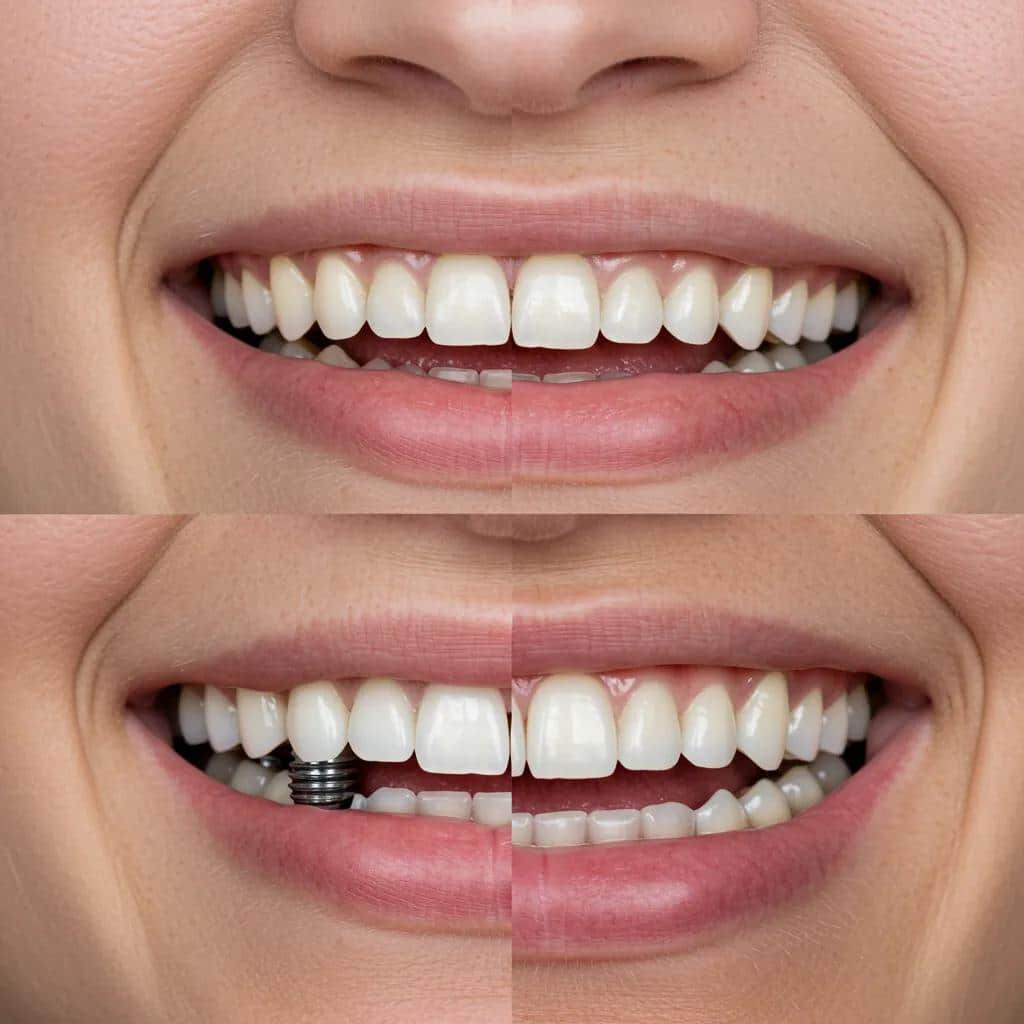
A dental implant is essentially a small titanium or ceramic post, carefully placed into your jawbone. It acts just like a natural toothroot, providing a strong foundation for a replacementtooth and bringing back normal function. This amazing process, called osseointegration, is when your bone naturally bonds with the implant post, creating a super stable anchor for your new abutment and crown. This is precisely why implants restore your chewing power and help preserve your jawbone over time! Implants are a fantastic part of modern restorative dentistry, offering a superior alternative to traditional tooth-supported options like bridges by replacing both the root and the visible tooth. Understanding these basics helps you truly appreciate the durability, long-term value, and benefits compared to removable dentures. Let's break down implant systems into their core parts next, so you can see how each component influences both cost and appearance.
What exactly is a dental implant, and what are its main parts?
A dental implant system consists of three main parts: the implant post (which acts as your new toothroot), the abutment (a connector piece), and the crown (your visible, natural-looking tooth). The implant post is typically made from titanium or zirconia; titanium is known for its predictable integration with bone, while zirconia offers a beautiful, metal-free aesthetic. The abutment securely attaches to the post and supports your custom crown. Crowns can be crafted from porcelain-fused-to-metal, all-ceramic, or zirconia, depending on your specific aesthetic needs. Your choice of materials directly impacts durability, cost, and overall appearance, as premium ceramics and custom abutments naturally increase lab and prosthetic fees. Knowing these components helps clarify why your itemized quote will often separate the implant post, abutment, and crown costs.
How does the dental implant procedure help replace missing teeth?
Your implant journey begins with a thorough consultation and advanced imaging. This is followed by the careful surgical placement of the implant post, then a crucial healing period for osseointegration (where the implant fuses with your bone). Finally, the abutment and crown are placed to complete your beautiful new restoration. Typical timelines can vary, with initial healing often taking several months, though some advanced protocols allow for immediate temporary teeth in select cases to minimize visible downtime. Preoperative imaging (like CBCT scans or X-rays) is vital for assessing your bone quality and determining if any grafting is needed; this planning stage significantly impacts both the cost and the success of your outcome. You can expect a clear, staged pathway: initial evaluation, surgery, healing, the prosthetic phase, and then regular maintenance – each step carefully planned with its own clinical tasks and potential costs.
How Much Does a Single Dental Implant Cost in Fort Worth?
A single dental implant here in Fort Worth typically falls within a range that covers the implant post, abutment, crown, necessary imaging, and surgical fees. A clear local estimate helps set your expectations right from the start. In Fort Worth, it's important to understand that single-tooth implant pricing can vary because factors like your clinician's experience, the specific implant brand used, any required grafting, and lab work all play a role in the final quote. Below, you'll find an itemized breakdown that clarifies what practices often include versus what might be quoted separately, helping you compare offers fairly. After the table, we'll summarize the most common factors that can increase the price and offer practical tips for requesting a detailed, itemized estimate.
This helpful line-item table shows the typical inclusions and common price ranges for each component of a single implant restoration right here in Fort Worth.
Component
Typical Inclusion Status
Fort Worth Price Range (approx.)
Implant post (titanium/zirconia)
Often listed separately
$900 - $2,000
Abutment (standard/custom)
May be included or extra
$300 - $900
Crown (porcelain/zirconia)
Often separate lab fee
$700 - $1,800
Imaging & consultation
Sometimes included as initial consult
$100 - $500
Surgical fee / placement
Surgeon/clinic fee
$500 - $2,000
This table clearly shows why a single tooth implant quote can vary quite a bit: different practices may bundle items differently and utilize various implant systems. Knowing which line items are included will empower you to compare total out-of-pocket costs more accurately.
What factors truly influence the cost of a single dental implant?
Several patient-specific and procedural factors significantly influence the cost of a single implant. These include your bone quality and whether you need bone grafting or a sinus lift, the complexity of the surgical approach, your chosen implant system and material, and the lab fee for a custom crown. For example, a patient with healthy bone and a straightforward implant placement will generally have fewer additional costs than someone needing staged grafts or advanced sedation. A clinician's experience and whether they use in-house digital workflows versus outsourced labs also impact pricing, as advanced CAD/CAM crowns and guided-surgery protocols have different overheads. Understanding these factors helps you identify which elements on your quote might be negotiable or eligible for financing.
What's typically included in the average single dental implant price?
An "average" single implant price is best understood as a combination of several sub-costs: the implant post, abutment, crown, imaging, lab fees, and the surgical placement fee. It's important to note that sedation, extractions, and grafts are often common exclusions. When comparing providers, always ask for a written, itemized estimate that clearly specifies what components are included, lists any potential additional costs (like bone grafts, sinus lifts, or extractions), and explains warranty or maintenance expectations. For true transparency, patients should ask if the crown is custom-made and if temporary restorations are part of the quoted price. Getting an itemized quote not only clarifies the cost but also sets clear expectations for your treatment schedule and financing options.
Exploring Multiple Dental Implants & Their Pricing Options
Multiple dental implants are fantastic solutions for replacing several adjacent missing teeth or even rehabilitating an entire arch. These options range from implant-supported bridges to advanced full-arch protocols like All-on-4 or All-on-6, with each solution carefully balancing the number of implants, prosthetic design, and long-term maintenance needs. Implant-supported bridges use fewer implants to support multiple teeth, making them a cost-efficient choice for moderate gaps. Meanwhile, All-on-4/All-on-6 systems anchor an entire arch of teeth on strategically placed implants, restoring full function and a beautiful smile. Implant-retained dentures offer a more budget-friendly full-arch option, stabilizing a removable prosthesis with fewer implants. Below, you'll find a helpful comparison table summarizing typical configurations, Fort Worth cost ranges, and practical pros and cons to guide your decision.
Solution
Typical Configuration
Typical Cost Range (Fort Worth)
Pros / Cons
Implant-supported bridge
2–4 implants supporting a multi-tooth bridge
$4,000 - $12,000
Pros: Preserves healthy adjacent teeth; often more affordable than full-arch solutions. Cons: Limited to smaller spans, requires strong supporting implants.
All-on-4 (per arch)
4 implants supporting a full-arch fixed prosthesis
$15,000 - $30,000 per arch
Pros: Provides a fixed, stable restoration with excellent function. Cons: Higher initial cost, requires complex planning.
All-on-6 (per arch)
6 implants for enhanced support and load distribution
$20,000 - $35,000 per arch
Pros: Offers even greater stability and potential longevity. Cons: Involves added surgical complexity.
Implant-retained denture
2–4 implants stabilizing a removable denture
$8,000 - $18,000 per arch
Pros: More affordable, easier maintenance compared to fixed options. Cons: Still removable, may require occasional relines.
This easy-to-understand table compares typical configurations and clearly shows why your best choice depends on your unique clinical needs, budget, and desired level of permanence. Deciding between these pathways usually requires a personalized evaluation to find the perfect balance between initial cost and long-term benefits.
What types of multiple dental implants are available for you?
When considering multiple implants, your options include implant-supported bridges, perfect for spanning a few missing teeth; full-arch fixed prostheses like All-on-4 or All-on-6; and implant-retained dentures, which use implants for secure retention while remaining removable. Ideal candidates for implant-supported bridges are patients missing adjacent teeth with sufficient bone and a good bite. All-on-4/6 candidates are typically those seeking fixed, full-arch solutions or who have experienced extensive tooth loss. Clinical considerations involve the ideal number of implants needed to distribute chewing forces, whether immediate loading is possible, and if any staged grafting or extractions are necessary. Comparing these types in terms of permanence, hygiene requirements, and cost will help you select the right long-term plan for your smile.
How much do implant-supported bridges and All-on-4 solutions cost in Fort Worth?
Fort Worth pricing for multiple implants reflects either per-implant or per-arch models. Implant-supported bridges are often quoted with per-bridge pricing, while All-on-4/6 quotes are typically per-arch. For instance, an implant-supported bridge replacing three teeth with two implants might cost significantly less than a full-arch All-on-4. However, the per-tooth cost often becomes more favorable with full-arch solutions when you consider the cost per functional tooth over many years. Factors that can increase per-arch costs include your choice of prosthetic materials, the need for bone grafting, and whether immediate fixed provisional prostheses are provided. For precise, personalized pricing, Fort Worth patients are always best served by scheduling a consultation and requesting an itemized plan that clearly outlines all implant, prosthetic, imaging, and surgical fees.
Full MouthDental Implants vs. Dentures: Cost Comparison
Full-mouthdental implants and traditional dentures differ significantly in upfront cost, expected lifespan, and functional outcomes. To truly assess cost-effectiveness, it's essential to look at the long-term cost-per-year and overall quality-of-life factors. Full-mouth implant solutions (whether fixed prostheses or implant-supported dentures) have higher initial costs but generally last much longer, actively preserve your jawbone, and offer vastly superior chewing efficiency compared to removable dentures. Dentures, while having a lower upfront cost, typically require frequent relines, replacements, and can unfortunately contribute to progressive bone loss, which may lead to increased long-term expenses and even compromise your nutrition. The table below clearly contrasts upfront price ranges, expected lifespan, and long-term cost-per-year to highlight where implants truly become more economical and beneficial over time.
Solution
Typical Lifespan (years)
Upfront Cost Range
Estimated Long-term Cost Per Year
Traditional full denture (per arch)
5–10 (with relines/replacements)
$1,000 - $5,000
$200 - $1,000/year (replacements/maintenance)
Implant-retained denture (per arch)
8–15
$8,000 - $18,000
$500 - $1,500/year (maintenance plus occasional relines)
Full-arch fixed implants (All-on-4/6)
10–20+
$15,000 - $35,000 per arch
$750 - $3,500/year (depending on prosthesis care)
This comparison clearly shows that while dentures offer a low entry cost, implants can deliver superior function and significantly lower lifetime indirect costs related to bone loss and dietary limitations. Your decision ultimately hinges on your priorities: immediate affordability versus long-term stability and an improved quality of life.
When is a full mouthdental implant restoration the right choice for you?
Full-mouth implant restoration is highly recommended for patients with failing teeth, extensive tooth loss, severe wear, or when long-term function and facial support are top priorities. Clinical indicators include teeth that cannot be restored, ongoing denture instability, and a patient's desire for fixed, beautiful teeth that restore strong bite force. Lifestyle factors such as wanting strong chewing ability, concern for preserving jawbone, and a willingness to invest in a truly durable solution also play a role in candidacy. If alternatives like conventional dentures still meet your needs and financial constraints, staged approaches or implant-retained dentures remain viable options. Our consultation process is designed to clarify which path perfectly fits your clinical and personal goals.
How do full mouth implants compare to traditional dentures in terms of cost and benefits?
Full-mouth implants generally provide vastly improved chewing efficiency, clearer speech, and better facial support while actively preserving your jawbone. This translates into significant quality-of-life gains compared to removable dentures. Economically, implants typically require less frequent replacement and often result in fewer indirect medical or dietary costs over time, making them a cost-effective choice for patients who anticipate long-term use and truly value stability. Dentures are less expensive upfront and can be appropriate for limited budgets or if there are medical reasons preventing surgery. However, they usually demand more ongoing maintenance and can unfortunately accelerate jawbone resorption. Patients should carefully weigh their immediate budget against their long-term life planning, as implants often deliver superior functional returns and comfort for a decade or more.
What Factors Influence the Cost of All Dental Implant Procedures?
A consistent set of factors drives the cost across both single and multiple implant procedures. These include the need for additional surgical procedures (like grafting or sinus lifts), your material choices (titanium versus zirconia), lab and prosthetic fees, the expertise of your clinician, and regional clinic overheads. Each of these elements acts as a modular cost component: if grafting is required, expect added surgical and material fees; if you choose a premium zirconia prosthesis, lab fees will increase accordingly. Insurance coverage and financing options also significantly impact your out-of-pocket burden, as they can adjust payment timing or reduce upfront costs through structured plans. Understanding how these components interact empowers you to compare quotes effectively and identify potential cost-saving strategies without ever compromising your clinical outcomes.
How do extra procedures like bone grafting and sinus lifts affect implant costs?
Bone grafting and sinus lifts add both material costs and surgical time to implant cases, which naturally increases the overall cost and extends your treatment timeline. When your jawbone isn't sufficient to support an implant, grafts are used to rebuild volume, utilizing materials like autograft, allograft, or synthetic options. Your choice of material will influence both the price and healing time. Sinus lift procedures are more complex and are often necessary for implants in the upper back jaw. They require additional imaging, specialized surgical skill, and several months of healing before the final implant can be placed. The cost impact can range from modest for minor grafts to substantial for staged sinus augmentations, making thorough pre-treatment imaging and planning absolutely critical to anticipate both financial and temporal commitments.
How do material choices and your dentist's experience impact pricing?
Your material selection—whether titanium or zirconia implants, porcelain or zirconia crowns, and custom abutments—influences both the cost and the aesthetic outcome. Premium materials and custom prosthetics naturally lead to higher lab and material fees. Your dentist's experience and specialist training also justify varying fee structures: clinicians with advanced surgical credentials or extensive restorative expertise often charge more because they deliver higher predictability and significantly lower complication rates. This premium can actually reduce long-term costs by minimizing the need for revisions; many patients view choosing an experienced provider as a wise investment in durable, lasting outcomes. Ultimately, material and provider choices represent a thoughtful trade-off between upfront cost and long-term value.
What role do geographic location and clinic overhead play in pricing?
Regional market rates, real estate costs, staffing expenses, and lab partnerships all contribute to a clinic's overhead, which ultimately factors into patient pricing. Fort Worth pricing trends, for example, reflect local supply, demand, and operational costs. Practices with on-site labs or advanced digital workflows may bundle services differently and sometimes offer efficiencies that can lower your total cost, while high-rent urban clinics might charge more to cover their fixed expenses. When comparing value across practices, it's important to assess all included services (like imaging, temporaries, and follow-up care) and consider whether a lower fee might be omitting critical elements. Patients should always use itemized quotes to truly evaluate how overhead and location affect the total cost, rather than relying solely on headline prices.
How do dental insurance and financing options make implants more affordable?
Dental insurance coverage for implants can vary widely. Some plans may cover portions of the prosthetic phase (like crowns or bridges) while excluding the implant post itself, and others might offer partial coverage for associated procedures such as extractions. The most practical step is to carefully review your plan's prosthodontic and surgical benefits and ask your provider to help you estimate your expected benefits. If your insurance coverage is limited, financing solutions discussed during a Free Implants Consultation can often bridge the gap between your desired treatment and your budget. Common financing structures include low- or no-interest introductory periods or fixed-term monthly payments. Understanding these terms will help you choose manageable payment solutions that fit your needs. Discussing financing during your consultation provides personalized estimates and helps align your treatment plans with your budget constraints.
Why Choose Affordable Dentist Near Me for Your Dental Implants in Fort Worth?
After exploring the clinical and financial landscape, patients often seek local trust signals and clear next steps. Affordable Dentist Near Me offers practical value propositions that directly address common concerns for Fort Worth patients considering implants. Our practice emphasizes Everyday Low Fees, provides a Free Implants Consultation to explain all your options clearly, and features special offers like a Free Whitening Pen and Free Laser Whitening that add extra value during your restorative care. Our experienced team, led by Dr. Mike Tri Pham, DDS, is dedicated to guiding your treatment planning with expertise. Plus, our strong local feedback—over 1470 Google reviews with an impressive 4.8 average rating—offers solid social proof for prospective patients. For Fort Worth residents looking for an easy, low-friction next step, scheduling a free consult is the clear call to action we use to turn education into confident appointments.
What free consultation and financing options are available to you?
Affordable Dentist Near Me proudly offers a Free Implants Consultation to thoroughly review your needs, imaging, and personalized pricing options, all without any obligation. During this visit, we'll also clearly outline various financing choices so you can easily compare payment pathways. Our clinic is committed to Everyday Low Fees and highlights fantastic patient offers like a Free Whitening Pen and Free Laser Whitening as added value when discussing your restorative care. Booking this free consult is the most practical way to receive an itemized, Fort Worth-specific treatment plan that clarifies all costs for the implant post, abutment, crown, imaging, surgical fees, and any required grafting. Scheduling a free consult—taking that simple step—transforms general pricing ranges into a concrete plan perfectly tailored to your Fort Worth clinical needs and financial situation.
How do patient reviews and experienced dentists build trust?
High review counts and strong ratings provide immediate credibility when you're choosing a local implant provider. Affordable Dentist Near Me proudly lists over 1470 Google reviews with an outstanding 4.8 average rating, which clearly signals consistent patient satisfaction and positive outcomes. Clinician experience truly matters: a practiced dentist significantly reduces complication rates and improves prosthetic fit, which in turn lowers the likelihood of costly revisions down the road. Our practice also makes it easy with online appointment booking and extended hours, simplifying access for patients with busy schedules and reinforcing our commitment to convenience and responsiveness. Prospective patients should always consider both clinician credentials and aggregated reviews when selecting a Fort Worth provider for their implant care.
Your Top Questions About Dental Implant Costs, Answered!
Patients frequently have concise questions about costs and coverage that can be answered quickly to support immediate decision-making. This section addresses common "People Also Ask"-style queries with direct answers, brief caveats, and a friendly call to action encouraging you to schedule a free consult for personalized pricing. Each short Q&A is optimized for clarity and actionability, so you leave with practical next steps rather than uncertainty.
How much does a single tooth implant typically cost?
A single tooth implant usually ranges from a modest to mid-range price, depending on what's included. You can expect an approximate Fort Worth range that covers the implant post, abutment, and crown, with the important caveat that grafts or extractions will increase the total cost. Since patient-specific factors always alter the final number, the best way to receive a precise quote is to schedule a free consult where your imaging and clinical needs can be thoroughly reviewed. In practice, asking for an itemized estimate that clearly shows what's included helps you compare offers fairly across different clinics.
Are multiple tooth implants more expensive than single implants?
Multiple tooth implants can indeed be more expensive in total than single implants, but they often offer better per-tooth economics and superior long-term value, especially when utilizing full-arch solutions or implant-supported bridges. For instance, an All-on-4 per-arch solution distributes the cost over more functional teeth, effectively reducing the cost-per-tooth compared to placing individual single-tooth implants for every missing tooth. When assessing true value, always consider lifetime maintenance, prosthetic longevity, and how implants actively preserve your jawbone compared to repeated removable denture replacements.
Does dental insurance cover dental implant procedures?
Dental insurance coverage for implants varies widely. Some plans may cover portions of the prosthetic phase (like crowns or bridges) while specifically excluding the implant post itself, and others might offer partial coverage for associated procedures such as extractions. The most practical step is to carefully review your plan's prosthodontic and surgical benefits and ask your provider to assist you in estimating your expected benefits. If your insurance coverage is limited, financing solutions discussed during a Free Implants Consultation can often bridge the gap between your desired treatment and your budget.
What financing options make dental implants truly affordable?
Common financing solutions include convenient in-office payment plans, third-party medical credit lines with fixed monthly payments, and staggered payment agreements designed to reduce your upfront cost. Patients often choose plans with manageable monthly payments spread over 6–60 months; some options even offer interest-free promotional periods for qualified applicants. To determine which plan perfectly fits your budget, discuss personalized financing during your Free Implants Consultation. This way, you can compare down payment expectations and monthly terms against your specific treatment timeline.
Ready to Schedule Your Free Dental Implant Consultation in Fort Worth?
Scheduling a Free Implants Consultation is the most practical and empowering next step to receive a Fort Worth-specific, itemized implant plan that fully accounts for your bone needs, material choices, and financing options. This section outlines how to prepare for a truly effective consult, what our clinic will evaluate, and how your consult leads to a clear written estimate and the scheduling of any needed procedures. Use the easy step-by-step instructions below to book promptly and maximize the usefulness of your consultation!
How to easily book your free implant consultation online?
To book your Free Implants Consultation, simply use our practice's convenient online appointment system or find our clinic's local business profile to request an appointment slot. Please include any prior imaging or insurance information you have to help us speed up your visit. When booking online, provide basic medical history and note whether you are seeking single-tooth or full-arch solutions so our clinic can allocate adequate time for your thorough evaluation and imaging. If you prefer, mention your availability for extended hours to secure a convenient slot. Providing recent dental records or x-rays before your consult can also shorten your evaluation time. Scheduling a free consult—taking that simple step—transforms general pricing ranges into a concrete plan perfectly tailored to your Fort Worth clinical needs and financial situation.
What to expect during your free dental implant consult?
During your Free Implants Consultation, you can expect a focused and informative agenda: a review of your medical and dental history, a comprehensive clinical exam, necessary imaging, a clear discussion of your implant options, and a transparent walk-through of itemized pricing and financing choices. Our clinician will carefully evaluate your bone volume and soft tissue health, explain whether grafting or a sinus lift might be necessary, and review material options such as titanium versus zirconia implants and various crown materials. The consult typically concludes with a personalized estimate and clear next-step scheduling options for surgery, temporaries, and prosthetic delivery. This no-obligation session is specifically designed to clarify all your clinical needs and financial planning, so you can decide with complete confidence.
Your helpful preparation checklist for your consult:
Bring any recent dental x-rays or make them available to our clinic in advance.
List all medications and your medical history to ensure safe surgical planning.
Clearly note your goals—whether it's a single tooth, multiple teeth, or full-arch restoration—to guide our planning.
What happens next after your consult:
Receive a detailed, itemized treatment plan showing all implant, prosthetic, imaging, and surgical fees.
Review financing and convenient payment plan options with our friendly staff.
Schedule your surgery or staged procedures once you've approved your plan and financial arrangements.
Key reasons to choose our transparent consult-first approach:
It provides an itemized quote, empowering you to compare providers fairly.
It identifies all your clinical needs upfront, helping you avoid surprise charges later.
It enables simultaneous planning for financing and scheduling, reducing unnecessary delays.
Quick list of related topics often discussed during implant planning:
Bone grafting and sinus lift as essential clinical preparations.
Prosthodontic lab fees and your crown material choices.
Flexible financing options that reduce your upfront burden.
Implant Solution
Typical Components Evaluated at Consult
Your Patient Takeaway
Single implant
Bone volume, implant post, abutment, crown
A personalized, itemized single-tooth plan
Multiple implants / bridges
Number of implants, span, grafting needs
Clear cost-per-tooth and prosthetic choice options
Full-arch (All-on-4/6)
Arch bone, surgical plan, provisional prosthesis
A per-arch quote with a staged timeline
Scheduling a free consult—taking that simple step—transforms general pricing ranges into a concrete plan perfectly tailored to your Fort Worth clinical needs and financial situation.
Frequently Asked Questions About Dental Implants
What are the amazing benefits of choosing dental implants over traditional dentures?
Dental implants offer several fantastic advantages over traditional dentures, including vastly improved stability, comfort, and functionality. Unlike dentures, which can slip and often require messy adhesives, implants are securely anchored right into your jawbone, allowing for much better chewing efficiency and clearer speech. Plus, implants actively help preserve your jawbone health by preventing bone loss, which is a common issue with dentures. Patients consistently report higher satisfaction with implants due to their incredibly natural appearance and the freedom to eat a wider variety of foods without any restrictions.
How long do dental implants typically last?
Dental implants are truly designed to be a long-term solution for tooth loss, with a lifespan that can easily exceed 10 to 15 years, and often much, much longer with proper care! Factors influencing their longevity include your personal oral hygiene, lifestyle choices, and the quality of the implant procedure itself. Regular dental check-ups and excellent oral hygiene practices, such as diligent brushing and flossing, are absolutely essential to maintaining the health of both your implants and the surrounding gum tissue. Many patients even enjoy their implants for a lifetime with appropriate, ongoing care.
What is the recovery process like after getting dental implants?
The recovery process after dental implantsurgery varies for each individual, but it generally involves a healing period of several months. Initially, patients might experience some swelling, mild discomfort, or bruising, all of which can be effectively managed with prescribed pain relief. During the crucial osseointegration phase, the implant fuses with your jawbone, which typically takes about 3 to 6 months. After this period, the abutment and crown can be comfortably placed. Following surgery, it's absolutely crucial to follow all post-operative care instructions and attend your follow-up appointments to ensure proper healing and successful integration.
Are there any risks or complications associated with dental implants?
While dental implants are generally very safe and highly effective, there are potential risks and complications, as with any surgical procedure. These may include a minor infection at the implant site, nerve damage, or sinus issues if implants are placed in the upper jaw. Additionally, improper placement or insufficient bone density can, in rare cases, lead to implant failure. However, these risks can be significantly minimized by choosing an experienced dental professional and diligently following all pre- and post-operative care instructions. Discussing any concerns with your dentist can help ensure a successful and smooth outcome.
Can anyone get dental implants, or are there specific requirements?
Most healthy adults are excellent candidates for dental implants, but certain factors can affect eligibility. Ideal candidates should have good overall health, sufficient bone density to comfortably support the implant, and healthy gums. Conditions such as uncontrolled diabetes, smoking, or certain autoimmune diseases may complicate the procedure or the healing process. A thorough evaluation by a skilled dental professional, including advanced imaging and a review of your health history, will precisely determine if implants are the perfect option for you. Alternatives may be recommended for those who do not meet the specific criteria for implants.
How do I care for my dental implants after placement?
Caring for your new dental implants is wonderfully similar to caring for your natural teeth! Regular brushing and flossing are absolutely essential to maintain excellent oral hygiene and prevent gum disease around your implants. Patients should also schedule routine dental check-ups for professional cleanings and thorough assessments. Avoiding extremely hard or sticky foods can help protect both your implants and your surrounding natural teeth. Additionally, it's highly recommended to refrain from smoking, as it can hinder healing and increase the risk of complications. Following these simple care guidelines will help ensure the incredible longevity and lasting success of your dental implants.
Ready to Restore Your Smile? Schedule Your Free Implant Consultation Today!
Understanding all the costs and options for dental implants truly empowers you to make informed decisions about your oral health and future smile. By comparing single and multiple implant solutions, you can confidently find the best fit for your unique needs and budget, all while ensuring incredible long-term benefits. Take that exciting next step towards beautifully restoring your smile by scheduling a free consultation with our experienced and caring team right here in Fort Worth. Explore our comprehensive services today to discover how we can help you achieve optimal dental health and the confident smile you deserve!