Affordable Dental Implants in Grand Prairie — A Practical Guide to Budget-Friendly Options
Dental implants are a long-lasting way to replace missing teeth, giving you a natural look and stable bite compared with traditional dentures. This guide explains low-cost implant options, what to expect, and how to find quality care close to home. If tooth loss has affected your confidence or daily comfort, affordable implants can help you smile, eat, and speak with more ease. Below we cover the basics, local costs in Grand Prairie, common payment plans, and practical tips for choosing a provider.
What Are Low Cost Dental Implants and How Do They Work?
Low-cost dental implants provide the same basic solution as standard implants but at a more accessible price. They use titanium posts that are placed in the jawbone to act as artificial tooth roots. After the post bonds with the bone, it supports a crown, bridge, or denture so you can chew and speak normally. The main advantage is a durable, natural-looking result that can last many years with proper care.
Understanding Dental Implants: Basics and Benefits
Compared with removable dentures or fixed bridges, implants give a stable foundation for replacement teeth. That stability improves chewing and helps you talk more clearly. Implants also protect jawbone health by reducing the bone loss that happens where teeth are missing. Many patients say implants look and feel like real teeth and boost their confidence and day-to-day comfort.
Research regularly finds that dental implants help restore key functions like eating and speaking, which in turn improves quality of life.
Dental Implants: Improving Quality of Life After Tooth Loss
Tooth loss can make eating and speaking harder and affect many parts of a person’s daily life. This study compared patients’ quality of life before and after receiving dental implants to measure those changes.
Comparing the quality of life of patients requesting dental implants before and after implant, A Moeintaghavi, 2017
How Affordable Implants Compare to Standard Options
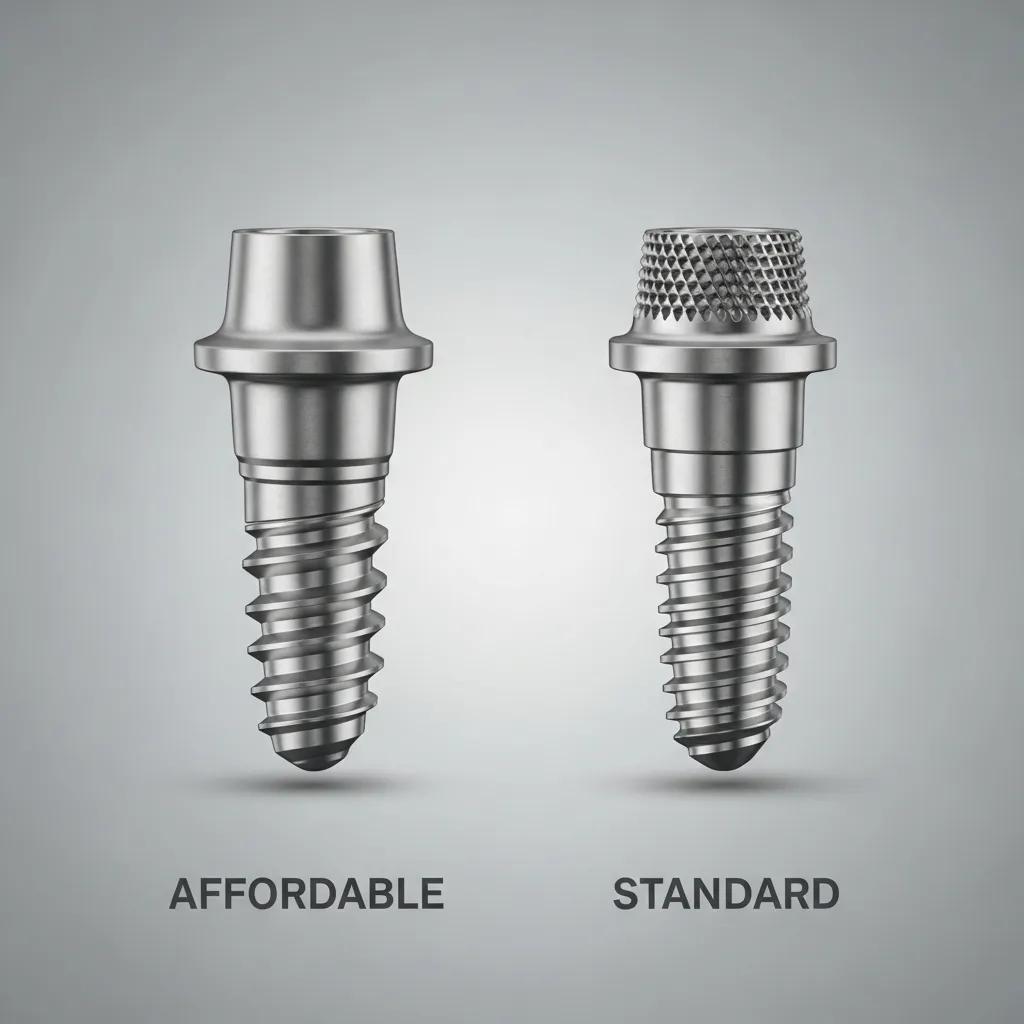
Affordable implants often use the same core materials and techniques as higher-priced options. Practices can offer lower prices by cutting overhead, streamlining care, or working with efficient lab partners. While warranties, follow-up services, or premium add-ons may differ, the basic function and outcome are comparable for many patients. The table below summarizes common differences.
Feature
Affordable Implants
Standard Implants
Cost
Lower
Higher
Material Quality
Comparable
Comparable to Premium
Procedure Time
Similar
Similar
Warranty
Limited
Extended
Choosing the right implant materials — for example, particular titanium alloys — plays a key role in long-term success and performance.
Key Materials for Successful Dental Implants
Success depends on choosing materials with the right properties. Over the years researchers have tested many biomaterials; while there’s no single perfect option, titanium alloys remain widely used and well-studied.
Suitability of titanium alloys as dental implant material-a review, J Wafula, 2024
To understand trade-offs, consider what lowers cost in many clinics: efficient scheduling, shared lab partnerships for crowns, standardized components, and focused treatment workflows. These measures reduce overhead without changing the core surgical steps. Where premium practices may add customized abutments, high-end esthetic layering, or extended guarantees, cost-conscious practices prioritize predictable, evidence-based components that are known to work well for most cases.
When you talk to a provider, clarify which parts of the treatment are included in the quoted price and which are optional add-ons. Ask about material brands, lab turnaround times, and the scope of post-operative care to make an apples-to-apples comparison.
How Much Do Dental Implants Cost in Grand Prairie?
Implant prices vary depending on the type of implant, the provider’s experience, and the complexity of your case. Below are typical cost factors to keep in mind.
Average Price Range for Dental Implants in Grand Prairie
In Grand Prairie, a single dental implant—including the implant post, abutment, and crown—typically runs about $2,000 to $4,500. Keep in mind that extra procedures such as bone grafting or sinus lifts can add to the total cost.
Additional procedures are common when bone volume or shape needs improvement before implant placement. Bone grafts, ridge augmentation, and sinus elevation are tailored to each patient and can extend treatment time. During a consultation, ask for an itemized estimate so you can see separate line items for imaging, lab fees, surgical time, and restorations.
Factors Influencing Dental Implant Cost
Several things affect implant pricing:
Material Quality: Better materials can increase durability but may cost more up front.
Dentist Experience: Providers with more implant training or a strong track record may charge higher fees.
Location: Prices reflect local market rates and overhead in different areas.
Understanding these factors helps you compare options and pick the best value for your needs. Also ask whether follow-up checks, adjustment appointments, and potential warranty work are included or billed separately—those items affect the total lifetime cost of care.
What Payment Plans Are Available for Dental Implants?
Many offices offer flexible payment choices to make implants more affordable. These options spread costs over time so treatment is easier to manage.
Exploring Dental Implant Payment Options
Financing Plans: Clinics often work with third-party lenders to offer low- or no-interest financing for qualified patients.
Insurance Coverage: Some dental plans will cover part of implant treatment depending on the policy and medical necessity.
In-House Payment Plans: Some practices let you pay in monthly installments directly to the office.
In addition to these common choices, many clinics will accept flexible spending accounts (FSAs) or health savings accounts (HSAs) where applicable. A few offices participate in dental savings plans or membership programs that reduce costs for routine care and sometimes discounted restorative work.
How to Qualify for Affordable Payment Plans
Qualifying usually requires basic financial information and sometimes a credit check. Talk with your dental office about available plans and what documentation you’ll need so you can pick a payment schedule that fits your budget.
Practical tips when applying: gather proof of income, a recent ID, and any insurance information before your consultation. Ask whether interest or fees apply if you miss a payment, and compare the total cost across lenders so you understand the true price over time.
Where to Find Cheap Dental Implants Near Me?
Finding affordable, high-quality implants requires a bit of research, but there are ways to locate trustworthy providers nearby.
Locating Affordable Dental Implant Providers in Grand Prairie
Grand Prairie has several practices focused on cost-conscious implant care. Start by searching local listings, reading patient reviews, and asking people you trust for recommendations. A short phone call or consultation can tell you a lot about a practice’s approach and fees.
Tips for Choosing Quality Low Cost Implant Services
When comparing providers, keep these checks in mind:
Check Credentials: Verify the dentist’s training and implant experience.
Read Reviews: Patient testimonials give insight into real outcomes and office service.
Consultation: Schedule a consultation to review your case, ask about materials and warranties, and see the clinic in person.
Taking these steps helps you balance cost with care quality.
Before a consultation, prepare a short checklist you can use to compare offices. Useful items include: the dentisťs implant training and certificates, a list of parts and brands used for the implant and crown, average timelines for each step, a clear refund or warranty policy, and sample before-and-after photos for cases similar to yours. Bring recent X-rays or imaging if you have them—this speeds up the initial assessment.
What Is the Cost of Full Mouth Dental Implants?
Full mouth dental implants replace most or all teeth on an arch and are a comprehensive option for extensive tooth loss. This treatment uses multiple implants to anchor a full set of replacement teeth.
Understanding Full Mouth Implant Procedures
Full-arch treatment usually includes an initial exam and imaging, placement of several implants, and a final restoration. The process can take several months because the implants need time to integrate with the bone before the permanent prosthesis is attached.
There are different clinical approaches—some practices offer staged protocols where implants are placed and temporary restorations are used while the bone heals, and others use immediate-load methods when conditions allow. Your dentist will discuss which approach best fits your anatomy, desired timeline, and budget.
Budgeting for Full Mouth Dental Implant Costs
Full mouth implant solutions typically range from $25,000 to $50,000, depending on the number of implants and case complexity. Discuss financing and staged treatment options with your provider to make the investment more manageable.
To manage cost, many patients choose staged treatment: complete one arch or sector at a time, spread appointments, and use temporary prostheses while finishing the final work. Ask about long-term maintenance costs and replacement schedules for prosthetic teeth so you can plan for ongoing expenses.
Beyond first costs, studies also consider long-term value when comparing implant-supported solutions to traditional dentures.
Cost-Effectiveness of Implant-Supported Dentures
This analysis compares conventional removable partial dentures with implant-supported mandibular removable partial dentures, taking into account healthcare costs valued at market tariffs.
Cost-effectiveness of implant-supported mandibular removable partial dentures, C Speksnijder, 2016
How to Ensure Quality When Choosing Low Cost Dental Implants?
Choosing low-cost implants should never mean settling for poor care. Use careful checks to make sure your treatment will be safe and effective over the long term.
Evaluating Credentials and Experience of Implant Dentists
Look for dentists with specific implant training, a solid track record, and clear before-and-after examples. Specialists in implantology or prosthodontics often have extra training that’s useful for complex cases.
During your visit, ask how many similar procedures the dentist performs each year, whether they handle surgical placement and restoration in-house, and which labs or technicians they use. A transparent practice will welcome these questions and explain their workflow clearly.
Patient Reviews and Success Stories in Grand Prairie
Patient reviews and success stories give real-world insight into a practice’s results and bedside manner. Look for consistent, recent feedback that mentions clear communication, predictable outcomes, and good follow-up care.
When reading testimonials, pay attention to recurring themes such as wait times, clarity of the cost estimate, complication handling, and the durability of the final restoration. If a practice provides contactable references or case studies, those can be particularly helpful.
What Are the Benefits and Risks of Affordable Dental Implants?
Affordable implants offer real benefits but come with the same potential risks as standard implants. Knowing both helps you make a confident choice.
Advantages of Choosing Low Cost Implants
Cost Savings: Lower prices make implant care reachable for more people.
Durability: Implants are built to last many years with proper care.
Improved Quality of Life: Replacing missing teeth can restore function, appearance, and self-confidence.
Potential Risks and How to Avoid Them
Possible complications include infection, implant failure, or nerve irritation. Reduce risk by choosing a qualified provider, following post-op instructions, and keeping up with follow-up visits.
If you have medical conditions that affect healing, such as uncontrolled diabetes or habits like heavy smoking, discuss these openly with your dentist. Proper preparation, planning, and aftercare greatly reduce the likelihood of problems.
How to Maintain Your Dental Implants for Long-Term Success?
Good home care and regular dental visits are essential to keep implants healthy and functioning for years.
Daily Care Tips for Dental Implants
Brush Regularly: Brush your implants and natural teeth twice a day with a soft-bristled brush.
Floss Daily: Use floss or interdental brushes to clean around implants and between teeth.
Avoid Hard Foods: Be mindful of very hard or sticky foods that could chip a crown or stress the restoration.
In addition to routine brushing and flossing, many implant patients benefit from water flossers or low-abrasive toothpaste to keep restorations and the surrounding gum tissue healthy. If your dentist recommends a specific interdental tool, use it consistently to reduce plaque buildup around implant margins.
When to Schedule Follow-Up Visits
Plan regular checkups to monitor implant health. Most dentists recommend at least an annual visit, though your provider may suggest more frequent reviews based on your case.
Follow-up visits usually include professional cleaning around the implant and periodic X-rays or scans to ensure the bone and implant remain stable. Early detection of changes allows simple interventions before complications develop.
Frequently Asked Questions
What are the different types of dental implants available?
The most common implants are endosteal, which are titanium posts placed directly into the jawbone. Subperiosteal implants sit on top of the bone but under the gum and may be used when bone height is limited. Mini dental implants are smaller in diameter and useful in narrow spaces or for stabilizing dentures. Your dentist will recommend the best type based on bone health and your treatment goals.
How long do dental implants last?
Implants themselves can last many years — often a lifetime — if you keep good oral hygiene and attend regular dental visits. The visible crown on top may wear and typically needs replacement every 10 to 15 years. Lifestyle factors and routine care influence how long any restoration lasts.
Are there any age restrictions for getting dental implants?
There’s no strict upper age limit for implants, but younger patients should have fully developed jawbones (usually late teens). Older adults can be excellent candidates, too — overall health, bone density, and chronic conditions are more important than age alone. A thorough evaluation will determine your suitability.
What is the recovery time after dental implant surgery?
Initial healing after implant surgery usually takes 1 to 2 weeks, when swelling and soreness are most noticeable. The full process — osseointegration, where the implant fuses with bone — can take several months. Many patients return to normal activities within a few days, but follow your dentist’s care instructions to support smooth healing.
Can dental implants be covered by insurance?
Insurance coverage for implants varies. Some plans cover part of the cost if implants are medically necessary; others classify them as elective and offer limited or no coverage. Check your policy and speak with your provider. Many offices also offer financing to help with out-of-pocket expenses.
What should I expect during the dental implant procedure?
The process starts with an exam and imaging to plan implant placement. During surgery, a titanium post is placed into the jawbone under local anesthesia. After a healing period, an abutment is attached and a crown is placed. You may feel some discomfort after surgery, but pain is usually manageable with recommended medications and proper care.
Conclusion
Affordable dental implants can be a smart, long-term way to restore your smile without unnecessary expense. By understanding costs, payment choices, and how to evaluate providers, you can find a solution that balances value and quality. Ready to learn more? Schedule a consultation with a trusted Grand Prairie provider and take the next step toward a healthier, more confident smile.