Are Mini Dental Implants Right for You? Honest Pros and Cons vs. Traditional Implants in Denton, TX
Mini dental implants have become a common alternative to traditional implants because they’re less invasive and often quicker to place. Below, we break down the main differences between mini and traditional implants so you can see the advantages and trade-offs. Missing teeth can affect eating, speaking, and confidence — and mini implants can be a practical option for many people who want a simpler path to a stable smile. We’ll walk through procedures, benefits, costs, and key considerations to help you decide.
What Are Mini Dental Implants and How Do They Work?
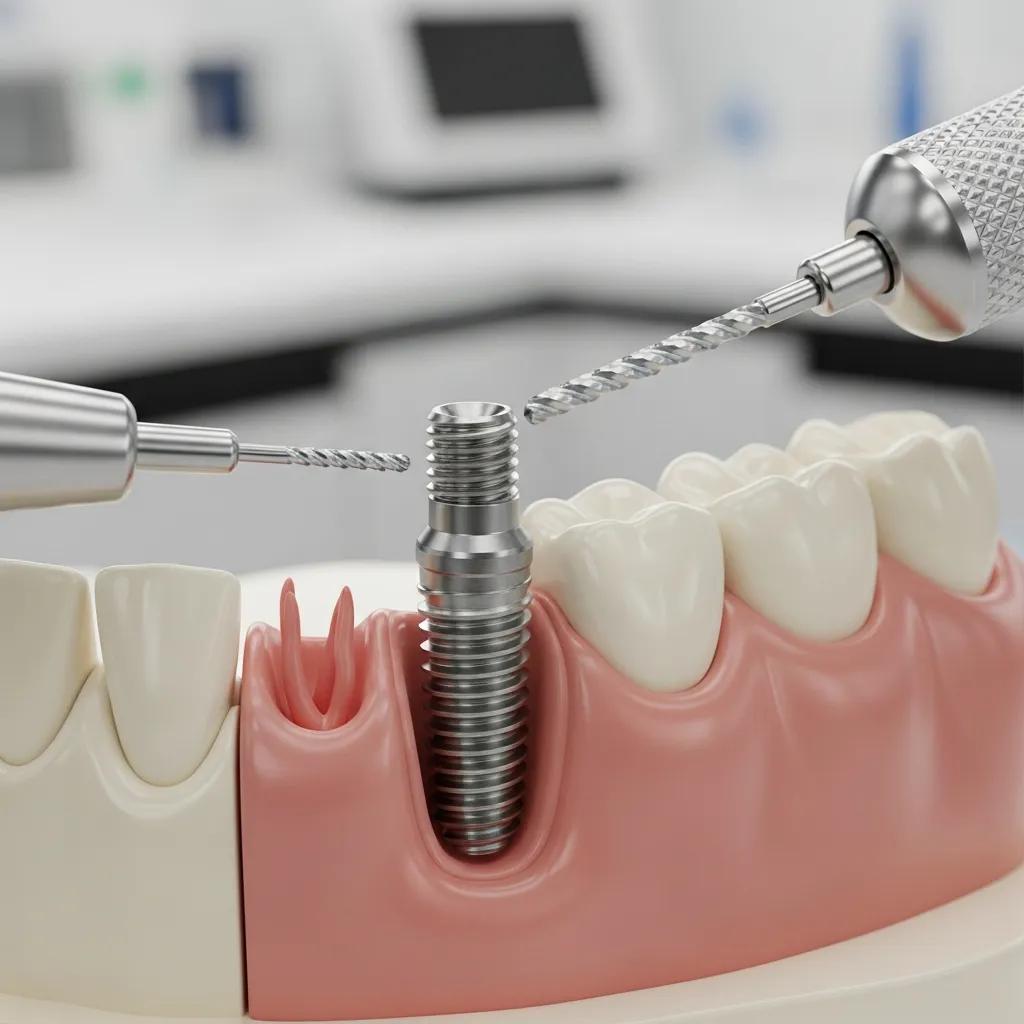
Mini dental implants are smaller-diameter implants used to anchor crowns, bridges, or dentures. Each implant is a titanium post placed into the jawbone to create a steady support for replacement teeth. Because they’re narrower, mini implants usually need less bone and can be placed with a simpler procedure and a shorter recovery.
Functionally, mini implants act like the root of a natural tooth. The visible portion connects to a prosthetic component — a crown, a small bridge, or a retentive attachment for a denture. The design of many mini implants enables them to provide immediate stabilization in cases where a full-size implant would require several months before loading. This can be a major benefit for patients seeking quicker improvement in denture fit or wanting a faster return to normal chewing function.
What Is the Mini Dental Implant Procedure?
The process starts with a full exam and X-rays to check jawbone health. We use local anesthesia so you’re comfortable during placement. The dentist makes a small opening, inserts the mini implant into the bone, and—if needed—places a stitch. Many patients are back to normal activities within a few days. Overall, recovery is typically faster than with traditional implants because the surgery is less extensive.
Before the appointment, your clinician will review medical history and medications, and may request recent dental records or additional imaging such as panoramic X-rays or cone beam CT scans when detailed bone evaluation is needed. On the day of surgery, most patients experience minimal surgical discomfort; clinicians commonly offer written aftercare instructions and recommendations for pain control, antibiotics when appropriate, and short-term dietary adjustments to protect the site during initial healing.
What Are the Key Features of Mini Dental Implants?
Mini implants differ from traditional implants in several ways. They’re usually about half the diameter of standard implants, which makes them suitable for patients with limited bone volume. Placement often takes less time and causes less discomfort. Many mini implants allow immediate loading, so you can sometimes receive your prosthetic teeth the same day as the implant.
Because of their smaller diameter and simplified restorative components, mini implants can be a conservative option in narrow ridges where bone grafting would otherwise be required for a standard implant. The restorative process for mini implants is generally straightforward, but the long-term plan should account for the mechanical limits of a narrower implant when used to support crowns or larger forces.
What Are Traditional Dental Implants and Their Benefits?
Traditional dental implants are the long-standing, well-researched option for tooth replacement. They use a titanium post surgically placed into the jawbone that biologically fuses with the bone over time, creating a strong foundation for crowns, bridges, or dentures.
Traditional implants come in a range of diameters and lengths to match bone anatomy and prosthetic requirements. Their broader surface area enhances the potential for osseointegration (the direct structural and functional connection between living bone and the surface of the implant), which underpins their reputation for high load tolerance and long-term success in restorative dentistry.
How Is the Traditional Dental Implant Procedure Performed?
Traditional implant treatment usually follows multiple steps over a longer timeline. After evaluating oral health and bone density, the implant is surgically placed under local anesthesia. A healing phase of several months follows to allow osseointegration—the bone bonding to the implant. Once healed, an abutment is attached and a custom crown or prosthetic is placed. This staged approach delivers a very stable, long-lasting result.
When bone volume or quality is insufficient, clinicians may recommend bone grafting or sinus augmentation prior to or at the time of implant placement. These additional procedures increase treatment time but can enable a traditional implant where it otherwise wouldn’t be possible. Treatment planning typically balances the patient’s goals, anatomical limitations, and long-term durability expectations.
What Advantages Do Traditional Dental Implants Offer?
Traditional implants are prized for their strength and longevity. With proper care, they can last decades—often 25 years or more. They tolerate higher biting forces and can support a wide range of restorations, making them a reliable choice for extensive dental work or full-arch replacements.
The broader platform and modular abutment systems used with traditional implants allow dental labs and clinicians to design highly customized restorations for optimal esthetics and function. In many cases, this delivers a final result that closely mimics the look, feel, and performance of natural teeth, which is especially important for front-tooth replacements or complex rehabilitations.
What Are the Pros and Cons of Mini Dental Implants?
What Are the Advantages of Mini Dental Implants?
Less Invasive: Smaller surgical sites mean less trauma to surrounding tissues. This can translate into less bleeding, less swelling, and reduced immediate postoperative pain compared with more extensive implant surgeries.
Quicker Recovery: Many patients heal faster and return to normal activities sooner. The ability to place mini implants with minimal incisions often shortens chair time and overall disruption to daily life.
More Affordable: Mini implants generally cost less than traditional implants, making them more accessible. The simplified components and shorter treatment sequence reduce lab fees and surgical time, which can lower the out-of-pocket expense.
Useful for Denture Stabilization: Mini implants are frequently used to stabilize lower dentures and prevent rocking or movement. For denture wearers, this improved retention can dramatically increase comfort and confidence when eating and speaking.
What Are the Disadvantages of Mini Dental Implants?
Lower Strength: Mini implants aren’t as robust as traditional implants and may not be ideal for heavy chewing loads or large restorations. They can be more susceptible to bending or loosening under high forces over time.
Limited Use Cases: They aren’t suitable for all situations—patients with extensive bone loss or complex needs may need traditional implants. Cases requiring broad support for bridges or full-arch fixed prosthetics commonly favor standard implants.
Possible Bone Changes: Over time, mini implants may not stimulate bone the same way larger implants do, which can affect bone volume. Monitoring bone levels around mini implants is an important part of ongoing care.
Restorative Limitations: The smaller restorative connections used with mini implants can limit options for highly customized crowns or complex prosthetic designs, so careful planning with your restorative dentist is essential.
What Are the Pros and Cons of Traditional Dental Implants?
What Are the Advantages of Traditional Dental Implants?
High Durability: Built to handle strong biting forces and larger restorations. This makes them suitable for posterior teeth and full-arch rehabilitations where chewing forces are significant.
Long-Term Success: Proven longevity—often lasting for decades with good care. Their ability to osseointegrate reliably contributes to predictable outcomes and fewer long-term mechanical complications.
Versatility: Can support single crowns, bridges, and full-arch prosthetics. Their versatile restorative options allow clinicians to address esthetic, functional, and occlusal requirements in complex cases.
Customizable Prosthetics: Traditional implants often use multi-component systems that allow for precise angulation, emergence profile, and esthetic control when fabricating crowns and bridges.
What Are the Disadvantages of Traditional Dental Implants?
More Invasive: The surgical procedure is more extensive and recovery can take longer. For some patients, the need for grafting or staged surgery can increase the medical and logistical burden of treatment.
Higher Cost: Traditional implants usually require a larger investment upfront. Additional costs can arise from grafting, custom abutments, and laboratory-fabricated restorations.
Longer Timeline: Treatment can span several months from placement to final restoration. Patients who want immediate solutions may find the waiting period for osseointegration and final prosthetics frustrating.
Potential for Additional Procedures: When bone or gum deficiencies exist, additional grafting or soft tissue management may be necessary, adding time and complexity to treatment.
How Do Mini and Traditional Dental Implants Compare?
How Do Size and Structure Differ Between Mini and Traditional Implants?
Mini implants are much narrower—typically about 1.8 to 3.3 mm in diameter—while traditional implants usually range from 3.4 to 5.8 mm. That size difference makes mini implants useful in areas with limited bone where a standard implant may not be possible without grafting.
Beyond diameter, differences in thread design, surface treatment, and restorative connection affect how each implant performs in the bone and how prosthetics attach. Your clinician will factor in available bone width, the anticipated restorative load, and esthetic demands when recommending a specific implant type and design.
What Are the Differences in Surgical Procedure and Recovery Time?
Mini implant placement is usually less invasive and can often be done with local anesthesia and minimal incisions, so recovery tends to be shorter—many people resume normal activities within a few days. Traditional implants require a more involved surgery and a longer healing period—often several months—before the final restoration can be attached.
That said, surgical protocols vary between clinicians. Some practices offer sedation options to reduce anxiety during either mini or traditional implant procedures. The choice of anesthesia and the expected recovery plan should be discussed during the consultation so you can plan for time off work, caregiver support, or immediate post-op needs.
How Do Costs and Financing Options Compare?
Mini dental implants are typically more affordable than traditional implants, making them an attractive option for budget-conscious patients. Costs vary by practice and case complexity. Financing options are often available for both choices to help manage expenses.
Cost drivers for any implant treatment include the number of implants required, the need for bone grafting or extractions, the type of prosthetic (removable vs. fixed), laboratory fees, and follow-up visits. During your consultation, the team can provide an itemized estimate and explain payment plans, third-party financing, or the use of health savings accounts where applicable.
What Are the Differences in Durability and Longevity?
Traditional implants offer superior durability and longevity, often lasting 25 years or more with proper care. Mini implants can be effective, but they may not endure the same heavy forces over the long term. Consider your chewing habits and restoration needs when weighing longevity.
Durability also depends on patient factors such as oral hygiene, smoking status, systemic health, and how well the prosthetic design distributes occlusal forces. Regular maintenance visits and appropriate home care are essential to maximize the lifespan of any implant-supported restoration.
Who Are Ideal Candidates for Each Implant Type?
Mini implants are a good fit for patients with limited bone or those who want a less invasive, quicker option. Traditional implants are better for patients with adequate bone and those who need a highly durable solution for larger restorations. A thorough exam with a dental professional will identify the right path for you.
Other candidate factors include overall health, medications that affect bone healing, smoking, and oral hygiene habits. Patients with uncontrolled systemic conditions may be advised to stabilize medical issues before implant treatment. For borderline cases, a trial of denture stabilization with mini implants can be a conservative starting point while you consider longer-term options.
What Are the Typical Applications for Mini vs. Traditional Implants?
Mini implants are commonly used to stabilize dentures or replace single teeth when bone volume is limited. Traditional implants are more versatile and can be used for single-tooth replacements, bridges, and full-arch restorations.
Examples of typical uses include:
Mini implants: anchoring lower dentures for improved retention, supporting overdentures with several small implants, or replacing a narrow anterior tooth where a standard implant would require grafting.
Traditional implants: replacing posterior teeth with crowns able to withstand chewing forces, supporting fixed bridges or full-arch prosthetics, and providing long-term solutions for complex restorative plans.
Are Mini Dental Implants Worth It for You? Factors to Consider
How Does Your Oral Health and Bone Structure Affect Implant Choice?
Your jawbone quality and overall oral health are central to the decision. If you have good bone volume and want a long-term solution, traditional implants may be best. If bone is limited and you prefer a less invasive option, mini implants could be a better match. A comprehensive evaluation will clarify your options.
Bone density in the upper jaw can differ from the lower jaw, and areas previously used for extractions may have narrower ridges. Imaging and a clinical exam show where implants can be placed predictably and whether augmentation would improve outcomes. Preserving existing bone and planning restorations to minimize overload is an important part of implant success.
What Budget and Financial Considerations Should You Evaluate?
Cost is an important factor. Mini implants often cost less up front, but factor in long-term maintenance and possible replacements. Talk to our team about financing, payment plans, and insurance to find an approach that fits your budget.
When comparing options, consider the total cost of ownership over time: initial surgery and prosthetic fabrication, periodic maintenance, potential repairs or replacements, and the impact on quality of life and diet. For many patients, improved denture retention reduces the need for adhesives and frequent adjustments, which can offset some costs.
What Are Your Desired Outcomes and Longevity Expectations?
Think about how long you want the solution to last and how you use your teeth. If longevity and strong bite force are priorities, traditional implants usually deliver. If you prefer speed, lower cost, and a less complex procedure, mini implants may meet your needs.
Discuss realistic expectations with your clinician about aesthetics, chewing ability, and the timeline for treatment. Some patients accept a removable overdenture stabilized by mini implants as a permanent solution; others choose a staged approach that begins with mini implants and later transitions to traditional implants when circumstances allow.
What Is the Cost Comparison of Mini vs. Traditional Dental Implants in Denton, TX?
Implant costs vary widely based on the implant type, procedure complexity, and local fees. Below are common factors that influence pricing so you know what to expect.
What Factors Influence the Cost of Mini Dental Implants?
Factor
Description
Impact on Cost
Material
The quality of titanium used
Higher quality can raise the price
Procedure Complexity
The difficulty of the surgical placement
More complex cases usually cost more
Location
The geographical area of the dental practice
Urban clinics often have higher fees
Additional considerations for mini implant cost include the number of implants required to achieve satisfactory retention and whether any immediate prosthetic work is needed the same day. Some practices include the cost of the attachment components and immediate denture adjustments in a package price, while others itemize each service.
What Factors Influence the Cost of Traditional Dental Implants?
Factor
Description
Impact on Cost
Material
Type of titanium and abutment used
Premium components increase cost
Surgical Fees
Complexity of the surgical procedure
More extensive surgeries tend to be pricier
Follow-Up Care
Additional visits for monitoring and adjustments
More appointments can raise total cost
With traditional implants, additional fees often arise from custom abutments, lab-fabricated crowns or bridges, and any required grafting procedures. The restorative phase can represent a substantial portion of the total cost, particularly when multiple teeth or full-arch solutions are involved.
What Financing and Insurance Options Are Available?
Payment Plans: Many offices offer plans to spread payments over several months. These plans can make comprehensive treatment more accessible by dividing fees into manageable installments.
Health Savings Accounts (HSAs): HSA funds can be used to pay for implant treatment. Using pre-tax HSA dollars may reduce the effective out-of-pocket cost for eligible patients.
Dental Insurance: Some plans cover parts of implant treatment—coverage varies by policy. Insurance may contribute toward extractions, certain prosthetic components, or part of the restorative fees; verify coverage details early in planning.
Our team can work with you to explore third-party financing options, provide estimates for insurance submissions, and help structure treatment stages that align with your financial situation and clinical needs.
How Can You Schedule a Free Dental Implant Consultation in Denton, TX?
What to Expect During Your Free Dental Implant Consult?
At your consultation, we’ll review your medical and dental history, take X-rays, and evaluate your jawbone and oral health. We’ll explain implant options, answer your questions, and recommend the best treatment plan tailored to your goals.
The consultation typically includes an initial intraoral exam, discussion of restorative goals, and an explanation of short- and long-term maintenance. We’ll also review alternatives, such as fixed versus removable prosthetics, and outline a proposed timeline and estimate so you can compare options with confidence.
How to Book Your Appointment with Dr. Mike Pham or Dr. Vo?
To schedule your free dental implant consultation, call our office or book online through our website. Our team is ready to guide you step by step toward restoring your smile and oral function.
If you have recent dental records, X-rays, or a list of medications, bring them to your appointment to speed planning. During the visit, the clinician will discuss preoperative instructions, post-op expectations, and any measures to optimize healing such as smoking cessation or stabilizing certain medical conditions.
Frequently Asked Questions
What is the recovery time for mini dental implants compared to traditional implants?
Recovery after mini implants is generally faster. Many patients are back to normal activities within a few days because the procedure is less invasive. Traditional implants usually need a healing period of several months for osseointegration, which lengthens the overall recovery time.
Individual recovery varies with the number of implants placed, your overall health, and whether additional procedures (like extractions or grafting) were performed. Expect some initial soreness for a few days. Your clinician will advise on pain management, oral rinses, and activity restrictions to support healing.
Are there any dietary restrictions after getting mini dental implants?
Yes. Most clinicians advise a soft-food diet for a few days after placement to protect the surgical site. Avoid hard, crunchy, or sticky foods during initial healing. Your dentist will tell you when it’s safe to return to your regular diet.
As healing progresses, you’ll gradually reintroduce firmer foods according to comfort and your clinician’s guidance. If your implants support a denture, you may be asked to avoid chewing directly on newly attached areas for a limited time while tissues adapt.
How do I maintain my mini dental implants?
Care for mini implants much like natural teeth: brush twice daily, floss, and use an antibacterial mouthwash as recommended. Keep regular dental check-ups so we can monitor the implants and surrounding tissue. Avoid smoking, which can impair healing and implant longevity.
Interdental brushes or proxy brushes can be helpful to clean around implant attachments and under overdentures. Professional cleanings and periodic X-rays allow your clinician to detect early signs of inflammation or bone changes and address them before they progress.
Can mini dental implants be used to support dentures?
Yes. Mini implants are commonly used to stabilize dentures, giving them a tighter fit and better function during chewing and speaking. This is especially helpful for patients with limited bone who want improved denture stability without extensive grafting.
When used for overdentures, mini implants are typically placed in strategic positions to maximize retention and load distribution. The denture is modified to accept attachment housings, which engage the implant-based attachments for a secure fit that remains removable for cleaning.
What should I consider when choosing between mini and traditional dental implants?
Consider your oral health, bone density, budget, and desired outcome. Mini implants suit patients seeking less invasive, more affordable options or those with limited bone. Traditional implants offer greater durability and versatility for long-term restorations. A dental exam will clarify which is best for your situation.
Think about lifestyle factors — if you clench or grind your teeth, eat very hard foods, or require fixed prosthetics, a traditional implant may better meet your functional needs. Conversely, if you prioritize a shorter timeline and minimal surgery, mini implants might be preferable.
Are there any age restrictions for getting mini dental implants?
There aren’t strict age limits, but candidates should have fully developed jawbones—typically reached in late adolescence. Older adults can be good candidates, particularly if they have bone loss and want a less invasive option. A complete clinical evaluation determines suitability for any age.
For older patients, considerations include bone density, chronic medical conditions, and medications that influence bone metabolism. With appropriate planning and medical clearance when necessary, many older adults successfully receive implant-supported restorations and enjoy improved function and quality of life.
Conclusion
Mini dental implants offer a less invasive, often more affordable path to replacing missing teeth and stabilizing dentures. They can be an excellent option depending on your bone health, budget, and treatment goals. Traditional implants remain the most durable and versatile long-term solution. If you’re weighing the options, schedule a consultation so our team can recommend the best plan for your smile.
Ultimately, the right choice depends on a careful clinical evaluation, clear communication about goals and expectations, and a treatment plan that balances short-term convenience with long-term oral health. Our team in Denton is available to review your case, compare realistic scenarios, and help you make an informed decision that fits both your lifestyle and clinical needs.