Bone Grafting vs Dental Implants: Which Is Better for Affordable Dental Solutions in Mansfield?
When it comes to restoring dental health, two prominent options are bone grafting and dental implants. Understanding the differences between these procedures is crucial for making an informed decision about your oral health. This article will explore the definitions, mechanisms, and benefits of both bone grafting and dental implants, helping you determine which option may be best for your needs. Many individuals face challenges such as tooth loss or insufficient bone density, which can complicate their dental restoration options. By examining the procedures, costs, and recovery times associated with each, you can better navigate your choices. We will cover the types of bone grafts, the dental implant procedure, cost comparisons, and how to decide between these two solutions.
What Is Bone Grafting and When Is It Needed?
Bone grafting is a surgical procedure that involves the transplantation of bone tissue to restore or augment the bone structure in the jaw. This procedure is often necessary when there is insufficient bone density to support dental implants, which are titanium fixtures placed in the jawbone to serve as artificial tooth roots. Bone grafting not only enhances the jawbone’s strength but also provides a stable foundation for dental implants, ensuring their long-term success.
What Are the Types of Bone Grafts Used in Dental Procedures?
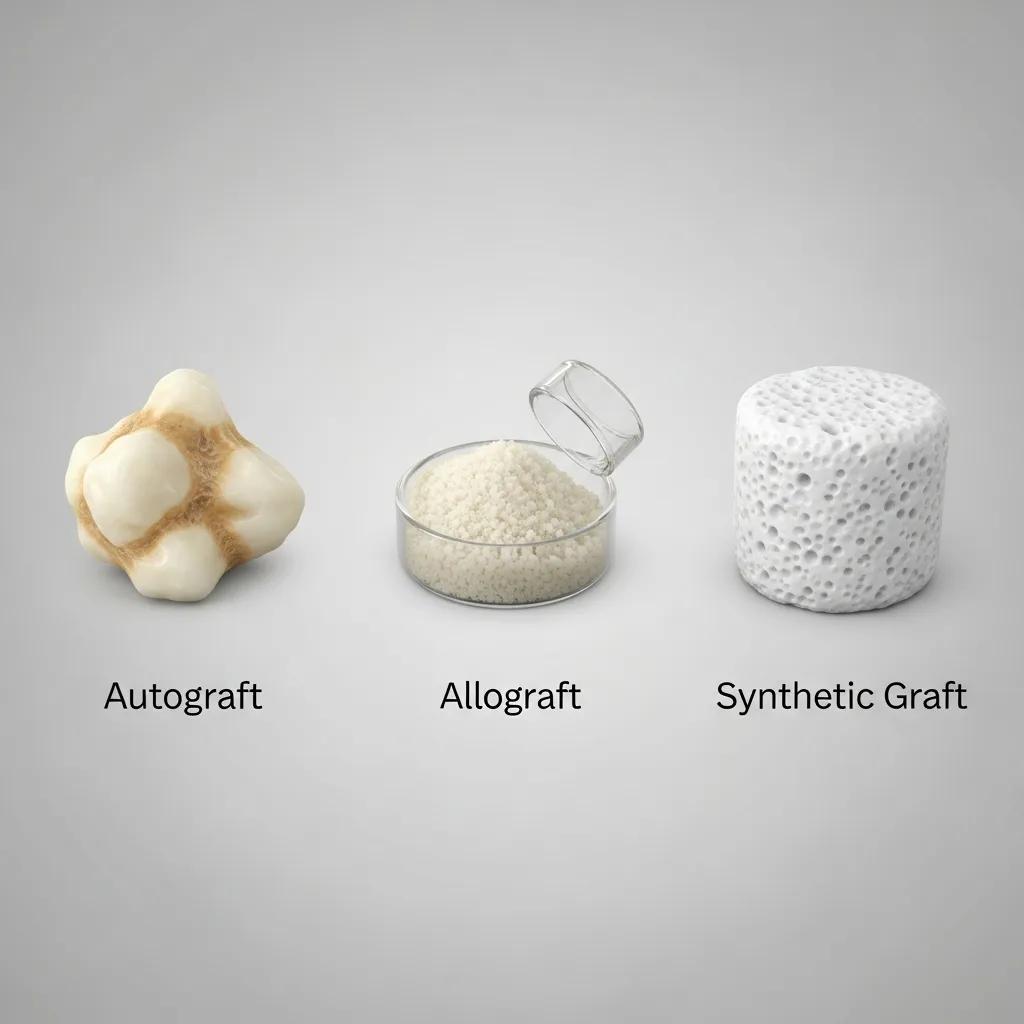
There are several types of bone grafts used in dental procedures, each with its unique characteristics:
Autograft: This type involves harvesting bone from the patient’s own body, typically from the hip or chin. It offers the highest success rate due to its compatibility.
Allograft: This graft uses bone from a deceased donor, which is processed and sterilized to ensure safety. It is a common choice due to its availability.
Synthetic grafts: These are made from biocompatible materials that mimic natural bone. They are often used when autografts or allografts are not feasible.
Each type of graft has its advantages and is chosen based on the patient’s specific needs and the extent of bone loss.
How Does Bone Grafting Support Dental Implant Success?
Bone grafting plays a critical role in the success of dental implants by providing the necessary bone density for proper placement. Dental implants require a certain amount of bone to integrate effectively, and grafting can enhance the jawbone’s volume and strength. Studies have shown that patients who undergo bone grafting before receiving implants have significantly higher success rates, often exceeding 90%. This relationship between bone density and implant success underscores the importance of evaluating bone health prior to implant procedures.
Further research delves into the specifics of various bone graft types and their efficacy in ensuring successful dental implant outcomes.
Bone Graft Types & Success Rates for Dental Implants
In this review, we provide a comparative evaluation of different bone grafts for dental implants success. We performed a literature review to analyze dental implant success and survival rates after the use of various grafts for bone augmentation. A total of 41 studies were selected and analyzed based on parameters including study design, number of implants placed, total number of participants, type of graft used, site from which graft was obtained, time elapsed between bone augmentation and implant placement, implant survival, and success rates.
Comparative bone graft evaluation for dental implant success: an evidence-based review, 2021
How Does the Dental Implant Procedure Work?
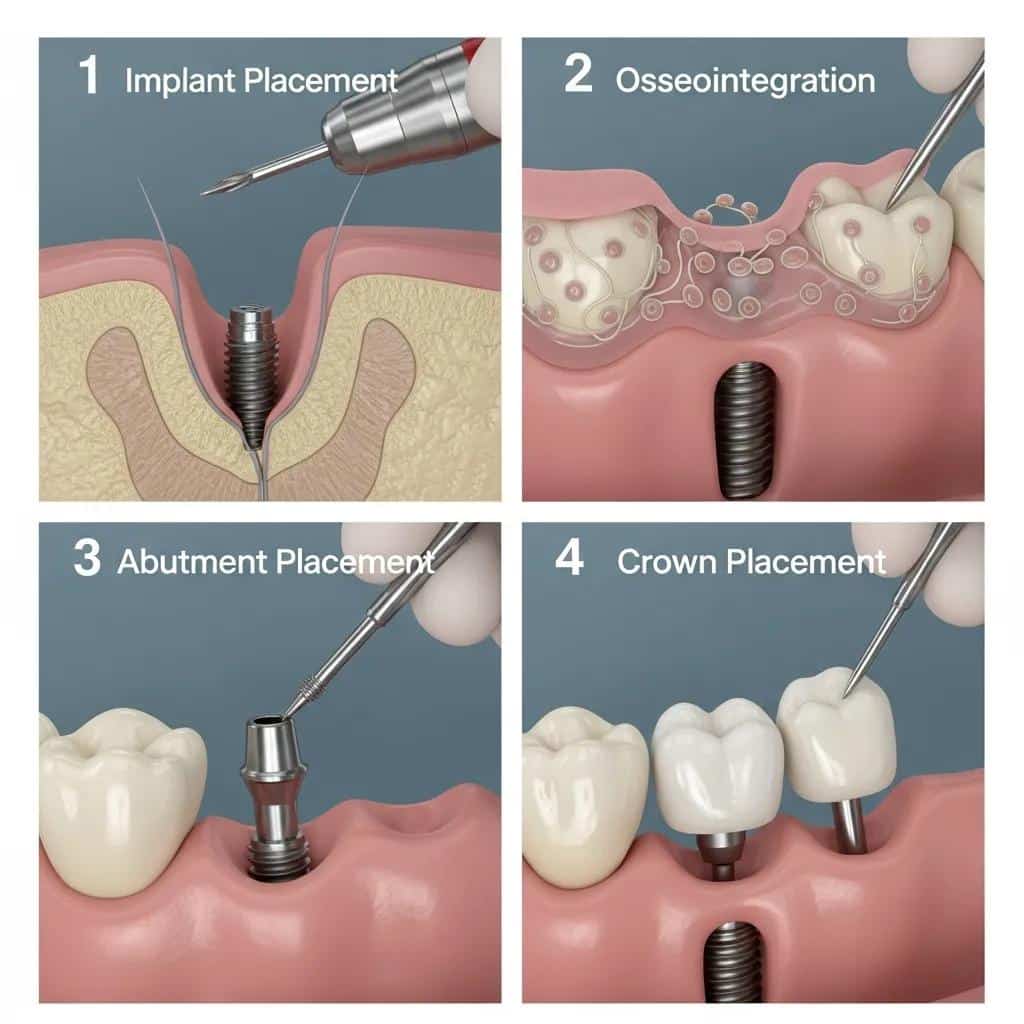
The dental implant procedure typically involves several steps, beginning with a thorough examination and imaging to assess bone density. Once the treatment plan is established, the process includes the following stages:
Implant Placement: The titanium implant is surgically placed into the jawbone.
Osseointegration: Over the next few months, the bone grows around the implant, securing it in place.
Abutment Placement: After osseointegration, an abutment is attached to the implant, which will hold the crown.
Crown Placement: Finally, a custom-made crown is placed on the abutment, completing the restoration.
This multi-step process ensures that the implant is securely anchored and functions like a natural tooth.
What Materials Are Commonly Used in Dental Implants?
Dental implants are primarily made from two materials:
Titanium: Known for its strength and biocompatibility, titanium is the most commonly used material for dental implants. It integrates well with bone, promoting osseointegration.
Zirconia: This ceramic material is an alternative to titanium and is favored for its aesthetic qualities, as it can be matched to the color of natural teeth. Zirconia implants are also biocompatible and resistant to corrosion.
Both materials have their benefits, and the choice often depends on the patient’s specific needs and preferences.
What Is the Typical Recovery Time After Dental Implant Surgery?
Recovery time after dental implant surgery can vary based on individual health factors and the complexity of the procedure. Generally, patients can expect the following timelines:
Initial Healing: The first stage of healing typically takes about 1-2 weeks, during which swelling and discomfort may occur.
Osseointegration: This crucial phase can take anywhere from 3 to 6 months, as the bone integrates with the implant.
Final Restoration: Once osseointegration is complete, the final crown can be placed, which may take an additional few weeks.
Patients are advised to follow post-operative care instructions to ensure a smooth recovery and optimal results.
What Are the Cost Differences Between Bone Grafting and Dental Implants?
Understanding the cost differences between bone grafting and dental implants is essential for budgeting your dental care. The costs can vary significantly based on factors such as the type of graft used, the complexity of the procedure, and the geographic location of the dental practice.
How Does Bone Grafting Cost Compare to Dental Implant Expenses?
The average cost of bone grafting can range from $300 to $3,000, depending on the type of graft and the extent of the procedure. In contrast, dental implants typically cost between $1,500 and $4,500 per implant, including the crown. It’s important to consider that bone grafting may be a necessary preliminary step for those requiring implants, potentially adding to the overall expense.
Procedure
Average Cost
Notes
Bone Grafting
$300 – $3,000
Depends on graft type and complexity
Dental Implants
$1,500 – $4,500
Includes implant and crown
This table illustrates the financial considerations involved in both procedures, highlighting the importance of discussing costs with your dental provider.
What Financing Options Are Available for Implant and Grafting Procedures?
Many dental practices offer financing options to help patients manage the costs of bone grafting and dental implants. Common options include:
Payment Plans: Many clinics provide flexible payment plans that allow patients to spread the cost over several months.
Dental Insurance: Some insurance plans may cover a portion of the costs associated with these procedures, particularly if they are deemed medically necessary.
Health Savings Accounts (HSAs): Patients can use funds from HSAs to pay for dental procedures, providing a tax-advantaged way to manage costs.
Discussing these options with your dental provider can help you find a solution that fits your budget.
Understanding the financial implications and patient decision-making process is crucial when considering dental implant treatments.
When dealing with the replacement of one missing tooth, the patient has the option of choosing between different types of treatment interventions. Several important factors play a role in his decision-making process, including his limited financial means and his efforts to solve the problem of missing teeth as effectively as possible. The main goal of the study is the economic-clinical evaluation of implant treatment, as a surgical-prosthetic method in dentistry, in case of replacement of one missing tooth of the molar area.
Cost-utility analysis of an implant treatment in dentistry, 2021
How to Decide Between Bone Grafting and Dental Implants?
Deciding between bone grafting and dental implants involves several factors, including the condition of your jawbone, overall health, and personal preferences. Consulting with a dental professional is crucial to evaluate your specific situation and determine the best course of action.
Can Dental Implants Be Placed Without Bone Grafting?
In some cases, dental implants can be placed without prior bone grafting if there is sufficient bone density. Factors such as the location of the implant and the patient’s overall health will influence this decision. However, if bone density is inadequate, grafting may be necessary to ensure the implant’s success. A thorough evaluation by a dental professional will help clarify the best approach for your needs.
The debate between using short implants and performing bone grafting for dental restoration is a key area of ongoing research.
Short Implants vs. Bone Grafting for Dental Restoration
The aim of this study was to conduct a systematic review to compare the survival rates between short implants (length < 10 mm) versus standard-length implants (≥ 10 mm) inserted in grafted bone. As secondary outcomes, marginal bone loss and survival rates of the implant supported prostheses were also analysed.
Short implants versus bone grafting and standard-length implants placement: a systematic review, JMM Caramês, 2018
To schedule a consultation and discuss your options, consider booking an appointment with a trusted dentist in Mansfield. Personalized advice can make all the difference.