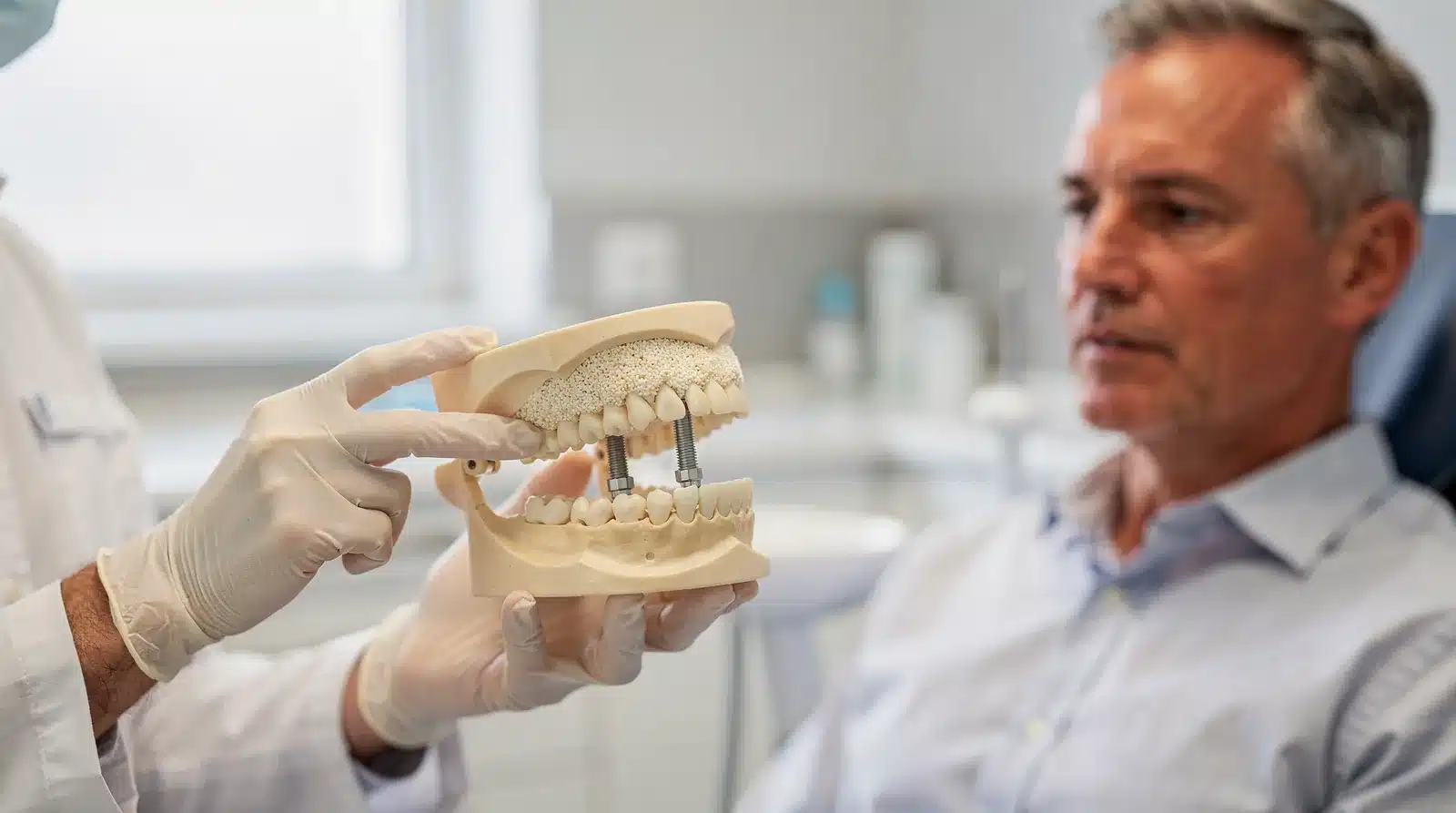
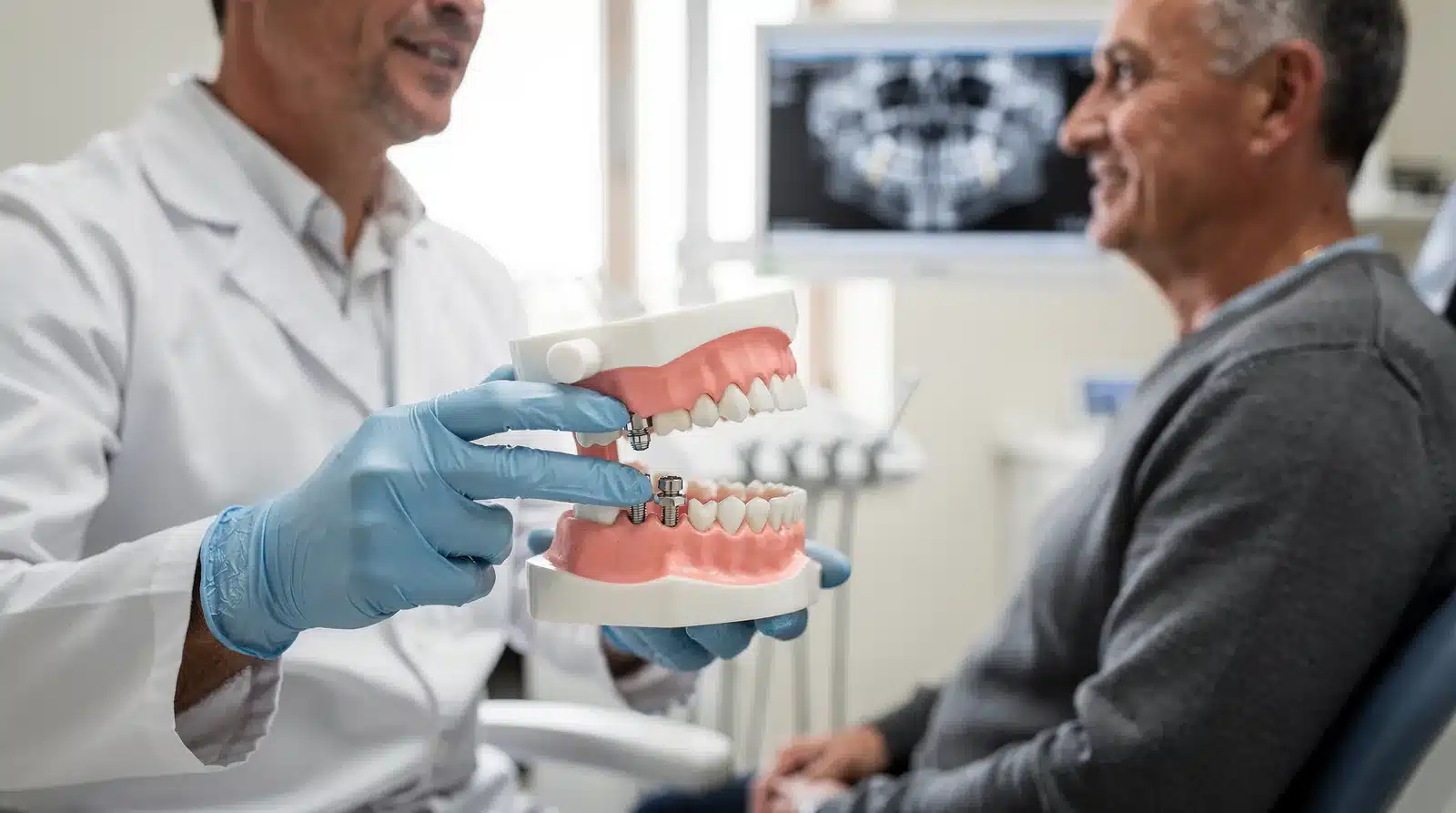
Bone grafting is not necessary for every dental implant. Many implants place successfully without extra bone work. Grafting becomes essential only when jawbone is missing or too thin to support the implant. Affordable Dentist Near Me evaluates each patient’s bone structure before recommending treatment, ensuring a stable, long-term foundation.
Key Takeaways
Bone grafting is not necessary for every dental implant placement.
Many patients have sufficient bone and proceed directly to implant surgery.
A bone graft adds bone material where the jawbone is missing or too thin.
Without sufficient jawbone volume, a dental implant lacks structural support for long-term success.
What is a bone graft for dental implants?
A bone graft for dental implants adds bone material to the jaw before or during implant placement. The procedure creates a stable foundation where natural bone has weakened or thinned over time.
Without sufficient jawbone volume, a dental implant lacks the structural support needed for long-term success. Dental implants are generally the best solution for tooth replacement, but they require adequate bone to anchor securely. A graft restores that foundation. The graft material stimulates the formation of healthy bone cells, which increase the thickness and strength of the jawbone. This biological process, called osteogenesis, turns the graft into living bone that fuses with the implant post.
How does the bone graft material work?
The graft acts as a scaffold. Natural bone cells migrate into the graft material and gradually replace it with the patient’s own bone. Over several months, the jaw regains density and volume. The timeline varies by graft size. Cleveland Clinic reports that initial recovery takes about a week, while the graft itself needs at least three months to heal. Large grafts may require nine to twelve months before implant placement.
Does every dental implant require a bone graft?
No. A clinician evaluates bone dimensions through imaging before recommending grafting. When bone loss is present, skipping the graft risks implant failure. The graft ensures the implant integrates properly and withstands chewing forces for decades. Affordable Dentist Near Me in Fort Worth evaluates whether a bone graft is needed during a consultation, helping patients understand their specific situation before committing to treatment.
Is bone grafting always required for implants?
A bone graft is not mandatory for every dental implant case. Many patients receive implants without any additional bone work. The decision hinges entirely on the volume and density of the existing jawbone at the implant site.
Bone loss after tooth removal, long-term denture wear, infection, or trauma can leave the jaw too thin or short to hold an implant securely. Without sufficient bone, an implant risks failure or poor aesthetic outcomes. When teeth have been missing for an extended period, the jawbone shrinks and weakens from lack of stimulation. A preliminary bone graft restores necessary strength and thickness so the implant integrates properly with the bone.
What causes the jawbone to shrink?
The human jaw relies on constant stimulation from tooth roots to maintain its shape. Once a tooth is gone, the body begins resorbing the bone mineral in that area. Over months and years, this gradual process creates a foundation too narrow or shallow for a standard implant.
How does a bone graft make implants possible?
A graft adds bone material precisely where volume has been lost. The procedure builds height and width, creating a stable base for the implant post. After the graft heals completely, the implant surgeon places the fixture into dense, healthy bone that supports decades of function.
Can I still get implants with gum disease or bone loss?
The answer depends on the severity and treatment of the underlying condition. Can I still get dental implants if I have gum disease or bone loss? Many patients with gum disease or bone loss can still receive dental implants after completing preparatory care. Active gum disease must be treated before implant placement. Untreated infection prevents proper implant integration and raises the risk of failure.
How does gum disease affect implant candidacy?
Gum disease creates inflammation and destroys the bone that supports teeth. A dental implant requires a healthy, infection-free environment to fuse with the jawbone. The purpose of preparatory treatment is to create a stable foundation for implants. While the treatment is beneficial, not all cases require every available procedure.
Affordable Dentist Near Me provides deep cleaning and root canals to treat gum disease and infection before considering implants. Addressing active disease first protects the investment in tooth replacement.
What happens when bone loss is already present?
Bone loss from gum disease or missing teeth often reverses through a bone graft. The graft stimulates the formation of healthy bone cells. These new cells increase the thickness of the jawbone. A bone graft implant refers to adding bone material to the jaw before or during placement of a dental implant.
Not every implant needs a graft. In many cases implants can be placed without extra bone work. When bone is missing or weak, a bone graft may be the safest route for long-term stability and function. Patients exploring affordable dental implants for gum disease and bone loss should understand that candidacy hinges on restoring oral health first.
The central question many patients ask is whether a bone graft is always needed. The answer is no. Clinicians evaluate each case individually. They measure bone volume and density before recommending grafting.
What does the bone graft procedure involve?
A bone graft procedure places donor or synthetic bone material into a jaw area lacking sufficient volume. The intervention is minimally invasive, carried out by a dentist or periodontist directly at the site where bone density has diminished.
Dental bone grafting becomes a prerequisite when tooth loss leaves the jaw without the stimulation needed to maintain its structure. Without adequate bone width or height, a dental implant lacks the foundation required for long-term stability. Left untreated, insufficient bone leads to implant failure, making grafting a protective step rather than an optional extra.
How long does recovery from a bone graft take?
Initial recovery is relatively quick. Cleveland Clinic reports that the first phase of healing takes about a week, during which tenderness, swelling, and bruising are normal. These side effects typically resolve within one to two weeks. Over-the-counter pain relievers manage most discomfort during this period.
Full integration of the graft material demands patience. The graft itself requires at least three months of healing before an implant can be placed. For patients needing a large bone graft, the wait extends to nine or even twelve months. Rushing this timeline risks implant instability and costly revision work.
Graft Size
Initial Recovery
Total Healing Before Implant
Standard
~1 week
3+ months
Large
~1 week
9–12 months
What does the post-procedure experience look like?
The immediate aftermath involves manageable discomfort. Tenderness around the graft site peaks within the first few days. Swelling and bruising are common but fade steadily. Antibiotics may be prescribed to reduce infection risk during the initial week of recovery. Most individuals resume normal routines within a few days, though strenuous activity requires a longer pause. The graft site heals beneath the surface long after external symptoms disappear.
How can I afford bone grafting and implants?
Patients can still get dental implants even with gum disease or bone loss. The financial path to treatment includes exploring cost-effective implant types and flexible payment structures that reduce upfront burden.
Affordable Dentist Near Me provides high-quality dental care that is both affordable and accessible. The company offers free consultations so prospective patients can learn their treatment options and costs before committing to any procedure. Monthly payment options remove the pressure of a single large payment.
What implant type costs the least upfront?
Dental implants vary significantly in price depending on the approach. Mini dental implants offer the lowest-cost entry point for a single tooth or denture stabilization in 2026. This option often requires less bone volume, which means some patients avoid extensive grafting altogether.
Which implant option saves money over time?
Long-term value matters more than the initial price. Single-tooth dental implants are the most cost-effective option for replacing one missing tooth without affecting neighboring teeth. Preserving adjacent healthy teeth avoids additional restorative work down the road.
The best affordable dental implant option depends on the number of teeth being replaced and jawbone density. A full treatment plan developed during the free consultation reveals which path fits a specific clinical situation and budget.
FAQ
Is bone grafting necessary for every dental implant?
No. What happens if I skip a bone graft with bone loss? Skipping the graft risks implant failure. Without sufficient jawbone volume, the implant lacks structural support for long-term success and cannot withstand chewing forces.
How does a bone graft support dental implant success?
The graft acts as a scaffold, stimulating healthy bone cells to replace the material with living bone. This restores jaw density and volume, ensuring the implant integrates properly and lasts for decades.
Conclusion
Bone grafting is not necessary for every dental implant, but it becomes essential when the jaw lacks sufficient volume to support long-term stability. Patients with bone loss from gum disease or missing teeth often require grafting to create a strong foundation. Skipping this step risks implant failure. A free consultation determines your specific needs, ensuring you receive the right treatment for a lasting, healthy smile.