Top 5 Concerns Patients Have About Dental Implants: Managing Pain, Healing, Risks, Cost, and Longevity
Dental implants replace missing teeth with a titanium fixture anchored in the jawbone that supports a prosthetic crown or denture, and they are widely recommended for restoring chewing, appearance, and long-term oral health. Many patients—especially those in the 40–60 age range—worry first about pain during and after surgery, then about how long recovery takes, what complications might occur, how much implants cost in a local market like Dallas, and whether implants truly last. This article answers those five top concerns in clear, practical language, with evidence-based timelines, pain-management strategies, risk signs to watch for, and realistic expectations for longevity and cost. You will learn what types of pain are normal versus warning signs, a week-by-week recovery map including osseointegration, the main complications and how they are prevented, typical cost drivers and financing options, and what determines long-term success. After this overview, readers who want personalized answers can take a direct next step to get individualized guidance through a Free Dental Consult that clarifies candidacy, sequencing, and pricing.
Affordable Dentist Near Me of Dallas offers a Free Dental Consult for patients concerned about dental implants; this no-cost appointment helps map out candidacy, estimated timelines, and an individualized plan so patients understand pain control and healing before committing to treatment. The Free Dental Consult provides immediate, personalized reassurance and is the recommended next step for anyone worried about pain, cost, or complications and who wants to explore implant options in Dallas.
How Can Dental Implant Pain Be Managed Effectively?
Dental implant pain management combines local anesthesia during surgery, short-term analgesics afterward, and clear home-care measures to minimize discomfort and promote healing. The mechanism behind effective pain control is straightforward: block pain signals at the surgical site, reduce inflammation, and support tissues while osseointegration begins. Proper pre-operative planning and intra-operative technique reduce tissue trauma and therefore reduce post-op pain, while post-op protocols focus on reducing swelling, preventing infection, and gradually resuming normal function. Understanding the typical pain pattern and having a plan for medication, diet, and activity can dramatically reduce anxiety and improve recovery. The next subsections explain what kinds of pain to expect and how long each usually lasts so you can recognize normal healing versus red flags.
Effective pain management strategies are crucial for a positive patient experience following dental implant surgery.
Managing Pain and Complications After Dental Implant Placement
Although dental implant placements have high success rates and a low incidence of morbidity, post-operative pain and complications with the healing process have been reported. There is little guidance available regarding optimal pre- and post-operative management of dental implant placement. This first paper discusses the mechanisms of pain associated with dental implant placement and offers guidance to clinicians on optimal pre- and post-operative pain management regimes.
Pre-and post-operative management of dental implant placement. Part 1: management of post-operative pain, 2014
What Types of Pain Are Common After Dental Implant Surgery?
Surgical-site pain from soft-tissue manipulation and bone work is the most common immediate discomfort after implant placement and typically feels like a dull, localized ache that flares with chewing or pressure. Referred pain—where patients feel discomfort in neighboring teeth, the jaw, or the ear—is also common and usually resolves as inflammation subsides; nerve-related pain (sharp, shooting, or tingling) is less common and requires prompt evaluation. Sinus-related discomfort can occur with upper-jaw implants near the sinus floor, presenting as pressure or toothache-like pain rather than sharp nerve pain. Knowing these distinctions helps patients describe symptoms accurately and speeds appropriate clinical responses, which reduces the risk of progression to more serious complications.
How Long Does Dental Implant Pain Typically Last?
Mild to moderate surgical pain most often peaks in the first 24–72 hours and then declines steadily, with many patients reporting significant improvement by day 3–5 and near-resolution by two weeks for soft-tissue symptoms. Bone-level soreness and deeper discomfort related to the implant site often persist at lower intensity for several weeks while tissues remodel, while severe or worsening pain after the first week is a warning sign that should prompt clinical contact. Factors that lengthen pain duration include smoking, uncontrolled systemic conditions, aggressive activity, or failure to follow post-op instructions; conversely, careful adherence to medication and cold/soft-food protocols speeds comfort. If pain becomes sharp, radiating, or is accompanied by fever or pus, patients should contact their dentist immediately to rule out infection or nerve involvement.
Research suggests that short-term analgesic medication can be effective for managing post-operative pain following dental implant surgery.
Post-Operative Pain Management in Dental Implant Surgery: A Review
Within the limitations of this review, POP following implant surgery may be effectively treated with the short-term use of analgesic medications. However, given the heterogeneity in the available RCTs, there is insufficient evidence to recommend an analgesic regimen following dental implant surgery. Short-term use of analgesic medications may be sufficient for post-operative pain management in dental implant surgery. Ultimately, the clinician’s analgesic prescript
Post-operative pain management in dental implant surgery: a systematic review and meta-analysis of randomized clinical trials, I Khouly, 2021
What Is the Typical Dental Implant Recovery Timeline?
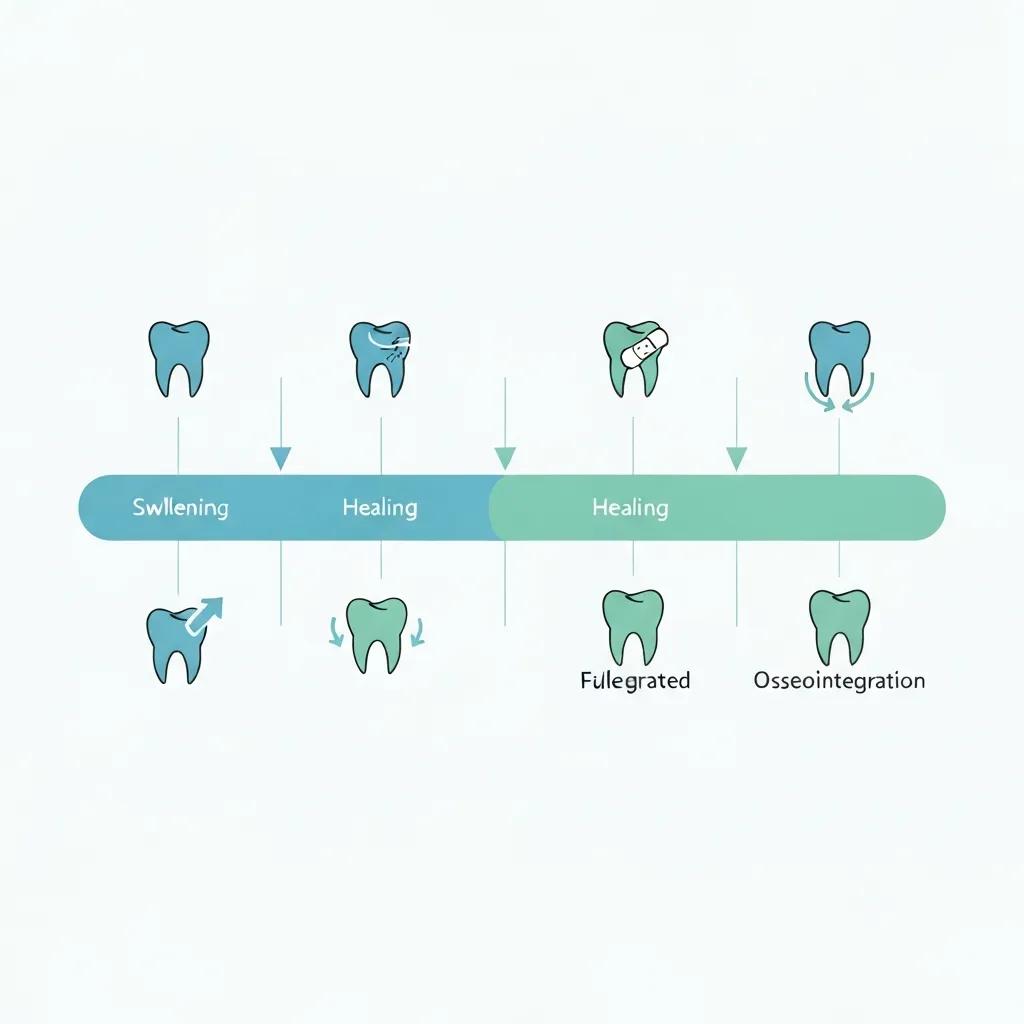
A clear recovery timeline helps patients plan work, travel, and daily activities and sets realistic expectations from immediate post-op care through final prosthetic loading. Recovery after implant surgery unfolds in stages: immediate post-op healing of soft tissues, the first week of inflammation and initial tissue repair, the subsequent weeks where swelling and discomfort decrease while function improves, and the osseointegration phase where bone bonds to the implant over months before the final crown or prosthesis is attached. Each stage has characteristic symptoms and clinician touchpoints, so patients know when routine follow-up is expected versus when to seek urgent attention. The following subsections map what to expect during the first week and explain how osseointegration governs the overall timeline and final restoration.
What Happens During the First Week After Dental Implant Surgery?
The first week centers on managing swelling, light bleeding, and discomfort while protecting the surgical site with gentle hygiene and dietary adjustments; patients should expect controlled swelling that peaks around day two and begins to subside thereafter. Practical steps include using prescribed or recommended analgesics, applying intermittent cold packs in the first 48 hours, following a soft-food diet, avoiding heavy lifting or bending, and performing gentle rinses as instructed to maintain cleanliness without disturbing sutures or the healing cap. Typical follow-up occurs within 1–2 weeks for suture removal or a clinical check, and immediate contact is advised for persistent bleeding, fever, or increasing pain. Clear home-care reduces complications and prepares the site for the longer osseointegration phase that follows.
(Introduction to the recovery stages below before the EAV table.)
Recovery Stage
Common Symptoms
Patient Actions / Clinician Follow-up
Immediate (0–48 hours)
Swelling, mild bleeding, throbbing pain
Rest, ice, soft diet, prescribed analgesics; emergency contact if heavy bleeding
First week (3–7 days)
Peak swelling day 2–3, decreasing pain, sutures present
Gradually reintroduce foods, scheduled clinical review for healing assessment
Osseointegration (3–6 months)
Minimal pain, gradual bone integration, no mobility
Periodic x-ray checks, final prosthetic planning once integration confirmed
What Are the Risks and Complications Associated With Dental Implants?
Dental implants are a standard restorative option, but like any surgical procedure they carry potential complications that are minimized through careful planning, sterile technique, and attentive aftercare. Broad categories of risk include infection at the implant site, peri-implantitis (inflammation around the implant), nerve injury presenting as numbness or paresthesia, sinus complications for upper-jaw placements, and mechanical failure or loss of osseointegration. Prevention starts with proper patient selection, imaging-driven planning, atraumatic surgical technique, and clear post-op protocols; recognizing early signs and acting quickly limits severity and improves outcomes. The next subsections list red-flag symptoms that suggest infection or failure and describe how modern pre-op imaging and guided approaches reduce nerve and sinus risks.
While dental implants boast high success rates, understanding potential complications is key to managing them effectively.
Complications of Dental Implants: Identification and Frequency
The present report demonstrated that complications associated with Bicon dental implants occurred with a 13.9% frequency in this study population. The most commonly observed
Complications of dental implants: identification, frequency, and associated risk factors., 2003
What Signs Indicate Possible Infection or Implant Failure?
Warning signs that require prompt attention include increasing or unrelenting pain after the initial healing window, swelling that worsens rather than improves, discharge of pus from the site, fever, or any new mobility of the implant or restoration. Localized redness and persistent bad taste or odor may indicate bacterial colonization, while systemic symptoms like fever suggest a spreading infection that demands urgent care. If any of these occur, patients should stop self-treating and seek professional evaluation promptly so the clinician can prescribe appropriate antibiotics, perform drainage if necessary, or intervene surgically if implant removal is required. Rapid recognition and early clinic contact significantly improve the odds of resolving infection without losing the implant.
How Can Risks Like Nerve Damage and Sinus Problems Be Minimised?
Risk reduction begins with detailed pre-operative imaging—such as three-dimensional scans—to map vital anatomical landmarks and measure bone volume so implants avoid nerve canals and the sinus floor. Guided surgical planning and the use of surgical guides reduce the chance of misplacement, while conservative techniques and experienced surgical judgment limit the depth and angulation errors that can impinge nerves or sinus cavities. When bone height is insufficient near the sinus, adjunctive procedures like sinus lift or bone grafting are used to create a safe, stable foundation before implant placement. These planning steps, combined with intra-operative caution and appropriate patient selection, substantially lower the incidence of nerve injury and sinus complications.
Complication
Signs to Watch For
Mitigation / Clinic Response
Infection
Worsening pain, pus, fever
Early antibiotics, local debridement, possible implant removal
Peri-implantitis
Bleeding on probing, bone loss on imaging
Non-surgical cleaning, antiseptics, surgical debridement if needed
Nerve injury
Numbness, tingling, altered sensation
Immediate assessment, imaging, conservative monitoring or referral
Sinus issues
Nasal congestion, sinus pressure, fluid
Pre-op sinus assessment, lifts/grafts as needed, ENT collaboration
How Much Do Dental Implants Cost and What Financing Options Are Available?
Cost for dental implants varies by the type of restoration and ancillary procedures required: single-tooth implants, multiple implants, and full-arch reconstructions have distinct pricing drivers based on materials, surgical complexity, and laboratory prosthetic work. Factors that most influence cost include the number of implants, need for bone grafts or sinus lifts, the type of prosthesis (single crown vs implant-supported denture), and local market conditions such as provider expertise and facility fees. Financing options commonly used to make implants affordable include health savings accounts (HSA/FSA), third-party dental financing plans, and in-house payment arrangements offered by clinics; a Free Dental Consult can provide a transparent, personalized estimate and help map financing choices to patient budgets. Below is a comparison table to illustrate typical ranges and common financing approaches.
Implant Type
Typical Cost Range (Local Est.)
Typical Additional Procedures
Single-tooth implant
$3,000–$6,000
Possible bone graft, crown fabrication
Multiple implants
Higher (per implant + prosthesis)
Bone grafts, staged placements
Full-arch implants / implant-supported dentures
$20,000–$50,000 per arch
Multiple implants, grafting, lab-work
Common financing methods include HSA/FSA funds, third-party dental financing plans, and clinic in-house payment arrangements.
Insurance may cover portions of restorative work but often excludes the implant fixture itself; a consult clarifies specific coverage.
A Free Dental Consult helps patients compare options and choose a payment pathway that fits their budget and timeline.
What Is the Success Rate and Longevity of Dental Implants?
Dental implants have strong long-term success when placed and maintained properly, with short- and long-term survival rates often reported in the mid-90s percentile for healthy patients under routine conditions. Success depends on stable osseointegration, sound prosthetic design, and consistent oral hygiene, and implants can function well for decades when these factors align—many studies and clinics report predictable longevity of 15–25 years or more for well-maintained restorations. Maintenance protocols—regular professional check-ups, home hygiene, and avoiding smoking—directly influence lifespan, while bruxism, poor bone quality, and uncontrolled systemic disease can shorten implant life. The following subsections outline expected longevity with proper care and describe modifiable and non-modifiable factors that determine long-term outcomes.
How Long Do Dental Implants Typically Last With Proper Care?
With good oral hygiene and routine dental follow-up, dental implants commonly last 15–25 years or longer, and many patients maintain functional implants for the remainder of life; however, the exact lifespan depends on individual biology and prosthetic wear. Regular maintenance visits allow clinicians to monitor bone levels, check prosthetic fit, and address soft-tissue issues early, which prevents small problems from becoming implant-threatening. The implant fixture itself—titanium integrated into bone—does not decay like a tooth, but the surrounding tissues and prosthetic components can fail without care, so long-term planning includes hygiene, periodic polishing, and occlusal checks. Understanding these maintenance requirements gives patients realistic expectations for implant longevity and helps them commit to the activities that protect their investment.
What Factors Affect the Long-Term Success of Dental Implants?
Long-term success is influenced by systemic health (diabetes control, immune status), lifestyle factors (smoking, oral hygiene), bone quality and volume at the implant site, prosthetic design and material choice, and the skill of the surgical and restorative team. Modifiable factors like smoking cessation, improved glycemic control, and disciplined oral hygiene have measurable positive effects on survival, while non-modifiable anatomical issues are often addressed with preparatory procedures such as bone grafts or sinus lifts. Selecting an integrated treatment plan that accounts for these variables and scheduling regular maintenance visits reduces risk and maximizes the odds of decades-long implant function.
Who Is a Good Candidate for Dental Implants?
Ideal candidates are adults with adequate jawbone volume, healthy gum tissues, and controlled chronic conditions, and who are motivated to maintain oral hygiene and attend periodic follow-ups. Contraindications include active, untreated periodontal disease, certain uncontrolled systemic illnesses, or insufficient bone that cannot be corrected with grafting; however, many patients who initially lack bone or have gum disease can become candidates after preparatory treatments. A comprehensive clinical and radiographic evaluation determines candidacy, and the patient pathway often involves staged procedures to optimize bone and soft-tissue conditions before implant placement. The next subsections examine how common conditions affect candidacy and outline typical preparatory procedures used to restore eligibility.
How Do Conditions Like Bone Loss or Gum Disease Impact Candidacy?
Bone loss reduces the available foundation for an implant and increases the risk of failure if not addressed, while active periodontal disease creates an inflammatory environment that undermines healing and raises infection risk. Diagnostic imaging assesses bone height and density and periodontal evaluation measures active inflammation; when deficits are found, clinicians plan corrective therapy such as periodontal treatment to stabilize gums and bone grafting to rebuild structural support. Successfully managing these conditions before implant placement often converts marginal candidates into good candidates and significantly improves long-term outcomes, so staged treatment planning is a common and effective approach.
What Preliminary Procedures Might Be Needed Before Implant Placement?
Common preparatory procedures include tooth extractions with socket preservation, bone grafting to augment deficient ridges, and sinus lift procedures to increase bone height in the upper jaw; periodontal therapy is performed when gum disease is present. Each procedure has an expected healing timeline—often weeks to months—so overall treatment sequencing balances biological healing with patient priorities. Performing these steps in the correct order and allowing adequate healing time increases the probability of successful osseointegration and a durable prosthetic outcome, which is central to long-term patient satisfaction.
How Does Affordable Dentist Near Me of Dallas Address These Top Concerns?
Affordable Dentist Near Me of Dallas focuses on patient-centered pathways that prioritize clear communication, conservative surgical technique, and accessible pricing to reduce anxiety about pain, recovery, risk, and cost for Dallas residents. The clinic offers advanced imaging and treatment planning to minimize surgical surprises, evidence-based pain-management protocols including local anesthesia and sedation options where appropriate, and transparent discussions about expected timelines and potential adjunctive procedures. For patients concerned about cost and logistics, the clinic promotes a Free Dental Consult as the immediate way to get a personalized treatment map, a candid candidacy assessment, and a clear estimate of fees and financing options. These services are delivered locally at Affordable Dentist Near Me of Dallas, 14902 Preston Road STE 401 Dallas, Texas 75254, where staff guide patients through scheduling, pre-op preparation, and post-op support.
What Advanced Pain Management Techniques Are Used at Our Dallas Clinic?
The clinic combines proven intra-operative anesthetic techniques with tailored post-operative protocols to minimize early discomfort and speed return to normal function; options include effective local anesthesia and, when appropriate, clinical sedation measures to reduce intra-op anxiety and improve patient experience. Post-op pain control emphasizes short courses of recommended analgesics, anti-inflammatory strategies, cold therapy, and clear home-care instructions to reduce swelling and protect the surgical site. Follow-up support includes scheduled check-ins to monitor symptoms and a pathway for urgent access if red-flag signs appear, which reassures patients and enables rapid intervention when needed. This integrated approach reduces the overall burden of pain and places patient comfort at the center of the implant journey.
How Do Free Consultations Help Patients Understand Their Implant Journey?
A Free Dental Consult at Affordable Dentist Near Me of Dallas gives each patient an individualized assessment that covers clinical candidacy, recommended sequencing (including whether bone grafts or sinus lifts are necessary), expected pain-control measures, and an itemized estimate of costs and financing routes. During the consult, clinicians review imaging, explain the recovery timeline including osseointegration phases, and answer questions about risks and long-term maintenance so patients leave with clear expectations rather than uncertainty. This consult is expressly designed to reduce anxiety and empower informed decisions, making it an ideal first step for anyone weighing implants versus alternatives. Scheduling a Free Dental Consult provides personalized answers and a treatment roadmap tailored to the patient’s goals and circumstances.
What Are Common Patient Questions About Dental Implants?
Patients commonly ask how implants compare to bridges and dentures, what benefits implants deliver beyond aesthetics, and which practical steps shorten recovery and reduce pain. Quick, direct answers help users scan for the exact information they need and support featured-snippet-style retrieval for search queries. The subsections that follow compare implants to other restorations and list the core benefits of choosing implants, with clear pros and cons to inform decision-making.
How Do Dental Implants Compare to Bridges and Dentures?
Compared with bridges and removable dentures, implants offer superior chewing efficiency, preserve adjacent teeth by avoiding preparations, and maintain jawbone volume through functional loading—advantages that often justify higher upfront investment. Bridges rely on neighboring teeth for support and can jeopardize those teeth over time, while dentures are less stable and can accelerate bone loss in the long term; implants restore function more like a natural tooth and typically require less frequent replacement. Maintenance differs: implants need periodontal-style care and periodic professional checks, bridges may need eventual replacement, and dentures require ongoing adjustments and eventual relining or replacement. For many patients, implants represent a long-term investment in oral health and quality of life compared to conventional options.
What Are the Benefits of Choosing Dental Implants?
Dental implants restore chewing function and facial support, preserve jawbone by transmitting functional forces into bone, protect adjacent natural teeth from preparation, and often provide the most natural-feeling and longest-lasting solution for tooth replacement. Psychologically and socially, stable implants improve confidence when speaking and eating and reduce the limitations associated with removable prostheses. Clinically, implants reduce the need for repeated prosthetic replacements and help maintain oral function into later decades of life. These benefits, combined with predictable success rates and a clear maintenance plan, make implants an attractive option for appropriate candidates.
Improved Chewing Efficiency: Implants restore near-natural bite force and function.
Bone Preservation: Functional loading preserves jawbone and facial structure.
Longevity: Well-maintained implants can last decades with routine care.
These advantages explain why many patients select implants for durable, health-preserving tooth replacement and why a Free Dental Consult is recommended to evaluate whether implants are the right choice.
Affordable Dentist Near Me of Dallas offers a Free Dental Consult to help answer these common questions and to provide individualized planning; scheduling that consult connects you with a clinician who can explain candidacy, pain control options, timelines, and realistic cost breakdowns specific to your case.