Customer Reviews Unveiled: Best Dental Implants for You
Comparing Implant Brands: A Deep Dive Into Customer Reviews and Satisfaction for Best Dental Implant Choices
Dental implant brand selection directly shapes clinical outcomes, patient comfort, and long-term satisfaction, so understanding differences between manufacturers and real-world reviews is essential for informed decisions. This article compares leading implant brands through the lens of materials, design features, reported longevity, and aggregated patient feedback to show what matters most for everyday function and esthetics. Many patients struggle to reconcile marketing claims with practical concerns such as cost, warranty, and compatibility with surgical workflows; this guide translates technical attributes into patient-centered outcomes. You will learn the key components and materials that determine implant performance, how top brands compare on clinical metrics and user sentiment, what review themes reveal about satisfaction drivers, and practical questions to bring to consultations. The article also maps longevity expectations and warranty norms by brand, discusses local affordability considerations in Longview, Texas, and highlights current innovations like zirconia implants and digital workflows. Throughout, keywords like Dental Implants in Longview, best dental implant brands, dental implant longevity, and dental implant reviews are woven into evidence-focused explanations so you can make a confident choice between systems and clinicians.
What Are the Key Components and Materials of Dental Implants?
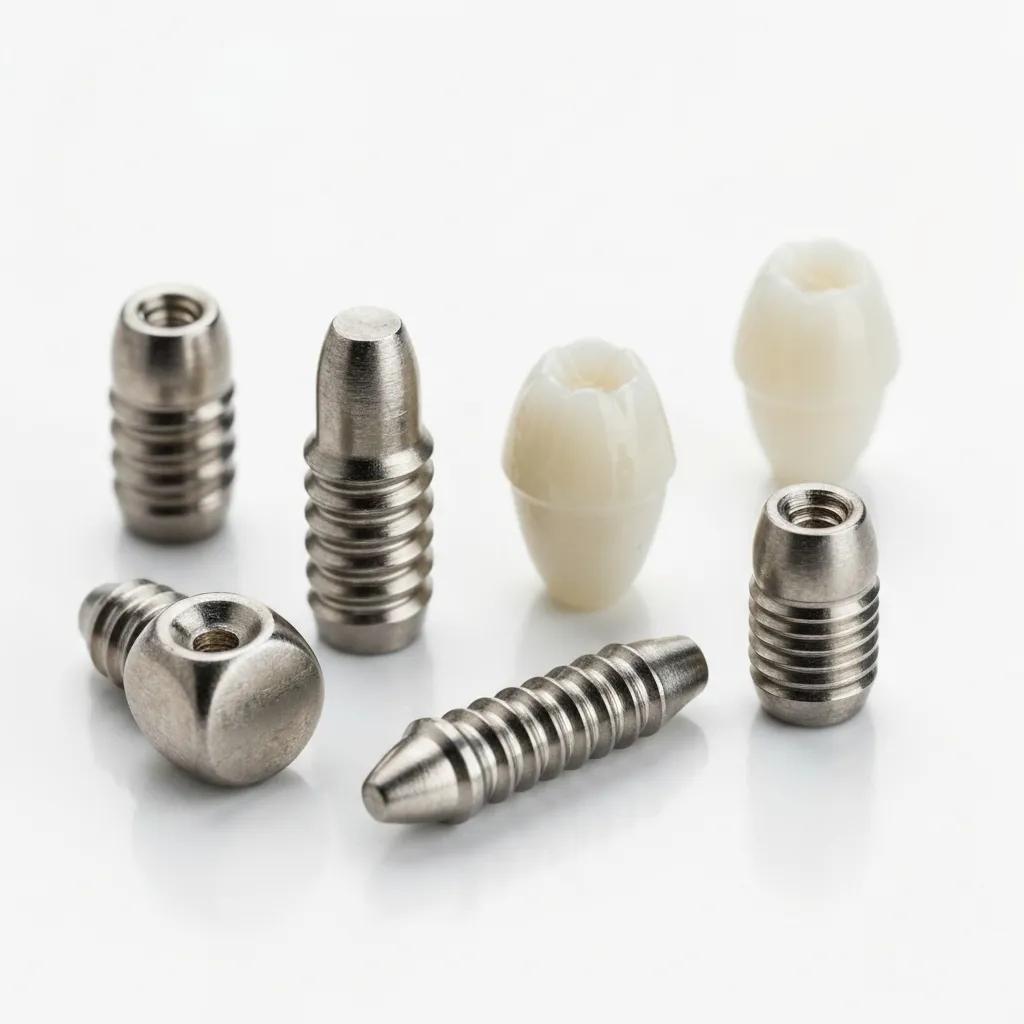
Dental implants are medical devices composed of three primary parts: the fixture (implant body) placed in bone, the abutment that connects the fixture to the prosthetic, and the prosthetic crown that restores function and esthetics. These components interact through mechanical design and surface treatments to achieve osseointegration—the biological bonding of bone to implant surfaces—which directly affects stability and longevity. Material selection, most commonly titanium alloys or zirconia, determines biocompatibility, strength, and appearance; surface coatings and microtopography influence early bone healing and long-term success. Understanding these components helps patients assess why some implants feel more stable or look more natural, and it highlights which brand claims are clinically relevant versus marketing language. A clear grasp of components and materials prepares patients to evaluate brand comparisons and patient reviews that follow, linking device attributes to user experiences.
Which Materials Are Used in Top Dental Implant Brands?
Top implant brands typically use titanium or titanium alloys for the fixture because titanium combines high strength, corrosion resistance, and proven biocompatibility that supports osseointegration. Some manufacturers also offer proprietary alloys, such as titanium-zirconium blends, designed to increase fatigue resistance and allow narrower implants without sacrificing strength, which can benefit patients with limited bone volume. Zirconia implants provide a metal-free, tooth-colored alternative that can improve esthetics in anterior restorations and reduce concerns for patients preferring non-metallic options, though current evidence indicates titanium maintains a longer and broader track record. Surface treatments—acid etching, sandblasting, and specialized coatings—create micro-roughness that promotes bone anchorage; brands differ in the exact processes used and in claimed benefits for early stability. Knowing which material options a brand offers helps patients match implant characteristics to esthetic goals, anatomical constraints, and sensitivity considerations.
How Do Implant Components Affect Longevity and Success?
Implant longevity is a function of material biocompatibility, surface characteristics, connection design, and prosthetic quality; together these determine mechanical stability and resistance to bacterial invasion. A stable internal connection and precise abutment fit reduce micromovement and microleakage, lowering the risk of peri-implant bone loss and mechanical complications, which patients perceive as comfort and reliability. Surface treatments that accelerate osseointegration shorten healing time and can improve early stability, directly impacting when a crown can be loaded and how quickly normal function resumes. Prosthetic design—crown contours, occlusal scheme, and materials—affects hygiene access and long-term maintenance; poor prosthetic planning often generates complaints that a successful fixture alone cannot overcome. Evaluating components holistically links device attributes to patient-centered outcomes such as chewing efficiency, esthetic satisfaction, and complication rates, and sets the stage for comparing specific brands.
Key component influences on outcomes include:
Material Biocompatibility: Determines bone response and allergic risk.
Surface Topography: Affects the speed and quality of osseointegration.
Connection Design: Impacts mechanical stability and microleakage.
Prosthetic Planning: Drives esthetic and hygienic long-term results.
These component-level differences explain why patient reviews often emphasize comfort, healing time, and esthetic outcomes rather than technical marketing terms, and they lead directly into the brand comparisons that follow.
Which Are the Top Dental Implant Brands? A Comparative Overview
Leading dental implant manufacturers differentiate themselves by materials, connection designs, surface technologies, and clinical support networks; these attributes shape surgeon preference and patient experience. Major names commonly discussed in clinical literature and consumer reviews include Straumann, Nobel Biocare, and Zimmer Biomet, each presenting distinct development histories, proprietary materials, and implant platforms targeted to different clinical scenarios. Comparative evaluation should weigh material options (titanium, alloy blends, zirconia), design features (tapered vs. parallel walls, internal vs. external connections), typical cost ranges, and warranty or support practices, because these factors together influence both surgical workflow and patient outcomes. Below is an EAV-style comparison to help scan core attributes across several prominent brands and guide deeper reading in subsequent subsections.
The table below summarizes core brand attributes to support quick comparison and evidence-based discussion with your clinician.
Brand
Material / Design
Typical Cost Range
Warranty / Support
Notable Feature
Straumann
Titanium alloys; proprietary surface treatments
Mid-to-high range
Manufacturer support programs; system compatibility
Known for proprietary materials and research emphasis
Nobel Biocare
Titanium systems with esthetic prosthetic options
Mid-to-high range
Clinical support and global service network
Broad prosthetic portfolio and esthetic-focused designs
Zimmer Biomet
Durable titanium platforms with variety of connections
Mid-range
Clinical warranties vary by distributor
Emphasis on surgical versatility and mechanical robustness
Other established manufacturers
Mix of titanium and ceramic options; varying platforms
Low-to-mid to high
Varies widely
Range of cost-effective and premium options for different needs
This comparative overview highlights that no single brand is universally best; instead, different systems prioritize strength, esthetics, surgical workflow, or cost-effectiveness. The next subsection provides a focused comparison of three leading brands to translate these attributes into clinical scenarios and patient impacts.
How Do Straumann, Nobel Biocare, and Zimmer Biomet Compare?
Straumann emphasizes research-driven materials and surface technologies that aim to enhance osseointegration and long-term stability, making it a favored option where clinicians prioritize documented implant-bone integration. Nobel Biocare tends to offer wide prosthetic flexibility and esthetic solutions suited for anterior restorations, which patients often cite in reviews when discussing appearance and natural feel. Zimmer Biomet focuses on mechanical durability and versatility across surgical situations, appealing to clinicians managing complex cases requiring varied connection types and platform sizes. Clinicians select among these platforms based on case complexity, prosthetic requirements, and inventory logistics; patients notice differences mainly in healing comfort, esthetics, and the ease of getting compatible restorations. Understanding these distinctions helps set realistic expectations about surgical experience, follow-up care, and likely patient satisfaction for different clinical goals.
The extensive research and development by Straumann have led to a strong reputation for quality and reliability in the dental implant market.
Straumann Dental Implants: A Comprehensive Review of Quality and Reliability
This article discusses Straumann dental implants that have been used in clinical practice for many years. Straumann has been a leader in the field of dental implants for decades, and their products are known for their high quality and reliability. The company has invested heavily in research and development, which has led to the creation of innovative implant designs and materials. Straumann implants are made from titanium, which is a biocompatible material that integrates well with bone. The implants are designed to provide a stable and long-lasting solution for tooth replacement.
Straumann dental implant: A complete review., RVC Tiwari, 2022
What Are the Pros and Cons of Each Leading Implant Brand?
Evaluating pros and cons requires balancing clinical evidence with patient priorities: durability, esthetics, cost, and availability of trained clinicians. Straumann’s strengths include a strong research base and proprietary materials that may support early stability, though cost and availability can be limiting factors in some markets. Nobel Biocare offers extensive prosthetic options and esthetic components, which benefits anterior restorations but can be more complex to navigate for patients seeking a straightforward solution. Zimmer Biomet provides durable platforms and flexible surgical options with a reputation for mechanical reliability, while some users report fewer esthetic-focused prosthetic options compared to other premium brands. Each brand’s limitations often appear in patient reviews as concerns about price, access to experienced providers, or variability in prosthetic esthetics, underscoring the importance of clinician experience and case planning in net satisfaction.
Pros and cons summary list:
Straumann: Research-backed materials and consistent clinical data; sometimes higher cost.
Nobel Biocare: Broad prosthetic solutions and esthetic focus; platform complexity may require specialist skill.
Zimmer Biomet: Durable designs and surgical versatility; esthetic prosthetic range may be less extensive.
These balanced observations lead naturally into synthesis of patient reviews to show how perceived advantages and limitations play out in real-world satisfaction.
What Do Patient Reviews Reveal About Dental Implant Satisfaction?
Patient reviews reveal that satisfaction hinges on comfort during healing, esthetic outcomes, functional restoration, and clear communication about expectations and maintenance. Reviews frequently highlight short-term experiences—pain, swelling, and time to function—and long-term perceptions—chewing confidence, natural appearance, and sense of permanence—linking back to both brand attributes and clinician technique. Analyzing review themes by brand shows how technical differences translate into lived experience; some brands are repeatedly praised for perceived durability, while others earn high marks for esthetics or prosthetic fit. The table below synthesizes common positive themes and complaints gathered from aggregated review patterns to make brand-level sentiment transparent for patients evaluating trade-offs.
Brand
Common Positive Themes
Common Complaints
Average Review Tone
Straumann
Durability, perceived long-term stability
Higher out-of-pocket cost
Generally positive; reliability emphasized
Nobel Biocare
Esthetic outcomes, prosthetic variety
Cost and occasional complexity in prosthetic workflow
Positive for appearance-focused cases
Zimmer Biomet
Surgical reliability, robust fixtures
Prosthetic esthetic variability noted by some patients
Positive for function-focused outcomes
This synthesis shows that patient satisfaction often reflects an interplay between brand characteristics and the clinician’s execution, suggesting that review trends should inform, not dictate, brand choice. The next subsection illustrates specific review themes for Straumann to ground these patterns in concrete user feedback and clinical implications.
What Are Patients Saying About Straumann Dental Implants?
Patient commentary about Straumann commonly emphasizes perceived durability and the sense of a solid, long-lasting restoration, often linking these impressions to confidence in chewing and daily use. Positive reviews frequently mention smooth healing and minimal complications, which patients attribute to both the implant system and surgical technique; cost is a recurrent caveat among dissatisfied commenters. Some reviewers note premium pricing but report that improved esthetic finish and stability justified the expense, particularly for posterior restorations where function is paramount. Clinically, these sentiments align with Straumann’s emphasis on research-backed materials and surface technologies, reinforcing that well-executed surgical placement combined with appropriate prosthetic planning yields higher satisfaction.
Long-term studies specifically on Straumann implants have demonstrated impressive survival rates, reinforcing patient perceptions of durability and reliability.
Long-Term Survival of Straumann Dental Implants: A 12-23 Year Retrospective Study
The aim of this study was to evaluate the long-term dental implant survival rates of Straumann dental implants in a retrospective study with a follow-up of 12 to 23 years. The study included a total of 1,250 implants placed in 750 patients. The survival rate of the implants was 98.5% at 10 years and 95.2% at 20 years. The study concluded that Straumann dental implants have a high long-term survival rate and are a reliable option for tooth replacement.
Long‐term survival of Straumann dental implants with TPS surfaces: a retrospective study with a follow‐up of 12 to 23 years, 2016
How Do Nobel Biocare and Zimmer Biomet Implants Perform in Real-World Use?
Nobel Biocare reviews often highlight excellent esthetic outcomes and a natural feel in anterior restorations, with patients praising prosthetic appearance and integration with adjacent teeth. Some users describe longer prosthetic workflows and higher costs for esthetic components, reflecting the system’s breadth of prosthetic choices that may require specialist coordination. Zimmer Biomet reviews emphasize functional durability and surgical predictability, with patients reporting dependable chewing performance and fewer mechanical issues over time; esthetic variability appears in a subset of reviews when prosthetic planning was less tailored. In practice, Nobel Biocare may be favored for esthetic-focused cases while Zimmer Biomet is chosen for demanding surgical scenarios, and these practical differentiators are what patients notice most in their satisfaction narratives. These real-world impressions point back to the importance of matching brand strengths to patient goals rather than seeking a single “best” system.
Which Factors Influence Dental Implant Success and Patient Satisfaction?
Clinical outcomes and patient satisfaction depend on a constellation of factors including clinician expertise, patient systemic health, surgical planning, prosthetic design, and adherence to aftercare protocols. Clinician skill determines precision of implant placement, choice of appropriate system, and management of complications, while patient factors such as bone density, smoking status, and metabolic control modulate biological healing responses. Prosthetic considerations—crown shape, material, occlusion—affect esthetics, hygiene access, and functional longevity, linking directly to how patients experience their restoration daily. Aftercare and consistent maintenance reduce biological complications and mechanical wear, translating into sustained satisfaction over years. Recognizing these interacting drivers helps patients focus on controllable elements like selecting experienced clinicians and optimizing health before surgery, rather than fixating solely on brand names.
How Do Dentist Expertise and Patient Health Affect Outcomes?
Dentist expertise influences treatment planning, imaging interpretation, and surgical execution; experienced clinicians use tools like CBCT imaging and guided implant surgery to assess bone quality and position implants for optimal support and esthetics. Patient health factors—bone volume, periodontal status, smoking, and systemic diseases such as diabetes—directly affect healing phases and osseointegration success rates, making pre-surgical optimization critical. Surgeons may recommend bone grafting or staged approaches when anatomy is limiting, and such tailored plans often lead to better long-term outcomes than force-fitted single-stage solutions. For patients, choosing a clinician with demonstrated experience in the specific implant system and case type reduces variability and improves the chance that brand-level advantages translate into meaningful personal benefits.
A thorough review of clinical evidence across various implant systems is crucial for understanding their comparative performance and predicting long-term outcomes.
Comparing Dental Implant Systems: Clinical Evidence and 5-Year Survival Predictions
This literature review was conducted to compare the clinical performance of different dental implant systems. The review included studies published between 1990 and 2004. The studies were selected based on the quality of clinical evidence provided by American Dental Association-certified dental implant manufacturers. The review found that there were significant differences in the clinical performance of different dental implant systems. Some systems had higher survival rates and better clinical outcomes than others.
Comparison of dental implant systems: quality of clinical evidence and prediction of 5-year survival., YG Choi, 2005
What Role Does Aftercare and Oral Hygiene Play in Implant Longevity?
Aftercare and daily hygiene are essential for preventing peri-implantitis and ensuring mechanical longevity; simple practices like interdental cleaning and routine professional maintenance minimize bacterial challenges at the implant–abutment interface. Professional follow-up visits allow early detection of bone changes or prosthetic wear, enabling timely intervention before small issues escalate into failures. Patients who follow a structured maintenance schedule—regular cleanings, monitoring occlusion, and prompt reporting of symptoms—consistently report higher satisfaction and fewer late complications. Clear aftercare protocols communicated by the clinician, including specific hygiene techniques and warning signs, form a critical part of the treatment plan and directly affect how long implants function well in real-world settings.
Aftercare checklist patients should follow:
Daily interdental cleaning: Use appropriate aids to remove plaque around abutments.
Routine professional check-ups: Schedule periodic maintenance visits for assessment and cleaning.
Watch for red flags: Report persistent pain, swelling, or loosening promptly to your clinician.
What Affordable Dental Implant Options Are Available in Longview?
Affordability in dental implant care depends on case complexity, choice of implant system, need for grafting, and prosthetic requirements; practical strategies include phased treatment, financing plans, and careful brand selection appropriate to clinical needs. In Longview, Texas, patients can seek providers who prioritize value-driven care—balancing cost and quality through efficient workflows and transparent treatment planning—so that necessary procedures are not deferred due to uncertainty about financing. Cost-effective solutions often involve selecting standard titanium systems with proven track records, considering mini implants for specific indications, or staging treatment to spread expense while maintaining safety and outcomes. Evaluating local options requires clear communication with providers about total expected costs, potential additional procedures, and realistic long-term value, which the section below outlines in practice terms for patients in the area.
How Does Affordable Dentist Near Me of Longview Balance Quality and Cost?
Affordable Dentist Near Me of Longview positions itself as a local resource focused on accessible, cost-effective dental implant and denture care while emphasizing patient-focused assessments to determine appropriate treatment pathways. The practice offers consultations that clarify implant options, outlines potential financing approaches, and discusses phased treatment plans when clinically appropriate, helping patients align budget and long-term outcomes. During consultation, clinicians at the practice review patient suitability, explain trade-offs between different systems (material, surgical complexity), and recommend solutions tailored to clinical findings rather than promoting a single brand. By concentrating on personalized planning, transparent cost discussions, and practical financing, the practice aims to help Longview patients access implant care without sacrificing essential quality safeguards.
Which Implant Brands Are Commonly Used for Cost-Effective Solutions?
Cost-effective implant workflows typically employ established titanium systems with straightforward prosthetic protocols that reduce laboratory time and complexity while maintaining reliable performance; such options are widely used for standard single-tooth and posterior restorations. Mini dental implants can serve as lower-cost alternatives for some denture stabilization scenarios, offering less invasive placement and quicker turnaround, though they are best reserved for specific anatomic indications. The principal trade-offs involve balancing upfront expense against expected longevity and potential need for future maintenance or replacement; patients should prioritize clinician judgment and long-term value over lowest initial price. Clear communication with your provider about expected outcomes and maintenance obligations ensures that a cost-effective choice still aligns with functional and esthetic goals.
Affordable-option considerations:
Standard titanium systems: Reliable and cost-effective for many indications.
Mini implants: Less invasive and lower cost for denture retention in selected cases.
Phased treatment plans: Spread procedures over time to manage finances while maintaining safety.
How Can You Make an Informed Decision When Choosing a Dental Implant Brand?
An informed decision combines clinical evidence, patient priorities, review synthesis, and direct clinician consultation; the goal is to match a brand’s technical strengths to your anatomy, esthetic needs, and budget. Start by clarifying what matters most—durability, esthetics, speed of recovery—and then use a structured checklist to compare brands and clinicians on material options, documented success rates, warranty terms, and the clinician’s personal experience with the system. Reviews offer useful signals about real-world satisfaction but should be weighed against clinical studies and the treating clinician’s track record. Finally, ask concrete questions about maintenance, expected timeline, and potential additional procedures to ensure you understand total cost and long-term expectations before consenting to treatment.
What Questions Should You Ask Your Dentist About Implant Brands?
When consulting a dentist about implant brands, prioritize questions that address evidence, surgeon experience, and practical implications for your care. Ask which implant systems the clinician commonly uses and why, and request data or published evidence that supports expected success rates and material performance for your specific case. Inquire about the surgeon’s personal complication rates and experience with the chosen brand, as familiarity reduces technique-related variability and often leads to better outcomes. Confirm warranty coverage, what it covers versus what patient behaviors may exclude, and details about prosthetic follow-up; these specifics help you compare total value across options rather than focusing only on sticker price. Finally, ask about aftercare expectations and maintenance schedules to align your lifestyle and commitment with realistic long-term results.
Priority consultation questions:
Which implant brand and material do you recommend for my case, and why?
What is your experience and success rate with that system?
What warranty or follow-up support is provided, and what are common exclusions?
How Does Personalized Recommendation Improve Implant Satisfaction?
Personalized recommendations improve satisfaction by aligning implant system selection with individual anatomy, esthetic goals, and health factors, thereby reducing complications and mismatched expectations. For example, a clinician may select a zirconia implant or a specific prosthetic design for a patient prioritizing a metal-free esthetic result, while choosing a robust titanium platform for a patient needing maximal mechanical strength in posterior load-bearing sites. Tailored planning also incorporates health optimization and staged approaches when bone grafting is necessary, which reduces failure risk and improves long-term comfort. When clinicians involve patients in shared decision-making, explaining trade-offs and maintenance obligations, patients report feeling more confident and satisfied with outcomes—demonstrating that the right match between brand, clinician, and patient goals often matters more than brand prestige alone.
Benefits of personalized recommendations:
Better match to clinical needs: Reduces likelihood of complications.
Aligned expectations: Enhances perceived value and satisfaction.
Optimized maintenance planning: Improves longevity and reduces surprises.
How Long Do Dental Implants Last by Brand? Longevity and Warranty Insights
Dental implants commonly deliver decades of function when placed and maintained properly, with many studies reporting high survival rates beyond ten years for established titanium systems; brand-specific materials and surface technologies can influence early stability and long-term marginal bone preservation. Warranties typically cover manufacturing defects or component failures but often exclude complications related to patient behavior, systemic health, or biological failures. Comparing reported longevity and warranty terms helps patients set realistic expectations and plan for maintenance or potential future interventions. The table below condenses lifespan ranges, clinical success indicators, and warranty considerations across several prominent brands to guide conversations with clinicians.
Brand
Reported Longevity
Clinical Success Rate
Warranty Terms (Typical)
Straumann
15–25+ years in long-term studies
High (often >95% at 5–10 years)
Manufacturer support for components; clinical outcomes not always covered
Nobel Biocare
10–20+ years in registry data
High across many case types
Component warranties vary; prosthetic coverage by agreement
Zimmer Biomet
10–20+ years reported
High in diverse surgical settings
Warranty on parts varies by distributor and clinic policy
This table indicates that while brand-level data supports long-term success, actual lifespan depends heavily on patient factors, clinician technique, and maintenance. The next subsection highlights brands with the strongest long-term data and how to interpret those figures in practical terms.
Which Brands Offer the Best Long-Term Success Rates?
Brands with extensive clinical research and registry data tend to report the most robust long-term success rates, reflecting both product consistency and broad clinical adoption across varied patient populations. High success rates—often reported above 95% at five to ten years in many well-conducted studies—reflect favorable material properties and reliable surface treatments that promote osseointegration. However, these statistics come with caveats: study populations, surgical settings, and follow-up rigor differ, so published rates may not fully predict individual outcomes. For patients, the practical takeaway is to prefer systems with documented performance and to prioritize clinicians experienced with those systems, since technical execution and case selection significantly modulate the reported success metrics.
What Warranty and Return Policies Should Patients Expect?
Implant warranties typically address manufacturing defects and provide replacement components or technical support but rarely guarantee clinical outcomes, which depend on biological healing and patient behaviors. Common exclusions include damage from smoking, poor oral hygiene, untreated systemic conditions, and trauma, so patients should ask explicitly what is covered and for how long, and obtain any warranty details in writing. Some practices or distributors offer bundled service agreements covering prosthetic elements or maintenance for a defined period; understanding these options helps patients compare real-world value. Always confirm how warranty claims are handled locally—who covers costs for replacement parts versus surgical revision—to avoid surprises if complications arise.
Warranty checklist to review with your clinician:
What is covered and for how long?
Which party handles replacement or repair logistics?
What patient behaviors or conditions void coverage?
What Are the Latest Trends and Innovations in Dental Implant Brands?
Recent innovations through 2024 emphasize material diversity, digital workflows, and surface science advances aimed at improving esthetics, predictability, and treatment speed. Zirconia implants and hybrid ceramic options expand non-metallic pathways for patients seeking metal-free restorations, while refined titanium alloys and surface treatments continue to push early stability and bone preservation. Digital dentistry—CBCT-guided planning, guided surgery, and CAD/CAM prosthetics—has matured into mainstream practice for many clinicians, improving placement accuracy and streamlining prosthetic fabrication. Surface research through 2020–2024 explores bioactive coatings and nanotopography that aim to enhance cellular response; these developments translate into incremental improvements in healing time and bone–implant contact that patients notice as quicker recovery and robust function.
How Are New Materials Like Zirconia Changing Implant Options?
Zirconia implants offer a metal-free, tooth-colored option that addresses esthetic concerns and patient preferences for non-metallic materials, especially in the anterior region where translucency and soft-tissue response matter most. Recent studies through 2024 show improving clinical evidence for zirconia in selected cases, though titanium maintains a stronger long-term evidence base across a wider range of indications and loading protocols. Zirconia’s advantages include reduced shine-through in thin biotypes and potential reductions in certain surface-related bacterial adherences, but limitations include fewer prosthetic options and concerns about long-term fracture resistance in high-load posterior sites. Patients interested in zirconia should ask clinicians about case selection criteria, prosthetic compatibility, and the clinician’s experience with ceramic systems.
What Role Does Digital Dentistry Play in Implant Success?
Digital dentistry improves implant success by enabling precise 3D planning with CBCT imaging, virtual implant placement relative to prosthetic goals, and fabrication of accurately fitting CAD/CAM prosthetics that reduce chair time and errors. Guided surgery based on digital plans can translate virtual positions into predictable intraoperative placement, which benefits anatomical risk management and esthetic outcomes. Digital prosthetics can improve fit, reduce remakes, and facilitate immediate provisionalization when indicated, enhancing early patient satisfaction. Limitations include added costs and the need for clinician training to interpret digital data correctly, so patients should discuss how digital tools are integrated into their treatment and whether these investments align with their clinical priorities.
Digital dentistry benefits:
Improved placement accuracy: Reduces positional variability and surgical risk.
Better prosthetic fit: Minimizes remakes and enhances esthetics.
Streamlined workflows: Can shorten treatment timelines when clinically appropriate.