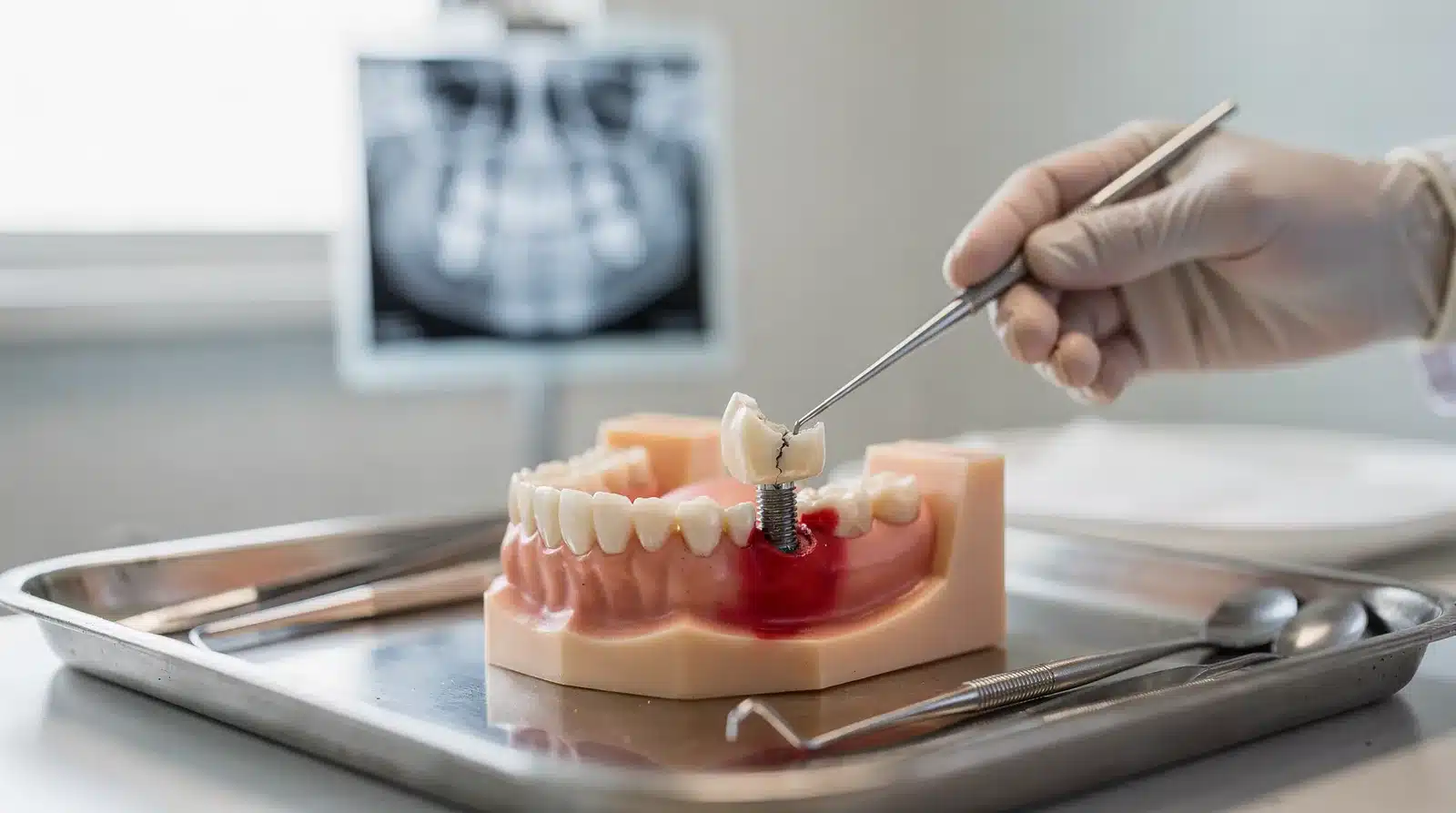
Dental implant failure stems from peri-implantitis, poor bone quality, and surgical trauma. About 5 to 10 percent of implants fail. Medical conditions, lifestyle choices, and clinician experience also contribute. Proper planning and care prevent most failures.
Key Takeaways
About 5 to 10 percent of dental implants fail, either shortly after placement or months to years later.
Peri-implantitis, a destructive bacterial infection, stands as the most common trigger for late implant failure.
Insufficient bone density is a primary cause of early failure, preventing successful osseointegration.
Uncontrolled diabetes impairs blood flow and the body’s capacity to repair minor bone injuries around the implant.
What is dental implant failure?
Dental implant failure occurs when an implant does not integrate properly with the jawbone or loses that integration over time. The condition represents a significant clinical barrier despite implants and their supported restorations demonstrating strong long-term survival percentages, according to a review published in Cureus. About 5 to 10 percent of dental implants fail, either shortly after the procedure or months to years later.
Most implant failures are preventable with proper planning, surgical technique, and ongoing care. Many factors contribute to implant problems, from medical conditions and lifestyle choices to the experience of the surgeon performing the placement.
What is the difference between early and late implant failure?
Early failure happens shortly after placement, before the implant fully bonds with the bone. Late failure occurs months or years later, after the implant has already functioned successfully. Understanding this distinction helps patients and clinicians target prevention strategies at each stage.
Can a failed dental implant be saved?
A failed implant that has lost integration with the jawbone typically requires removal. The underlying cause determines whether a replacement implant can be placed after the site heals. Dental implant failure causes range from infection to insufficient bone density, and addressing the specific cause is essential before attempting another procedure.
What causes early implant failure?
Early implant failure occurs when a dental implant fails to integrate with the jawbone within the first few months after placement. This failure of osseointegration, the biological process where living bone fuses to the implant surface, prevents the restoration from ever becoming stable.
Failed osseointegration accounts for most early dental implant failure causes. The healing process is complex and vulnerable to disruption from both local and systemic factors. When the bone does not grow tightly around the implant, the fixture remains loose and cannot support a crown or bridge.
What role does bone density play in early implant failure?
Insufficient bone density is a primary cause of early failure. Without adequate bone volume and quality at the surgical site, the implant lacks the structural support needed for integration. Screening for bone density before surgery keeps long-term success in the 95 to 98% range, according to research funded by the National Institute of Dental and Craniofacial Research.
Can surgical factors cause an implant to fail early?
Surgical trauma, improper positioning, and early infections all prevent successful osseointegration. An implant placed at an incorrect angle or depth experiences uneven force distribution during healing. Early post-operative infection introduces bacteria to the surgical site before the soft tissue seal forms, directly compromising the integration process. Pre-existing health conditions, smoking, and oral hygiene habits all contribute to whether healing proceeds normally in those critical first months.
What causes late implant failure?
Late implant failure occurs months or years after successful osseointegration. Peri-implantitis, a destructive bacterial infection, stands as the most common trigger for these delayed losses.
Peri-implantitis develops when bacteria colonize the tissue surrounding an implant. The infection provokes inflammation that progressively destroys the supporting bone. Without intervention, the implant loses its foundation and mobility sets in. Research funded by the National Institute of Dental and Craniofacial Research identifies peri-implantitis as the leading cause among the five primary dental implant failure causes.
Mechanical overload represents a second pathway to late failure. Excessive biting forces, often from teeth grinding or an ill-fitting restoration, transmit stress directly to the implant-bone interface. Over time, this occlusal overloading causes microfractures in the surrounding bone or fractures the implant fixture itself. The biological healing that initially secured the implant cannot withstand sustained, unmanaged pressure.
Systemic health shifts also undermine long-term stability. Smoking constricts blood vessels and depresses immune function, creating conditions where low-grade infection persists unchecked. These factors do not cause failure directly. They erode the implant’s ability to resist the daily bacterial and mechanical challenges every implant faces.
How does peri-implantitis destroy bone around an implant?
The infection triggers a chronic inflammatory response. The body releases enzymes and inflammatory mediators intended to fight bacteria. These same substances break down bone tissue. As bone recedes, a pocket forms between the implant and gum, sheltering more bacteria and accelerating the destructive cycle.
Can a failed late-stage implant be replaced?
Replacement depends on the remaining bone volume and infection control. A clinician first removes the failing implant and debrides the infected site thoroughly. After a healing period of several months, bone grafting may rebuild lost structure. A new implant can then be placed once the site shows healthy, infection-free bone.
What are the warning signs of implant failure?
Recognizing dental implant failure causes early hinges on spotting specific physical symptoms. Persistent pain or throbbing discomfort around the implant site signals a problem that demands immediate professional evaluation. Implant mobility, where the post feels loose or shifts during chewing, represents another critical warning sign.
Patients who identify these symptoms quickly gain a meaningful advantage. Early detection creates a window for timely intervention, often allowing a dentist to address the issue before the implant is lost. Screening for complications at the first sign of trouble preserves the high success rates that modern implant dentistry achieves.
What does an infected dental implant feel like?
An infected implant typically produces swelling and bleeding of the surrounding gum tissue. The area may feel tender to the touch, and patients often notice a dull, persistent ache rather than sharp pain. Receding gums that expose part of the implant post frequently accompany these sensations, indicating possible peri-implantitis, a destructive inflammatory condition affecting the soft and hard tissues around the implant.
How can you tell if your body is rejecting a dental implant?
Rejection manifests through a combination of mobility and tissue changes. The implant post becomes progressively looser as the bone fails to integrate, while the gums may appear red, swollen, or pull away from the restoration. Unlike normal healing discomfort, these symptoms worsen over time rather than improving. Recognizing these signs and seeking prompt care significantly improves the chances of saving the implant and protecting the long-term investment in oral health.
How can you prevent dental implant failure?
Preventing dental implant failure requires consistent oral hygiene, regular professional monitoring, and control of systemic health risks. Patients who address these three areas before and after surgery reduce their chance of losing an implant to infection or instability.
Dental implant failure causes fall into two broad categories: early failures tied to surgical placement and healing, and late failures driven by infection or overload. Prevention targets both.
What daily habits protect a dental implant?
Meticulous oral hygiene forms the first line of defense against peri-implantitis, the inflammatory condition that destroys bone around an implant. Patients benefit from tailored cleaning tools designed for implant surfaces, including interdental brushes and low-abrasive pastes. Consistent plaque removal prevents bacterial buildup from reaching the implant threads.
How often should a patient see a dentist after implant placement?
Routine dental follow-ups allow early detection of problems before bone loss becomes irreversible. Professional maintenance visits include probing around the implant, checking occlusion, and evaluating soft tissue health. Knowing what to watch for between appointments improves long-term outcomes.
Which health conditions increase implant risk?
Managing underlying systemic risk factors is critical. Uncontrolled diabetes impairs healing and increases infection susceptibility. Smoking restricts blood flow to the surgical site. Patients who control these conditions before surgery and maintain control afterward position their implants for long-term success.
FAQ
Can a failed dental implant be saved?
A failed implant that has lost integration with the jawbone typically requires removal, and the underlying cause determines whether a replacement implant can be placed after the site heals.
Conclusion
Understanding these causes gives patients a clear path forward. Controlling infection through daily hygiene, managing bite forces with a night guard, and stabilizing systemic health conditions like diabetes or smoking habits directly address the primary threats to implant longevity. Acting on these factors before and after placement protects the investment in oral health.