Are Dental Bridges Right for You? A Clear Guide to Types, Costs, and Aftercare
Missing teeth affect more than your smile—they can change how you eat, speak, and feel. Dental bridges are a common, reliable option to replace lost teeth and restore function and appearance. This guide walks you through what bridges are, the main types, pros and cons, the treatment steps, typical costs, and simple care tips. With clear information, you can decide whether a bridge fits your needs or if another solution might be better for your oral health.
In many cases a dentist will determine candidacy for a bridge during a comprehensive exam. That assessment typically includes checking gum health, the stability of adjacent teeth, and whether there’s enough bone where implants might be considered. Your overall medical history and habits—such as smoking or chronic conditions that affect healing—are also discussed because they can influence treatment choices and long-term success.
What Are the Different Types of Dental Bridges?
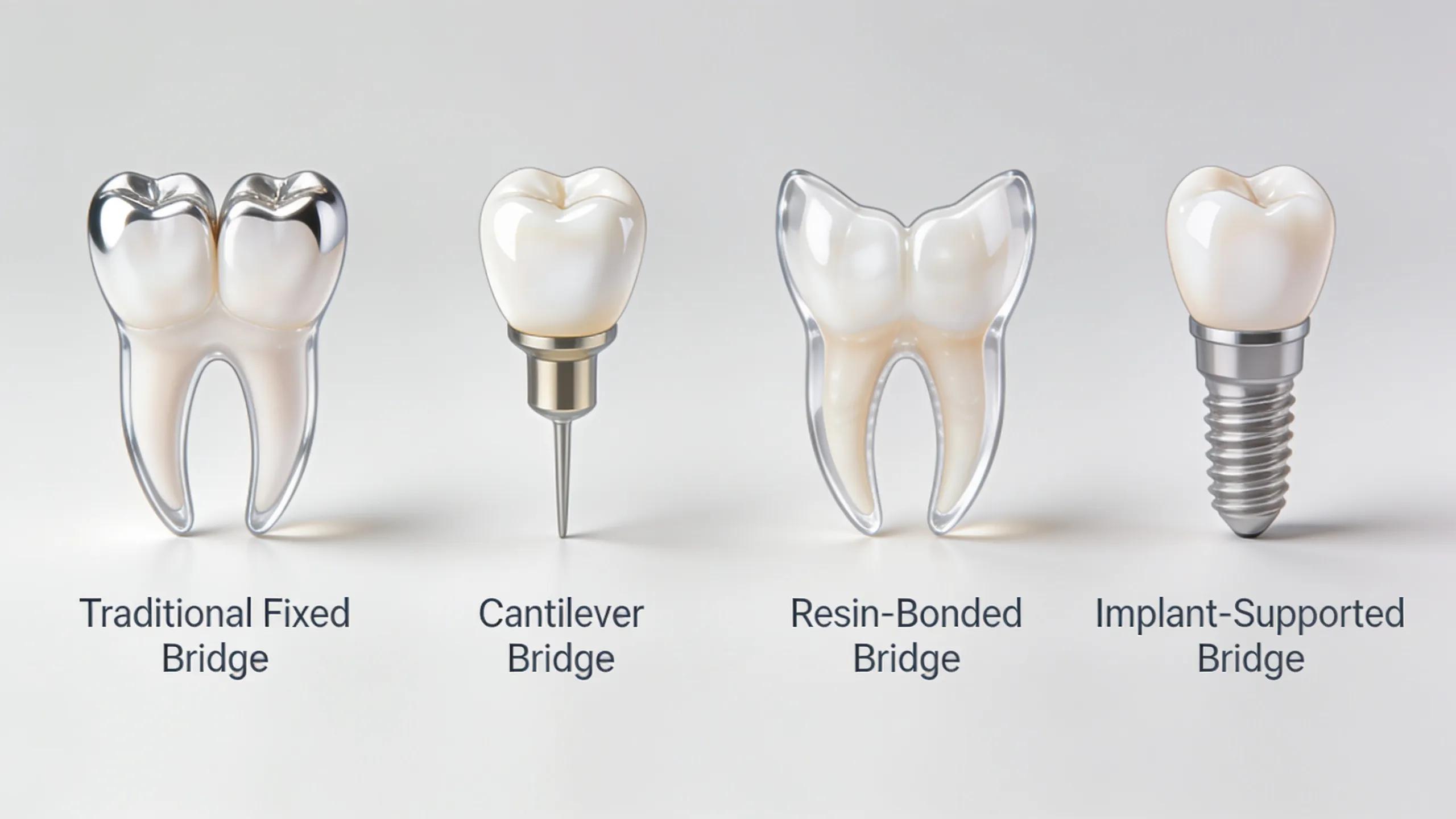
Dental bridges are fixed restorations that replace one or more missing teeth by attaching a prosthetic tooth (or teeth) to nearby support—either natural teeth or implants. Each bridge type has different benefits and trade-offs, so it helps to understand the options. The most common kinds are fixed bridges, cantilever bridges, Maryland (resin-bonded) bridges, and implant-supported bridges. Knowing the differences makes it easier to choose the right approach for your mouth.
How Do Fixed, Cantilever, Maryland, and Implant-Supported Bridges Compare?
Each bridge type offers distinct features that can affect durability, tooth preparation, and suitability for certain locations in the mouth.
Type
Description
Advantages
Limitations
Fixed Bridges
Two crowns on the teeth beside the gap with a false tooth (pontic) between them
Strong, natural-looking, and stable for everyday use
Requires reshaping the adjacent teeth to fit crowns
Cantilever Bridges
Anchored to a single adjacent tooth rather than both sides
Can be less invasive when only one side is available for support
Not as stable for large gaps or on back teeth under heavy bite forces
Maryland Bridges
A pontic with metal or porcelain wings bonded to the back of neighboring teeth
Minimal alteration of adjacent teeth and conservative preparation
Less suitable for areas with strong chewing pressure; bond can fail over time
Implant-Supported Bridges
Bridge supported by dental implants instead of natural teeth
Best long-term support, preserves nearby teeth, feels like natural teeth
Requires implant surgery and sufficient jawbone; higher upfront cost
Comparing these options with your dentist helps match the right bridge type to your dental and lifestyle needs.
When deciding between bridge types, dentists consider the location of the gap (front versus back teeth), how many teeth are missing, and the bite forces in that area. For example, conservative options like Maryland bridges may suit front teeth where chewing forces are lower, while molar replacements often require stronger support such as a fixed or implant-supported bridge. The treatment plan balances durability, aesthetics, and how invasive the preparation will be.
Which Bridge Type Is Best Suited for Your Dental Needs?
Choosing a bridge depends on where the missing teeth are, the health of neighboring teeth, bone support, and your goals for appearance and longevity. Fixed and implant-supported bridges are generally the most durable, while cantilever and Maryland bridges are less invasive choices for specific situations. A dental exam and discussion with your dentist will clarify which option fits your mouth, budget, and long-term plans.
What Are the Advantages and Disadvantages of Dental Bridges?
Dental bridges offer clear benefits but also come with limitations you should weigh before deciding.
What Benefits Do Dental Bridges Offer Compared to Other Tooth Replacement Options?
Bridges can be a smart solution for many patients.
Restored Function: Bridges let you chew and speak more comfortably, improving daily life.
Improved Appearance: They fill visible gaps and help restore a natural-looking smile.
Support for Facial Structure: Replacing missing teeth helps maintain jaw alignment and facial contours, reducing the risk of shifting teeth or bone changes.
These advantages make bridges a practical choice for both function and cosmetics.
Realistic expectations help patients plan for the future: bridges restore function quickly and can be finished in a relatively short timeframe compared with multi-stage implant treatments. At the same time, they require ongoing care and monitoring, and patients should expect routine check-ups to confirm fit and health of supporting teeth.
What Are the Common Limitations and Risks of Dental Bridges?
It’s important to know the potential downsides as well.
Impact on Adjacent Teeth: Preparing teeth for crowns can weaken otherwise healthy teeth if they’re used as supports.
Risk of Decay: If bacteria collect around the bridge margins, decay can develop on supporting teeth without good hygiene.
Replacement Over Time: Bridges usually last 5–15 years depending on materials, wear, and care, and may need repair or replacement.
Knowing these risks helps you plan for maintenance and make an informed choice with your dentist.
If you have concerns about long-term effects on adjacent teeth, discuss alternative designs with your provider—for example, implant-supported options that avoid altering neighboring teeth, or conservative bonding techniques that reduce preparation. Your dentist can explain the trade-offs in writing so you can compare options.
How Is the Dental Bridge Procedure Performed? Step-by-Step Guide
The bridge process typically spans a few appointments to ensure a comfortable fit and lasting results.
What Are the Preparation and Fitting Steps for Dental Bridges?
Here’s what to expect during treatment:
Consultation and X-rays: We evaluate your mouth, take X-rays, and create a tailored treatment plan.
Tooth Preparation: Adjacent teeth are shaped when needed to receive crowns for a secure fit.
Impressions: Molds or digital scans are taken to make a custom bridge that matches your bite and color.
Temporary Bridge: A temporary restoration protects the prepared teeth while the final bridge is made.
Final Placement: The permanent bridge is adjusted and cemented once it fits comfortably and looks right.
Each step focuses on comfort and accuracy so your new bridge functions well and looks natural.
Typical timelines vary: initial consultation and planning may be completed in one visit, preparation and temporization in a second, and final placement at a later appointment once lab work is finished. For implant-supported bridges the process is longer because surgical healing and osseointegration need to occur before the final restoration is attached.
Is the Dental Bridge Procedure Painful or Risky?
Most people find the procedure manageable. Local anesthesia is used during preparation to minimize discomfort, and any post-treatment sensitivity usually fades within days or weeks. As with any dental work, there are risks like infection or an ill-fitting restoration, which is why careful planning, skilled placement, and follow-up care are essential.
How Much Do Dental Bridges Cost? Understanding Pricing and Insurance Options
Cost can be a major factor when choosing a bridge, and prices vary based on several elements.
What Factors Influence Dental Bridge Pricing?
Typical cost drivers include:
Type of Bridge: Implant-supported bridges usually cost more than traditional fixed or Maryland bridges.
Materials: Porcelain, porcelain-fused-to-metal, or gold options differ in price and appearance.
Location and Provider: Fees vary by region and the complexity of the case.
Which Insurance Plans Cover Dental Bridges and How to Maximize Benefits?
Insurance coverage for bridges differs across plans, so check your policy details for restorative benefits.
Review Your Plan: Look for coverage on crowns and fixed restorations.
Pre-Authorization: Ask your dentist to submit a pre-treatment estimate to clarify what’s covered.
Use FSA/HSA: Flexible Spending Accounts or Health Savings Accounts can help lower out-of-pocket costs.
Understanding your benefits ahead of time makes it easier to budget for treatment.
Beyond insurance, many practices offer financing or payment plans and can provide a written estimate showing covered and non-covered portions. Ask your provider for a breakdown that includes laboratory fees, any required preparatory care, and aftercare appointments so you can plan and compare estimates from multiple offices if desired.
How Long Do Dental Bridges Last and How Should You Care for Them?
The lifespan of a bridge depends on the type, materials, and how well you care for it.
What Is the Average Lifespan of Different Dental Bridge Types?
Most bridges last between 5 and 15 years. Fixed bridges often hold up longer than Maryland or cantilever designs. Implant-supported bridges can last even longer with proper maintenance and healthy bone support.
What Are the Best Practices for Dental Bridge Maintenance and Aftercare?
To keep your bridge in good shape:
Brush and Floss Daily: Use a soft brush and floss carefully around the bridge to remove plaque.
Regular Dental Visits: Professional cleanings and exams catch problems early.
Avoid Hard or Sticky Foods: These can stress or damage the bridge.
Good home care and routine check-ups help extend the life of your restoration.
Specific tools such as interdental brushes, floss threaders, or a water flosser can be very helpful to clean beneath pontics and around abutments. Your dental hygienist can demonstrate techniques and recommend products that fit your bridge design and dexterity. If you notice persistent sensitivity, looseness, or discomfort, contact your dentist so the bridge and supporting teeth can be evaluated.
What Are the Alternatives to Dental Bridges? Comparing Options Like Dental Implants and Dentures
Bridges are one of several ways to replace missing teeth—each option has different benefits.
How Do Dental Implants Differ from Dental Bridges?
Implants replace both the tooth and its root by placing a titanium post in the jawbone. Key differences include:
Longevity: Implants can last a lifetime with good care, while bridges typically need replacement after years of use.
For many people with adequate bone, implants offer a long-term solution that closely mimics natural teeth.
When Might Dentures or Other Solutions Be Preferable?
Dentures may be a better fit for patients missing many teeth or looking for a more affordable, non-surgical option. Partial dentures can replace several teeth without surgically placing implants, while full dentures restore an entire arch. Comfort, maintenance, cost, and oral health are all factors to discuss with your dentist.
Sometimes a hybrid approach is recommended—for example, combining implants with fixed bridges to support a longer restoration when several consecutive teeth are missing. Discussing these tailored solutions helps you weigh convenience, durability, and the level of surgical intervention you’re comfortable with.
How Can You Schedule a Free Consultation to Determine if Dental Bridges Are Right for You?
A consultation is the best way to get personalized guidance on whether a bridge suits your needs.
What to Expect During a Free Dental Bridge Consultation?
During a free visit, you can expect:
Comprehensive Exam: We’ll check teeth, gums, and bone support and take any needed X-rays.
Personalized Recommendations: We’ll explain your options, timelines, and cost estimates so you can make an informed choice.
This visit helps you understand the best path forward for your smile.
Before your appointment, gather any recent dental records or X-rays if possible, and make a short list of questions and priorities—appearance, budget, treatment length, or concerns about surgery or sensitivity. Bringing a list helps make the most of the consultation and ensures you leave with a clear next step.
How to Easily Schedule Your Appointment Online Today?
Book your appointment using the online scheduler—pick a time that works for you and confirm your visit in minutes. Schedule your appointment to get started.
What Do Patients Say About Their Dental Bridge Experience?
Many patients report feeling more confident and comfortable after getting a bridge. They often note improvements in chewing and speech and appreciate the natural look of the restoration. Patient feedback typically highlights how treatment helped restore daily life and self-confidence.
What Are Commonly Asked Questions About Dental Bridge Procedures and Care?
Patients commonly ask about pain, healing time, and daily care. Clear answers and step-by-step guidance from your dentist help reduce worry and support a smoother recovery and long-term success.
For more on restorative options and services, visit dental services to learn about treatment plans for missing teeth.
Frequently Asked Questions
1. Can dental bridges be used for multiple missing teeth?
Yes. Bridges can span several missing teeth if they are properly supported—either by healthy adjacent teeth or by implants. The exact design depends on the gap size, location, and the condition of surrounding teeth. Your dentist will evaluate your situation and recommend the most suitable bridge type.
2. What is the recovery time after getting a dental bridge?
Most people return to normal activities within a day or two. You may have some sensitivity or mild discomfort as your mouth adjusts. Full settling and any soft-tissue healing can take a few weeks; follow your dentist’s aftercare instructions to stay comfortable.
3. How do I take care of my dental bridge during the healing process?
Keep up excellent oral hygiene—brush twice daily and gently clean around the bridge. Avoid hard or sticky foods and follow any specific advice from your dentist. Attend follow-up visits so your provider can monitor healing and the bridge’s fit.
4. Are there specific foods I should avoid with a dental bridge?
Avoid very hard or sticky items like hard candies, nuts, and chewy taffy that can stress the bridge. Cut tough foods into smaller pieces and choose softer options while you’re adjusting to the restoration.
5. How do I know if I need to replace my dental bridge?
Signs you might need a replacement include visible wear, discomfort when biting, looseness at the bridge margins, or decay on supporting teeth. Regular dental exams help spot issues early and guide whether repair or replacement is needed.
6. Can I get a dental bridge if I have gum disease?
Not right away. Gum disease should be treated first because healthy gums and bone are essential for a successful bridge. Your dentist will recommend therapy to stabilize your gum health before placing a restoration.
7. What alternatives exist if I decide not to pursue dental bridges?
Alternatives include dental implants (a durable, long-term option) and partial or full dentures (more affordable or non-surgical choices). Each option has pros and cons—discuss them with your dentist to find the best match for your situation.
Conclusion
Dental bridges are a dependable way to restore your smile, chew function, and facial support after tooth loss. They offer strong cosmetic and functional benefits, though they come with trade-offs like future maintenance and potential effects on neighboring teeth. A consultation with a dental professional will clarify whether a bridge—or another solution like implants or dentures—best suits your goals and oral health. Schedule a free consultation to explore your options and take the next step toward a healthier, more confident smile.