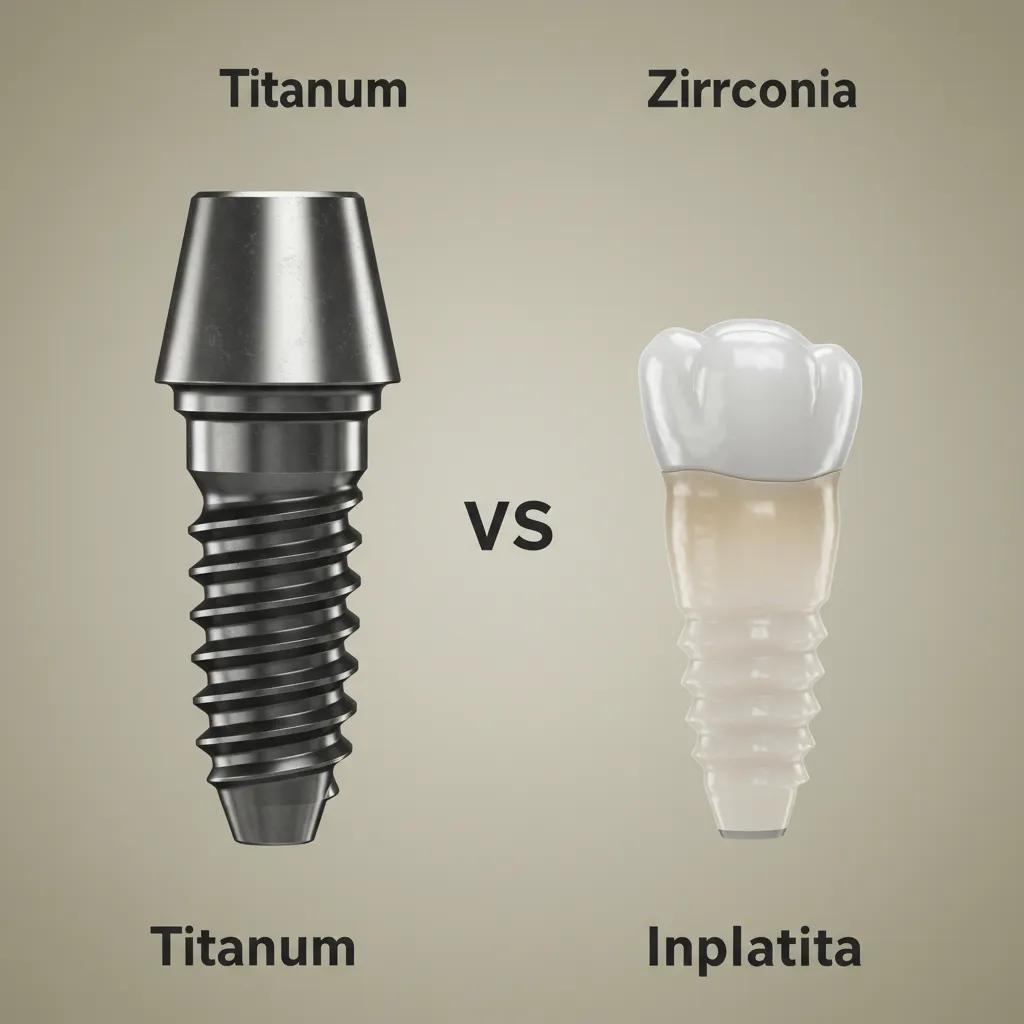
How Titanium Versus Zirconia Dental Implants Influence the Success of Your Dental Implant Procedure
Dental implants—whether made from titanium or zirconia—are the engineered anchors that replace missing teeth by integrating with jawbone and supporting crowns, bridges, or dentures. Choosing between titanium dental implants and zirconia dental implants matters because material properties such as mechanical strength, biocompatibility, surface behavior, and color each influence osseointegration, soft-tissue response, aesthetic outcome, and long-term implant survival. This article explains how implant material affects healing and function, summarizes current evidence and practical trade-offs, and gives a stepwise decision framework so patients can prepare informed questions for their dentist. Readers will learn the key differences in composition and structure, what clinical data show about titanium longevity, the specific benefits of zirconia for aesthetics and gum health, how to choose the right material based on clinical and lifestyle factors, and how risks and maintenance compare. Throughout the guide we reference related concepts—abutments, implant fixtures, peri-implantitis, and surface treatments—so you can understand why clinicians in Waco and similar regions may favor one approach and when to seek evaluation. If you are considering an implant, this article will help you weigh evidence-based outcomes and next steps, including how to schedule a free consult to confirm candidacy.
What Are the Key Differences Between Titanium and Zirconia Dental Implants?
Titanium implants are metallic fixtures made from titanium or titanium alloys, prized for high tensile strength, ductility, and a long track record of reliable osseointegration, while zirconia implants are ceramic, tooth-colored fixtures (yttria-stabilized zirconia) that emphasize aesthetics and a metal-free option for patients with specific concerns. The material composition determines mechanical properties, fracture resistance, and how light interacts with the restoration, which in turn affects gingival appearance and prosthetic planning. Clinically, titanium is commonly used across posterior and anterior sites for its versatility and extensive evidence base, whereas zirconia is often selected for anterior single-tooth restorations, metal-free protocols, or when reduced gingival shadowing is critical. Understanding these broad differences helps patients and clinicians match material characteristics to functional demands, soft-tissue biotype, and aesthetic goals. The next subsections break down composition and aesthetic implications so you can see how structure and color translate into clinical choices.
How Do Titanium and Zirconia Materials Differ in Composition and Structure?
Titanium implants are metallic fixtures whose surface can be modified (e.g., roughened, SLA-type treatments) to promote bone contact; the alloy and surface microtopography support osseointegration through mechanical interlocking and biochemical signaling. Zirconia implants are advanced ceramics—most commonly yttria-stabilized zirconia—whose crystalline structure gives high compressive strength and favorable color but a different fracture behavior compared with metal alloys. Because titanium is ductile, it tolerates bending forces and micromovement differently than the more brittle ceramic, which influences prosthetic design and connector geometry for two-piece versus one-piece systems. Surface engineering matters for both: titanium surface roughening improves bone anchorage, while emerging zirconia surface modifications aim to increase bone contact and reduce bacterial adhesion. These compositional and structural differences drive surgical handling, prosthetic connection choices, and the way clinicians plan load and restoration type.
What Are the Visual and Aesthetic Differences Between Titanium and Zirconia Implants?
Aesthetically, zirconia’s tooth-like white color reduces gingival shadowing and can produce better visual outcomes where thin gingival biotypes or high smile lines expose the facial soft tissue, while titanium’s metallic hue may transmit through thin or translucent gums and alter the perceived shade of a restoration. Zirconia also offers a monolithic ceramic option with translucency that, when paired with all-ceramic crowns, can closely mimic natural teeth in single anterior cases. However, abutment design, crown material, and soft-tissue thickness all interact with implant color; for example, a titanium implant with a zirconia abut or well-designed restoration can still achieve excellent aesthetics in many cases. Practical restoration planning considers abutment choice (zirconia vs titanium abutments), soft-tissue grafting opportunities, and how crown layering will mask underlying components. Understanding these visual trade-offs informs whether aesthetics or maximal mechanical resilience should govern material selection for a given site.
Material
Attribute
Typical Clinical Note
Titanium implants
Composition: metal alloy; Surface: easily roughened/coated
Strong, ductile, proven osseointegration; versatile for posterior loading
Zirconia implants
Composition: yttria-stabilized ceramic; Surface: improving with new treatments
Tooth-colored, metal-free, favored in high-aesthetic anterior sites
Abutment options
Meronym of implant system: titanium or zirconia abutments
Abutment material affects final shade, soft-tissue response, and restorative workflow
This table summarizes how core material attributes translate into clinical considerations; the next section evaluates long-term success data for titanium implants and why clinicians rely on that evidence when planning treatment.
How Do Titanium Dental Implants Affect Implant Success Rates?
Titanium implants have a substantial clinical evidence base demonstrating high survival rates largely because titanium supports reliable osseointegration—direct structural and functional connection between bone and implant—through favorable surface chemistry and mechanical properties. Osseointegration occurs as bone cells adhere to and remodel around the implant surface, producing stable contact that allows functional loading; titanium’s biocompatibility and modifiable surfaces have been central to consistent integration across diverse patient profiles. Success rates for titanium implants are reported across many studies and clinical registries as consistently high when patient and surgical factors are optimized, and those outcomes underpin why titanium remains the standard choice for many clinicians. The following subsections present an evidence-oriented summary and explain how titanium’s biocompatibility affects healing and clinical protocols.
What Clinical Evidence Supports Titanium Implant Longevity?
Clinical literature and registries commonly report favorable 5- and 10-year survival outcomes for titanium implants, with multiple long-term cohort studies showing durable function when placed with proper technique and maintained with good oral hygiene. These studies indicate that survival is not determined by material alone; bone quality, surgical precision, prosthetic design, and patient health (smoking, diabetes, oral hygiene) all influence longevity. Surface treatments such as micro-roughening and hydrophilic coatings are associated with improved early bone contact, which can translate into faster integration and lower early failure rates. While exact percentages vary across studies, the overall evidence supports predictable long-term outcomes for titanium implants in routine clinical practice. Appreciating these data helps patients understand that material choice interacts with many modifiable and non-modifiable risk factors that dentists evaluate before surgery.
How Does Titanium’s Biocompatibility Influence Healing and Osseointegration?
Biocompatibility refers to the material’s ability to perform with an appropriate host response; titanium elicits favorable bone cell attachment and minimal chronic inflammation in most patients, which enables progressive bone remodeling and stable osseointegration. Surface topography, chemical composition, and the presence of bioactive coatings influence early protein adsorption and cell adhesion—key initial steps toward bone formation at the implant interface. Clinically, this means titanium implants often show predictable healing timelines and can support a range of loading protocols from immediate to delayed depending on bone quality and surgical stability. Rare concerns such as metal hypersensitivity exist but are uncommon; for most patients, titanium’s biocompatibility is a major reason for its long-term clinical success. The next section explores how zirconia’s metal-free composition yields different benefits and trade-offs.
What Are the Benefits of Zirconia Dental Implants for Your Procedure?
Zirconia dental implants offer a metal-free alternative with aesthetic advantages and potential soft-tissue benefits that make them especially attractive for anterior restorations or for patients seeking an all-ceramic solution. Zirconia’s white color minimizes gingival shadowing and can produce pleasing aesthetic outcomes without complex masking strategies, while its ceramic surface may interact differently with peri-implant soft tissue and plaque. For patients with a history of metal concerns or strong preferences for metal-free dentistry, zirconia provides a clinically useful option that matches specific aesthetic and biocompatibility priorities. That said, clinicians balance these benefits against differences in fracture mechanics and evidence maturity; selecting zirconia requires a careful assessment of site-specific loading, prosthetic design, and the latest material advances. After reviewing these benefits, patients who want to explore zirconia options are encouraged to schedule a free consult to confirm whether zirconia is a suitable choice for their anatomy and goals.
How Does Zirconia’s Metal-Free Composition Benefit Patients?
Zirconia’s lack of metal reduces concerns about metallic taste, galvanic reactions, or visible graying of the gingiva, which some patients perceive as advantages for comfort and appearance. For the small subset of patients worried about metal sensitivity, zirconia offers an alternative framework, although true allergic reactions to titanium are rare and require diagnostic confirmation. Beyond allergy concerns, metal-free implants support a streamlined aesthetic workflow where abutment and crown materials can be all-ceramic, simplifying color matching in the anterior zone. Clinicians evaluate candidacy by considering bite force, bruxism, and bone support, because ceramic materials behave differently under repetitive loading. Understanding these clinical trade-offs clarifies why zirconia is chosen in certain scenarios and why individualized assessment is essential before deciding on a metal-free implant.
What Are the Advantages of Zirconia Implants in Terms of Aesthetics and Gum Health?
Zirconia can improve gingival esthetics through reduced translucency and a surface that, in some observational studies, shows favorable soft-tissue interaction with reduced discoloration behind thin gingiva. Surface roughness and surface chemistry of zirconia may also influence plaque accumulation patterns and soft-tissue sealing, although evidence comparing long-term peri-implant soft-tissue outcomes between materials is evolving. In practice, zirconia implants paired with well-contoured all-ceramic crowns often yield superior visual integration for high-smile-line anterior cases, particularly when gingival thickness is limited. Clinicians weigh these potential soft-tissue benefits against prosthetic reparability and mechanical considerations to determine whether zirconia is the best match for a given site and patient expectation.
Reduced gingival shadowing: Tooth-colored fixtures minimize grayness under thin gums.
Metal-free restoration workflows: Simplifies crown-abutment color matching in the smile zone.
Potential soft-tissue compatibility: Observational findings suggest favorable mucosal integration in some cases.
How to Choose Between Titanium and Zirconia Implants for Your Dental Procedure?
Choosing the right implant material begins with clinical criteria—bone quality and quantity, location of the missing tooth, occlusal forces, and overall systemic health—then layers in patient priorities like aesthetics, lifestyle, and budget. A structured decision checklist helps patients and clinicians converge on the optimal solution by ranking essential clinical safety factors first, then aesthetic and preference factors. Because material selection affects prosthetic workflow, maintenance expectations, and possible need for adjunctive procedures (e.g., grafting or soft-tissue augmentation), a personalized evaluation is necessary. The clinic offers individualized recommendations and a free consult to evaluate which implant material fits your needs and goals; for patients comparing options, scheduling a free consult provides the decisive clinical assessment to confirm candidacy and plan treatment.
What Factors Should Influence Your Implant Material Choice?
Critical clinical factors that should lead the selection process include the tooth’s location (anterior vs posterior), bone quality and volume, presence of parafunctional habits like bruxism, and the expected occlusal load the implant will bear. Patient health considerations such as smoking status, diabetes control, and oral hygiene directly affect risk of peri-implant complications and therefore inform whether a conservative or more robust material is preferable. Aesthetic priorities and smile line determine whether zirconia’s color benefits are essential, while restorative access and future reparability influence whether a titanium-based two-piece system is more practical. By aligning these prioritized clinical factors with patient lifestyle and aesthetic goals, clinicians can recommend the material that maximizes both safety and satisfaction.
Assess site biomechanics: Posterior molars with high occlusal load often favor titanium for mechanical resilience.
Evaluate soft-tissue biotype: Thin gingival tissue and high smile line may favor zirconia for aesthetics.
Review patient health and habits: Smoking, uncontrolled systemic disease, or heavy bruxism increase complication risk and affect material choice.
How Do Cost, Durability, and Patient Lifestyle Affect Implant Selection?
Cost drivers include the implant system, need for grafting, abutment choice, and laboratory fees for crowns; while zirconia components can involve different lab processes, titanium systems have widespread availability and a long supply chain that can affect pricing. Durability differences manifest most clearly under high occlusal stresses: titanium’s ductile behavior often affords reparability and component interchangeability, whereas zirconia’s ceramic nature can challenge repairs after fracture. Lifestyle factors—heavy chewing, contact sports without mouthguard use, and night-time bruxism—increase mechanical risk and may push clinicians toward titanium or reinforced prosthetic designs. Ultimately, personalized estimates and a clinical exam define true cost and durability expectations; patients are advised to obtain a tailored plan and, if desired, schedule a free consult where the clinic can provide individualized recommendations and cost guidance.
Implant Type
5-Year Survival (clinical summary)
10-Year Survival (clinical summary)
Titanium implants
High survival in multiple cohorts when clinical factors optimized; early osseointegration aided by surface treatments
Durable long-term outcomes reported in many studies, with maintenance and patient factors influencing longevity
Zirconia implants
Emerging evidence shows promising short- to mid-term survival in selected cases; long-term data are still maturing
Long-term outcomes are being established; cautious selection and modern surface/connection designs improve prospects
Comparative note
Material is one component; surgical technique, bone quality, and maintenance determine eventual survival
Individualized assessment is essential to predict long-term performance for any material
This summary table frames comparative survival language and underscores the need for personalized clinical assessment; the next section turns to specific risks and how to mitigate them.
What Are the Common Risks and Complications Associated with Titanium and Zirconia Implants?
Both titanium and zirconia implants share some baseline biological risks—most notably peri-implantitis and infection—because pathogens and host response, not material alone, drive many complications. Mechanical differences, however, mean titanium is more likely to experience component loosening or wear, while zirconia’s ceramic nature raises specific concern for fracture under extreme loads. Maintenance requirements and the reparability pathway differ: titanium two-piece systems often allow abutment or screw replacement, whereas zirconia one-piece systems may necessitate more complex restorative solutions if damaged. Risk mitigation focuses on patient selection, surgical technique, surface selection, and ongoing hygiene and recall protocols. The following subsections compare infection and rejection profiles and outline long-term maintenance needs for each material.
How Do Titanium Implants Compare to Zirconia in Terms of Infection and Rejection?
Peri-implantitis risk factors—poor plaque control, smoking, history of periodontitis, and systemic disease—apply to both materials; effective home care and regular professional maintenance remain the primary prevention strategies. True immunologic rejection is rare for both titanium and zirconia; reported metal hypersensitivity to titanium is uncommon, and diagnostic confirmation is required before assuming allergy is the cause of implant failure. Zirconia’s ceramic surface may demonstrate different bacterial adhesion characteristics in some studies, but both materials require meticulous soft-tissue management to minimize infection risk. When infection or peri-implant bone loss occurs, early detection and intervention—mechanical debridement, local therapies, or surgical remediation—are crucial regardless of implant material. Understanding these shared biological risks helps patients prioritize prevention and recognize early signs that warrant professional evaluation.
Peri-implantitis: Maintain rigorous oral hygiene and regular professional cleanings to reduce biofilm-driven inflammation.
Infection at placement: Use sterile surgical technique and pre-/post-operative protocols to minimize early infection risk.
Soft-tissue recession: Plan prosthetics and consider soft-tissue augmentation when necessary to protect esthetics and health.
What Are the Long-Term Maintenance Requirements for Each Implant Type?
Home care for both titanium and zirconia implants centers on daily plaque control with brushing and interproximal cleaning, while professional recall intervals typically include periodic evaluation, hygiene visits, and radiographic monitoring when indicated. Titanium two-piece systems may require occasional screw torque checks or abutment interventions, and prosthetic components are often replaceable without removing the implant fixture. Zirconia restorations and one-piece implant designs can provide durable aesthetics but can be less forgiving if ceramic fracture occurs; management may require prosthetic remakes or more involved interventions. Early recognition of mobility, pain, or persistent inflammation is essential for timely care and improved prognosis. Establishing a lifelong maintenance plan tailored to the chosen material and the patient’s risk profile ensures both functional longevity and aesthetic preservation.
Implant Material
Complication Type
Typical Frequency / Notes
Titanium implants
Peri-implantitis
Occurs when risk factors present; frequency tied to plaque control and systemic health
Titanium implants
Mechanical loosening
More common in multi-component systems; mitigated by proper torque and prosthetic design
Zirconia implants
Fracture risk
Low under normal function but increased with heavy occlusal loads; design improvements reduce risk
Zirconia implants
Esthetic recession
Generally favorable soft-tissue color outcomes, but recession risks persist with poor maintenance
This comparison clarifies how biological and mechanical complication profiles diverge by material and emphasizes the importance of individualized maintenance plans.
How Do Dental Implant Materials Impact Procedure Outcomes in Waco and Similar Regions?
Local practice patterns, patient demographics, and access to materials and specialists shape implant outcomes in Waco and similar communities, because clinicians select systems they are trained to restore reliably and that fit regional referral pathways. In many regions, titanium systems are widely used because of broad clinician familiarity and a large evidence base supporting long-term success, while zirconia adoption grows where aesthetic demand or patient preference for metal-free options is higher. Regional patient health profiles—smoking prevalence, rates of chronic disease, and oral hygiene behaviors—also influence expected outcomes and counsel clinicians to emphasize risk modification before implant placement. For patients in Waco, understanding local practice tendencies and asking targeted questions during evaluation helps ensure selections align with both evidence and local expertise. The next subsections discuss preferred materials among local professionals and how demographics affect outcomes.
What Are the Preferred Implant Materials Among Dental Professionals in Waco?
Clinician preference in a given area often reflects training, comfort with specific implant systems, restorative workflows, and availability of implant components; many practitioners continue to rely on titanium-based solutions because of the predictable restorative flexibility and extensive long-term data. Where patients prioritize anterior aesthetics or request metal-free options, clinicians trained in modern zirconia systems may offer that alternative, particularly for single-tooth anterior cases. Referral patterns for complex reconstructions or cases requiring advanced prosthodontic planning can also determine which systems are used locally, as some specialists maintain inventory and expertise for specific implant platforms. Patients should inquire at consultation about a clinician’s experience with both titanium and zirconia options, how outcomes are measured in the practice, and what restorative team will manage their case.
How Does Regional Patient Demographics Influence Material Success Rates?
Population-level factors—age distribution, prevalence of systemic conditions like diabetes, smoking rates, and access to routine dental care—directly change baseline risk and the resources needed to support implant success. Older populations or communities with higher prevalence of chronic disease may experience higher rates of peri-implant complications without thorough pre-op optimization and maintenance. Conversely, regions with strong preventive care access and patient engagement show better long-term implant performance because early issues are identified and managed promptly. For Waco patients, discussing personal risk factors and ensuring a clear maintenance agreement with the treating dental team helps translate material properties into the best possible clinical outcome.
Population health metrics: Diabetes control and smoking prevalence affect healing and infection risk.
Access to follow-up care: Reliable professional maintenance reduces long-term complications.
Local clinician expertise: Familiarity with specific implant systems improves restorative predictability.
These regional considerations guide treatment planning and highlight why an in-person assessment is crucial for a tailored recommendation and treatment timeline.
What Advances Are Emerging in Titanium and Zirconia Dental Implant Technology?
Ongoing innovations in surface science, materials engineering, and connection designs are narrowing historical gaps between titanium and zirconia performance by improving osseointegration, soft-tissue outcomes, and mechanical resilience. For titanium, advancements include nanoscale surface treatments and bioactive coatings that accelerate bone contact and potentially shorten healing windows, while zirconia benefits from improved stabilization methods, multi-piece designs, and surface functionalization aimed at enhancing bone and soft-tissue integration. Hybrid systems and refined prosthetic components allow clinicians to leverage material strengths—combining titanium fixtures with ceramic abutments or using newer zirconia two-piece connections—to balance durability and aesthetics. Understanding these technological trends helps patients appreciate that material selection is influenced by current engineering improvements and evolving clinical evidence. The following subsections explain how surface treatments and material innovations translate into improved patient outcomes.
How Are New Surface Treatments Improving Titanium Implant Success?
Surface treatments for titanium—such as micro-roughening, sandblasting and acid etching, and hydrophilic conditioning—enhance the initial biological response by increasing surface area for protein adsorption and cell attachment, which promotes faster and stronger bone-to-implant contact. Some coatings and modified topographies aim to recruit osteogenic cells, reduce bacterial adhesion, or release bioactive molecules that support regeneration; clinically, these changes can allow for more predictable early loading protocols and may reduce early implant failure. The practical effect for patients includes potentially shorter treatment timelines and improved predictability in compromised bone scenarios. As surface science advances, clinicians select implants whose surface characteristics align with the patient’s bone quality and the planned loading protocol to optimize osseointegration and long-term stability.
What Innovations Are Enhancing Zirconia Implant Strength and Integration?
Material-science advances—such as improved yttria stabilization, optimized sintering protocols, and multi-piece zirconia designs—have increased zirconia’s mechanical resilience and allowed clinicians to apply ceramic systems in a wider range of clinical scenarios. Surface modifications that increase microroughness or apply bioactive coatings aim to improve bone contact and soft-tissue sealing for zirconia implants, addressing historical concerns about integration. Two-piece zirconia systems and refined abutment connections enhance prosthetic flexibility and simplify restorative workflows, while processing improvements reduce susceptibility to low-temperature degradation and increase fracture toughness. These innovations make zirconia a more viable option for broader indications, although long-term comparative data continue to accumulate and inform best-practice selection.
Zirconia Surface Treatments for Enhanced Osseointegration in Dental Implants
The aim of this review was to critically explore the state of art of zirconia surface treatment to enhance the biological and osseointegration behavior of zirconia in implant dentistry.
Zirconia Surface Treatments for Enhanced Osseointegration in Dental Implants, ME Galárraga-Vinueza, 2019
Faster integration: Advanced surfaces may reduce healing time and support earlier restorations.
Improved aesthetics without compromise: Stronger zirconia systems broaden anterior and selected posterior use.
Greater restorative flexibility: Hybrid designs and improved abutments increase reparability and customization.
Advances in both materials mean that the decision between titanium and zirconia increasingly depends on individual anatomy, function, and aesthetic priority rather than historical material limits. For patients ready to explore options in Waco, the clinic provides professional evaluation and recommendations.
For patients interested in evaluating implant options locally, our dental office provides dental implants and dentures and offers clinical guidance tailored to your anatomy and goals; if you would like individualized recommendations and a treatment plan, please schedule a free consult to confirm candidacy and discuss material choices.
Prepare questions before your consult: List concerns about aesthetics, durability, and timeline.
Bring a medical summary: Be ready to discuss systemic health, medications, and habits that affect healing.
Ask about maintenance: Understand the recommended recall schedule and what follow-up care entails.