How to Find the Best Implant Dentist: Expert Guide to Choosing a Qualified Dental Implant Specialist
Choosing an implant dentist means selecting a clinician whose training, judgment, and technical skill directly influence long-term oral function and esthetics, so understanding how to find the best implant dentist is essential for predictable outcomes. This guide explains what implant dentist qualifications mean, how experience and complex casework translate to competency, which advanced technologies improve planning and placement, and how to evaluate reviews, costs, and follow-up care. Readers will learn practical questions to ask during consultation, scenario-based recommendations for different specialists, and transparent financial and maintenance considerations that affect value and implant longevity. The article maps H2 sections that cover certifications (including ABOI vs AAID distinctions), experience metrics and verification, CBCT and guided surgery benefits, review interpretation and before/after evidence, consultation question checklists, specialist comparisons, cost drivers and payment options, and post-operative maintenance expectations. Throughout, search-focused keywords such as implant dentist qualifications, oral surgeon vs periodontist for implants, and 3D imaging CBCT dental implants are integrated to help you evaluate providers systematically and confidently. Next we examine the core professional credentials you should prioritize when vetting an implant dentist.
What Qualifications and Certifications Should a Top Implant Dentist Have?
A top implant dentist combines valid state dental licensure with targeted credentials that demonstrate specialized education, case experience, and peer review to reduce complications and improve success rates. Credentials such as board certifications and recognized implant training programs indicate a clinician has documented case experience, passed rigorous examinations, and engaged in continuing education specific to dental implants. Prioritizing these qualifications helps patients connect training and oversight with safer surgical technique, better restorative outcomes, and clearer emergency protocols. Below we unpack why board certifications matter, how to verify state licensing and continuing education, and how specialist credentials correlate with measurable implant success.
Why Are Board Certifications Like ABOI and AAID Important?
Board certifications such as ABOI and AAID represent an additional layer of credentialing beyond basic licensure that requires documented case submissions, peer evaluation, and formal examination to establish competency in implantology. These certifications function as EducationalOccupationalCredential markers showing the clinician has met standardized benchmarks for treatment planning, surgical skill, and prosthetic restoration; that mechanism reduces variability in outcomes and signals commitment to best practices. Candidates typically present a case portfolio, demonstrate clinical proficiency in complex scenarios, and pass written and oral assessments, which together create a peer-reviewed validation of skill. Understanding this certification process helps patients infer a dentist’s depth of training and ongoing accountability, which leads naturally into verifying state licensing records and continuing education histories.
What State Licensing and Continuing Education Requirements Matter?
State dental boards issue licenses that verify legal authorization to practice and discipline oversight, but the details of continuing education (CE) requirements vary by jurisdiction and influence how current a dentist’s implant knowledge remains. Checking state licensing involves confirming active status, any disciplinary history, and required CE hours; many boards publish this information online or provide verification on request, and recent studies indicate higher CE engagement correlates with improved procedural outcomes. Patients should ask specifically about implant-focused CE, hands-on surgical courses, and attendance at advanced workshops that cover current technologies like CBCT and guided surgery. Verifying these records complements certification checks and leads directly to understanding how credentials impact measurable implant success.
How Do Specialist Credentials Impact Implant Success Rates?
Specialist credentials—such as training in oral surgery, periodontology, or prosthodontics—combine extended residency education with focused clinical exposure that correlates with lower complication rates and higher implant survival in complex cases. Evidence from clinical analyses suggests clinicians with advanced specialty training or board certification demonstrate stronger case selection, better management of compromised sites, and more consistent restorative planning, which improves long-term implant survival and patient satisfaction. When clinicians pair specialist training with documented case outcomes and modern imaging workflows, the mechanism linking credentialing to better outcomes becomes clear: superior planning reduces surgical trauma and prosthetic complications. With credentials and CE verified, the next practical filter is experience — how many cases, and what kinds, should you expect from a highly qualified implant dentist?
How Does Experience Influence Choosing the Best Dental Implant Surgeon?
Experience matters both in quantity—number of implants placed—and in the quality and variety of cases handled, since complex reconstructions and grafting procedures require nuanced judgment and adaptable technique. Experience functions as a proxy for exposure to complications, iterative improvement in surgical workflow, and an established restorative collaboration network; these mechanisms lead to predictable outcomes and refined patient selection criteria. Evaluating experience should therefore balance years in practice with documented case complexity and demonstrated outcomes, and the following subsections provide benchmarks for experience ranges, examples of complex cases, and verification steps for a dentist’s track record.
How Many Years and Procedures Define Implant Expertise?
Defining expertise relies less on an absolute year count and more on demonstrated case volume, diversity, and complexity, with meaningful benchmarks showing progressive responsibility and repeated success across varied clinical scenarios. Reasonable expectations include clinicians who regularly perform implant procedures as a core part of their practice, can present representative case logs or photo galleries, and can describe complication management protocols they use; these indicators show experience beyond isolated training courses. A clinician’s procedural frequency and ongoing documentation of outcomes demonstrate continual skill reinforcement, which patients should weigh alongside credentials. After assessing routine case volume, you should also consider the categories of complex cases that truly test an implant dentist’s expertise.
What Complex Cases Should an Experienced Implant Dentist Handle?
Complex cases that indicate higher competence include multi-unit full-arch restorations, extensive bone grafting and sinus lifts, immediate implant placement after extractions with compromised sockets, and implants in patients with systemic health considerations. Successfully managing these scenarios requires coordination of surgical technique, graft materials, and prosthetic planning to restore function and esthetics while minimizing complications such as graft failure or peri-implantitis. When clinicians describe these case types, look for explanations of sequencing, materials selection, and contingency planning to confirm depth of expertise. Demonstrated ability in these complex categories naturally leads into how to verify a dentist’s track record through objective evidence.
How to Verify an Implant Dentist’s Track Record and Success Rate?
Verifying track record combines requests for case logs, before/after galleries showing full-case progressions, complication management descriptions, and corroborating references from referring dentists or former patients to create an evidence-based view of outcomes. Ask for aggregate success metrics and how those numbers were calculated, then compare photo galleries for consistency in lighting, case complexity, and documented timelines; these verifiable artifacts provide a mechanism to interpret claimed success rates. Supplement gallery review with direct questions about follow-up protocols and documented complication rates; this verification step prepares you to evaluate a practice’s use of advanced technology such as CBCT and guided surgery in planning and executing implants.
What Advanced Technology Should a Leading Implant Dentist Use?
Advanced technology—CBCT 3D imaging, computer-guided implant surgery, and digital impressions—serves as a toolset that enhances diagnosis, reduces surgical guesswork, and improves prosthetic fit, thereby increasing predictability and patient comfort. Each technology functions via specific mechanisms: CBCT provides volumetric bone assessment, guided surgery transfers digital plans to precise intraoral positions, and digital impression workflows streamline lab communication and prosthesis accuracy. Understanding what each technology does and the benefits it provides helps patients select practitioners who use modern workflows for safer, faster, and more esthetic implant care.
How Does 3D Imaging and CBCT Improve Implant Planning?
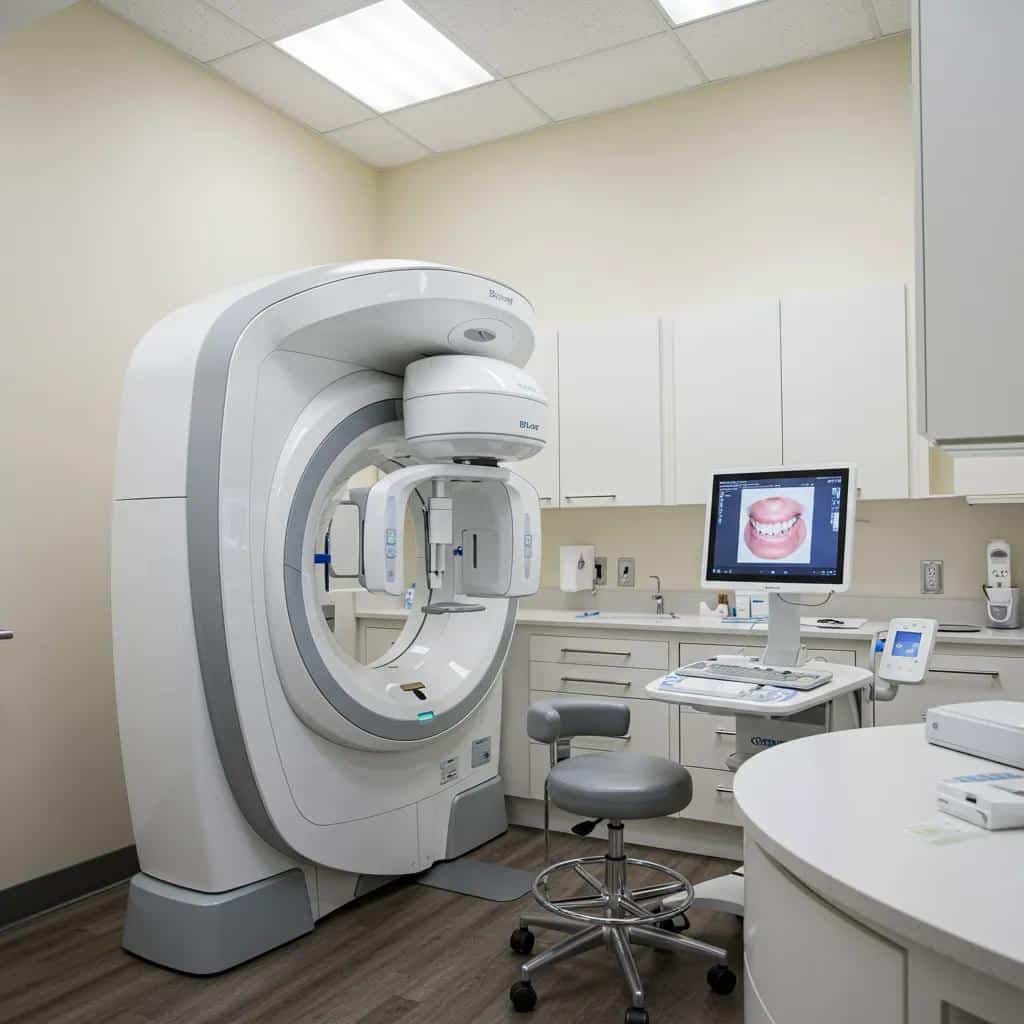
CBCT (Cone Beam CT) delivers three-dimensional anatomical imaging that reveals bone volume, proximity to vital structures, and ideal implant trajectories, enabling data-driven treatment planning that reduces intraoperative surprises. This mechanism increases surgical precision by allowing clinicians to measure cross-sectional bone, assess bone density, and simulate implant size and angulation before touching tissue, which lowers the risk of nerve injury and improves primary stability. Patients benefit because CBCT-guided plans often translate to shorter surgeries, fewer unexpected grafts, and clearer restorative outcomes for crowns or bridges. Confirming a clinician’s routine use of CBCT during consultation is a logical next step before evaluating computer-guided surgery.
Digital Technologies for Dental Implant Planning and Guided Surgery
Digital technologies for dental implant treatment planning and guided surgery are becoming increasingly important in modern dentistry. Cone beam computed tomography (CBCT) has become a standard imaging modality for dental implant treatment planning, providing detailed three-dimensional information about the patient’s anatomy. CBCT imaging of the posterior mandible and CT-guided dental implant surgery are crucial for accurate placement and predictable outcomes.
Digital technologies for dental implant treatment planning and guided surgery, AM Greenberg, 2015
What Are the Benefits of Computer-Guided Implant Surgery?
Computer-guided implant surgery transfers a digital plan into the operative field using surgical guides or navigation systems, improving placement accuracy, reducing surgical time, and often enabling minimally invasive flapless approaches that limit patient discomfort. The technology’s mechanism synchronizes CBCT data, prosthetic planning, and surgical guide fabrication to ensure implants are placed in locations optimized for restorative load and esthetics, which reduces restorative rework and improves osseointegration potential. While guided protocols enhance predictability, patients should understand limitations: guide fit, bone quality, and intraoperative adjustments can still be necessary. After assessing guided surgery benefits, consider how digital impressions and workflows complete the restorative chain.
Computer-Guided Implant Surgery: Minimally Invasive and Predictable
Nowadays computer-guided “flap-less” surgery for implant placement using stereolithographic tem-plates is gaining popularity among clinicians and patients. The advantages of this surgical protocol are its minimally invasive nature, accuracy of implant placement, predictability, less post-surgical discomfort and reduced time required for definitive rehabilitation.
A novel workflow for computer guided implant surgery matching digital dental casts and CBCT scan, L Arcuri, 2016
How Do Digital Impressions and Workflow Enhance Treatment?
Digital intraoral scanning replaces traditional impressions with precise optical data capture that improves crown and abutment fit, reduces remakes, and shortens laboratory turnaround, which directly enhances the prosthetic phase of implant treatment. The mechanism unites clinician planning, lab communication, and prosthetic design within a digital workflow that maintains consistent reference points for occlusion, emergence profile, and esthetics, reducing adjustment appointments and chair time. For patients, digital workflows mean fewer gagging episodes, faster provisionalization, and more predictable final restorations. Evaluating a practice’s digital capabilities provides insight into overall treatment efficiency and prosthetic quality before you consult patient reviews and testimonials.
How Can Patient Reviews and Testimonials Help You Choose the Best Implant Dentist?
Patient reviews and before/after galleries are practical trust signals that, when interpreted correctly, reveal a clinician’s patient care quality, complication transparency, and esthetic consistency; however, reviews require careful evaluation to avoid misleading impressions. Useful review analysis focuses on review substance, frequency, and corroborating evidence rather than isolated praise, while before/after photos should show full-case sequences with clinical detail. Referrals from general dentists add professional validation and clarify coordination of care. Below we outline what to look for in reviews, how to read photo evidence, and why professional referrals matter.
What Should You Look for in Online Reviews and Ratings?
When assessing online reviews, prioritize detailed accounts that describe the treatment process, complication handling, communication, pain management, and restorative outcomes rather than brief generic praise that reveals little about clinical quality. Look for patterns: repeated comments about scheduling transparency, follow-up responsiveness, or consistent esthetic results are meaningful signals, while an excessive number of overly positive single-sentence reviews may indicate bias. Cross-reference written reviews with photo evidence and professional referrals to build a coherent picture of reliability and patient experience. Understanding review signals prepares you to evaluate before/after photos for technical credibility.
How Do Before and After Photos Demonstrate Dentist Skill?
Before and after photos demonstrate skill most effectively when they present standardized full-arch or full-tooth sequences with consistent lighting, close-up intraoral views, and documentation of initial pathology, staged treatment steps, and final restorations. High-quality galleries include radiographs or CBCT snapshots, annotations explaining grafting or sequencing, and multiple angles that show occlusion and soft-tissue outcomes; these artifacts reveal whether results are replicable or lucky outliers. Ask to see complete case galleries, not only selective highlights, and request examples of cases similar to yours to assess applicable experience. After scrutinizing photos, professional referrals provide another layer of validation for collaborative treatment planning.
Why Are Referrals from General Dentists Valuable?
Referrals from general dentists or other healthcare professionals are valuable because they indicate local clinical trust, established communication channels, and a history of coordinated treatment planning that supports continuity of care. A referring dentist can explain how the specialist managed perioperative coordination, provisionalization, and final restoration handoff, which are crucial details for long-term success and patient convenience. When requesting a referral, ask the general dentist what outcomes they have observed and how they manage follow-up care jointly; this insight complements patient reviews and technical evidence. With reviews and referrals considered, prepare for a targeted consultation by using the right questions.
What Questions Should You Ask During Your Dental Implant Consultation?
A structured consultation checklist reveals critical information about an implant dentist’s qualifications, proposed treatment plan, alternatives, costs, and post-operative care, enabling informed consent and realistic expectations. Asking clear, specific questions uncovers training, success metrics, imaging use, prosthetic planning, and contingency plans for complications, and the list below provides phrasing and rationale to guide that conversation. Use these questions to evaluate transparency and to compare multiple providers if seeking second opinions.
A practical list of top consultation questions to assess qualifications, planning, and outcomes:
What are your specific implant training and certifications? Ask for details about residencies, board certifications, and implant-focused continuing education to verify implant dentist qualifications.
How many implants and what types of complex cases have you performed? Request case counts and examples to understand experience breadth and relevance to your situation.
Will you use CBCT and a digital treatment plan for my case? Confirm imaging and planning workflows that improve predictability and prosthetic fit.
What is the full cost breakdown and expected timeline? Insist on itemized estimates that separate surgery, grafting, imaging, lab fees, and restorations for financial transparency.
How do you handle complications and what is your follow-up schedule? Understand emergency protocols, warranty terms, and routine maintenance expectations to ensure long-term success.
Who will fabricate and fit my final restoration? Clarify restorative responsibility and laboratory partnerships to align esthetic goals and occlusal planning.
What alternatives exist to implants for my condition? Explore non-implant options and second opinion pathways to ensure implant therapy is the best choice.
Can you show complete before/after case galleries similar to mine? Request full-case documentation to judge clinical consistency and realistic outcomes.
These targeted questions illuminate a provider’s competence and transparency; once you receive answers, compare responses to specialist roles and case scenarios to determine the best clinician match.
Which Key Questions Reveal Dentist Qualifications and Experience?
Key qualification questions focus on formal training, certifications, and documented experience, while experience questions probe case volume, complication management, and examples of complex reconstructions handled successfully. Ask for specific training program names, board certifications like ABOI or AAID, and the percentage of the clinician’s caseload devoted to implants, which together provide a mechanism to gauge ongoing practical focus. Request sample timelines and complication rates and how outcomes are measured; clear answers demonstrate systematic quality control rather than anecdotal claims. After clarifying qualifications, shift to discussing the proposed treatment plan and any viable alternatives.
How to Discuss Treatment Plans and Alternative Options?
When discussing treatment plans, request a step-by-step outline that clarifies sequencing, required grafting, provisionalization timing, and final restoration responsibilities, and ask the clinician to explain reasoning for chosen approaches versus reasonable alternatives. A robust plan includes imaging-based rationales, contingency options if grafts underperform, and expected healing windows that inform personal scheduling; these elements reveal whether the clinician uses a decision-tree approach to customized care. If alternatives exist—removable prostheses, bridges, or staged implants—ask for comparative pros and cons relative to your health goals; this discussion ensures choices align with your risk tolerance and budget. Once the plan is clear, you should address financial and post-operative care details before consenting.
What Financial and Post-Operative Care Questions Are Essential?
Essential financial questions request an itemized cost breakdown for implant fixture, abutment, restoration, imaging, grafting, sedation, and lab fees, plus clarity on payment plans, third-party financing, and what is included in warranties or maintenance packages. Ask whether insurance pre-authorization is supported, which codes are typically used, and what documentation is provided for reimbursement, since insurance coverage varies and affects out-of-pocket planning. For post-operative care, confirm scheduled follow-ups, suture removal, prosthetic appointments, emergency contact procedures, and professional maintenance intervals to understand long-term costs and commitments. Transparent financial and aftercare answers complete a comprehensive consultation and lead into choosing the right type of specialist for your case.
How Do Different Types of Dental Implant Specialists Compare?
Different implant specialists—oral surgeons, periodontists, prosthodontists, and general dentists with advanced implant training—bring distinct training, focus, and ideal case scopes that inform who is best for a given clinical scenario. Comparing these specialists helps match case complexity to clinician expertise and clarifies when multidisciplinary collaboration is advantageous. Below is an EAV table that summarizes typical training and best-case scenarios, followed by scenario-based recommendations for each specialist type.
Specialist
Typical Training / Focus
Best-case Scenarios / Procedures
Oral Surgeon
Hospital-based residency in oral and maxillofacial surgery; focus on complex surgical anatomy and reconstruction
Extensive bone grafting, orthognathic coordination, impacted tooth removal with implant placement
Periodontist
Specialty in periodontics with emphasis on supporting tissues, regenerative procedures, and implants
Bone grafting, soft tissue grafts, peri-implantitis management, implants in compromised periodontal sites
Prosthodontist
Advanced training in prosthetic rehabilitation, occlusion, and full-mouth restorations
Additional implant courses and hands-on training while maintaining broad general practice
Routine single-tooth implants and uncomplicated cases with adequate bone and straightforward restorations
This table clarifies how each specialist’s training aligns to case complexity and helps patients choose based on specific clinical needs. After reviewing roles, assess when to select an oral surgeon for complex surgical indications.
When Should You Choose an Oral Surgeon for Implants?
Oral surgeons are the preferred choice for cases requiring complex surgical intervention such as major bone reconstruction, impacted tooth removal combined with implant placement, or extensive facial trauma reconstruction, because their residency training covers advanced anesthesia, hospital care, and surgical management of complex anatomy. Their expertise in airway management and reconstruction makes them suitable for medically complex patients and for staged procedures that require hospital resources or multidisciplinary coordination. Patients facing major grafting, sinus floor elevation at scale, or full-arch bony deficiencies should favor an oral surgeon and ensure restorative planning is coordinated with a prosthodontist or general dentist. After surgical needs are addressed, consider whether periodontal expertise is needed for supporting tissue management.
What Role Does a Periodontist Play in Implant Placement?
A periodontist specializes in the health of gums and alveolar bone and plays a crucial role when soft-tissue management, ridge augmentation, or management of peri-implant disease determines long-term stability of implants. Periodontal procedures—such as connective tissue grafts, guided bone regeneration, and meticulous soft-tissue sculpting—optimize emergence profiles and attach stable keratinized tissue around implants to reduce recession risk. Choose a periodontist for implants in sites with active periodontal disease history or when sophisticated soft-tissue outcomes are essential for esthetics and hygiene access. Coordination between periodontist and restorative clinician ensures seamless transition from tissue management to final prosthesis placement.
How Does a Prosthodontist Contribute to Implant Restoration?
A prosthodontist brings restorative precision focused on occlusion, esthetics, and long-term prosthesis function, designing implant restorations that integrate bite dynamics, esthetic contours, and durable materials to preserve implant health and patient comfort. Their training emphasizes the final prosthetic phase—choosing abutment types, occlusal schemes, and materials such as zirconia where metal-free options are preferred—ensuring restorations meet functional and cosmetic goals. For full-mouth rehabilitation and complex esthetic cases, prosthodontic involvement from the outset improves communication between surgical planning and final prosthesis delivery. After deciding on restorative strategy, consider when a trained general dentist is appropriate.
Can General Dentists with Advanced Training Perform Implants?
General dentists who complete extensive implant training and hands-on mentorship can competently perform straightforward single-tooth implants and some multi-unit cases, particularly when bone volume and anatomy are favorable and case complexity is low. Their scope is appropriate for routine implant placement when they maintain a clear referral network for grafting, complex reconstructions, or prosthetic challenges beyond their training; this ensures patient safety and predictable results. Patients should verify documented training, case volume, and collaborative arrangements for complications before choosing a general dentist for implant services. With specialist selection clarified, financial transparency becomes the next critical evaluation area.
What Financial Factors and Payment Options Should You Consider When Selecting an Implant Dentist?
Dental implant costs reflect multiple components—implant fixture, abutment, restoration, imaging, grafting, sedation, and laboratory fees—and understanding each element allows patients to compare quotes and avoid hidden expenses. Transparent practices provide itemized estimates, financing options, and written treatment plans that separate surgical and prosthetic phases, which is essential for budgeting and informed consent. Below we present an EAV table breaking down major cost drivers, followed by guidance on insurance, payment plans, and the importance of clear documentation.
Below we present an EAV table breaking down major cost drivers, followed by guidance on insurance, payment plans, and the importance of clear documentation.
Cost Factor
What It Covers
Typical Price Range / Impact
Implant fixture
Surgical placement of the titanium or zirconia implant body
Significant impact; range varies widely by region and implant system
Abutment & crown
Prosthetic components and laboratory fabrication
Major component of final cost; affects esthetics and longevity
Bone grafting / sinus lift
Augmentation procedures to create adequate bone volume
Adds cost and healing time; necessary for many complex cases
Imaging & guided surgery
CBCT scans, surgical guides, planning software
Moderate cost with high impact on precision and reduced surgical risk
Sedation / anesthesia
Local sedation, oral sedation, or general anesthesia
Variable; increases comfort and complexity of care
This breakdown shows how different elements drive total cost and why itemized estimates are necessary to compare offers fairly. Next, consider how insurance and financing options affect affordability and patient decision making.
What Are the Typical Cost Factors for Dental Implants?
Typical cost factors include the implant fixture, abutment, prosthetic crown or bridge, laboratory fees, CBCT imaging, grafting materials, membrane materials for regeneration, and any sedation or facility fees required for complex surgery. Each factor contributes to total cost by adding materials, lab time, and clinical chair time; for example, bone grafting increases both material expenses and additional surgical stages. Understanding this itemization helps patients evaluate quotes and determine whether phased treatment or staged payments make the procedure more accessible. After identifying cost components, review insurance and payment options that may offset out-of-pocket expenses.
How Do Insurance and Payment Plans Affect Affordability?
Insurance coverage for implants varies widely and often covers only portions of prosthetic work or associated extractions, so patients should obtain pre-authorization and ask for billing codes used to assess potential reimbursement; many practices provide benefit checks as a courtesy. Financing options typically include third-party medical/dental lenders, in-office payment plans, and phased treatment financing; each option has tradeoffs in interest, flexibility, and provider participation. Patients should request written payment plan terms and confirm what occurs if additional procedures such as unexpected grafting become necessary. Clear knowledge of financing options allows realistic planning and avoids consent under financial uncertainty.
Why Is Cost Transparency Important in Treatment Planning?
Cost transparency reduces the likelihood of surprise bills and supports informed consent by providing itemized written estimates, phased payment schedules, and documentation of what warranties or maintenance responsibilities are included with the prosthesis. Transparent communication ensures patients can compare like-for-like proposals across providers and understand which elements drive value—such as a premium lab or higher-grade abutment versus standard components. Before consenting, insist on written estimates that specify revision policies and emergency coverage to align financial expectations with clinical reality. With financial clarity, the final major determinant of long-term success is postoperative care and maintenance.
How Does Post-Operative Care Impact Long-Term Dental Implant Success?
Post-operative care is a decisive factor in implant longevity because early healing, infection prevention, and consistent maintenance routines influence osseointegration and peri-implant tissue health over years. Structured follow-up visits, clear home-care instructions, and professional maintenance intervals form a system that preserves implant integrity and detects early signs of complications such as peri-implant mucositis. The sections below outline expected follow-up care timelines, how initial clinician choices affect longevity, and daily and professional maintenance best practices to sustain implant function.
What Follow-Up Care Should You Expect After Implant Surgery?
Expect an immediate post-op visit within the first week for pain control assessment, suture check or removal, and wound inspection, followed by staged reviews to monitor osseointegration and to schedule provisional and final prosthetic phases. For single-tooth implants, a typical timeline includes 1-week, 4–6 week, and 3–6 month checks before restorative loading as indicated by healing; multi-unit or grafted cases often require extended monitoring and additional imaging to confirm bone integration. Patients should receive written signs to watch for—excessive swelling, persistent pain, pus, or mobility—and emergency contact procedures should be provided. Clear follow-up protocols improve early detection of issues and lead into how initial clinician choice affects long-term outcomes.
How Does Initial Dentist Choice Affect Implant Longevity?
Initial clinician choices—planning thoroughness, surgical technique, prosthetic design, and tissue management—directly affect implant biomechanics, soft-tissue health, and ease of ongoing maintenance, which together determine longevity and risk of future complications. A dentist who integrates digital planning, appropriate grafting, and prosthetic considerations at the outset reduces mechanical overload, minimizes soft-tissue recession, and facilitates hygienic access for maintenance visits. Choosing a clinician with a clear maintenance plan and documented recall protocol creates a mechanism for early intervention should peri-implant disease emerge. With the right initial care, long-term implant maintenance becomes a predictable part of oral health routines.
What Are Best Practices for Long-Term Implant Maintenance?
Long-term implant maintenance includes daily home care—soft-bristle brushing, interdental cleaning with floss or interdental brushes around abutments—and professional recalls typically every 3–6 months based on risk assessment to remove biofilm and detect early inflammation. Clinicians recommend specific tools for peri-implant hygiene and periodic radiographic or probing checks to monitor bone levels and soft-tissue health; these preventive actions help maintain implant stability and function. Patients should be alert for signs of peri-implant disease such as bleeding on probing, persistent bad taste, or implant mobility and should report these promptly for evaluation. Adhering to maintenance protocols secures the long-term value of implant therapy and concludes this practical guide to choosing the best implant dentist.