The Cost of Care: Dental Implants vs. Bridges and Dentures Maintenance Needs – Your Comprehensive Longview Guide
Missing teeth create both functional and financial questions: which tooth replacement option balances upfront cost, ongoing maintenance, and long-term oral health? This guide compares dental implants, dental bridges, and dentures with a focus on cost and maintenance implications for patients in Longview, TX, helping adults aged 40–60 make an informed choice. You will learn what each option is, how procedure stages and component parts drive pricing, daily care and professional maintenance needs, and how long-term value shifts when bone preservation and replacement cycles are considered. The article maps implant definitions and local cost drivers, bridge types and maintenance trade-offs, denture varieties and daily care routines, a direct maintenance comparison, long-term health implications including bone loss, local financing options, and a practical decision checklist. Throughout, keywords such as dental implants Longview TX, dental bridge cost Longview, denture maintenance, and dental financing Longview are woven into clinical explanations and budgeting steps so you can compare treatment options side-by-side and prepare for a local consultation.
What Are Dental Implants and How Do They Impact Cost and Maintenance?
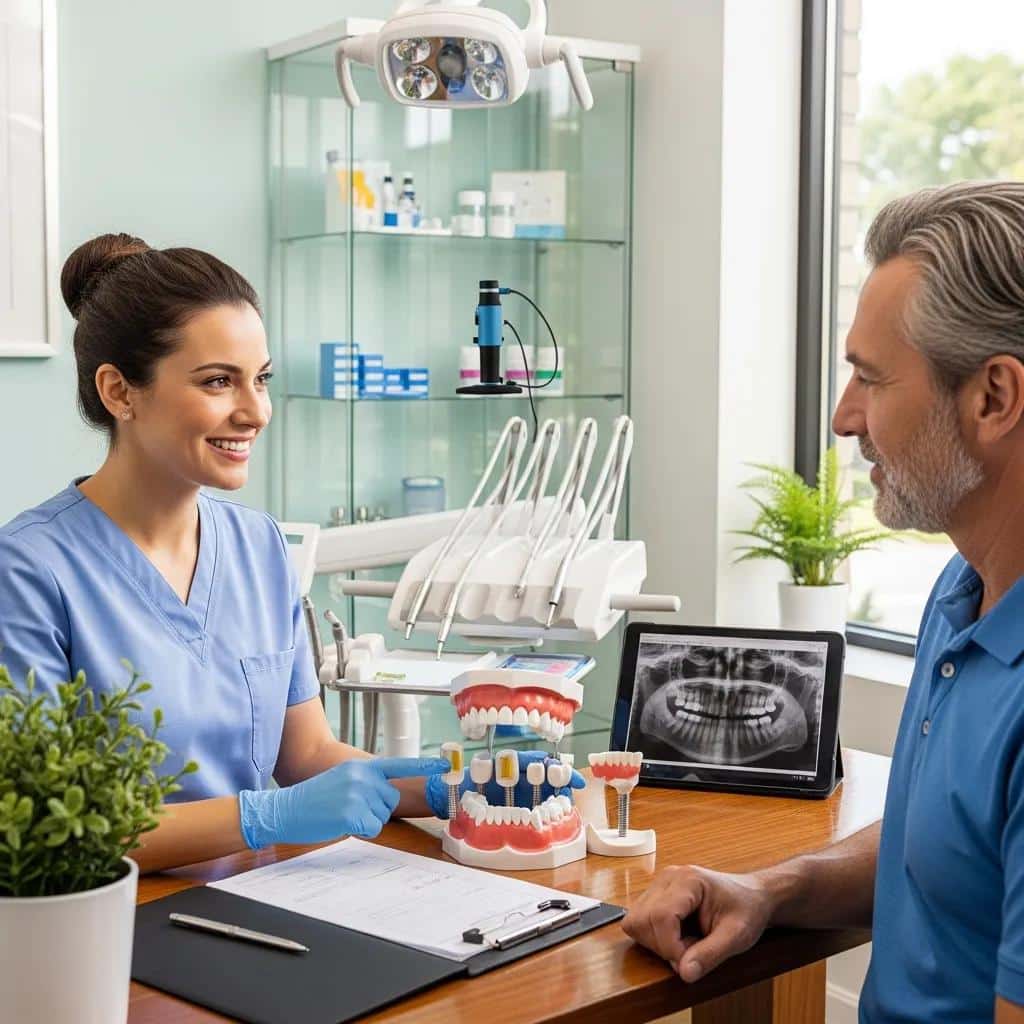
Dental implants are titanium or zirconia fixtures surgically placed into the jawbone to replace missing tooth roots; they support abutments and crowns to restore function and appearance. The mechanism of osseointegration—bone bonding to the implant fixture—creates a stable foundation, which reduces micromotion and preserves jawbone volume, and this biologic bonding is a primary reason implants have higher upfront costs but lower long-term replacement frequency. Implant treatment cost reflects multiple stages: surgical placement, possible bone grafting, abutment/crown fabrication (lab work), and follow-up visits; each stage contributes discrete fees and timing that affect overall pricing. Maintenance for implants involves daily oral hygiene similar to natural teeth plus professional monitoring to prevent peri-implantitis, with the value proposition being durable stability and often superior chewing function. Understanding these procedure components clarifies why implants are often recommended when long-term bone preservation and function are priorities, and sets up the next detail: specific clinical benefits and local cost ranges.
What Defines Dental Implants and Their Benefits for Long-Term Oral Health?
Dental implants are composed of three main meronym parts: the implant fixture (root-level device), the abutment (connecting component), and the crown (visible restoration). This prosthodontic treatment stimulates bone through functional loading—osseointegration—which helps maintain facial structure and reduces the progressive resorption seen with removable dentures. Clinically, implants restore near-natural chewing efficiency and aesthetics and are often favored for single-tooth implant or implant-supported denture scenarios because they do not rely on adjacent teeth for support. Recent clinical reasoning indicates implants produce high success rates when patients maintain rigorous hygiene and attend professional recalls, which contributes to strong patient satisfaction and long-term oral health outcomes. The biological mechanism that preserves bone also simplifies future treatment planning, a point that matters when comparing lifetime costs against alternatives.
How Much Do Dental Implants Cost in Longview, TX and What Factors Affect Pricing?
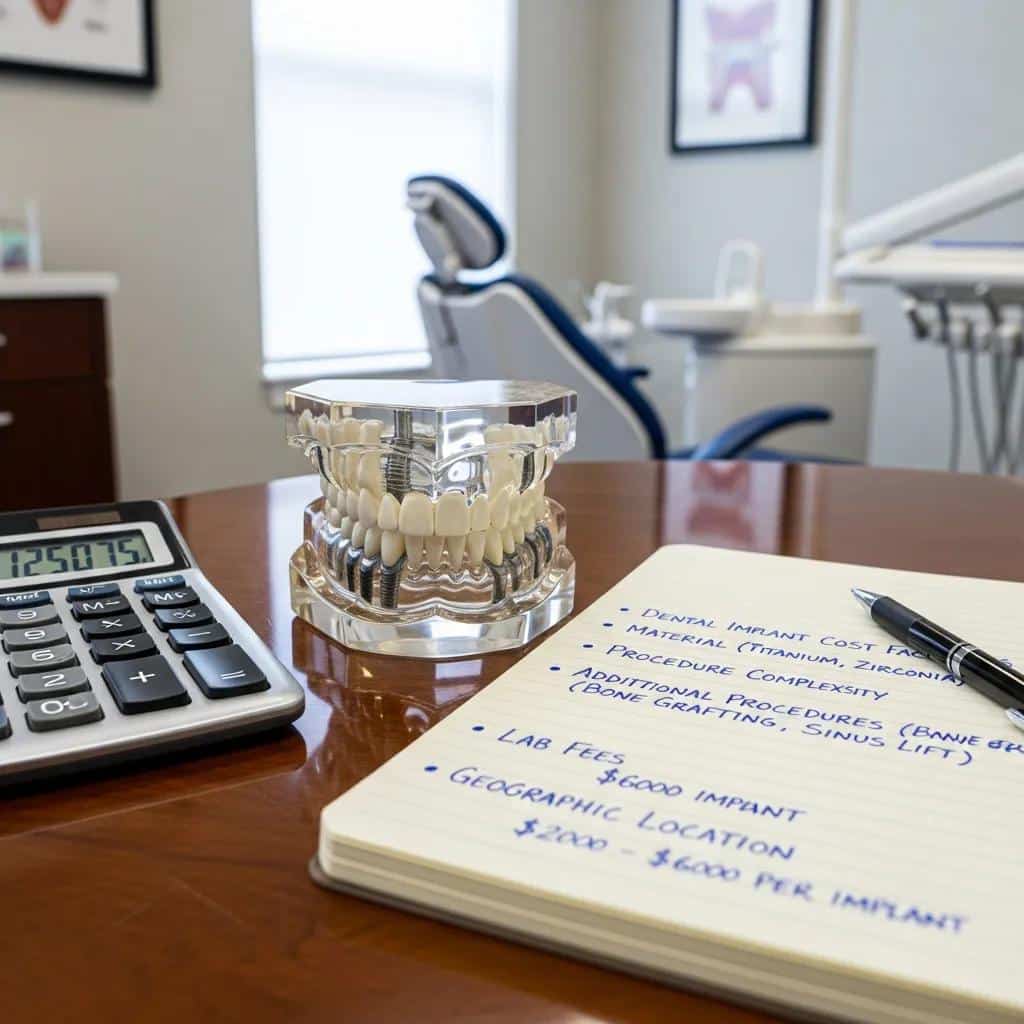
Approximate implant cost ranges in Longview typically fall into a broad band because of treatment variability: a single-tooth implant (fixture, abutment, crown) can range from approximately $3,000 to $6,000 or more depending on complexity. Key cost drivers include the number of implants required, the need for bone grafting or sinus lifts, extractions, choice of materials (zirconia vs. titanium components, all-ceramic crowns), and laboratory fees for custom prosthetics. Surgical complexity and additional specialist care—such as periodontist or prosthodontist involvement—also increase fees; conversely, straightforward single-tooth cases without grafting sit at the lower end of the range. Quotes often exclude certain recurring costs like routine professional prophylaxis or additional interventions to manage peri-implantitis, so requesting an itemized estimate is important. For patients seeking immediate clarity, a consultation provides a tailored estimate that reflects bone volume, treatment staging, and prosthetic choices, which leads into where to find local care.
For patients in Longview seeking implants, Affordable Dentist Near Me of Longview provides implant services at its Longview location and advertises free consultations plus flexible financing options and everyday low fees; scheduling a consultation there can yield a detailed, personalized cost estimate and treatment timeline. This local clinic mention is intended to help readers find a nearby provider to assess candidacy and get an itemized plan.
How Do Dental Bridges Compare in Cost, Types, and Maintenance Requirements?
Dental bridges are fixed prosthetic restorations that replace missing teeth by anchoring a pontic to adjacent teeth or implants; they differ from implants because they often rely on neighboring tooth structure and require preparatory work on abutment teeth. The bridge treatment pathway typically involves tooth preparation, impression or digital scanning, laboratory fabrication of the pontic and crowns, and cementation—each step creating specific cost items. Bridges can be less expensive upfront than implants for short-span replacements, but they transfer occlusal loads to adjacent teeth and may increase long-term maintenance demands on those abutments. From a maintenance perspective, bridging requires careful cleaning under pontics and around margins to prevent decay of abutment teeth, and bridges are susceptible to failure if supporting teeth develop caries or periodontal disease. Understanding bridge types and how they interact with adjacent teeth clarifies why bridges are chosen for certain clinical scenarios and what maintenance trade-offs to expect.
What Are the Different Types of Dental Bridges and Their Specific Uses?
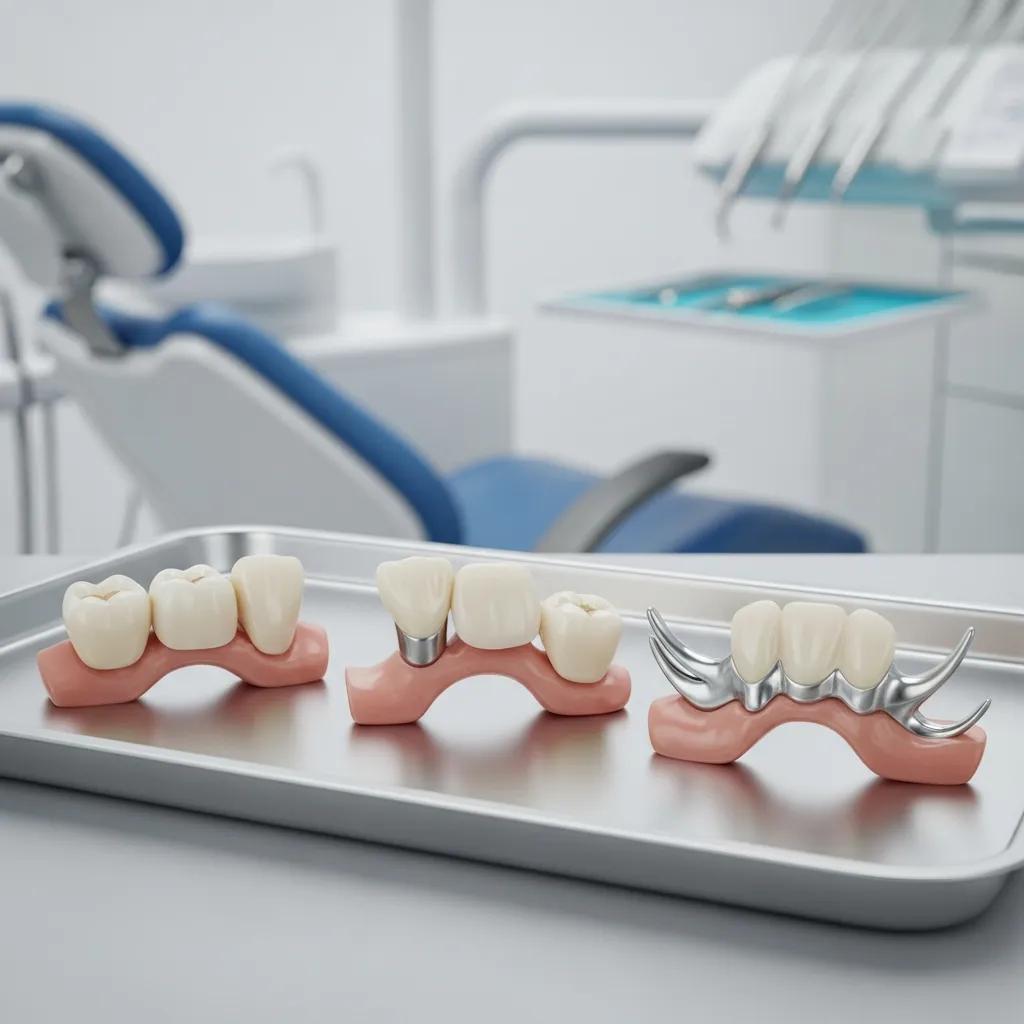
There are several bridge hyponyms useful to know: traditional bridge, cantilever bridge, Maryland (resin-bonded) bridge, and implant-supported bridge, each suited to different clinical needs. A traditional bridge uses crowns on both sides of a pontic and is common when both adjacent teeth need crowns; this offers strength but requires significant enamel reduction. A cantilever bridge anchors to a single adjacent tooth and is reserved for limited situations where only one strong abutment is available; it can place unusual force vectors on the supporting tooth. A Maryland bridge uses a metal or ceramic wing bonded to the back of adjacent teeth, preserving tooth structure but offering less strength for high-load posterior situations; it’s often used for single anterior replacements. Implant-supported bridges replace multiple teeth without sacrificing adjacent natural teeth and combine prosthodontic durability with the biological benefits of implants, but they come with higher surgical and lab costs. Each type has pros and cons that influence lifespan, maintenance, and when a clinician will recommend one over another.
The following bulleted list explains typical clinical uses for each bridge type.
Traditional Bridge: Best when adjacent teeth already require crowns; provides robust function for several missing teeth in sequence.
Cantilever Bridge: Used when a strong abutment exists on only one side; suitable for front teeth with limited force demands.
Maryland Bridge: Conservative option for single anterior tooth replacement with minimal tooth reduction.
What Is the Average Cost of Dental Bridges in Longview and What Influences It?
Average bridge cost in Longview varies with materials (porcelain-fused-to-metal vs. all-ceramic), number of units (two crowns plus pontic vs. longer spans), and laboratory craftsmanship; common ranges for three-unit bridges often sit between $1,500 and $3,000, generally lower than single full implant solutions but can still be substantial depending on customization and material selection. Main cost influences include the number of pontics required, whether adjacent teeth need root canal therapy or buildup before crowning, and the choice of high-quality ceramic materials or layered restorations for aesthetics. Bridges may incur future costs if supporting teeth fail due to decay or periodontal disease, which can lead to replacement or conversion to an implant-retained solution; this potential future expense is an important factor in long-term budgeting. When evaluating price quotes, request itemized estimates that show laboratory fees, provisional prosthesis costs, and any preparatory work so you can compare apples-to-apples with implant proposals. Clear communication about expected longevity and potential follow-up care helps patients anticipate future maintenance.
What Are Dentures and What Should Patients Know About Their Cost and Daily Care?
Dentures are removable prostheses that replace missing teeth and surrounding tissues; options include full dentures, partial dentures, immediate dentures, and implant-supported dentures which combine elements of both removable and fixed approaches. Denture cost reflects the type (full vs. partial), materials, complexity of jaw relationships, and whether implant attachments or bars are used for increased stability; maintenance needs range from daily cleaning and overnight soaking to periodic relines as the oral tissues and residual ridge remodel over time. Daily care is focused on removing plaque from prosthetic teeth, preventing staining, and managing fit changes through relining when bone resorption alters the denture-bearing tissues; dentures also require careful handling to avoid fracture of the denture base or acrylic teeth. Patients should understand that removable dentures often involve higher ongoing maintenance in the form of relines, adjustments, and replacements every several years, especially for conventional full dentures without implant support. Recognizing these care requirements helps patients weigh immediate affordability against repeated professional costs and quality-of-life impacts like chewing stability and speech.
What Types of Dentures Are Available and How Do They Differ?
Different denture types include full (complete) dentures for edentulous arches, partial dentures that clasp to remaining teeth, immediate dentures placed the same day as extractions, and implant-supported dentures that attach to implants for enhanced retention. Full dentures are the most economical option for complete tooth loss but rely entirely on tissue support and adhesives for retention, which can compromise chewing force and lead to faster ridge resorption. Partial dentures preserve remaining teeth and are a reversible option when multiple teeth are missing but some natural dentition remains; they are subject to clasp wear and require hygienic maintenance around abutment teeth. Implant-supported dentures—an example hyponym being the implant-supported denture—use fixtures and attachments to stabilize a removable prosthesis or be fixed into place, improving comfort and reducing bone loss, though they carry implant-level costs. Each denture type presents trade-offs in comfort, stability, maintenance frequency, and long-term tissue health.
The following numbered list outlines pros and cons of denture types.
Full Denture: Affordable initial cost; requires frequent relines and offers less chewing efficiency.
Implant-Supported Denture: Superior stability and bone preservation; higher upfront surgical investment.
How Much Do Dentures Cost in Longview and What Are the Maintenance Needs?
In Longview, denture cost depends on whether the restoration is a standard acrylic full denture, a cast metal partial, or an implant-retained prosthesis; typical ranges vary widely because of laboratory processing, materials, and whether implant components are involved. Conventional full dentures typically range from $600 to $1,500 per arch, partial dentures from $700 to $2,000, and implant-supported dentures can range from $3,500 to $7,000 or more depending on the number of implants and attachments. Maintenance tasks for dentures include daily brushing of the prosthesis with a non-abrasive denture cleanser, overnight soaking in a denture solution to reduce microbial buildup, and returning for relines or adjustments as ridge resorption changes fit; relining is often needed every 1–3 years depending on tissue changes. Patients should budget not only for the initial prosthesis but also for periodic adjustments, potential rebasing, and replacement every 5–10 years for conventional dentures, though implant-supported prostheses may extend functional lifespan. Clear expectations about required follow-up appointments for adjustments and relines reduce frustration and protect oral health by ensuring proper fit and minimizing sore spots.
The following bulleted list details essential daily and periodic denture care steps.
Clean dentures daily with a denture brush and non-abrasive cleaner, removing biofilm and deposits.
Soak dentures overnight to reduce staining and bacterial load, and rinse before reinsertion.
Schedule professional relines and checks every 12–36 months or sooner if fit changes or discomfort occur.
How Do Maintenance Needs Differ Among Dental Implants, Bridges, and Dentures?
Comparing maintenance regimes highlights practical differences patients will live with: implants require peri-implant surveillance and periodontal-like hygiene, bridges demand meticulous cleaning around abutment margins and under pontics, while dentures emphasize prosthesis cleaning, soaking, and periodic relines. Daily oral hygiene tools differ by option: implants benefit from interdental brushes and water flossers to clean the abutment interface, bridges require floss threaders or superfloss to clean under pontics, and dentures need dedicated brushes and soaking solutions to remove deposits. Professional care schedules also vary: implants often need routine professional examinations and targeted prophylaxis to monitor osseointegration and detect peri-implant disease early; bridges and dentures need periodic adjustments and repairs depending on wear and tissue changes. Understanding these distinctions helps patients choose based on lifestyle, manual dexterity, and willingness to perform daily maintenance, and sets up concrete daily and professional care steps for each treatment.
What Are the Daily and Professional Care Requirements for Dental Implants?
Daily implant care blends toothlike hygiene with vigilance: brush twice daily using a soft brush and non-abrasive toothpaste, clean interdental spaces around the implant with interdental brushes sized to the implant profile, and consider adjunctive water flosser use to reduce plaque at the peri-implant sulcus. Professional follow-up typically includes dental cleanings with instruments safe for implant surfaces, periodic radiographic checks to assess crestal bone levels, and clinical screening for signs of peri-implantitis such as bleeding on probing or suppuration. Prevention hinges on consistent home care and timely professional interventions; untreated peri-implantitis can lead to bone loss and implant failure, so early detection matters. Patients should watch for symptoms like new mobility, persistent soreness, or changes in the soft tissue and report these promptly to their clinician. Consistent maintenance preserves the implant’s structural benefits and supports its long-term lifespan.
The critical role of consistent home care and professional monitoring in preventing complications like peri-implantitis is underscored by research highlighting its prevalence and potential for implant loss.
Peri-Implantitis: Prevention & Treatment for Dental Implants
Peri-implant inflammations represent serious diseases after dental implant treatment, which affect both the surrounding hard and soft tissue. Due to prevalence rates up to 56%, peri-implantitis can lead to the loss of the implant without multilateral prevention and therapy concepts. Specific continuous check-ups with evaluation and elimination of risk factors (e.g. smoking, systemic diseases and periodontitis) are effective precautions.
Definition, etiology, prevention and treatment of peri-implantitis–a review, O Jung, 2014
Daily care checklist for implants:
Brush implants twice daily with a soft brush and low-abrasive paste.
Use interdental brushes or floss to remove biofilm at the implant-abutment junction.
Attend regular professional checkups for radiographic and clinical monitoring.
How Should Patients Maintain Bridges and Dentures to Maximize Longevity?
Bridges require techniques that protect abutment teeth and maintain the integrity of margins: use floss threaders or superfloss to clean under pontics and around crown margins, brush with a fluoride toothpaste to reduce caries risk on adjacent teeth, and schedule recalls to check fit and watch for recurrent decay at abutment sites. Denture maintenance emphasizes prosthesis hygiene and tissue care: remove and clean dentures after meals if possible, use a denture brush and non-abrasive cleaner daily, soak overnight to preserve acrylic and reduce microbial colonization, and avoid using abrasive household cleansers or hot water that can warp the base. Professional adjustments, such as relines and rebasing, address fit changes from bone resorption; prompt relines prevent sore spots and preserve chewing efficiency. Proactive care—both home and clinical—extends prosthesis lifespan and reduces the likelihood of costly emergency repairs or premature replacements.
Practical steps to maximize longevity:
For bridges, clean under pontics daily with targeted flossing to protect abutments.
For dentures, clean and soak nightly and seek relines as tissue changes occur.
For both, maintain routine professional visits to detect early problems and perform preventive maintenance.
Replacement Option
Daily Care
Professional Care
Typical Issues
Dental Implant
Brush twice daily, interdental brushes, water flosser
Professional prophylaxis, radiographic checks, implant probing
Peri-implantitis, soft tissue inflammation
Dental Bridge
Floss threaders under pontics, brush margins with fluoride paste
Regular exams, possible recementation
Decay on abutments, crown margin failure
Denture
Clean and soak daily, rinse before insertion
Relines, rebasing, adjustments
Fit changes, resin fracture, ridge resorption
What Are the Long-Term Value and Health Implications of Choosing Implants Over Bridges and Dentures?
Long-term value assessment must weigh upfront investment against cumulative maintenance, replacement cycles, and biologic outcomes such as bone preservation and facial support. Implants typically preserve alveolar bone through functional load transfer, reducing long-term resorption and preserving facial contours compared with removable dentures which accelerate ridge loss. Bridges protect esthetics and function in the near term but can compromise adjacent teeth and create downstream costs if abutments fail; this interplay affects total cost of ownership over a decade or more. Quality-of-life outcomes—chewing efficiency, speech, and confidence—often favor implant-retained solutions, particularly implant-supported dentures and implant-supported bridges, though patient preference, medical status, and budget constraints remain critical variables. A pragmatic long-term financial analysis includes likely reline and replacement intervals for dentures, potential rework for bridges, and the lower replacement frequency but need for peri-implant care with implants.
How Do Dental Implants Prevent Bone Loss Compared to Other Options?
Dental implants stimulate the surrounding alveolar bone through occlusal loading transmitted to the fixture; this biomechanical stimulus promotes remodeling and helps maintain bone density in the edentulous area. In contrast, conventional dentures rest on mucosal tissue and do not provide the mechanical stimulus required to maintain bone volume, which leads to progressive ridge resorption and altered fit over time. Bridges transfer load to adjacent teeth rather than to the missing site, thereby failing to address local bone loss at the edentulous ridge and potentially increasing stress on abutments. Clinically, preserving bone where implants are placed simplifies future restorative work and helps maintain long-term oral function and facial aesthetics—an important consideration for patients planning multi-decade oral health management. This biologic advantage often offsets higher initial implant costs when viewed through the lens of lifetime treatment planning.
What Are the Lifespan Expectations and Replacement Needs for Each Treatment?
Implants, when well-maintained and placed in suitable bone, often last decades and can function as long-term solutions with occasional prosthetic component replacement (crowns, abutments) rather than full system failure. Bridges typically have a lifespan of 5–15 years depending on oral hygiene, abutment tooth health, and occlusal forces, but can require earlier replacement if supporting teeth develop caries or periodontal disease. Dentures commonly need relining every 1–3 years and replacement approximately every 5–10 years for conventional acrylic prostheses as tissue and aesthetic needs evolve. Maintenance quality and patient habits significantly modify these ranges: meticulous hygiene, smoking cessation, and regular professional oversight extend lifespan across all modalities. When calculating long-term costs, include likely component replacements and maintenance visits rather than focusing solely on the initial price tag.
Understanding the expected longevity of dental treatments is crucial for patients to make informed decisions and for clinicians to set realistic expectations, as emphasized by dental research.
Dental Treatment Longevity & Patient Investment
Patients reasonably expect a return for their investment and want to know how long their treatment will last. Clinicians have an obligation to inform their patients so that they can make reasoned decisions about treatment options. Longevity data are also informative for health agencies setting service schedules for publicly funded treatment, and for determining settlements by insurers such as ACC.
How long will it last? The expected longevity of prosthodontic and restorative treatment, DR Schwass, 2013
Option
Typical Cost (Longview)
Lifespan Expectation
Maintenance Frequency
Bone Impact
Dental Implant
$3,000–$6,000+ per single tooth (approx.)
25+ years with care; often lifetime
Daily home care; professional checks every 3–6 months
Preserves bone via osseointegration
Dental Bridge
Moderate, lower than implants for short spans
5–15 years depending on abutment health
Daily cleaning under pontics; checkups every 6–12 months
Does not preserve bone at edentulous site
Denture (Full/Partial)
Lower initial cost; implant-supported higher
5–10 years standard; implant-supported longer
Daily cleaning and soaking; relines every 1–3 years
Accelerates resorption unless implant-retained
Which Financing Options Are Available in Longview for Dental Implants, Bridges, and Dentures?
Financing pathways for tooth replacement include in-house payment plans, third-party lenders such as healthcare credit lines, and staged treatment approaches that spread cost across visits; each option suits different budgets and treatment timelines. In Longview, clinics commonly present tiered options—phased treatment, partial payment plans, or third-party financing—to make higher-cost treatments like implants more accessible while preserving clinical outcomes. The clinic-level messaging frequently emphasizes affordability strategies, such as everyday low fees and flexible dental financing options, which help patients compare immediate costs against long-term value. When evaluating financing, request sample monthly payment scenarios tied to the exact itemized estimate so you can compare total interest, payment timelines, and how financing aligns with your budget. Understanding these practical financing mechanisms clarifies how to move forward with a preferred treatment without sacrificing care quality.
What Flexible Dental Financing Plans Does Affordable Dentist Near Me Offer?
Affordable Dentist Near Me of Longview publicizes several affordability-oriented claims including “Everyday Low Fees” and “Flexible Dental Financing Options” and offers free consultations for implants and dentures to help patients obtain personalized cost estimates and financing information. These stated offerings are intended to reduce upfront barriers to care by allowing patients to review options and discuss payment strategies during a no-cost consultation. For specific plan terms, monthly example payments, and eligibility, patients should bring treatment goals and insurance information to the consultation so the practice can present the most applicable financial choices. Scheduling a free consultation enables a clinician to provide an itemized treatment plan and explain how flexible financing can be applied to implants, bridges, or dentures to align clinical priorities with budget constraints.
Financing considerations to discuss during consultation:
Ask for itemized estimates showing surgical, prosthetic, and lab costs so financing covers the full treatment.
Discuss phased treatment to spread major expenses over time while prioritizing oral health.
Request sample monthly payment scenarios to compare third-party plans versus any in-house options.
How Can Patients Budget for Tooth Replacement Treatments Effectively?
Budgeting effectively begins with obtaining multiple itemized estimates and comparing which line items are included—surgery, grafting, lab fees, temporary prostheses, and follow-up visits—so you can model total cost. Consider phased approaches (e.g., extract now, place implants later) to distribute costs over months, and ask about third-party payment plans or dental credit lines that may reduce monthly burden while considering interest and fees. Factor ongoing maintenance into the budget: prophylaxis visits, relines, and potential prosthetic repairs should be planned as recurring costs rather than surprises. Finally, create a realistic monthly savings target or financing plan based on the lowest acceptable timeline for initiating treatment; combining savings with a financing solution often provides the most flexible path. Preparing a written budget and discussing it during a free consultation ensures financial transparency and reduces the chance of unforeseen expenses.
Financing Option
Typical Use Case
Typical Terms / Notes
In-house payment plan
Short-term splits for procedures with clinic
Varies by clinic; often interest-free short-term options
Third-party credit (e.g., CareCredit)
Larger treatments like implants
May offer promotional periods; review interest after promo
Phased treatment + savings
Staging surgery and prosthetics
Allows spreading payments over months; depends on clinical plan
How Can Patients Make the Right Choice Between Implants, Bridges, and Dentures in Longview?
Deciding among implants, bridges, and dentures requires assessing clinical factors (bone volume, periodontal status), financial constraints (budget, willingness to finance), and lifestyle expectations (chewing demands, esthetic priorities). A structured decision framework weighs short-term affordability against long-term value: implants often demand higher upfront investment but deliver superior bone preservation and fewer replacement cycles, bridges preserve function without implants but can compromise adjacent teeth, and dentures offer low initial cost with predictable ongoing replacement and relining schedules. Patients should collect clinical data—radiographs, periodontal charting—and obtain itemized estimates to compare real-world cost pathways. Ultimately, an individualized clinical exam is necessary to confirm suitability for implants versus alternatives and to identify when adjunctive procedures like bone grafting are needed, which affects both candidacy and cost.
What Factors Should Influence Your Decision: Budget, Oral Health, and Lifestyle?
A practical checklist helps prioritize decisions based on personal circumstances: medical history and bone volume determine implant candidacy, number and location of missing teeth influence whether a bridge or implant-supported bridge is appropriate, and manual dexterity or comfort with daily hygiene affects whether removable dentures are a safe choice. Lifestyle considerations—such as desire for maximum chewing efficiency, participation in contact sports, or concern about long-term facial support—tilt the decision toward implant solutions, whereas limited budgets or temporary prosthetic needs may make bridges or dentures more sensible. Clinically, verify periodontal health and evaluate adjacent teeth strength before committing to bridgework; conversely, evaluate the residual ridge and bone density for implant planning. Using this structured approach ensures that cost considerations do not overshadow critical clinical suitability.
Decision checklist to bring to your consultation:
Current dental X-rays and a list of medications/medical conditions.
Budget range and openness to financing or phased treatment.
Lifestyle priorities: chewing ability, aesthetics, and willingness to maintain daily hygiene.
Where Can You Schedule a Free Consultation to Explore Your Options?
To get a personalized examination and itemized treatment plan, schedule a free consultation at the Longview dental location for a full review of implants, bridges, and dentures; during that appointment bring recent X-rays if available and be prepared to discuss budget and preferences. The practice’s Longview location page and its Google Business Profile list the clinic and help patients confirm location details and available services; bringing questions about financing and expected timelines to the consultation will produce the most actionable estimate. Prepare a consultation checklist—include medical history, current prosthesis information, and a list of priorities—to maximize the value of the appointment. A focused free consultation is the practical next step to convert comparative information into a tailored treatment plan with clear cost and maintenance expectations.
What Are Common Patient Questions About Dental Implants, Bridges, and Dentures Maintenance?
Patients frequently ask which option offers the best balance of cost and care, how daily habits affect longevity, and what complications to watch for—issues that shape realistic expectations and adherence to maintenance regimens. Concise, practical answers help patients prioritize: implants deliver long-term value with surgical investment; bridges serve well when adjacent teeth are otherwise healthy; dentures remain a cost-effective solution with expected relines and replacements. Daily habits like smoking cessation, consistent oral hygiene, and avoiding high-impact foods materially extend the lifespan of all restorations. Clear answers to these common questions support informed consent and realistic planning, which reduces surprises and promotes better long-term outcomes.
Which Option Offers the Best Balance of Cost and Care for Long-Term Success?
The best balance depends on patient priorities: for those prioritizing longevity, chewing function, and bone preservation, implants typically offer the strongest long-term value despite higher initial costs, because they reduce the need for repeated prosthesis replacement and preserve alveolar bone. Patients primarily constrained by immediate budget may choose bridges or dentures as practical interim solutions, understanding that bridges can compromise adjacent teeth and dentures typically require ongoing relines and replacements. For many, implant-supported dentures represent a hybrid compromise—improved stability and bone preservation with fewer prosthetic adjustments than conventional dentures, though still requiring implant-level investment. Ultimately, individualized assessment during a professional consultation clarifies which trade-offs align best with your oral health, budget, and lifestyle priorities.
Typical patient profiles and recommended options:
Prioritize long-term durability and bone health: Dental implants or implant-supported bridges.
Need moderate cost with fixed solution: Traditional bridges if adjacent teeth are healthy.
Require low upfront cost or temporary solution: Removable partial or full dentures.
How Do Daily Habits Affect the Longevity of Each Tooth Replacement Method?
Daily habits have measurable effects: implants benefit from rigorous plaque control, interdental cleaning, and avoidance of smoking to reduce the risk of peri-implantitis; bridges require careful flossing under pontics and fluoride use to protect abutment teeth; dentures benefit from nightly removal and cleaning, avoiding overnight wear unless otherwise instructed and avoiding abrasive cleaners that damage acrylic. Dietary choices—limiting hard, sticky, or excessively chewy foods—reduce mechanical stress on bridges and denture teeth and lower fracture risk. Smoking and uncontrolled diabetes are systemic factors that reduce healing and increase complications for implants and can accelerate periodontal breakdown around remaining teeth supporting bridges. Changes in daily habits produce meaningful improvements in longevity and reduce the probability of costly rework.
Daily habit recommendations with expected impacts:
Quit smoking: Reduces implant complications and improves healing outcomes.
Consistent interdental cleaning: Preserves abutment teeth and implants by removing plaque.
Proper denture care: Extends prosthesis life and reduces infection risk.