Can Tooth Extraction Cause Ear Pain? Understanding Causes, Symptoms, and Relief Options
Tooth extraction is a common dental procedure, but many patients are surprised to experience ear pain afterward. Understanding the connection between tooth extraction and ear pain is crucial for effective management and relief. This article will explore the various causes of ear pain following tooth extraction, the symptoms to watch for, and the relief options available. By addressing these concerns, patients can better navigate their post-extraction recovery and seek appropriate care when necessary. We will cover the anatomical connections between teeth and ears, common causes of ear pain, and when to contact a dentist in Longview for assistance.
The extensive sensory innervation of the ear means that pain from various sources, including dental procedures, can manifest as referred otalgia.
Referred Otalgia: Causes, Innervation & Management
Referred otalgia is common and treatment should be aimed at the underlying pathology. Potential aetiologies are vast given the extensive sensory innervation of the ear. An understanding of this and a structured approach to patient assessment is important for optimal patient management.
Aetiology and management options for secondary referred otalgia: a systematic review and meta-analyses, 2023
What Is the Connection Between Tooth Extraction and Ear Pain?
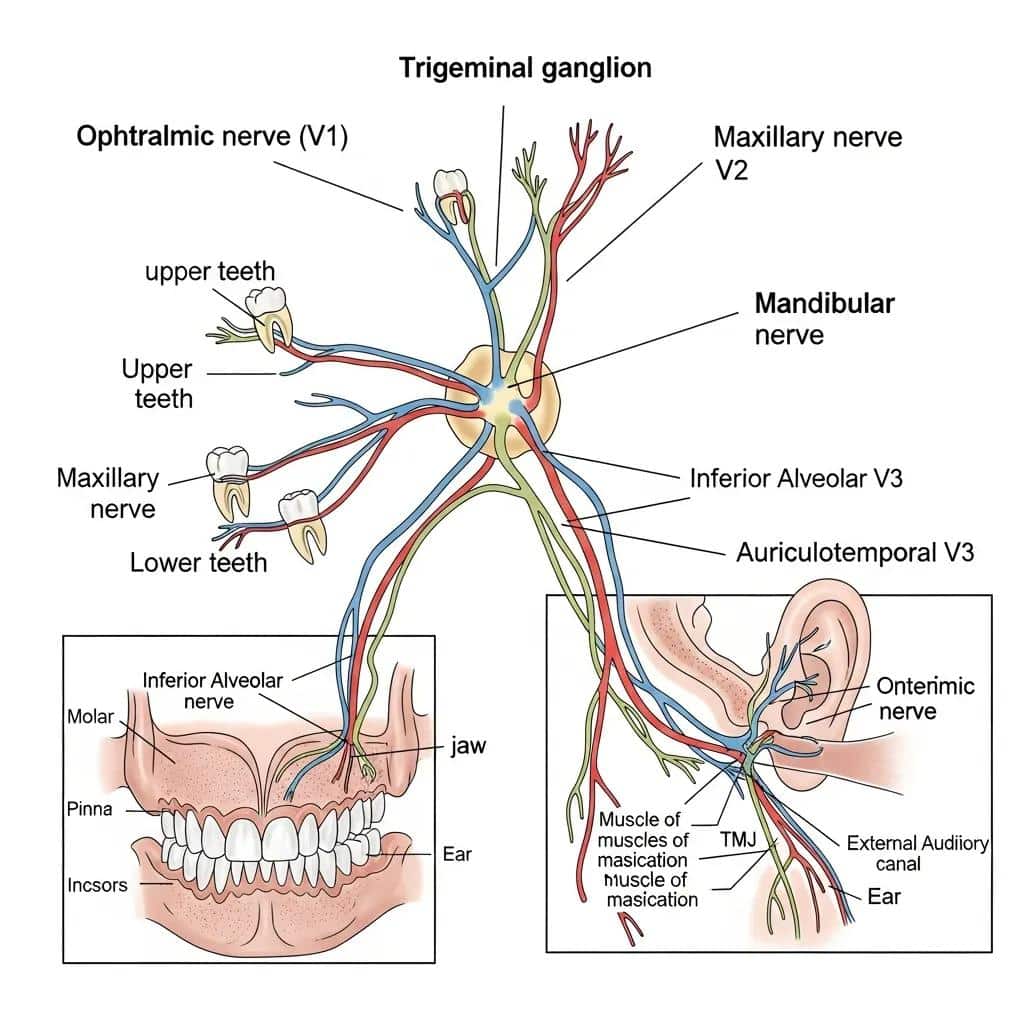
Tooth extraction can lead to ear pain due to several anatomical and neurological connections. The trigeminal nerve, which is responsible for sensation in the face, has branches that extend to the jaw and ear. When a tooth is extracted, the trauma can irritate this nerve, resulting in referred pain that manifests as ear discomfort. Additionally, the jaw’s anatomy plays a significant role in how pain is perceived. Variations in jaw structure can influence the intensity and location of pain experienced after dental procedures.
How Does the Trigeminal Nerve Link Teeth, Jaw, and Ear Pain?
The trigeminal nerve is a crucial pathway for transmitting sensory information from the face to the brain. When a tooth is extracted, the surrounding tissues, including the jaw and gums, can become inflamed. This inflammation can irritate the trigeminal nerve, leading to referred pain in the ear. For instance, patients may feel ear pain even though the source of the discomfort is in the jaw or teeth. Understanding this connection helps patients recognize that ear pain can be a secondary effect of dental procedures.
What Role Does Jaw Anatomy Play in Post-Extraction Ear Discomfort?
Jaw anatomy significantly impacts how pain is perceived after tooth extraction. Variations in jaw structure, such as the alignment of the temporomandibular joint (TMJ), can affect the distribution of pain signals. If the jaw is misaligned or if there is excessive strain on the jaw muscles, patients may experience heightened sensitivity and discomfort in the ear area. This anatomical relationship underscores the importance of considering individual differences in jaw structure when evaluating post-extraction pain.
What Are the Common Causes of Ear Pain After Tooth Extraction?
Several factors can contribute to ear pain following tooth extraction. Understanding these causes can help patients identify the source of their discomfort and seek appropriate treatment.
Referred Pain: Pain from the extraction site can be perceived in the ear due to the interconnectedness of the trigeminal nerve.
Inflammation and Swelling: Post-operative inflammation can lead to pressure in the surrounding areas, causing discomfort in the ear.
Dry Socket: This painful condition occurs when the blood clot at the extraction site dislodges or dissolves prematurely, exposing bone and nerves, which can lead to ear pain.
TMJ Strain or Dysfunction: Strain on the TMJ from clenching, grinding, or jaw movement during or after the procedure can result in ear pain.
Sinus Issues: For upper molar extractions, sinus pressure or inflammation can lead to referred pain in the ear.
Infection: Post-extraction infections can cause localized pain that radiates to the ear.
How Does Referred Pain Cause Earache After Extraction?
Referred pain is a phenomenon where pain is felt in a location different from its source. After a tooth extraction, the irritation of the trigeminal nerve can lead to sensations of pain in the ear. This occurs because the brain may misinterpret signals from the nerve, causing discomfort to be felt in areas that are not directly affected by the extraction. Understanding this mechanism can help patients manage their expectations regarding post-operative pain.
Indeed, clinical evidence demonstrates how addressing dental issues can directly resolve persistent ear pain caused by referred sensations.
Tooth Extraction Resolves Chronic Earache
The underlying cause of a 2 year history of increasingly severe unilateral earache was identified as a partially erupted lower third molar tooth. Previous multi-disciplinary investigations had been unable to identify the cause. The correct diagnosis was made by electro-dermal screening (EAV) and subsequently confirmed by local anesthetic block. Extraction of the tooth, together with debridement of the surrounding tissues, resulted in immediate and permanent remission of pain with a 2 year follow-up.
A Dental Focus as a Cause of Trigeminal Neuralgia: Case Report, 1994
Can Inflammation and Swelling Lead to Ear Pain?
Yes, inflammation and swelling are common after tooth extraction and can contribute to ear pain. The body’s natural response to surgery involves increased blood flow and immune activity in the area, which can lead to swelling. This swelling can create pressure on nearby structures, including the ear, resulting in discomfort. Managing inflammation through prescribed medications and following post-operative care instructions can help alleviate this pain.
What Is Dry Socket and How Does It Cause Ear Pain?
Dry socket is a complication that can occur after tooth extraction, characterized by the loss or premature dissolution of the blood clot at the extraction site. This condition exposes the underlying bone and nerves, leading to severe pain that can radiate to the ear. Patients with dry socket often describe the pain as throbbing and persistent, making it essential to seek dental care for appropriate treatment. Treatment options may include medicated dressings and pain management strategies.
How Does TMJ Strain or Dysfunction Result in Ear Pain?
TMJ strain or dysfunction can lead to ear pain after tooth extraction due to the close anatomical relationship between the jaw joint and the ear. If the jaw is overworked, misaligned, or strained during or after the extraction process, it can result in muscle tension and pain that radiates to the ear. Patients experiencing TMJ-related ear pain may benefit from relaxation techniques, jaw exercises, and physical therapy to alleviate discomfort.
Can Sinus Issues After Upper Molar Extraction Cause Ear Pain?
Yes, sinus issues can arise after the extraction of upper molars, particularly if the roots of the teeth are close to the sinus cavities. Inflammation or pressure in the sinuses can lead to referred pain in the ear, causing discomfort. Patients should be aware of this potential complication and consult their dentist if they experience persistent ear pain following upper molar extractions.
How Can Infection After Extraction Lead to Ear Discomfort?
Infection at the extraction site can lead to localized pain that radiates to the ear. Symptoms of infection may include increased swelling, redness, warmth, and fever, in addition to ear pain. Prompt dental evaluation and treatment are crucial to address infections and prevent further complications. Antibiotics and pain management may be necessary to resolve the issue.
Is Ear Pain Normal After Tooth Extraction and How Long Does It Last?
Experiencing ear pain after tooth extraction can be common, but the duration and intensity of the pain can vary. Understanding what to expect can help patients manage their recovery effectively.
What Is the Typical Duration of Ear Pain Post-Extraction?
Typically, ear pain following tooth extraction may last for a few days to about a week, depending on the individual’s healing process and the complexity of the extraction. Most patients find that the pain gradually diminishes as the inflammation subsides and the extraction site heals. However, if ear pain persists beyond a week or worsens, it is advisable to consult a dentist for further evaluation.
When Should You Be Concerned About Persistent or Severe Ear Pain?
Patients should be vigilant for signs of complications, such as persistent or severe ear pain that does not improve with time. Other concerning symptoms may include fever, increased swelling, discharge from the extraction site, or difficulty opening the mouth. If any of these symptoms occur, it is essential to contact a dentist promptly to address potential complications.
How Can You Relieve Ear Pain After Tooth Extraction?
Relieving ear pain after tooth extraction involves a combination of home remedies and professional care. Understanding effective strategies can enhance comfort during recovery.
What Are Effective Home Remedies for Post-Extraction Earache?
Several home remedies can help alleviate ear pain after tooth extraction:
Warm Compress: Applying a warm compress to the affected area can help reduce pain and promote relaxation.
Over-the-Counter Pain Relievers: Nonsteroidal anti-inflammatory drugs (NSAIDs) such as ibuprofen can help manage pain and reduce inflammation.
Salt Water Rinse: Gently rinsing with warm salt water can help keep the extraction site clean and reduce discomfort.
These remedies can provide temporary relief, but patients should consult their dentist if pain persists.
How Do Cold Compresses and Pain Relievers Help?
Cold compresses can be effective in reducing swelling and numbing pain in the ear area. Applying a cold pack for 15-20 minutes can help alleviate discomfort. Additionally, over-the-counter pain relievers, such as ibuprofen or acetaminophen, can help manage pain and inflammation. Following the recommended dosage is essential for safety and effectiveness.
When Should You Contact a Dentist in Longview for Ear Pain After Extraction?
Knowing when to seek professional dental care is crucial for managing ear pain after tooth extraction. Certain warning signs indicate the need for immediate attention.
What Are the Warning Signs That Require Professional Dental Care?
Severe Pain: Intense pain that does not respond to over-the-counter medications.
Fever: A fever may indicate an infection that requires treatment.
Swelling: Significant swelling that worsens over time.
Discharge: Any unusual discharge from the extraction site.
Difficulty Opening Mouth: Limited jaw movement or severe discomfort when opening the mouth.
These symptoms may indicate complications that require professional intervention.
How Does Affordable Dentist Near Me of Longview Manage Post-Extraction Complications?
At Affordable Dentist Near Me of Longview, we prioritize patient comfort and care during the recovery process. Our team is equipped to manage post-extraction complications effectively. We provide thorough evaluations for any persistent pain or discomfort, ensuring that patients receive the appropriate treatment. Our commitment to patient care includes personalized follow-up appointments to monitor healing and address any concerns.
Comprehensive management of post-extraction complications, from initial assessment to ongoing care, is essential for optimal patient outcomes.
Managing Post-Extraction Pain & Complications
Tooth extraction, a common procedure in dental practice, is associated with various potential complications that can impact patient outcomes and satisfaction. This chapter provides an in-depth analysis of the common complications associated with tooth extractions, including bleeding, pain, infection, dry socket, and damage to surrounding structures. It emphasizes the importance of a comprehensive preoperative assessment, which includes a detailed review of the patient’s medical history and an evaluation of risk factors. This assessment is crucial for identifying patients at higher risk of complications and for implementing appropriate preventive measures. The chapter discusses strategies for managing immediate post-extraction issues such as bleeding and pain, as well as approaches for addressing more complex complications like infections and dry socket.
Management of Complications in Tooth Extraction, DS Hwang, 2024
How Can You Prevent Ear Pain and Other Complications After Tooth Extraction?
Preventing ear pain and other complications after tooth extraction involves following proper post-operative care guidelines. Understanding these steps can enhance recovery.
What Post-Operative Care Steps Reduce Risk of Dry Socket and Infection?
To minimize the risk of dry socket and infection, patients should adhere to the following post-operative care steps:
Avoid Straws: Do not use straws for at least 24-48 hours after extraction to prevent dislodging the blood clot.
Maintain Oral Hygiene: Gently brush teeth and rinse with salt water starting 24 hours after extraction to keep the mouth clean.
Follow Dietary Recommendations: Stick to soft foods and avoid hot, spicy, or crunchy items that may irritate the extraction site.
These steps can significantly reduce the risk of complications and promote healing.
How Does Following Dentist Instructions Help Prevent TMJ and Sinus Issues?
Following the dentist’s post-operative instructions is crucial for preventing TMJ strain and sinus issues. Adhering to recommended care practices can help ensure proper healing and minimize discomfort. Patients should also communicate any concerns or unusual symptoms to their dentist, allowing for timely intervention if complications arise.