How to Compare Dental Implant Prices: Tips for Finding the Best Deal on Affordable Implants in Mansfield
Comparing dental implant prices reveals the true drivers of cost and helps you choose a treatment that balances quality, longevity, and out-of-pocket expense. This guide explains how implant pricing is built from component-level charges through adjunctive procedures, then walks you step-by-step through practical strategies to collect, normalize, and evaluate quotes from different providers. If your priority is a reliable, long-lasting tooth replacement at a reasonable total cost, learning how to compare dental implant prices will save money and reduce surprises during treatment. For readers ready for a personalized estimate, Dentist In Mansfield– Dentures and Dental Implants offers a Free Dental Implant Consult and a Free New Patient Consultation as a practical next step to get an itemized, local quote and a tailored plan. The article covers the key cost components, reasons prices vary across Mansfield and Texas, local financing and discount options, insurance realities, how to evaluate quality versus price, and a checklist you can use when comparing multiple quotes.
What Are the Key Components Included in Dental Implant Costs?
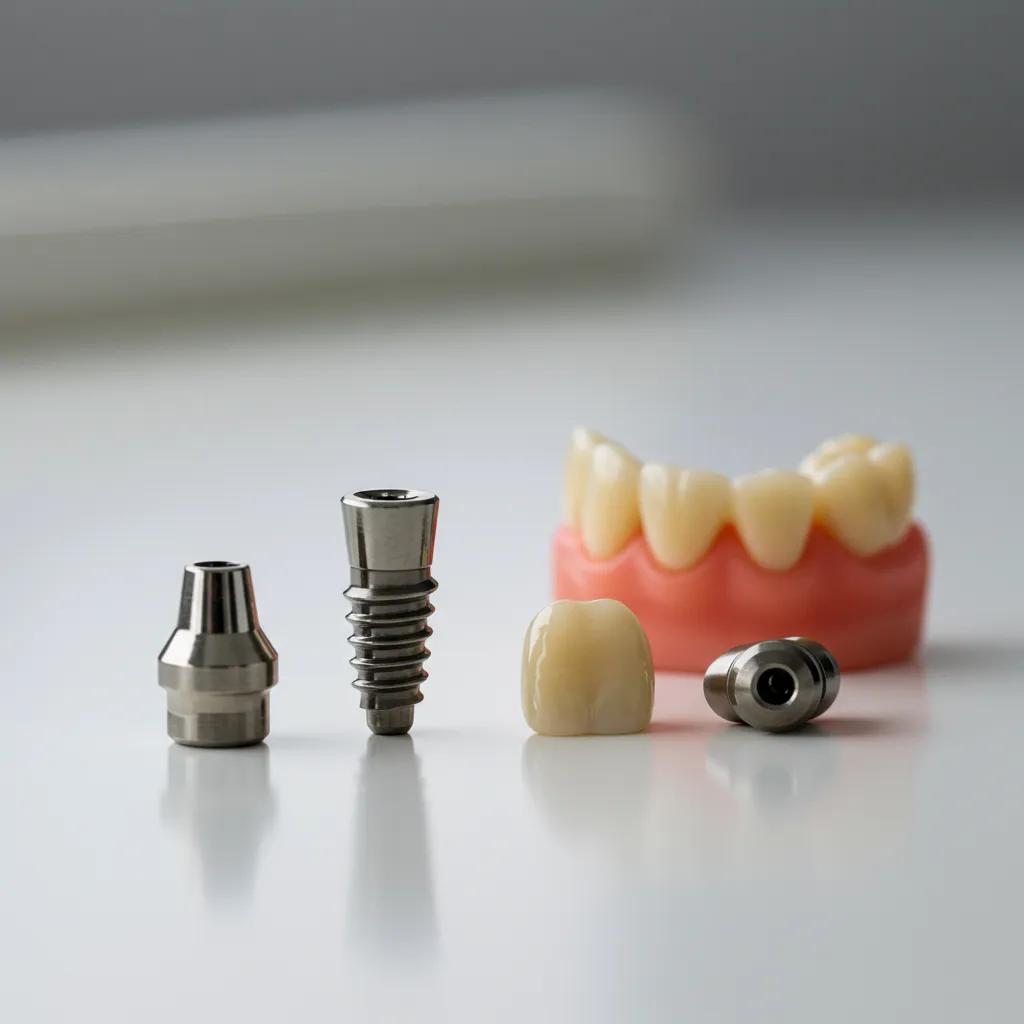
Dental implant costs are made up of distinct components—each billed separately—so comparing quotes requires line-item clarity. The main parts are the implant post (fixture), the abutment that connects the post to the restoration, and the final crown or prosthesis, with additional charges for imaging, anesthesia, lab fees, and any adjunctive procedures. Understanding these elements and typical ranges helps you normalize quotes and see where lower prices might omit necessary items. Below is a concise breakdown of the common line items and a typical range so you can ask targeted questions when you get quotes; this sets the stage for interpreting additional procedures that might appear later in an estimate.
Component
What It Covers
Typical Cost Range
Implant post (fixture)
Surgical placement of titanium or zirconia implant into jawbone
$800–$2,500
Abutment
Connector piece between implant and crown; may be stock or custom
$200–$800
Crown or prosthesis
Final tooth restoration (porcelain, ceramic, hybrid) and lab fees
$600–$2,000
Surgical fees & anesthesia
Surgeon time, facility fees, sedation if needed
$300–$1,200
Imaging & diagnostics
X-rays, CBCT scans, impressions
$100–$600
Adjunctive procedures
Extractions, bone grafts, sinus lifts as required
$200–$3,000+
This table illustrates where most of the total comes from and why itemized quotes are essential; the next section explains the core implant components in more detail and why each is billed separately.
What Does the Dental Implant Procedure Include: Post, Abutment, and Crown?
The implant post is the surgically placed fixture that serves as the artificial tooth root and requires osseointegration to become stable; this explains why the post is a major portion of the overall cost. The abutment is the intermediary component that secures the final crown to the post, and it may be a stock part or a custom-milled piece—material choice and customization affect price. The crown is the visible tooth replacement; laboratory fees, material selection (porcelain fused to metal, zirconia, or layered ceramics), and aesthetic work drive the crown’s cost. Because materials and lab processes differ in longevity and appearance, each component is usually quoted as a separate line item, and understanding that separation lets you compare apples to apples between providers. Knowing this breakdown helps you ask specifically which materials and brands are included in a quote and why their costs differ.
How Do Additional Procedures Like Bone Grafts Affect Implant Prices?
Adjunctive procedures can substantially raise the final price and extend the timeline because they address underlying biological needs before implant placement can be successful. Common adjunctive treatments include tooth extraction, bone grafting to rebuild deficient jawbone, and sinus lift procedures for upper jaw implants; each has its own fee and recovery period. Bone graft materials may be autograft, allograft, or synthetic, and the graft’s complexity and volume influence cost as well as whether a secondary healing period is required before implant placement. When a clinician includes adjunctive procedures in an estimate, those items should be listed separately so you can compare whether other providers are factoring them into their baseline price or treating them as optional add-ons. Understanding when such procedures are necessary prevents surprise costs and lets you evaluate whether lower initial quotes are realistic for your clinical needs.
Why Do Dental Implant Prices Vary Across Mansfield and Other Clinics?
Dental implant prices vary because of clinic overhead, provider expertise, geographic cost differences, and the materials and technologies used during treatment. Clinics with higher fixed costs or those that invest in advanced imaging and guided surgery may charge more but also deliver efficiencies and precision that reduce complication risk. Provider factors—such as specialist training, surgical experience, and reputation—also influence fees because they correlate with outcomes; at the same time, implant brand selections and warranty policies create price differences that matter over the long term. Appreciating these drivers helps you weigh whether a higher upfront price may represent better value over an implant’s expected lifetime.
How Do Materials and Implant Types Influence Cost Differences?
Material choices such as titanium versus zirconia implants, the selection of OEM branded implant systems versus generic options, and the choice between single-tooth implants, multiple-tooth implants, or full-arch solutions such as All-on-4 each have distinct cost and longevity trade-offs. Titanium implants are widely used for durability and osseointegration; zirconia can offer aesthetic advantages in certain cases but may cost more. Full-arch systems reduce the per-tooth cost in some scenarios but involve greater surgical complexity and higher initial fees compared with single-tooth replacements. When comparing quotes, pay attention to the implant brand and material listed on the estimate since these choices affect prosthetic compatibility, long-term maintenance, and potential replacement costs down the road.
What Role Does Dentist Experience and Clinic Location Play in Pricing?
Dentist experience, specialty training (such as oral surgery or prosthodontics), and the complexity of cases a clinic handles affect fees because they directly relate to predictability of outcomes and complication rates. Clinics in urban centers or higher-rent neighborhoods typically have higher overhead, which is reflected in pricing, while smaller local practices may have lower fees but different resource availability. That said, a higher price does not automatically mean better care; investigate credentials, case results, and whether the estimate includes follow-up care and warranty terms. Evaluating these factors helps you decide when paying a premium is justified by superior planning, technology, or long-term support.
How Can You Find Affordable Dental Implant Options in Mansfield?
Finding affordable implants in Mansfield requires combining local market knowledge with financing strategies and discount programs to lower out-of-pocket costs responsibly. Start by collecting itemized quotes from multiple local providers and comparing identical line items—this reveals where savings exist or where cheaper quotes cut corners. Exploring financing through clinic-sponsored plans, third-party medical credit, or dental discount programs can turn a high upfront cost into manageable monthly payments, and being aware of local special offers such as free consults helps you obtain a personalized assessment without initial expense. Below is a practical table comparing common local financing and discount approaches to help you evaluate which combination could reduce your monthly payment while protecting quality.
Financing Option
Terms / Requirements
Typical Monthly Example or Savings
In-house payment plan
Flexible clinic plan with scheduled payments
$150–$400/month depending on term
Third-party financing (medical credit)
Requires credit approval; may offer deferred interest
$100–$350/month depending on term
Dental discount plan
Membership-based percentage off services
30–60% savings on listed services
Staged treatment
Spread procedures over months to reduce upfront cost
Pays only for each phase as scheduled
To assess these options locally, ask each provider for sample monthly scenarios and whether a dental discount plan or in-house financing can be combined with insurance to lower net cost.
The first step is to request itemized estimates from each clinic and a sample payment schedule.
The second step is to check eligibility requirements for any clinic financing or third-party credit.
The third step is to compare the actual monthly payment and total paid over the financing term.
These steps let you quantify trade-offs between interest-bearing plans and interest-free clinic options, and the next subsection details the specific financing plans and payment options you should expect to encounter when exploring local offers.
What Financing Plans and Payment Options Are Available for Dental Implants?
Financing options typically fall into three categories: clinic in-house plans, third-party medical or dental credit, and staged treatment that spreads clinical phases across months. In-house plans often provide flexible monthly payments and may be interest-free for a promotional period, whereas third-party credit services require credit approval and can extend terms up to several years with varying APRs. Staged treatment allows patients to pay only for diagnosis, grafting, or implant placement as each phase occurs, reducing immediate cash needs but potentially extending total timeline and administrative steps. When evaluating a plan, request an amortization example showing monthly payments, total interest, and any penalties for early payoff; this transparency helps you compare the real monthly burden and cumulative cost. For local patients in Mansfield, inquire whether clinics combine financing with a dental discount plan that can reduce the principal before financing is applied.
In-house plans may offer the most flexibility for patients with uneven cash flow.
Third-party financing can make high-cost treatments accessible but requires careful scrutiny of APRs and fees.
Staged treatment works well when clinical conditions permit delaying portions of treatment.
How Do Dental Discount Programs and Special Offers Help Lower Costs?
Dental discount programs are membership packages that provide percentage discounts off standard fees for procedures rather than acting as insurance; they often reduce costs by 30–60% on eligible services, making implants and adjunctive treatments more affordable for non-insured patients. Special offers such as Free Dental Implant Consults or New Patient Consultations let you obtain diagnostic information and an itemized estimate at no initial cost, improving your ability to compare real offers. When evaluating a discount plan, verify the procedures covered, the providers in-network, any waiting periods, and how discounts apply to lab fees or adjunctive surgeries. Combining a discount plan with financing can lower the financed principal, reducing monthly payments and total interest paid. For local patients interested in a customized plan, Dentist In Mansfield- Dentures and Dental Implants advertises flexible financing and a dental discount plan that claims 30–60 percent savings on services, which can be considered as part of an affordability strategy.
Verify membership terms and exact exclusions before joining.
Confirm whether discount savings apply to implant hardware, lab fees, and surgical fees.
Ask whether special offers such as free consults include diagnostic imaging or if those carry separate fees.
Does Dental Insurance Cover Dental Implants? What Should You Know?
Dental insurance coverage for implants varies widely and often does not cover the full cost; while some plans offer partial coverage for portions of implant treatment, many exclude implants or treat them as major restorative procedures with limited benefits. The practical reality is that implants are frequently handled as elective major services with coverage caps and waiting periods, so assuming full insurance coverage can lead to surprises. To maximize benefits, get pre-authorization, an itemized estimate with procedure codes, and a clear statement from your insurer about covered line items before treatment begins.
Insurance Type
Typical Coverage for Implants
Tips to Maximize Benefits
Traditional dental PPO
May cover lab fees or crown portion partially; implants often excluded or limited
Obtain pre-authorization; submit itemized estimate with codes
Employer group plans
Varies widely; some employers offer plans with implant riders
Ask HR about riders and waiting period waivers
Medical insurance (rare)
May cover if implant relates to medical trauma or oncology
Provide medical documentation to justify coverage
Secondary/combination plans
Can reduce out-of-pocket if primary covers part
Coordinate claims and track EOBs carefully
This table clarifies that coverage is inconsistent and that proactive steps are necessary to identify covered elements in your plan; the following subsection explains which plans are more likely to include some implant benefits and what red flags to watch for.
Which Insurance Plans Typically Include Implant Coverage?
Some employer-sponsored or premium dental plans may offer limited implant coverage or riders that can be added for additional cost, but many standard plans exclude implants or limit benefits to restorative portions such as crowns or partial lab fees. Plans that do cover implants commonly impose waiting periods, annual maximums, and percentage-based reimbursement that still leaves a substantial patient responsibility. Important red flags include blanket exclusions for implants, unclear coding on Explanation of Benefits (EOB) documents, and plans that only cover extractions or crowns but not the fixture placement. Before committing to treatment, request a written benefits breakdown for each CPT/ADA code in the itemized estimate to see which line items will be reimbursed. Getting this verification prevents billing disputes and gives you accurate expectations about net cost.
How to Maximize Your Insurance Benefits for Dental Implants?
To maximize insurance benefits, obtain pre-authorization for the entire treatment plan, ensure your provider submits itemized claims with correct procedure codes, and coordinate benefits if you have secondary coverage. Use explanation of benefits (EOB) statements to identify which line items were denied or partially paid, then discuss appeals or alternate coding with your provider when clinically appropriate. Combining insurance reimbursement with a dental discount plan or in-house financing can reduce your net out-of-pocket cost; plan sequencing (for example, scheduling covered restorative work before optional cosmetic upgrades) can also optimize coverage. Finally, maintain clear documentation of clinical necessity—such as bone loss or trauma—because medical justification may occasionally allow medical insurance to cover a portion of the treatment. These administrative steps increase reimbursement likelihood and reduce unexpected patient balances.
Why Is Scheduling a Free Dental Implant Consultation Important?
A Free Dental Implant Consult is the most reliable way to receive a personalized treatment plan and an itemized cost estimate tailored to your anatomy, health status, and restorative goals. During a consult, the clinician evaluates bone volume, gum health, opposing dentition, and bite relationships, performs or reviews imaging, and outlines whether adjunctive procedures are necessary—information that directly shapes the final price and timeline. A free consult also gives you the opportunity to ask targeted questions about implant materials, warranties, follow-up care, and the full list of line items you should expect on any quote. For patients in Mansfield seeking a no-cost starting point, Dentist In Mansfield- Dentures and Dental Implants advertises a Free Dental Implant Consult and Free New Patient Consultation to help you obtain a tailored estimate; booking one provides a defensible baseline to compare other quotes.
Dental Implant Cost Analysis: A Bottom-Up Approach
The purpose of this study was to estimate the cost of dental implant using the bottom-up approach with the current data from dental clinics. In this study, direct and indirect costs required for each treatment were calculated using the bottom-up approach. In the bottom-up costing, the average monthly total cost of dental clinic includes labor and material costs, administrative expenses, medical malpractice costs, and opportunity costs of invested capital. For the dental implant cost components, those include direct costs (labor costs, laboratory costs, material costs, depreciation or other operating costs), indirect costs (administrative costs), and the opportunity costs of investment for dental clinic.
Dental implant bottom-up cost analysis, 2014
What Questions Should You Ask During a Free Dental Implant Consult?
Prepare a prioritized checklist of questions to make the consult efficient and to collect the facts you need for price comparison, including specifics about implanted materials, brand names, lab responsibilities, whether adjunctive procedures are included, complication rates, and warranty terms. Ask for an itemized written estimate with procedure codes, a projected timeline including staged treatments, and sample monthly payment scenarios if financing is offered. Inquire about sedation options, post-operative care, frequency of follow-up visits, and what is included in any stated implant warranty. Finally, request contact references for a few recent implant cases (before-and-after summaries) or a review of typical outcomes to gauge procedural consistency. These targeted questions transform the consult into a tool for comparing providers on value, not just price.
How Does a Free Consult Help You Get a Personalized Cost Estimate?
A free consult leads to a personalized estimate by combining clinical diagnostics—such as intraoral exam, X-rays or CBCT imaging, and occlusal analysis—with a restorative plan that lists necessary surgical and prosthetic steps. The diagnostic workflow identifies bone graft needs, sinus lift requirements, or tooth extractions that must be accounted for in the quote; it also determines whether guided surgery or advanced imaging will be recommended, which affects cost. A thorough consult results in an itemized estimate that includes implant hardware, abutment type, crown materials, lab fees, surgical fees, anesthesia, and any adjunctive procedures, enabling direct comparison with other itemized quotes. Because the estimate is tailored to your anatomy and planned approach, it reduces uncertainty and allows you to compare competing offers on an apples-to-apples basis.
Patient and Dentist Decision-Making for Dental Implant Costs
The aim of this study is to examine how clinicians and patients negotiate clinical need and treatment decisions within a context of finite resources. Dental implant treatment is an effective treatment for missing teeth, but is only available via the NHS in some specific clinical circumstances. The majority of people who receive this treatment therefore pay privately, often at substantial cost to themselves. People are used to paying towards dental treatment costs. However, dental implant treatment is much more expensive than existing treatments – such as removable dentures. We know very little about how dentists make decisions about whether to offer such treatments, or what patients consider when deciding whether or not to pay for them.
Paying for treatments? Influences on negotiating clinical need and decision-making for dental implant treatment, CE Exley, 2009
How to Compare Dental Implant Prices Effectively: Step-by-Step Tips
A disciplined, step-by-step approach makes comparing implant prices efficient and accurate; begin with itemized quotes and proceed to normalize and evaluate them using consistent criteria. First, gather at least three itemized estimates from different providers that list implant hardware, abutment type, crown material, lab fees, surgical fees, anesthesia, imaging, and adjunctive procedures separately. Second, create a simple comparison table that lines up identical items so you can see which providers include certain services or pass them as add-ons. Third, evaluate provider qualifications, implant brand, warranty terms, and post-op follow-up to assess long-term value beyond the upfront fee. Fourth, incorporate financing, discount plans, and expected insurance reimbursement to calculate your net out-of-pocket and monthly payment scenarios. The numbered checklist below provides a concise reproducible method to compare quotes and select a provider on value rather than the lowest sticker price.
Request itemized written estimates that list each component and procedure with codes.
Line up identical line items across quotes to compare unit costs directly.
Confirm implant brand and material and verify lab involvement for crowns.
Evaluate provider credentials and outcomes including experience and complication handling.
Factor in financing, discounts, and insurance to compute net patient cost and monthly payments.
Following these steps reduces ambiguity and highlights whether lower quotes omit necessary items or reflect real savings; the next subsection explains which specific factors you should scrutinize when evaluating each quote.
What Factors Should You Consider When Comparing Implant Quotes?
When comparing quotes, prioritize line-item parity, implant brand and material, lab quality, surgical approach (guided vs freehand), anesthesia and facility fees, warranty terms, and included follow-up visits. Verify whether diagnostic imaging like CBCT is included or charged separately and whether adjunctive procedures such as bone grafts are embedded in the initial quote or listed as contingent extras. Ask about the dental lab used for the crown and whether the clinic uses in-house milling or outsourced laboratories, because lab quality affects aesthetics and fit. Confirm warranty coverage for both the implant hardware and the prosthetic crown, including the terms for repair or replacement if complications arise. These items determine the total cost of ownership and the likelihood of needing additional, costly interventions later.
How to Evaluate Quality Versus Cost for Long-Term Value?
Assess long-term value by comparing upfront cost against expected life span, maintenance needs, complication rates, and warranty coverage; higher-quality materials and experienced providers often yield fewer complications and lower lifetime cost. Consider scenarios where a higher initial investment in premium implant components and precise surgical planning reduces the chance of graft failure, implant mobility, or prosthetic remakes, which are expensive to correct. Estimate total ownership cost by adding expected maintenance and potential repair expenses over a 10–15 year horizon and compare that to savings from a lower-priced option with higher risk. Seek transparent data on success rates, follow-up care protocols, and whether the provider offers sedation dentistry for patient comfort during complex procedures. Ultimately, choosing a provider on long-term predictable outcomes rather than the lowest immediate price often results in better financial and oral-health outcomes.
What Are the Latest Trends and Market Insights Affecting Dental Implant Prices?
Market-level factors shaping implant pricing include advances in imaging and guided surgery, increased demand among aging populations, and a trend toward greater pricing transparency and flexible financing to expand access to care. New technologies such as 3D CBCT imaging and computer-guided implant placement raise costs in the short term but can reduce procedural time and complications, often improving long-term value. Growing patient demand for predictable outcomes and aesthetic restorations pushes clinics to invest in higher-quality labs and digital workflows, which influences fees in competitive markets. Understanding these trends helps you anticipate where investments in technology or training may justify higher prices and which cost elements are likely to change in the near future.
How Are Technological Advances Impacting Implant Costs?
Technologies like cone-beam computed tomography (CBCT), intraoral scanning, 3D-printed surgical guides, and digital treatment planning improve surgical accuracy and prosthetic fit but add costs for equipment and technician time. These advances can reduce chair time, lower complication rates, and enable same-day provisional restorations in certain cases, which may offset initial investment by shortening recovery and minimizing remakes. Clinics offering guided surgery or digital prosthetic workflows typically include corresponding line items for planning, guide fabrication, and scanning in their estimates. Evaluating the value of these technologies requires balancing the incremental cost against potential reductions in risk, improved aesthetics, and fewer follow-up repairs.
Why Is Transparent Pricing and Flexible Financing Becoming More Important?
Transparent, itemized pricing and flexible payment options address patient demand for predictable out-of-pocket costs and increase treatment acceptance by making high-value procedures more accessible. As patients research options and compare quotes, clinics that provide clear written estimates, sample monthly payment scenarios, and discount or financing options tend to convert more consults into treatment plans. Flexible financing reduces financial barriers while transparent pricing prevents disputes and surprise balances after treatment. For patients, prioritizing providers who communicate transparently and offer realistic payment pathways enhances confidence in the chosen plan and reduces stress associated with complex multi-stage treatments.
Comparing Dental Implant Costs vs. Conventional Strategies
The effectiveness of dental implants is widely studied, especially in terms of their clinical outcomes. However, from the policymaker’s point of view, variables other than safety and efficacy, such as the costs and effectiveness of dental implants as compared to other treatment alternatives, are vital in decision making. This paper compares the costs of different treatment strategies in a randomized clinical trial in patients with resorbed mandibles and persistent problems with their conventional dentures: treatment with a mandibular overdenture on permucosal dental implants, an overdenture on a transmandibular implant, new dentures after preprosthetic surgery, and new dentures only. Data were gathered on an individual patient level to gain insight into specific cost episodes. Direct costs were subdivided into labor, material, technique, and overhead.
The cost of dental implants as compared to that of conventional strategies, 1998
What Are Common Patient Questions About Dental Implant Pricing?
Patients frequently ask whether implants can be made cheaper without compromising quality, why prices differ so much between providers, and how to combine insurance, discount plans, and financing to reduce net cost. The concise answers below are intended to serve as quick references for the most common pricing concerns and to guide deeper evaluation during consults. These short, actionable responses help you know which follow-up questions to ask and what documentation to request from prospective providers.
How Can I Get Dental Implants Cheaper Without Sacrificing Quality?
You can reduce costs safely by using staged treatment to spread payments, combining a dental discount plan with financing to lower the financed principal, and negotiating itemized fees such as lab charges or staging nonessential cosmetic upgrades later. Selecting appropriate implant materials and avoiding unnecessary premium upgrades when clinically unnecessary can lower prices without affecting success rates; always confirm that any lower-cost implant is compatible with reputable prosthetic components. Avoid risky shortcuts like choosing uncredentialed providers solely for low price, skipping diagnostic imaging, or using unverified implant systems because these choices can increase complication risk and long-term costs. Request an itemized quote, compare identical line items, and prioritize providers who document clinical necessity for every recommended adjunctive procedure.
Why Do Dental Implant Prices Differ So Much Between Providers?
Price variation stems from differences in material choices, lab partnerships, provider experience, clinic overhead, and included technologies such as guided surgery or advanced imaging. Some providers bundle services differently—what looks like a lower fee may exclude imaging, lab fees, or follow-up care—so direct comparisons require normalizing quotes to identical components. Provider reputation and training can justify higher fees because they often correlate with lower complication rates and better aesthetic outcomes. By focusing on itemized comparisons and evaluating long-term value measures like warranty coverage and expected maintenance needs, you can interpret price differences accurately and choose a plan that is cost-effective over the implant’s service life.
Collect itemized quotes to compare exact line items.
Normalize quotes by ensuring identical components and materials are being compared.
Weigh long-term value: warranty, expected lifespan, and follow-up care matter more than the lowest sticker price.
These steps complete the practical guidance needed to compare offers; the final action is to use a Free Dental Implant Consult to obtain a personalized, itemized estimate.
For readers ready to move forward, Dentist In Mansfield- Dentures and Dental Implants provides a Free Dental Implant Consult and Free New Patient Consultation to generate a tailored treatment plan and written itemized estimate at no initial cost. Their office at 708 Hunters Row Ct # 102, Mansfield, TX 76063 can be used as a local, practical example of where to start the comparison process, and their advertised flexible financing, dental discount plan (30–60% savings), experienced team, state-of-the-art facilities, and sedation dentistry options illustrate how local offerings can fit into an affordability strategy. Scheduling a consult will produce the personalized estimate you need to complete an apples-to-apples comparison between providers.