From Titanium to Alloys: How Material Selection Impacts Your Dental Implant Experience and Patient Outcomes
Dental implants replace missing teeth by acting as durable artificial roots that support restorations designed to look, feel, and function like natural teeth. Material selection matters because the implant material determines how the body accepts the device, how well bone bonds to the surface (osseointegration), how the restoration looks in the mouth, and how long the solution lasts. This article explains the components of an implant, compares titanium, zirconia, and common alloys, and translates material science into practical guidance patients can use when making decisions. You will learn the clinical strengths and trade-offs of each material, a step-by-step decision framework for choosing the best option for your anatomy and goals, and how local clinic resources can support a personalized plan. Throughout, expect clear comparisons, EAV-style tables that summarize properties, actionable lists for patients aged 40–60, and a straightforward path to a Free Dental Implant Consult with Affordable Dentist Near Me of Waco to discuss which material fits your needs.
What Are Dental Implants and Why Does Material Choice Matter?
A dental implant is a medical-grade fixture inserted into the jawbone to replace a missing tooth root and anchor a prosthetic crown or bridge, and material choice matters because the implant’s chemistry and surface behavior dictate biological integration, mechanical durability, and visible aesthetics. The fixture material influences osseointegration rate, corrosion resistance, and how surrounding gum tissue responds, which in turn affects long-term success and patient comfort. Clinically, surface treatments, alloying elements, and ceramic formulations can enhance bone contact, reduce microbial adherence, and alter how light transmits through an anterior restoration. Understanding these mechanisms helps patients weigh trade-offs like anterior aesthetics versus posterior load-bearing performance and informs follow-up care expectations. The next subsections break the implant into its parts and show how each part’s material contributes to the overall outcome.
What Are the Main Components of a Dental Implant?
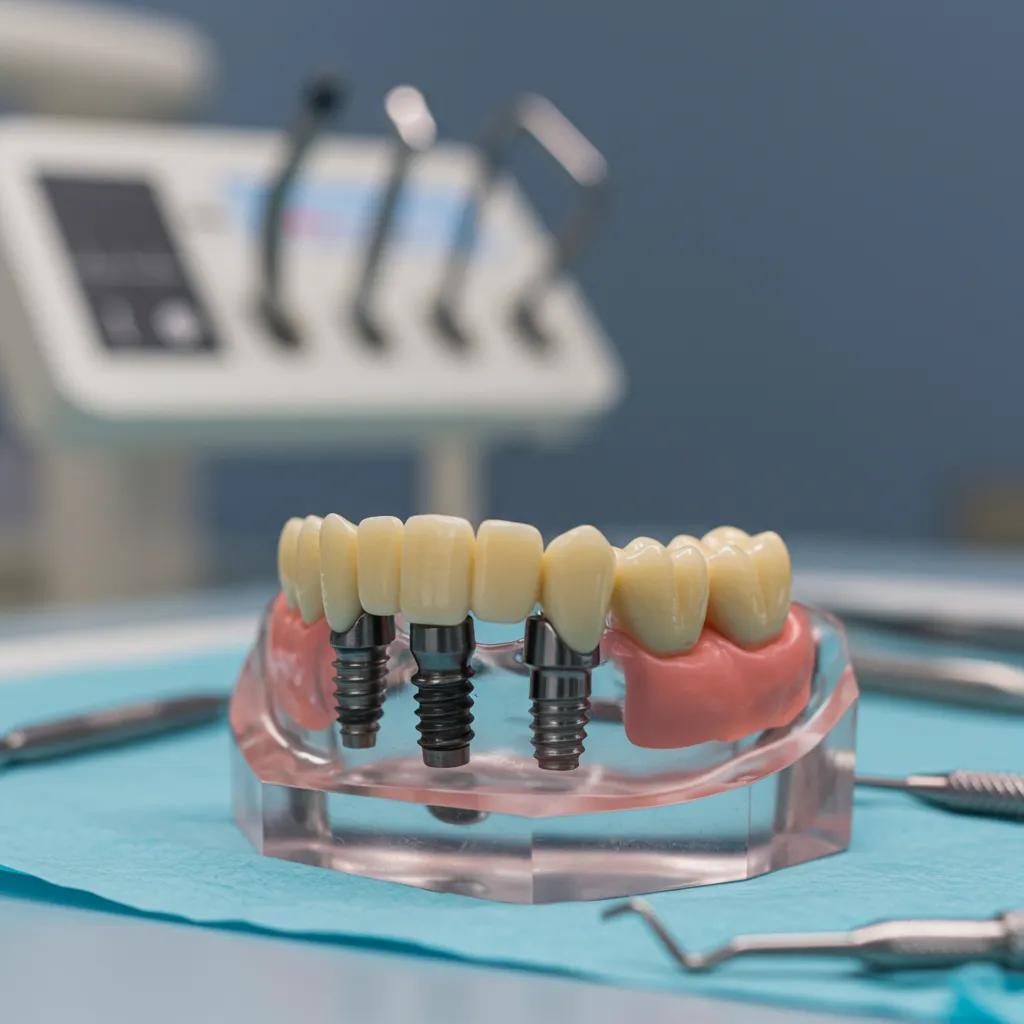
Dental implants consist of three primary parts: the implant fixture (post) that anchors into bone, the abutment that connects the fixture to the visible restoration, and the crown or prosthesis that replaces the tooth above the gumline. The fixture is typically the most mechanically demanding component and is commonly made from titanium alloys or ceramic materials designed for osseointegration. The abutment must balance strength with aesthetics; it can be metal, zirconia, or a hybrid to mask metallic hues under thin gingiva. The crown material—porcelain, zirconia, or a layered ceramic—primarily determines final color and translucency and is selected to match the patient’s smile.
Recognizing which element drives a given clinical concern (strength, allergy risk, or appearance) simplifies material decisions and leads into how material properties affect outcomes.
How Does Material Affect Implant Success and Patient Experience?
Material affects success by altering three interrelated domains: biological acceptance (biocompatibility and osseointegration), mechanical reliability (strength and fatigue resistance), and esthetic integration (color, translucency, and gingival response). For example, materials that promote rapid osseointegration reduce healing time and the risk of early failure, while alloys with improved fatigue resistance lower the chance of fracture under repeated chewing forces. Patient experience is shaped by aesthetic considerations—materials with tooth-like color are preferred in the anterior zone—and by sensitivity or allergy risks that may require metal-free alternatives. Recent studies and clinical consensus through 2025 emphasize that matching material to anatomical demands and patient priorities typically yields the best functional and satisfaction outcomes, which leads naturally to examining titanium’s role in modern implantology.
What Are the Benefits and Considerations of Titanium Dental Implants?
Titanium dental implants have a long clinical track record because titanium combines high biocompatibility with proven osseointegration and robust mechanical properties; clinicians favor titanium for predictable long-term outcomes, especially in posterior load-bearing sites.
Titanium’s surface chemistry forms a stable oxide layer that supports bone apposition and resists corrosion in the oral environment, and numerous clinical studies over decades show high success rates when implants are placed with appropriate technique. Despite these strengths, titanium’s metallic color can be a cosmetic drawback in thin gingival biotypes or anterior restorations, and although true titanium allergy is rare, metal sensitivity is an important clinical consideration for some patients. Surface treatments—such as micro-roughening and coatings—improve early bone contact and can be paired with alloy formulations to boost mechanical performance.
The following table summarizes titanium’s common attributes to help patients compare properties quickly.
Component
Characteristic
Clinical Impact
Titanium implant
Osseointegration
High — consistent and predictable bone integration
Titanium implant
Corrosion resistance
Strong — stable oxide layer reduces metal ion release
Titanium implant
Mechanical strength
Excellent — suited for posterior and multi-unit restorations
This table highlights titanium’s core strengths: reliable bone integration, corrosion resistance, and mechanical durability. With that in mind, the next subsection explains why titanium became the dominant implant material and when clinicians still prefer it.
Why Is Titanium the Most Common Material for Dental Implants?
Titanium became dominant because it reliably forms a biologically compatible surface that encourages direct bone contact, a process called osseointegration, which is essential for implant stability under functional loads. The oxide layer that forms on titanium surfaces minimizes corrosion and provides a scaffold for bone cells to adhere and mature, producing high long-term success rates documented across multiple clinical studies. In addition, titanium alloys offer superior fatigue resistance and toughness compared with many ceramics, enabling multi-unit bridges and full-arch restorations without undue risk of fracture. Practitioners use surface modifications—such as microtexturing and bioactive coatings—to further enhance early stability and shorten healing windows. Understanding these mechanisms clarifies why titanium remains a first-line option for many clinical scenarios and guides patients toward choices that prioritize mechanical reliability.
What Are the Pros and Cons of Titanium Implants?
Pros of Titanium Implants:Proven long-term clinical success and predictable osseointegration.Excellent mechanical strength and fatigue resistance for single and multi-unit restorations.Multiple surface treatments and alloy options to tailor performance to bone quality.
Cons of Titanium Implants:Metallic hue that may be visible under thin soft tissue, affecting anterior aesthetics.Rare instances of metal sensitivity or allergy that require alternative materials.Perception of “metal” by patients seeking fully metal-free solutions.
Patients concerned about anterior aesthetics or metal sensitivity may consider ceramic options; the next main section compares zirconia as a metal-free alternative.
How Do Zirconia Dental Implants Compare as a Metal-Free Alternative?
Zirconia dental implants are a ceramic option that offers metal-free restorations with tooth-like color and promising biocompatibility, making them attractive for patients prioritizing aesthetics or with metal sensitivity concerns. Zirconia’s white color and translucency allow better masking under thin gingival tissue and can produce superior esthetic outcomes in the anterior region, while its biocompatible surface elicits favorable soft-tissue responses in many clinical reports.
However, zirconia’s mechanical behavior differs from metals: while modern zirconia formulations have improved fracture toughness, long-term comparative data to titanium are still developing, and clinicians carefully assess case selection for multi-unit or high-load situations. Surface engineering and one-piece versus two-piece zirconia designs affect restorative flexibility and prosthetic options.
The table below summarizes key zirconia attributes to help patients compare trade-offs.
Component
Characteristic
Clinical Impact
Zirconia implant
Aesthetics
Superior — tooth-colored, ideal for anterior restorations
Zirconia implant
Biocompatibility
High — low incidence of soft-tissue irritation and metal sensitivity
Zirconia implant
Mechanical behavior
Improving — good for single units, careful selection needed for multi-unit bridges
This table clarifies zirconia’s strengths in appearance and biocompatibility while acknowledging mechanical considerations. The next subsections explore which patients benefit most from zirconia and what limitations to expect.
What Makes Zirconia Implants Ideal for Aesthetic and Metal-Sensitive Patients?
Zirconia implants are especially suited to patients with thin gingival biotype or high aesthetic demands because the white, ceramic structure minimizes dark shading through the gum and provides a natural emergence profile. For patients with documented metal sensitivity or those who prefer a metal-free restorative path, zirconia offers a compelling alternative because it does not contain metallic elements that could trigger hypersensitivity reactions. Clinicians often recommend zirconia for single-tooth anterior restorations where appearance and soft-tissue color match matter most, and where occlusal forces are moderate. In addition, zirconia’s low surface roughness can reduce plaque accumulation, potentially improving soft-tissue health, although clinical technique and hygiene remain critical. These benefits make zirconia an essential option in a patient-centered material selection toolkit.
Research has explored the comparative performance of ceramic versus titanium implants, noting that while both have strengths, some concerns exist regarding long-term stability and biocompatibility of certain ceramic materials.
Biocompatibility and Osseointegration of Ceramic vs. Titanium Dental Implants
There have been some negative experiences with dental implants made of aluminium oxide and some concerns regarding the long-term stability of zirconia implants. The aim of this study was to compare titanium versus zirconium dioxide implants in terms of biocompatibility in cell culture and in vivo osseointegration.
What Are the Advantages and Limitations of Zirconia Implants?
Advantages include superior aesthetics, metal-free composition beneficial to sensitive patients, and favorable soft-tissue integration in many cases.
Limitations include less historical long-term data compared with titanium, potential for brittle failure under extreme stress or poor design, and limitations in prosthetic flexibility for complex multi-unit restorations.
Mitigation strategies include careful case selection by the clinician, using modern multi-piece zirconia systems when appropriate, and pairing zirconia fixtures with compatible restorative materials to distribute occlusal loads.
Balancing these factors helps define clinical scenarios in which zirconia is the best choice versus situations where titanium or alloyed solutions are preferred.
What Are Dental Implant Alloys and How Do They Enhance Implant Performance?
Dental implant alloys are engineered metal mixtures—most commonly titanium alloys—designed to improve mechanical properties like strength-to-weight ratio, fatigue resistance, and sometimes biocompatibility compared with pure metals. Alloying elements such as aluminum and vanadium (for example in Ti-6Al-4V) modify microstructure and mechanical behavior to resist fracture and extend implant longevity under repeated loading.
The EAV table below breaks down common alloy attributes and their clinical impacts for patient understanding.
Alloy Type
Attribute
Value for Patients
Titanium-alloy (e.g., Ti-6Al-4V)
Strength-to-weight
Enhanced strength with modest weight increase; ideal for load-bearing fixtures
Cobalt-chrome components
Wear resistance
High stiffness and wear resistance for abutments and frameworks
Surface-treated alloys
Osseointegration
Improved early bone contact when paired with micro-roughening coatings
This table shows how alloys are selected to address specific clinical needs—strength, stiffness, or surface biology—so patients can see why alloys are part of modern implant strategies. The following subsections list common alloy options and explain their functional benefits.
Which Alloys Are Commonly Used in Dental Implants?
The most common alloys in implant components include titanium alloys such as Ti-6Al-4V, and cobalt-chromium used in certain prosthetic frameworks or abutments; each plays a distinct role in implant systems. Titanium alloys combine the corrosion resistance and biocompatibility of titanium with improved tensile strength and fatigue resistance provided by alloying elements. Cobalt-chromium offers high stiffness and wear resistance, making it suitable for thin abutment walls and long-span prosthetic frameworks where rigidity is important. Manufacturers often pair these alloys with surface modifications—micro-roughening or bioactive coatings—to ensure that mechanical advantages do not compromise bone integration. Clinicians consider alloy selection when planning for heavy occlusal loads, bruxism, or extensive restorative work to reduce the risk of mechanical complications.
The clinical performance and biological response of zirconia implants as a substitute for titanium have been a subject of ongoing research and debate.
Zirconia Dental Implants: Osseointegration and Biocompatibility
Both osseointegrative and biocompatibility characteristics of zirconium dioxide have been investigated in numerous studies. The question of whether zirconia dental implants are a viable substitute to titanium dental implants in terms of their clinical performance and biological response has been a subject of ongoing research and debate.
How Do Alloys Improve Strength and Longevity of Implants?
Alloys improve longevity by refining the metal’s grain structure and dislocation behavior, which directly enhances fatigue resistance—the material’s ability to withstand repeated chewing forces without microfracture. For patients, that translates to lower risk of mechanical failure over decades, especially for multi-unit bridges and full-arch restorations where forces are cumulative. Alloyed components can also be manufactured thinner without sacrificing strength, allowing more space for restorative design or improved soft-tissue contours. When alloys are combined with proven surface treatments, they maintain excellent osseointegration while offering mechanical benefits that pure metals may lack. Understanding this balance helps patients appreciate why clinicians sometimes prefer alloyed fixtures or components for demanding restorative cases.
How Do You Choose the Best Dental Implant Material for Your Needs?
Selecting the best dental implant material is a patient-centered process that weighs medical history, bone quality, aesthetic priorities, functional demands, and budget; a structured checklist helps translate these factors into a material choice that aligns with long-term success. Key considerations include allergy history and metal sensitivity, the density and volume of available jawbone, whether the replacement is in the anterior aesthetic zone or posterior load-bearing region, and the patient’s tolerance for maintenance and potential restorative revisions.
Material
Pros
Cons
Typical Use Cases
Titanium (pure/alloy)
Predictable osseointegration, high strength
Metallic color under thin tissue, rare sensitivities
Tooth-colored, metal-free, good soft-tissue response
Less long-term data for complex bridges, design limits
Single anterior teeth, metal-sensitive patients
Alloyed titanium
Enhanced strength, fatigue resistance
Slightly more complex surface engineering
Full-arch frameworks, patients with bruxism
This table provides a practical map for discussions with a clinician. The next subsections expand the checklist into actionable factors and show how material selection affects measurable long-term outcomes.
What Factors Should Influence Your Implant Material Choice?
Medical history and allergies: Document metal sensitivity, systemic conditions, or medications that affect bone healing.
Local anatomy: Evaluate bone density, jaw volume, and soft-tissue thickness through imaging; limited bone may favor certain designs or grafting prior to implant placement.
Aesthetic goals: Determine if the tooth is in a highly visible zone where ceramic options enhance final appearance.
Functional demands: Consider bruxism, chewing habits, and opposing dentition that increase mechanical loads.
Budget and maintenance preferences: Discuss lifecycle costs and restorative replacement intervals to balance upfront cost against long-term outcomes.
This checklist helps patients frame the consultation and ensures the decision accounts for both biological and lifestyle factors. The next subsection ties these factors to long-term success metrics.
How Does Material Selection Affect Long-Term Implant Success?
Material selection influences long-term success by altering measurable outcomes—fixture survival rates, frequency of prosthetic revisions, and maintenance intensity—where both biological integration and mechanical durability are critical. Titanium-based systems have decades of longitudinal data showing high fixture survival when placed in appropriate conditions, while modern zirconia shows promising mid-term outcomes with growing long-term evidence. Alloys and surface treatments reduce mechanical complications by improving fatigue resistance and early stability, which lowers early failure risk. Regular maintenance, good oral hygiene, and routine professional follow-up remain essential regardless of material; however, some materials may need specific care protocols (for example, gentler abrasive control on ceramics). Considering these variables together enables a risk-adjusted projection of expected lifespan and informs scheduling of periodic clinical reviews.
How Does Affordable Dentist Near Me of Waco Support Your Dental Implant Material Decisions?
Affordable Dentist Near Me of Waco supports patients by providing educational consultations, diagnostic imaging, and technology-driven planning to match implant material choice to individual anatomy and goals; patients in Waco can access a Free Dental Implant Consult to begin the decision process. During a consult, clinicians review medical history, evaluate oral tissues and bone with imaging, and discuss aesthetic priorities and lifestyle considerations to identify material-appropriate options. The practice emphasizes affordable care and patient-centered planning, using diagnostic data to recommend titanium, zirconia, or alloyed solutions based on evidence and individual needs rather than default choices. Knowing that options exist and that a no-cost consultation is available helps patients move from general comparison to a personalized plan tailored for predictable outcomes.
What Advanced Technologies Does the Clinic Use for Implant Material Selection?
The clinic uses advanced diagnostic and planning tools to personalize material selection, including three-dimensional imaging to assess bone volume and digital impression workflows to plan aesthetic outcomes and prosthetic fit.
3D imaging informs whether bone grafting is necessary or whether a shorter or narrower fixture is advisable, which can shift material preferences toward stronger alloys in compromised bone or toward ceramics in well-supported anterior sites. Digital workflows allow mock-ups of final restorations so patients can visualize how material choices affect color, translucency, and emergence profile before placement. Guided surgical planning ties imaging and prosthetic goals together to position implants for optimal load distribution, which reduces mechanical risk regardless of material chosen. Collectively, these technologies translate material science into tailored clinical decisions that fit each patient’s anatomy and goals.
How Can You Schedule a Free Dental Implant Consultation in Waco?
To schedule a Free Dental Implant Consult with Affordable Dentist Near Me of Waco, patients typically begin by requesting the clinic’s complimentary consultation to discuss implant options and material choices, bringing relevant medical history and any prior imaging to the appointment. At the consult, clinicians will perform a focused oral exam, review imaging needs, and discuss treatment timelines, potential need for preparatory procedures, and estimated restorative pathways that match the patient’s priorities. The visit is educational and obligation-free; patients leave with a clear next-step plan—whether that is additional imaging, a proposed material recommendation, or a staged treatment timeline that addresses bone or soft-tissue concerns. Providing this accessible, no-cost starting point helps patients move from research to a tailored clinical plan that respects both medical and aesthetic requirements.
What Are the Most Common Patient Questions About Dental Implant Materials?
Patients frequently ask straightforward, practical questions about implant composition, allergy risk, longevity, and safety; concise answers help guide the initial decision-making process and prepare patients for a focused consultation. Below are common questions with direct, evidence-informed responses to capture the essentials and prepare readers for deeper discussion with their clinician. Each answer is designed to be clear and actionable, and to point patients toward individualized assessment as the next step.
What Are Dental Implants Made Of?
Dental implants typically use different materials for each component: the fixture can be titanium, a titanium alloy, or zirconia; the abutment may be titanium, zirconia, or a hybrid; and the crown is often ceramic (porcelain or zirconia) or metal-ceramic in some restorative systems. Titanium and titanium alloys dominate fixtures because of their predictable osseointegration and strength, while zirconia fixtures are offered as metal-free alternatives, particularly for anterior single-tooth replacements. Abutments are selected to balance color-masking needs and connection strength, and crowns are chosen for optimal aesthetics and occlusal function. Understanding which component causes a given concern (e.g., visible grayness under thin gums) helps target material changes effectively.
Can You Be Allergic to Dental Implant Materials?
Allergic reactions to implant materials are uncommon but possible; metal sensitivity is relatively rare and often requires prior clinical history or testing to confirm. Patients with documented metal allergies or unexplained reactions to metallic jewelry or dental appliances should discuss testing and alternative materials such as zirconia, which is metal-free and well-tolerated by many sensitive patients. Clinicians assess allergy risk through medical history, and when suspicion exists they offer testing or a metal-free pathway to minimize immune responses. Choosing a material that aligns with a patient’s sensitivity profile reduces the likelihood of soft-tissue irritation and improves long-term comfort.
The properties of zirconia, including its biocompatibility and reduced bacterial colonization, make it a suitable biomaterial for dental implants, though its advantages and disadvantages are still being highlighted in reviews.
Zirconia in Dental Implantology: Properties and Applications
Zirconia is a ceramic material that has gained popularity in dental implantology due to its favorable properties. This review discusses various properties of zirconia like osseointegration, biocompatibility, and less bacterial colonization, which make it a biomaterial suitable to be used as dental implant, and tries to highlight its advantages and disadvantages.
How Long Do Different Dental Implant Materials Last?
Implant fixtures—whether titanium or zirconia—are designed to last decades when biological integration is successful and maintenance protocols are followed; crowns and prosthetic components typically require replacement sooner due to wear, fracture, or changes in the mouth. Titanium implants have multi-decade survival data showing high cumulative survival rates under proper conditions, while zirconia has favorable mid-term data with ongoing research clarifying very long-term performance. Longevity depends strongly on systemic health, oral hygiene, occlusal forces, and maintenance visits; crowns may need replacement every 8–15 years whereas well-integrated fixtures can remain functional far beyond that with proper care. Regular professional follow-up and hygiene help maximize lifespan regardless of base material.
Which Dental Implant Material Is the Safest?
Both titanium and zirconia have strong safety profiles when selected appropriately and placed with sound surgical technique; the “safest” option depends on individual medical history, anatomy, and functional demands. Titanium’s long clinical track record establishes a broad evidence base for safety and predictability, while zirconia’s biocompatibility and low reactivity offer a metal-free alternative for patients with sensitivity concerns. Safety is not only material-dependent but also technique-dependent: accurate imaging, appropriate loading protocols, and material-compatible prosthetic design are all critical to minimizing complications. An individualized clinical evaluation remains the best way to determine which material yields the optimal safety margin for a specific patient.
How Do Dental Implant Materials Impact Your Long-Term Oral Health and Satisfaction?
Material choice affects long-term oral health by influencing soft-tissue stability, peri-implant bone preservation, prosthetic longevity, and overall patient satisfaction with function and appearance; aligning material selection with clinical demands and realistic expectations maximizes positive outcomes. Materials that favor rapid osseointegration and resist corrosion support stable bone levels, reducing risks of peri-implant complications and improving functional longevity. Patient satisfaction is driven by comfort, chewing ability, and aesthetics—attributes that material choice directly shapes through color, contour, and tactile feel. Maintenance routines and monitoring cadence also vary by material; awareness of these differences enables patients to plan for long-term care that preserves both oral health and restorative value.
What Are the Latest Trends in Dental Implant Materials?
Recent trends through 2025 include increased clinical adoption of zirconia for anterior aesthetics, continual refinements in titanium alloy formulations to enhance fatigue resistance, and advances in surface treatments that accelerate osseointegration and reduce bacterial adhesion. Research emphasis has focused on combining mechanical robustness with biological performance through nanostructured surfaces and bioactive coatings that encourage faster bone formation. Clinicians are also refining hybrid workflows that use digital planning and prosthetic-driven implant placement to ensure material selection aligns precisely with final restorative goals. These trends indicate a growing capability to customize materials and workflows to patient-specific needs rather than a one-size-fits-all approach.
How Does Material Choice Affect Implant Maintenance and Care?
Material choice affects daily hygiene practices and recommended professional recall intervals because surface characteristics influence plaque adherence and abrasion sensitivity; for example, ceramic restorations may require gentler abrasive control while metal frameworks tolerate standard hygiene routines. All patients should follow rigorous oral hygiene, but clinicians may recommend material-specific tools or techniques—for instance, avoiding overly abrasive pastes on ceramic surfaces or using supplemental interdental cleaning around multi-unit frameworks. Routine professional evaluations typically occur every 6–12 months to monitor soft-tissue health, occlusion, and prosthetic wear; materials under higher occlusal stress or with less long-term data may warrant closer surveillance. Clear maintenance plans tied to material selection reduce the risk of complications and extend prosthetic life.
Key takeaways for maintenance:
Maintain daily plaque control with brushing and interdental cleaning tailored to your restoration.
Attend professional check-ups at clinician-recommended intervals to monitor integration and prosthetic integrity.
Discuss material-specific home-care recommendations with your clinician to protect ceramic or alloy surfaces.
These practical steps translate material science into everyday behaviors that preserve oral health and satisfaction over the long term. If you are ready to evaluate options for your mouth specifically, a Free Dental Implant Consult is an accessible next step.