Essential Dental Implant Cleaning Techniques for Longevity: How to Maintain and Protect Your Implants
Dental implant aftercare refers to the daily and professional cleaning practices that protect the implant fixture, abutment, crown, and surrounding gum tissue from infection and mechanical deterioration. Proper implant hygiene works by disrupting bacterial biofilm in the peri-implant sulcus, reducing inflammation and stabilizing bone levels, which together preserve implant function and the restorative prosthesis. This article explains evidence-based routines, specialized tools, and professional maintenance strategies you can apply to maximize implant longevity while preventing peri-implantitis and costly complications. Readers will gain a step-by-step daily care routine, a comparison of interdental and irrigation tools, risk-based schedules for professional maintenance, and clear signs that require timely clinical attention. The guide also maps lifestyle and systemic factors that influence implant survival and closes with practical local options for expert cleaning and a low-barrier way to get individualized advice. Throughout, we emphasize implant oral hygiene, peri-implantitis prevention, and professional implant cleaning frequency to help you protect your dental investment.
Why Is Proper Dental Implant Care Crucial for Longevity?
Proper dental implant care means keeping the implant and surrounding tissues free of pathogenic biofilm so the fixture integrates and remains stable; this prevents infection and prosthesis failure. Biofilm forms quickly and produces inflammatory mediators that erode peri-implant soft tissue and bone, so mechanical removal and professional assessment are essential to interrupt that destructive mechanism. Maintaining excellent oral hygiene directly correlates with higher implant success rates because reduced inflammation preserves crestal bone levels and prevents progressive peri-implantitis that can lead to implant loss. Recent reviews and clinical consensus in 2024–2025 emphasize prevention through combined home care and regular professional maintenance as the most effective approach to long-term success. Understanding peri-implantitis and how daily cleaning prevents bone loss leads naturally to specific warning signs and the routine steps patients can take at home and with their clinician.
What Is Peri-Implantitis and How Does It Affect Implant Health?
Peri-implantitis is an inflammatory condition of the soft tissues and supporting bone around an implant caused by pathogenic biofilm and host response, and it differs from gingivitis by its association with bone loss. The disease process begins with bacterial colonization at the implant–soft tissue interface and progresses as inflammation promotes osteoclastic activity that resorbs crestal bone, undermining implant stability and eventually risking implant failure. Clinically, peri-implantitis presents with bleeding on probing, increased pocket depths around the implant, suppuration, and sometimes mobility of the prosthesis; radiographs often reveal vertical or circumferential bone loss. Early-stage peri-implant mucositis (soft-tissue inflammation without bone loss) is reversible with improved hygiene and professional care, whereas peri-implantitis requires targeted debridement, antimicrobial strategies, and possibly surgical intervention. Recognizing these stages highlights why daily home-care measures and timely professional check-ups are essential to prevent progression and preserve the implant.
How Does Daily Cleaning Prevent Bone Loss and Implant Failure?
Daily cleaning prevents bone loss by mechanically disrupting the bacterial biofilm that drives soft-tissue inflammation and the cascade of cytokines that activate bone-resorbing cells, thereby protecting the peri-implant bone. Removing plaque every 12–24 hours reduces the microbial load and lowers levels of inflammatory mediators such as interleukins and prostaglandins that contribute to tissue breakdown; consistent disruption of biofilm reduces the risk of converting reversible mucositis into destructive peri-implantitis. Practical home routines that combine gentle brushing, interdental cleaning, and targeted irrigation have been associated with lower bleeding on probing and improved peri-implant soft-tissue health in observational and clinical studies. Patients who follow regimented daily care reduce the need for complex professional interventions and preserve the prosthesis, which both protects oral function and limits long-term costs. The mechanisms of biofilm control therefore directly translate into longevity benefits, which leads into the next section detailing the best daily home-care practices.
What Are the Best Daily Home Care Practices for Dental Implants?
Daily home care for implants blends soft mechanical cleaning with interdental access and adjunctive antiseptic measures to control biofilm and inflammation. The primary goal is to remove plaque from the implant crown, abutment interface, and peri-implant sulcus without applying abrasive force that could damage restoration surfaces or traumatize soft tissue. A routine that includes twice-daily brushing with a soft-bristle brush, once-daily interdental cleaning (interdental brush or floss/threader), and targeted irrigation or an antimicrobial rinse when indicated offers comprehensive coverage. These steps reduce bacterial load, keep the peri-implant sulcus healthy, and make professional maintenance more effective when performed at regular intervals. Implementing a consistent, evidence-informed daily routine complements professional care and reduces the long-term risk of peri-implant complications.
Patients can follow this short daily routine for predictable results:
Brush twice daily with a soft-bristle toothbrush using gentle, circular strokes to clean implant crowns and surrounding gingiva.
Clean interdental spaces once daily with an appropriately sized interdental brush or implant-specific floss to remove biofilm between restorations and natural teeth.
Use a water flosser on low-to-medium pressure once daily as an adjunct to remove debris from the peri-implant sulcus and bridge pontics.
Rinse with a clinician-recommended antimicrobial mouthwash after cleaning when indicated for short-term inflammation control.
How Should You Brush Dental Implants for Optimal Cleaning?
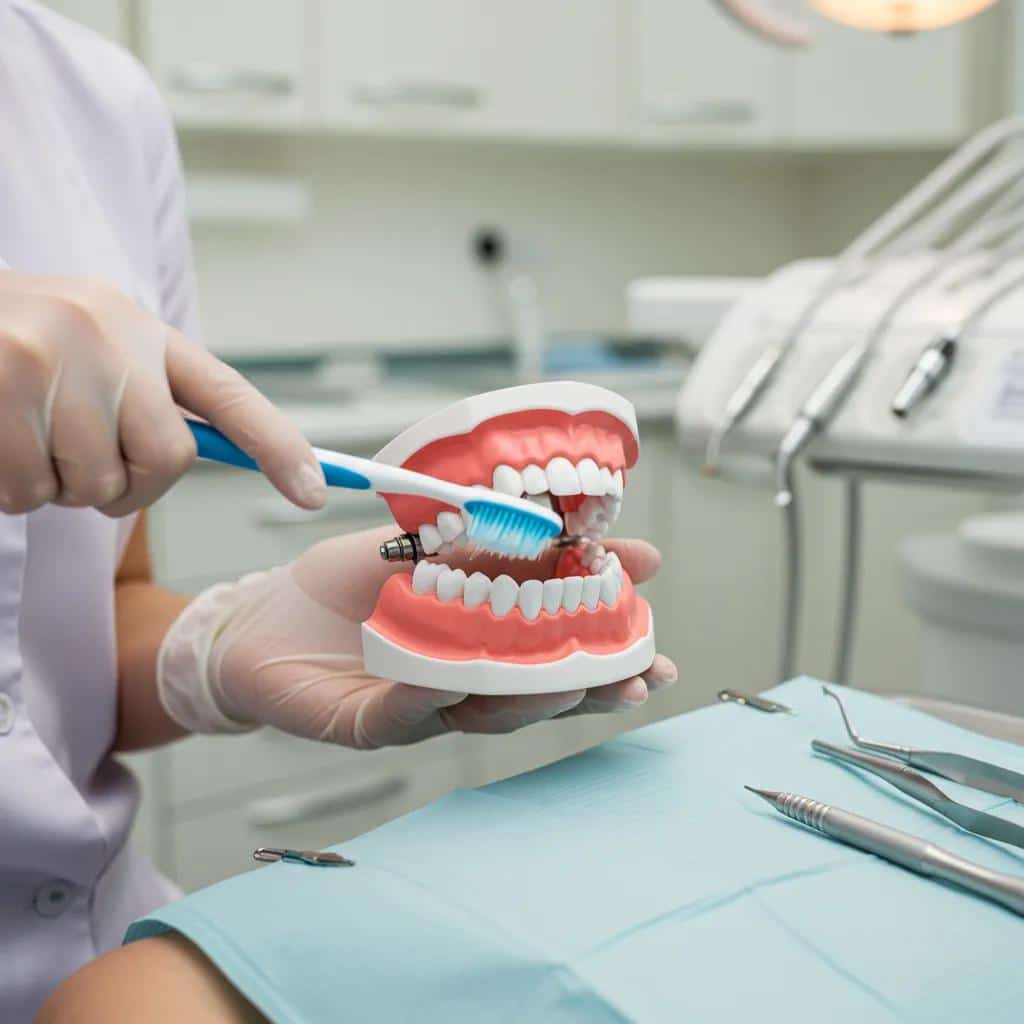
Brushing implants optimally requires a gentle technique and the right tools to remove plaque without abrading restorative materials or traumatizing soft tissue. Use a soft-bristle or specialized sulcus brush and position the bristles at a 45-degree angle to the crown-to-gum junction, applying light pressure and using slow circular or vibratory motions for at least two minutes to cover all surfaces. Electric toothbrushes with soft brush heads often provide consistent motion and can improve plaque removal for many patients, but manual brushing with correct technique remains effective for motivated patients. Avoid abrasive whitening pastes or heavy-handed scrubbing that may scratch prosthetic surfaces or irritate the peri-implant mucosa; instead choose a non-abrasive toothpaste recommended for restorations. Proper brushing prepares the site for interdental cleaning and reduces the microbial load that would otherwise accumulate between professional visits.
What Are Effective Flossing Techniques for Implants?
Effective flossing for implants depends on the prosthesis type and access: single-tooth implants often respond well to implant-specific floss or floss threaders, while implant-supported bridges typically require interdental brushes or specialized floss that can reach under pontics. For single crowns, use a non-traumatic implant floss or a floss threader to pass floss gently around the abutment and under the contact point, moving the floss in a C-shape around each side of the implant restoration to remove supra- and subgingival plaque. For bridges or all-on-4 styles, select narrow interdental brushes sized to the embrasure or use a water flosser to flush the sub-prosthetic area; flossing alone may not reach beneath pontics effectively. The sequence—brushing first to loosen debris, then interdental cleaning or irrigation—maximizes biofilm removal and minimizes the chance of leaving residual plaque that could fuel inflammation.
Which Specialized Tools Are Recommended for Dental Implant Hygiene?
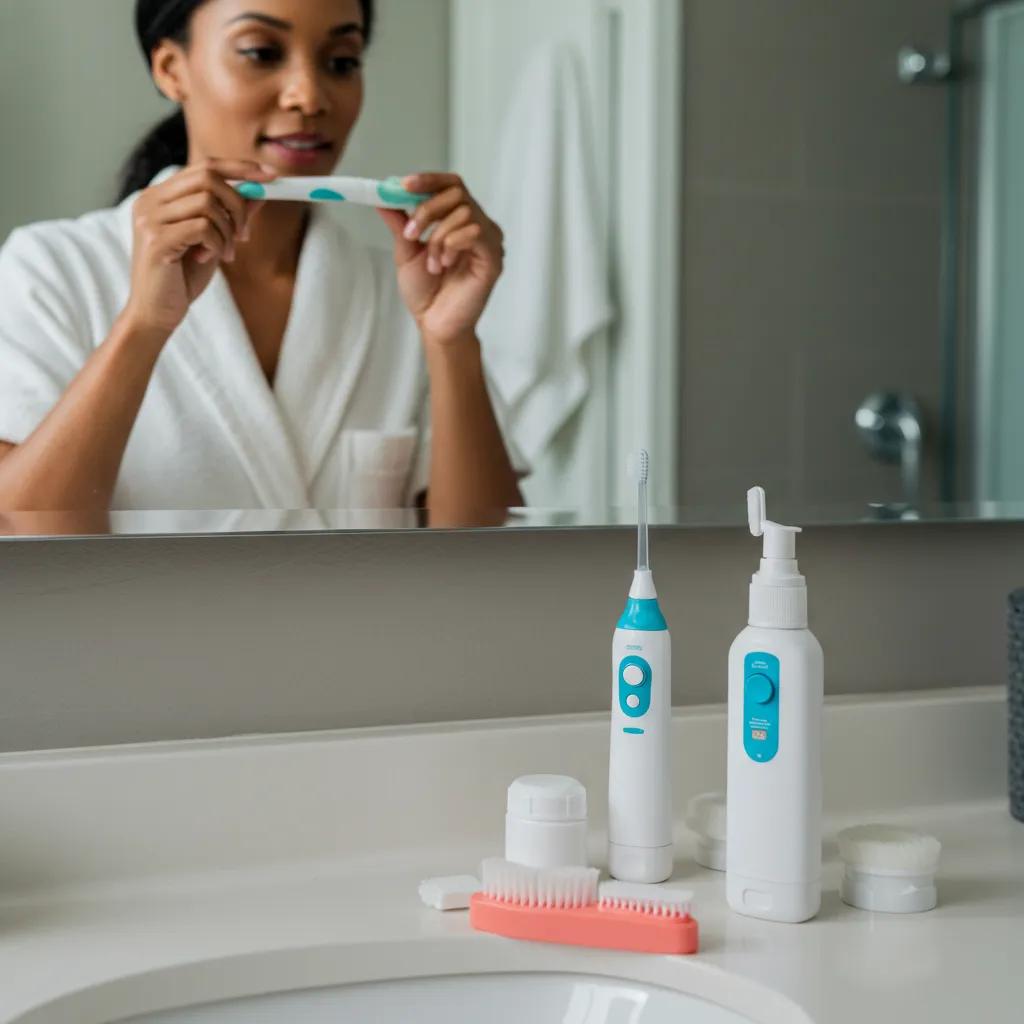
Specialized tools target biofilm in areas that standard brushing alone cannot adequately reach, and selecting the correct combination reduces peri-implant inflammation while protecting restorative components. Interdental brushes clean embrasures and prosthetic gaps, water flossers irrigate sulcus areas and flush debris, sulcus brushes reach shallow pockets, and rubber-tip stimulators massage and maintain healthy interdental papillae. Each tool has a best-use case depending on prosthesis type, soft-tissue health, and patient dexterity; using the right tool regularly reduces bleeding on probing and helps maintain bone stability. Combining tools—soft-bristle brushing plus interdental brushes or water flossers—provides comprehensive hygiene tailored to implant anatomy and prosthetic design. The table below compares common implant hygiene tools to guide selection based on advantage and caution.
Introductory note: This table compares interdental brushes, water flossers, implant-specific floss, and sulcus brushes across practical attributes so patients and clinicians can match tools to individual needs.
Tool
Best use case
Frequency
Advantages
Cautions
Interdental brushes
Cleaning gaps around bridges and between teeth/implants
Daily
Effective at removing interdental biofilm and debris; sizes adapt to embrasure
Use correct size to avoid tissue trauma; replace when bent
Water flosser (oral irrigator)
Flushing under pontics and shallow sulci
Daily
Easy for patients with limited dexterity; reduces bleeding on probing
Use clinician-guided pressure settings to avoid soft-tissue damage
Implant-specific floss / floss threader
Single-implant crown contacts and tight interdental spaces
Daily
Gentle around abutments; reaches subgingival margins
Requires technique training; may be slower for bridges
Sulcus brush / soft interdental pick
Targeting peri-implant sulcus and shallow pockets
Once daily or as instructed
Cleans distal sulcus areas and around abutment collars
Avoid aggressive insertion; use small sizes for delicate tissue
How Do Interdental Brushes Help Clean Hard-to-Reach Areas?
Interdental brushes are small, nylon-bristled tools on a wire core that mechanically remove interdental biofilm and massage the papilla, making them ideal for bridges, wide embrasures, and implant-supported prostheses. Choose the correct brush size by starting small and gradually increasing until you feel gentle resistance without forcing the brush; color-coded sizing systems can help patients maintain consistency and effectiveness. Technique includes inserting the brush gently at the contact point, angling it slightly to follow the embrasure contours, and moving it in and out several times to dislodge accumulated plaque, followed by rinsing the brush. Regular use of appropriately sized interdental brushes reduces interdental bleeding and the bacterial burden around implants, supporting tissue health. Correct selection and gentle technique prevent trauma and make interdental brushes a reliable everyday tool for implant maintenance.
Can Water Flossers Improve Implant Cleaning?
Water flossers, or oral irrigators, propel a pulsating stream of water that disrupts biofilm and flushes debris from under bridges and along the peri-implant sulcus, making them especially helpful for patients with complex prostheses or limited manual dexterity. Clinical trials and comparative studies show that, when used in conjunction with mechanical cleaning, water flossers reduce bleeding on probing and gingival inflammation, though they do not fully replace interdental brushes for heavy biofilm removal in narrow contacts. Use a low-to-medium pressure setting and angle the tip at approximately 90 degrees to the sulcus while following the manufacturer’s motion recommendations; start with a short daily session and increase as tolerated. Contraindications are few, but clinicians should instruct patients with open wounds or recent surgery to follow post-operative guidance to avoid disrupting healing tissues. Incorporating irrigation as an adjunct enhances plaque control in areas that are otherwise difficult to access with brush or floss alone.
How Often Should You Schedule Professional Dental Implant Maintenance?
Professional implant maintenance frequency depends on patient risk profile and clinical findings; routine care combines clinical examination, risk assessment, and implant-safe debridement to preserve bone and prosthesis integrity. Low-risk patients with excellent home care and stable peri-implant tissues commonly benefit from professional cleanings and exams every 6–12 months, while moderate- and high-risk patients often require more frequent visits—every 3–4 months or individualized intervals based on disease activity. The professional visit is an opportunity for clinicians to perform peri-implant probing, selective polishing with implant-safe instruments, radiographic review when indicated, and reinforcement of home care techniques, all of which reduce progression of peri-implant disease. Regularly scheduled maintenance enables early detection of soft-tissue inflammation, loose components, or occlusal issues and prevents escalation to more invasive treatment. For readers interested in a professional assessment, Affordable Dentist Near Me of Dallas offers implant maintenance services and a Free Dental Consult to discuss personalized schedules and treatment options.
Introductory note: The following table maps patient risk profiles to recommended professional check-up frequency and the rationale behind each interval.
Risk profile
Professional check-up focus
Recommended frequency
Low risk
Routine exam, hygiene reinforcement, polishing with implant-safe instruments
Every 6–12 months
Moderate risk
Detailed probing, targeted debridement, possible localized antimicrobials
Every 3–6 months
High risk
Intensive monitoring, radiographs as indicated, periodontal therapy coordination
What Happens During a Professional Implant Cleaning Appointment?
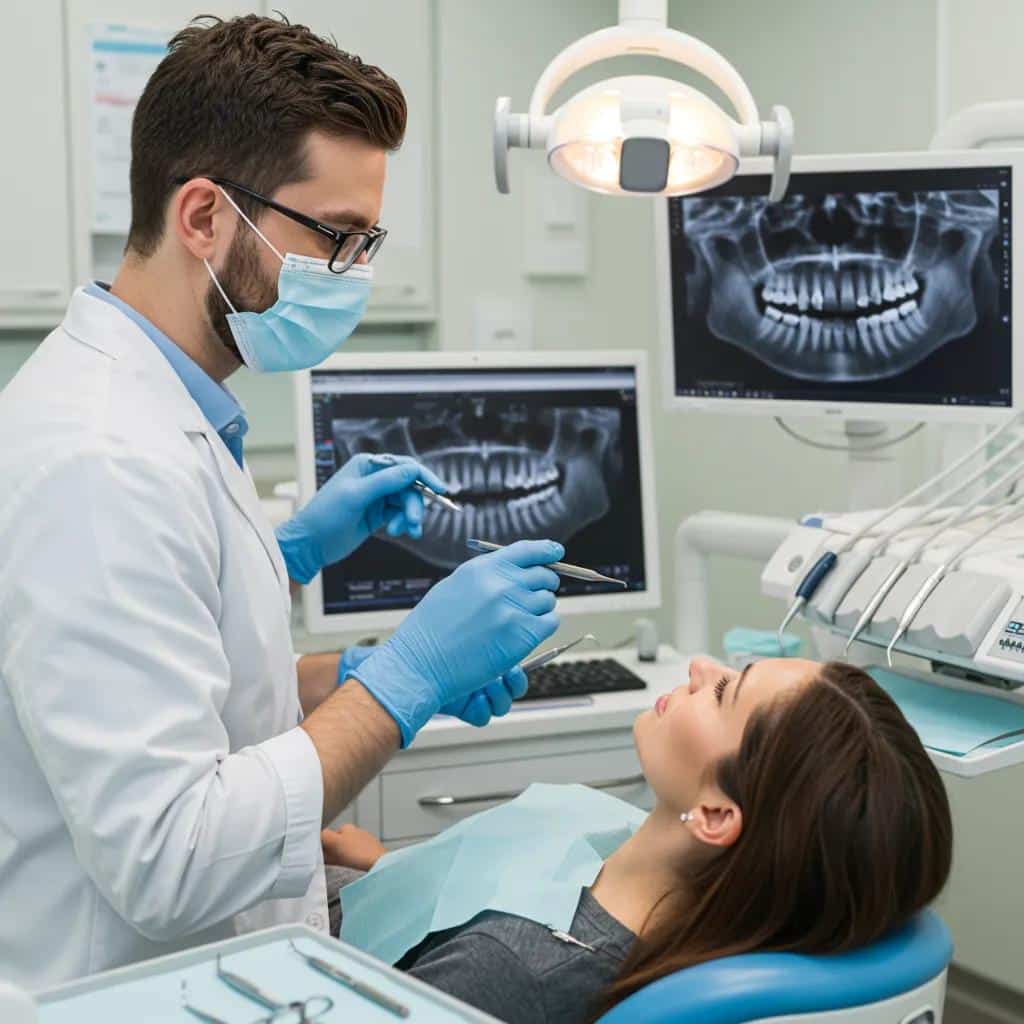
A professional implant cleaning appointment begins with a focused clinical exam that evaluates soft-tissue health, bleeding on probing, pocket depths around implants, and prosthesis integrity, followed by a targeted hygiene session using implant-safe instruments. Clinicians use non-metallic or specially coated scalers, ultrasonic devices with plastic inserts, and polishers designed to avoid scratching restorations, removing calculus and biofilm while protecting surface integrity. When indicated, radiographs assess crestal bone levels or reveal changes not evident clinically, and the clinician will document findings to guide recall intervals and any necessary interventions. The appointment typically concludes with reinforced home-care instructions tailored to the patient’s prosthesis and tissue anatomy, and, if disease activity is detected, a treatment plan that may include localized antimicrobials or referral to a periodontist. Understanding the appointment workflow helps patients know what to expect and why regular professional maintenance is an essential complement to daily hygiene.
Why Are Regular Check-Ups Essential to Prevent Complications?
Regular check-ups enable early detection of peri-implant inflammation, mechanical complications, and bite-related overload, which are far easier and less costly to address in early stages than after significant bone loss or restoration failure. Early intervention—such as improved hygiene coaching, localized debridement, or occlusal adjustment—can often halt disease progression and preserve the implant foundation, while delayed care increases the risk of needing complex surgical or replacement procedures. Clinicians monitor trends over time through charting pocket depths, photographic documentation, and periodic radiographs, allowing proactive adjustments to recall intervals and treatment plans when patients show increased risk. Routine maintenance also reinforces patient technique and tool choice, creating a partnership that preserves oral health and the financial investment in the restorative work. This emphasis on early detection and maintenance bridges into strategies for preventing peri-implantitis and managing modifiable risk factors.
How Can You Prevent Peri-Implantitis and Other Implant Complications?
Preventing peri-implantitis combines impeccable local hygiene, management of systemic risk factors, and attention to prosthetic design and occlusion to limit microbial colonization and mechanical stress. Modifiable risks—smoking cessation, optimizing glycemic control for diabetic patients, and achieving and maintaining periodontal health—significantly reduce the likelihood of peri-implant disease. Mechanical considerations such as ensuring passive fit of prostheses and addressing bruxism through occlusal guards or adjustments reduce overload on implants, which otherwise contributes to micro-movement and bone loss. A prevention plan includes daily home cleaning, regular professional maintenance based on risk profile, and coordination with medical providers when systemic conditions are present. These layered strategies reduce long-term complications and preserve both function and esthetics of implant-supported restorations.
Common prevention strategies include:
Optimize local hygiene: Twice-daily brushing, daily interdental cleaning, and adjunctive irrigation to control plaque.
Manage systemic health: Coordinate with physicians to control diabetes and other medical conditions that impair healing.
Address mechanical risks: Evaluate prosthesis fit and occlusion; use nightguards if bruxism is present.
What Are the Common Risk Factors for Peri-Implantitis?
Common risk factors for peri-implantitis include poor oral hygiene, a history of periodontitis, tobacco use, uncontrolled diabetes, and certain mechanical issues such as ill-fitting restorations or excessive occlusal forces. Each factor contributes either by increasing bacterial colonization and inflammatory response (poor hygiene, periodontitis, smoking) or by increasing biomechanical stress and microdamage to bone and implants (occlusal overload, misfit). Prevalence studies indicate patients with prior periodontal disease or who smoke have higher rates of peri-implant inflammation and bone loss, making risk modification and intensified monitoring critical for these groups. Practical mitigation includes smoking cessation support, improved plaque control routines, periodontal stabilization before implant therapy, and careful prosthetic planning to avoid overloading implants. Recognizing and addressing these risk factors before and after implant placement is central to a prevention-focused maintenance plan.
How Can Early Warning Signs of Implant Issues Be Recognized?
Patients can monitor for warning signs that warrant prompt dental evaluation: bleeding or redness around the implant, persistent swelling, a bad taste or odor that does not resolve with hygiene, increasing pocket depths, or any mobility of the prosthesis. Early signs such as intermittent bleeding on brushing or slight swelling often indicate reversible inflammation (mucositis) and are best managed quickly with enhanced home care and a professional hygiene appointment. More concerning signs—suppuration, persistent pain, radiographic bone loss, or visible mobility—require expedited clinical assessment and possibly more intensive periodontal or surgical management. Establishing a low threshold for evaluation when symptoms appear improves the odds of conservative treatment success and reduces the risk of implant loss. Knowing these warning signs connects directly to the long-term protective behaviors outlined in the next section.
What Are the Best Practices to Protect Your Dental Implant Investment Long-Term?
Protecting a dental implant investment long-term combines disciplined daily hygiene, scheduled professional maintenance, lifestyle changes, and documentation that together maintain tissue health and prosthesis integrity. Long-term surveillance—through periodic radiographs, clinical charting, and photographic records—detects subtle changes early and allows for timely interventions that are less invasive and less expensive than late-stage treatments. Habits like avoiding tobacco, limiting hard or abrasive foods, and addressing systemic health issues such as uncontrolled diabetes and osteoporosis support optimal tissue healing and implant longevity. Financially, preventing disease and maintaining restorations through conservative maintenance preserves function and reduces the likelihood of costly replacement procedures. A structured maintenance plan that integrates home routines, professional visits, and systemic health management provides the best protection for implants over decades.
Introductory note: The following table maps common habits and medical factors to their measurable impact on implant longevity and offers mitigation strategies.
Habit or factor
Attribute
Impact on longevity
Smoking
Local tissue vasoconstriction and immune impairment
Increased risk of peri-implantitis and implant failure
Uncontrolled diabetes
Impaired wound healing and higher infection risk
Greater likelihood of early and late complications
Bruxism / occlusal overload
Excessive mechanical stress on implant/prosthesis
Prosthesis wear, component loosening, bone loss
Poor oral hygiene
Sustained plaque accumulation and inflammation
Progressive peri-implantitis and bone resorption
Which Habits Should You Avoid to Ensure Implant Health?
Avoiding specific habits that stress peri-implant tissues or increase infection risk significantly improves implant prognosis; chief among these are tobacco use, using teeth as tools, and frequent consumption of hard or sticky foods that can transmit excessive forces to prostheses. Tobacco impairs vascularity and immune function at the tissue level, increasing both early and late failure rates and making smoking cessation a priority for implant patients. Mechanical misuse—opening packages, biting fingernails, or chewing ice—places concentrated forces on restorations and can loosen screws or fracture prosthetic materials, so adopting safer alternatives and mindful eating habits reduces risk. Reinforcing these behavior changes alongside oral hygiene routines helps patients maintain both the function and aesthetics of their implants over time.
How Does Overall Health Impact Dental Implant Longevity?
Systemic health conditions influence implant healing, maintenance, and long-term stability through effects on immune response, bone metabolism, and tissue repair; therefore, coordination between dental and medical providers is often necessary. Conditions like poorly controlled diabetes increase infection risk and impair osseointegration, while certain medications and metabolic bone disorders can alter bone remodeling dynamics around implants. Working with physicians to optimize glycemic control, reviewing medications that affect bone metabolism, and adjusting treatment plans for patients with immune compromise improves outcomes and reduces complications. Practical steps include pre-implant medical clearance when indicated, ongoing communication about systemic changes, and individualized recall intervals based on overall health. Recognizing the interplay between systemic factors and implant biology strengthens a preventive, team-based approach to long-term implant success.
Where Can You Get Expert Dental Implant Cleaning and Consultation in Dallas?
Affordable Dentist Near Me of Dallas provides local implant care services that combine routine preventive dentistry with implant and denture maintenance, making it a convenient resource for Dallas patients seeking professional support. The practice offers dental implants and dentures, routine exams and professional cleanings, periodontal (gum) disease treatment, and a Free Dental Consult for implant concerns; their approach emphasizes affordability with “Everyday Low Fees” and flexible pricing options for patients. Located at 6301 Abrams Rd Ste 125, Dallas, Texas 75231, the clinic performs professional implant-cleaning procedures, peri-implantitis management strategies when indicated, and personalized maintenance planning that complements patient home care. Preparing for a consult by bringing prior dental records, a list of medical conditions and medications, and any questions about prosthesis care will help the team provide tailored recommendations.
The practice’s services for implant patients include:
Professional implant-safe cleanings and hygiene reinforcement.
Periodontal disease diagnosis and treatment to stabilize tissues before and after implant therapy.
Denture and prosthesis support, including maintenance counseling for implant-supported restorations.
If you want individualized assessment and a no-cost introduction to options and maintenance planning, Get Patient to schedule an appointment for a Free Dental Consult.
What Services Does Affordable Dentist Near Me of Dallas Offer for Implant Care?
Affordable Dentist Near Me of Dallas provides a focused set of services useful for implant patients: dental implants and dentures, routine exams and professional cleanings, periodontal disease treatment, and a Free Dental Implant Consultation to assess needs and propose a plan. Their preventive services include implant-safe instrumentation during hygiene appointments and clinician-led coaching on home-care tools like interdental brushes and oral irrigators suited to each prosthesis type. Periodontal services address gingival inflammation and mucositis early, while restorative coordination helps maintain prosthesis fit and occlusion to avoid mechanical overload. Emphasizing affordability, the practice positions its free consult as a low-barrier first step for patients who want a professional opinion about implant maintenance, potential peri-implantitis concerns, or a long-term hygiene plan.
How Can You Schedule a Free Dental Implant Consultation?
Scheduling a Free Dental Implant Consultation at Affordable Dentist Near Me of Dallas is a straightforward way to obtain a professional assessment of implant health and individualized maintenance recommendations, and patients should prepare by gathering recent dental records and a list of medical conditions and medications. At the consult, the clinician will review your dental and medical history, perform a focused oral exam, discuss home-care routines, and propose a maintenance schedule or treatment plan tailored to your risk profile. This complimentary consult removes an initial financial barrier and provides clarity about next steps—whether that means intensified hygiene measures, professional debridement, or referral for specialized care. For patients ready to explore options and receive a personalized plan, Get Patient to schedule an appointment for a Free Dental Consult.
What Are the Most Frequently Asked Questions About Dental Implant Cleaning?
This FAQ-style section answers concise patient questions about daily routines, tool safety, and best practices so readers can quickly find actionable guidance and reference deeper explanations earlier in the article. The answers below are direct and practical, suitable for rapid reference and for inclusion in FAQ schema to improve discoverability. Each question points back to the detailed sections above for readers who want full technique descriptions and evidence-based rationale. Understanding these fundamentals reduces confusion and supports consistent, effective implant care.
How Do You Clean Dental Implants Daily?
A concise daily routine for implant care focuses on three core actions: gentle brushing, interdental cleaning, and targeted irrigation or rinsing to disrupt biofilm accumulation and maintain soft-tissue health. Brush twice daily with a soft-bristle toothbrush for two minutes, paying attention to crown margins and the gumline; follow with once-daily interdental cleaning using an appropriately sized interdental brush or implant-specific floss to remove trapped debris. Use a water flosser as an adjunct to flush under pontics or in areas difficult to reach with brushes, and consider a short course of an antimicrobial rinse if inflammation is present and recommended by your clinician. Performing this sequence consistently minimizes inflammation, reduces bleeding on probing, and helps maintain bone stability around the implant.
Can You Use Any Toothpaste or Mouthwash on Implants?
Not all toothpastes and mouthwashes are ideal for implants; patients should avoid highly abrasive whitening pastes and brushing formulas that can scratch restorative materials, and be cautious with alcohol-based mouthwashes that may irritate delicate peri-implant tissues when used excessively. Choose a non-abrasive fluoride toothpaste formulated for sensitivity or restorative-friendly use to protect both natural enamel and prosthetic materials. Antimicrobial mouthwashes containing chlorhexidine may be recommended short-term for active inflammation but should be used under clinician guidance due to potential staining and altered taste; essential-oil or alcohol-free antiseptic rinses are alternatives for routine use when indicated. Discuss product selection with your dental team to match recommendations to your prosthesis type and tissue health.
Dental Implant Hygiene and Maintenance Protocols for Practitioners
Dental implant care and maintenance is of critical importance as implants grow in popularity as a tooth replacement option. The purpose of this study was to investigate the implant-related training and clinical practices of oral health practitioners (OHPs) in Australia regarding oral hygiene instructions (OHI) and maintenance protocols, and to better understand their role in providing peri-implant services.
Dental Implant Hygiene and Maintenance Protocols: A survey of oral health practitioners in Australia, MS Hopcraft, 2021
The importance of proper training and consistent protocols for dental professionals is highlighted in studies investigating practitioner practices, underscoring the need for standardized approaches to implant hygiene.
Challenges in Elderly Dental Implant Care and Cleaning
Many implant-related problems were associated with insufficiency or difficulty in cleaning around the implant, resulting in peri-implantitis. Prosthetic and more serious complications such as implant body fracture or loss were reported and frequently managed by routine follow-ups, cleaning the area around the implant, scaling and polishing, and/or pharmacological modalities. Oral care mainly involved simple toothbrushing instructions, which was not adequate.
Dental implant status in elderly individuals requiring domiciliary dental care in Japan, 2021
For certain patient populations, such as the elderly, standard oral hygiene instructions may not be sufficient to prevent implant complications, emphasizing the need for tailored cleaning strategies and more frequent professional interventions.
Get Patient to schedule an appointment for a Free Dental Consult.