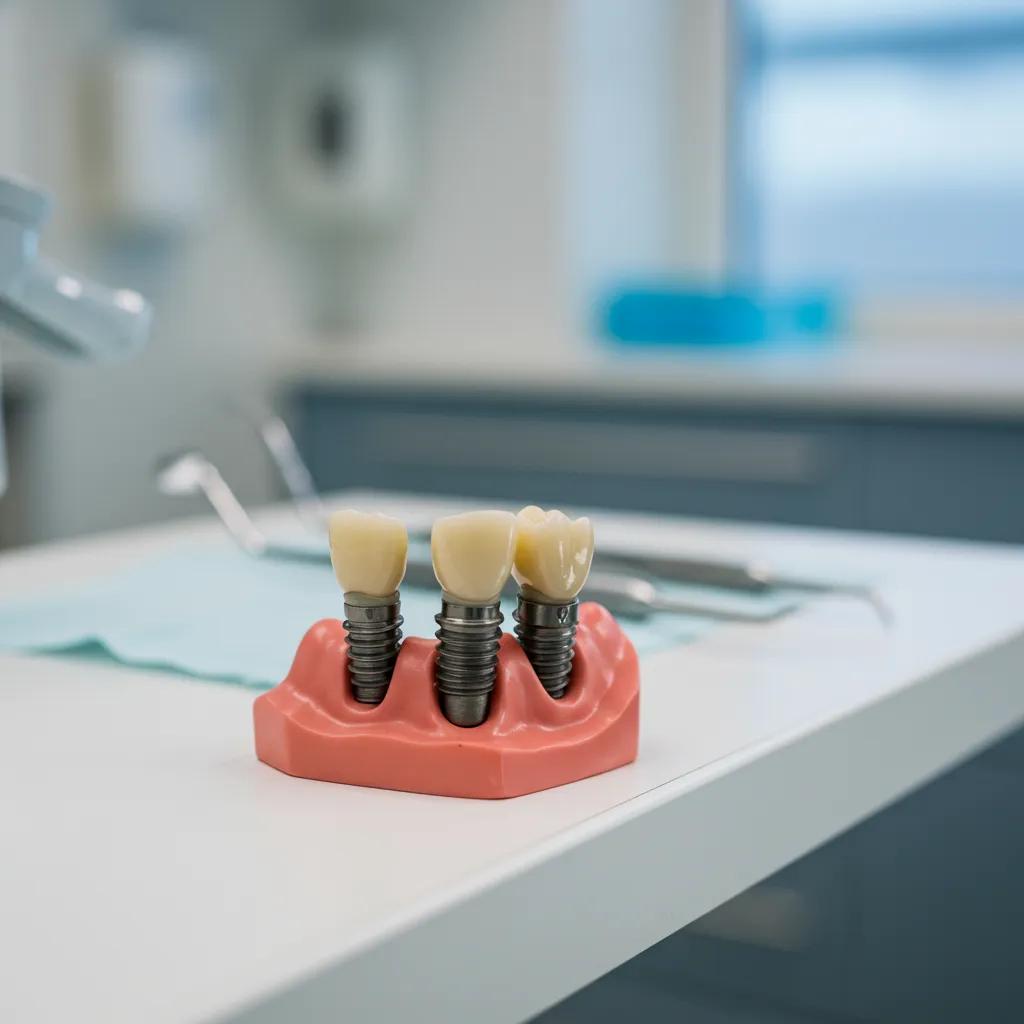
Decoding Dental Implant Prices: What Cost Factors Should You Be Aware Of?
Dental implants are prosthetic tooth roots—typically metal or ceramic posts—placed into the jawbone to support crowns, bridges, or full-arch restorations. Understanding their price drivers helps you make informed choices about long-term oral health and budget. This guide decodes dental implant pricing by explaining national and Fort Worth cost ranges, itemizing what is usually included in quotes, and mapping the main drivers: number of implants, implant materials (titanium vs zirconia), preparatory procedures like bone grafts and sinus lifts, clinician expertise, and sedation choices. Many patients feel uncertain when comparing quotes because advertised prices often omit diagnostic scans, grafts, or lab fees; this article solves that by providing clear breakdowns, EAV tables, comparison lists, and a practical 3-step estimator you can use before visiting a local Fort Worth provider. You will learn how insurance, HSAs/FSAs, and payment plans typically apply, why implants often offer greater long-term value than bridges or dentures, and which market and technology trends are influencing prices through 2025 and beyond. Read on for granular, patient-focused guidance that prepares you to get accurate, itemized estimates and to evaluate trade-offs between cost, aesthetics, and longevity.
What Is the Average Cost of Dental Implants Nationally and in Fort Worth?
The average cost of a single dental implant nationally typically reflects the combined price of the implant post, abutment, crown, and surgery, and it varies due to materials, preparatory work, and provider fees. National per-implant ranges are often cited as low-to-mid for economy systems, mid-range for standard titanium systems, and premium for zirconia or advanced workflows, with full-arch solutions (All-on-4) priced substantially higher due to complexity and prosthetic components. Understanding these ranges matters because quoted figures sometimes represent only one piece of the process rather than the entire restorative pathway, creating confusion for patients comparing national and Fort Worth prices. Regional modifiers—clinic overhead, specialist density, and local material availability—can nudge Fort Worth pricing slightly above or below national medians, so obtaining local, itemized quotes is essential before making decisions. The following subsections break down typical single vs multiple implant ranges, compare Fort Worth to national averages, and list what an “average cost” commonly includes and excludes.
What Are the Typical Price Ranges for Single and Multiple Implants?
A single tooth implant cost generally covers the implant post, abutment, and crown plus surgical fees, and price bands typically fall into low, mid, and high tiers based on material and workflow choices. Low-tier single-implant scenarios may represent economy implant systems with minimal lab work and limited warranties, while mid-tier prices align with standard titanium implants and conventional crowns, and high-tier figures reflect zirconia components, premium prosthetics, or guided-surgery workflows. Multiple implants can create economies of scale where combined prosthetic work reduces per-tooth cost, but complex surgical time or bone grafting can raise the per-unit price even as total investment increases. Example scenarios help illustrate: a straightforward single implant with a standard titanium post and porcelain crown falls into a mid-range band, whereas a full-arch All-on-4 solution distributes cost across multiple implants and prosthetic components and therefore presents a very different pricing structure.
How Do Fort Worth Dental Implant Prices Compare to National Averages?
Fort Worth pricing typically aligns with national mid-range averages but can shift up or down depending on local specialist availability, clinic overhead, and competitive market dynamics; caution is warranted because quoted figures vary in what they include. Urban centers with many oral surgeons and periodontists may show slightly higher fees due to specialist premiums, while areas with competitive general dentist offerings might offer more mid-tier pricing; Fort Worth tends to be competitive, but individual providers vary.
Local factors that influence Fort Worth modifiers include rental costs, lab partnerships, and regional supply chains for titanium or zirconia components, and these modifiers explain why some estimates differ from national medians. The practical takeaway is to request at least two or three itemized local estimates and compare the same components—implant post, abutment, crown, imaging, grafts, and anesthesia—so you can make apples-to-apples comparisons.
What Does the Average Cost Include in Dental Implant Pricing?
Average quoted implant costs often include the implant post, the abutment, and the final crown plus a portion of the clinician’s surgical fee, but many quotes exclude additional diagnostics, grafting, or sedation. Common inclusions are the primary implant component and prosthetic crown, while common exclusions are CBCT scans, temporary prostheses, bone graft materials, sinus lift procedures, and extended follow-ups—items that can materially increase the final bill. Asking for an itemized estimate reduces surprise fees and highlights whether the quote covers lab fees, local anesthesia or IV sedation, post-op visits, and warranty terms for the prosthetic crown. When comparing offers, use a checklist to ensure each quote lists included components and excluded items so you can evaluate true cost differences rather than marketing price points.
What Key Factors Influence the Cost of Dental Implants?
Cost drivers for dental implants include the number of implants, choice of implant materials, necessity of preparatory procedures like bone grafts and sinus lifts, provider expertise and location, and sedation choices; each factor affects both price and clinical outcomes. Materials differ in purchase cost and lab handling requirements, preliminary procedures add separate fees and timeline implications, and clinician experience often commands a premium that may improve long-term success. Technology and workflow choices—digital planning or guided surgery—also influence fees by increasing upfront costs but potentially improving outcomes and efficiency. Understanding how each factor maps to price empowers patients to balance short-term expense against long-term value and implant longevity.
How Does the Number of Implants Affect Total Cost?
The number of implants directly multiplies certain line items—implant posts and associated crowns—but economies of scale often emerge for prosthetic and surgical setup costs when multiple implants are placed in the same operative session. Per-unit implant costs can decrease when a single surgical event places multiple posts, because operating-room setup, anesthesia, and lab fees are spread across more teeth, but complexity such as uneven bone levels or additional grafting can raise per-implant labor and materials. For full-arch solutions, the pricing structure often shifts from per-tooth to a prosthetic-based model (e.g., implant-supported bridge or All-on-4), where total cost reflects the prosthesis complexity, materials, and the number of implants used. Patients should ask providers for scenario-based quotes showing single-tooth pricing and bundled full-arch pricing to evaluate marginal cost changes.
What Are the Cost Differences Between Titanium and Zirconia Implants?
Titanium implants are historically dominant and often less expensive due to widespread use and established manufacturing scale, while zirconia implants typically command higher prices because of material costs and more limited clinical adoption. Titanium offers proven osseointegration and a long track record of success, making it a cost-effective choice for many patients; zirconia provides superior aesthetics where metal avoidance is desired and may be preferable for certain soft-tissue profiles but currently has a smaller evidence base and higher material/lab costs. When choosing, weigh the price delta against aesthetic needs and long-term evidence: titanium remains the value leader for longevity and predictability, while zirconia can justify a premium for specific cosmetic or biocompatibility concerns.
Titanium vs. Zirconia: Dental Implant Materials Explained
The favourable long-term clinical survival rates reported for titanium and its biomedical applications have led to its widespread use as a dental implant material. However, concerns regarding its aesthetic limitations and potential biocompatibility issues have spurred research into alternative materials, such as zirconia.
A Critical Review of Dental Implant Materials with an Emphasis on Titanium versus Zirconia, RB Osman, 2015
Implant Component
Characteristic
Typical Cost Note
Titanium implant
Established osseointegration, broad indications
Generally lower per-unit cost due to scale
Zirconia implant
Metal-free, improved translucency for esthetics
Typically higher material and lab costs
Clinical choice
Use-case dependent
Material choice may add a moderate premium
This materials comparison clarifies why material selection is a primary contributor to per-implant price deltas and patient trade-offs.
How Do Preliminary Procedures Like Bone Grafts and Sinus Lifts Impact Price?
Bone grafts and sinus lifts are preparatory interventions that restore or augment bone volume to support implants, and they add discrete costs that often range widely depending on graft type and extent. Bone grafting can be a minor augmentation or a major reconstruction—costs vary from a modest additional fee for small particulate grafts to significant expense for block grafts or staged reconstructions—while sinus lifts introduce additional surgical complexity and materials, further elevating total cost.
Timing matters: simultaneous grafting with implant placement may reduce total visits but can increase surgical time and risk, whereas staged grafting separates procedures and can prolong the timeline while adding cumulative fees. Patients should request specific graft type descriptions and price ranges so they can evaluate alternatives and timing implications.
How Does Dentist Expertise and Location Influence Implant Pricing?
Provider credentials—oral surgeon, periodontist, or experienced general dentist—affect fees because specialists typically charge higher clinician fees tied to advanced training, and geography influences overhead-based pricing. Specialists often bring complex surgical skills and access to advanced facilities, creating a premium that may yield smoother outcomes for challenging cases, while general dentists may offer competitive pricing for straightforward implant cases; local Fort Worth market dynamics shape these differences. Value indicators include documented outcomes, clear warranties, transparent itemization, and whether the provider uses guided-surgery workflows or advanced imaging; these factors justify price differentials when outcomes or reduced complication rates are likely.
What Role Do Sedation Options Play in Dental Implant Costs?
Sedation choices—local anesthesia alone, oral sedation, or IV sedation—affect patient comfort and clinician workflow and add incremental fees to the overall implant cost. Local anesthesia is typically included in baseline surgical fees, while oral sedation adds clinician monitoring and medication costs, and IV sedation involves anesthesia personnel fees and enhanced monitoring equipment.
Patients with anxiety, complex surgeries, or longer operative sessions often opt for IV sedation despite higher cost because it improves tolerance and often facilitates efficient treatment in fewer visits. Ask providers to itemize sedation options and associated items (anesthesiologist fee, monitoring, recovery time) so you can plan both clinical comfort and financial impact.
How Is the Dental Implant Cost Broken Down?
A transparent cost breakdown isolates implant post, abutment, crown, surgical fees, diagnostics, lab fees, and follow-up care so patients can compare quotes and identify exclusions that change final out-of-pocket costs. Itemizing each component clarifies why two quotes with similar headline prices might differ significantly in coverage and value. The table below provides a concise EAV-style breakdown of core components and typical cost ranges to guide patient inquiries and comparisons.
Component
Role in Treatment
Typical Cost Range & Notes
Implant post
Acts as artificial root
Variable by system and material; primary hardware cost
Abutment
Connects post to crown
Cost varies with custom vs stock abutments and material
Crown
Final prosthetic tooth
Porcelain/ceramic lab work adds material and lab fees
Surgical fees
Clinician and operative costs
Includes placement, facility fees, and basic anesthesia
What Are the Costs of Implant Post, Abutment, and Crown?
The implant post is the core hardware; the abutment is the connector, and the crown is the visible prosthesis—each contributes a meaningful portion of the total cost depending on brand, material, and lab techniques. Implant post prices depend on the system (economy vs premium) and material (titanium vs zirconia), abutments add cost when custom or zirconia ceramic is used, and crowns reflect lab work, material (porcelain fused to metal, full ceramic), and esthetic complexity. Warranties and expected lifespans vary: high-quality crowns and abutments may cost more upfront but reduce replacement frequency and long-term expense. Request clarity on brand, material, and lab turnaround to align expectations with price.
Prosthetic Part
Typical Cost Range
Notes on Variation
Implant post
$ (varies)
Brand and material influence cost
Abutment
$ (varies)
Custom abutments cost more than stock
Crown
$ (varies)
Material and lab quality alter price
How Much Does the Surgical Procedure and Follow-Up Care Add to the Cost?
Surgical fees encompass clinician time, operating-room overhead, and anesthesia or sedation costs, while follow-up care covers postoperative visits, x-rays, and minor adjustments that support osseointegration and prosthetic fit. Operating-room charges and specialist clinician fees are often sizable line items, and sedation choice (oral vs IV) increases the surgical cost. Follow-up visits—critical for long-term success—may be included for a set period or billed per visit; ensure your estimate specifies included postoperative care and any additional fees for adjustments or complications. Including follow-up planning in the initial quote prevents unexpected post-op costs and emphasizes the importance of comprehensive care in overall price evaluation.
What Financing and Insurance Options Are Available for Dental Implants?
Dental insurance commonly limits implant coverage, but alternative financing—HSAs, FSAs, personal loans, and practice payment plans—can make implants affordable by spreading cost; understanding which vehicles apply and their documentation requirements is essential. HSAs and FSAs permit pre-tax use for qualified medical expenses, creating substantial savings when used for implants. Personal loans and clinic payment plans offer different cost profiles: loans may carry interest rates while practice plans sometimes provide interest-free periods. The following table summarizes common financing vehicles and typical considerations to discuss with your provider or plan administrator.
Financing Vehicle
How It Applies
Typical Considerations
Dental insurance
May cover portions
Often excludes implants or limits coverage; check specifics
HSA / FSA
Pre-tax funds for qualified expenses
Documentation required; can reduce taxable cost
Personal loans
Spread cost over time
Compare APR, term, and fees
Practice payment plans
Clinic-level installments
Ask about deposits, interest, and penalties
Does Dental Insurance Cover Dental Implant Costs?
Most dental insurance plans historically limit or exclude coverage for implants, often categorizing implants as elective or prosthetic procedures, so patients should verify plan specifics and documentation requirements. When partial coverage exists, it typically applies to the crown or prosthetic portion rather than the implant post or surgical fees, meaning substantial out-of-pocket expense remains. To evaluate coverage, request a predetermination from your insurer that lists covered CPT or CDT codes and expected patient responsibility, and consider submitting pre-authorization for any preparatory procedures. If coverage is limited, HSAs and FSAs or financing options can bridge the gap.
How Can HSAs and FSAs Help Finance Dental Implants?
HSAs and FSAs allow you to use pre-tax dollars for qualified medical and dental expenses, which can reduce the effective out-of-pocket cost for implants when documentation and eligible expense rules are followed. To use these funds, retain itemized invoices that describe the specific procedures and components, and check plan guidance on whether implant posts, grafts, and prosthetic crowns qualify under your plan. HSAs provide flexibility and rollover potential for unspent funds, while FSAs can have use-it-or-lose-it constraints; both require careful documentation for reimbursement. Using HSAs/FSAs effectively lowers taxable cost and can make higher-quality material choices more attainable.
What Personal Loan and Payment Plan Options Exist for Implant Financing?
Personal loans, healthcare credit facilities, and practice-level payment plans spread cost but differ in interest, terms, and medical-credit eligibility; evaluating APR, repayment term, and potential penalties is essential when choosing a route. Personal loans may provide predictable monthly payments, while healthcare credit options sometimes offer promotional interest-free periods that require on-time payments. Practice payment plans can be convenient and tailored, but confirm whether they include interest or require upfront deposits. When comparing options, calculate total repayment cost and ask providers to outline deposit, timeline, and refund policies to avoid surprises.
Financing choices vary in cost and flexibility; select the option that minimizes total interest and matches your cash flow needs.
Ask providers for their typical patient financing scenarios and sample repayment schedules.
Keep documentation and itemized estimates to facilitate HSA/FSA claims or insurance predeterminations.
These actionable steps help you match financing structure to both clinical needs and financial priorities.
Why Are Dental Implants Worth the Investment Compared to Alternatives?
Dental implants replace the tooth root and support prosthetics in a way that preserves jawbone, restores chewing efficiency, and often provides superior long-term value compared to bridges or removable dentures. By integrating with the bone through osseointegration, implants prevent the bone resorption that accelerates with conventional dentures, preserving facial structure and function. Although implants carry higher upfront costs, they often reduce replacement cycles and maintenance expenses across 5–10 year horizons, improving quality of life and delivering better functional outcomes. The following subsections explain mechanisms, compare lifetime costs, and use hypothetical cases to illuminate value.
How Do Dental Implants Improve Longevity and Jawbone Health?
Dental implants integrate with jawbone via osseointegration, where bone cells grow onto the implant surface, stabilizing the prosthesis and maintaining alveolar bone volume—this biological mechanism prevents the progressive bone loss typical under dentures. Preventing bone resorption preserves facial contours and supports adjacent teeth, reducing long-term morbidity associated with missing teeth. Success rates for modern implants are high with appropriate planning and maintenance, and implants require routine hygiene and periodic professional checks rather than the adhesive-dependent maintenance of dentures. Preserving bone also simplifies future restorative options and can lower lifetime costs associated with bone-related complications.
What Are the Cost and Quality Differences Between Implants, Bridges, and Dentures?
Upfront, bridges and dentures typically cost less than implants, but they often require more frequent replacement, compromise adjacent teeth, and contribute to bone loss that can necessitate future interventions—raising lifetime costs. Bridges rely on adjacent teeth for support and may require those teeth to be altered, while dentures are removable and can impair chewing efficiency and comfort; both options can trigger additional costs for relines, adhesive, or replacements. A lifetime-cost comparison should include initial investment, maintenance, replacement cycles, and indirect costs like bone grafting necessitated by long-term resorption. Many patients find implants provide superior function and a more predictable long-term financial profile when viewed over 5–10 years.
How Do Patient Case Studies Demonstrate the Value of Dental Implants?
Hypothetical patient scenarios show how implants can yield cost-effective outcomes when factoring functional improvement and reduced replacement needs: a single implant with a durable crown may outlast a three-unit bridge that requires replacement sooner and compromises adjacent teeth.
Case A: a patient opts for a single implant and avoids altering neighboring structures, preserving future options and incurring lower long-term maintenance.
Case B: a patient chooses removable dentures for low upfront cost but pays repeatedly for relines and adhesives while experiencing progressive bone loss. These scenarios illustrate trade-offs and emphasize that personalized clinical assessment drives both clinical outcomes and cost-effectiveness.
What Are the Latest Trends and Market Insights Affecting Dental Implant Prices?
Market growth, material adoption, and technological advances—such as digital planning and CAD/CAM prosthetics—are shifting price dynamics by both introducing premium workflows and generating efficiencies that can moderate costs over time. Rising demand from aging populations and expanded indications drives market growth, while innovations in guided surgery and additive manufacturing influence how clinics price premium services. Value-implant systems have grown as lower-cost entrants seeking to balance affordability and clinical efficacy; their presence affects pricing tiers and patient access. Below are trend discussions and implications for pricing and availability.
How Is the Global Dental Implant Market Growing Through 2033?
Market projections through the early 2030s indicate steady growth driven by demographic shifts, increased demand for esthetic dentistry, and technological adoption; higher demand can exert upward pressure on prices in constrained supply environments but also encourages competition that can moderate costs. Growth trajectories suggest expanding implant use across broader age ranges and increasing penetration in markets previously underserved, which affects manufacturer scale and potential price reductions for common systems. The market context signals more options for patients but also the need to vet lower-cost systems for clinical evidence and long-term outcomes.
What Technological Advances Are Influencing Implant Costs?
Digital workflows, guided surgery, and CAD/CAM prosthetics raise upfront costs when used as premium services because of planning software, guide fabrication, and precise milling, but they can reduce chair time, improve fit, and lower complication risk—value that may offset higher initial fees. 3D printing and in-office milling can shorten lab turnaround and reduce some lab fees, while guided placement can increase accuracy and reduce surgical risk, which may decrease long-term costs from complications. Patients should weigh whether premium digital workflows deliver tangible benefits for their case or whether conventional workflows provide equivalent outcomes at lower cost.
How Do Value Implants Affect Cost and Quality Balance?
Value implants aim to provide lower-cost options by streamlining component choices and manufacturing, and their market share grows as clinics seek affordability solutions; however, clinicians must vet systems for clinical evidence, component compatibility, and warranty support. Pros of value implants include improved access and lower per-unit hardware costs, while cons include potential limitations in long-term data or reduced flexibility for complex cases. When considering value systems, prioritize providers who can demonstrate clinical outcomes and provide clear follow-up care and warranty terms to mitigate risk.
How Can You Estimate Your Personalized Dental Implant Cost?
Estimating your personalized dental implant cost requires collecting precise inputs—number of implants, need for grafts, material preference, sedation choice, and diagnostics—and using those items to compute a scenario-based estimate you can present to local Fort Worth providers for consistent quotes. A simple checklist and three-step formula streamline this process and produce an estimate that accounts for common variables and local pricing modifiers. Bringing consistent inputs to multiple providers yields comparable, itemized quotes so you can make an informed choice based on value, not just headline price.
What Factors Should You Input for an Accurate Cost Estimate?
Gather the following data points before requesting estimates: number of implants required, bone quality and need for grafting, preference for titanium or zirconia, desired prosthetic type (single crown vs implant-supported bridge vs full-arch), sedation preference, and diagnostic imaging requirements such as CBCT. Each input alters cost: grafting adds both material and surgical fees, zirconia increases prosthetic material cost, and IV sedation adds anesthesia fees. Obtain a diagnostic CBCT or recent imaging when possible, because accurate bone assessment yields reliable graft and implant planning and therefore more accurate pricing.
How Do Local Provider Prices Affect Your Estimate in Fort Worth?
Local Fort Worth provider fees are shaped by specialist availability, clinic overhead, and regional competition; to obtain an accurate estimate, solicit at least two to three quotes from local providers using identical input criteria and request itemized pricing for components and services. Use consistent listing—implant post (material/brand), abutment type, crown material, graft needs, imaging, and sedation—so quotes are comparable. Regional modifiers such as lab partnerships and supply sourcing can create modest differences, so focus on total itemized cost and outcome assurances rather than headline numbers.
Where Can You Find Reliable Cost Estimator Tools for Dental Implants?
Good cost estimators let you enter itemized inputs—number of implants, grafts, material choice, sedation—and produce transparent breakdowns rather than a single lump-sum, allowing scenario comparisons and better planning. Look for calculators that allow component-level entries and provide ranges for preparatory procedures and regional modifiers; validate outputs by comparing them to local itemized quotes and authoritative guidance from professional dental organizations. Use these tools as planning aids and always confirm estimates with a clinical exam and provider consultation before making decisions.
Collect inputs: Number of implants, graft needs, material, sedation, diagnostics.
Calculate base: Per-implant post + abutment + crown.
These steps produce an actionable estimate you can present to Fort Worth providers for final itemized quotes and enable practical budgeting and financing decisions.