Dental Implant Maintenance Vs Traditional Options: What You Should Know About Care Effort and Longevity
Dental implants and traditional tooth-replacement options—such as full or partial dentures and fixed dental bridges—serve the same broad purpose: restoring function, speech, and appearance after tooth loss. This article compares dental implant maintenance versus the care required for dentures and bridges, focusing on daily routines, specialized tools, professional follow-up, common complications (including peri-implantitis), and long-term cost and lifespan implications. Readers will learn practical, evidence-aligned routines for home care, what to expect from professional maintenance visits, how complications are identified and prevented, and how maintenance choices influence longevity and overall cost. The goal is to equip you with actionable guidance so you can choose a restorative pathway that fits your lifestyle and long-term oral-health priorities. The article covers definitions and component breakdowns, daily cleaning steps and tools, denture and bridge care, the role of professional care, complication prevention, direct comparisons through structured tables, long-term outlook and costs, and local care options available in Longview.
Research consistently compares the clinical outcomes and functional benefits of dental implants versus traditional denture restorations.
Dental Implants vs. Dentures: Clinical Effects & Mastication Function
Background:Dentition defect is a common symptom in clinical dental patients. This study compared the clinical effects of denture restoration and dental implant restoration in the treatment of dentition defects through meta-analysis.Methods:Data retrieval was conducted through the PubMed, Web of Science, Embase, CNKI, and Wanfang databases.
The effect of denture restoration and dental implant restoration in the treatment of dentition defect: a systematic review and meta-analysis, 2021
What Are Dental Implants and Traditional Tooth Replacement Options?
Dental implants are fixed prosthetic replacements that anchor an artificial tooth to the jawbone via a surgically placed post, restoring chewing function and helping preserve adjacent bone. The mechanism that makes implants durable is osseointegration, where the titanium or zirconia post fuses with bone tissue and creates a stable foundation for an abutment and implant crown, delivering a result that closely mimics natural tooth biomechanics and appearance. Traditional options include full or partial removable dentures and fixed dental bridges; dentures replace multiple or all teeth and are removable for cleaning, while bridges span a gap by attaching to adjacent abutment teeth and are not removed daily. Understanding these differences clarifies why maintenance strategies vary: implants demand tooth-like hygiene to protect surrounding gums and bone, dentures require daily removal and soaking to manage biofilm and fit, and bridges require specialized interdental cleaning beneath pontics to prevent decay of abutment teeth. Knowing the basic function and structure of each option helps patients select the maintenance routine that matches their dexterity, health risks, and long-term goals.
What Components Make Up a Dental Implant?
A dental implant consists of three primary components: the implant post (commonly titanium or zirconia) that is placed into the jawbone, an abutment that connects the post to the visible restoration, and the implant crown that replicates the tooth’s chewing surface and contours. The implant post provides the foundational stability via osseointegration, which is crucial because a firmly integrated post distributes forces into the bone and reduces micro-mobility that can invite complications. The abutment forms the critical interface at the gumline where plaque and biofilm can accumulate, so careful cleaning around the abutment margin is essential for preventing peri-implant inflammation. The crown itself is susceptible to wear and may develop marginal staining or soft-tissue irritation if hygiene lapses; however, crowns are replaceable without disturbing the underlying post in many cases. Recognizing how these parts interact clarifies why implant maintenance focuses on both surface cleaning and monitoring the tissue that supports the implant.
How Do Dentures and Bridges Function as Traditional Options?
Dentures are removable prostheses with a denture base and denture teeth that restore full or partial arches and rest on the oral mucosa and supporting bone, relying on fit and sometimes adhesive for retention. Full dentures replace an entire arch and change the mechanics of chewing compared with natural teeth, while partial dentures depend on remaining teeth for stability and can act as a saddle that transfers load to adjacent structures. Fixed bridges consist of abutment crowns on neighboring teeth joined to a bridge pontic that fills the missing tooth space; because bridges are cemented, they provide a fixed restoration but place additional hygiene demands on the abutment teeth. The materials used—acrylic bases and resin or porcelain teeth for dentures, and ceramic or metal-based crowns for bridges—affect wear, polishing, and cleaning approaches, and each option carries maintenance trade-offs related to removability, oral-tissue contact, and prosthetic longevity. Understanding these functional differences prepares patients for the distinct daily and periodic care each option requires.
How Do You Care for Dental Implants Daily?
Dental implants require a routine that mirrors natural-tooth hygiene but emphasizes interdental cleaning and attention to the abutment margins to prevent biofilm accumulation and peri-implant disease. The core mechanism behind effective daily care is consistent plaque control at and beneath the gumline, which prevents bacterial colonization that can lead to inflammation of soft tissue and bone loss around the implant. This daily approach produces the specific benefit of preserving osseointegration and reducing the risk of peri-implantitis, thereby supporting long-term implant stability and function. Below are concise, actionable steps followed by frequency guidance to provide a practical routine patients can adopt for reliable implant maintenance.
Scientific evidence underscores the critical role of diligent home care in preventing inflammation and complications around dental implants.
Dental Implant Home Care: Preventing Mucositis & Peri-Implantitis
Background: Correlation between high plaque index and inflammatory lesions around dental implants has been shown and this highlights the importance of patient plaque control. Until now, knowledge of peri-implant home care practices has been based on periodontal devices. Objective: The aim of this overview is to identify the presence of scientific evidence that peri-implant homecare plays a role in mucositis and peri-implantitis prevention.
Role of dental implant homecare in mucositis and peri-implantitis prevention: a literature overview, V Checchi, 2019
Brush twice daily with a soft-bristled or implant-specific brush using a non-abrasive toothpaste and a gentle circular motion along the gumline and abutment margin.
Clean interdental spaces at least once daily using interdental brushes sized to the embrasure, or floss with a floss threader if needed to reach around the implant.
Rinse with an antimicrobial mouthwash or saline rinse after meals when brushing is not possible, particularly if you notice food accumulation or bleeding.
Inspect the site daily for early warning signs—bleeding, swelling, increased probing depth, or mobility—and seek professional evaluation promptly if any appear.
Use adjunctive tools such as a water flosser as an addition to, not a replacement for, mechanical interdental cleaning to reduce biofilm in hard-to-reach areas.
These steps emphasize prevention and self-monitoring and naturally lead into a more detailed, surgeon- and hygiene-focused cleaning routine that clarifies motions, products, and timing for optimal results.
What Is the Recommended Dental Implant Cleaning Routine?
A recommended implant cleaning routine centers on morning and evening mechanical cleaning plus daily interdental care and periodic rinsing to control biofilm and inflammation. Start each morning by brushing with a soft-bristled brush and non-abrasive paste, focusing two to three minutes on the implant crown margins and surrounding gingiva using gentle, circular strokes to dislodge plaque without abrading the prosthetic surface. After the midday meal, rinse and, when possible, floss or use a compact interdental brush around the abutment to remove trapped food; in the evening repeat the thorough brushing and complete the routine with interdental cleaning and an antimicrobial rinse. The clinical rationale is straightforward: consistent, gentle, mechanical plaque removal prevents the maturation of calculus and bacterial colonies that precipitate peri-implant mucositis and, if unchecked, peri-implantitis. Pay close attention to any bleeding on brushing—this is an early warning that should prompt professional assessment—because early intervention preserves both soft tissue health and the underlying osseointegration.
Which Specialized Tools Help Maintain Dental Implants?
Choosing the right tools enhances plaque control around implants and helps patients tailor care to their oral anatomy, restoration design, and dexterity. The following table outlines common tools, their primary use around implants, and the practical benefit each provides to guide selection based on individual needs.
This EAV-style table compares interdental brushes, water flossers, implant-specific brushes, and floss types.
Tool
Primary Use Around Implants
Benefit / How to Use
Interdental brush
Clean embrasure and abutment gaps
Gently insert and move back-and-forth; highly effective for plaque removal where floss may not reach
Water flosser
Rinse subgingival regions and remove debris
Use on low-to-medium pressure directed at gumline; useful as adjunct for patients with limited manual dexterity
Implant-specific brush
Clean crown margins and abutment interfaces
Small head and tapered bristles reach margins without abrasion; brush 1–2 minutes per site
Floss with threader or super floss
Clean under bridge pontics and around implants
Use threader to pass floss beneath prosthesis; wrap around abutment and slide up-and-down to remove plaque
What Are the Maintenance Requirements for Dentures and Bridges?
Denture and bridge maintenance follows different principles: dentures require removable cleaning and overnight soaking to manage biofilm and fit, while bridges rely on fixed-prosthesis hygiene techniques that protect abutment teeth and the pontic interface. The mechanism behind denture maintenance is controlling microbial growth on the denture base and teeth and preserving fit through relines or adjustments when the supporting tissues change, which helps prevent sore spots and functional breakdown. Bridge maintenance centers on preventing caries on abutment teeth and cleaning beneath pontics where food traps and plaque can accumulate; this preserves the health of the teeth supporting the bridge. Proper daily and periodic care reduces the risk of prosthetic failure, improves comfort, and maintains oral health, and the practical routines below outline cleaning, storage, and flossing techniques.
At the end of this section is a brief note about local clinical support available for denture and bridge maintenance to help readers connect routine care with professional services.
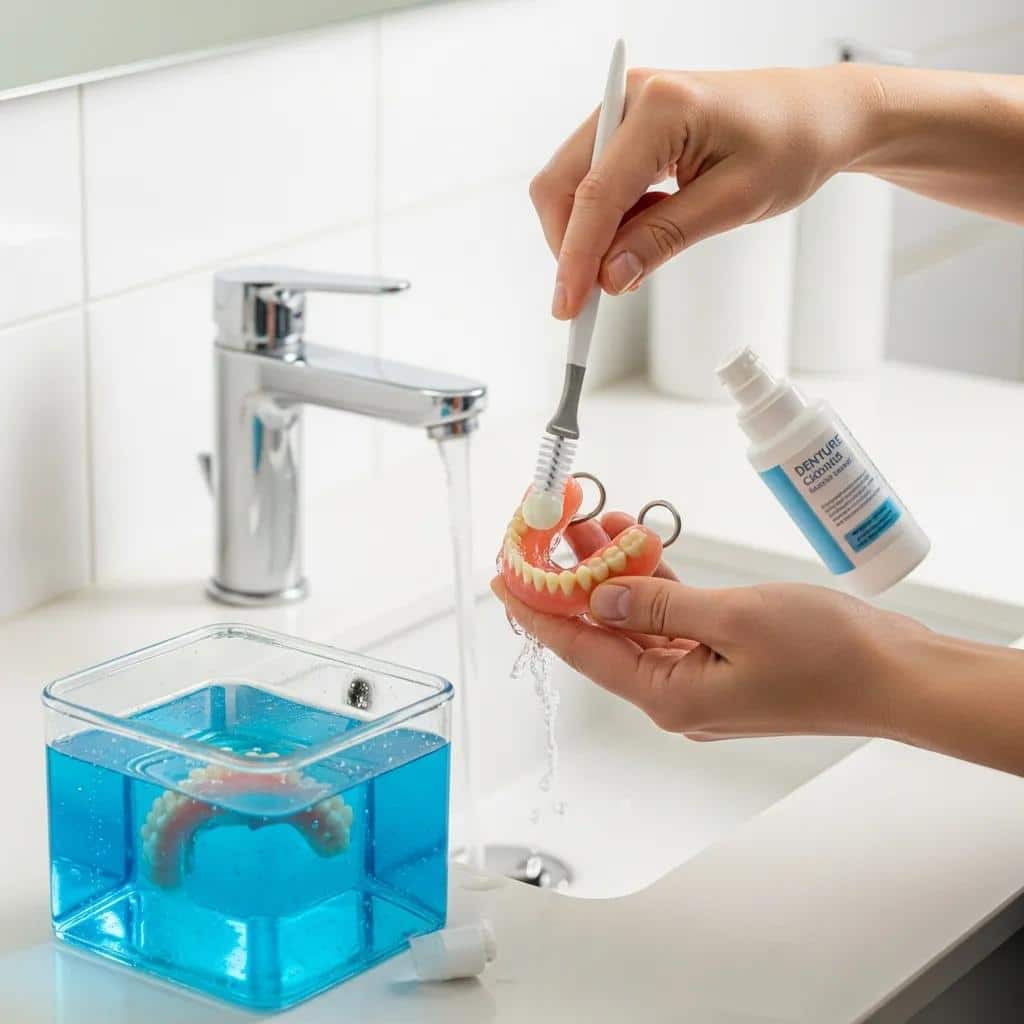
Denture care involves consistent removal, cleaning, and storage to prevent staining, odor, and tissue irritation, while bridge care requires special interdental tools to clear food from under pontics and monitor abutments for decay or loosening. A strong routine for dentures includes rinsing after meals to remove loose debris, brushing the prosthesis with a denture brush and appropriate cleanser (avoiding abrasive toothpastes), and soaking overnight in a recommended solution to disinfect and prevent drying or warping. For bridges, patients should employ floss threaders, super floss, or specialized floss to clean under pontics daily, brushing vigorously around the abutment margins and using an antimicrobial rinse when indicated. Both prosthetic types benefit from periodic professional checks: dentures may need relines or repairs as the tissue base changes, and bridges require evaluation of crown margins and the health of supporting teeth. These maintenance actions minimize complications and lead into specific step-by-step cleaning guidance for dentures and flossing techniques for bridges.
Short clinic note: Affordable Dentist Near Me of Longview provides denture maintenance services, denture adjustments and relines, and bridge evaluations to help patients maintain fit and function; these professional services support long-term prosthetic success and complement home-care routines.
How Should You Clean and Store Dentures Properly?
Cleaning and storing dentures properly prevents biofilm accumulation, staining, and material deterioration while maintaining tissue health under the prosthesis. The practical routine begins by rinsing dentures after eating to dislodge food particles, followed by gentle brushing with a denture brush and a cleanser specifically formulated for dentures—avoid abrasive toothpaste and hot water to prevent surface abrasion and warping. Nightly soaking in a denture soak or mild antiseptic solution helps disinfect and remove residual stains; soaking also keeps the acrylic moist to prevent cracking and preserve the denture base. Storage should always involve submerging the denture in recommended solution or water to avoid drying; when relines, repairs, or adjustments are needed because of sore spots, repeated slipping, or changes in fit, see a dental professional promptly to avoid tissue damage. Proper cleaning and storage protect oral tissues and prolong prosthesis service life, and knowing when to seek professional help sets the stage for maintenance intervals and signs of wear.
What Are Effective Flossing Techniques for Dental Bridges?
Effective cleaning for bridges focuses on removing plaque beneath pontics and around crown margins using floss threaders, super floss, or interdental brushes to prevent decay and inflammation of abutment teeth. A stepwise approach begins by threading the floss under the pontic using a floss threader, then wrapping the floss around the side of each abutment and sliding it up-and-down to clear biofilm from the margin; alternative tools like super floss incorporate a stiffened-end section to pass beneath the pontic and a fluffy section to clean the broader area. Interdental brushes of an appropriate size may supplement or replace flossing in larger embrasures, and daily use is essential because trapped food and plaque under the pontic can accelerate caries in abutment teeth. Mistakes to avoid include sawing floss harshly against crown margins or skipping the underside of the pontic, both of which allow bacterial colonies to mature between recall visits. Mastering these techniques reduces the likelihood of bridge failure and transitions naturally to how professional care supports these prosthetic maintenance needs.
How Does Professional Dental Care Support Implant and Prosthetic Maintenance?
Professional dental care plays a central role in preventing and detecting problems that home care alone may miss; professionals use instruments and imaging to assess soft tissue health, measure peri-implant probing depths, remove calculus, and perform adjustments to dentures and bridges. The mechanism by which professional visits protect prosthetics is twofold: clinicians remove hardened biofilm and calculus that home care cannot, and they monitor peri-prosthetic tissues and supporting structures for early signs of failure so corrective measures can be taken before irreversible damage occurs. Regular professional interventions thereby extend prosthetic lifespan and reduce the need for complex corrective procedures, delivering the benefit of ongoing function and reduced long-term costs. Below are the key reasons and recommended frequencies for professional visits, followed by a brief description of local clinical services that support maintenance.
Professional cleanings detect early inflammation and peri-implant disease and remove calculus that home care cannot reach.
Specialized maintenance appointments allow for targeted debridement around implant abutments and inspection of soft-tissue attachment and probing depths.
Dentures and bridges can be evaluated for fit, occlusion, and material wear, enabling timely relines, repairs, or crown adjustments.
Radiographic monitoring during professional visits helps detect bone changes around implants and hidden decay on bridge abutments.
Personalized maintenance plans reduce complication risk and align recall intervals with individual risk profiles such as periodontal history or systemic health factors.
These professional activities form the backbone of a preventive strategy and lead into a more detailed explanation of why regular implant cleanings and prosthetic services are essential to long-term success.
Why Are Regular Professional Cleanings Important for Dental Implants?
Regular professional cleanings for dental implants are important because clinicians can remove hardened deposits and subgingival biofilm that are difficult to disrupt with home tools, and they can identify early signs of soft-tissue inflammation and bone loss. Clinical instruments, including specially coated scalers and polishing tools for implants, allow hygienists to debride implant surfaces safely, reducing the bacterial load that contributes to peri-implant mucositis and peri-implantitis. Recommended frequency varies by risk profile but commonly includes two visits per year as a baseline, with more frequent visits for patients with a history of periodontal disease, smoking, or poorly controlled systemic conditions; these intervals enable monitoring of probing depths and radiographic checks to preserve osseointegration. Early detection at these visits enables minimally invasive interventions—such as antimicrobial therapy or targeted debridement—that can halt progression and protect the implant’s long-term function. Understanding the role of professional cleanings clarifies how clinic-level services complement home care and supports subsequent discussion of denture and bridge professional services.
What Professional Services Are Available for Denture and Bridge Maintenance?
Professional services for dentures and bridges include relines, repairs, occlusal adjustments, polishing, and detailed evaluations of fit and supporting tissue health to maintain comfort and function. Denture relines restore a close adaptation to the changing contours of the mouth, preventing sore spots and instability, while repairs address fractures, tooth replacement on the prosthesis, or attachment replacements for partials; occlusal adjustments correct bite imbalances that can cause wear or tissue irritation. For bridges, professional evaluation includes checking crown margins for integrity, polishing surfaces to reduce plaque retention, and assessing neighboring teeth for decay; when abutment teeth show pathology, clinicians can plan restorative measures to preserve the bridge or replace it as needed. These services maintain prosthetic performance, prevent secondary complications, and are an essential complement to daily home care routines that patients perform between visits.
Brief clinic services paragraph: Affordable Dentist Near Me of Longview offers professional implant cleanings, denture adjustments and relines, and bridge evaluations as part of the practice’s restorative and prosthodontic care, using modern technology and equipment to support long-term prosthetic maintenance and patient comfort.
What Are the Common Complications and How Can They Be Prevented?
Common complications across prosthetic options include peri-implantitis for implants, prosthetic wear and loss of retention for dentures, and decay or failure of abutment teeth for bridges; identifying these early allows conservative management and prevents more extensive interventions. The underlying mechanism for many complications is uncontrolled plaque biofilm at tissue interfaces—whether it is the implant abutment margin, the denture-fitting surface, or the crown margin of a bridge—which triggers inflammation in adjacent soft tissues and can lead to bone loss or prosthetic instability. Preventive measures center on rigorous daily hygiene, adherence to professional maintenance schedules, risk-factor management (smoking cessation, glycemic control for diabetes), and timely prosthetic adjustments. Below are practical prevention steps and red-flag symptoms that indicate the need for immediate clinical evaluation to protect prosthetic longevity and oral health.
Maintain consistent mechanical plaque control daily—brushing, interdental cleaning, and prosthesis-specific care—to prevent biofilm maturation.
Attend professional maintenance visits as recommended; use professional cleanings to remove calculus and monitor tissue health.
Control systemic risk factors such as smoking and poorly controlled diabetes, which increase susceptibility to infection and compromise healing.
Respond promptly to warning signs such as persistent bleeding, unexplained pain, increased mobility of a prosthesis, or changes in fit that indicate tissue or structural changes.
Use antimicrobial adjuncts under clinician guidance when early inflammation is detected to reduce bacterial load and encourage tissue healing.
These prevention strategies reduce complication rates and lead into more detailed signs and prevention tactics specific to peri-implantitis and general gum-health practices.
How Can Peri-Implantitis Be Identified and Prevented?
Peri-implantitis is identified by clinical signs of inflammation around an implant—bleeding on probing, increased probing depth, suppuration, gum recession, and radiographic bone loss—and it is prevented primarily through sustained plaque control and regular professional monitoring. Clinicians diagnose peri-implantitis using a combination of clinical probing, visual inspection for inflammation and exudate, and radiographs to quantify bone loss compared with baseline images; early peri-implant mucositis may be reversible with improved hygiene, while established peri-implantitis may require surgical or adjunctive antimicrobial therapy. Preventive daily measures include meticulous interdental cleaning, gentle brushing of the abutment margins, and avoidance of behaviors that promote infection, such as smoking; professional maintenance includes debridement and risk-based recall intervals. Recognizing these signs early is critical because interventions are more effective before substantial bone loss occurs, and patient adherence to hygiene and recall schedules greatly reduces the chance of progression. This focus on identification naturally connects to broader gum-health practices that underpin prosthetic success.
Further research confirms the effectiveness of supportive peri-implant therapies in preventing serious complications like implant loss.
Efficacy of Supportive Peri-Implant Therapies for Preventing Implant Loss
ABSTRACTObjectivesTo study the efficacy of supportive peri-implant therapies in preventing clinical and radiological signs of peri-implantitis and implant loss.Material and MethodsLongitudinal human studies, published between January 1, 2006, and February 1, 2016, were included based on an electronic search using MEDLINE and EMBASE databases and complemented by a manual search.
The efficacy of supportive peri-implant therapies in preventing peri-implantitis and implant loss: a systematic review of the literature, A Ramanauskaite, 2016
What Gum Health Practices Support Long-Term Prosthetic Success?
Good gum-health practices for long-term prosthetic success include consistent plaque control through brushing and interdental cleaning, routine periodontal assessments, and management of systemic contributors that affect tissue healing and immunity. Brushing twice daily with a soft brush, daily interdental cleaning using appropriately sized interdental brushes or floss, and regular antimicrobial rinses when clinically indicated reduce gingival inflammation that threatens both natural teeth and implants. Regular periodontal evaluations enable clinicians to track pocket depths, attachment levels, and tissue response, facilitating early intervention when changes occur; additionally, addressing systemic risk factors such as smoking cessation and diabetes control improves tissue resilience and healing. These standard gum-health strategies support implant osseointegration, reduce denture-related mucosal irritation, and help preserve abutment teeth under bridges, creating a unified foundation for all prosthetic maintenance needs.
How Do Maintenance Efforts Compare Between Implants, Dentures, and Bridges?
Comparing maintenance efforts across implants, dentures, and bridges clarifies time investment, complexity, professional-care requirements, common complications, and typical lifespans—allowing patients to weigh daily routines against long-term outcomes. The primary mechanism differentiating maintenance effort is whether the restoration is fixed or removable and whether it interacts directly with bone or mucosa in ways that change over time, such as residual ridge resorption under dentures. Implants tend to mimic natural-tooth hygiene but require precise interdental cleaning and monitoring for peri-implant disease; dentures require routine removal and soaking plus periodic relines; bridges demand enhanced flossing techniques under pontics and monitoring of abutment teeth for decay. The table below provides a scannable side-by-side comparison of daily care, professional care frequency, common complications, and typical lifespan to help readers quickly evaluate effort versus benefit.
Different prosthetic types present distinct maintenance profiles and expected outcomes.
Restoration Type
Daily Care
Professional Care Frequency
Common Complications
Typical Longevity Range
Implant
Brushing + interdental cleaning around abutment
2×/year baseline; tailored for risk
Peri-implant mucositis, peri-implantitis
Many years to decades with proper care
Denture (full/partial)
Remove & brush; nightly soak
Annual checks; relines/repairs as needed
Poor fit, sores, fracture, biofilm
5–8 years average for prosthesis; varies
Fixed Bridge
Brushing + floss threader under pontic
1–2×/year; monitor abutments
Decay of abutment teeth, cement failure
7–15 years depending on abutment health
What Are the Daily Care Differences Among These Options?
Daily care differs primarily in method and frequency: implants require a tooth-like routine plus interdental cleaning, dentures require removal and soaking to manage biofilm and fit, and bridges require specialized flossing under the pontic to protect abutment teeth. For implants, the daily checklist includes brushing twice daily, interdental cleaning once daily, rinsing as needed, and inspection for inflammation; this routine mirrors natural-tooth hygiene but focuses on the implant–tissue interface. For dentures, the checklist includes rinsing after meals, brushing the prosthesis with a denture brush, overnight soaking, and preserving the denture base to avoid drying; this process usually takes additional minutes each day but is essential for hygiene and comfort. For bridges, daily flossing beneath the pontic with a threader or super floss plus diligent brushing preserves abutment integrity and prevents secondary caries. These daily routines align with professional maintenance schedules and inform expectations about time and technique required to support long-term success.
How Do Professional Care Needs Vary?
Professional care needs vary by restoration type and patient risk factors: implants require specialized debridement and periodic radiographic monitoring, dentures need fit checks and relines, and bridges benefit from crown margin inspections and monitoring for decay on supporting teeth. Implant maintenance typically includes targeted debridement, probing to measure tissue attachment and pocket depths, and radiographs when changes are suspected to protect osseointegration; frequency is often every six months or more frequently for high-risk patients. Denture patients usually benefit from annual fit assessments and timely relines or repairs to maintain comfort and avoid tissue trauma, especially as bone and soft-tissue contours change with time. Bridge maintenance centers on assessing crown margins, polishing to lower plaque retention, and ensuring abutment tooth vitality; if abutment decay or failure occurs, further restoration or replacement of the bridge may be required. These differentiated professional services underscore why tailored recall schedules and risk-based approaches are central to long-term prosthetic care.
What Is the Long-Term Outlook and Cost Implications of Each Option?
Long-term outlook and cost implications depend significantly on maintenance adherence, complication incidence, and the need for repairs or replacements over time; maintenance reduces complication-driven costs and extends the functional lifetime of any prosthetic. The mechanism connecting maintenance and cost is straightforward: preventive care reduces the probability of high-cost interventions such as surgical treatment for peri-implantitis, frequent relines or new denture fabrication, or bridge replacement due to abutment failure. Proper maintenance therefore lowers average lifetime costs despite higher up-front investment for options like implants, while inadequate maintenance increases the likelihood of costly repairs or replacements. The table below summarizes estimated ongoing cost categories and typical frequency to help readers understand recurring expenses relative to initial investment and maintenance-driven replacement cycles.
This cost-driver table outlines typical recurring costs by prosthetic type; ranges are illustrative to show relative drivers rather than specific clinic prices.
Restoration Type
Ongoing Cost Category
Typical Frequency / Notes
Implant
Professional maintenance & periodic imaging
1–2×/year baseline; additional if complications arise
Denture
Relines, repairs, replacement
Reline or adjust every 1–5 years; replacement every 5–8 years
Bridge
Crown maintenance, possible abutment treatment
Checkups 1–2×/year; replacement every 7–15 years depending on abutment health
How Does Maintenance Impact the Longevity of Dental Implants vs. Traditional Options?
Maintenance practices critically influence longevity: implants can last decades when peri-implant health is preserved through home care and professional monitoring, bridges depend on the ongoing health of abutment teeth and may require earlier replacement if abutments fail, and dentures have predictable material wear and fit changes that necessitate relines and replacement over time. The clinical rationale is that implants, once osseointegrated, are structurally durable, but their long-term success hinges on controlling peri-implant infection and preserving supporting bone; consistent plaque control and recall visits are the most important predictors of long-term implant survival. Bridges are susceptible to secondary caries on abutment teeth and to crown margin degradation, so diligent hygiene and early treatment of abutment pathology extend their life. Dentures experience dimensional changes in fit from tissue resorption and acrylic wear, so relines and periodic replacement are expected and planned for as part of lifecycle maintenance. Thus, maintenance reduces replacement frequency for all options, with implants typically offering the best longevity when maintenance is rigorous.
What Are the Ongoing Costs Associated with Each Maintenance Type?
Ongoing costs for each restoration are driven by the frequency of professional maintenance, the likelihood of repairs, and complication-driven interventions; implants often have lower recurring prosthetic replacement costs but may require targeted professional maintenance and imaging, whereas dentures and bridges incur routine reline, repair, or replacement costs with differing frequencies. For implants, recurring costs largely take the form of specialized maintenance visits and occasional adjunctive therapies if inflammation arises; for dentures, relines and repairs are common recurring costs that occur at predictable intervals; for bridges, costs are associated with occlusal adjustments, polishing, and potential abutment treatments if decay or structural compromise occurs. Preventive care—daily hygiene and appropriate recall intervals—reduces the chance of emergency or complex procedures that drive costs higher. Understanding these recurring cost categories helps patients weigh long-term financial implications against functional and esthetic benefits.
Why Choose Affordable Dentist Near Me of Longview for Your Dental Prosthetic Care?
Affordable Dentist Near Me of Longview offers implant, denture, and bridge services locally and emphasizes affordability, modern technology, and patient-focused follow-up to support long-term prosthetic maintenance. The practice expressly promotes affordable pricing options, everyday low fees, and affordable payment plans to help patients access restorative care, and it offers a free dental implant consult to help prospective implant candidates understand their options before committing to treatment. Services relevant to long-term maintenance that are available at the Longview location include professional implant cleanings, denture adjustments and relines, and bridge evaluations, all delivered using modern technology and equipment to improve treatment accuracy and comfort. Patients seeking a maintenance plan can schedule an initial consult to review prosthetic options, maintenance expectations, and personalized follow-up intervals to align restorative choices with lifestyle and budget priorities. This patient-centered approach integrates cost considerations with clinical planning to make long-term maintenance more predictable and manageable.
What Affordable Pricing and Payment Plans Are Offered?
The Longview practice highlights affordable pricing options and affordable payment plans as part of its commitment to accessible restorative care, and it explicitly advertises a free dental implant consult to help patients evaluate implant suitability and maintenance needs without an initial fee. These offers support informed decision-making by allowing patients to compare the likely maintenance effort and long-term value of implants, dentures, and bridges before beginning treatment. While specific pricing and plan details are handled directly through the clinic, the availability of structured options and a no-cost implant consultation reduces barriers to discussing prosthetic choices and establishing a personalized maintenance plan. This pricing transparency and consultative approach help patients make choices grounded in both clinical and financial realities.
How Does Our Clinic Support Patients in Long-Term Maintenance?
Affordable Dentist Near Me of Longview supports long-term maintenance through the clinical services listed earlier—professional implant cleanings, denture adjustments and relines, and bridge evaluations—combined with follow-up care and modern equipment that facilitate accurate assessment and timely interventions. The clinic’s service mix includes general, prosthodontic, periodontic, and restorative care that together provide the multidisciplinary support necessary for complex prosthetic cases and ongoing maintenance. Patients can work with clinicians to establish recall intervals, receive instruction on home-care techniques tailored to their restoration type, and schedule relines or repairs as tissue and prosthetic needs evolve. Encouraging patients to use the free implant consult and to enroll in a maintenance schedule helps translate daily hygiene into lasting prosthetic success and improved long-term outcomes.