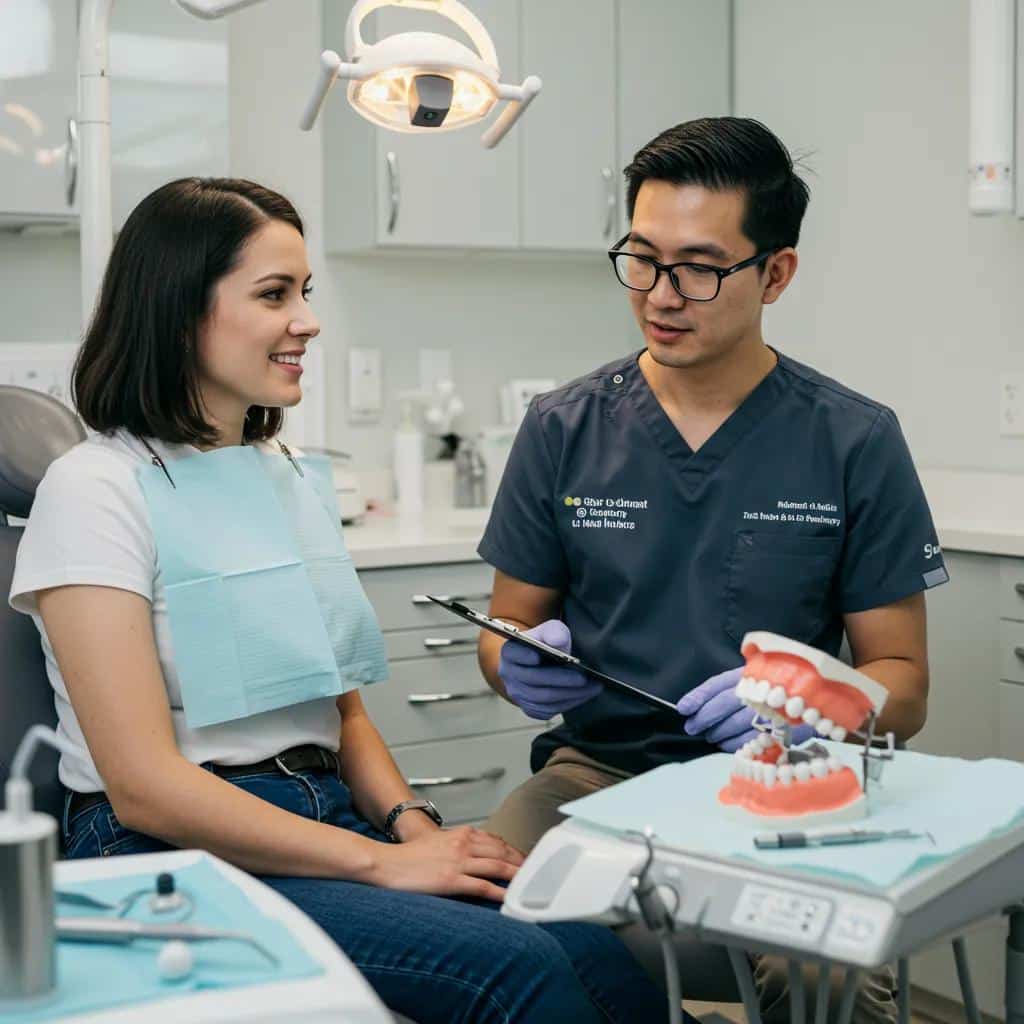
Your Dental Implant Journey After Tooth Extraction: What to Expect and When You Can Get Started
Getting a tooth extracted and then receiving a dental implant is a carefully planned process. It’s all about balancing proper bone healing, preventing infection, and ensuring the implant integrates perfectly with your jawbone. This article will walk you through what an “implant timeline after extraction” truly means, why bone health and management are key to how soon your implant can be placed, and how different approaches—immediate, early, or delayed placement—can change both your timing and final results. You’ll discover the typical windows for each placement strategy, the vital role of bone grafting and socket preservation, what to expect during recovery, and realistic cost considerations specifically for care here in Fort Worth. We’ve included practical checklists and tables to compare placement types, graft materials, and cost components, helping you plan your decisions and appointments with confidence. After exploring timelines, procedural steps, and alternatives if immediate placement isn’t an option, you’ll find clear next steps to determine your eligibility and when to schedule treatment. This roadmap uses the latest research and clinical insights to help you decide whether an immediate implant or a staged approach is best for you, and prepares you to schedule a free consult for a truly personalized plan.
Understanding Your Dental Implant Timeline After a Tooth Extraction
Your personal timeline for dental implants after an extraction isn’t one-size-fits-all; it truly depends on whether your dentist recommends immediate, early, or delayed placement. Each option is carefully chosen to optimize your healing and ensure the implant’s stability. Immediate placement happens right when your tooth is removed, but only if your socket and surrounding bone are healthy enough. Early placement typically involves a 4–8 week wait for soft tissue healing, while delayed placement usually allows 3–6 months or more for your bone to fully remodel and any grafts to consolidate. These choices represent a thoughtful balance between minimizing your overall treatment time and ensuring you have enough healthy bone and infection-free conditions for predictable implant success. Understanding these differences helps you weigh benefits like fewer surgeries against potential risks such as compromised initial stability or the need for more grafting. The table below clearly summarizes typical timeframes, along with their pros and cons, making the comparison easy to understand before we discuss individual factors that might adjust these timelines for you.
Implant Placement Type
How Long You’ll Wait
Key Benefits & Considerations
Immediate implant placement
Same-day as extraction
Pros: Fewer surgeries, helps preserve your natural gum line. Cons: Requires excellent bone health and no infection; demands strong initial stability.
Early implant placement
4–8 weeks after extraction
Pros: Allows soft tissue to stabilize, reduces infection risk. Cons: Might still need minor bone grafting; moderate overall treatment time.
Delayed implant placement
3–6+ months after extraction
Pros: Ensures stable bone volume after natural remodeling, lowest infection risk. Cons: Longer total treatment time; potential need for bone augmentation.
This comparison helps you see how different placement strategies impact your healing journey and final restoration planning. Next, let’s dive into what truly determines your personal waiting period and the factors that refine these averages for individual patients.
So, How Long Should You Really Wait for Your Dental Implant?
Figuring out how long to wait before your implant placement begins with a thorough assessment of your socket’s condition, any infection status, and your existing bone volume. A healthy socket with intact bone can sometimes allow for an immediate implant, while infected or deficient sockets typically require a waiting period. Immediate placement is possible when an atraumatic extraction preserves your bone and your dentist can achieve strong initial stability. Otherwise, early placement at 4–8 weeks allows for soft tissue closure and reduced swelling, and delayed placement after 3–6 months gives your bone time to remodel and any grafts to fully integrate. Systemic factors like controlled diabetes and habits such as smoking can extend these windows because they slow down healing and osseointegration. For our Fort Worth patients weighing speed versus predictability, a detailed imaging and exam during a free consult will clarify your optimal window and whether socket preservation or augmentation will alter your timing. If you’re looking for an individualized timeline based on your unique oral health and imaging, schedule a free consult with us to get your personalized plan.
What Really Shapes Your Implant Placement Timeline?
Several medical, dental, and lifestyle factors can significantly adjust your recommended wait time for implant placement by influencing bone healing, infection risk, and implant stability. The quantity and quality of your existing bone are crucial for determining if an implant can be stabilized immediately; if there’s not enough bone, you might need socket preservation or grafting, which adds months to your timeline. The presence of active infection or gum disease usually requires thorough cleaning and a longer healing period to reduce the risk of implant failure. Additionally, systemic health factors—like uncontrolled diabetes, certain medications that affect bone turnover, and smoking—can slow down healing and extend your treatment plan. Local factors, such as the proximity to your sinus or nerve canals, might necessitate staged augmentation. Even prior radiation therapy in the head or neck region can significantly alter the timing and approach. Understanding these factors helps both you and our team plan a realistic schedule and identify any modifiable risks to potentially shorten your overall treatment time.
Immediate Dental Implants: What They Are & Could They Be Right for You?
Immediate dental implant placement is a fantastic technique where we place your implant into the extraction socket during the very same visit your tooth is removed. This is possible when your local and systemic health conditions fully support the implant’s initial stability. Essentially, immediate placement uses your existing alveolar bone and intact cortical plates to achieve that crucial initial mechanical stability, later relying on osseointegration for long-term biological fixation. This approach helps preserve your natural soft tissue contours and can significantly shorten your total treatment time, offering great aesthetic benefits in visible areas and reducing the number of surgical visits you’ll need. However, successful immediate placement requires careful case selection, precise surgical technique, and diligent control of infection and soft tissue closure to avoid complications. The next paragraphs will summarize the benefits and risks, and then present a practical checklist to help identify those who are best suited for this same-day placement option.
While immediate placement offers fantastic aesthetic and time-saving benefits, it’s important to know it’s not the right fit for every patient or every situation.
Weighing Your Options: Benefits & Risks of Immediate Implant Placement
Immediate implant placement offers compelling benefits like fewer surgical sessions, excellent preservation of your natural gum architecture, and often a quicker path to your final restoration when conditions are just right. These advantages come from placing the implant before your alveolar ridge naturally remodels, which helps maintain your bone contours and soft tissue support around your future crown. However, there are risks to consider, including potential difficulty in achieving adequate initial stability in sockets with significant bone loss, an increased chance of micro-motion that can hinder osseointegration, and higher sensitivity to any lingering infection that could compromise success. To mitigate these, we employ strategies like atraumatic extraction, selective socket grafting to fill any gaps, and using provisional restorations to protect the site while osseointegration occurs. We’ll discuss these expected time savings and aesthetic advantages against any potential risks during your planning, helping you determine the absolute best timing for your implant placement.
Immediate placement can significantly reduce your overall treatment time if your socket and bone conditions are favorable.
Achieving strong initial stability is crucial; without it, the risk of implant failure increases.
Any residual infection is a major contraindication unless it’s effectively resolved before or during surgery.
Understanding these benefit-risk considerations helps us move directly to our practical checklist, designed to see if immediate placement is the best path for you.
Are You a Good Candidate for Immediate Dental Implants?
Generally, good candidates for immediate dental implants have healthy sockets with sufficient bone volume, intact cortical plates, and no active infection or severe gum disease at the extraction site. Systemically, candidates should have well-controlled chronic conditions—like diabetes—and avoid habits that slow healing. Non-smokers, or those committed to quitting, have a much higher probability of success. Adequate bone density and favorable anatomy that allow us to achieve strong initial stability are essential; if we can’t get stable initial fixation, we’ll explore alternative timing. Your soft tissue quality and aesthetic expectations also play a role in candidacy, especially since immediate placement can beautifully preserve gum contours in your smile zone when performed correctly. A thorough clinical exam and imaging during your free consult will determine your eligibility and identify whether socket preservation or small grafts will be needed to support immediate placement.
How Bone Grafting Impacts Your Dental Implant Timeline
Bone grafting will adjust your implant timeline by adding necessary healing phases for the graft to consolidate and integrate. This healing time varies depending on the type of graft and how much augmentation is needed. We perform grafting when your natural bone volume isn’t enough for stable implant placement, or when procedures like sinus lifts and ridge augmentations are required to reestablish the proper anatomy. Different graft sources—like autograft (your own bone), allograft (human donor), xenograft (animal-derived), and synthetic materials—each have unique biological behaviors and typical healing windows that influence when your implant can be placed. By carefully coordinating the graft type with your implant timing, we can sometimes choose immediate placement with simultaneous grafting in select cases, or plan staged grafting followed by a delayed implant to maximize predictability. The table below compares common graft types, their typical healing time until your implant is ready, and their clinical suitability, helping you understand how grafting might extend your overall timeline.
Knowing your graft options helps you better understand the journey ahead and how long it might take before your new implant is ready to be placed and restored.
Type of Graft
Estimated Healing Time Before Implant
What It’s Best For / Key Points
Autograft (your own bone)
3–4 months
Fast remodeling and strong biological integration; requires a small donor site but excellent for larger defects.
Allograft (human donor)
4–6 months
A great scaffold for bone in many defects; avoids needing a donor site from you but may integrate slower than autograft.
Xenograft (animal-derived)
6+ months
Often used for socket preservation and sinus lifts; provides stable volume but is replaced by your native bone more slowly.
Synthetic grafts (bioceramics)
3–6 months
A predictable scaffold that encourages bone growth, often used with other biological materials; timing depends on defect size and your individual factors.
When Might You Need Bone Grafting After a Tooth Extraction?
Bone grafting becomes necessary when your remaining jawbone lacks sufficient width or height to securely stabilize an implant, when a sinus lift is needed in your upper back jaw, or when an extraction and any infection have left a bony defect that would compromise the future positioning of your implant. Socket preservation grafts are commonly placed right at the time of extraction to limit bone loss after the tooth is removed and simplify later implant placement. Larger augmentations for vertical or horizontal bone deficiencies require staged grafting and a longer healing period. Our dentists will carefully evaluate your ridge dimensions using imaging and clinical probing to decide whether immediate grafting at extraction or a delayed augmentation is the best approach for you. Skipping necessary grafting increases the risk of your implant being poorly positioned, leading to poor aesthetics, and a higher chance of needing additional procedures later on. When bone grafting is indicated, our choice of material carefully balances healing speed, any donor-site considerations, and long-term volume stability.
How Long Does Bone Grafting Take to Heal Before Your Implant Can Be Placed?
The healing time after bone grafting can range from roughly three months for smaller autografts or synthetic onlay grafts to six months or even longer for larger allografts, xenografts, or complex sinus lifts that require more extensive remodeling. Your individual patient factors, such as smoking, uncontrolled systemic diseases, and certain medications, can extend healing by weeks or months because they can impair blood vessel growth and bone turnover. Our dentists will often evaluate your graft‘s maturation with clinical assessment and imaging before proceeding to implant placement, ensuring there’s adequate volume and density for stable placement. In some specific cases, implants can be placed simultaneously with grafting if strong initial stability can be achieved and the graft provides good support, but staged protocols remain the standard for larger augmentations. For a precise timeline based on your specific graft needs and oral health, we invite you to schedule a free consult to get an exact plan and estimate.
Your Recovery Journey: After Tooth Extraction & Dental ImplantSurgery
Recovering after a tooth extraction and recovering after dental implantsurgery have timelines that overlap but are also distinct. Extraction healing stabilizes your soft tissues in a matter of weeks and your bone over several months, while implant surgery adds phases of soft tissue recovery followed by months of osseointegration. Short-term extraction recovery commonly involves soreness and swelling that typically peaks within the first 48–72 hours and improves significantly within one to two weeks as your soft tissue closes. Implant surgery usually causes mild to moderate postoperative discomfort for the first week and requires consistent oral hygiene and follow-up to ensure smooth soft tissue healing. The implant then undergoes osseointegration, a crucial process that takes several months to achieve durable biological fixation. Knowing these stages and expected milestones helps you plan your work and social activities during the initial recovery and stay vigilant for any warning signs that might require dental attention. Below, you’ll find practical recovery timelines and a list of do’s and don’ts to support your healing and ensure successful implant integration.
Our recovery management focuses on minimizing inflammation and protecting your surgical site to support stable osseointegration, ensuring your best outcome.
How Long Will Your Tooth Extraction Recovery Take?
Recovering from a routine tooth extraction usually follows a very predictable course: you can expect moderate pain and swelling for the first 48–72 hours, with discomfort significantly reduced by week one, and soft tissue healing largely complete within two weeks. However, the bony remodeling beneath your soft tissues continues for several months, changing your socket dimensions and potentially making socket preservation necessary to maintain volume for later implants. Managing the early phase—using cold packs, sticking to a short soft diet, and gentle oral care after 24 hours—helps reduce complications and promotes smooth, uneventful healing. Signs such as persistent severe pain, increasing swelling, fever, or drainage require prompt evaluation to rule out infection or other complications. Understanding when your extraction site is stable enough for further procedures, like early implant placement or grafting, will depend on your clinical follow-up and imaging results.
What to Expect During Your Dental Implant Recovery Process
After your implant placement, immediate postoperative recovery typically includes some soreness, moderate swelling, and temporary bruising that should diminish over the first week, with most daily activities returning to normal during that period. Your implant then enters a prolonged biological phase called osseointegration, where new bone forms tightly around the implant surface. This commonly requires three to six months for predictable integration, depending on the implant’s location and your systemic health factors. Interim prosthetic solutions or temporary dentures can help preserve your function and aesthetics while the implant heals. Our team will schedule periodic checks and imaging to confirm progress before moving forward with abutment and crown placement. Excellent oral hygiene, diligently following up on your visits, and controlling risk factors (like smoking) significantly improve the likelihood of successful integration. If you experience symptoms such as increasing pain, mobility, or persistent infection, please contact your dental provider promptly.
Understanding Dental Implant Costs in Fort Worth
The costs for dental implants here in Fort Worth reflect several key components—the implant fixture itself, the abutment, the crown, imaging, any necessary grafting, and professional fees—and these can vary based on complexity and materials. A transparent cost breakdown helps our patients truly understand what drives price differences: a straightforward single implant without grafting requires fewer resources than a case needing sinus lifts or extensive augmentation. Financing options in our area often include convenient in-office payment plans and third-party lenders. While insurance commonly covers extractions and limited aspects of care, it rarely covers the full implant costs, so careful planning is essential. The table below outlines typical cost components, approximate ranges, and important considerations about insurance and financing that influence your out-of-pocket expense and help set realistic expectations. After reviewing these typical cost drivers and options, you can confidently decide whether to proceed to a free consult for an exact quote and a tailored treatment plan.
Implant Cost Component
Estimated Cost Range (Fort Worth)
Coverage & Financing Notes
Implant fixture (implant post)
Moderate to high range
Cost is influenced by the brand, size, and surgical complexity.
Abutment
Low to moderate range
Custom or stock abutments can change lab fees and final fit.
Crown (final prosthesis)
Moderate range
Material choices and lab work significantly affect the final price.
Bone grafting / sinus lift
Moderate to high range
Significant augmentations will increase your total cost and timeline.
Imaging and labs
Low to moderate range
CBCT and specialized imaging add diagnostic accuracy and are typically billed separately.
This cost component table clearly shows where expenses concentrate and why individualized quotes are so important. After reviewing financing and insurance realities, we encourage you to consider scheduling a free consult for an exact quote and a personalized treatment plan.
What Really Influences Your Dental Implant Cost in Fort Worth?
Clinical complexity—such as the need for bone grafting, sinus lifts, or multiple implants—drives a substantial portion of your implant cost because these procedures require additional time, specialized materials, and surgical expertise. Material choices, including the specific implant system and crown materials, also influence lab fees and your long-term expectations for longevity; high-performance implant systems and customized prosthetics generally come with higher costs. The experience of your provider and the use of advanced imaging or guided surgery can also increase fees but often enhance predictability and outcomes. Geographic factors and local marketplace dynamics here in Fort Worth affect overhead and pricing, and we always advise patients to consider the total treatment scope rather than just the price per component to truly evaluate value. Transparent pre-treatment estimates that clearly break down each component help you compare options and decide whether financing is necessary.
Exploring Financing & Insurance for Your Dental Implants
While your insurance often covers diagnostic imaging and tooth extractions, many plans unfortunately limit or exclude implant fixtures and prostheses. This means patients often need to explore alternative payment options for full coverage of their implant treatment. Common financing solutions include convenient in-office payment plans that spread costs over several months, and third-party dental loans that offer longer-term repayment. Eligibility and terms vary, so comparing options is important. Some clinics provide simplified financing preauthorization, while others partner with lenders to present multiple choices. We always recommend patients request a detailed estimate and discuss financing options during a consult. For those budgeting for care in Fort Worth, scheduling a free consult provides an exact quote and a discussion of available payment strategies tailored to your proposed treatment plan. If you need a precise cost breakdown and a flexible financing plan, schedule a free consult with us to get an exact quote and treatment plan.
Your Journey from Tooth Extraction to a Brand New Dental Implant
The process from your tooth extraction to your final implant restoration follows a sequence of clearly defined steps, all designed to optimize your biological healing and prosthetic outcomes. Understanding each stage helps you plan your time and set realistic expectations. Typical phases include extraction with careful socket management, optional socket preservation or bone grafting, implant placement (either immediate or staged), a healing and osseointegration period, abutment connection, and finally, your custom crown fabrication and placement. Each step involves important clinical decisions—such as whether to graft immediately, whether to place an immediate temporary, and how long to wait for healing—that can alter your timeline but significantly enhance long-term success. Below is a numbered list summarizing what happens at each major visit, so you know exactly what to expect from your first extraction to the delivery of your final prosthesis. This is followed by a brief explanation of surgical considerations during extraction that directly affect your implant planning.
Initial Assessment & Imaging: A thorough clinical exam and advanced imaging help us determine your bone volume, check for infection, and assess your overall candidacy.
Tooth Extraction & Socket Management: We perform an atraumatic extraction, with or without socket preservation, to carefully maintain your bone.
Bone Grafting (if needed): Small or large grafts are placed to restore ridge dimensions, ensuring future implant stability.
Implant Placement: Your implant is placed, either immediately, early, or delayed, based on clinical factors and achieving strong initial stability.
Osseointegration Period: Several months of crucial healing while your implant integrates seamlessly with your native bone.
Abutment & Prosthesis: The abutment is connected, and your final custom crown is fabricated and placed for long-term function and aesthetics.
This stepwise overview prepares you for the typical sequence of care and naturally transitions to specifics about extraction techniques that influence implant timing. If you’d like a review of your individual sequence and timing, schedule a free consult to discuss your steps and an estimated schedule.
What Happens During Your Tooth Extraction That Matters for Implants?
When we perform a tooth extraction with implant planning in mind, our focus is on using atraumatic techniques that carefully preserve your buccal bone and soft tissue. This is crucial for maximizing future implant stability and achieving excellent aesthetic outcomes. Our clinicians use gentle luxation and controlled elevation to remove roots intact, minimizing any damage to your cortical plate. When necessary, socket preservation grafts or membranes are placed to reduce bone loss after extraction. An immediate intraoperative assessment of your bone walls, adjacent gum support, and the presence of any infection guides whether immediate implant placement is possible or if staged grafting would be a better choice. The extraction visit also provides an opportunity to plan incisions and flap design to support future implant access and ideal soft tissue contours. Recognizing signs at extraction—such as a thin buccal plate or periapical pathology—can alter your implant timeline by prompting augmentation or delayed placement to ensure long-term success.
How We Perform Your Implant Surgery After Extraction
Implant surgery after extraction typically follows a carefully controlled sequence: we’ll administer local anesthesia or sedation as indicated, manage any necessary incisions and flap, prepare the osteotomy (the implant site) to the planned depth and angulation, insert the implant to achieve strong initial stability, and then close with sutures or a sealed soft tissue approach. When bone grafting accompanies implant placement, the graft material is carefully packed around the implant and often covered with a membrane. If a provisional restoration is used, it’s adjusted to avoid loading the implant during early healing. Patients typically feel pressure rather than sharp pain during the procedure because anesthesia completely numbs the operative field. Post-operative instructions will cover analgesics, diet, and activity modification during the first week. Follow-up imaging confirms the implant’s position and integration progress, and your surgeon will schedule visits to monitor healing before progressing to the prosthetic steps.
Ensuring Your Dental Implant Heals Successfully After Extraction
Successful implant healing after extraction depends on both our expert clinical technique and your diligent patient behaviors that support bone regeneration and prevent infection. Your adherence to postoperative protocols significantly improves osseointegration rates. Key practices include avoiding smoking, maintaining controlled blood sugar if you’re diabetic, following prescribed medication regimens, and practicing careful oral hygiene to minimize bacterial load while protecting your surgical site. Our clinicians will reinforce these measures with specific instructions on diet, wound care, and when to resume regular oral hygiene practices. We also schedule periodic reviews and imaging to confirm bone integration. Below are practical do’s and don’ts to protect your healing and ensure successful implant integration.
By emphasizing predictable behaviors and consistent clinical follow-up, we significantly increase the probability of your implant success and overall satisfaction.
Your Best Practices for Post-Extraction Care
Post-extraction care focuses on minimizing bleeding and swelling, preventing the dislodgement of the blood clot, and supporting tissue regeneration to preserve your jawbone for subsequent implant planning or grafting. Immediate measures include sticking to a soft diet, avoiding vigorous rinsing or spitting for 24 hours, using cold packs to control swelling during the first 48 hours, and gentle saline rinses after the initial period to maintain hygiene. Pain and inflammation are typically managed with prescribed or over-the-counter analgesics as directed, and you should avoid smoking and strenuous exercise that can impair healing. Monitoring for signs of infection—like fever, increasing pain, or persistent drainage—is essential for timely intervention and to avoid delays in your implant timelines. These practical steps create a stable foundation for either early or delayed implant placement, as clinically indicated.
Absolutely avoid smoking and all tobacco products while healing.
Use recommended antiseptic rinses only as directed by our team.
Maintain a soft diet and avoid chewing on the extraction side initially.
Adhering to these simple protocols helps reduce complications and supports an earlier progression to implant placement when appropriate.
Caring for Your Mouth After Implant Placement
After implant placement, your care focuses on protecting the surgical site during soft tissue healing while promoting cleanliness to limit bacterial colonization around the fixture. You should follow a gentle cleaning regimen and avoid disturbing the implant area. Initial recommendations include soft foods, avoiding pressure on any provisional restorations, and using non-abrasive, antimicrobial rinses if prescribed. Mechanical plaque control with careful brushing and interdental cleaning is gradually reintroduced as your tissues heal. Long-term maintenance includes regular professional cleanings and periodic exams to assess your peri-implant tissues, with prompt management of any signs of peri-implant mucositis or bone loss. Lifestyle measures—like good glycemic control, smoking cessation, and consistent oral hygiene—are among the most influential factors in preserving your implant’s health. Effective postoperative care and routine professional follow-up maximize the likelihood that your implant will function predictably for many years to come.
What If Immediate Implant Placement Isn’t an Option for You?
When immediate implant placement isn’t feasible due to infection, inadequate bone, or systemic constraints, don’t worry! We have excellent temporary and staged alternatives that provide functional and aesthetic solutions while we prepare your site for future implants. Temporary prostheses—such as removable flippers, temporary bridges, or provisional partial dentures—can restore your appearance and basic function while your extraction socket heals or grafts consolidate. Fixed dental bridges may be appropriate for adjacent tooth support when implant timing is delayed, although bridges do involve altering neighboring teeth. Delayed implants often yield equivalent long-term outcomes when managed properly, but they sometimes require augmentation to restore any lost ridge volume. The following list summarizes common temporary solutions and the pros and cons of choosing delayed implants versus other alternatives, leading into considerations that influence your final treatment selection.
These alternatives help bridge the gap between extraction and your final implant, carefully balancing cost, aesthetics, and your long-term oral health.
Temporary Solutions After Your Tooth Extraction
Temporary solutions after extraction serve your short-term aesthetic and functional needs, ranging from simple removable flippers to more stable provisional bridges. Each option carefully balances comfort, cost, and maintenance:
Removable flippers are an inexpensive way to provide immediate aesthetics but may be less comfortable and stable for chewing.
Interim partial dentures offer greater stability but come with higher cost and maintenance needs.
Provisional fixed bridges avoid a removable prosthesis but require preparation of adjacent teeth, which some patients prefer to avoid to preserve natural tooth structure.
Implant-supported temporaries are an excellent option when initial implant stability allows for provisionalization, offering superior aesthetics and function during healing.
We’ll discuss these temporary choices with you to find the perfect match for your lifestyle and goals as we plan your definitive implant therapy.
How Does Delayed Implant Placement Impact Your Treatment Outcomes?
Delaying implant placement can actually preserve long-term success when it allows for the complete resolution of infection and adequate bone regeneration. However, longer delays do increase the risk of ridge resorption and the eventual need for augmentation. When properly planned, delayed placement often yields outcomes comparable to immediate implants in terms of osseointegration and prosthetic function, especially when augmentation restores volume and contour before implant insertion. The trade-off is a longer total treatment timeline and potentially higher short-term costs due to additional grafting or prosthetic phases. Our clinicians carefully weigh these variables against your priorities—speed, aesthetics, cost—and anatomical realities to recommend the approach with the best prognosis for you. If you remain undecided about immediate versus delayed implants, schedule a free consult to get a tailored recommendation based on your oral health and treatment goals.
Ready for a personalized recommendation, an exact quote, and a clear timeline for your unique situation? Schedule your free consult today to chat with our friendly treatment team about your options and next steps!
Your Frequently Asked Questions
Immediate, Early, or Delayed Implants: What’s the Difference?
Immediate implant placement happens at the same time your tooth is extracted, provided your socket is healthy. Early placement typically occurs 4-8 weeks after extraction, allowing your soft tissues to heal. Delayed placement is done after 3-6 months, giving your bone time for complete remodeling. Each method has its own benefits and considerations, such as overall treatment time, healing stability, and whether additional procedures like grafting are needed. Understanding these differences helps you choose the best option for your specific situation.
How Does Smoking Affect Your Dental Implant Success?
Smoking significantly impacts dental implant success rates because it negatively affects blood flow and healing. Nicotine constricts blood vessels, reducing the oxygen and nutrient delivery crucial for healing tissues, which can lead to complications like infection and implant failure. We strongly advise patients to quit smoking before and after the procedure to enhance healing and osseointegration. Discussing smoking cessation strategies with your dentist can greatly improve your chances of a successful implant outcome.
What Are the Signs of Infection After Dental ImplantSurgery?
Signs of infection after dental implantsurgery may include persistent pain, swelling, redness around the surgical site, fever, and drainage of pus or foul-smelling discharge. If you experience any of these symptoms, it is crucial to contact your dental provider immediately. Early intervention can prevent complications and help ensure the success of your implant. Regular follow-up appointments are also essential for monitoring your healing and addressing any concerns promptly.
Can Dental Implants Fail? What Are the Common Reasons?
Yes, dental implants can sometimes fail due to various reasons, including infection, insufficient bone density, improper placement, or excessive stress on the implant. Other factors like uncontrolled diabetes, smoking, and poor oral hygiene can also contribute to implant failure. Understanding these risks and diligently adhering to post-operative care instructions can significantly enhance the likelihood of successful integration and long-term function of your implant.
What to Expect During Your Implant Healing Process?
After implant placement, you can expect some swelling, discomfort, and bruising, which typically subside within a week. The osseointegration process, where your bone fuses with the implant, usually takes several months. During this time, it’s essential to maintain excellent oral hygiene and attend follow-up appointments to monitor your healing. Temporary restorations may be used to maintain aesthetics and function while your implant heals. Adhering to your dentist’s post-operative care instructions is crucial for a successful outcome.
Are There Any Dietary Restrictions After Your Dental ImplantSurgery?
Yes, after dental implantsurgery, it is advisable to follow a soft diet for the first few days to avoid putting pressure on the surgical site. Foods like yogurt, smoothies, mashed potatoes, and soups are highly recommended. Please avoid hard, crunchy, or sticky foods that could disrupt the healing process or dislodge the implant. Staying well-hydrated and gradually reintroducing solid foods as healing progresses is essential for a smooth recovery.
How Can You Best Prepare for Your Dental Implant Consultation?
To best prepare for your dental implant consultation, please gather any relevant medical history, including medications you’re taking and previous dental treatments. Be ready to discuss your oral health goals and any concerns you may have. Bringing a list of questions can help ensure you cover all necessary topics during your appointment. Additionally, consider scheduling any required imaging or tests beforehand to provide your dentist with a comprehensive view of your dental health.
Ready to Restore Your Smile?
Understanding your dental implant timeline after tooth extraction is a crucial step toward making informed decisions about your oral health. By recognizing the benefits of timely implant placement and the factors that influence healing, you can truly optimize your treatment outcomes. If you’re ready to explore your options and receive personalized guidance, schedule a free consultation with our expert team today. Your journey to a beautifully restored smile starts with the right information and unwavering support!