Essential Maintenance Tips for Dental Implants, Bridges, and Dentures: How to Care for Your Dental Prosthetics Effectively
Dental prosthetics are artificial replacements for missing teeth and surrounding tissues, and proper care preserves function, comfort, and oral health. This guide explains how dental implants, bridges, and dentures differ, why maintenance matters, and practical routines you can use daily and periodically to protect your investment. Many people underestimate how plaque, wear, and poor fit undermine prosthetic longevity; consistent, evidence-informed cleaning routines reduce infection risk, prevent mechanical failure, and help maintain bone and gum health. Over the following sections you’ll find clear definitions, step-by-step daily and weekly cleaning checklists, recommended tools and products, troubleshooting signs to watch for, and guidance on when to seek professional maintenance. The advice integrates current research and practical tips for people with single-tooth implants, implant-supported dentures, fixed bridges, and removable partial or full dentures, with specific tool recommendations such as interdental brushes, water irrigators, and non-abrasive cleaners. Read on to learn actionable routines, avoid common mistakes, and understand when to consult a dental professional to keep your implants, bridges, and dentures functioning well for years.
What Are Dental Implants, Bridges, and Dentures? Understanding Your Dental Prosthetics
Dental implants are titanium or ceramic fixtures placed into the jawbone that act as artificial tooth roots and securely anchor crowns or prostheses. Bridges replace one or more missing teeth by spanning the gap and are supported either by natural teeth (abutments) or by implants; they are fixed and not removable by the patient. Dentures are removable prostheses that replace multiple teeth or a full arch, consisting of a denture base and replacement teeth; they may be fully removable or implant-retained and vary by material and retention method. These prosthetic categories form the hypernym “dental prosthetics care,” and each meronym — implant crown, abutment, pontic, denture base, clasp — determines specific maintenance actions.
Understanding these structural differences helps explain why cleaning routines differ: implants require plaque control at the peri-implant interface, bridges need interdental and under-pontic access, and dentures require soaking and careful mechanical cleaning to avoid staining and microbial colonization. The following subsection contrasts implants, bridges, and dentures to highlight maintenance implications and practical choices you’ll face.
How do dental implants differ from bridges and dentures?
Dental implants are anchored into bone using an implant fixture and support a prosthetic crown or full arch, offering high stability and preserving bone through functional loading. Bridges rely on adjacent natural teeth or implants as abutments to support pontics that fill gaps, which can increase caries or periodontal risk at the abutment if oral hygiene is inadequate. Dentures are removable prostheses with a denture base and teeth that rest on mucosa; they often require nightly removal and soaking, and they rely on adhesives or implant attachments for retention when needed. Implants generally demand meticulous peri-implant plaque control to prevent peri-implantitis, while bridges and dentures emphasize cleaning under pontics and maintaining tissue health under the denture base. These structural distinctions mean maintenance routines vary in frequency and tools, and understanding the mechanics of each prosthetic guides the correct cleaning approach for longevity and comfort.
Why Is Proper Maintenance Crucial for Dental Implants, Bridges, and Dentures?
Proper maintenance prevents biological and mechanical complications, preserves supporting tissues, and extends prosthetic lifespan through early detection and intervention. Inadequate hygiene around implants can lead to peri-implantitis — an inflammatory condition that causes bone loss around the implant fixture — while plaque accumulation around bridge abutments increases the risk of caries and periodontal breakdown. For dentures, poor cleaning promotes biofilm accumulation, denture stomatitis, staining, and odor, which compromise oral comfort and systemic health. Maintaining prosthetics also reduces mechanical stress: removing debris prevents uneven occlusal loading, and timely professional adjustments avoid fracture or loosening. Recent studies and clinical guidance through 2024 emphasize that combined daily mechanical cleaning and periodic professional maintenance are essential to limit complications and preserve oral function and aesthetics over the long term.
The main biological risks of poor maintenance include microbial infection, inflammation, and tissue destruction.
The mechanical risks include loosening, fracture, and wear that degrade function and fit.
The practical benefits of maintenance include comfort, improved chewing ability, and fewer costly repairs.
Maintaining prosthetics through regular cleaning routines and scheduled professional checks directly reduces complication rates and supports long-term outcomes. The next subsections list specific risks that arise when hygiene lapses and outline how maintenance actions extend prosthetic longevity.
What risks arise from poor oral hygiene with dental prosthetics?
Poor hygiene around implants can lead to peri-implant mucositis, progressing to peri-implantitis if untreated and causing progressive bone loss around the implant fixture. Bridges can conceal decay beneath crowns and accelerate periodontal disease at abutment teeth, because food traps and plaque accumulate at the crown margins and under pontics. Denture wearers face denture stomatitis and fungal colonization when biofilm is not removed nightly, resulting in soreness, redness, and bad taste. Systemic risks also increase: chronic oral infection contributes to inflammation that has associations with cardiovascular and metabolic health. Recognizing these complications early—such as bleeding, persistent odor, tissue redness, or prosthetic mobility—permits prompt treatment and preserves both prosthetic and oral tissue health.
How does maintenance extend the lifespan of dental implants and prosthetics?
Routine cleaning removes plaque and biofilm that would otherwise fuel inflammation and bone loss around implants and teeth; this prevents peri-implantitis and reduces caries risk adjacent to bridge abutments. Mechanical maintenance steps—such as polishing rough prosthetic surfaces, relining dentures that have warped, and tightening or replacing loose screws—limit mechanical failure and uneven load distribution. Professional maintenance provides debridement of subgingival and peri-implant deposits, identification of wear on occlusal surfaces, and adjustment of fit before fractures or tissue damage occur. Together, daily home care and periodic professional assessments form a preventive system that preserves the prosthetic interface, minimizing replacement cycles and maintaining chewing efficiency and comfort.
How to Clean and Maintain Dental Implants: Best Practices and Tips
Dental implant maintenance focuses on removing plaque from the implant crown, abutment junction, and peri-implant sulcus while avoiding abrasive tools that could damage implant surfaces. The mechanism of benefit is simple: plaque removal prevents bacterial colonization and inflammation, which in turn reduces the risk of peri-implantitis and supports osseointegration stability. Current clinical guidance recommends a layered routine combining gentle brushing, interdental cleaning, and periodic antimicrobial rinses as needed, plus professional cleaning at intervals determined by risk. Below is a practical daily and weekly checklist followed by an EAV table comparing tools and their use.
This numbered checklist outlines high-value daily and weekly actions for implant care:
Brush twice daily with a soft-bristle brush using a non-abrasive fluoride toothpaste to remove surface plaque without abrading the implant crown.
Clean interproximally once daily using an appropriately sized interdental brush or floss threader to remove biofilm at the abutment and adjacent teeth.
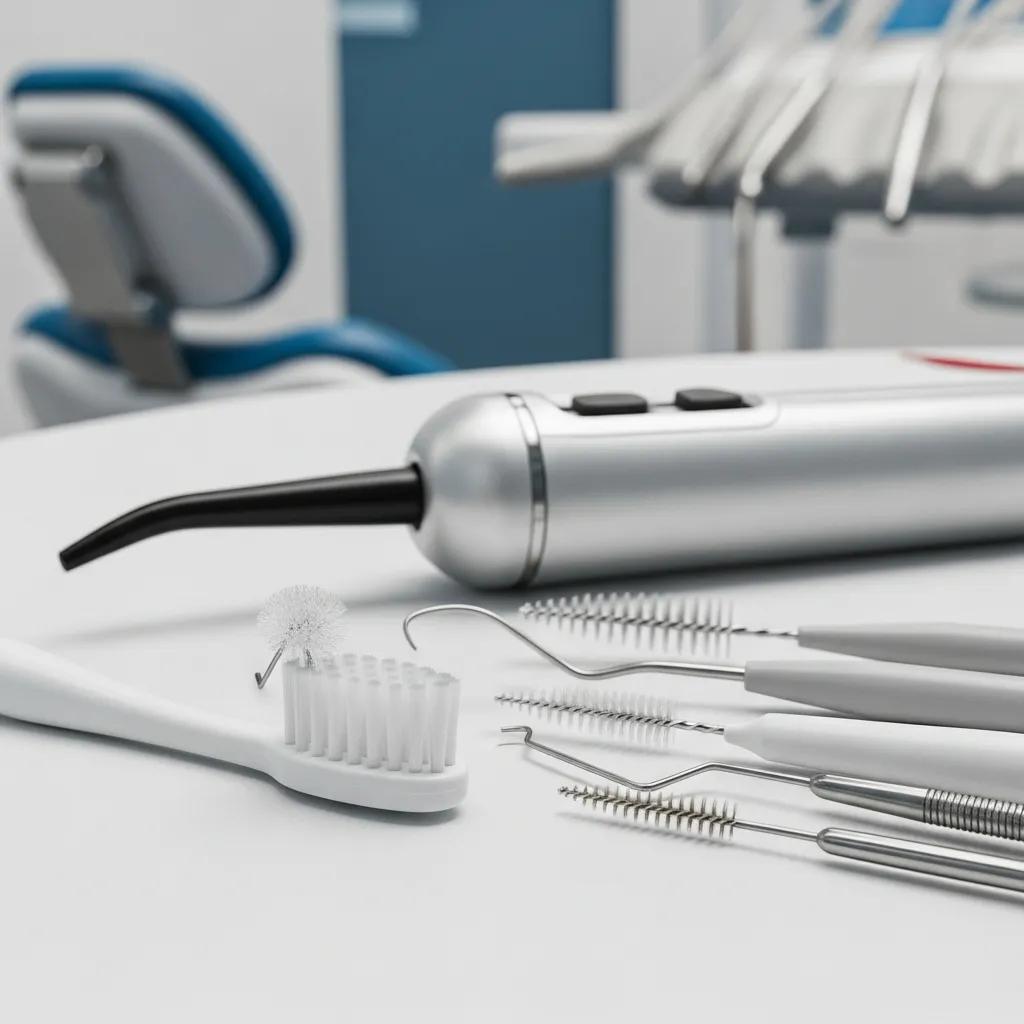
Use a water irrigator (oral irrigator) on a low setting to flush subgingival areas and reduce residual debris, especially if you have limited dexterity.
Rinse with an alcohol-free antibacterial mouthwash when prescribed or recommended by your dental professional to lower microbial load between cleanings.
Schedule professional peri-implant assessments and maintenance cleanings based on your risk profile, typically every 3–12 months.
These actions together reduce bacterial challenge and preserve peri-implant tissues; the next table clarifies tool selection and when each is most effective.
Tool
Purpose
When to Use
Soft-bristle toothbrush (manual or electric)
Gently removes plaque from crowns and soft tissues without abrading surfaces
Twice daily, morning and evening
Interdental brush (various sizes)
Cleans between implant crown/abutment and adjacent teeth to disrupt biofilm
Once daily, size matched to interdental space
Water irrigator (oral irrigator)
Flushes subgingival and interproximal areas, dislodges debris, and supports mucosal health
Daily or as adjunct after flossing
Floss with threader / floss picks
Removes plaque along contact points and under crowns where brushes can’t reach
Once daily, particularly under bridges/around abutments
What daily oral hygiene routines support dental implant health?
A consistent daily routine strengthens the mechanical barrier and reduces microbial load around implants, preserving both soft tissue health and bone stability. Begin with gentle brushing using a soft-bristle or polished-nylon electric brush twice daily, focusing on the implant crown and adjacent gingival margin with short, controlled strokes to displace plaque. Follow with interdental cleaning: select an interdental brush that fits snugly without force, or use floss with a threader for tight contacts to remove biofilm at the abutment interface. After mechanical cleaning, a short rinse with an alcohol-free antibacterial mouthwash can lower residual bacteria; adjunctive use of a water irrigator enhances removal of food debris, especially after meals. Consistency is key: daily mechanical disruption of biofilm interrupts its maturation and reduces the risk of peri-implant inflammation.
Which cleaning tools and products are recommended for dental implants?
Choose non-abrasive, fluoride toothpastes and soft brushes designed to protect implant crown surfaces while effectively removing plaque; abrasive pastes can roughen ceramic or composite surfaces and encourage biofilm adherence. Interdental brushes with coated wire and tapered heads work well for open embrasures, while floss threaders and super floss allow safe cleaning under pontics or fixed prostheses. Water irrigators with pressure control are particularly helpful for patients with limited dexterity and for flushing the peri-implant sulcus; use low to moderate pressure and the manufacturer’s recommendations. Avoid metal instruments for home cleaning and refrain from aggressive scrubbing; these can damage prosthetic materials and create micro-abrasions that trap bacteria.
Product Category
Characteristic
Recommendation
Toothpaste
Abrasivity and fluoride content
Use non-abrasive fluoride paste formulated for sensitive surfaces
Interdental brushes
Wire coating and size range
Use coated, tapered brushes sized to interdental space; replace when bristles splay
Water irrigators
Pressure control and tip design
Use daily on low setting; consider specialized peri-implant tips if available
Floss/Threaders
Strength and ease of use
Use floss with a stiffened end or a threader to pass under prosthetic margins
Effective Care and Cleaning Tips for Dental Bridges
Cleaning bridges requires attention to the pontic underside and the margins of abutment crowns to prevent decay and periodontal inflammation; access and technique differ from single implants because plaque can hide under fixed spans. The principle is to disrupt biofilm where it accumulates—under pontics, at crown margins, and interproximally—so that adjacent teeth and tissues stay healthy and the bridge remains stable. Daily home care combining flossing beneath pontics, interdental brushing around abutments, and routine professional polishing reduces the risk of secondary caries and periodontal problems. The EAV table below clarifies which tools target specific bridge areas and how to apply them.
Before the table, note that bridge care focuses on under-pontic cleaning, margin hygiene, and preventing excess cement or debris from accumulating. The table maps areas to tools and actions.
Bridge Component
Area to Clean
Recommended Tools/Products
Pontic underside
Mucosal contact and food traps
Floss with threader, interdental pick, or soft interdental brush daily
Abutment margins
Crown margins at gingival level
Super floss, single-tufted brush, non-abrasive paste, and antimicrobial rinse
Occlusal surfaces
Chewing surfaces of pontics and abutments
Soft-bristle brush and periodic professional polishing
How to clean under and around dental bridges properly?
To clean under pontics, first pass a floss threader beneath the pontic and use a length of floss or super floss to gently scrape plaque away from the tissue contact area, repeating for each pontic space. For abutment margins, employ a single-tufted or interdental brush to access narrow crevices and remove biofilm at the crown-gingival junction; use gentle back-and-forth motions rather than harsh force to avoid tissue trauma. A water irrigator is a useful adjunct to dislodge trapped food particles beneath fixed spans, especially after meals, while an antimicrobial rinse can lower microbial burden when inflammation is present. For patients with limited dexterity, electric toothbrushes combined with flossing aids or interdental picks improve adherence to the routine and reduce missed areas beneath bridges.
What products help maintain dental bridge hygiene?
Use super floss or floss with a threader to reach beneath pontics and remove strandable debris; these products combine stiffer ends for threading and spongy segments for cleaning larger embrasures. Interdental brushes with coated wires clean abutment margins safely and are available in small sizes to match tight spaces; selecting the correct size prevents tissue injury. Non-abrasive fluoride toothpastes help protect natural abutment teeth from caries without roughening prosthetic materials, while alcohol-free antimicrobial rinses reduce plaque accumulation and gingival inflammation. Avoid abrasive powders and hard brushes that can roughen ceramic or metal surfaces, which would increase plaque retention and esthetic deterioration.
Denture Cleaning Tips: How to Keep Your Dentures Fresh and Functional
Removable dentures require mechanical removal of food and biofilm daily, and soaking in appropriate solutions overnight when recommended to control microbial growth and preserve fit. The denture base and artificial teeth are meronyms of the denture prosthesis; both components require distinct actions: brushing with a denture brush to remove debris and soaking to control microbial colonization and odors. Proper daily routines and periodic professional evaluation reduce the risk of denture stomatitis, staining, and warped bases that affect retention and chewing. The following list provides a concise daily and overnight routine to maintain removable dentures effectively.
Further emphasizing the importance of effective cleaning, research consistently highlights best practices for maintaining denture hygiene.
Objectives The aim of this systematic review was to provide an overview of the scientific evidence available from prospective clinical studies regarding denture hygiene interventions.
Cleaning of removable dental prostheses–a systematic review, 2021
This bulleted list gives the core daily and overnight steps for denture care:
Rinse dentures under running water after meals to remove loose food particles and reduce immediate staining.
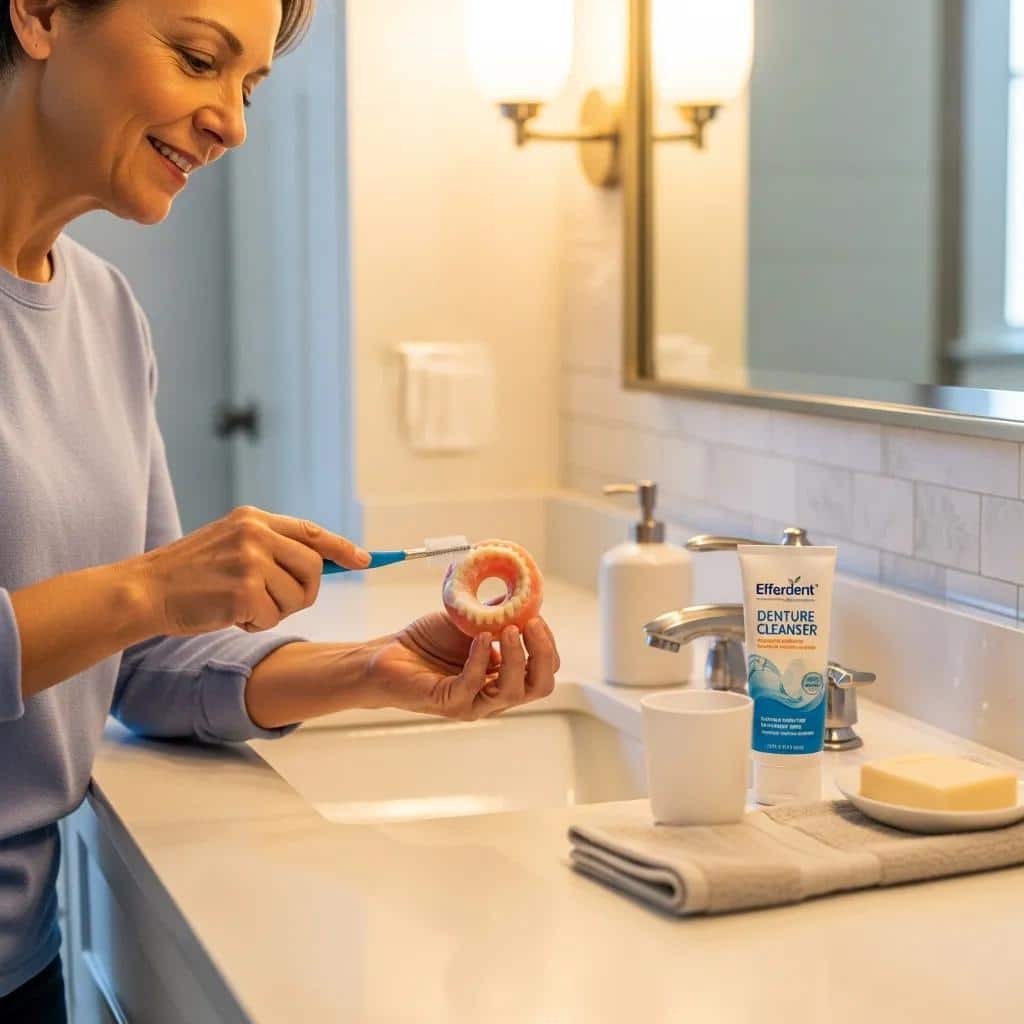
Brush dentures daily with a soft denture brush and a non-abrasive denture cleanser to dislodge biofilm and surface stains.
Soak dentures overnight in an appropriate soaking solution when recommended by the manufacturer or clinician to control microbes and maintain hydration of the base.
Handle dentures carefully over a soft surface or sink filled with water to avoid accidental dropping and fracture.
Remove and clean the mouth—gums, tongue, and palate—each night to minimize tissue inflammation and fungal growth.
These steps reduce mechanical accumulation of biofilm on the prosthesis and protect oral tissues; the next table sets a simple maintenance schedule with recommended actions.
Denture Type
Daily / Weekly / Periodic
Recommended Action
Removable full denture
Daily
Rinse after meals; brush with denture cleaner; soak overnight as appropriate
Removable partial denture
Daily
Remove and brush clasp areas; clean supporting teeth; soak weekly if required
Implant-supported overdenture
Daily
Clean around attachments with interdental brush; remove and soak if removable; inspect attachments periodically
What are the best daily cleaning methods for dentures?
Begin each day by rinsing dentures under cool or lukewarm water to remove loose debris, and use a soft denture brush with a non-abrasive denture cleanser to brush all surfaces gently; avoid hot water which can warp acrylic bases. After brushing, remove residual cleanser and inspect the prosthesis for chips, cracks, or worn areas that may require professional attention. If the denture is removable, soak overnight in a recommended solution to reduce microbial load and prevent odor; however, follow the clinician’s advice for overnight protocols, especially for implant-retained dentures. Clean your oral tissues—gums, tongue, and palate—with a soft brush or cloth nightly to remove biofilm and reduce risk of denture stomatitis, completing a comprehensive hygiene loop that protects both mouth and prosthesis.
How to prevent common denture problems through proper care?
Prevent denture staining and odor by removing debris promptly and avoiding tobacco and heavy staining foods; regular mechanical cleaning prevents trapped food from promoting fungal growth. To avoid poor fit and sore spots, handle dentures carefully to prevent bending and schedule periodic relines or adjustments when retention declines or tissue changes occur. Prevent fungal infections by nightly cleaning of the mouth, thorough denture cleaning, and professional evaluation if redness or soreness develops; maintaining hydration and addressing dry mouth also support mucosal health. Prompt professional assessment for persistent discomfort, movement, or fractured components prevents escalation and often restores function with simple adjustments.
Oral Hygiene for Dental Prosthetics: Integrating Care into Your Routine
Adapting everyday hygiene to prosthetic type means combining standard oral care habits—brushing, interdental cleaning, and rinsing—with prosthetic-specific actions like under-pontic cleaning and overnight denture soaking. This integration reduces the semantic distance between general oral hygiene and prosthetic maintenance: the same causal chain of plaque → inflammation → tissue loss applies across implants, bridges, and dentures, but the tools and frequency vary. For individuals with limited dexterity or visual impairment, electric toothbrushes, adapted floss holders, and water irrigators bridge capability gaps and sustain routine adherence. The next subsections outline practical adjustments for various patient needs and the role of diet and lifestyle in prosthetic longevity.
For implants: prioritize peri-implant sulcus cleaning with interdental brushes and irrigators.
For bridges: add daily use of threaders or super floss to reach under pontics.
For dentures: commit to nightly removal, brushing, and soaking as applicable to the prosthesis.
These tailored adjustments keep daily habits manageable while targeting the unique risk zones of each prosthetic type. The following subsections offer concrete adaptation strategies and lifestyle guidance.
How to adapt your oral hygiene routine for implants, bridges, and dentures?
Start with a baseline twice-daily brushing and customize adjuncts: implant wearers should add an interdental brush sized to their embrasure and use a water flosser for the peri-implant sulcus; bridge patients should incorporate floss threaders or super floss daily to clear under-pontic spaces. For denture wearers, remove the prosthesis nightly and clean both the prosthesis and oral tissues; consider specialized denture brushes and soaking routines. Patients with arthritis or reduced dexterity benefit from electric toothbrushes with larger handles, floss holders, and water irrigators that reduce manual demand. Set simple daily reminders and align cleaning tasks with routine activities—such as cleaning after the evening meal—to ensure consistency and reduce missed steps.
What role does diet and lifestyle play in prosthetic maintenance?
Diet and lifestyle directly influence prosthetic wear, oral tissue health, and microbial ecology: chewing very hard or sticky foods can fracture prosthetic components or dislodge bridges and dentures, while frequent sugar intake elevates caries risk for natural abutment teeth. Smoking impairs healing, increases the risk of peri-implantitis, and contributes to denture odor and staining; cessation improves long-term outcomes. Hydration and saliva production support mucosal comfort and denture retention, so managing dry mouth—through hydration or clinician-recommended measures—improves prosthetic function. Choosing nutrient-dense, balanced foods reduces mechanical stress on prostheses and supports tissue health, complementing mechanical maintenance routines to extend prosthetic lifespan.
When to Consult Your Dentist: Signs You Need Professional Maintenance
Professional maintenance is required whenever symptoms suggest biological or mechanical compromise, and routine professional checks ensure early detection of wear, margin failure, or tissue changes that home care can’t address. Typical warning signs include persistent pain, bleeding around implants or abutments, looseness or mobility of a prosthetic, swelling, sudden changes in bite, and chronic bad taste or odor. Baseline professional check-up intervals vary with risk profile—commonly every 3 to 12 months—and higher-risk patients (history of peri-implantitis, uncontrolled systemic conditions, heavy tobacco use) require more frequent visits. During a professional maintenance visit, clinicians perform targeted debridement, assess soft tissue and bone health, adjust fit, and recommend relines or repairs to restore function and comfort.
This concise list highlights urgent and routine symptoms that should prompt contact with a dental professional:
Persistent pain, swelling, or bleeding around implants, bridges, or denture-bearing tissues.
Mobility or looseness of an implant-supported crown, bridge, or denture that affects chewing or causes discomfort.
Sudden changes in bite, difficulty chewing, or new pressure points and sore spots beneath a denture.
Prompt professional attention minimizes progression to severe complications and supports conservative repairs over replacement. The following subsection details symptom interpretation and baseline scheduling guidance.
What symptoms indicate issues with dental implants, bridges, or dentures?
Mobility of a prosthetic component—whether an implant crown, a bridge, or a denture—signals mechanical failure or tissue changes and warrants prompt assessment to avoid further damage. Persistent pain, swelling, redness, or bleeding indicate inflammatory or infectious processes such as peri-implantitis, periodontal disease around abutments, or denture-related stomatitis, which require clinical management. Changes in fit or bite that produce new chewing difficulties or sore spots suggest tissue resorption, denture warpage, or occlusal wear and often necessitate relining, adjustment, or occlusal therapy. Early recognition of these symptoms and timely professional maintenance protect supporting tissues and reduce the need for complex interventions.
How often should professional check-ups and cleanings occur?
Baseline professional follow-up typically ranges from every three to twelve months depending on individual risk: lower-risk patients commonly visit every six to twelve months, while those with a history of peri-implantitis, uncontrolled systemic disease, or heavy tobacco use may need visits every three to four months. During maintenance visits, clinicians perform professional debridement of subgingival and peri-implant deposits, check for prosthetic loosening or wear, evaluate occlusion, and advise on home-care adjustments. Remember that frequency should be personalized: recent studies through 2024 emphasize tailoring intervals to clinical findings and risk factors rather than a one-size-fits-all schedule, ensuring more frequent surveillance for patients with elevated risk.
After assessing symptoms and scheduling follow-ups, consider seeking local professional maintenance from a dental office that provides dental implants and dentures; you can find appointment options and practice information via the clinic’s website or its Google Business Profile. Referral to a dental professional helps implement specialized peri-implant protocols, relines, and adjustments that cannot be replicated at home.
Common Mistakes to Avoid in Maintaining Dental Implants, Bridges, and Dentures
Avoiding harmful behaviors and incorrect cleaning methods reduces the chance of prosthetic failure and infection; common errors include using abrasive pastes, neglecting interdental cleaning, skipping professional visits, and attempting DIY repairs. Mechanical abuses—such as using teeth to open packages, chewing ice, or biting very hard foods—create stress that leads to fractures or loosening, while poor hygiene allows biofilm to thrive and cause inflammation at prosthetic interfaces. Overreliance on adhesives without addressing fit changes masks underlying problems and delays corrective care. Understanding preventive behaviors and when to act preserves prosthetic function and oral health.
The next list summarizes frequent mistakes and the corrective behavior to adopt.
Using abrasive cleansers or stiff brushes that damage prosthetic surfaces instead of non-abrasive cleaners and soft brushes.
Skipping daily interdental cleaning and relying solely on brushing, which misses biofilm at critical junctions.
Ignoring early signs of soreness, mobility, or persistent odor, which should trigger professional review rather than home adjustments.
Adopting correct routines and seeking timely professional maintenance prevents escalation and preserves prosthetic longevity; the following subsection details habit changes and infection prevention.
What habits can damage dental prosthetics?
Mechanical misuse such as biting hard objects, using teeth as tools, or repeatedly chewing ice transmits forces that can fracture crowns, pontics, or denture teeth and dislodge attachments. Poor hygiene habits—omitting flossing under bridges, failing to remove and clean dentures nightly, or using abrasive household cleaners—promote plaque accumulation, roughen prosthetic surfaces, and accelerate microbial colonization. Tobacco use and heavy alcohol consumption impair tissue healing and increase the risk of peri-implant disease and denture odor, compounding mechanical and biological stressors. Replacing these habits with safer alternatives—using scissors instead of teeth, following prescribed cleaning routines, and quitting tobacco—reduces the cumulative damage that leads to prosthetic failure.
How to prevent infections and complications through proper care?
Consistent, evidence-based hygiene interrupts biofilm formation: brush twice daily with soft brushes, clean interproximally daily with appropriate brushes or threaders, and soak or otherwise disinfect removable prostheses as recommended. Manage systemic risk factors—such as smoking cessation and glycemic control for diabetic patients—to reduce susceptibility to infection and poor healing. Maintain scheduled professional follow-ups for debridement and assessment, and address small fit or comfort issues early to avoid secondary complications. Use antimicrobial rinses or topical agents only under professional guidance, and seek prompt care for any signs of infection to limit tissue damage and preserve prosthetic function.
For readers seeking professional maintenance beyond home care, a local dental office that provides dental implants and dentures can evaluate fit, perform professional cleanings, and recommend relines or adjustments that protect both prosthetics and oral tissues. The clinic’s website and Google Business Profile provide practice details and options for scheduling appointments; use those practice channels to request a maintenance visit if you notice symptoms described above.
A careful combination of daily cleaning, lifestyle modification, and professional monitoring prevents most complications and preserves prosthetic function over time. Timely intervention is more conservative and cost-effective than late-stage repairs or replacements.
For additional support or to schedule professional maintenance for implants, bridges, or dentures, consider contacting a local dental office that provides dental implants and dentures. Practice information and appointment options are available through the clinic’s website and its Google Business Profile for those who want to arrange an evaluation, professional cleaning, or prosthetic adjustment to maintain optimal function and oral health.