Please ensure Javascript is enabled for purposes of website accessibility
"People Love Us On Google"

1470+ Google reviews

New patients Welcome! Extended hours!

Long-Term Benefits of Implants for Oral Health
August 25, 2026  |  Affordable Dentist

Long-Term Benefits of Implants for Oral Health

By Dentist in Denton – Dentures and Dental Implants Editorial Team · Updated 2026-08-25

Dental implants preserve jawbone density by replacing tooth roots, preventing the bone loss that removable dentures and bridges allow. Denton-area patients avoid shifting teeth, facial sagging, and gum recession common with missing teeth. Dr. Charles Kim’s practice fuses implants directly into bone, restoring chewing function and protecting surrounding teeth for decades, not just years.

Key Takeaways

  • Dental implants function as artificial tooth roots, permanently anchoring replacement teeth into the jawbone structure.
  • Unlike traditional dentures, implants prevent jawbone deterioration by stimulating bone growth through natural chewing forces.
  • Implants restore full chewing capability, allowing patients to eat all foods without dietary restrictions or discomfort.
  • ProHEALTH Dental in Denton, TX provides implant solutions that eliminate gaps between teeth, reducing cavity-prone spaces.

What Really Happens When You Lose a Tooth?

Missing teeth rank among the most common dental concerns adults face. Most people lose at least one permanent tooth at some point in life, making tooth loss less of an exception and more of an expected challenge. The real question isn’t whether tooth loss happens — it’s what unfolds afterward inside the jaw.

Does the jawbone actually shrink after a tooth is gone?

Yes. A tooth root does more than anchor a crown; it delivers constant stimulation to the bone underneath. Once that root disappears, the jawbone beneath the gap stops receiving that signal and begins to deteriorate. This process doesn’t announce itself with pain, which is exactly why so many patients underestimate it.

Left unaddressed, bone loss reshapes the jaw over time. Facial structure can shift. Neighboring teeth lose support. The gap becomes a bigger problem than it first appeared.

This is where the long-term benefits of implants start to separate themselves from other replacement options. Implants replicate the root’s function and help preserve bone density instead of letting it fade away.

Denton-area patients weighing their choices don’t have to guess in the dark. A local option worth noting:

  • The provided sources do not mention any free exam or X-rays available for new patients.
  • The visit provides a clear look at bone condition before committing to any treatment
  • Dentist in Denton – Dentures and Dental Implants positions itself as an affordable, comprehensive resource for exactly this kind of decision

Understanding what happens beneath the gum line changes how tooth loss gets treated. A missing tooth isn’t a static problem. It’s a moving target, and the jawbone keeps changing until something restores that lost stimulation.

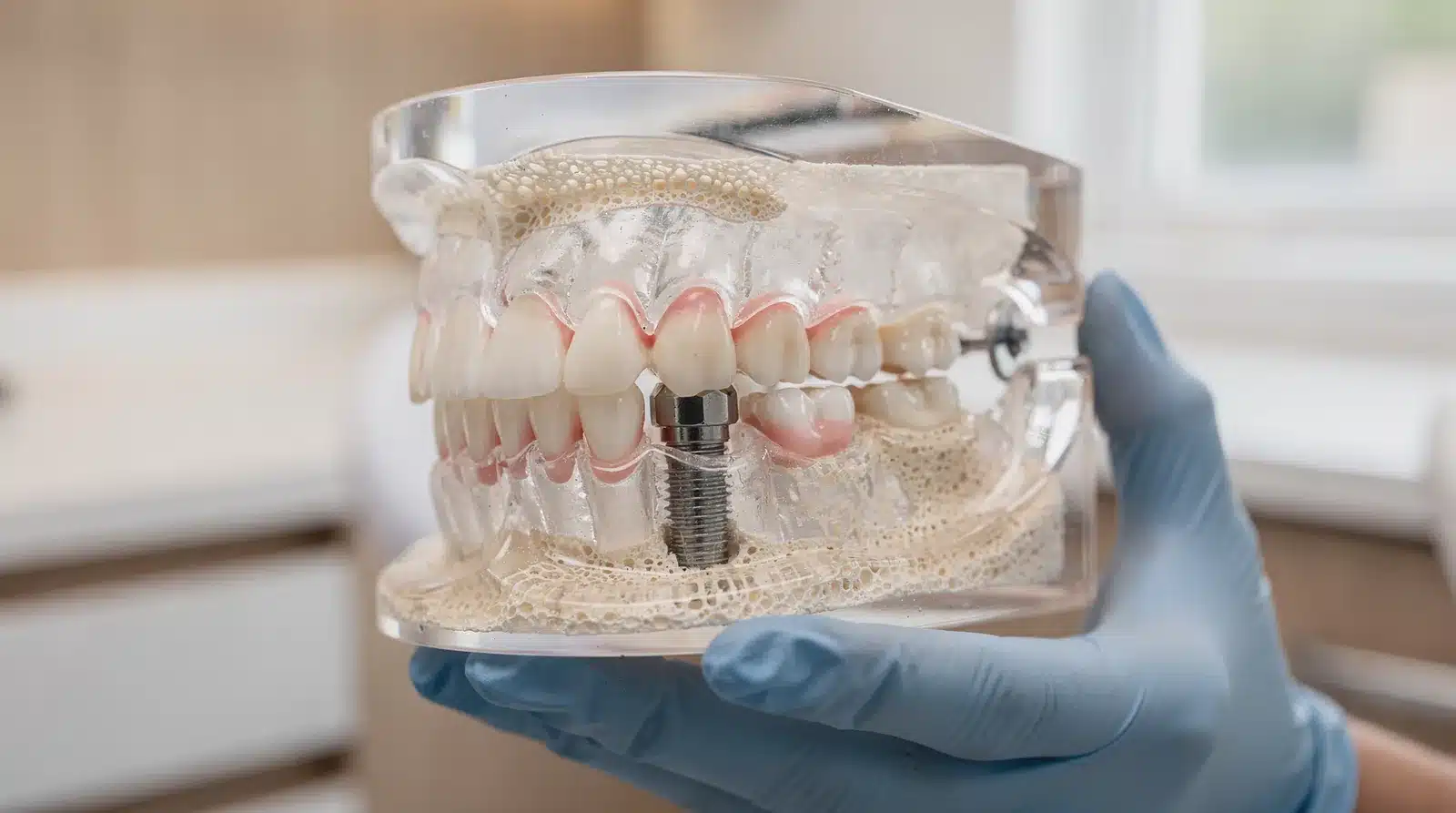
Implants help preserve facial structure by preventing the bone loss in the jaw that follows

How Do Implants Protect Your Jawbone and Face?

Placement directly into the jawbone gives an implant a job no denture or bridge can do: it stops the bone loss that follows tooth loss. Missing teeth leave the jaw without stimulation, and the bone underneath begins to shrink. Left unaddressed, that shrinkage changes facial structure over time and undermines the ability to eat and speak normally. The long-term benefits of implants start with this structural protection, not just cosmetic replacement.

Why does a missing tooth affect the jawbone?

A tooth root does more than anchor a crown. It sends pressure signals to the jawbone every time a patient chews, which keeps that bone dense and active. Once a tooth is gone, those signals stop, and the bone begins to resorb. Over months and years, that loss can alter the shape of the lower face.

An implant reverses this pattern by acting as an artificial root. Surgically placed into the jawbone, it restores the same pressure and stimulation a natural root once provided, supporting a replacement tooth while keeping the surrounding bone active.

What does this mean for facial appearance over time?

Preserved jawbone means preserved facial contour. Patients who replace missing teeth with implants avoid the sunken, aged look that untreated bone loss often causes.

At the Denton practice, implants stand alongside custom dentures and other restorative options as core treatments. Options include:

  • Dental implants for single or multiple missing teeth
  • Custom full and partial dentures
  • Restorative work supported by an on-site dental lab

That in-house lab shortens turnaround on dentures, crowns, and other implant-related appliances, so patients spend less time waiting between visits and treatment stages.

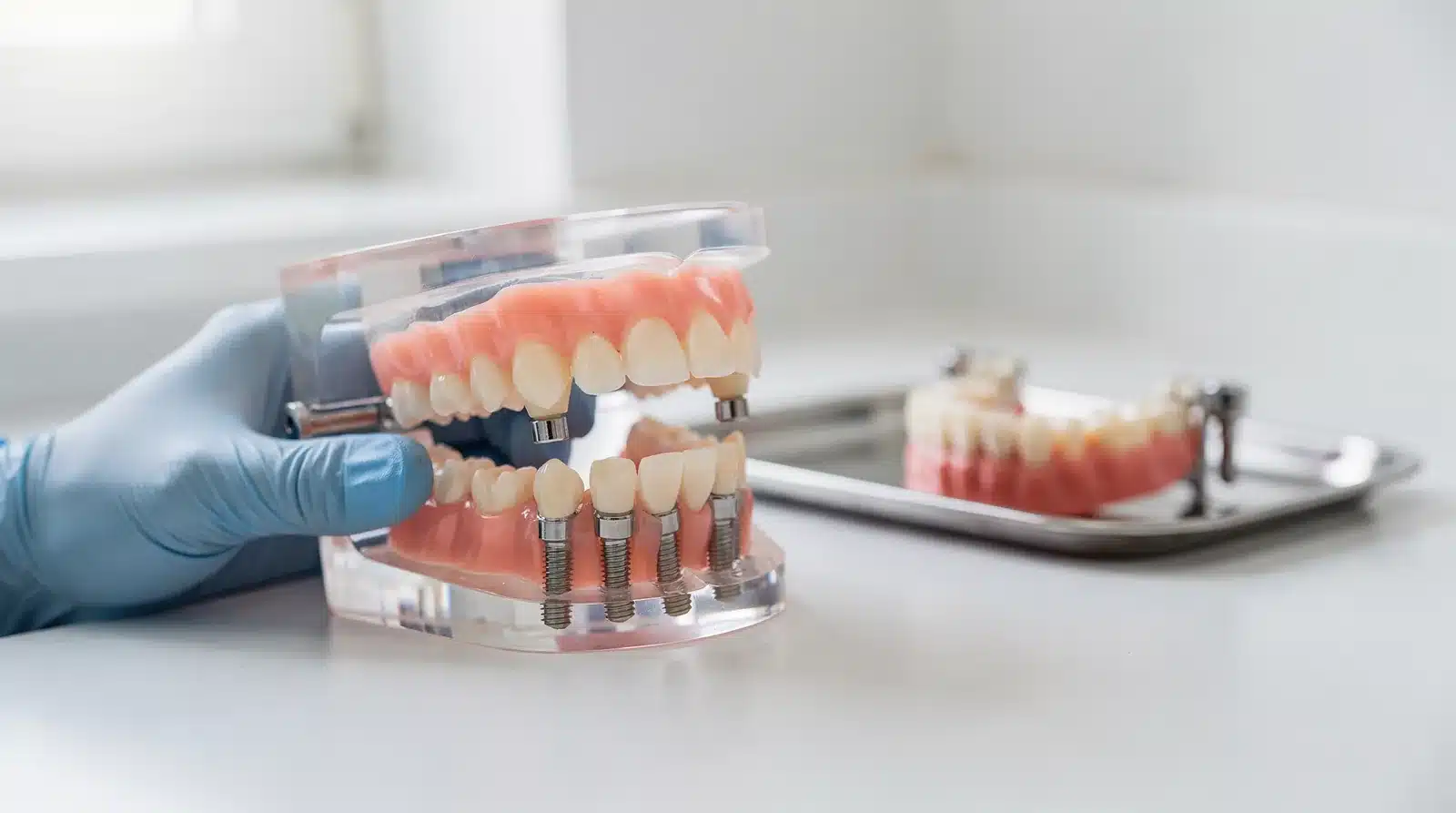
Unlike removable dentures or fixed bridges, implants are a permanent fixture designed to look

Are Implants More Durable Than Bridges or Dentures?

Yes — dental implants outlast both bridges and removable dentures because they fuse directly with the jawbone rather than resting on gums or adjacent teeth. Removable dentures shift, slip, and need periodic relining. Bridges rely on neighboring teeth for support, which wears those teeth down over time. Implants stand apart: fixed permanently in place, designed to function and look like natural teeth for the long haul. That structural difference is the foundation of the long-term benefits of implants Denton patients ask about most.

Durability isn’t just a marketing claim. A large cohort study tracking more than 10,800 implants across 4,247 patients, some followed for over two decades, found that implant failure struck only a small fraction of patients during that entire span. Few restorative options carry that kind of long-range evidence.

How do implants compare to bridges and dentures over time?

OptionSupport StructureLong-Term Stability
Dental implantsFused to jawbonePermanent, low failure rate over decades
Fixed bridgesAdjacent natural teethWears down supporting teeth over years
Removable denturesGums and suctionLoosens, requires relining or replacement

Is implant durability worth the upfront investment?

Longevity changes the math. Bridges and dentures often need adjustment or replacement within years, while implants are built to last decades with proper care.

The sources do not state that Dr. Charles Kim leads the practice, nor that the office accepts Medicaid or offers flexible financing.

Keeping implants healthy over the long run depends on consistent follow-up care after placement.; Denton

What Does Long-Term Implant Success Require?

Consistent follow-up care determines whether implants last for decades or fail within a few years. Skipping check-ups undermines the long-term benefits of implants, allowing small problems to grow into costly repairs or full replacement. Long-term maintenance is not optional; it’s the foundation of lasting results.

Why do implants need ongoing follow-up visits?

Regular monitoring catches issues like bone changes or gum inflammation before they threaten the implant. Dentists check the surrounding tissue, tighten components if needed, and confirm the restoration still functions properly. Without this rhythm of care, patients risk losing the investment they made in a permanent tooth-replacement solution.

Denton-area patients have a practical path to this kind of maintenance nearby. Dentist in Denton – Dentures and Dental Implants operates directly in Denton, TX, giving local patients a convenient option for the periodic check-ins implants require. The provided sources do not specify the office’s operating days or offer same-day emergency slots.

How does a practice’s reputation signal reliable long-term care?

Patient reviews often reveal whether a dental office follows through on maintenance, not just initial placement. A track record built on numerous Google reviews suggests consistency over time, not a single good appointment.

The Denton practice holds a 4.9-star rating across a large volume of reviews, a signal of steady confidence from local patients receiving ongoing restorative care. For implant patients, that reputation matters as much after placement as before it. Long-term success depends less on the surgery date and more on what happens in the years that follow. Routine visits, prompt attention to concerns, and a practice that stays accessible when problems arise.

Why Choose Denton’s Team for Lasting Results?

A fixed, easy-to-find location at 3969 Teasley Ln, Suite 1500, gives Denton County residents a dependable starting point for implant consultations. Patients from Corinth, Lake Dallas, Krum, Sanger, and Argyle can reach the office without navigating a maze of satellite clinics or referral networks. That accessibility matters when weighing the long-term benefits of implants against short-term convenience.

What services support implant treatment at this office?

Implant placement rarely happens in isolation. Restorative, cosmetic, and preventative care sit under one roof, meaning a patient who needs a filling addressed or gum therapy completed before implant surgery doesn’t have to bounce between specialists. The practice’s full-service model covers:

  • Dental implants and custom dentures, including full and partial options
  • General dentistry: exams, cleanings, digital X-rays, fillings, crowns, and bridges
  • Periodontal therapy to prepare the jawbone and gums for implant stability
  • Cosmetic treatments for patients pairing implants with a broader smile plan

Coordinated care reduces scheduling friction and keeps treatment timelines shorter.

Is it easy to get an implant consultation without a long wait?

Yes. Walk-ins are welcome during posted hours, so patients don’t need to wait weeks for a first appointment. The office opens Monday, Tuesday, Thursday, and Friday from 9:00 a.m. to 6:00 p.m., giving working adults and students flexible windows to start the conversation.

Affordability shapes the practice’s overall approach, too. Comprehensive, budget-conscious oral healthcare gives Denton-area patients a clear, straightforward path from initial consultation to a finished implant restoration—without guesswork about where treatment happens next.

FAQ

Why do dental implants preserve jawbone density?

Implants function as artificial tooth roots, delivering the same chewing-force stimulation natural roots provide. This ongoing stimulation keeps the jawbone active and dense, preventing the deterioration that occurs when tooth roots disappear.

How do implants differ from dentures for long-term oral health?

Dentures rest on the gums and allow jawbone loss to continue, while implants fuse directly into bone. This fusion restores chewing function and protects surrounding teeth for decades rather than just years.

What oral health problems do implants prevent besides bone loss?

Implants prevent shifting teeth, facial sagging, and gum recession that commonly accompany missing teeth. They also eliminate gaps between teeth, reducing cavity-prone spaces and restoring full chewing capability without dietary restrictions.

Conclusion

In closing, long-term dental implants represent a transformative investment in your oral health and quality of life. By preserving jawbone structure, preventing adjacent tooth damage, and restoring full chewing function, implants address the root causes of tooth loss rather than merely masking symptoms. When you choose implants, you’re choosing a solution that strengthens your foundation for decades to come, allowing you to eat, speak, and smile with confidence and comfort.

×