By Dentist in Denton – Dentures and Dental Implants Editorial Team · Updated 2026-08-25
Dental implants in Denton, TX restore missing teeth with a secure, natural-looking option that functions like real teeth. Dentist in Denton – Dentures and Dental Implants provides implant solutions supported by an on-site lab for faster turnaround. Implants preserve jawbone density, improve chewing comfort, and eliminate the slipping problems common with traditional dentures.
Key Takeaways
Dental implants integrate with jawbone to provide stable, durable tooth replacement lasting decades.
Dr. Joseph Choi at Denton Family Dentistry offers natural-looking implant restorations for missing teeth.
Implants function as artificial tooth roots, supporting crowns, bridges, or dentures securely.
Restored smiles eliminate eating difficulties and speaking embarrassment from tooth loss.
What makes dental implants last longer than other options?
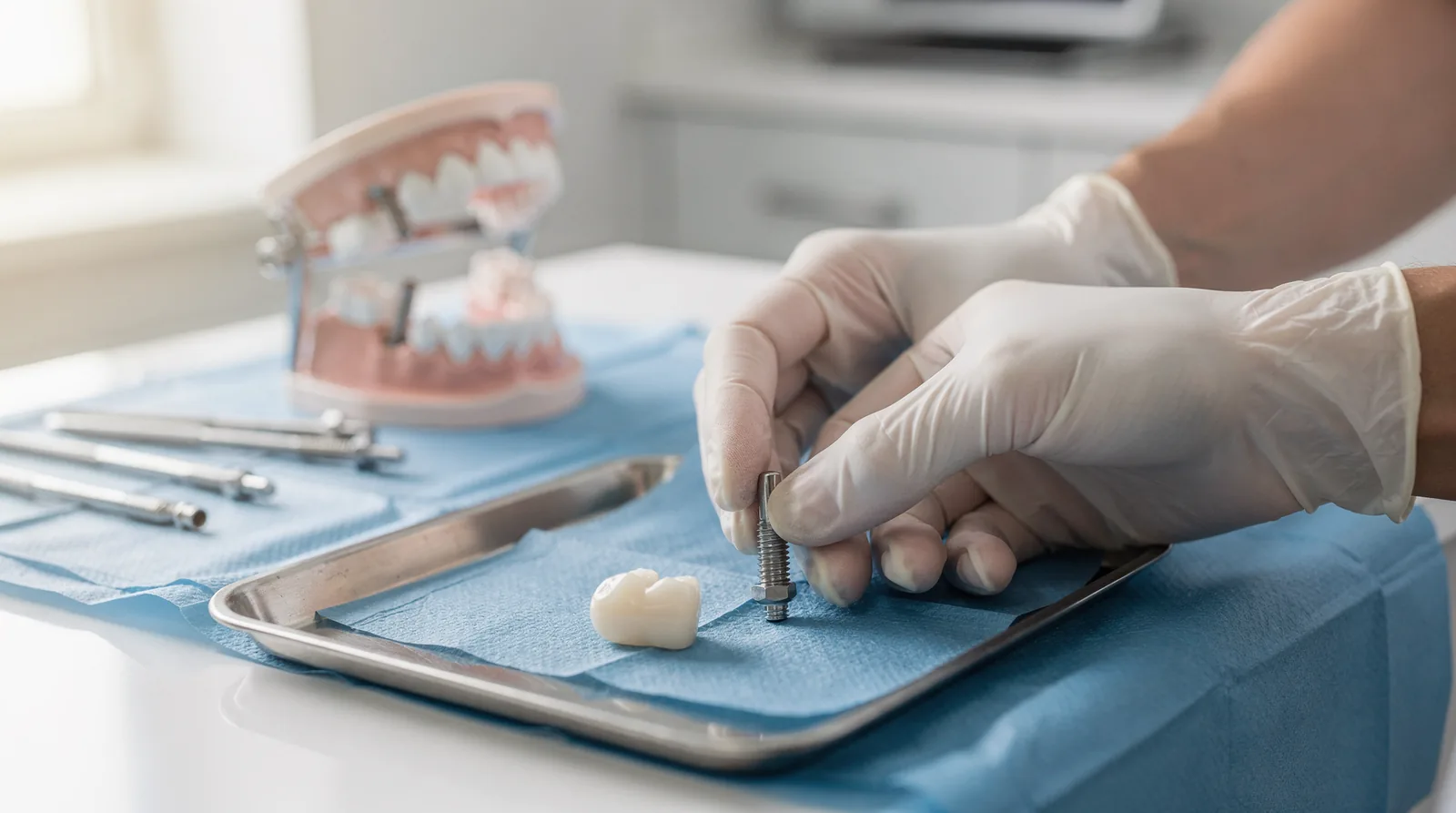
Dental implants outlast bridges and dentures because the implant itself fuses directly with the jawbone. Made from titanium, these small screw-like posts are surgically placed within the jawbone to create a stable base. This process ensures a foundation that supports a customized restoration for years, often decades, without slipping or shifting.
How does the implant bond with bone over time?
The implant bonds with the bone through a process called osseointegration. Over time, the implant and living bone tissue grow together, creating a stable foundation that supports replacement teeth. This biological integration prevents the bone loss that occurs with bridges or dentures, which rest on top of the gums rather than inside the bone.
Why does preserving jawbone density matter for longevity?
Dental implants help preserve jawbone density over time, unlike other tooth replacement methods. When a tooth is lost, the jawbone in that area begins to deteriorate because it no longer receives stimulation from the tooth root. Bridges and dentures do nothing to stop this bone loss, which can lead to a sunken facial appearance and further tooth loss down the road. Implants stimulate the bone just like natural roots, maintaining facial structure and providing a durable, long-lasting solution.
Feature
Dental Implants
Bridges & Dentures
Bone preservation
Stimulates bone, preserves density
No bone stimulation, allows deterioration
Foundation
Fused to jawbone
Rests on gums or adjacent teeth
Typical lifespan
20+ years with care
5-10 years before replacement needed
The Denton practice offers dental implants as a core restorative service for long-term tooth replacement. Patients seeking a permanent solution find that the Long-Term Benefits of Implants include preserved jaw structure, stable chewing function, and a natural appearance that traditional options cannot match.
How do implants improve your daily comfort and confidence?
Missing teeth create more than visible gaps in a smile. Living without a full set of teeth takes a toll on self-esteem. Daily routines, making eating a meal with family or speaking to colleagues difficult and even embarrassing. Dental implants address these challenges directly by restoring both function and appearance.
What makes implants feel more natural than other options?
Dental implants are designed to look and function like natural teeth. Unlike removable appliances that shift or click during use, implants integrate with the jawbone to create a stable foundation. This security allows clients to eat favorite foods without worry and speak clearly without hesitation. The restoration stays firmly in place, eliminating the self-consciousness that often accompanies missing teeth or loose dentures.
How do implants improve eating and speaking?
Implants improve comfort when eating and speaking by providing a secure foundation. The titanium post acts as an artificial root, anchoring the restoration so it withstands normal biting forces. Clients report enjoying meals again without avoiding certain foods or struggling with pronunciation. This functional improvement translates directly into greater confidence in social and professional settings.
For Denton residents experiencing these difficulties, the practice accepts walk-ins and offers same-day emergency dentistry for urgent needs. Replacing missing teeth with implants removes the daily frustration of compromised eating and speaking, restoring the simple pleasures of sharing a meal or holding a conversation without embarrassment.
What is the step-by-step process for getting implants?
Replacing missing teeth with dental implants follows a precise sequence of surgical and restorative steps at the Denton practice. The process begins with a comprehensive evaluation using modern diagnostics and comfort-focused technology to enhance precision during treatment planning. The full implant journey delivers the Long-Term Benefits of Implants, including preserved jawbone density and restored chewing function.
Step 1: Anesthesia and sedation
The first step involves administering anesthesia to numb the gums completely. Patients who prefer additional relaxation can choose sedation, which the clinical team provides prior to the procedure. The combination ensures the client experiences no pain during the surgery.
Step 2: Incision and bone exposure
The surgeon creates a small incision in the gum tissue to expose the underlying jawbone. This incision gives direct access to the bone where the implant will be placed. Exposing the bone is a standard step for all implant procedures in the Denton clinic.
How is the implant placed into the jawbone?
The surgeon uses specialized instruments to create a small hole in the jawbone at the precise location identified during planning. The opening is gradually widened until it reaches the exact size needed for the specific dental implant being placed. The titanium post is then inserted into this prepared site, where it will fuse with the bone over several months. This fusion provides the stable foundation that makes implants feel and function like natural teeth. The Denton office supports this process with modern technology that improves accuracy at each stage.
Why choose a Denton practice with an on-site lab?
A Denton dental office that houses an on-site lab delivers faster turnaround times and greater precision for tooth replacements. Patients avoid week-long waits for external laboratories to fabricate crowns, dentures, or custom appliances. The Long-Term Benefits of Implants depend partly on precise fit during the restoration phase. An in-house lab makes that fit easier to achieve.
What happens when the lab is in the same building?
The on-site lab at this Denton practice accelerates production timelines significantly. Custom dental crowns, full and partial dentures, and implant-supported restorations can often be completed within the same appointment. This eliminates multiple return visits and reduces the total treatment time from months to weeks for many patients. Faster turnaround means less time wearing temporary restorations and more time enjoying a functional replacement.
Same‑day solutions for crowns and custom appliances
Direct oversight by Dr. Charles Kim, DDS, throughout fabrication
Faster adjustments if a restoration needs refinement after fitting
The practice also maintains transparent pricing that includes lab work in quoted treatment costs. Patients without insurance can access the Dental Discount Plan, which applies to lab‑fabricated restorations as well.
How does an on-site lab affect treatment costs?
An internal lab reduces third‑party markups that external dental laboratories typically add. The practice passes these savings to patients through transparent treatment plans. Combined with acceptance of most major insurance plans including Medicaid. Flexible financing options, the on‑site lab helps keep restorative dentistry affordable for Denton residents across all budgets. This approach has contributed to the practice’s 4.9‑star rating from local patients who value both speed and value.
What are the long-term benefits of implants for your health?
Dental implants protect long-term oral health by preserving jawbone density and preventing the cascade of problems that follows tooth loss. Leaving a gap untreated triggers a chain reaction: remaining teeth shift into the empty space, which causes jaw pain, headaches, and even additional tooth loss over time. Implants stop that process by acting as artificial tooth roots that anchor surrounding teeth in place.
How do implants preserve jawbone structure?
The jawbone requires stimulation from tooth roots to maintain its density. When a tooth disappears, that stimulation stops, and the bone begins to deteriorate. Dental implants provide a stable foundation that mimics natural roots, helping to preserve jawbone density over time. This preservation maintains facial structure and prevents the sunken appearance often associated with long-term tooth loss.
Why does a secure fit matter for daily life?
A secure, natural-looking replacement changes how a person eats, speaks, and smiles. Unlike loose dentures that shift during meals or conversation, implants stay firmly anchored. This security supports comfortable chewing and clear speech, which protects nutrition and confidence simultaneously.
Long-Term Benefits of Implants extend beyond the mouth itself:
Prevention of further tooth loss — neighboring teeth stay properly aligned
Bone preservation — the jaw maintains its natural density and shape
Stable function — eating and speaking remain comfortable and reliable
Residents throughout Denton County, including those in Denton, Corinth, and nearby communities, face these same risks when teeth go missing. Choosing implants addresses the root cause of the problem rather than masking the symptoms, making the investment in long-term health a practical decision for the years ahead.
FAQ
How long do dental implants last compared to bridges and dentures?
Dental implants fuse with the jawbone through osseointegration, lasting 20+ years with care. Bridges and dentures rest on gums or adjacent teeth and typically need replacement within 5-10 years.
Why do dental implants prevent jawbone loss?
Implants stimulate the jawbone just like natural tooth roots, preserving density and facial structure. Bridges and dentures provide no stimulation, allowing bone deterioration and a sunken facial appearance over time.
How do dental implants improve daily life for patients in Denton?
Implants restore stable chewing function and a natural appearance, eliminating the slipping issues common with dentures. This allows patients to eat and speak confidently without embarrassment.
Conclusion
In closing, dental implants represent a transformative investment in your oral health and quality of life. By choosing implant treatment at Dentist in Denton, you gain a permanent solution that restores function, preserves jawbone integrity, and delivers the confidence of a natural-looking smile. Dr. Kim and the team combine advanced technology with personalized care to ensure your implants serve you reliably for decades, making them the smart choice for lasting dental wellness.