Your Guide to Dental Implant Costs: Single vs. Multiple Procedures in Fort Worth
Dental implants offer a strong, lasting way to replace missing teeth, using a titanium or zirconia post anchored in your jawbone, topped with an abutment and a beautiful crown to bring back your natural chewing and smile. This helpful guide is designed for Fort Worth patients, comparing single-tooth implants, multi-tooth solutions, and full-arch options. We’ll break down typical local price ranges, what influences the cost, and all the practical financing choices available today. We know many people put off implants due to cost worries, but with clear, line-item estimates and straightforward financing, a vague expense can become a totally manageable plan. Keep reading to discover how implant pricing works here in Fort Worth, what to expect for single versus multiple procedures, and how to weigh alternatives like bridges and dentures for both immediate cost and long-term value. This article dives into implant components, cost variations, Fort Worth-specific breakdowns for single and multiple implants (with easy-to-understand tables), full-arch options like All-on-4, clinical and material factors affecting your investment, step-by-step procedure and recovery timelines, financing and insurance details (including clinic-specific info), and direct comparisons of implants versus other solutions.
Understanding Dental Implants: What They Are & How Costs Differ
Dental implants are essentially artificial tooth roots that naturally fuse with your jawbone. This amazing process, called osseointegration, creates a super stable base for crowns, bridges, or even dentures, giving them incredible longevity and function. Each implant system includes a post, an abutment, and your final restoration, and every part plays a role in the total cost due to differences in manufacturers, materials, and lab work. You’ll find that costs can differ between single and multiple procedures because surgical complexity, lab fees, and the time our providers spend create both fixed and per-tooth expenses that change based on your specific treatment. Knowing these cost factors helps you understand when you might see ‘economies of scale’ – often, larger cases can mean lower per-tooth lab fees, though they might involve more complex surgery. In the upcoming sections, we’ll dive deeper into implant components and why pricing varies for single-tooth versus multi-tooth solutions.
Breaking Down Your Dental Implant: What Are the Key Parts?
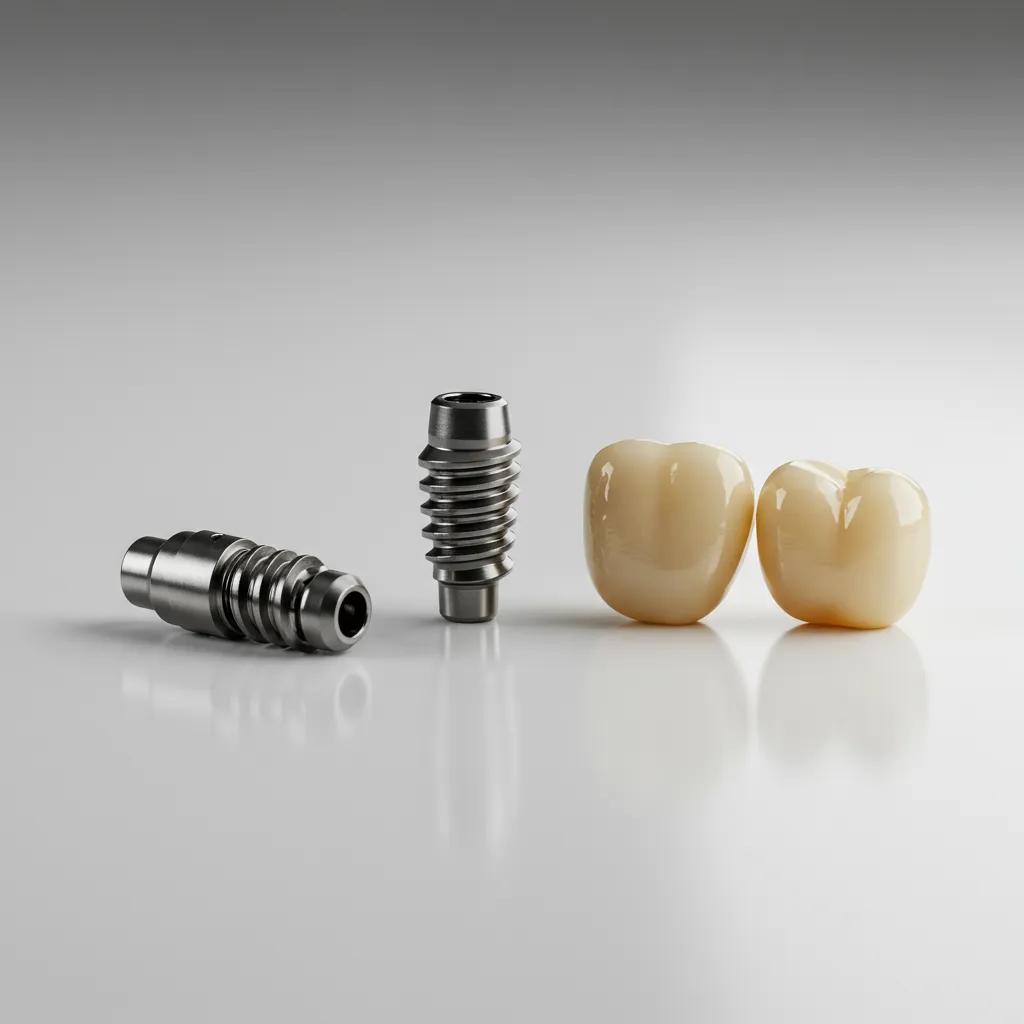
A single dental implant is made up of three main parts: the implant post, which acts like your new toothroot; the abutment, which connects the post to your crown; and the crown itself, which is the beautiful, visible part of your new tooth. Implant posts are usually made from titanium or zirconia. Titanium posts are a tried-and-true choice, offering excellent integration with your bone at a generally lower cost, while zirconia posts can provide even better aesthetics, though they might increase the overall price. Abutments can be standard (stock) or custom-made. Custom abutments involve more lab work and cost, but they offer a superior fit and look, especially for teeth that show when you smile. The crown material—whether it’s porcelain-fused-to-metal, full-ceramic, or zirconia—impacts both how long it lasts and its price. Higher-end ceramic crowns often cost more but give you amazing translucency and stain resistance. Understanding these individual items helps you see why different implant quotes might include various combinations of components and services.
Why Do Dental Implant Costs Vary for Single vs. Multiple Teeth?
For a single tooth implant, the costs are focused on just one surgical area and one set of prosthetic parts, making the pricing quite clear. However, when we look at multiple-tooth or full-arch cases, things change a bit. These often involve different stages, more surgical time, and larger lab productions, which affects the cost per unit. Think of it this way: fixed costs, like setting up for surgery, imaging, and your initial treatment plan, stay pretty much the same whether you’re getting one implant or several. This means those fixed expenses get spread out over more implants in multi-tooth cases, potentially lowering the cost per tooth. Variable costs—like each individual implant, crown, and abutment—increase with the number of teeth you’re replacing. But here’s a smart part: implant-supported bridges and full-arch prostheses can actually reduce the total number of implants needed, shifting the cost towards fewer posts but larger, integrated prosthetics. Knowing the difference between fixed and variable costs helps you decide if replacing adjacent teeth individually or opting for a bridge or full-arch solution offers the best value for your unique smile.
What’s the Cost of a Single Dental Implant in Fort Worth?
When you consider a single dental implant in Fort Worth, the price usually covers the implant post, abutment, and crown, along with necessary imaging, surgical fees, and lab work. Our local complete-case ranges reflect these essential components, plus any preparatory treatments that might be needed. To give you the clearest picture of single-implant pricing, we believe in breaking down the line-item components: the implant fixture, abutment, prosthetic crown, imaging and planning, and the surgical/professional fee. Keep in mind that optional items like grafting, extractions, or sedation can adjust the total. Below, you’ll find a helpful table that outlines these common components and their typical cost ranges right here in Fort Worth, making it easier for you to compare different providers.
Here’s a clear breakdown of typical line-item costs for single implants in Fort Worth:
Implant Component
What It Does
Typical Fort Worth Price Range
Implant Post (Fixture)
Your new titanium or zirconia tooth root, placed in the bone
$2,000 – $2,500
Abutment
The connector between your implant post and crown (stock or custom)
$950 – $1,500
Crown (Your New Tooth)
Your custom porcelain or zirconia crown, made by our lab
$1,365 – $1,690
Imaging & Planning
Detailed CBCT/3D imaging and precise surgical planning
$100 – $400
Surgical/Professional Fee
The implant placement procedure and local anesthesia
$700 – $1,800
This clear breakdown illustrates how the total cost for a single implant typically falls within a predictable Fort Worth range, from a more modest sum to a higher figure, depending on your material choices and provider fees. By understanding each line item, you can confidently identify where reasonable cost savings might be found—for instance, by choosing a stock abutment or a standard crown material—all without ever compromising your clinical results. Our next section will explain how additional treatments can adjust these estimates and the important clinical reasons why those procedures might be necessary for your best outcome.
Your Typical Cost Breakdown for a Single Dental Implant
When you receive a quote for a single implant, it will typically itemize the implant fixture, abutment, crown, imaging, and surgical fees. Each part contributes a predictable portion to your total cost, with the implant fixture and surgical fee often being the largest individual charges. Generally, implant posts make up about 25–40% of the total case fee, while crowns or final restorations are usually 20–35%, and professional/surgical fees plus imaging cover the rest. Choosing material upgrades—like a custom zirconia abutment or a premium all-ceramic crown—can increase the restoration cost. While advanced digital workflows (like guided surgery) might slightly raise planning fees, they significantly improve accuracy and can even reduce your time in the chair. We always encourage our patients to ask for a detailed, line-item estimate. This way, you can easily compare quotes from different clinics and confirm exactly which services (such as a temporary crown or postoperative visits) are included versus billed separately.
How Do Extra Treatments Impact Your Single Implant Cost?
Sometimes, additional treatments like a tooth extraction, bone grafting, or a sinus lift are necessary. These procedures will increase both your treatment timeline and the overall cost of a single implant case, but they’re crucial for addressing any anatomical limitations that could otherwise affect how well your implant integrates. For example, a bonegraft might be needed if your jaw doesn’t have enough bone volume to properly support an implant. The graft materials and the necessary healing time add to the expense and can extend your treatment by several months if staged grafts are required. Sinus lift procedures, often needed for upper molar areas, involve more surgical complexity and lab coordination, which will increase your total investment compared to a simpler implant placement. If you have infected or severely damaged teeth that need extraction and site cleaning, these also add immediate costs but are vital for preventing future issues. Our clinicians carefully factor all these into your treatment plan so you have a complete understanding of both the clinical and financial aspects before moving forward.
Costs for Multiple Dental Implants & Implant-Supported Bridges
When you’re looking to replace several teeth, the costs will naturally adjust because the surgical time, lab work, and prosthetic design move from individual restorations to integrated, multi-unit solutions. The good news is that implant-supported bridges and partial fixed prostheses are designed to optimize the number of implants you need, which can actually lower your per-tooth price! Multi-tooth cases often benefit from a shared surgical setup and bulk lab work, reducing the cost per crown and abutment. However, they might also require more intricate planning, bone grafting, or staged surgeries if your jawbone needs extra support. To help you explore your options, the table below compares common multi-tooth scenarios and their typical Fort Worth price ranges, so you can clearly see how costs adjust as the number of implants increases.
Here’s a scenario-based comparison for multiple implants right here in Fort Worth:
Your Scenario
Implants Needed
Typical Fort Worth Price
Replacing 2 Adjacent Teeth
2 Implants (2 Crowns)
$3,000 – $7,000
Replacing 3–5 Teeth (Quadrant)
3–5 Implants
$6,000 – $15,000
Implant-Supported Bridge (3 Units on 2 Implants)
2 Implants for a 3-Unit Bridge
$4,500 – $10,000
Per-Arch Implant Restorations (Partial/Full)
Varies (3–6+ Implants)
$8,000 – $30,000+
How Does Your Number of Implants Affect the Total Cost?
As you consider more implants, fixed costs like imaging and surgical setup get spread out over a larger number of prosthetic units, which often means the price per tooth can actually go down, even if the overall total increases – it’s a smart ‘economy of scale’ effect in multi-tooth implant planning! For instance, if we place three implants in one surgical session, the costs for imaging and anesthesia are shared across all three, making each additional implant relatively more affordable than the first when you look at per-tooth averages. Keep in mind, though, that larger cases might need more extensive grafting or longer operating times, which could balance out some of those per-unit savings if bone augmentation or staged healing is required. We always encourage our patients to look at both the per-tooth average and the total investment when comparing options, because a lower per-tooth cost doesn’t always mean the lowest long-term cost once maintenance and replacement cycles are factored in.
Implant-Supported Bridges: What They Are & Their Pricing in Fort Worth?
An implant-supported bridge is a fantastic solution for replacing several missing teeth right next to each other. It works by anchoring a multi-unit prosthesis to fewer implants than if you were to get individual crowns, effectively reducing the number of posts needed while still giving you a fixed restoration that feels and functions just like your natural teeth. The pricing for a bridge depends on its design, the materials used, and how many implants are supporting it. A popular setup uses just two implants to support a three-unit bridge, which can often be more cost-effective than placing three separate implants and crowns. Bridges do require very precise laboratory work and careful planning for your bite, so lab and prosthetic fees are a significant part of the price. Here in Fort Worth, implant-supported bridge totals typically fall into an intermediate range, balancing fewer implant posts with the higher complexity of the prosthetic itself. Clinically, we recommend bridges when your adjacent teeth are healthy and your bone conditions allow fewer implants to reliably support the load.
Affordable Full MouthDental Implants: What Are They & Their Price Ranges?
Full-mouth implant solutions, often known as All-on-4, All-on-6, or full-arch fixed prostheses, are designed to replace an entire upper or lower arch of teeth using a select number of implants to support a beautiful, fixed restoration. These innovative approaches aim to bring back your full function and aesthetics while smartly managing the total number of implants needed. The cost for these full-arch options considers the complexity of one large prosthesis, the specific materials chosen for your arch, and any necessary preparatory surgery like bone grafting or extractions. Essentially, these procedures bundle many aspects of single and multi-tooth care into one comprehensive plan. All-on-4 and All-on-6 techniques are frequently highlighted as ‘affordable full mouth‘ solutions because they require fewer implants than replacing each tooth individually. This can significantly reduce surgical and hardware costs while still providing you with a wonderfully stable, fixed prosthesis. In the following sections, we’ll share typical Fort Worth price ranges for All-on-4/All-on-6 cases and outline the advantages and who makes a great candidate for these full-arch reconstructions.
What’s the Cost for All-on-4 and Full Mouth Implants in Fort Worth?
For All-on-4 per-arch pricing here in Fort Worth, you’ll typically find costs ranging from mid to high five-figure amounts. This depends on the prosthetic material you choose, the specific implant system, and any preparatory surgery that might be needed. These typical per-arch ranges reflect the comprehensive, bundled nature of this treatment. A practical estimate for your arch often includes the implant fixtures (usually 4–6), an immediate provisional prosthesis, your beautiful final fixed prosthesis (which can be acrylic or zirconia-based), all necessary imaging, extractions, and surgical fees. This entire package can vary quite a bit based on material upgrades and the complexity of the lab work. Keep in mind that additional bone grafting or staged sinus lifts will increase both the costs and the timeline, while simpler cases might allow for immediate loading and a shorter overall treatment period. If you’re considering full-arch solutions, we highly recommend requesting a comprehensive case estimate that clearly itemizes your provisional and final prostheses, all implant components, and any other necessary procedures, so you can accurately compare your options.
The Amazing Advantages of Full Arch Implant Solutions
Full-arch implant restorations truly transform your smile, offering predictable chewing function, stunning esthetics, and a fixed prosthesis that often provides far better long-term value compared to removable dentures. These incredible advantages come from the biomechanical stability achieved by multiple implants working together to spread chewing forces evenly. With implant-retained fixed arches, you’ll say goodbye to the daily hassle of removing dentures and dealing with messy adhesives, which dramatically boosts patient satisfaction for speaking, eating, and overall confidence. While the initial investment might be larger than for a single implant, full-arch solutions can actually be more cost-effective in the long run than replacing every missing tooth individually, especially when you consider the lasting durability of the prosthesis and fewer replacement cycles. The patients who benefit most from these solutions are those with extensive tooth loss, failing teeth, or anyone looking for a truly stable, fixed solution with fewer surgical implants than a tooth-by-toothreplacement would demand.
What Influences Your Dental Implant Investment Here in Fort Worth?
A few key factors, both clinical and non-clinical, play a role in your implant pricing. Understanding these helps you anticipate how your unique situation will shape your final estimate. Clinical aspects include the number of implants you need, the quality and quantity of your bone, whether grafting or sinus augmentation is necessary, and the choice between immediate or staged loading. Each of these clinical decisions affects the surgical time and materials required. Non-clinical factors also influence fees, such as your provider’s experience, the use of advanced digital workflows (like CBCT scans and guided surgery), local market rates here in Fort Worth, and your prosthetic material choices (standard ceramic versus premium zirconia). By recognizing these influences, you can better prioritize what matters most to you—whether it’s a lower initial price, a faster timeline, or premium aesthetics—and ask targeted questions to ensure your treatment perfectly aligns with your goals.
How Bone Grafting & Extractions Impact Your Implant Costs
Bone grafting and tooth extractions will add both procedural complexity and extra materials to your implant case, which increases the total cost and often extends the timeline due to necessary healing when staged procedures are involved. There are different types of grafts—autograft, allograft, and xenograft—each with unique cost profiles and clinical uses. Some grafts can be placed immediately during your implant surgery, while others need a separate healing period before implant placement. Extractions that uncover infection or require ridge preservation might mean additional cleaning and extra visits. Sinus lifts, often needed for upper back teeth, are among the more involved ancillary procedures due to their technical demands. It’s important for you to understand if your grafting will be simultaneous (done at the same time as your implant) or staged (a separate procedure), as staged grafting will increase both your total time and cost. This is a clinical decision that impacts both your budget and your treatment timeline.
How Material Choices & Dentist Expertise Affect Your Implant Pricing
Your material choices—like titanium versus zirconia implants, stock versus custom abutments, and the crown materials themselves—are big drivers of prosthetic costs and significantly impact the long-term aesthetics and durability of your implant. At the same time, your provider’s expertise and the technology they use (such as guided surgery and digital impressions) play a huge role in surgical precision and how predictable your outcome will be. Highly experienced implant providers or specialists might have higher professional fees, but these reflect their extensive training, skill in managing complications, and a track record of predictable, long-lasting results. These fees are often justified by a reduced risk of failure and potentially lower lifetime maintenance costs for you. Advanced digital workflows, including CBCT-based planning and guided surgical templates, greatly improve placement accuracy but do add to the planning fees. We encourage our patients to weigh these added upfront costs against the potential long-term savings from fewer revisions and a superior prosthetic fit. Ultimately, the perfect balance between material quality and clinical expertise shapes both your initial investment and the incredible lifetime value you receive.
Making Dental Implants Affordable: Your Financing & Insurance Options in Fort Worth
Making your dental implants affordable is absolutely possible! It often involves a smart combination of insurance verification, careful payment planning, and exploring local offers that can reduce your out-of-pocket costs. Here in Fort Worth, a practical affordability plan typically includes verifying your PPO benefits, looking into third-party financing, and considering our clinic’s discount plans or in-house arrangements. Many of our patients start by confirming their eligibility under PPO plans, understanding their annual maximums, and clarifying if any part of their implant prosthetics qualifies for coverage. This initial insurance step helps narrow down your immediate financial responsibility. Third-party financing platforms provide structured monthly payments with various terms, while our dental discount plans offer reduced fees on services without needing to go through insurance. The table below gives you a quick comparison of typical options and terms, so you can easily see your pathways to affordability.
Here’s a quick look at common financing and payment options for dental implants in Fort Worth, summarizing the typical terms you might encounter:
Your Option
Type of Plan
Typical Terms & What to Know
PPO Insurance
Insurance Coverage
We accept many plans; some prosthetic parts may have partial benefits
Dental Discount Plan
Membership for Discounts
Enjoy reduced fees on procedures for a low membership cost
Third-Party Financing
Like CareCredit Loans
Fixed monthly payments, with possible promotional interest-free periods
Our In-House Payment Plans
Managed by Our Clinic
Flexible monthly payments arranged directly with us
What Insurance & Payment Options Does Affordable Dentist Near Me Offer?
At Affordable Dentist Near Me, we’re proud to accept ALL PPO insurances! We also offer our own Dental Discount Plan, along with flexible financing options and convenient in-house payment choices, all designed to help you manage your implant costs. Verifying your benefits during a consultation is key to understanding your coverage and avoiding any surprises. When you come in for your consult, please bring your PPO insurance cards and any recent dental records. This helps our friendly team check your eligibility and estimate your patient portion, showing you exactly where insurance might assist with prosthetic components or lab fees. Our Dental Discount Plan can be a fantastic help, especially if you don’t have full implant coverage, by reducing routine fees. Plus, our in-house arrangements offer another easy way to split payments without needing external lending. If you’re ready to discuss personalized pricing and payment plans, simply schedule a Free Dental Implant Consult with us to review your clinical needs and all your available payment options!
How Do Third-Party Financing & Our Payment Plans Work for Implants?
Third-party financing options are a popular way to make implant costs manageable, allowing you to repay them in convenient monthly installments. Terms can range from short promotional periods to multi-year loans, and eligibility depends on your credit and the lender’s criteria, with monthly payments varying based on the term and interest. Lenders like CareCredit are a common example: you apply, get approved, and then use that line of credit to pay our dental clinic. They often offer promotional zero-interest periods, but remember, you’ll need to pay off the full amount within that window to avoid deferred interest. Our in-house payment plans are arranged directly with us, providing predictable monthly payments without needing external loan approvals, though terms can vary by practice. We invite you to use your Free Dental Implant Consult to run example payment calculations—our friendly clinic staff can model monthly payments for both third-party and in-house plans, helping you choose the most affordable path forward.
Your Step-by-Step Dental Implant Procedure & Recovery Timeline
Your dental implant journey follows clear, defined stages: consultation and planning, surgical placement, osseointegration (that’s when the implant fuses with your bone!), abutment and prosthetic placement, and finally, periodic maintenance. Each stage has predictable timelines for healing and follow-up care. Our thorough planning, using advanced imaging and treatment design, helps reduce any surgical surprises and creates a clear schedule, so you’ll always know when to expect your provisional restorations and beautiful final crowns. The numbered list below outlines our standard workflow, so you can easily see the sequence and typical timeframes for each phase.
Your initial consultation and detailed treatment planning, including imaging and a medical review.
Surgical placement of your implant post, with an immediate or staged provisional restoration as needed.
The osseointegration period (typically 3–6 months), allowing your bone to naturally fuse with the implant.
Abutment placement and soft-tissue shaping, then the fabrication and placement of your final crown or prosthesis.
Routine follow-up and maintenance visits to ensure your implant’s long-term health and longevity.
These essential steps are the foundation of modern implant dentistry, helping us set realistic expectations for your healing, prosthetic timing, and all necessary follow-up care. Our next sections will dive into the specifics of surgery, osseointegration, and recovery—all the things our patients frequently ask about!
What to Expect During Your Dental ImplantSurgery & Osseointegration
During your implant surgery, our skilled clinician will carefully place the implant post into the prepared bone site, using local anesthesia or sedation as you prefer. The surgical procedure typically involves either flap or flapless techniques, depending on your soft tissue needs and the best implant positioning. Immediately after placement, diligent postoperative care—including antibiotic protocols if needed, gentle oral hygiene, and dietary adjustments—is crucial for smooth healing. This is when osseointegration begins, as your bone naturally remodels and bonds to the implant surface over several months. This osseointegration timeline usually takes about three to six months, influenced by your bone quality, overall health, and the implant system used. Successful integration is the vital biological foundation for your implant’s long-term stability. Knowing this healing window helps you plan your work and social activities, and sets clear expectations for when your provisional restorations will be exchanged for your beautiful final prosthetics.
What to Expect During Your Recovery & Follow-Up Care
After your implant placement, you can expect some predictable short-term symptoms—like a bit of swelling, mild discomfort, and minor bleeding—which usually resolve within just a few days with proper care, pain management, and by following the postoperative instructions our clinician provides. Making some dietary modifications (sticking to soft foods), avoiding strenuous activity for 48–72 hours, and maintaining gentle oral hygiene are all crucial for supporting your healing and reducing any risks of complications. Keep in mind that smoking and uncontrolled systemic conditions can prolong recovery and impact osseointegration. We’ll schedule follow-up visits shortly after surgery to check your healing, then at regular intervals during the osseointegration phase, and again after your final restoration is placed, to monitor its function and your overall gum health. For long-term maintenance, it’s just like caring for your natural teeth: daily cleaning around your implant crowns, routine dental exams, and professional checkups to catch any wear or bite adjustments early, which helps your implant last for decades to come.
Dental Implant Alternatives: What Are They & How Do Costs Compare?
While dental implants are often the ideal choice, we want you to know about all your options! Alternatives include traditional fixed bridges, removable partial dentures, and implant-retained overdentures. Each of these comes with its own upfront costs, maintenance needs, and expected lifespan, all of which influence the long-term value you’ll receive. Bridges, for example, don’t require surgery but do involve altering adjacent teeth, which can sometimes compromise their structure and may mean needing replacement every 7–10 years. Removable dentures have lower initial costs but often come with higher maintenance and replacement cycles, plus reduced chewing efficiency. Implant-retained overdentures offer much better stability compared to conventional dentures, but they do require at least two implants and periodic attachment maintenance, blending some implant benefits with removable prosthetic considerations. The table below clearly compares initial costs, longevity, functional differences, and maintenance needs, so you can thoughtfully weigh the immediate expense against your lifetime outcomes.
How Do Bridges & Dentures Stack Up Against Implants in Cost & Longevity?
While dental bridges and dentures might have lower initial costs than implants, they generally come with shorter functional lifespans and higher ongoing maintenance expenses. This often means that, over your lifetime, implants can actually be more cost-effective. Bridges require us to prepare adjacent teeth, which could potentially compromise those teeth and lead to future restorative needs. Dentures, on the other hand, don’t alter neighboring teeth but offer less stability and chewing efficiency, often limiting your dietary choices. Implant-supported overdentures find a happy medium by significantly improving retention and function while keeping initial costs below full fixed-arch solutions, though they still need attachment maintenance and possible periodic relining. When you truly evaluate the cost per year of function and consider the quality-of-life improvements, many of our patients discover that implants provide superior long-term value, even with their higher initial fees.
When Do We Recommend Dental Implant Alternatives?
We recommend alternatives when medical, anatomical, or financial factors might make implants impractical for you, or when a temporary solution is the right step while you prepare for future implant care. Sometimes, factors like poor overall medical control, not enough bone without realistic grafting options, or simply your personal preference against surgery can mean implants aren’t the best fit. In these situations, bridges or dentures can offer excellent, more affordable restorations. Financial circumstances sometimes make it smarter to start with a removable prosthesis or bridge while you save for implants down the road. Plus, temporary prosthetics can beautifully maintain your aesthetics and function during staged treatment. Our clinicians will always recommend alternatives when they best align with your short-term needs, risk profile, and long-term goals, and we’ll always keep the door open to revisiting implant solutions if your conditions change.
Important Note: For personalized pricing, easy insurance verification, and flexible payment planning right here in Fort Worth, Affordable Dentist Near Me is here to help you explore every option for affordability. Our practice proudly accepts ALL PPO insurances, offers a fantastic Dental Discount Plan, convenient in-house payment options, and various third-party financing pathways to truly reduce any upfront cost barriers. Ready to discuss a tailored estimate and all your available payment arrangements? Simply schedule a Free Dental Implant Consult with us today!
Your Frequently Asked Questions
What’s the Recovery Timeline After Dental ImplantSurgery?
The recovery timeline after your dental implantsurgery usually takes several months. Right after surgery, you might notice some swelling and mild discomfort for a few days. The amazing process of osseointegration, where your bone naturally fuses with the implant, typically takes about 3 to 6 months. Throughout this period, your follow-up appointments are super important to monitor your healing progress. Once osseointegration is complete, we can then place your abutment and beautiful final prosthetic crown. Remember to always follow our post-operative care instructions closely to ensure a smooth recovery and the very best results!
Are Dental Implants Right for Everyone?
While dental implants are a wonderfully popular and effective solution for many, they might not be the perfect fit for absolutely everyone. Factors like insufficient bone density, uncontrolled diabetes, or certain medical conditions can influence whether you’re a good candidate. Also, patients who smoke or have poor oral hygiene might face higher risks of implant failure. That’s why a thorough evaluation by our experienced dental professional is so essential to determine if implants are truly the right choice for you. Based on your individual circumstances, we might recommend alternative options that better suit your needs.
How Long Do Dental Implants Usually Last?
Dental implants are truly designed to be a long-term solution for your smile, often lasting 10 to 15 years or even longer with proper care! Factors that influence their longevity include your daily oral hygiene, keeping up with regular dental check-ups, and lifestyle choices like smoking. While the implant post itself can potentially last a lifetime, the prosthetic components, such as your crowns, might need replacement over time due to normal wear and tear. By maintaining excellent oral health and consistently following your dentist’s recommendations, you can significantly enhance the lifespan of your dental implants.
What Are the Risks of Dental ImplantSurgery?
Just like any surgical procedure, dental implantsurgery does come with certain risks. Common complications can include infection at the implant site, nerve damage, and sinus issues, especially for implants in the upper jaw. Also, improper placement could potentially lead to implant failure. However, we want to reassure you that these risks can be greatly minimized by choosing an experienced dental professional and diligently following all pre- and post-operative care instructions. We always encourage you to discuss any potential risks and concerns with your dentist, as open communication is key to ensuring a successful outcome for your smile.
Can My Dental Implants Be Covered by Insurance?
Yes, dental implants may be partially covered by some dental insurance plans, especially if they are considered medically necessary. Coverage can vary quite a bit between plans, so it’s really important to verify your specific benefits before moving forward. Many of our patients discover that while the implant itself might not be fully covered, related procedures like extractions or bone grafting could be eligible for reimbursement. We always recommend consulting with your insurance provider and our friendly dental office team to clarify exactly what costs you might incur.
What Are the Maintenance Needs for Dental Implants?
Maintaining your dental implants is wonderfully similar to caring for your natural teeth! Regular brushing and flossing are absolutely essential to prevent plaque buildup and gum disease. We also encourage all our patients to schedule routine dental check-ups for professional cleanings and thorough assessments. While implants themselves are resistant to decay, the health of your surrounding gums is incredibly crucial for their long-term success. Avoiding tobacco products and maintaining a balanced diet can further boost the health of both your implants and the surrounding tissues, keeping your smile bright and healthy.
What If My Dental Implant Feels Loose?
If your dental implant ever feels loose, it’s really important to contact your dentist immediately. A loose implant could signal issues like infection, bone loss, or even improper placement. Early intervention is absolutely crucial to address the problem quickly and prevent any further complications. Your dentist will perform a thorough evaluation, which might include imaging, to pinpoint the exact cause of the looseness and recommend the best treatment options to restore its stability.
Your Journey to a Confident Smile Starts Here
Understanding the costs involved with dental implants truly empowers our Fort Worth patients to make the best, most informed decisions for their oral health. By clearly breaking down all the components and financing options, you can navigate your choices with complete clarity and confidence. If you’re thinking about dental implants, we encourage you to take that important next step by scheduling a Free Dental Implant Consult with us to explore personalized pricing and payment plans. Your journey to a healthier, more confident smile begins with having the right information and our unwavering support!