Dental implants succeed over 95% of the time, but early detection prevents costly full replacement procedures.
Implant failure occurs when any of three components—titanium body, abutment, or crown—becomes loose or broken.
Your body signals implant problems early, allowing intervention before complications require complete implant replacement.
Titanium implant bodies resist rejection, making material failure rare compared to mechanical component issues.
What is dental implant failure?
Dental implant failure refers to any complication that prevents an implant from functioning as intended, whether shortly after placement or years later. A dental implant consists of three parts: a titanium body inserted into the jawbone, an abutment that connects to it, and a crown that sits on top. Failure can affect any of these components. The implant may not fuse with bone, the abutment may loosen, or the crown may break.
How does an implant stay in place?
The implant’s stability depends on a biological process called osseointegration. During this process, living bone cells grow around the implant surface and anchor it to the jawbone. Healthy bone continues to surround the implant over time, creating a permanent bond. When osseointegration does not occur properly, the implant lacks the foundation it needs to function.
Can failure happen at different times?
Dental implant failure can occur early after the procedure or as a long-term problem. Early failures typically happen within the first few months, often due to poor osseointegration or infection. Late failures may develop years later from issues like bone loss, gum disease, or excessive force on the implant. Affordable Dentist Near Me provides durable, natural-looking dental implants designed for long-term success when patients follow proper aftercare.
Affordable Dentist Near Me is located in Longview, TX, US. Recognizing the [Signs of Implant Failure to Watch For](https://affordabledentistnearme.com/recognize-the-signs-of-dental-implant-failure-early/) early can prevent a small problem from becoming a complete implant loss.
What are the first signs of implant trouble?
Persistent pain after the initial healing period signals the earliest warning of dental implant failure. Many patients assume some discomfort is normal, but ongoing pain that does not subside requires immediate attention from a dentist. Severe pain during the healing process itself can also indicate a problem developing beneath the surface.
What does implant looseness feel like?
Mobility or looseness of the implant represents a primary sign that osseointegration has not occurred properly. When bone fails to grow around the implant surface, the implant cannot anchor securely to the jawbone. At first, the movement might be slight and only recognizable by a dentist during an examination. Over time, an implant that has failed becomes progressively more noticeable to the patient.
Which other symptoms should patients watch for?
Swelling around the gums near the implant site provides another early indicator of trouble. Difficulty chewing on the affected side often accompanies this swelling. Patients experiencing any combination of these Signs of Implant Failure to Watch For should contact their dentist right away. Catching these problems early makes the difference between a simple correction and needing a full replacement.
Early Warning Sign
What It Indicates
Persistent pain after healing
Possible infection or failed integration
Implant looseness or mobility
Failed osseointegration
Swelling around gums
Inflammation or infection
Difficulty chewing
Structural instability
Ignoring these signals allows minor issues to escalate into major complications. A dentist can evaluate the implant and determine whether intervention can save it.
How can infection cause implant failure?
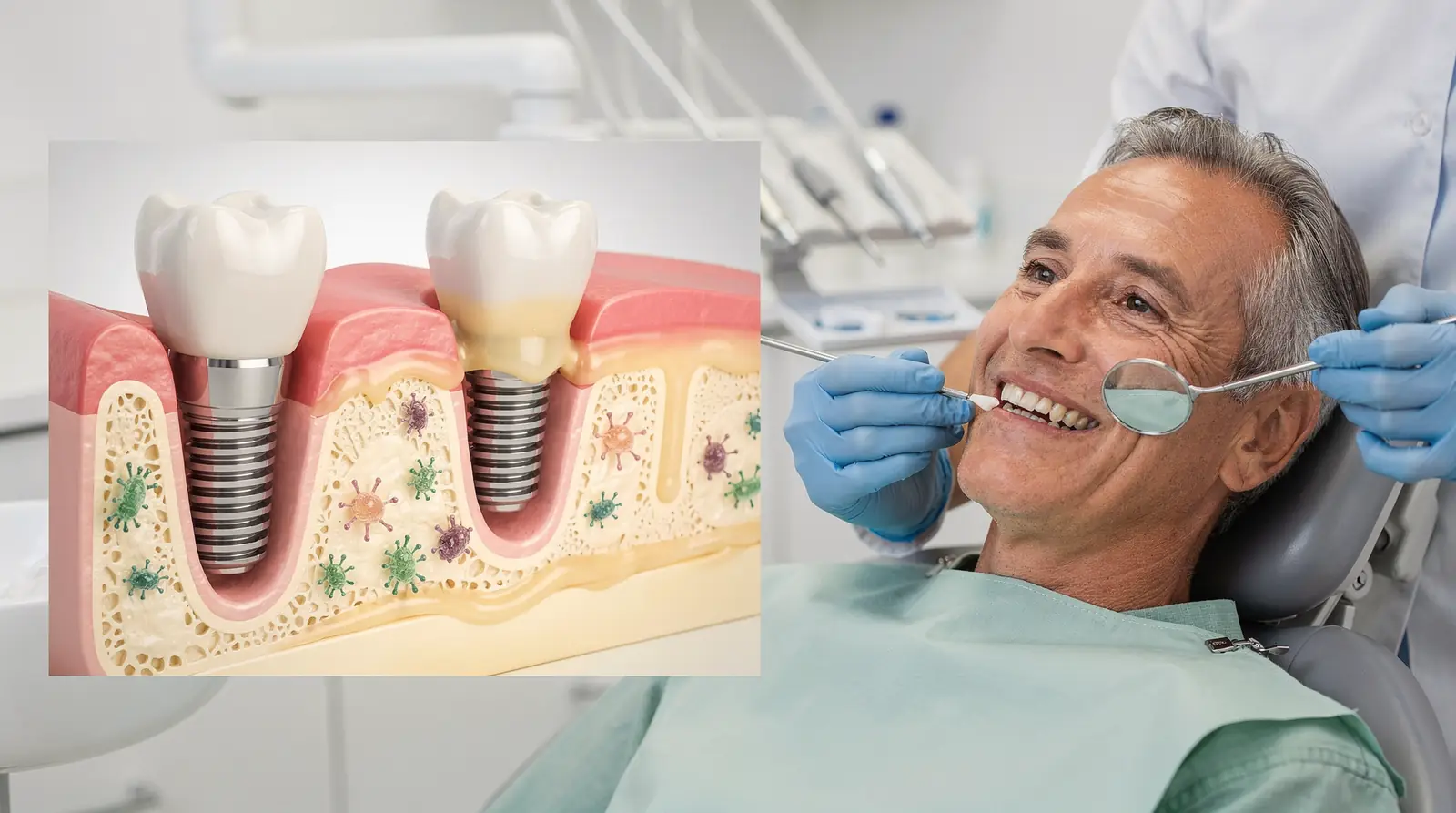
Infection creates a direct threat to dental implant survival. Bacteria in plaque produce acids that trigger gum disease around the implant site. When this inflammation goes untreated, it destroys the supporting bone structure. The result is bone loss severe enough to require complete implant removal.
What role does oral hygiene play in preventing infection?
Poor oral hygiene allows plaque to accumulate around the implant. The bacteria in that plaque produce acids that attack gum tissue. Without consistent brushing and flossing, this cycle leads to peri-implantitis — a destructive infection that eats away at jawbone. Regular professional deep cleaning helps maintain gum health around implants and catches early signs of trouble.
Which health factors increase infection risk?
Pre-existing health conditions raise the chances of implant failure. Smoking constricts blood flow to healing tissues, making infection more likely. Patients with diabetes or autoimmune disorders face higher infection rates because their bodies struggle to fight bacteria. Oral hygiene habits directly determine whether harmful bacteria take hold around the implant.
Infection Risk Factor
How It Affects Implant Healing
Poor oral hygiene
Allows plaque bacteria to produce acids that inflame gums
Smoking
Reduces blood flow, slowing immune response to bacteria
Diabetes
Impairs the body’s ability to fight gum infections
Skipped cleanings
Lets hidden plaque harden into calculus below the gumline
Ignoring early infection symptoms allows bacteria to spread deeper into the jawbone. What starts as mild gum redness progresses to bone destruction. Patients who notice swelling, persistent bad taste, or bleeding around an implant should contact their dentist immediately. Early intervention stops infection before it compromises the implant’s foundation.
When should you contact your dentist?
Clients should contact their dentist immediately upon noticing persistent pain or a loose implant. These symptoms signal that the implant may be failing, and delaying action turns a manageable problem into a costly one. Catching issues early makes the difference between a simple adjustment and needing a full replacement. Many patients assume some discomfort is normal and wait too long to seek help. Ignoring these warning signs allows infection to spread, bone loss to accelerate, and the implant to require complete removal.
What happens if a patient waits too long?
Waiting too long after noticing symptoms allows minor inflammation to progress into advanced infection. The bone surrounding the implant deteriorates, making salvage impossible. At that point, the only option is surgical removal and a fresh start with a new implant after healing. Affordable Dentist Near Me offers free consultations to evaluate implant health before problems reach this stage.
How does Affordable Dentist Near Me help with failing implants?
The team at Affordable Dentist Near Me provides free consultations to assess each implant’s condition. During this visit, the dentist examines the implant for looseness, checks gum tissue for swelling, and evaluates any pain the patient reports. Early intervention preserves the implant and avoids the expense and recovery time of a full replacement. Clients who schedule promptly give themselves the best chance at a simple, affordable fix.
What are the Signs of Implant Failure to Watch For?
Dental implants carry a success rate over 95%, but problems can still develop after placement. The Signs of Implant Failure to Watch For include persistent pain, a loose implant, swelling around the gums, and difficulty chewing. Catching these warning symptoms early often makes the difference between a simple correction and needing a full replacement.
What does implant looseness feel like?
A stable implant should feel solid, like a natural tooth root fused to the jawbone. Looseness indicates that osseointegration — the biological process where living bone cells grow around the implant surface — has not occurred properly. Any movement, rocking, or sensation that the implant shifts when touched requires immediate attention from a dentist.
How does gum swelling signal a problem?
Swelling around the implant site that persists beyond the initial healing period points to infection or inflammation. Red, tender gums that bleed during brushing suggest peri-implantitis, a condition that attacks the supporting bone. Left untreated, this infection destroys the bone anchor and leads to implant failure.
Warning Sign
What It Indicates
Action Required
Persistent pain
Nerve damage, infection, or improper placement
Schedule evaluation within 48 hours
Loose implant
Failed osseointegration or bone loss
Immediate dental assessment
Gum swelling
Infection or peri-implantitis
Professional deep cleaning needed
Chewing difficulty
Misalignment or structural issue
Bite adjustment or repair
Recognizing these signs early allows patients and their dentist to work together on prevention strategies. Affordable Dentist Near Me provides expert root canal and deep cleaning services that support long-term implant health. Custom dentures from the practice are backed by some of the longest warranties on the market, offering peace of mind for restorative work.
FAQ
What is dental implant failure?
Dental implant failure is any complication that prevents an implant from functioning properly, affecting the titanium body, abutment, or crown. It happens either shortly after placement or years later.
What causes an implant to fail?
Failure occurs when osseointegration does not happen properly, meaning bone cells fail to grow around the implant and anchor it to the jawbone. Infection, bone loss, gum disease, or excessive force also contribute to failure.
What are the warning signs of a failing implant?
Persistent pain after healing, a loose or mobile implant, gum swelling, and difficulty chewing are key warning signs. These symptoms often appear early, allowing intervention before the problem worsens.
Conclusion
In closing, recognizing the warning signs of dental implant failure—such as persistent pain, swelling, looseness, or unusual discharge—empowers you to seek timely professional care and protect your investment in your smile. Early intervention makes all the difference in preserving your implant and maintaining the natural appearance and function you worked to achieve. Trust your instincts, stay alert to changes, and reach out to your dental team at the first sign of concern.