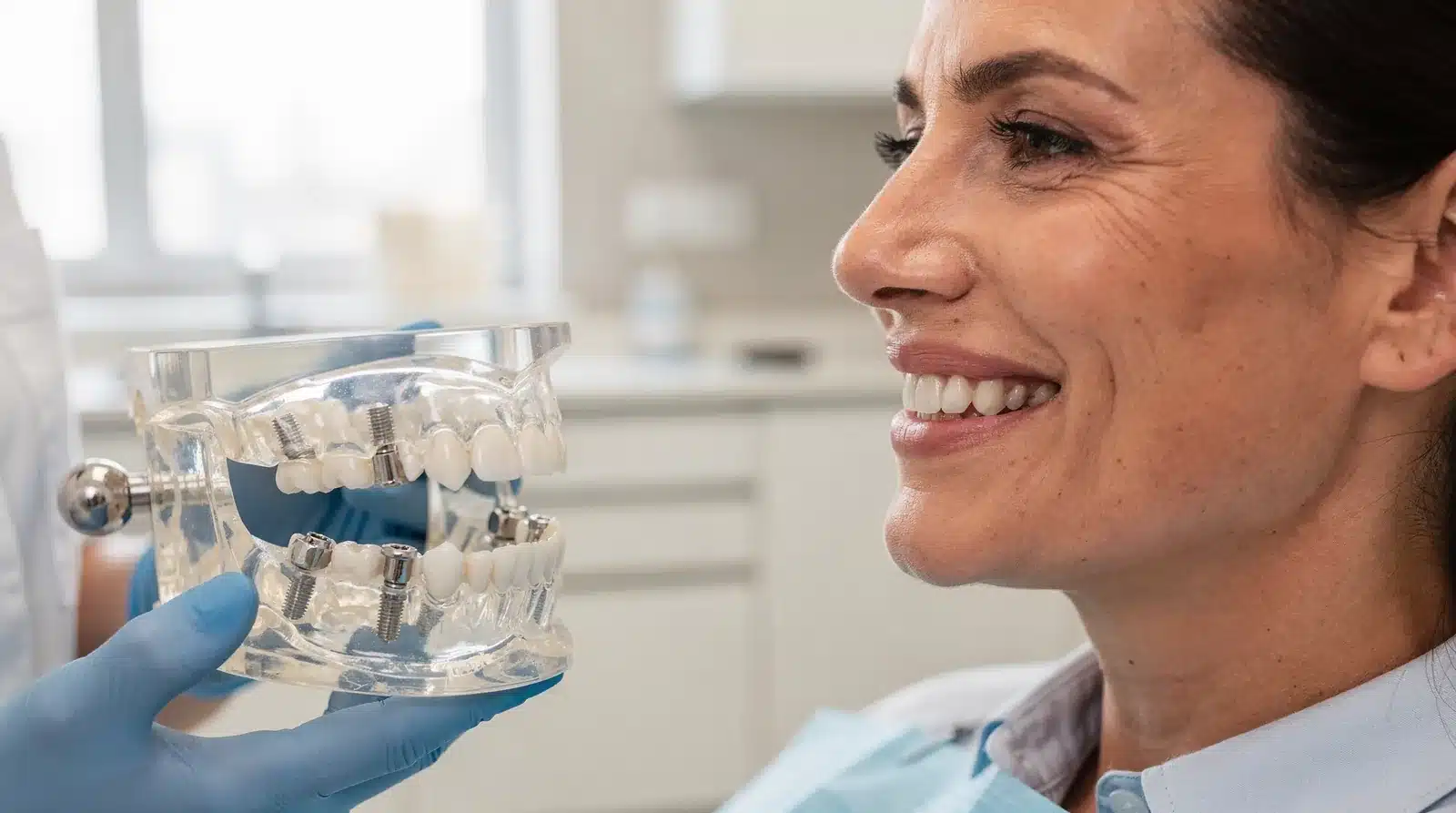
When it comes to Aesthetic Benefits of Implants, dental implants provide aesthetic advantages beyond function. Implant posts are screw-like devices inserted in the jawbone. Aesthetic Benefits of Implants support natural-looking replacement teeth that preserve facial structure. This approach maintains bone density and prevents the sunken appearance associated with missing teeth, creating a more youthful smile.
Key Takeaways
Implant posts fuse with the jawbone through osseointegration, preserving bone density and preventing facial collapse.
The crown emerges from the gum line exactly as a natural tooth does, matching surrounding teeth in contour and position.
Bone preservation maintains facial contours that support a youthful appearance and prevents a sunken look.
Implants resist decay and serve patients for many years without the deterioration that dulls or discolors other restorations.
What makes dental implants look so natural?
Dental implants achieve a remarkably natural appearance by replicating the full structure of a missing tooth, from root to crown. The implant post fuses with the jawbone, creating a stable foundation that prevents the shifting and sinking common with other restorations. This structural integration allows the visible crown to emerge from the gum line exactly as a natural tooth does, matching the surrounding teeth in contour and position.
The aesthetic result goes beyond simply filling a gap. A well-placed implant enhances the overall appearance of the smile by preserving the natural arch form and preventing adjacent teeth from tilting into the empty space. The crown is custom-fabricated to match the shade, translucency, and shape of neighboring teeth, making the restoration indistinguishable within the smile.
How does the implant foundation affect appearance?
The foundation determines how light interacts with the restoration. Because the implant is anchored directly into the jawbone, the crown sits flush against the gum tissue without dark metal margins or clasps. This seamless emergence profile mimics nature and eliminates the artificial look that can betray other tooth-replacement options.
Why does jawbone preservation matter for aesthetics?
Bone preservation maintains the facial contours that support a youthful appearance. When a tooth is lost, the underlying bone begins to resorb, which can cause a sunken look around the mouth over time. The implant post stimulates the bone during chewing, much like a natural tooth root, helping to maintain facial structure and lip support.
Durability also contributes to the long-term aesthetic value. Implants resist decay and, with proper care, serve patients for many years without the deterioration that dulls or discolors other restorations. This lasting integrity means the smile retains its natural brilliance decade after decade.
How do implants preserve facial structure?
Dental implants preserve facial structure by replacing the root of a missing tooth. The implant post stimulates the jawbone, preventing the bone loss that causes facial collapse.
A missing tooth triggers a biological chain reaction. Without a root to stimulate the jaw, the bone begins to resorb, shrinking over time. This bone loss alters the contours of the face, leading to a sunken or prematurely aged appearance. Dental implants interrupt this process at its source.
How does osseointegration support facial structure?
Osseointegration is the biological process that makes structural preservation possible. Dental implants are screw-like posts inserted surgically into predetermined areas of the jaw. Through osseointegration, the implant post forms a lasting bond with the jawbone, acting as an artificial tooth root. This bond transfers chewing forces into the bone, maintaining the stimulation needed to preserve bone density.
What happens to the jawbone without an implant?
Bone loss begins within the first year of tooth loss and accelerates over time. The jawbone shrinks in both height and width, which changes the distance between the nose and chin. Adjacent teeth drift into the gap, and the facial muscles lose underlying support. The result is a collapsed profile that traditional bridges or dentures cannot reverse because those restorations sit above the gumline without engaging the bone.
The aesthetic benefits of implants extend beyond the visible crown. By maintaining facial structure, implants contribute to a more beautiful and youthful smile. The restoration fills the gap while the implant root preserves the foundational bone that supports the lips and cheeks. This dual action, replacing both the visible tooth and its hidden root, distinguishes implant treatment from every other tooth replacement option.
Can implants prevent premature facial aging?
Dental implants help prevent premature facial aging by preserving jawbone density and maintaining natural facial contours. Missing teeth trigger bone resorption, a process that gradually shrinks the jaw and causes the lower face to collapse inward over time.
How does bone loss change facial appearance?
When a tooth root disappears, the jawbone no longer receives the stimulation it needs to maintain its volume. The body begins resorbing that bone, and the structural support for cheeks and lips deteriorates. Dental implants replace both the visible crown and the root, delivering the mechanical stimulation that halts this deterioration. The result is a preserved facial profile rather than the sunken look associated with long-term tooth loss.
Why do traditional replacements fall short?
Conventional bridges and dentures sit above the gumline without engaging the underlying bone. They restore surface-level appearance but leave the root void untreated, allowing resorption to continue unchecked. Implants, by contrast, integrate directly into the jawbone through osseointegration. This integration provides a sturdy foundation for replacement teeth while actively maintaining bone structure, an advantage that traditional options cannot replicate.
The aesthetic benefits of implants extend well beyond filling gaps. Implants enhance the overall appearance of the smile by restoring natural proportions and preventing the facial collapse that ages a person’s look prematurely. Implants preserve not just the smile but the foundational structure of the face.
How do implants improve everyday confidence?
Dental implants contribute to a more beautiful and confident smile. The aesthetic benefits of implants extend beyond filling a gap, reshaping how a person feels in social and professional settings.
A complete smile removes the instinct to hide teeth during conversations or photographs. Dental implants provide a solution for missing teeth that goes beyond function, restoring a natural appearance that blends seamlessly with existing teeth. This visual harmony eliminates the self-consciousness that often accompanies tooth loss.
Why do dental implants feel more secure than removable options?
The stability of implants transforms daily interactions. Unlike removable restorations that may shift during speech or eating, implants stay fixed in place. This reliability means a person speaks, laughs, and eats without hesitation.
How does long-term durability affect self-assurance?
Knowing the restoration is built to last reduces ongoing anxiety about dental health. Implants are designed to last for many years with proper care. This permanence shifts the mindset from temporary repair to lasting solution, reinforcing confidence with every passing year.
What should you expect from implant consultation?
An implant consultation maps out a treatment plan tailored to the individual’s oral anatomy and aesthetic goals. No two cases follow the same blueprint because dental implant surgery is personalized to each patient. A thorough evaluation prevents surprises later and sets clear expectations for the final smile outcome.
What happens during the initial exam?
The dentist or oral surgeon examines the jawbone, gums, and surrounding teeth. Diagnostic imaging reveals bone density and identifies the ideal placement sites. This data shapes a surgical guide that balances structural integrity with the aesthetic benefits of implants.
How is the surgical timeline structured?
The process unfolds in three distinct phases. First, the provider places the implant surgically into the jawbone. A healing period follows, allowing the bone to fuse with the post. Finally, the abutment and permanent crown, bridge, or denture attach to complete the restoration.
Will the procedure cause discomfort?
Anesthesia numbs the gums before any incision begins. Sedation options are available for those who prefer them. The combination ensures a pain-free surgical experience from start to finish.
FAQ
What makes dental implants look so natural?
Dental implants replicate the full structure of a missing tooth, from root to crown, with the crown emerging from the gum line exactly as a natural tooth does.
How does the implant foundation affect appearance?
The implant anchors directly into the jawbone, allowing the crown to sit flush against gum tissue without dark metal margins or clasps.
Why does jawbone preservation matter for aesthetics?
Bone preservation maintains facial contours that support a youthful appearance and prevents the sunken look caused by bone resorption after tooth loss.
Conclusion
Dental implants preserve the bone that supports facial structure, preventing the collapsed profile that ages a person’s look. This dual restoration of root and crown distinguishes implants from every other tooth replacement option. A consultation with a dentist maps the personalized treatment plan that balances structural integrity with aesthetic goals, setting clear expectations for the final smile outcome.