The Truth About Dental Implants: What Patients Really Think Compared to Dentures and Bridges
Dental implants replace missing tooth roots with titanium posts that fuse to bone, restoring stability, chewing power, and a sense of normalcy that many patients describe as life-changing. This article explains what dental implants are, how they compare to dentures and bridges from a patient perspective, and why comfort, function, and long-term health often drive satisfaction. Many readers worry about pain, cost, and realistic outcomes when weighing implants against removable or tooth-supported alternatives; this guide addresses those concerns with patient-focused comparisons, practical examples, and clear next steps. You will find plain-language definitions, evidence-driven comparisons of comfort and function, aesthetic and bone-preservation implications, longevity and maintenance expectations, and an itemized look at pros and cons so you can decide what matters most. Finally, the piece maps the typical patient journey at a local practice and explains cost and financing options so you can move from information to action with confidence. Throughout, target phrases like dental implants patient reviews Tyler, dental implants vs dentures patient satisfaction, and cost of dental implants financing Tyler are woven into the discussion to help you find the information most patients look for when choosing a tooth-replacement path.
What Are Dental Implants, Dentures, and Bridges? A Patient’s Guide to Tooth Replacement Options
Dental implants, dentures, and bridges are three common restorative dentistry approaches that replace missing teeth, each working by different mechanisms and delivering distinct patient experiences. Implants involve a titanium implant post anchored into the jawbone, an abutment, and a crown that together act like a natural tooth root, providing fixed stability and stimulating bone through osseointegration. Dentures are removable prosthetics that sit on the gums and replace some or all teeth; they vary from partial removable prostheses to full conventional dentures and implant-retained overdentures, and they trade permanence for lower upfront invasiveness. Bridges are fixed restorations that span a gap by using adjacent teeth as abutments, requiring preparation of those teeth but offering a non-surgical, immediate-looking option. Understanding these mechanisms helps patients weigh comfort, function, bone health, and maintenance needs when choosing the right tooth-replacement option for their lifestyle.
What Are Dental Implants and How Do They Work?
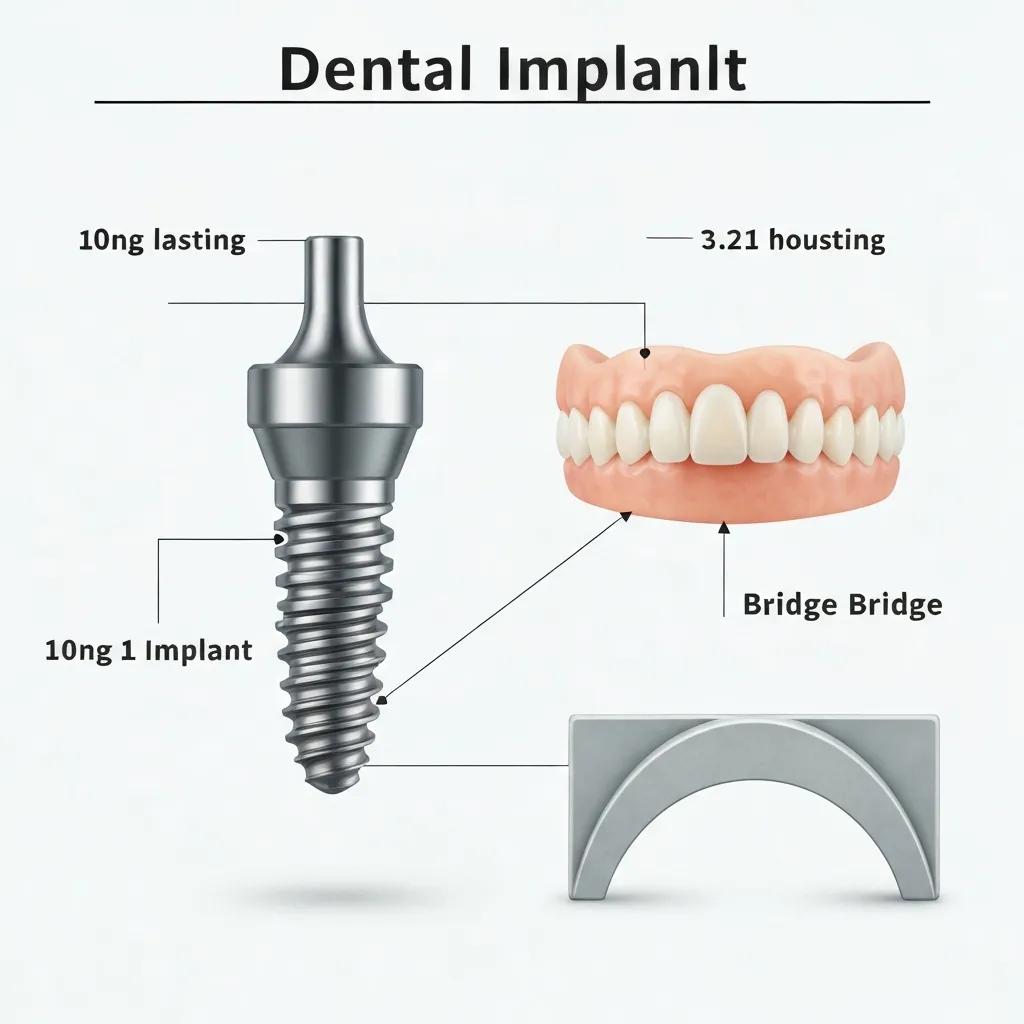
Dental implants consist of three primary parts: a titanium implant post that acts as a root, an abutment that connects post to crown, and a prosthetic crown that restores tooth shape and function. Osseointegration is the biological process where bone cells attach to the titanium surface, creating a rigid foundation that transfers chewing forces to the jaw and preserves facial bone. Patients report implants feel more like natural teeth because the implant’s fixed nature and force distribution support proprioception and stability, which improves mastication and speech. Implants are used for single-tooth replacement, multiple teeth with implant-supported bridges, and full-arch solutions such as implant-supported dentures or all-on-4 approaches, making them a hyponym within restorative dentistry. Knowing the implant components clarifies why implants can outperform removable options in long-term comfort and jaw preservation.
What Are Dentures and Their Types?
Dentures are removable dental prostheses designed to replace missing teeth and surrounding tissues, and they come in several common types including full (complete) dentures, partial dentures, immediate dentures placed right after extraction, and implant-retained overdentures that combine implants with removable bases. Full dentures rest on the gums and rely on suction and adhesives for retention, while partial dentures clasp to remaining teeth to fill gaps; immediate dentures ease the transition after extractions but often require relines as healing alters the ridge. Patients choose dentures for lower initial cost, non-surgical fit, or when multiple teeth are missing but often accept trade-offs such as maintenance, adhesives, and periodic remakes. Understanding denture types helps patients anticipate daily care, changes in fit over time, and how implant-hybrid options can improve retention and reduce slippage. This context prepares patients to compare functional outcomes and quality-of-life differences across options.
What Are Dental Bridges and How Do They Affect Adjacent Teeth?
Dental bridges are fixed prostheses that replace one or more missing teeth by anchoring a pontic (replacement tooth) to adjacent abutment teeth, which must be prepared—often removing healthy enamel—to support crowns that hold the bridge in place. Bridges offer a non-surgical, relatively quick solution that restores chewing and appearance, but they transfer occlusal forces to abutment teeth and do not stimulate underlying jawbone at the extraction site. From a patient viewpoint, bridges feel stable and natural once placed, but they may necessitate additional maintenance or replacement if abutment teeth develop decay, fracture, or periodontal issues. Choosing a bridge often involves trade-offs: quicker restoration with no implant surgery versus potential long-term risks to otherwise healthy neighbor teeth and lack of bone-preserving stimulation. Patients considering a bridge should weigh the immediate benefits against possible future interventions on adjacent teeth.
How Do Patients Rate Comfort and Stability: Dental Implants vs. Dentures?
Comfort and stability are central to patient satisfaction, and many patient reviews emphasize whether a prosthesis stays in place, causes soreness, or interferes with daily life. Dental implants generally provide fixed, high-stability outcomes because the titanium post integrates with bone, producing minimal movement during chewing and speaking, which reduces mucosal irritation and sore spots. By contrast, conventional dentures often shift during function, leading to slippage and pressure points that require adhesives, relines, or behavioral adjustments; implant-retained overdentures bridge this gap by combining removable maintenance with implant-level stability. Examining patient-reported metrics—stability, comfort, and soreness—helps capture the lived experience beyond clinical success rates and explains why many patients prefer fixed solutions for long-term quality of life.
Intro to the comparison table: The table below condenses patient-centered comfort and stability attributes to help readers quickly scan differences between options.
Restoration Type
Comfort & Stability
Typical Patient Experience
Dental Implants
Fixed, high stability
Minimal movement, reduced sore spots, high comfort ratings
Implant-supported Dentures
Improved retention
Less slippage than removable dentures, easier adaptation
Conventional Dentures
Removable, variable stability
Slippage, adhesives needed, more sore spots reported
Do Dental Implants Feel More Natural Than Dentures?
Many patients describe dental implants as feeling more natural because the implant’s root-like structure and rigid anchorage restore a more authentic biting and proprioceptive experience. Biologically, osseointegration creates a direct bone-to-implant interface that transfers occlusal forces through bone, maintaining sensory feedback and a more natural force distribution, which patients equate with “a tooth that feels real.” Patient reviews and clinical summaries commonly report higher satisfaction with speech, chewing confidence, and day-to-day comfort after implants compared to conventional dentures, especially when patients transition from removable to fixed solutions. This perceived naturalness often follows from both the mechanical stability and the psychological reassurance that implants do not rely on adhesives or frequent repositioning. Understanding these tactile and sensory differences helps patients set realistic expectations about the experiential gap between fixed and removable restorations.
Patient Satisfaction with Dental Implants: A Comparative Literature Review
It is understandable that a patient’s satisfaction with dentures is influenced by factors such as comfort, stability, and aesthetics, which are often compromised by the limitations of conventional dentures. Dental implants, on the other hand, offer a more stable and natural-feeling solution, leading to higher patient satisfaction in many cases. This literature review aims to explore the various factors contributing to patient satisfaction with dental implants, comparing them to traditional tooth replacement options.
Satisfaction with dental implants: a literature review, ALO Mahmoud, 2005
Many patients describe dental implants as feeling more natural because the implant’s root-like structure and rigid anchorage restore a more authentic biting and proprioceptive experience. Biologically, osseointegration creates a direct bone-to-implant interface that transfers occlusal forces through bone, maintaining sensory feedback and a more natural force distribution, which patients equate with “a tooth that feels real.” Patient reviews and clinical summaries commonly report higher satisfaction with speech, chewing confidence, and day-to-day comfort after implants compared to conventional dentures, especially when patients transition from removable to fixed solutions. This perceived naturalness often follows from both the mechanical stability and the psychological reassurance that implants do not rely on adhesives or frequent repositioning. Understanding these tactile and sensory differences helps patients set realistic expectations about the experiential gap between fixed and removable restorations.
What Are Common Patient Complaints About Denture Slippage and Discomfort?
Denture wearers frequently report slippage while eating or speaking, sore spots from uneven pressure, and reduced confidence in social settings when prostheses shift unexpectedly during conversation or laughter. These complaints commonly lead patients to use adhesives, avoid certain foods, or seek relines and adjustments, which provide temporary relief but may not solve underlying ridge resorption or fit changes. Implant retention or conversion to implant-supported overdentures is a common mitigation strategy because implants anchor the denture base to stable points, reducing movement and sore spot formation and restoring more consistent function. Addressing these common problems requires understanding denture mechanics, regular maintenance, and realistic expectations about adaptation time and possible upgrade pathways to implant-assisted solutions.
Elderly Patient Satisfaction: Implant Overdentures vs. Conventional Dentures
Conclusion: Even with implant treatment presenting higher patient satisfaction and quality of life, conventional complete dentures can be a viable option for the elderly, provided that proper care and maintenance are given. However, when comparing patient satisfaction between treatment with conventional complete dentures and overdentures in the elderly, implant-retained overdentures generally show superior outcomes.
A comparison of patient satisfaction between treatment with conventional complete dentures and overdentures in the elderly: a literature review, WG Assunção, 2010
Denture wearers frequently report slippage while eating or speaking, sore spots from uneven pressure, and reduced confidence in social settings when prostheses shift unexpectedly during conversation or laughter. These complaints commonly lead patients to use adhesives, avoid certain foods, or seek relines and adjustments, which provide temporary relief but may not solve underlying ridge resorption or fit changes. Implant retention or conversion to implant-supported overdentures is a common mitigation strategy because implants anchor the denture base to stable points, reducing movement and sore spot formation and restoring more consistent function. Addressing these common problems requires understanding denture mechanics, regular maintenance, and realistic expectations about adaptation time and possible upgrade pathways to implant-assisted solutions.
How Do Dental Implants Compare to Dentures in Eating, Speaking, and Daily Function?
Functional outcomes—eating, speaking, and daily comfort—often determine long-term satisfaction, and many patients evaluate options based on the foods they can eat and how confidently they can socialize. Dental implants restore a high proportion of natural chewing force because the implant transfers load to bone, enabling patients to eat firmer foods and expand dietary variety compared with conventional dentures. Dentures, while restoring appearance and basic function, typically reduce bite force and can interfere with pronunciation of certain sounds until wearers adapt, which may lead to avoidance of crunchy or sticky foods and social hesitation. Comparing measurable chewing efficiency and patient anecdotes clarifies why function is a top priority for many choosing between a removable prosthesis and a fixed implant solution.
Before the functional lists: The following list outlines common functional gains that patients report after receiving implants and common limitations that denture wearers face.
Restored chewing force: Implants recover a larger percentage of natural bite strength, allowing firmer food choices.
Improved speech clarity: Fixed restorations reduce movement that can distort sounds during conversation.
Greater day-to-day confidence: Stable teeth reduce worry about slippage during social interactions.
These functional items show why many patients prioritize implants for lifestyle restoration and why function often outweighs initial cost concerns for those seeking durable, predictable outcomes.
Can Patients Eat and Speak Confidently with Dental Implants?
Yes; dental implants commonly enable patients to eat and speak more confidently because they reestablish a fixed, stable occlusal surface that closely mimics natural teeth and reduces movement-related speech distortions. Clinical and patient-reported outcomes indicate improved masticatory efficiency and faster recovery of dietary variety, with many patients noting they can comfortably eat foods they avoided with dentures. The implant’s force transfer to bone supports consistent occlusion under load, which enhances speech mechanics and reduces compensatory tongue or lip movements that can hinder pronunciation. This functional stability often translates into measurable quality-of-life improvements and higher overall patient satisfaction with implants compared to removable options.
What Limitations Do Denture Wearers Face in Eating and Speaking?
Denture wearers commonly face dietary restrictions—avoiding hard, sticky, or chewy foods—because removable prostheses cannot replicate the full bite force and can shift during mastication, increasing the risk of sore spots and embarrassment. Speech can be affected until the wearer adapts to the denture base and tongue space changes, and persistent movement can lead to social avoidance of certain activities like speaking at public events or eating out. Workarounds such as adhesives, specialized denture-friendly diets, and regular adjustments help but may not fully restore pre-tooth-loss function; for many, implant-supported options present a long-term solution. Recognizing these limitations helps patients make realistic plans and consider staged upgrades such as converting existing dentures to implant-retained prostheses.
What Do Patients Say About Aesthetics and Confidence: Implants vs. Dentures?
Aesthetics and the psychological impact of tooth replacement strongly influence patient satisfaction, with many people equating a natural-looking, stable smile with confidence and social ease. Dental implants preserve facial structure by maintaining bone volume at the site of the missing root, which supports lip and cheek contours and helps prevent the sunken appearance associated with long-term denture wear. Dentures can provide an immediate cosmetic restoration, but over time ridge resorption can alter facial proportions and necessitate adjustments to denture appearance and fit. Patients often report that implants feel and look more like real teeth, boosting self-esteem and reducing social anxiety compared with removable alternatives that may look or feel bulky.
How Do Dental Implants Preserve Facial Structure and Smile Appearance?
Implants preserve facial structure by stimulating the jawbone through load transfer and osseointegration, which helps maintain bone volume and prevents the progressive resorption that follows tooth loss. This bone-preserving effect supports overlying soft tissues—lips, cheeks, and lower face—which contributes to a more youthful and stable facial profile compared with the gradual collapse seen with long-term denture use. Patients who retain bone volume often require fewer prosthetic modifications and experience fewer esthetic compromises over time because their underlying skeletal support remains intact. Understanding the connection between root replacement and facial preservation helps explain why many patients choose implants for both function and long-term appearance.
Why Do Dentures Sometimes Affect Patient Confidence?
Dentures can affect confidence because removable prostheses may slip, trap food, or require visible adhesives and handling in social situations, which can provoke embarrassment or self-conscious behavior. Even well-fitting dentures change oral sensations and tongue space, which may temporarily alter speech patterns and lead to hesitancy in public speaking or social eating. Regular maintenance and modern denture materials reduce some of these concerns, but many patients still feel that a fixed restoration better replicates the look and feel of natural teeth. Recognizing these psychosocial impacts clarifies why aesthetics and stability are often weighted heavily when patients assess their options.
How Do Dental Implants Compare to Bridges in Protecting Natural Teeth and Jawbone Health?
Comparing implants to bridges centers on two clinically important outcomes: the health of adjacent natural teeth and the preservation of underlying jawbone. Dental implants replace a missing tooth root and thus stimulate adjacent bone, slowing or preventing resorption, while bridges rely on preparing adjacent teeth for crowns and do not replace the root or directly stimulate the bone beneath the missing tooth. For patients with healthy neighboring teeth, implants avoid irreversible preparation and preserve tooth structure, whereas bridges may compromise abutment teeth over the long term. Weighing these differences helps patients prioritize preservation of natural dentition versus the non-surgical convenience of bridges.
Intro to EAV table: The table below compares how bridges and implants affect adjacent teeth and bone from a patient-centered perspective.
Restoration
Effect on Adjacent Teeth
Effect on Jawbone
Dental Implants
No alteration of adjacent teeth
Stimulates bone via osseointegration
Fixed Bridges
Requires reduction of abutment teeth
No root replacement; bone loss may continue
Implant-supported Bridge
Preserves neighboring teeth if implants placed
Maintains bone similar to single implants
Do Dental Implants Preserve Adjacent Teeth Better Than Bridges?
Yes; dental implants typically preserve adjacent teeth because they replace the missing tooth independently without requiring preparation or crowning of healthy neighboring teeth. Bridges necessitate reshaping abutment teeth to support the prosthesis, which permanently alters those teeth and can increase long-term risk for decay or structural failure. Patients often choose implants when the goal is to maintain the health and integrity of remaining natural teeth, since implants isolate the replacement from neighboring structures. This difference becomes particularly important when adjacent teeth are strong and healthy, and the patient values long-term conservation of oral structures.
How Do Implants Prevent Bone Loss Compared to Bridges?
Implants prevent bone loss through the process of osseointegration, where the implant transfers functional load to the surrounding bone and thereby stimulates bone maintenance and remodeling. Bridges do not replace the root and therefore do not transmit functional forces into the bone at the extraction site, allowing resorption to continue unchecked over time and potentially altering facial contours. Patients who prioritize long-term face shape and denture-free maintenance often select implants because preserving bone reduces the need for future prosthetic adjustments and helps maintain prosthetic aesthetics. This mechanistic distinction clarifies a major health and cosmetic advantage of root-replacing solutions.
What Are the Longevity and Durability Differences Between Dental Implants, Dentures, and Bridges?
Longevity and durability depend on material quality, patient hygiene, biology, and maintenance, and patients frequently ask which option lasts longest and which requires the least long-term upkeep. Dental implants—when well-planned and properly maintained—have high long-term success rates and often function for decades because the titanium post is integrated to bone and the crown can be replaced if it wears. Dentures are subject to wear, base fracture, and fit changes due to jawbone resorption, necessitating relines or replacement typically on a multi-year schedule. Bridges have reasonable lifespans but depend on the health of abutment teeth; if those teeth fail, the bridge will need replacement and possibly more extensive restorative work.
Intro to EAV table: The following table summarizes typical lifespan ranges and common patient-reported durability concerns for each restoration type.
Restoration
Typical Lifespan Range
Common Patient-Reported Issues
Dental Implants
15+ to lifetime for implants; crowns 10–15 years
Low movement; occasional maintenance on crowns
Fixed Bridges
8–15 years depending on abutment health
Abutment tooth decay or fracture leading to failure
Dentures
5–8 years before major remake
Fit changes, wear, relines, and base fractures
How Long Do Dental Implants Last According to Patient Outcomes?
Longitudinal data and patient outcomes suggest that implants have high survival rates, often exceeding 90–95% at 10 years under proper conditions, with many implants functioning successfully for decades when patients maintain oral hygiene and attend regular follow-ups. Factors such as smoking, uncontrolled diabetes, peri-implantitis, and poor maintenance can reduce longevity, but with good health and hygiene, implants are commonly the most durable solution for tooth replacement. Patient testimonials frequently highlight years of trouble-free function as a major satisfaction driver, and when crown wear occurs, the prosthetic crown can often be replaced without disturbing the osseointegrated implant. Understanding these realistic expectations helps patients plan for maintenance rather than replacement of the entire implant system.
What Are the Typical Lifespans of Dentures and Bridges?
Dentures typically require relines, rebasing, or replacement every 5–8 years due to wear and changes in the supporting ridge, while bridges commonly last 8–15 years depending on the longevity of the abutment teeth and maintenance of oral health. Common failure modes for dentures include acrylic fracture, loss of fit due to bone resorption, and occlusal wear, whereas bridges commonly fail because of secondary caries on abutment teeth, periodontal disease, or tooth fracture. Patients comparing cost-effectiveness should consider not just upfront price but cumulative maintenance and replacement over time when deciding between removable, tooth-supported, and implant-based solutions.
Patient Satisfaction and Quality of Life with Implant Overdentures vs. Fixed Dentures
Patient satisfaction and oral health-related quality of life outcomes of implant overdentures and fixed complete dentures. In a systematic review of the literature, Strassburger and coworkers7 found that the use of broad questions to assess patient satisfaction with implant therapy yielded more comprehensive results than specific questions. This highlights the importance of understanding the patient’s overall experience and perception of their oral health.
Patient satisfaction and oral health-related quality of life outcomes of implant overdentures and fixed complete dentures., M O’Sullivan, 2010
Dentures typically require relines, rebasing, or replacement every 5–8 years due to wear and changes in the supporting ridge, while bridges commonly last 8–15 years depending on the longevity of the abutment teeth and maintenance of oral health. Common failure modes for dentures include acrylic fracture, loss of fit due to bone resorption, and occlusal wear, whereas bridges commonly fail because of secondary caries on abutment teeth, periodontal disease, or tooth fracture. Patients comparing cost-effectiveness should consider not just upfront price but cumulative maintenance and replacement over time when deciding between removable, tooth-supported, and implant-based solutions.
What Is the Patient Journey Like for Dental Implants at Affordable Dentist Near Me of Tyler?
Understanding the typical steps of a patient’s implant journey at a local clinic helps demystify the process and clarify where decisions, imaging, and financing fit in. At Affordable Dentist Near Me of Tyler, the patient pathway begins with a comprehensive consult and imaging, followed by individualized treatment planning, surgical placement of implants, a healing and osseointegration phase, and final prosthetic restoration and follow-up care. The clinic emphasizes comfort-focused processes and education-based care so patients feel informed at each step, and financing options are discussed early to reduce decision friction. For readers who want a practical next step, this section explains how a consult starts the process and what to expect at each phase; for those ready to act, the clinic offers a Free Dental Consultation for new patients that lowers the barrier to getting personalized recommendations and financial planning.
Initial consultation and imaging: A focused exam with imaging and discussion of options to create a plan tailored to your health and goals.
Surgical placement: Implant posts are placed with local anesthesia and modern comfort measures to minimize discomfort.
Healing and restorative phase: The implant integrates while temporary prostheses protect function until final crowns are placed.
This numbered sequence clarifies the patient timeline and shows how each step builds toward a stable, long-term restoration. For prospective patients in Tyler seeking a clear entry point, the clinic’s approach is designed to Get Dental Patients to schedule a free consult and review individualized options with transparent financing conversation.
What Should Patients Expect During the Dental Implant Procedure and Recovery?
The implant procedure typically begins with local anesthesia and optional sedation, followed by placement of the titanium post into the jawbone; post-operative discomfort is generally moderate and managed with prescribed or over-the-counter medications and cold therapy. In the days after surgery patients often experience minor swelling and tenderness that peaks around 48–72 hours and then diminishes as healing progresses, with soft-food diets recommended initially to protect the surgical site. Osseointegration usually requires several months before a definitive crown is attached, and routine follow-up visits monitor healing, hygiene, and prosthetic planning to ensure long-term success. At Affordable Dentist Near Me of Tyler, comfort-focused processes, patient education, and flexible financing options are part of the perioperative plan, and the practice encourages prospective patients to Get Dental Patients to schedule a free consult to review personalized timelines and payment options.
This practical overview sets realistic expectations for healing and underscores clinic support to reduce anxiety during the process.
How Do Cost and Financing Options Affect Patient Decisions?
Cost decisions hinge on several components—surgical placement of the implant post, abutment and crown fabrication, any necessary bone grafting or sinus lift procedures, and follow-up visits—and these elements drive variability in total investment. Insurance coverage often depends on whether a procedure is considered restorative versus prosthetic; Affordable Dentist Near Me of Tyler accepts most PPO insurance plans and offers flexible financing to spread payments, which helps patients consider implants as a long-term investment rather than an unattainable upfront expense. The clinic’s $79 Free Dental Consultation for new patients serves as a low-friction entry point to obtain itemized estimates, discuss PPO benefits, review financing options, and create an individualized plan that aligns with both oral health goals and budget constraints.
Boxed callout (clinic support summary):
$79 Free Dental Consultation for new patients.
Accepts most PPO insurance plans.
Flexible financing options available to help spread the cost of implants.
This practical cost summary highlights how transparent pricing, insurance acceptance, and financing tools can change the calculus for patients weighing implants against lower-cost short-term solutions.
What Are the Pros and Cons of Dental Implants from a Patient Perspective?
Patients seeking a balanced view want clear lists of benefits and realistic concerns so they can weigh immediate trade-offs against long-term rewards. Dental implants deliver improved chewing and speech, superior aesthetics, facial bone preservation, and notable durability when maintained correctly; these benefits often translate to higher oral health-related quality of life for many patients. On the other hand, common concerns include higher initial cost, surgical risks such as infection or peri-implantitis, and a healing period that requires patience and temporary dietary adjustments. Presenting these pros and cons side-by-side allows patients to prioritize what matters for their lifestyle, dental health, and budget.
Intro to benefits list: Below are the most commonly reported patient benefits from choosing implants, each with a concise rationale.
Improved chewing and speech: Fixed implants restore bite force and stability for clearer speech and better food choices.
Aesthetics and confidence: Implants preserve soft tissue and bone, supporting a natural-looking smile and greater self-esteem.
Long-term durability: With proper care, implants can function for decades and often require less full replacement than alternatives.
Summary paragraph after benefits: These benefits explain why many patients view implants as an investment in quality of life rather than merely a cosmetic choice, and they justify careful consideration of financing or staged treatment plans when appropriate.
What Are the Key Benefits Patients Report with Dental Implants?
Patients commonly report a combination of functional, aesthetic, and psychosocial benefits after implants, including the ability to eat a broader range of foods, the confidence of a fixed restoration that does not require adhesives, and improved appearance due to bone preservation. Clinically, implants support occlusal stability and redistribute forces through bone, which patients interpret as a durable, natural-feeling solution that requires routine hygiene rather than prosthetic handling. Many patients emphasize the psychological benefit of not worrying about slippage during social situations and the convenience of treating the implant much like a natural tooth in daily care routines. These outcomes explain high patient satisfaction ratings in many long-term reviews and why implants are often recommended for those prioritizing lasting function and appearance.
What Are Common Patient Concerns and Risks Associated with Implants?
Common patient concerns include the initial financial outlay, the need for minor surgery with associated short-term discomfort, and the potential for complications such as peri-implantitis or implant failure in the presence of poor hygiene or systemic risk factors. Clinics mitigate these risks with careful preoperative assessment, patient education on hygiene and smoking cessation, and structured follow-up schedules to detect early signs of complications; understanding these mitigation strategies can reduce anxiety and clarify realistic outcomes. At Affordable Dentist Near Me of Tyler, education-based care and comfort-focused procedures aim to minimize perceived risk and support recovery, and prospective patients are encouraged to Get Dental Patients to schedule a free consult to review individualized risk assessments and financing options. Balancing these concerns against the long-term benefits helps patients form a pragmatic plan that fits their oral health goals.
Surgical risks: As with any surgery, there is a small risk of infection or healing complications, which careful planning reduces.
Peri-implantitis: Inflammation around implants can occur, emphasizing the need for lifelong hygiene and regular checkups.
Financial considerations: Upfront costs are higher than dentures or bridges, but long-term value often offsets repeated replacement costs.