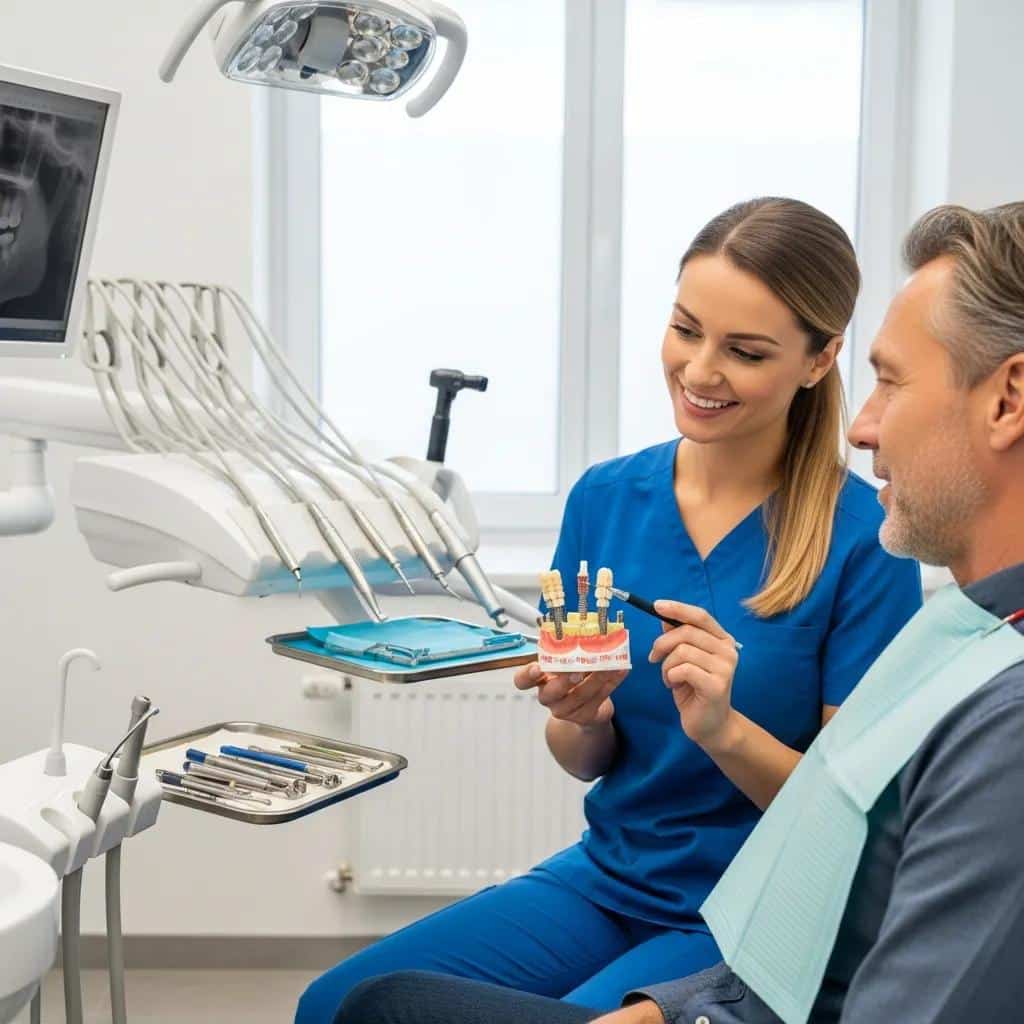
Transform Your Smile: Patients’ Joy with Dental Implants
From Doubt to Delight: Understanding Dental Implants Patient Experience and Long-Term Success in Mansfield
Dental implants are a restorative dentistry solution that replaces missing teeth with a titanium or zirconia post anchored into the jawbone, restoring chewing function, speech, and smile aesthetics while promoting long-term oral health. This article explains how dental implants work through osseointegration, why Mansfield patients increasingly choose them over removable options, and how living with implants feels years after placement. Many people worry about pain, cost, and whether an implant will truly feel like a natural tooth; this guide addresses those doubts with clinical outcomes, patient-centered narratives, and practical next steps. You will read about implant mechanics, long-term success rates, comparisons with dentures and bridges, local cost factors in Mansfield, financing options, and exact steps to prepare for a consultation. The coverage includes explicit patient experience themes—how uncertainty becomes confidence—plus data-driven tables and checklists to help you evaluate options and plan a confident, informed path forward.
Why Do Patients in Mansfield Choose Dental Implants for Lasting Confidence?
Dental implants are chosen because they restore both the physical function of teeth and the emotional confidence that comes with a stable, natural-feeling smile. By replacing a tooth root with a post that integrates into bone, implants provide anchor stability that allows people to speak and eat without the fear of slipping or adhesives, which directly supports social confidence and day-to-day comfort. For many Mansfield residents, the combination of functional restoration and aesthetic improvement triggers meaningful life changes such as eating favorite foods, engaging socially without self-consciousness, and regaining professional poise. Local availability of experienced teams and offers such as a Free Dental Implant Consult reduce initial friction and make the decision to explore implants accessible. Understanding these motivations clarifies why implants are often preferred by patients in the 40–60 age cohort who prioritize durability, facial support, and lasting outcomes over short-term savings.
How Do Dental Implants Restore Natural Feel and Function Over Time?
Dental implants restore natural feel and function by replacing the tooth root with a biocompatible post that undergoes osseointegration, a biological process where bone bonds to the implant surface for stable load transfer. This mechanical integration allows chewing forces to be transmitted into the jawbone similarly to a natural tooth root, preserving bite efficiency and reducing micro-movement that can cause discomfort; the result is reliable mastication and clearer speech. Implants commonly use titanium or zirconia materials chosen for strength and tissue compatibility, and modern abutment and crown design further refine occlusion and tactile feedback. Patients typically report progressive improvements in sensation and confidence over months as soft tissues heal and they adapt to the restoration, moving from cautious testing to normal eating habits. Understanding this mechanism makes clear why long-term implant function often resembles natural dentition and supports a durable, comfortable oral experience.
Contemporary Concepts in Dental Implant Osseointegration: A Review
To identify pertinent articles on osseointegration of dental implants, we searched PubMed, Scopus, and Web of Science databases using keywords such as “dental implant”, “osseointegration”, “implant surface”, “bone regeneration”, “implant stability”, “implant failure”, and “implant success”. The search was limited to articles published in English and within the last 10 years. A total of 587 articles were identified, and after screening the titles and abstracts, 150 articles were selected for full-text review. Finally, 45 articles were included in this review based on their relevance to the contemporary concepts in osseointegration of dental implants.
Contemporary concepts in osseointegration of dental implants: a review, D Rokaya, 2022
What Role Does Dental Implant Treatment Play in Regaining Self-Esteem?
Dental implant treatment plays a central role in regaining self-esteem by repairing visible tooth loss and restoring a sense of bodily integrity that directly affects social interactions and self-image. Replacing missing teeth with restorations that match color, shape, and alignment helps patients feel more comfortable smiling, laughing, and speaking in public situations where appearance matters. For many Mansfield residents aged 40–60, reclaiming a complete smile reduces anxiety around dating, job interviews, and social gatherings, offering measurable improvements in quality of life and mental wellbeing. The psychological benefit is amplified when clinical care includes clear communication, predictable timelines, and pain management options, which together transform apprehension into empowerment. These emotional changes link tightly to functional gains, because when a person can eat, speak, and smile without restraint, daily life resumes with renewed confidence and dignity.
Dental implants thus serve both practical and psychosocial roles, directly connecting restoration mechanics to improved self-esteem and sustained wellbeing.
What Are the Long-Term Benefits and Success Rates of Dental Implants?
Dental implants deliver long-term benefits by preserving jawbone volume, restoring efficient chewing, and maintaining facial support, and clinical evidence consistently shows high survival and success rates over multi-year follow-ups. Implants reduce the rate of bone resorption that follows tooth loss because they transmit functional load to surrounding bone, thereby preserving alveolar height and facial contours; the clinical consequence is better long-term oral health and greater future treatment options. Success rates reported in contemporary studies generally fall within a high range at 10 years, and implant longevity is further supported by proper planning, surgical technique, and patient maintenance. Practical care strategies—regular hygiene, periodic check-ups, and timely crown maintenance—maximize survival and ensure the prosthetic components continue to function well for many years. These clinical benefits translate to real-life advantages: sustained diet variety, stable speech patterns, and fewer downstream restorative procedures compared with non-implant alternatives.
Intro to the following table: This table summarizes typical long-term outcomes and key metrics you can expect when considering dental implants.
Outcome Measure
Typical Result
Practical Implication
10-year success rate
90–95%
High likelihood of functional implants with proper care
15-year survival
~85–90% (varies)
Many implants remain functional long-term with maintenance
Implants often outlast crowns; prosthetics may need renewal
This table highlights that dental implants are a durable restorative option with quantifiable outcomes, and appropriate patient maintenance plays a key role in long-term success.
Long-Term Dental Implant Survival and Success: A Systematic Review
This systematic review evaluated the survival and success rates of dental implants reported in longitudinal studies with a follow-up period of at least 10 years. The review included studies published between 2000 and 2014, encompassing a total of 15,450 implants placed in 5,179 patients. The results indicated that dental implants are safe and present high survival rates and minimal marginal bone resorption in the long term. The review also identified factors associated with implant success, such as patient selection, surgical technique, and prosthetic rehabilitation.
Evaluation of survival and success rates of dental implants reported in longitudinal studies with a follow-up period of at least 10 years: a systematic review, V Moraschini, 2015
How Do Dental Implants Prevent Bone Loss and Preserve Oral Health?
Dental implants prevent bone loss by reintroducing functional load to the alveolar bone, which maintains bone remodeling through mechanical stimulation; without this load, resorption typically accelerates. The implant post functions like a natural root, transmitting occlusal forces that encourage bone maintenance and slow the dimensional changes that cause sunken facial appearance or altered bite relationships. Clinically, preserving bone reduces the need for extensive grafting in the future and maintains the integrity of adjacent teeth and soft tissues, which benefits long-term oral health and aesthetics. Patients who choose implants therefore not only replace missing teeth but also protect the surrounding oral structures, helping to sustain a stable foundation for future dental work. Understanding this protective role clarifies why implants are often recommended when long-term oral preservation is a primary concern.
What Is the Typical Lifespan and Durability of Dental Implants?
The typical implant lifespan is long, with many implants remaining functional for 10–15 years and often much longer when the patient maintains excellent oral hygiene and attends regular professional care appointments. Durability depends on biological factors (bone quality, systemic health), behavioral factors (smoking, oral hygiene), and prosthetic factors (occlusal design, crown material), and mitigating risk factors significantly improves outcomes. While implants themselves are designed to be permanent, restorations such as crowns and abutments may require replacement over time due to wear, fractures, or esthetic changes; planning for periodic prosthetic maintenance is part of realistic expectations. With routine care and avoidance of high-risk behaviors, patients commonly experience stable function and comfort for decades, making implants a long-term investment in oral function and appearance.
Long-Term Success Rates: Dental Implants vs. Tooth Preservation
Studies revealed high success rates and long-term survival of dental implants, but also highlighted potential failures and complications. The review compared the long-term success rates of tooth preservation versus dental implants, considering various factors such as patient age, oral hygiene, and implant placement technique. It also discussed the criteria for defining implant success and failure, emphasizing the importance of long-term follow-up and patient-reported outcomes.
Comparing the long-term success rates of tooth preservation and dental implants: a critical review, SC Sartoretto, 2023
How Do Mansfield Patients Describe Their Dental Implant Journey?
Mansfield patients commonly describe their implant journey as a transformation from initial doubt—centered on pain, cost, and uncertainty—into delight characterized by regained function, improved aesthetics, and renewed confidence. Early fears often revolve around surgical pain and financial barriers, but many report that clear planning, imaging, and pain-management strategies substantially reduce anxiety and create predictable outcomes. Over months and years, patients describe moments of delight such as the first comfortable bite of a steak, speaking without worry about slippage, or receiving compliments about a natural-looking smile; these subjective outcomes align with objective improvements in nutrition, social activity, and psychological wellbeing. Collective patient narratives emphasize a progression: education at consultation, trust in the treatment plan, manageable recovery, and sustained satisfaction—an arc that supports others considering the procedure.
What Are Common Patient Experiences From Doubt to Delight?
Common patient experiences follow a recognizable arc: initial hesitation due to perceived pain and cost, a reassuring consultation that clarifies candidacy and financing, the surgical phase with effective comfort measures, a recovery period with incremental functional gains, and finally long-term delight as daily life returns to normal. Many Mansfield residents note that early reassurance—3D imaging, clear timelines, and sedation options—reduces fear and increases willingness to proceed; this educational step often marks the turning point from doubt to action. During recovery, patients report discomfort that is typically manageable with prescribed measures and that functional improvements become noticeable within weeks to months as soft tissue healing and osseointegration progress. Years later, the majority describe superior comfort and confidence compared with pre-implant status, reporting both practical benefits and emotional satisfaction.
How Have Dental Implants Improved Quality of Life for Mansfield Residents?
Dental implants improve quality of life by restoring the ability to chew a full range of foods, improving speech clarity, and reducing social anxiety associated with missing or unstable teeth, which in turn supports nutritional health and mental wellbeing.
Residents frequently report dietary expansion—reintroducing foods previously avoided—and a measurable reduction in embarrassment or self-consciousness during social interaction, enhancing relationships and professional presence. The long-term nature of implant benefits means that improvements in nutrition and psychosocial health accumulate over years, contributing to broader health outcomes beyond dental metrics. These sustained enhancements explain why many patients consider implants not merely a dental procedure but a life-improving intervention with tangible daily benefits.
What Should You Expect During Your Dental Implant Process in Mansfield?
The dental implant process in Mansfield typically begins with a diagnostic consultation, progresses through planning and surgery, and continues with recovery and periodic follow-up care; each phase has specific steps designed to ensure safety, comfort, and predictable outcomes. At the consult, clinicians evaluate oral health, take appropriate imaging to assess bone and anatomy, discuss restoration options, and outline a personalized timeline and cost estimate; this initial planning stage reduces uncertainty and helps patients make informed decisions. Surgery day includes anesthesia or sedation choices, precise implant placement, and immediate post-op instructions focused on pain control and healing. Follow-up appointments monitor osseointegration, finalize prosthetic design, and transition patients to long-term maintenance. Knowing this staged path helps patients prepare mentally and logistically and sets clear expectations for recovery and final results.
What Happens at Your Free Dental Implant Consultation?
A free dental implant consultation typically includes an oral exam, review of medical history, targeted imaging such as CBCT or 3D scans when indicated, and a personalized treatment plan that outlines implant options, timeline, and an itemized cost estimate. During this visit, clinicians assess bone volume and identify any need for grafting or preparatory procedures, discuss restoration types (single crowns, implant-supported bridges, or implant-retained dentures), and present anesthesia or sedation choices tailored to patient comfort. The consultation also provides an opportunity to review financing options and ask detailed questions about maintenance and expected outcomes, which reduces uncertainty and sets realistic expectations.
If you are ready to move forward or want to reserve a planning appointment, tell the team: “Trying to schedule a free consult” when you call or inquire, and they will register your interest and explain next steps.
Introductory checklist: Below is a concise checklist that explains what to bring and how to prepare for your free consult.
Bring Recent Dental Records: Copies of X-rays or treatment notes aid planning and reduce redundant imaging.
List Medications and Medical History: Complete information helps determine sedation safety and healing risks.
Prepare Questions: Write down concerns about pain, timeline, and financing to use appointment time efficiently.
How Is Pain Managed and Comfort Ensured During Implant Placement?
Pain is managed using local anesthesia, and where appropriate, oral or IV sedation protocols are available to minimize discomfort and anxiety during implant surgery, tailored to each patient’s medical profile and preferences. Local anesthetic numbs the surgical site, while sedation options reduce awareness and stress for more complex cases or for patients with higher anxiety, and clinicians monitor comfort throughout the procedure. Post-operative pain is usually moderate and controlled with short courses of analgesics, cold therapy, and clear aftercare instructions, with most patients reporting manageable symptoms that subside within days to a few weeks. Practices focused on patient comfort also use gentle surgical techniques, pre-emptive pain control, and attentive follow-up to address concerns promptly. These strategies help patients transition from surgical recovery to functional gains with minimal disruption to daily life.
How Do Dental Implants Compare to Dentures and Bridges for Long-Term Use?
Dental implants outperform dentures and bridges for many long-term goals because they provide anchored stability, better bone preservation, and a lower lifetime maintenance burden despite higher upfront cost; these differences make implants preferable when the priority is lasting function and oral health. Implants anchor restorations directly into jawbone, reducing movement that commonly affects removable dentures and producing secure occlusion comparable to natural teeth. Bridges can restore adjacent gaps without implants but rely on neighboring teeth for support, potentially sacrificing healthy tooth structure and failing to address underlying bone loss. Considering lifetime value, implants often reduce the need for repeated adjustments and replacement that characterize dentures and some prosthetic bridges, making them a strategic choice for patients seeking durable solutions.
Below is a comparison table that clarifies stability, bone health, comfort, and maintenance across options.
Treatment Option
Stability & Comfort
Bone Preservation
Typical Maintenance / Lifespan
Dental Implant (single/implant-supported)
High stability; feels natural
Preserves bone via load transfer
Long-term; crowns may need replacement over time
Removable Denture
Variable stability; can slip
Does not prevent resorption; may accelerate it
Requires relines/adjustments; replacement more frequent
Fixed Dental Bridge
Good immediate comfort
Does not replace root; bone loss under edentulous area possible
May need replacement; adjacent teeth altered for support
This table highlights that dental implants are a durable restorative option with quantifiable outcomes, and appropriate patient maintenance plays a key role in long-term success.
What Are the Stability and Comfort Differences Between Implants and Dentures?
Implants deliver superior stability because they are fixed into bone, eliminating the micro-movements and adhesive reliance that many denture wearers experience, which improves comfort while eating and speaking. Dentures can cause sore spots, slippage, and dietary limitations, forcing behavioral adjustments like avoiding certain textures and foods, whereas implant-supported restorations typically restore more normal diet and oral sensation. Implant-retained overdentures offer a middle ground, combining improved retention with lower cost than full-arch fixed solutions and reducing many common denture complaints. Patient-reported outcomes consistently favor implant solutions for comfort and confidence, and this comfort gain frequently becomes the decisive factor for those seeking a long-term, active lifestyle. Understanding these functional contrasts helps patients select the option that matches their priorities for stability, comfort, and dietary freedom.
How Do Dental Implants Support Bone Health Compared to Other Options?
Dental implants support bone health by restoring mechanical load to the alveolar ridge, which maintains bone density and mitigates the volumetric collapse that follows tooth loss, a process that removable prostheses cannot prevent. Bridges restore tooth form but not the root, leaving the edentulous bone prone to resorption over time; dentures similarly fail to transmit physiologic load to the jawbone and can exert resorptive pressure on soft tissues. Maintaining bone volume with implants preserves facial contours, reduces the need for future grafting, and keeps adjacent teeth and soft tissues in a healthier state. Clinically, this translates into fewer downstream interventions and more predictable long-term results, reinforcing why implants are often the preferred choice when bone preservation is a priority.
How Much Do Dental Implants Cost in Mansfield and What Financing Options Are Available?
Implant cost in Mansfield depends on several factors—number of implants, need for bone grafting or sinus lift, choice of restoration materials, and the complexity of surgery—so personalized cost estimates are essential for accurate planning. Typical scenarios vary from single-tooth implants to full-arch implant-retained dentures, each with different material and laboratory costs, and preparatory procedures add to the total when required. Financing options in the local market often include in-house payment plans and third-party lending to spread payments over months, which many patients find helpful for managing upfront investment versus long-term value. A free consult is a zero-cost way to obtain an itemized, individualized estimate and to explore financing options in detail, allowing patients to make informed choices without initial financial commitment.
Introductory cost table: This table outlines common cost components and example ranges or notes to illustrate how estimates are built for Mansfield patients.
Cost Component
Typical Range / Note
Relevance
Single implant (post + abutment + crown)
$3,000 to $5,000 (varies by case)
Base unit cost for single-tooth replacement
Implant-supported denture (per arch)
$15,000 to $30,000 (varies widely)
Common full-arch solution with better stability
Bone grafting / sinus lift
$200 to $3,000 depending on extent
Additional procedure and cost if needed
Diagnostic imaging / CBCT
$100 to $300 (may be included)
Critical for precise planning and candidacy assessment
This table clarifies how the total estimate is a sum of procedure components and why a personalized consult matters to determine exact pricing.
What Factors Influence the Cost of Dental Implants in Mansfield?
Several factors influence cost: the number of implants required, whether bone grafting or sinus augmentation is needed, the choice of crown materials and lab work, and the complexity of surgical or restorative steps required for stable, esthetic outcomes. Patient-specific variables—such as bone quality, overall health, and smoking status—can necessitate preparatory work that raises cost but improves the likelihood of success. Provider factors like experience, technology (for example, guided surgery), and local market pricing also influence fees, though higher upfront investment may reduce downstream maintenance expenses. Discussing these variables during a consult provides clarity on options and trade-offs, enabling patients to align treatment scope with budget and long-term goals.
How Can You Access Affordable Payment Plans and Free Consultations?
Accessible payment paths often include in-house monthly plans that split costs over time and third-party healthcare financing that provides fixed monthly payments, enabling patients to proceed without full upfront payment. Many practices also offer a no-cost initial consultation—an opportunity to receive a tailored treatment estimate and explore financing without commitment—making it easier to compare options and plan. To use the Free Dental Implant Consult as a practical tool, tell the scheduling team “Trying to schedule a free consult” when you contact the office, and they will register your consult and review available payment pathways during the visit. Preparing documentation such as prior dental records and a list of questions before the visit speeds the financing conversation and helps identify the best payment structure for your needs.
Introductory summary list of financing tips:
Prepare basic financial questions in advance to compare monthly costs and total interest.
Ask for an itemized estimate showing each component, so you can prioritize procedures.
Inquire about temporary measures or phased treatment plans to spread costs while achieving functional goals.
These practical steps typically reduce financial stress and let patients pursue implant care with clearer expectations and manageable payment plans.
What Are the Most Common Questions About Dental Implants Answered?
Patients frequently ask about how implants feel over time, long-term success statistics, recovery timelines, and whether implants are worth the investment compared with alternatives; succinct answers combined with links to deeper sections help capture quick SERP intents and guide reading. Short, authoritative responses can serve as quick references for readers while the article’s detailed sections expand on mechanisms, clinical evidence, and patient experience. Addressing these common questions directly helps capture searcher intent for featured snippets and provides reassurance to people who are evaluating options in Mansfield.
Introductory FAQ list below clarifies typical short queries with actionable answers.
How do dental implants feel after many years? Implants commonly feel like natural teeth because they integrate with bone and support stable restorations.
What is the success rate after 10+ years? Typical published ranges indicate high success, generally around 90–95% at 10 years under usual conditions.
Can you eat normally with implants? Yes; most patients regain normal chewing function and can enjoy a diverse diet once healing and prosthetic adjustments are complete.
How Do Dental Implants Feel After Many Years?
After many years, dental implants are reported to feel similar to natural teeth because they form a bone-anchored foundation that supports restorations with stable occlusion and minimal micro-movement. The sensation is not identical to a tooth with a periodontal ligament, but the mechanical stability and return of masticatory function mean most patients experience minimal functional difference and a high degree of comfort. Over time, soft tissue integration around the abutment and crown contributes to a natural appearance and tactile feedback, while routine maintenance helps sustain this comfort and prevent complications. Long-term patient reports emphasize enhanced confidence and normalization of eating and speaking patterns, reinforcing the perception of implants as durable, life-improving solutions.
What Is the Success Rate of Dental Implants After 10+ Years?
Success rates after 10 years typically range in the high 80s to mid-90s percentile depending on the study, patient selection, and maintenance, reflecting strong long-term outcomes when implants are placed and managed appropriately. Factors that can reduce success include smoking, uncontrolled systemic conditions, poor oral hygiene, and inadequate bone support, but many of these risks can be managed or mitigated with pre-treatment planning and ongoing care. Clinicians measure both survival (implant remaining in place) and success (absence of complications and functional restoration), and high-quality follow-up care correlates strongly with favorable metrics. Awareness of these factors helps patients adopt behaviors and maintenance routines that support sustained implant health.
How Can You Start Your Journey to a Confident Smile With Dental Implants in Mansfield?
Starting your implant journey begins with scheduling a Free Dental Implant Consult, gathering relevant dental records, and preparing questions about candidacy, timeline, and financing; these steps create a clear pathway from evaluation to treatment. The consult establishes diagnostic needs such as imaging, assesses bone volume and general health, and presents individualized options—single-tooth implants, implant-supported bridges, or implant-retained dentures—so you can compare functional outcomes and costs. After the consult, the typical workflow includes diagnostics, treatment planning, scheduling of surgical and restorative phases, and establishing a maintenance schedule to protect long-term success. Clear communication about expectations, comfort measures, and financing helps transform initial doubt into actionable plans and ultimately delight with a restored smile.
How Do You Schedule a Free Dental Implant Consultation in Mansfield?
To schedule a free consultation, contact the practice by phone or local business listing and request an appointment; when you reach the team, simply state: “Trying to schedule a free consult” so staff can register your interest and explain what documentation to bring.
The practice location at 708 Hunters Row Ct # 102, Mansfield, TX 76063 and the office phone are available for direct booking and inquiries, with staff prepared to review basic medical history, scheduling preferences, and any prior dental imaging you can supply.
Bringing prior X-rays or a list of medications to the consult streamlines assessment and reduces the need for repeat imaging, saving you time during the visit.
Introductory action list for what to expect at booking:
Be ready to provide a brief medical history and recent dental work.
Ask about imaging needs so you can bring or transfer records before the visit.
Confirm available payment plan options to discuss during the consult.
What Are the Next Steps After Your Consultation?
After your consultation, the team will typically order any necessary diagnostic imaging, finalize a treatment plan, and discuss the sequence of surgical and restorative appointments along with pre-op instructions and financing arrangements.
If bone grafting or other preparatory procedures are required, those will be scheduled first to create a stable foundation for implant placement; otherwise, implant surgery is planned according to your availability and comfort preferences.
Before surgery, the practice provides pre-op guidance—such as fasting rules for sedation—and confirms post-op logistics to ensure a smooth recovery period.
Follow-up visits monitor osseointegration and progress toward final restorations, and a maintenance schedule is established to support long-term implant health and function.
Practical reassurance: If you are ready to initiate this process, tell the team “Trying to schedule a free consult” and they will guide you through scheduling, documentation, and financing options so you can make an informed decision with local support and clear next steps.
Contact the office or local listing and use the phrase above to request a consult.
Gather prior dental records and medication information for the visit.
Discuss financing options and plan a timeline for diagnostics and treatment.
Dentist In Mansfield- Dentures and Dental Implants provides implant and denture services within Mansfield, and local patients can reference the practice’s presence and patient feedback when deciding where to consult; the Mansfield location has received positive local reviews that many patients cite as part of their decision-making.
The practice operates as part of the Affordable Dentist Near Me network, which collectively reports broad review data that prospective patients often consider when choosing a local provider.
The availability of a Free Dental Implant Consult, practical financing options, and a local office address (708 Hunters Row Ct # 102, Mansfield, TX 76063) helps reduce barriers for those ready to learn more.
Prepare for your consult by organizing records and questions.
Use the free consult to receive an itemized estimate and financing discussion.
Move forward with confidence knowing you have a clear plan and support.