What Additional Costs Can Arise During Your Dental Implant Journey?
The dental implant journey describes the full sequence of care from an initial consultation through preparatory work, surgical placement, prosthetic restoration, and long-term maintenance, and total costs can vary significantly at every stage. This guide explains which additional expenses commonly arise beyond the headline implant price, why those costs occur, and how each stage of treatment may change the final bill. Many patients assume a single figure covers everything, but the reality is that implant care is modular: diagnostic imaging, preparatory procedures, sedation, temporary restorations, and ongoing maintenance often appear as separate line items. Understanding each category helps you anticipate expenses, compare quotes, and plan financing or insurance conversations with clarity. In the sections that follow we break down core components and base costs, detail pre-implant procedures like bone grafts and sinus lifts, explain how sedation and diagnostics affect price, map post-op and long-term maintenance costs, cover potential complication-driven expenses, and show how financing and insurance choices can change out-of-pocket responsibility. Throughout the article you will find comparison tables, actionable lists of questions to ask at your consultation, and practical steps to prepare for and manage unexpected implant expenses.
What Are the Core Components and Base Costs of Dental Implants?
The baseline implant quotation typically includes three primary components: the implant post (the titanium or ceramic fixture placed in bone), the abutment (the connector between the post and the prosthetic), and the crown or prosthetic restoration that restores function and aesthetics. Each component is charged as a distinct service in many treatment plans because they involve different materials, laboratory work, and specialist skill sets; that segmentation is a primary reason initial quotes can appear lower than the final invoice. Material selection, laboratory fabrication complexity, and whether the provider uses in-office milling or external labs all influence the final cost, and differences in warranty and follow-up care may also be reflected in pricing. Knowing how clinics itemize these components helps patients compare true apples-to-apples costs rather than only headline numbers. The table below breaks down these core entities, their primary attributes, and the value drivers that determine why one quote may be higher or lower than another.
This next paragraph will lead into detailed H3s that unpack each component and how material choices affect price.
Different implant components contribute distinct roles to the restoration and are priced accordingly, which is why itemized estimates are important when comparing providers.
What Does the Implant Post, Abutment, and Crown Cost?
The implant post is the surgically placed fixture that replaces the tooth root and its cost reflects surgical skill, implant brand choice, and materials; providers separate the surgical fee from the cost of the implant hardware because placement involves operating-room time, sterile instruments, and clinician expertise. The abutment acts as the mechanical link between the implanted post and the visible crown; abutments vary from stock titanium pieces to custom-milled ceramic abutments, and customization increases laboratory time and cost. The crown is the visible tooth replacement and its price depends on material, lab fabrication, complexity of occlusion, and aesthetic requirements; higher-end ceramic materials and complex shade matching add to lab fees and chairside adjustments. Because clinics may bundle some line items while charging others separately, patients should request an itemized estimate showing surgical fees, implant components, abutment type, crown material, and laboratory charges. Understanding those distinctions clarifies why a quoted “implant” price can represent very different scopes of work between providers.
The following paragraph will explore how crown and abutment material choices drive longevity and cost trade-offs.
Component
What It Does
Cost Drivers
Implant post (fixture)
Replaces tooth root and anchors restoration in bone
Surgical time, implant brand, length/diameter, clinician expertise
Abutment
Connects implant post to crown, available as stock or custom
Material (titanium vs ceramic), custom milling, esthetic demands
Crown / Prosthetic
Restores chewing surface and appearance
Material (porcelain, zirconia, metal-ceramic), lab work, shade matching
This EAV-style breakdown clarifies where fees commonly appear on an itemized treatment plan and helps patients compare proposals from different providers.
How Do Material Choices Affect Dental Implant Prices?
Crown and abutment material selection balances aesthetics, longevity, and price because different materials require different fabrication processes and lab expertise; for example, layered porcelain offers excellent shade nuance but may require more technician time than monolithic zirconia, which is stronger but can be less translucent. Metal-ceramic crowns may be less expensive for posterior teeth where complete translucency is less critical, while high-translucency zirconia or custom-stained porcelain is often chosen for visible anterior restorations and therefore commands higher lab and material costs. Beyond crowns, abutment materials matter for tissue aesthetics—ceramic abutments reduce the risk of a grayish gingival hue in thin biotypes but usually cost more than stock titanium abutments. Patients should weigh the functional need (e.g., heavy bite, parafunction) against cosmetic priorities to choose a material that aligns with both durability expectations and budget constraints. Discussing these trade-offs during treatment planning lets clinicians tailor a restoration strategy that matches long-term goals without surprising patients with unexpected upgrades.
Understanding material trade-offs leads naturally to considering preparatory procedures that might change material selection or timing, such as bone grafting that supports higher-end restorations.
What Pre-Implant Procedures Can Add to Your Dental Implant Expenses?
Preparatory procedures exist to create a stable and healthy environment for implant placement, and these additional interventions—such as tooth extraction, bone grafting, and sinus augmentation—are major drivers of extra expense because they require surgical time, materials, and follow-up care. Assessing bone volume, sinus anatomy, and soft tissue health during planning determines whether these adjunctive procedures are necessary, and that assessment often relies on advanced imaging that can also be billed separately. Because pre-implant procedures alter both the treatment timeline and the clinical complexity, they affect overall cost by adding staged surgeries, healing periods, and sometimes additional visits for monitoring and graft integration. Clear explanations from your clinician about why a procedure is recommended, what material options exist, and how the work will be billed help prevent surprise charges. Below we unpack common preparatory procedures, their clinical indications, and how they typically influence treatment budgeting.
These preparatory topics connect directly to specific sub-procedures like bone grafts, sinus lifts, and extractions that follow.
When Is a Bone Graft Necessary and What Is Its Cost?
A bone graft is necessary when native jawbone lacks the height or width to securely support an implant, and clinicians select graft type based on defect size, source availability, and clinical goals; inadequate bone volume risks implant instability and long-term failure. Graft options include autograft (patient’s bone), allograft (donor human bone), xenograft (animal-derived), and synthetic substitutes, each with different handling characteristics, healing timelines, and cost implications—autografts involve additional surgical sites, raising operative time and complexity. Healing after bone grafting typically requires months of integration before implant placement, which can extend treatment timelines and increase monitoring visits, imaging, and potential revision procedures, all of which add to total cost. Patients should ask whether simultaneous implant placement is possible or if staged grafting is safer, and should request an itemized estimate that separates graft materials, grafting surgery, and subsequent implant placement. Choosing the least invasive graft that achieves predictable support often provides the best value for long-term implant success.
The importance of adequate bone volume leads into specific upper-jaw issues such as sinus lifts, which are common for posterior implants.
Cost and Time Considerations in Maxillary Sinus Augmentation for Dental Implants
Sinus lift procedures increase bone volume by augmenting With respect to cost and treatment time, all the procedures were surgical intervention for placing the implants whereas
Interventions for replacing missing teeth: augmentation procedures of the maxillary sinus, P Felice, 1996
How Much Does a Sinus Lift Procedure Cost and Why Is It Needed?
A sinus lift augments bone height in the posterior upper jaw when the maxillary sinus location limits implant length, and it is performed either as a closed (crestal) or open (lateral window) approach depending on the amount of augmentation required. Open sinus lifts are typically more extensive procedures, demand greater surgical time and access, and therefore tend to be more expensive than closed techniques which are suitable for smaller augmentations; both approaches add healing time before implant placement and are typically billed as separate surgical services. Sinus augmentation uses graft materials similar to bone grafting—choices between allograft, xenograft, or synthetic materials affect material costs and healing characteristics—and the presence of sinus pathology or membrane perforation risk can necessitate additional interventions. Because sinus lifts change the overall timeline and may require follow-up imaging and visits, they should be discussed early in treatment planning to incorporate those expenses into your budget. Patients benefit from understanding whether their plan involves staged sinus augmentation or simultaneous implant placement to compare total cost and healing implications.
A clear assessment of sinus anatomy naturally precedes decisions about extractions and socket preservation when removing failing teeth.
What Are the Costs of Tooth Extractions Before Implant Placement?
Tooth extractions before implant placement range from simple removal of a mobile tooth to surgical extraction of broken roots or impacted fragments, and surgical extractions typically cost more because they require flap elevation, bone smoothing, or sectioning of roots. Socket preservation—placing graft material in the extraction site to limit resorption—can be advised when future implant placement is planned and adds material and laboratory expenses while improving odds for ideal implant positioning; whether socket preservation is necessary depends on the tooth’s condition and aesthetic priorities. Timing matters: extracting a tooth then waiting for healing before grafting or implant placement creates multiple billed phases, whereas immediate implant placement after extraction can consolidate fees in appropriate cases but requires adequate infection control and bone volume. Patients should confirm whether extraction fees include simple post-op visits and suture removal, and whether the clinic bundles extraction and socket preservation or bills each as a separate line item. Comparing itemized treatment plans helps identify bundled value versus separate charges across clinics.
The impact of extractions and grafting on treatment timeline leads next to how sedation choices affect both comfort and cost during surgical phases.
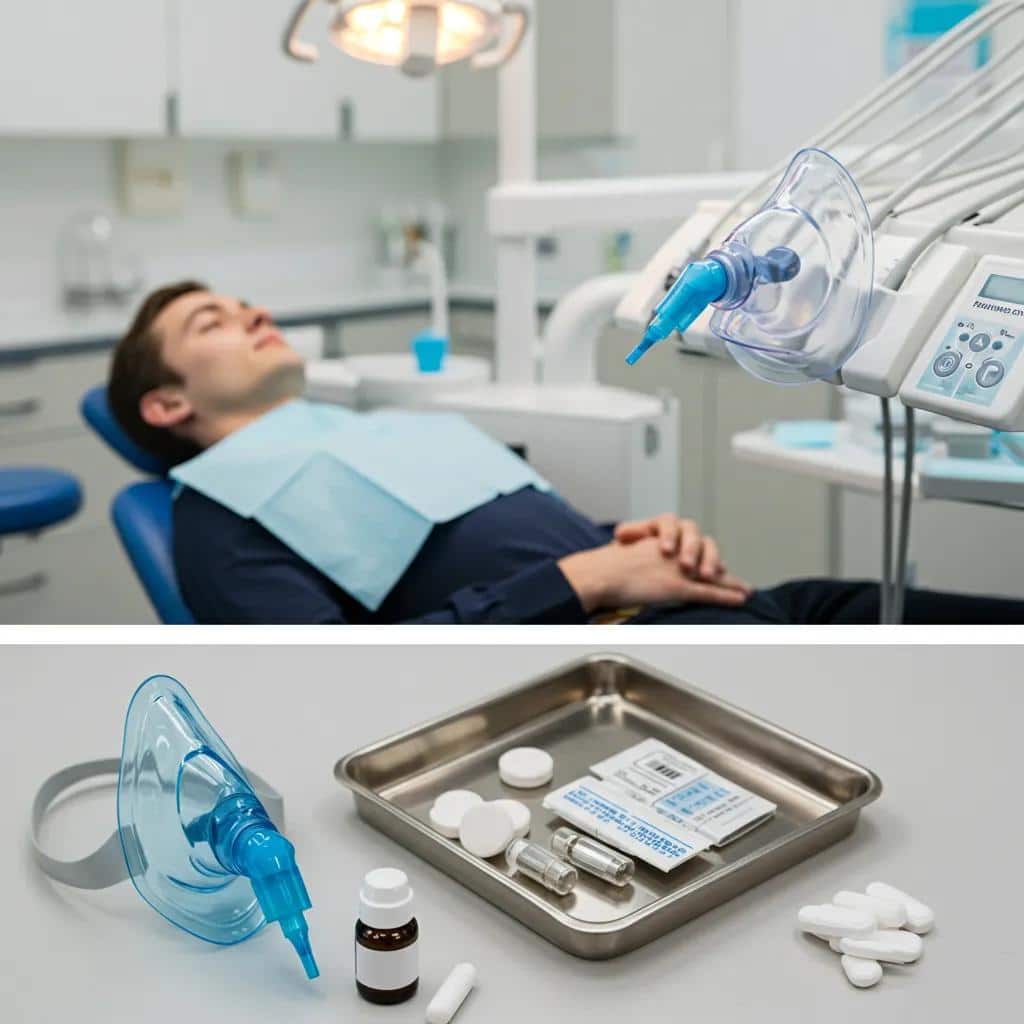
How Do Sedation and Comfort Dentistry Affect Your Total Implant Cost?
Sedation and comfort dentistry options exist to manage anxiety and pain during implant surgery, and the type selected—local anesthetic only, nitrous oxide, oral conscious sedation, or IV sedation—affects both perioperative monitoring needs and overall cost. Higher levels of sedation require additional clinician oversight, monitoring equipment, and sometimes the presence of sedation-trained staff or an anesthesiologist, which contributes to separate billing beyond the surgical fee; these services also influence recovery time and post-op supervision. When patients request specific sedation levels for complex surgeries or for comfort reasons, clinicians should document the rationale and discuss associated fees in advance to prevent unexpected charges. Choosing an appropriate sedation strategy involves balancing medical suitability, anxiety levels, and budget, and asking direct questions during planning ensures transparency. Below we compare common sedation modalities, their typical use cases, and cost considerations in a concise EAV-style table to facilitate decision-making.
The next section will outline sedation types and recommended indications so readers can match their needs to cost implications.
What Types of Sedation Are Available for Dental Implant Surgery?
Local anesthesia numbs the surgical site and is sufficient for straightforward implant placement, offering safety and minimal recovery without sedation-associated monitoring, making it the least complex option for many patients. Nitrous oxide (laughing gas) provides light sedation and anxiolysis with rapid recovery and is useful for moderate nervousness; it requires simple delivery equipment and short post-op observation but is less effective for deep anxiety or lengthy procedures. Oral conscious sedation uses prescribed medications taken before the appointment to induce moderate sedation, but it requires escort home and additional monitoring because of variable patient responses; dosing considerations and medical history affect suitability. IV sedation provides deeper, titratable sedation levels and is recommended for extensive surgical cases or patients with significant fear, but it typically requires an anesthesia-trained clinician or sedation-certified team member and more intensive recovery monitoring. Discuss medical history, airway considerations, and post-op plans with your provider to select the safest and most cost-effective sedation pathway for your implant procedure.
Transitioning from sedation types, the following subsection examines how sedation is billed and what drives its cost in practice.
Sedation Type
Typical Use Case / Level
Value Considerations
Local anesthesia
Minor or routine implant placements
Low cost, minimal recovery, limited monitoring
Nitrous oxide
Mild to moderate anxiety for short procedures
Quick recovery, moderate cost, suitable for many patients
Oral conscious sedation
Moderate anxiety or longer procedures
Variable response, requires escort and monitoring, moderate cost
This EAV table shows how sedation choice relates to clinical need and practical cost drivers, helping patients factor sedation into their budget.
How Much Does Sedation Dentistry Typically Cost?
Sedation dentistry is often billed separately because it requires specific medications, equipment, monitoring, and sometimes additional staff time; the cost depends on the sedation level, duration of the procedure, and whether an anesthesiologist or sedation-certified clinician is required. For brief procedures with nitrous oxide, costs reflect equipment use and gas consumption, whereas oral sedation costs are influenced by medication selection and pre-procedure assessment; IV sedation carries higher fees for specialized personnel and monitoring equipment. Patients should request a clear breakdown that specifies whether sedation includes pre-op evaluation, intraoperative monitoring, recovery time, and any required escort or post-op restrictions, since these elements affect total out-of-pocket expense. Discussing sedation candidly during consultation allows clinicians to recommend the safest option while providing an accurate cost estimate and explaining whether alternative strategies (e.g., staged appointments under local anesthesia) might reduce expense without compromising care. Planning sedation as part of the overall implant budget prevents unexpected charges on the day of surgery.
Preparing for sedation decisions naturally leads to understanding diagnostic and temporary restoration fees that are also common extra items.
What Additional Diagnostic and Temporary Restoration Costs Should You Expect?
Accurate diagnostic imaging and appropriate temporary restorations are integral to successful implant therapy, and both categories commonly generate separate charges for imaging equipment use, interpretation, laboratory work, and temporary prosthetic fabrication. Advanced imaging such as cone-beam CT (CBCT) provides three-dimensional views critical for precise implant planning and nerve/sinus mapping, and while it reduces surgical risk it is often billed as an additional diagnostic fee. Temporary restorations—crowns, bridges, or provisional dentures—maintain aesthetics and function while implants integrate; some clinicians include simple temporaries in restorative fees while others bill them as optional upgrades depending on complexity and materials. Investing in high-quality diagnostics and temporaries can lower the risk of complications and avoid costly revisions, but patients should understand which imaging and temporary devices are standard versus optional in their estimate. The subsections below describe common imaging modalities and temporary restoration options and explain how they influence treatment cost and experience.
Because imaging and temporaries support clinical safety and patient function, the next paragraphs detail their specific roles and charges.
What Are the Costs of X-rays, CT Scans, and Other Diagnostic Imaging?
Diagnostic imaging for implant planning ranges from standard periapical and panoramic X-rays for baseline assessment to three-dimensional CBCT scans for detailed bone and anatomical mapping; each modality provides different levels of information and is priced accordingly. Panoramic X-rays offer a broad overview at lower cost and are often used as a starting point, while CBCT imaging gives volumetric detail that informs implant angulation, bone volume, and proximity to vital structures—advanced imaging reduces surgical risk but typically carries a separate fee. Interpretation time by the clinician or a radiologist and the creation of digital surgical guides based on CBCT data can add additional charges, especially when planning complex full-arch or guided surgeries. Because the precision gained from advanced imaging can reduce operative time and complication risk, patients should view imaging fees as risk management investments rather than optional extras in many cases. Ask your provider whether imaging fees are included in the implant quote or listed as separate diagnostic line items.
Detailed imaging informs temporary prosthetic planning, which affects patient appearance and function during healing.
How Much Do Temporary Dental Restorations Cost During Healing?
Temporary restorations protect the surgical site, preserve esthetics, and allow patients to function normally while implants integrate, and temporary options range from simple chairside acrylic crowns to lab-fabricated provisional bridges or dentures depending on the clinical situation. Chairside temporaries are often less expensive and can be provided the same day, whereas custom provisional restorations produced in a dental laboratory offer improved fit, strength, and aesthetics but add lab fees and fabrication time. Decisions about temporary restorations depend on location of the missing tooth, aesthetic priorities, and whether immediate loading protocols are clinically appropriate; higher-demand anterior cases often justify the additional cost of a lab-quality provisional. Billing practices vary: some practices include a basic temporary in the surgical fee while others itemize lab-fabricated temporaries as separate charges, so confirming what is included prevents unexpected bills. Choosing the right temporary balances cost with the importance of appearance and function during the healing phase.
Clear temporaries and imaging often reduce long-term costs by preventing misaligned implants or soft tissue complications, which leads naturally to discussing follow-up and maintenance expenses.
What Post-Procedure and Long-Term Maintenance Costs Can Arise After Dental Implants?
Post-procedure costs include routine follow-up appointments, potential medications, and emergency visits, while long-term maintenance encompasses specialized cleanings, periodic component checks, and potential repairs or replacements of crowns or abutments over time. Immediate postoperative visits focus on wound checks, suture removal, and early healing assessment, and additional visits for unexpected pain, swelling, or infection may generate extra fees; medications like antibiotics or analgesics may be prescribed and can be separate out-of-pocket costs. Long-term maintenance often includes periodontal evaluations and implant-specific cleaning protocols that can require additional chair time or specialized instruments, and eventual prosthetic wear or damage may necessitate crown replacement or abutment revision at later dates. Preventive maintenance and adherence to recall schedules reduce the likelihood of costly complications, but patients should budget for periodic professional care beyond the initial restorative fee. Below we outline typical follow-up patterns and long-term maintenance elements that influence lifetime cost.
Understanding immediate follow-up needs precedes a detailed look at typical follow-up and medication costs and then long-term maintenance expectations.
How Much Do Follow-Up Appointments and Medications Typically Cost?
Follow-up care usually begins within the first week after surgery and continues at intervals to monitor integration and soft-tissue health, and while basic check-ups are generally low-cost, unscheduled emergency visits or additional interventions due to complications can increase expenses. Prescribed medications—such as antibiotics, analgesics, or anti-inflammatories—vary by region and pharmacy and are often not included in the clinic’s quoted surgical fee; some providers include a starter pack of medications while others leave prescriptions as an individual expense. If additional professional services are needed, such as incision and drainage for an infection or extra visits for wound management, those services will typically be billed separately and may require more advanced interventions. Patients should ask whether the initial surgical fee covers a set number of post-op visits and what emergency fees look like, since predictable post-op care reduces the chance of surprise out-of-pocket charges. Clear communication about expected follow-up cadence and included services helps patients budget appropriately for the immediate healing phase.
Routine maintenance reduces long-term repair risk, which leads into the typical schedule and costs associated with implant cleaning and component servicing.
What Are the Expenses for Long-Term Implant Maintenance and Cleaning?
Long-term implant maintenance combines home care with periodic professional maintenance visits, including specialized instrumentation for cleaning around implant surfaces, and such procedures may be billed at a different rate than routine dental prophylaxis due to the need for non-abrasive tools and implant-specific protocols. Depending on your recall schedule, maintenance visits may occur every three to six months initially and then at individualized intervals based on peri-implant tissue stability, and each professional visit contributes to cumulative lifetime costs that patients should factor into budgeting. Over years of use, prosthetic components like crowns or abutments may wear, chip, or suffer occlusal damage and will require repair or replacement; planning for eventual prosthetic refreshes and understanding warranty coverage helps avoid unexpected bills. Preventive maintenance is a cost-effective strategy because early detection of peri-implant mucositis or mechanical wear allows conservative interventions, minimizing the need for expensive revision surgeries. Discuss long-term maintenance plans with your provider to determine expected recall intervals and whether any maintenance services are covered or bundled.
Because complications can dramatically increase cost, it is essential to understand common risks and the financial implications of remedial care.
What Potential Complications Can Increase Your Dental Implant Costs?
Complications such as infection, peri-implantitis, implant failure, nerve injury, or sinus membrane perforation can necessitate additional treatment ranging from antibiotics and debridement to revision surgery and prosthetic replacement, and these interventions add meaningful expense beyond routine care. The cost impact varies with severity—minor infections may be managed conservatively with medication and local care, while implant failure often requires removal, site remediation (including bone grafting), and re-implantation which compounds initial costs. Early detection through regular follow-ups and strict oral hygiene protocols reduces the likelihood and financial burden of these complications, but lifestyle factors and systemic health conditions can elevate risk and therefore expected lifetime costs. When clinicians identify risk factors such as smoking or uncontrolled systemic disease, they should discuss preventative measures and realistic prognosis so patients can weigh potential extra costs when deciding on treatment. Below we list common complications, typical treatments, and pragmatic prevention strategies to help patients minimize the chance of costly remedial care.
The following subsections give concrete examples of complications and practical steps patients can take to reduce added costs from avoidable problems.
What Are Common Dental Implant Complications and Their Treatment Costs?
Common complications include peri-implant mucositis (soft-tissue inflammation), peri-implantitis (progressive bone loss around implants), infection at the surgical site, mechanical complications like screw loosening or crown fracture, and less commonly nerve injury or sinus membrane perforation in upper-jaw cases. Treatment for soft-tissue inflammation may involve professional debridement, antiseptic rinses, and closer recall intervals, while peri-implantitis can require surgical decontamination, bone grafting, and regenerative procedures; mechanical problems typically require component replacement or occlusal adjustment. More serious complications such as implant failure often necessitate implant removal, corrective grafting, and re-implantation, each adding significant cost and potentially extending treatment by many months. Patients should ask providers for examples of how similar complications have been managed and whether the clinic offers warranties or coverage for remedial procedures, as those policies materially affect out-of-pocket exposure.
Knowing typical complication pathways informs prevention steps, which is the focus of the next subsection and can reduce the risk of expensive interventions.
How Can You Minimize Additional Costs from Implant Complications?
Prevention is the most effective cost-control strategy: maintain excellent oral hygiene, attend scheduled maintenance visits, manage systemic risk factors like uncontrolled diabetes or smoking, and follow post-op instructions closely to minimize infection risk. Early detection matters—regular professional monitoring identifies peri-implant inflammation before it progresses, enabling conservative measures that cost much less than surgical revision and grafting. Choosing an experienced surgical team and appropriate diagnostic imaging during planning reduces likelihood of anatomic complications such as nerve impingement or sinus perforation, and obtaining clear documentation of included follow-ups and emergency policies prevents billing surprises. Patients can also ask about warranties or maintenance plans that some providers offer to mitigate the financial impact of component failures or prosthetic issues. By prioritizing preventative care and open communication with the provider, patients significantly lower the probability of costly corrective treatments.
With complication risk understood, the next section explains how financing and insurance choices affect what you actually pay.
How Can Financing and Insurance Impact the Overall Cost of Dental Implants?
Insurance coverage for dental implants varies widely and often excludes implants or limits coverage to reconstructive scenarios, while financing options—such as in-house payment plans or third-party lenders—allow patients to spread cost over time but come with different terms and potential interest. Verifying benefits with your insurer early in the planning process clarifies what portion, if any, will be reimbursed, and gathering claim codes from your provider streamlines prior authorization or pre-determination requests. Financing choices influence cash flow and monthly obligation more than total clinical cost, and transparent cost estimates allow patients to compare monthly payment scenarios with different financing tools. Below is a comparison-style EAV table that outlines financing and insurance categories, typical terms, and how they affect out-of-pocket responsibility so readers can match options to their financial circumstances.
After the table we will present local practice-level financing and a direct invitation to use available free consultation resources.
Negotiating Costs and Decisions for Private Dental Implant Treatment
The aim of this study is to examine how clinicians and patients negotiate clinical need and treatment decisions within a context of finite resources. Dental implant treatment is an effective treatment for missing teeth, but is only available via the NHS in some specific clinical circumstances. The majority of people who receive this treatment therefore pay privately, often at substantial cost to themselves. People are used to paying towards dental treatment costs. However, dental implant treatment is much more expensive than existing treatments – such as removable dentures. We know very little about how dentists make decisions about whether to offer such treatments, or what patients consider when deciding whether or not to pay for them.
Paying for treatments? Influences on negotiating clinical need and decision-making for dental implant treatment, CE Exley, 2009
What Dental Implant Financing Plans Are Available in Longview, TX?
Patients in Longview commonly encounter several financing categories: in-house payment plans offered directly by practices, third-party medical/dental lenders that provide installment loans, and standard credit options such as healthcare credit cards; these categories differ in approval requirements, interest rates, and payment flexibility. When evaluating financing, patients should ask about down payment requirements, whether treatment is staged across billing cycles, late payment penalties, and how refunds or treatment changes are handled; those terms determine real monthly cost and patient safeguards. Another important question is whether financing applies only to specific services (for example, the surgical phase but not follow-up care) or can be applied to the entire treatment plan including diagnostics and prosthetics. Comparing sample monthly payment scenarios for the full proposed treatment helps patients choose the financing route that minimizes total interest while matching cash-flow needs. Patients should also request a written copy of the financing agreement to review before committing to treatment.
This leads into the table describing financing/insurance option attributes and practical out-of-pocket examples.
Option Category
Typical Terms / Coverage
Practical Effect on Out-of-Pocket
Dental insurance (partial)
May cover limited restorative portions or diagnostics; implants often excluded
Reduces selected line items but commonly leaves significant balance
In-house payment plan
Practice-managed installments, variable terms
Spreads cost without external credit checks; terms vary
Third-party lender
Installment loan with fixed payments and interest
Predictable monthly payments but adds interest cost
Standard credit
Healthcare credit cards or personal loans
Flexible use but potentially higher APRs and fees
This EAV table summarizes how common payment options interact with clinical billing, enabling patients to plan for monthly obligations and total interest.
Affordable Dentist Near Me of Longview offers patient-friendly payment approaches that can help when planning payment for implant care, including affordable payment plans and a Free Implant Consultation to produce a personalized estimate and discuss financing options. The practice emphasizes transparent pricing and patient comfort, which means scheduling a free consultation can clarify anticipated line items, discuss available payment options, and outline sedation choices suitable for your case. Using a free consultation to obtain an itemized treatment plan helps patients compare financing scenarios more accurately and reduces the chance of unexpected charges during staged care. After evaluating financing alternatives, ask your clinician to provide sample amortization scenarios for the full treatment so you can choose the most cost-effective approach for your situation.
Understanding how insurance often limits implant coverage, the next subsection explains practical verification steps and common out-of-pocket elements to expect.
Does Dental Insurance Cover Dental Implants and What Are the Out-of-Pocket Costs?
Many dental insurance plans treat dental implants as elective or restorative and may exclude them or cap coverage, although some policies offer limited coverage for associated procedures like extractions or crowns; coverage varies widely by plan and by insurer. Patients should request a predetermination or pre-authorization from their insurer using the treatment codes provided by the clinic to learn whether specific line items will be reimbursed, and should ask whether deductibles, waiting periods, or annual maximums will affect reimbursement. Even when partial coverage exists, common out-of-pocket elements include diagnostics, advanced imaging, sedation, grafting materials, and temporaries, which are often excluded or capped in many plans. A practical checklist for insurance verification includes obtaining a written benefits summary for the proposed treatment, confirming claim submission processes, and estimating expected patient responsibility after reimbursements. Transparent budgeting assumes that insurance may cover only a portion, so planning for full out-of-pocket exposure or financing options remains essential.
After clarifying insurance realities, the article turns to preparing for and managing unexpected expenses through consultation questions and practice-level support.
How Can You Prepare for and Manage Unexpected Dental Implant Expenses?
Preparing for unexpected expenses begins with obtaining a detailed, itemized treatment plan, asking targeted questions about what is and is not included, and understanding staged treatment timelines that can split costs across visits. Building a contingency buffer—typically a percentage of the estimated total—provides financial resilience if grafting, additional imaging, or unforeseen visits become necessary, and exploring financing or staged treatment can make care more accessible without delaying needed procedures. Taking advantage of a Free Implant Consultation gives you an opportunity to review anticipated line items, talk through sedation needs, and get clarity on the clinic’s approach to transparent pricing. Below we provide a prioritized list of specific questions to bring to your consultation and additional budgeting tactics to manage unexpected costs effectively.
The following list of consultation questions equips you to extract the precise cost and clinical information you need to plan.
What Questions Should You Ask During Your Free Dental Implant Consultation?
What specific services are included in the written estimate and which are billed separately?
Which diagnostic tests and imaging are required and are those fees included in the quote?
If a bone graft or sinus lift is needed, how will those procedures be scheduled and billed?
What sedation options do you recommend and how are sedation fees itemized?
Does the practice offer payment plans or financing and what are typical terms?
Are temporary restorations included and what are the options and costs for lab-fabricated temporaries?
What is the follow-up schedule and which post-op visits are included in the surgical fee?
How does the clinic handle complications and are remedial procedures covered or guaranteed?
What warranties or guarantees apply to the implant components and prosthetics?
Can you provide sample itemized invoices from similar cases to illustrate total cost variability?
Asking these questions helps you compare proposals objectively and prevents hidden fees from derailing your budget.
These targeted questions naturally lead to understanding how specific clinics support transparent pricing and patient comfort, which is addressed next.
How Does Affordable Dentist Near Me of Longview Support Transparent Pricing and Patient Comfort?
Affordable Dentist Near Me of Longview highlights a commitment to transparent, patient-focused care through explicit offerings such as a Free Implant Consultation, affordable payment plans, and a practice emphasis on patient comfort and modern technology. The Free Implant Consultation enables prospective patients to receive a personalized assessment and an itemized estimate so they can understand what is included and what may be billed separately, which reduces the chance of surprise charges. The practice’s everyday low fees and advertised payment options provide an accessible pathway for many patients to plan financing across staged treatment when necessary, while comfort-focused services—such as available sedation options—help match clinical needs with patient wellbeing during procedures. Scheduling a free consult at this practice is therefore a practical step to get a transparent cost plan, discuss financing, and explore comfort measures tailored to your treatment.
This business-level support completes the patient planning section and prepares readers to act on the budgeting and prevention strategies discussed throughout the article.
Create an itemized budget that lists each projected service and potential contingencies to visualize total expected cost.
Establish a contingency fund equal to a percentage of the estimate to cover unexpected grafts or additional visits.
Compare financing scenarios and request sample amortization for the full plan to understand monthly obligations.
These planning tactics combine to reduce the likelihood of unexpected financial stress during implant therapy and help patients navigate multi-stage treatment more confidently.
An itemized budget clarifies options and prevents surprises.
A contingency fund covers unplanned procedures without delaying care.
Comparing financing ensures you select the most cost-effective payment path.
This final checklist reinforces practical steps you can take immediately after your consultation to manage unexpected implant expenses.
Confirm excluded items up front so you are not surprised by separate diagnostic or sedation fees.
Ask about bundled pricing for staged treatments to see if combining phases reduces total cost.
Document verbal estimates in writing to refer back to if treatment changes arise.
These tactics, together with preventive care and transparent discussion with your clinician, reduce both clinical risk and financial uncertainty.
Prioritize preventive maintenance because early detection of peri-implant issues typically costs far less than surgical revision.
Follow post-op instructions strictly to minimize infection risk and avoid emergency interventions.
Use free consultations wisely to compare itemized plans from multiple providers when possible.
By combining proactive budgeting, thorough questioning, and maintenance-minded behavior, patients can both limit unexpected costs and achieve more predictable outcomes for their dental implant journey.