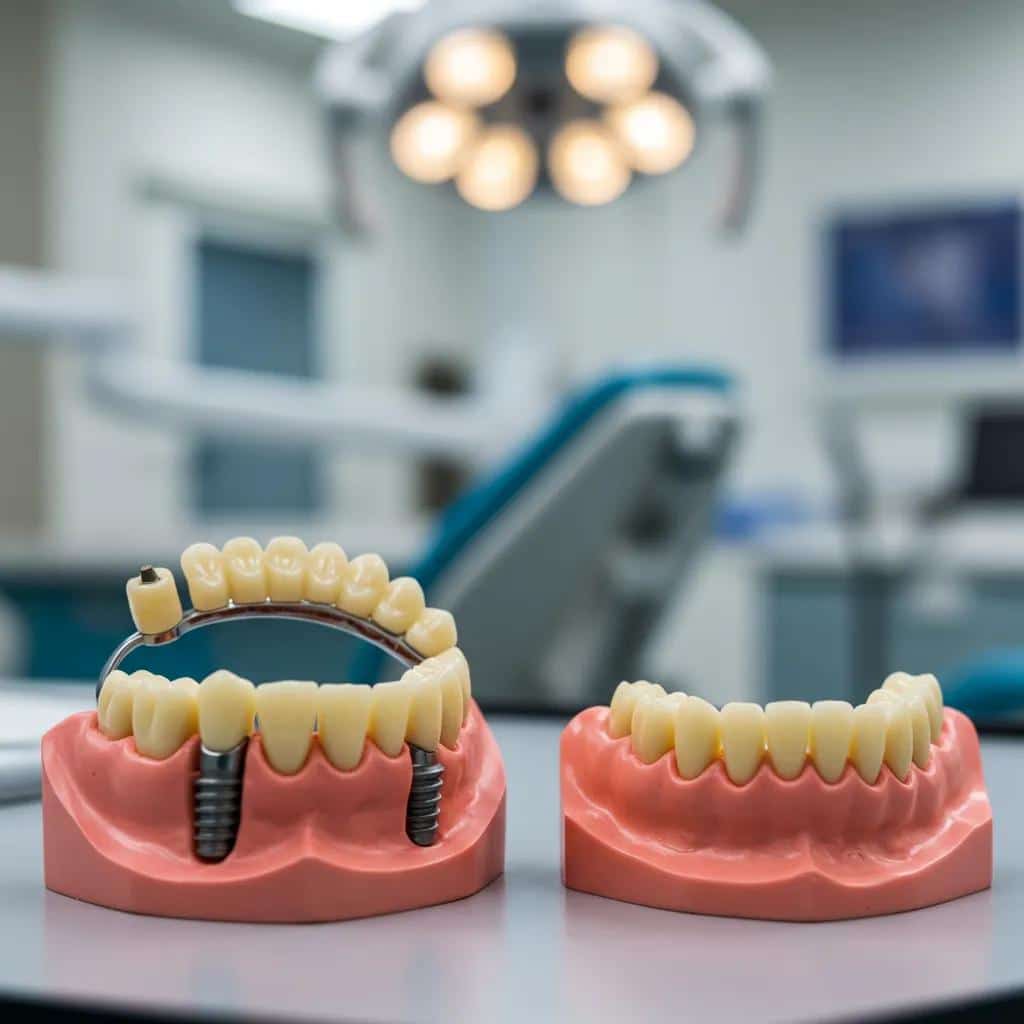
Single vs. Multiple Dental Implants: Your Guide to Costs, Options, and Smart Choices
Dental implants are truly amazing – they’re permanent tooth replacements that bring back your chewing power, protect your jawbone, and look and feel just like your natural teeth. This guide is here to clear up why single and multiple implant costs can differ, break down every price detail, and compare options like implant-supported bridges and full-arch solutions so you can see the long-term value. We know many patients worry about upfront costs and want clear financing options right here in Fort Worth. So, this article dives into per-component pricing, common extra procedures, what your treatment timeline might look like, and smart ways to make implants more affordable. You’ll get clear Fort Worth cost ranges, easy side-by-side comparisons (single implant vs. implant-supported bridge and All-on-4/All-on-6), and step-by-step patient journey timelines to help you plan your treatment from start to finish. Plus, we’ll share financing tips, insurance guidance, and special clinic offers that can ease your out-of-pocket costs, all while focusing on the best clinical choices for lasting value.
Dental Implants: What Are They and How Do They Give You Back Your Smile?
Think of a dental implant as a clever replacement for your missing tooth‘s root. We place a tiny, biocompatible post, then attach a connector (the abutment) and a beautiful crown to bring back both function and a natural look. This implant post—often made of titanium or zirconia—actually fuses with your jawbone in a process called osseointegration. This amazing bond stabilizes your bone, preventing the bone loss that usually happens after losing a tooth. It means you get chewing power just like a natural tooth, and it keeps your bone healthy! Knowing these implant parts and how they work helps you see the upfront cost as an investment in long-term benefits like incredible durability, fewer future replacements, and better overall oral health. Up next, we’ll break down each component in simple terms so you know exactly what you’re paying for and what influences those costs.
Breaking Down Your Dental Implant: What Are the Key Parts?
Your implant system has three main stars: the implant post (that’s the “fixture”), the abutment (a connector), and the crown (your new tooth!). Sometimes, we might also need bonegraft material or special implants for unique situations. The implant post itself acts like an artificial root, typically crafted from titanium or zirconia. Its material and brand can affect the base cost and what’s best for your specific case. The abutment is the crucial link between the post and your new crown, and its material (titanium, zirconia, or custom-milled) can impact both price and how natural your smile looks. Finally, the crown is the part everyone sees! Its material (like porcelain-fused-to-metal, zirconia, or layered ceramic) influences lab fees and how beautiful it looks. Together, these components make up most of your per-tooth price and determine how long your implant will last.
Why Are Dental Implants Often Your Best Choice for Missing Teeth?
Dental implants do something truly special: they preserve your jawbone by replacing the toothroot. This helps maintain your natural facial structure and significantly reduces long-term bone loss, unlike bridges or removable dentures. When it comes to function, implants restore your chewing power almost exactly to natural levels, and they do it without needing to alter healthy adjacent teeth – a common requirement for traditional fixed bridges. You’ll also love the superior aesthetic stability and comfort implants offer because they integrate directly with your bone and support your gum contours, meaning fewer worries about future replacements. While the initial cost might be higher, implants often prove to be a much better long-term investment, as bridges and dentures can demand more frequent adjustments or even full replacement down the road.
What’s the Real Cost of a Single Dental Implant in Fort Worth?
For a single dental implant here in Fort Worth, you can expect a clear cost range that covers the implant post, abutment, and crown. Keep in mind, any extra procedures will adjust that total. Factors like local market conditions, your choice of materials (titanium vs. zirconia), and the specific clinician’s fees all play a role in where your case lands within our typical Fort Worth range. We’ve put together a transparent per-component cost table below so you can see exactly how the total is calculated and where costs might vary. Understanding these details is key to planning your budget, having smart insurance conversations, and making informed financing decisions.
Implant Part
Typical Price Range
What to Know
Implant post (fixture)
$1,000 – $3,000
Price varies by brand, size, and material (titanium vs. zirconia)
Abutment (connective piece)
$300 – $800
Standard vs. custom abutments affect both price and how natural it looks
Dental crown (final restoration)
$800 – $2,000
Material choice and lab work (like zirconia or layered ceramic) impact the final price
Laboratory and prosthetic fees
$200 – $800
Lab work, getting the perfect shade match, and milling all contribute to the total
Surgical/clinical fees
$300 – $1,000
Includes your provider’s time, anesthesia, and facility fees
As you can see from this table, single-tooth implant costs in Fort Worth typically range from $2,500 to $7,500. The biggest differences usually come down to your material choices and the specific expertise of your clinician. (summerbrookdentalfw.com)
Your Single Implant: A Closer Look at the Average Cost Breakdown
When we put together the cost for your implant post, abutment, crown, lab fees, and surgical time, a typical single-tooth implant in Fort Worth usually comes in somewhere between $2,500 and $6,000. This range depends on your material choices and how complex your specific case is. The implant post itself is often the biggest part of the cost, with the crown and lab fees making up a good chunk of the prosthetic expense. Choosing upgraded materials—like a zirconia implant or a super-strong layered ceramic crown—can increase those costs, but they might offer fantastic aesthetic or biological benefits for your unique situation. Looking at these components side-by-side helps you see where small adjustments could lower your upfront price, or where investing a little more now could save you on long-term maintenance.
A cost-utility analysis comparing single dental implants to prosthetic solutions indicates that implant treatment is more cost-effective over a 30-year horizon, providing a higher quality of life with a lower incremental cost-utility ratio.
Cost-Utility Analysis: Single Dental Implants vs. Prosthetic Solutions
1. When dealing with the replacement of one missing tooth, the patient has the option of choosing between different types of treatment interventions. Several important factors play a role in his decision-making process, including his limited financial means and his efforts to solve the problem of missing teeth as effectively as possible. The main goal of the study is the economic-clinical evaluation of implant treatment, as a surgical-prosthetic method in dentistry, in case of replacement of one missing tooth of the molar area.
2. Cost-utility analysis from the patient’s perspective is used for evaluation. The selected comparator is a purely prosthetic solution with the help of a three-unit fixed dental prosthesis. Cost-utility analysis is modelled using Markov models, which consider a 30-year time horizon.
3. Based on the results of modelling, the intervention evaluated by the patient, i.e. treatment with the help of implant-supported single crown, brings exactly 15.31 quality-adjusted prosthesis years (QAPY) after 30 years. The value of incremental cost-utility ratio amounted to USD − 1434.
4. The results of the cost-utility analysis suggest that implant treatment with an implant-supported single crown is more cost-effective than treatment with the three-unit fixed dental prosthesis.
5. The current modernization and innovation of treatment procedures is leading to a constant increase in health care costs. Increasing quality of provided care goes hand in hand with this trend. The development of technologies and new methods of treatment does not avoid the field of dentistry either. Implantology is one of the examples of a dynamically developing field of dentistry. However, patients are generally very often faced with the decision on choosing the type of treatment, and the financial side of things play an important role in their decision, sometimes the most important. Other factors that influence their final decisions include aesthetics, durability of the treatme
What About Extra Procedures? How They Impact Your Single Implant Cost
Sometimes, to ensure your implant is placed perfectly and lasts for years, a few extra procedures might be needed. These commonly include tooth extraction, bone grafting, sinus lifts (especially for upper back teeth), 3D imaging, and sedation. Each of these adds a separate cost and can extend your treatment timeline a bit. Bone grafting prices depend on the material chosen (like autograft, allograft, or xenograft) and how much is needed; larger grafts mean more surgical time and material expense. Sinus lifts are a bit more involved and costly than standard grafts, priced accordingly when your upper back jaw lacks enough vertical bone. Imaging like a cone-beam CT and guided-surgery tools add to planning costs but significantly improve surgical precision. Your sedation choices (local vs. IV) affect both your comfort and the overall charges. These add-ons can increase a single implant case by anywhere from a few hundred to several thousand dollars, depending on how complex your needs are.
After seeing all these cost details, we know you might be looking for local offers and an easy next step. If you want direct, personalized help with Fort Worth pricing and all your options, remember that Affordable Dentist Near Me is here for you with a free consultation!
Considering Multiple Implants? Let’s Talk Costs and Your Best Options!
When you’re looking to replace several missing teeth, you’ve got some great choices! You could opt for multiple individual implants (one for each missing tooth), implant-supported bridges that cleverly span gaps using fewer implants, or even full-arch solutions like All-on-4 or All-on-6 for more extensive tooth loss. Each path balances the number of implants, how complex the prosthetic is, and the overall cost per arch. The right choice for you will depend on how many teeth are missing, your bone health, and your long-term smile goals. Our table below gives you a quick summary of typical setups, how many implants are usually involved, and representative price ranges to show you the economics per arch and per tooth. This comparison will clearly show you when implant-supported bridges can actually lower your per-tooth cost compared to individual implants, and when full-arch approaches offer the most reliable and predictable restoration for those with significant tooth loss.
Your Treatment Option
Implants Needed
Typical Cost Range
Cost Insight Per Tooth
Multiple individual implants
1 implant per missing tooth
$2,500 – $6,000 per tooth
Highest cost per tooth, ideal for single, isolated gaps
Implant-supported bridge
2 – 4 implants supporting bridge
$6,000 – $15,000 per bridge
More affordable per tooth when replacing several adjacent teeth
All-on-4 full-arch prosthesis
4 implants per arch
$15,000 – $30,000 per arch
Very cost-effective for replacing a full arch compared to many individual implants
All-on-6 full-arch prosthesis
6 implants per arch
$18,000 – $35,000 per arch
Offers increased support, with a slightly higher initial investment
As you can see, implant-supported bridges and full-arch solutions really shine when you have several adjacent missing teeth. By using fewer implants to support a multi-tooth prosthesis, you actually reduce the total hardware and some laboratory fees per tooth, offering great value! (summerbrookdentalfw.com)
What’s the Cost of an Implant-Supported Bridge?
An implant-supported bridge typically uses two to four implants to securely hold a fixed bridge, replacing several missing teeth right next to each other. You can expect prices to range from about $6,000 to $15,000 per bridge, depending on how long the span is and the materials chosen. The great news is that by using fewer implants to support multiple teeth, you actually lower the per-tooth hardware costs and reduce laboratory fees compared to placing individual implants for every single missing tooth. Bridges are often a fantastic choice when you have a block of adjacent missing teeth and enough bone to support strategically placed implants, making them a truly cost-effective solution without compromising on function. Of course, clinical factors—like your bite, aesthetic goals, and bone health—will help us determine if a bridge or multiple individual implants is the smartest long-term investment for your smile.
Full Arch Solutions: What Do All-on-4 and All-on-6 Cost?
For full-arch solutions like All-on-4 or All-on-6, we place four to six implants per arch and attach a beautiful, fixed prosthesis. You’ll typically find per-arch costs ranging from $15,000 to $35,000, depending on the prosthetic material and if temporary teeth are included. These innovative methods mean fewer implants are needed for a complete arch restoration, often leading to much faster timelines compared to placing an individual implant for every single missing tooth. (summerbrookdentalfw.com)
The big advantages here are fewer implant placements, a more streamlined surgical process, and getting your chewing function back much quicker! The main thing to consider is that it’s a single prosthesis, so if repair or replacement is ever needed, it’s a more involved process. However, for patients with widespread tooth loss, All-on-4/6 is often a clinically smart and incredibly cost-competitive choice compared to placing many individual implants throughout an entire arch.
Single vs. Multiple Implants: Comparing Costs and Long-Term Value
When you’re comparing single and multiple implants, it’s really important to look beyond just the initial price tag. We need to consider the cost per tooth, how long they’re expected to last, and the functional benefits to truly understand the long-term value. While multiple individual implants might have the highest per-tooth cost, they offer maximum independent restoration for each tooth. On the other hand, implant-supported bridges and full-arch solutions can actually lower your per-tooth cost by using fewer implants and consolidated prosthetics. When you evaluate the total lifecycle cost—including maintenance, the chances of future repairs, and how they impact your adjacent teeth—you’ll often find that implant solutions significantly outperform bridges and removable dentures over a 10–20 year period. In the next sections, we’ll give you some clear examples and a value-focused perspective to help you see when each approach makes the most sense, both financially and clinically.
Is It More Affordable to Get One Implant or Several?
If you’re looking to replace three missing teeth right next to each other, choosing individual implants for each will often be more expensive than opting for an implant-supported bridge. A bridge typically uses just two to four implants to support all three prosthetic teeth, which usually lowers your per-tooth cost thanks to shared abutments and fewer lab fees. For instance, three individual implants at $3,500 each would total $10,500. But a three-toothbridge on two implants might be in the $7,000–$9,000 range, depending on materials – that’s significant per-tooth savings! Of course, clinical factors—like your bone volume, the space between your teeth, and the health of neighboring teeth—can sometimes make single implants the necessary choice, even with a higher cost. Ultimately, your dentist will help you weigh the financial aspects against the best long-term functional and biological outcome for your unique smile.
The Long-Term Benefits: Why Dental Implants Are a Smart Investment
When properly placed and cared for, dental implants boast incredibly high long-term success rates and impressive longevity. This means far fewer repeat restorative procedures compared to some cheaper, short-term alternatives. Over a 10–20 year period, implants actively preserve your bone, stabilize your bite, and help you avoid the endless cycle of tooth preparation or denture relining that can really add up in costs. The true investment value includes dramatically improved chewing efficiency, a significant reduction in oral health decline, and fewer replacement cycles – all factors that truly justify the initial spending. By looking at these amazing outcomes alongside the per-tooth economics, you can confidently choose durable restoration paths that minimize your cumulative costs and truly maximize your quality of life.
What Goes Into the Total Cost of Your Dental Implants?
A few key things directly impact the price of your implants: the implant material itself (titanium vs. zirconia), whether you need grafting or a sinus lift, how complex the lab work and prosthetic are, your provider’s experience, and local Fort Worth market rates. More complex clinical situations mean more surgical time, detailed planning, and extra procedures—all of which naturally lead to higher fees. Knowing how each of these factors contributes empowers you to understand where costs come from and even identify ways to manage them (like choosing standard components over premium materials) without ever compromising on predictable, successful results.
The main cost-driving factors include:
Materials and components, like the implant brand and your crown material, which directly affect supplier and lab fees.
Surgical complexity, including any bone grafting, extractions, sinus lifts, and your anesthesia choices.
Your provider’s experience and specialty – oral surgeons and prosthodontists typically have higher clinical fees due to their advanced training and complex cases.
Local Fort Worth market conditions, diagnostic imaging, and laboratory costs, which can differ from broader regional averages.
It’s important to remember that these factors often work together. For example, if you have limited bone, it means more grafting is needed, which then increases surgical time and material costs, and might even require a specialist. Understanding this interplay helps explain why two cases that seem similar on the surface can actually have quite different quotes.
Titanium vs. Zirconia: How Do Materials Impact Your Implant Price?
Titanium implants are incredibly popular and generally more affordable than zirconia options. Zirconia implants, however, often come with a premium because of their unique material properties and fantastic aesthetic benefits in certain situations. Titanium has a proven, long-standing history for successfully fusing with bone and is usually the most budget-friendly choice for the implant itself. Zirconia, on the other hand, might be preferred for metal-free restorations or for those highly visible front teeth where aesthetics are paramount. Your choice of crown material—whether it’s full-contour zirconia, layered ceramic, or porcelain-fused-to-metal—will also influence the prosthetic price, with premium ceramics typically costing more. Ultimately, choosing the right materials means finding the perfect balance between cost, your clinical needs, and your long-term aesthetic goals to get the optimal solution for you.
Does Your Dentist’s Experience or Location Change Implant Costs?
Yes, your provider’s experience and specialization definitely play a role in fees. Oral surgeons and prosthodontists, for example, often have higher professional fees than general dentists because of their extensive advanced training and the complex cases they handle. Fort Worth’s local market rates also establish baseline pricing—larger urban areas with higher overhead typically have higher fees than smaller towns, so getting local estimates is absolutely crucial. While paying a bit more for a highly experienced provider might seem like an extra cost, it can actually reduce the risk of complications and future repair costs, making that higher fee a potentially very cost-effective choice in the long run. Always make sure to verify credentials and ask for case examples as you weigh the value of experience against your budget.
Making Dental Implants Affordable in Fort Worth: Your Options!
We believe everyone deserves a healthy smile, which is why we offer practical strategies to make dental implants affordable! These include flexible financing and payment plans, making the most of your insurance for covered parts, special clinic promotions, and choosing smart, cost-effective treatment paths like implant-supported bridges when they’re right for you. You can easily combine third-party financing, our convenient in-house payment plans, and strategic use of your insurance for related procedures (like extractions or imaging) to significantly reduce your immediate out-of-pocket costs.
Common affordability options are:
Third-party financing programs that break down your total cost into manageable monthly payments, often with interest-free introductory periods.
Our own in-house clinic payment plans, designed with lower down payments and predictable monthly installments, all managed right here by our team.
Smart insurance optimization: we help you file claims for covered services like extractions or imaging and coordinate benefits to reduce specific costs.
Look out for special offers from local providers that can lower your initial consultation fee or provide promotional pricing, especially for new patients.
When you combine these options with our transparent, itemized estimates, you’ll be able to easily compare your net monthly costs and choose a pathway that perfectly aligns with your financial comfort and clinical needs. Below, we’ve put together a simple table showing sample payment-plan structures and typical down-payment/monthly ranges to help you evaluate your best options.
Your Payment Option
Typical Down Payment
Typical Monthly Payment Range
In-house clinic plan
$0 – $1,000
$99 – $399 per month
Third-party financing
10% – 20%
$100 – $500 per month (depends on your chosen term)
Split-pay deposit + balance
$500 – $2,000
$100 – $350 per month
Combined insurance + financing
Varies
Your out-of-pocket monthly cost after benefits
This table makes it clear how different payment programs translate into your monthly obligations. For example, you might see options advertised as “Cost as low 99 dollar a month” – that’s one example of a low-monthly structure for eligible plans. (summerbrookdentalfw.com)
Choosing a structured payment plan helps you align your implant care with your household budget, all while keeping your best clinical choices open.
What Kind of Financing and Payment Plans Can Help with Dental Implants?
When it comes to financing, you’ll typically find three main types: our convenient in-house clinic plans, third-party dental financing, and smart combination strategies that pair your insurance reimbursement with a payment plan for any remaining balance. Our in-house plans are often super flexible with down payments and durations, sometimes even offering special low-monthly promotional options. Third-party lenders provide standardized terms and easy online applications, though interest rates can vary. For example, you might find low-monthly plans starting around $99 for eligible treatment amounts, while more extensive full-arch options will naturally have higher monthly payments over longer terms. To apply, simply request an itemized estimate from us, choose a term length that comfortably fits your budget, and we’ll help you verify any promotion requirements.
Does Your Insurance Cover Dental Implants? How to Maximize Your Benefits!
Dental insurance coverage for implants can really differ a lot from plan to plan. While many policies might not cover the implant fixture itself, they often *do* cover related procedures like extractions, bone grafting, and even the crown. To get the most out of your benefits, we always recommend requesting a pre-treatment estimate from your insurance provider and discussing all the coverage details with our friendly dental office team. Combining your insurance benefits with our flexible financing options can truly help reduce your out-of-pocket costs for implant procedures.
What Special Offers Does Affordable Dentist Near Me Have for You?
Here at Affordable Dentist Near Me in Fort Worth, we’re all about making implant services accessible and affordable! We proudly highlight our “EVERYDAY LOW FEES” and run special promotions specifically designed to lower any financial barriers for our patients. Our clinic explicitly offers a Free implants consultation for anyone considering treatment, and we advertise payment structures like “Cost as low 99 dollar a month” to help you comfortably manage your monthly commitments. Locally, we also promise to beat any dental plan by at least 5 percent, warmly welcome New patients! with Extended hours!, and make it super easy to Schedule Appointment Online or reach us via our 24/7 emergency hotline. (affordabledentistnearme.com)
These special offers are all about making your treatment journey easier, reducing any initial stress, and ensuring we can still plan the best clinical care for you.
Ready to explore your treatment options and get clear pricing right here in Fort Worth? Affordable Dentist Near Me invites you for a free consultation to discuss your clinical needs and all your financing alternatives with our friendly clinic team.
Your Free Consultation Awaits at Affordable Dentist Near Me!
Book Your Free Consultation: Let’s start with an initial clinical review to understand your bone health and plan your treatment steps.
Get Your Itemized Estimate: We’ll provide a clear, line-by-line cost breakdown so you can easily compare all your financing options.
Discover Flexible Payment Plans: Find the perfect plan that fits your monthly budget, all while ensuring you get the best clinical care.
These simple steps are designed to streamline your decision process, helping you move smoothly from understanding costs to confidently scheduling your care with a clear picture of what to expect.
Claim Your Free Consultation with Affordable Dentist Near Me!
Why It’s So Important: A personalized consultation truly clarifies your clinical options and gives you real, accurate cost estimates.
What to Bring Along: Any recent dental records or X-rays you have can really help us speed up your planning process.
Your Next Steps: After your consultation, you’ll receive a detailed treatment plan to help you apply for financing or insurance predetermination.
Ready for Your Free Consultation? Contact Affordable Dentist Near Me!
Your Most Asked Questions About Dental Implants
What’s the Usual Recovery Time After Dental ImplantSurgery?
Recovery time after dental implantsurgery can definitely vary based on your individual health and how complex your procedure was. Typically, you can expect a healing period of about 3 to 6 months for osseointegration – that’s when the implant actually fuses with your jawbone. During this time, you might experience some swelling and discomfort, but don’t worry, we’ll provide prescribed pain relief to keep you comfortable. Regular follow-up appointments are super important to monitor your healing and make sure the implant is integrating perfectly before we place your final crown.
Are Dental Implants the Right Choice for Everyone?
While dental implants are an incredibly effective solution for so many people, they might not be the perfect fit for absolutely everyone. The best candidates usually have enough bone density to support the implant and generally good overall oral health. Certain factors like uncontrolled diabetes, smoking, or some autoimmune diseases can impact healing and the success of your implant. That’s why a thorough evaluation by one of our dental professionals is always necessary to determine if implants are truly the right choice for you, taking into account your specific health conditions and unique dental needs.
How Long Can You Expect Your Dental Implants to Last?
Dental implants are truly built to last! They’re designed as a long-term solution for tooth loss, often serving you well for 10 to 30 years or even longer with proper care. How long they last depends on things like your daily oral hygiene, keeping up with regular dental check-ups, and lifestyle choices such as smoking. While the implant post itself can potentially last a lifetime, the crown (your visible tooth) might need replacing every 10 to 15 years due to normal wear and tear. Consistent maintenance and care are absolutely crucial to getting the maximum lifespan from both your implant and its restoration.
What Are the Potential Risks of Dental ImplantSurgery?
Just like any surgical procedure, dental implantsurgery does come with some potential risks. These can include infection at the implant site, nerve damage, sinus issues (especially for upper jaw implants), or even implant failure if the bone doesn’t integrate properly. However, we want to reassure you that these risks are generally quite low, especially when the procedure is performed by an experienced professional like ours. You can help minimize risks by diligently following all pre- and post-operative care instructions and making sure to attend all your follow-up appointments to ensure proper healing and successful implant integration.
Will My Dental Insurance Cover Dental Implants?
Dental insurance coverage for implants can really differ a lot from plan to plan. While many policies might not cover the implant fixture itself, they often *do* cover related procedures like extractions, bone grafting, and even the crown. To get the most out of your benefits, we always recommend requesting a pre-treatment estimate from your insurance provider and discussing all the coverage details with our friendly dental office team. Combining your insurance benefits with our flexible financing options can truly help reduce your out-of-pocket costs for implant procedures.
What Happens During My First Dental Implant Consultation?
During your initial dental implant consultation, our dentist will perform a thorough evaluation. This includes reviewing your medical history, checking your overall dental health, and taking imaging studies like X-rays or 3D scans. This comprehensive assessment helps us determine if implants are the perfect fit for your unique situation. Your dentist will then walk you through the procedure, explain what results you can expect, discuss all the costs, and go over your financing options. This is also your perfect chance to ask any questions and share any concerns you have about the treatment process – we’re here to listen!
Ready to Transform Your Smile?
We truly believe that understanding the costs of dental implants empowers you to make the very best decisions for your oral health. By carefully weighing the benefits of single versus multiple implants, you can confidently choose the most cost-effective and clinically ideal solution for your unique needs. If you’re ready to explore all your options and receive personalized guidance, we warmly invite you to schedule a free consultation with Affordable Dentist Near Me. Take that exciting first step towards a healthier, happier smile today!