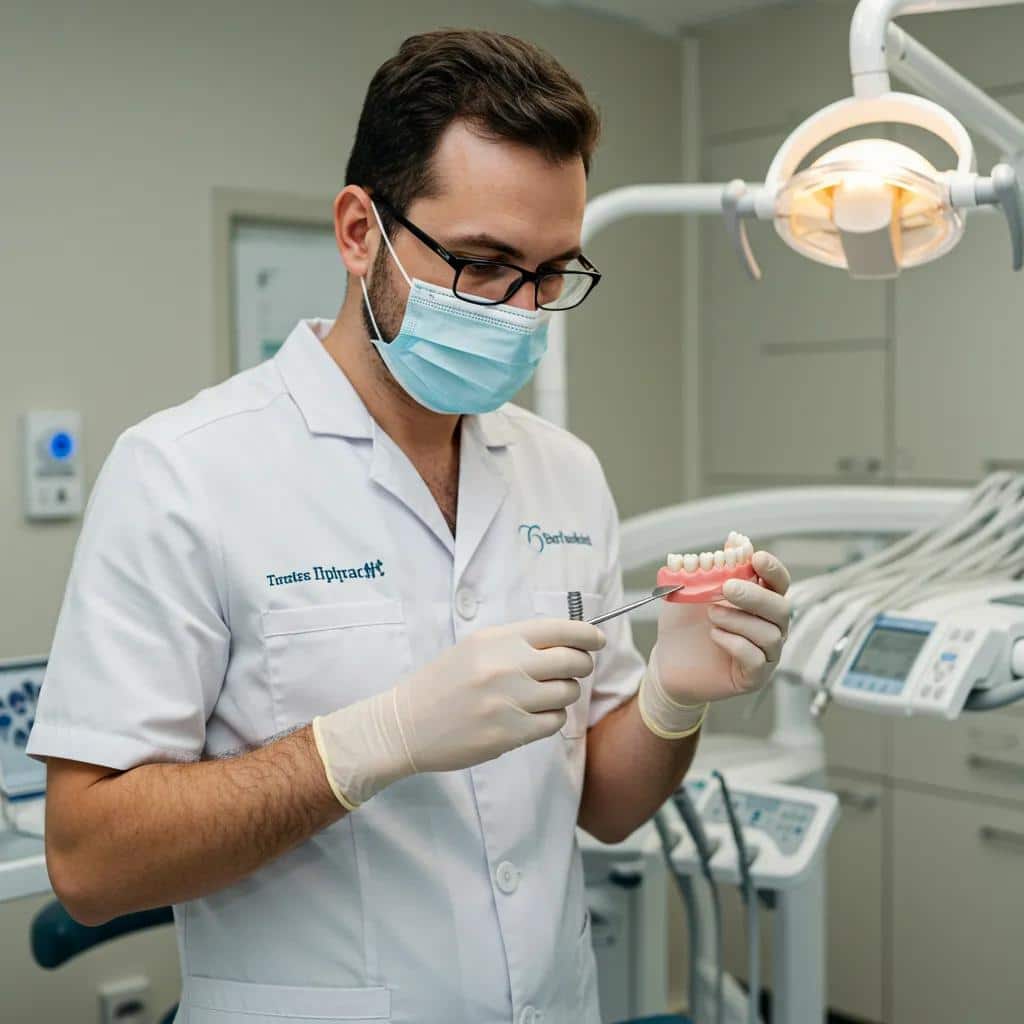
What Makes the Best Dental Implant Surgeon Different? Key Qualities and How to Choose the Right Specialist
Choosing the best dental implant surgeon means finding a clinician who combines the right credentials, deep clinical experience, advanced technology, and a patient-centered approach to deliver safer, longer-lasting results. This article explains what “best” means for dental implant surgery by defining key qualifications, the measurable impact of experience, and the technologies that improve precision and outcomes. Many patients search terms like “Comparison of Implant Surgeons Near Me” or “dental implant specialist credentials” because they want clear decision criteria rather than marketing claims, and this guide provides actionable criteria to evaluate providers. You will learn which certifications matter, how to read success-rate metrics and reviews, how AI and guided workflows change planning and execution, and when to choose an oral surgeon, periodontist, or prosthodontist. The sections that follow cover qualifications and certification, experience and outcomes, advanced technologies and materials, patient-centered care, specialty comparisons, interpreting success rates and reviews, and ethical considerations—each with practical lists, comparison tables, and decision guidance. By the end you will have a structured framework to select the right implant specialist for specific clinical scenarios and personal priorities.
What Qualifications and Certifications Should the Best Implant Surgeon Have?
The qualifications and certifications that distinguish top implant surgeons signal specialized training, peer-reviewed competency, and ongoing clinical validation, which together improve patient safety and predictability. Board certification in a relevant specialty demonstrates independent assessment of clinical skill, and specialized fellowships or implantology diplomas indicate focused implant training that goes beyond general dental licensure. Recent professional standards emphasize continuing education in implant systems, digital workflows, and biologic techniques to maintain competence given rapid technological change. These credential signals directly reduce risk because certified clinicians have demonstrated both theoretical knowledge and practical competence, which supports better treatment planning and complication management. Understanding which credentials matter helps patients prioritize clinicians who match their case complexity and desired outcomes.
Which Board Certifications Distinguish Top Dental Implant Specialists?
Board certification represents an external verification of expertise where peers evaluate case complexity, judgment, and outcomes, and it is distinct from basic dental licensure which only confirms general practice eligibility. Certification pathways vary by specialty but commonly require surgical case documentation, written exams, and peer review; that combination shows the surgeon has met recognized standards rather than self-declared competence. Patients should treat board certification as a strong competency signal while also checking the scope of the certification and related continuing education to ensure alignment with advanced implant procedures. Verification typically involves checking credentialing bodies and asking surgeons for documentation of board status and relevant case logs, which reveals both training depth and commitment to standards. Requesting verification helps align expectations and supports informed decision-making for complex implant care.
How Does Specialized Training in Oral Surgery, Periodontics, and Prosthodontics Impact Expertise?
Specialty training shapes the clinical strengths a clinician brings to implantology because curricula emphasize different anatomical, biologic, and restorative skills that affect case selection and outcomes. Oral and maxillofacial surgeons train extensively in complex surgical anatomy, anesthesia, and hospital-based procedures, which is advantageous for advanced grafting and medically complex patients. Periodontists focus on soft-tissue management, periodontal health, and bone preservation—critical for peri-implant tissue stability and long-term maintenance. Prosthodontists emphasize prosthetic-driven planning, occlusion, and esthetics, delivering restorative solutions for full-arch and highly esthetic cases; their restorative planning often drives implant positioning decisions. Matching the specialist’s core training to the clinical challenge improves predictability and reduces the need for additional referrals mid-treatment.
Why Is Continuing Education Essential for Implant Surgeons?
Continuing education ensures clinicians remain current with innovations such as CBCT-based planning, computer-guided workflows, AI-assisted segmentation, and novel biomaterials, all of which change clinical decision-making and outcomes. Regular training through workshops, peer-reviewed courses, and device-specific certifications equips surgeons to deploy new techniques safely and to interpret evolving evidence about materials like zirconia or advanced grafting protocols. Patients can use a surgeon’s continuing education record as a proxy for practice currency and safety focus, asking how frequently the clinician trains on new implant systems and digital planning tools. Ongoing education reduces complication rates and fosters adoption of evidence-based methods, directly benefiting long-term implant success and patient satisfaction.
How Does Experience Influence the Success of a Dental Implant Surgeon?
Experience influences implant success through three linked mechanisms: technical repetition builds procedural fluency, case volume broadens exposure to atypical anatomy and complications, and complex-case management develops judgment for staged reconstructions and rescue strategies. Practitioners with higher volumes tend to recognize subtle risk factors earlier, optimize grafting protocols, and manage peri-operative complications with predictable escalation paths. Validating experience requires looking beyond years in practice to documented case logs, before-and-after records, and published case series that show outcomes across different clinical scenarios. Because raw success-rate numbers can be misleading without context, experience must be interpreted with case complexity, follow-up length, and complication handling in mind.
What Role Does Years of Practice and Number of Procedures Play in Implant Success Rates?
Years of practice provide a temporal context for experience, but case volume is often a better predictor of procedural fluency and complication management because repetition refines technical decision-making and intraoperative adjustments. High-volume clinicians typically demonstrate streamlined workflows, lower complication frequencies, and efficient management of common issues like peri-implantitis or soft-tissue recession. When evaluating a surgeon, patients should ask for anonymized case volumes, range of procedural types, and examples of complex reconstructions to assess whether the provider has scaled skills across diverse scenarios. Combining years and volume offers a fuller view: longevity suggests sustained practice, while volume indicates day-to-day competence and exposure.
How Do Expert Surgeons Handle Complex Cases Like Bone Grafting and Sinus Lifts?
Expert clinicians use protocol-driven decision trees to choose between staged grafting versus simultaneous implant placement, selecting graft materials and techniques based on defect size, vascularity, and biomechanical needs. Common approaches include particulate grafting with membrane coverage, block grafts for vertical augmentation, and lateral or transcrestal sinus lifts tailored to residual bone height; each technique has predictable timelines for healing and implant insertion. Risk mitigation includes careful CBCT assessment, 3D surgical guides for precise osteotomy angulation, and multidisciplinary planning with prosthodontic input to ensure functional restoration. When cases exceed a clinician’s scope, high-quality practices will refer or co-manage with appropriate specialists to protect outcomes and patient safety.
What Are Typical Success Rates Achieved by Experienced Implant Specialists?
Under ideal conditions and with appropriate patient selection, specialist success rates commonly approach high levels—published ranges often exceed 95% survival at five years and may reach near 98–99% in controlled series—yet these figures vary with case complexity and reporting methods. It is essential to distinguish implant survival (implant remains in place) from success (no pain, function maintained, limited bone loss), and to require follow-up periods of at least five years for meaningful interpretation. Patients should request definitions used in a surgeon’s reported rates, denominators, and complication logs to understand what the numbers represent. Interpreting success rates in context helps patients weigh trade-offs between less experienced providers and specialists who handle complex reconstructions.
What Advanced Technologies and Techniques Set the Best Implant Surgeons Apart?
Advanced technologies and techniques reduce variability in planning and placement, improving prosthetic outcomes and lowering complication risks by creating a prosthetic-driven, anatomy-aware workflow that integrates imaging, planning, and execution. CBCT/3D imaging provides volumetric anatomy for bone assessment, surgical guides translate prosthetic plans to the surgical field, AI accelerates segmentation and flags anatomic risks, and robotics and navigated systems improve placement accuracy when used with proper surgeon oversight. Material advances such as surface-modified titanium and high-strength zirconia expand restorative options for esthetics and biocompatibility. Together, these technologies form a workflow from diagnosis → planning → guided execution → documented outcomes that enhances predictability for both simple and complex cases.
How Does 3D Imaging and Computer-Guided Surgery Improve Implant Precision?
CBCT delivers three-dimensional anatomical data that enables accurate assessment of alveolar bone, sinus anatomy, and critical structures, which supports prosthetic-driven implant planning and reduces guesswork in site preparation. Computer-guided surgery uses virtual planning to fabricate surgical guides that control angulation and depth, decreasing placement errors and improving prosthetic fit on first try. The imaging-to-guide pipeline shortens operative time, reduces intraoperative surprises, and facilitates minimally invasive approaches in limited bone scenarios, contributing to faster recovery and improved esthetic outcomes. Implementing guided workflows requires quality control checks and verification steps to ensure guide seating and surgical realities match the virtual plan.
Introductory list: Key advantages of guided planning include safety, accuracy, and prosthetic predictability.
Anatomic clarity: CBCT reveals bone morphology and vital structures before surgery.
Controlled placement: Surgical guides reduce angulation and depth errors during osteotomy.
Faster restorative integration: Precise positioning improves prosthetic fit and function.
These advantages explain why imaging-to-guide workflows are now widely regarded as best-practice for predictable implant placement, and they lead naturally to considering AI and robotic assistance for further refinement.
Computer-Guided Implant Surgery Accuracy with Digital Drill Guides
The purpose of this prospective cohort study was to evaluate computer‐guided implant surgery with tooth‐supported drill guides based on CBCT scans and intraoral scanning.
The accuracy of computer‐guided implant surgery with tooth‐supported, digitally designed drill guides based on CBCT and intraoral scanning. A prospective cohort …, T Flügge, 2019
What Are the Benefits of AI-Driven Treatment Planning and Robotic-Assisted Surgery?
AI contributes by automating image segmentation, suggesting prosthetic-driven implant positions, and flagging anatomical risks such as nerve proximity or sinus encroachment, which speeds planning and standardizes baseline safety checks. Robotic assistance and navigation add mechanical precision to execute planned osteotomies with sub-millimeter control, but they require surgeon oversight and rigorous training to avoid automation errors. Current 2025 trends show AI accelerating planning cycles and improving risk detection while robotics improve placement repeatability for select indications; however, both technologies complement rather than replace clinical judgment. The prudent use of these tools enhances reproducibility and documentation, facilitating better long-term outcome tracking.
How Do Novel Materials Like Zirconia and Titanium Enhance Implant Outcomes?
Titanium remains the dominant implant material due to proven osseointegration, mechanical strength, and long-term track records in diverse clinical conditions, which supports predictable load-bearing restorations. Zirconia implants offer esthetic advantages for anterior restorations and may reduce soft-tissue discoloration, but their clinical evidence base is still evolving and case selection must account for fracture risk and restorative demands. Surface treatments and microtopography on titanium fixtures improve early bone integration, while ceramic options provide alternatives for patients with metal sensitivities or specific esthetic needs. When choosing materials, surgeons balance mechanical demands, esthetic goals, and long-term maintenance considerations to optimize outcomes.
Introductory table: Compare technologies, benefits, and limitations to clarify clinical trade-offs before selecting systems.
Technology
Benefit
Clinical impact / limitation
CBCT / 3D Imaging
Detailed anatomical mapping
Improves diagnosis and graft planning; requires appropriate interpretation
Computer-Guided Surgery
Translational accuracy from plan to mouth
Reduces angulation errors; guide misfit risks if not verified
AI-Driven Planning
Faster segmentation and risk detection
Standardizes planning; depends on data quality and clinician oversight
Robotic-Assisted Surgery
Mechanical precision in placement
Enhances repeatability; requires training and cost investment
How Does a Patient-Centric Approach Define the Best Implant Surgeon?
A patient-centric approach prioritizes clear communication, shared decision-making, individualized treatment sequencing, and robust post-operative follow-up, all of which improve adherence and long-term implant maintenance. Surgeons who use 3D simulations, visual aids, and explicit written plans reduce surprises and align expectations for timeline, discomfort, and costs. Comfort options such as tailored sedation protocols and office-monitoring practices increase accessibility for anxious or medically complex patients, while structured maintenance programs monitor peri-implant health to prevent late failures. Together these elements reduce the likelihood of dissatisfaction and foster predictable, durable results.
Why Is Clear Communication and Personalized Treatment Planning Crucial?
Clear communication defines the scope of care, outlines alternatives, and explains risks in language patients understand, which builds trust and enables informed consent for implant surgery. Personalized treatment planning uses diagnostic data—CBCT, study models, and esthetic requirements—to create prosthetic-driven plans that balance invasiveness with long-term function. Shared decision-making includes discussing conservative alternatives, sequencing of grafts versus simultaneous placement, and expected maintenance needs so patients can weigh trade-offs. This collaborative approach improves adherence to post-op protocols and prepares patients for the likely clinical course, reducing surprises and improving satisfaction.
Introductory list: Essential questions patients should ask during consultation.
What are my restorative goals and alternatives to implants?
How will you use imaging and guides to plan my treatment?
What are the expected timelines, risks, and maintenance steps?
These questions help patients evaluate communication quality and align the surgical plan with personal priorities, leading to clearer expectations and better outcomes.
What Sedation and Comfort Options Do Top Surgeons Offer?
Top implant surgeons tailor sedation to patient anxiety, medical history, and procedural complexity, ranging from local anesthesia with anxiolytics to IV sedation or monitored general anesthesia when needed. Safety protocols include pre-operative medical screening, intraoperative monitoring, and post-sedation recovery planning to minimize complications and ensure smooth transitions from surgery to home care. Offering a spectrum of comfort options increases procedural accessibility and helps patients complete multi-stage treatments that require longer operative times. Surgeons who clearly explain sedation choices and recovery expectations empower patients to select the safest and most comfortable pathway for their care.
How Is Comprehensive Post-Operative Care Managed for Long-Term Success?
Post-operative care includes scheduled early checks to verify soft-tissue healing, radiographic follow-up to monitor osseointegration, and long-term recall visits for peri-implant maintenance and hygiene reinforcement. Maintenance protocols typically involve professional cleaning schedules, home-care instructions tailored to implant restorations, and criteria for escalation if signs of peri-implant disease appear. Documented post-op pathways, including emergency contact protocols and clear complication remediation steps, reduce late failures and support predictable prosthetic longevity. A robust maintenance program directly links to higher success metrics and patient satisfaction over decade-plus timelines.
What Are the Differences Between Oral Surgeons, Periodontists, and Prosthodontists in Implant Surgery?
Understanding the roles of oral surgeons, periodontists, and prosthodontists clarifies which specialist is best for specific implant scenarios and when multidisciplinary collaboration optimizes results. Oral surgeons excel in complex surgical reconstructions and anesthesia management, periodontists concentrate on tissue health and grafting, and prosthodontists lead restorative planning and occlusal rehabilitation. Choosing the right specialist requires mapping the clinical problem—bone deficiency, soft-tissue disease, esthetic restoration, or systemic complexity—to the clinician whose training best addresses that domain. Multidisciplinary teams are often ideal for complex reconstructions, combining surgical and restorative expertise for predictable outcomes.
When Should You Choose an Oral and Maxillofacial Surgeon for Implants?
Choose an oral and maxillofacial surgeon when cases involve complex anatomy, extensive grafting, need for hospital-based anesthesia, or trauma reconstruction, because their training emphasizes surgical management across these high-acuity scenarios. Oral surgeons provide advanced airway and anesthesia resources, which is important for medically complex patients or procedures requiring general anesthesia. They are appropriate for staged reconstructions, extensive vertical augmentation, and cases where hospital access or multidisciplinary surgical teams are required. For patients facing major reconstructive needs, an oral surgeon’s scope and facility access often make them the preferred choice.
How Do Periodontists Specialize in Implant Placement and Bone Health?
Periodontists bring specialized expertise in soft-tissue management, periodontal regeneration, and bone preservation techniques that are essential for long-term peri-implant tissue stability and esthetic outcomes. They often manage grafting strategies, soft-tissue augmentation, and long-term tissue maintenance to prevent mucosal recession and peri-implantitis. Periodontists are particularly well-suited for patients with a history of periodontal disease, compromised bone volume, or complex soft-tissue esthetic demands that influence restorative choices. Choosing a periodontist benefits cases where tissue health and long-term peri-implant maintenance are primary concerns.
Introductory EAV table: Compare specialist type, training/focus, and when to choose them.
What Role Do Prosthodontists Play in Implant Restoration and Maintenance?
Prosthodontists focus on designing and delivering the final prosthesis, controlling occlusion, and ensuring durable function across complex restorative cases, which includes full-arch rehabilitation and highly esthetic anterior restorations. Their prosthetic-driven planning ensures implant positioning supports ideal crown emergence profiles, occlusal load distribution, and long-term maintenance access. Prosthodontists often coordinate multidisciplinary care to align surgical placement with restorative needs and provide long-term follow-up for prosthetic adjustments and maintenance. For patients prioritizing esthetics, function, or complex occlusal rehabilitation, prosthodontic leadership in planning and restoration is critical.
How Can You Evaluate Implant Surgeon Success Rates and Patient Reviews?
Evaluating a surgeon’s outcomes requires a structured appraisal of objective metrics, review reliability, and documented case studies; this triage prevents over-reliance on unverified testimonials. Meaningful metrics include defined success versus survival rates, complication and revision frequencies, follow-up duration, and details on how outcomes were measured. Online reviews provide color on patient experience but are prone to selection bias and manipulation, so they should be cross-checked with documented case images, anonymized outcome logs, and referrals. Requesting case studies with radiographic documentation and clear follow-up intervals reveals how clinicians manage complications and sustain long-term prosthetic success.
What Metrics Define a High Implant Success Rate?
A high-quality implant success metric distinguishes survival (implant present) from success (functional, symptom-free, acceptable bone levels) and typically reports outcomes over standardized follow-up periods such as five or ten years. Recommended thresholds might include survival rates above 95% at five years for routine cases, low revision rates, and transparent reporting of peri-implant disease incidence; however, thresholds must be contextualized by case complexity. Patients should ask surgeons how they define success, what follow-up intervals are used, and whether outcome data is peer-reviewed or internally audited. Standardized reporting reduces ambiguity and enables apples-to-apples comparisons between providers.
How to Interpret Patient Testimonials and Aggregate Ratings?
Testimonials capture subjective experience—communication, comfort, and perceived results—but often omit objective outcome data and are susceptible to selection bias and moderation practices. When interpreting reviews, prioritize detailed accounts that describe pre-op condition, steps in treatment, complications if any, and long-term function rather than short, generic praise. Look for verified reviews, references to photographic or radiographic documentation, and external referrals from restorative dentists as higher-quality endorsements. Combining testimonials with objective metrics and case documentation gives a balanced view of both experience and clinical competence.
Introductory EAV table: Clarify which metrics matter and quality thresholds to watch for.
Metric
How it’s measured
Threshold indicating quality
Implant Survival Rate
Proportion of implants present after set follow-up
>95% at 5 years for routine cases
Complication Rate
Documented intra/post-op complications per case
Low complication frequency with transparent logs
Revision / Failure Rate
Number of re-operations or removals
Minimal revisions; clear salvage protocols
Follow-up Duration
Median time patients are monitored
Minimum 5-year follow-up recommended
Why Are Case Studies and Long-Term Outcomes Important in Choosing a Surgeon?
Case studies and long-term outcome series demonstrate a surgeon’s ability to solve complex problems, manage complications, and maintain prosthetic function over time; they are the most direct evidence of practical competence. Published case series or anonymized clinical portfolios that include radiographs, timelines, and documented follow-up provide insight into how clinicians respond to failures and revise treatment plans. Asking for examples that match your clinical scenario—single-tooth, grafted sites, or full-arch reconstructions—reveals whether a surgeon has repeatable success in comparable cases. Long-term documentation is therefore essential to validate claims of expertise and to set realistic expectations.
What Ethical Considerations Should Influence Your Choice of Implant Surgeon?
Ethical practice in implantology emphasizes conservative, evidence-based recommendations, transparent cost communication, and multidisciplinary referrals when cases exceed a clinician’s scope; these behaviors protect patients from overtreatment and surprise costs. Top surgeons present alternatives, encourage second opinions for invasive procedures, and provide itemized treatment plans that clarify short- and long-term financial commitments. Collaboration among specialists ensures comprehensive solutions and distributes responsibility for complex reconstructions. Ethical considerations therefore act as practical safeguards that directly affect both clinical outcomes and patient trust.
How Do Top Surgeons Avoid Over-Treatment and Ensure Patient Education?
Top practitioners use shared decision-making tools, document rationale for invasive care, and present conservative alternatives alongside surgical options so patients can weigh benefits and risks transparently. They encourage second opinions for major reconstructions and provide decision aids that compare short-term intervention versus staged conservative approaches. Clear documentation of the clinical reasoning for grafts, staged implants, or full-arch solutions prevents unnecessary procedures and aligns treatment with patient goals. This evidence-based conservatism protects patients from overtreatment while maintaining access to appropriate advanced care when clearly indicated.
Introductory list: Red flags patients should watch for that may indicate risk of over-treatment.
No alternative offered: Provider presents only one, invasive option without discussing conservative paths.
Pressure for immediate treatment: Urgent-sounding timelines without clinical justification.
Lack of documented rationale: No diagnostic images, objective measures, or written plan provided.
Recognizing these red flags helps patients seek additional opinions and confirms that recommended treatments are appropriately justified.
What Are the Best Practices for Transparent Cost and Treatment Options?
Best practices include providing itemized estimates, explaining maintenance costs and potential revision expenses, and describing financing or phased treatment options when available. Transparent proposals compare long-term durability and total cost of ownership rather than focusing solely on upfront price, helping patients make economically sound decisions. Comparing written proposals across providers on identical treatment scopes reveals true value differences and reduces surprise billing. Clear financial transparency is a marker of ethical practice and improves long-term patient adherence to maintenance protocols.
How Is Multidisciplinary Collaboration Used to Provide Comprehensive Solutions?
Multidisciplinary collaboration coordinates surgical, prosthetic, and restorative expertise to align anatomical preparation with final restorative goals, which improves predictability and decreases mid-treatment surprises. Examples include joint planning sessions between oral surgeons and prosthodontists for full-arch cases, or co-managed sinus lifts with periodontists and surgeons to optimize graft outcomes. Effective collaboration uses shared digital planning files, clear role definitions, and synchronized timelines to reduce treatment friction and enhance outcomes. This team-based approach is particularly valuable in complex reconstructions where single-discipline solutions create higher risk.
Surgical + Prosthetic planning: Aligns implant position to final crown and occlusion.
Co-management referrals: Ensures appropriate expertise for grafting or anesthesia.
Shared documentation: Facilitates consistent follow-up and complication management.
Strong collaboration protects patients from fragmented care and supports sustained implant success through coordinated expertise.