Your Guide to Long-Term Care of Dental Implants Compared to Bridges and Dentures: Maintenance, Longevity, and Cost Insights
Dental implants, dental bridges, and dentures are the primary tooth replacement options for adults seeking durable function and a natural appearance; this guide compares their long-term care, expected lifespan, and cost implications to help readers make informed choices. Readers will learn how each prosthetic works, why maintenance differs between them, how jawbone health is affected, and what to expect in long-term costs and repairs. Many patients aged 40–60 prioritize permanence and oral health preservation, making implant longevity and bone preservation central considerations when comparing solutions. This article explains daily and professional care routines, presents evidence-based longevity ranges, and offers practical decision criteria that balance lifestyle, budget, and anatomy. Sections cover clear definitions and component breakdowns, daily maintenance checklists, an entity-attribute-value comparison of lifespan and failure modes, localized cost ranges with financing context for Longview, and clinician-recommended tips to maximize comfort and lifespan. Throughout, the article weaves in how Affordable Dentist Near Me of Longview supports patients with consultations and follow-up care while keeping the primary focus on clinical information and patient decision-making.
What Are Dental Implants, Bridges, and Dentures? Definitions and Key Differences
Dental implants are titanium or zirconia posts surgically placed in the jawbone to serve as artificial tooth roots that integrate with bone via osseointegration, providing a fixed foundation for crowns or implant-supported prosthetics. A dental bridge is a restorative device that replaces one or more missing teeth by anchoring a pontic to prepared adjacent abutment teeth or to implants; it transfers chewing forces to neighboring teeth rather than to bone. Dentures are removable prosthetics with a denture base and denture teeth that rest on the gums and rely on tissue support, adhesives, or implant attachments for retention and stability. The key differences are invasiveness, permanence, and load transfer: implants replace root function and stimulate bone, bridges depend on adjacent tooth structure and can increase risk to abutments, and dentures are non-invasive but allow bone resorption over time. Understanding these differences frames maintenance needs and long-term outcomes, which we will examine next in component-level detail and practical care guidance.
How Do Dental Implants Work and What Are Their Components?
Dental implants function by placing a post (fixture) into the alveolar bone, where osseointegration—direct structural and functional connection between bone and implant surface—occurs, creating a load-bearing root substitute that preserves bone. The main components include the implant post (fixture), the abutment that connects the post to the visible restoration, and the crown (or prosthetic arch) that restores chewing and appearance; implant systems may also include retention attachments for overdentures. Materials commonly used are titanium and titanium alloys for the post, and increasingly zirconia for metal-free options; crowns are typically ceramic or porcelain-fused-to-metal depending on esthetic and strength requirements. Key clinical success factors are adequate bone volume, stable osseointegration, meticulous oral hygiene, and avoidance of uncontrolled risk factors like tobacco use and untreated periodontal disease. Mastering the component roles helps patients appreciate why implants often require different maintenance and radiographic follow-up compared with bridges or dentures, which we discuss in the next section on bridge structure.
What Are Dental Bridges and How Are They Structured?
A dental bridge replaces missing teeth by spanning the gap with a pontic held in place by crowns on adjacent abutment teeth or by adhesive frameworks; the basic meronomy includes pontic, abutment crowns, and supporting tooth structure. Common bridge types are traditional fixed bridges that use two crowned abutments, cantilever bridges that attach to a single abutment, Maryland (resin-bonded) bridges that use a metal or ceramic framework bonded to adjacent teeth, and implant-supported bridges that fix to implant abutments rather than natural teeth. Preparing abutment teeth for a traditional bridge requires tooth reduction, which can increase the risk of decay or root canal needs over time if oral hygiene lapses; resin-bonded bridges minimize preparation but offer different durability trade-offs. Choosing a bridge type depends on adjacent tooth health, occlusal forces, esthetic demands, and patient preference for a fixed versus removable solution. Understanding bridge structure and implications for neighboring teeth sets the stage for a comparison of long-term care needs across prosthetic types.
How Does Long-Term Care Different for Dental Implants, Bridges, and Dentures?
Long-term care differs because implants demand peri-implant hygiene to prevent peri-implantitis, bridges require meticulous cleaning at the pontic-abutment interface to protect abutment teeth, and dentures need nightly cleaning and periodic relining to maintain fit and tissue health. Each prosthetic uses specific tools—interdental brushes and water flossers for implants, floss threaders for bridges, and denture brushes and soaking solutions for dentures—so a bespoke routine improves longevity and comfort. Professional maintenance schedules also differ: implants benefit from targeted peri-implant assessments and radiographs at intervals, bridges require monitoring for abutment decay and margin integrity, and dentures often need relines or rebasing as bone resorbs and soft tissues change. Recognizing signs of complications—bleeding around implants, food trapping under a bridge, or sore spots beneath a denture—encourages earlier professional intervention and reduces long-term failure risk. The next subsections provide daily implant maintenance guidance followed by practical cleaning methods for bridges and dentures, including instrument recommendations and red flags.
What Daily Maintenance Is Required for Dental Implants?
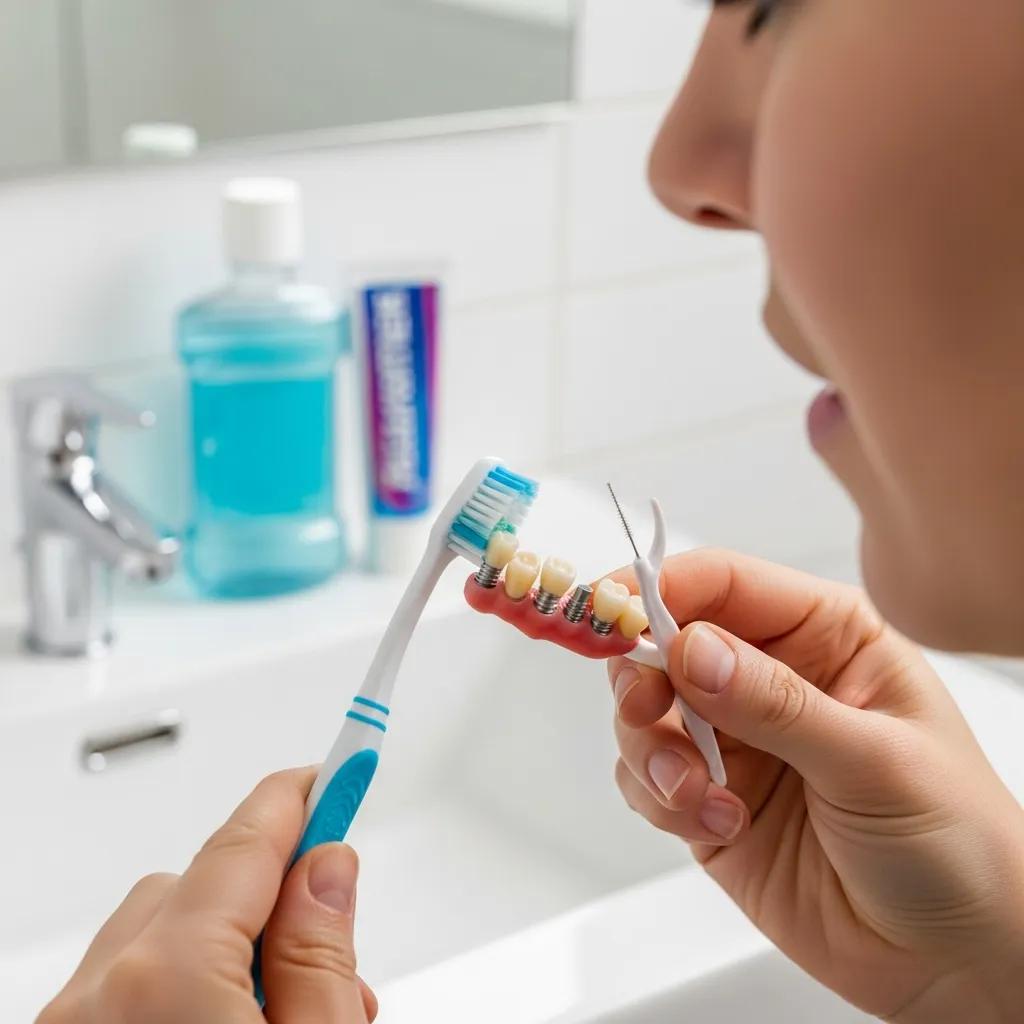
Daily maintenance for dental implants focuses on removing biofilm around the implant-abutment interface and between implant crowns to prevent peri-implant mucositis and peri-implantitis; this begins with brushing twice daily using a soft, non-abrasive brush and low-abrasive toothpaste. Interdental cleaning—using interdental brushes sized to the space, superfloss, or thin tufted brushes—targets the implant sulcus and contact points to disrupt biofilm that causes inflammation; flossing under implant restorations with appropriate threaders is also recommended. Rinsing with an antimicrobial mouth rinse may be advised for short-term control of inflammation, and smoking cessation is strongly recommended because tobacco impairs osseointegration and increases infection risk. Professional maintenance typically includes periodontal-style cleanings at three- to six-month intervals for higher-risk patients and annual radiographs to verify bone stability around implant fixtures. Consistent daily care reduces the chance of implant complications and preserves the long-term stability of the implant-supported restoration, which leads into how bridges and dentures require different cleaning approaches.
How Should You Clean and Maintain Dental Bridges and Dentures?
Maintaining bridges requires daily cleaning beneath the pontic and around abutment margins to prevent decay and periodontal issues on supporting teeth; floss threaders, interdental brushes, or water irrigation help clear debris under the pontic. For removable partial and full dentures, nightly soaking in a denture-cleaning solution and gentle brushing with a denture brush remove stains and biofilm while sparing soft tissues from abrasive scrubbing; adhesives should be used sparingly and per instructions to avoid trapping food and bacteria. Denture wearers need periodic relines or rebasing as bone and soft tissue shape change—typically every few years—to maintain fit and avoid pressure sores, and immediate attention is required for persistent sore spots or loosening. For bridges, regular dental exams focused on abutment tooth health and margin integrity help detect caries or fractures early; preventive topical fluoride and risk-based topical measures may also be discussed. Proper daily technique and timely professional adjustments preserve the function of bridges and dentures and minimize their common failure pathways, which we compare quantitatively in the longevity section.
What Is the Longevity and Durability of Dental Implants Compared to Bridges and Dentures?
Longevity and durability vary substantially: properly placed and maintained implants often offer the longest-term solution, whereas bridges and dentures typically have shorter functional lifespans and require more frequent replacement or repair. Key factors that influence durability include oral hygiene, systemic health, smoking, bruxism, and the quality of the supporting bone or abutment teeth; restorative components such as crowns and pontics may wear or need replacement even when structural supports remain stable. Understanding typical lifespan ranges and failure modes helps patients weigh long-term total cost of ownership and expected maintenance. The following table compares typical lifespans, common failure modes, and recommended maintenance frequencies for implants, bridges, and dentures to illustrate these trade-offs clearly.
Understanding the expected lifespan of various prosthodontic treatments is crucial for patients to make informed decisions about their long-term oral health investments.
Patients reasonably expect a return for their investment and want to know how long their treatment will last. Clinicians have an obligation to inform their patients so that they can make reasoned decisions about treatment options. Longevity data are also informative for health agencies setting service schedules for publicly funded treatment, and for determining settlements by insurers such as ACC. Historically, much of the prosthodontic treatment performed in practice has relied heavily on dogma, low-level anecdotal evidence, and clinical case reports. This paper considers the literature on fixed and removable prosthodontic rest
How long will it last? The expected longevity of prosthodontic and restorative treatment, DR Schwass, 2013
Prosthetic Type
Typical Lifespan
Common Failure Modes / Maintenance Frequency
Dental Implant (post + crown)
20–30+ years for the post; crowns typically 10–15 years
Failure modes: peri-implantitis, mechanical wear of crowns; maintenance: daily hygiene, professional peri-implant cleaning 3–12 months
Fixed Dental Bridge
7–15 years depending on abutment health
Failure modes: decay of abutment teeth, bridge fracture, margin failure; maintenance: daily cleaning under pontic, professional checks 6–12 months
Removable Denture (partial/full)
5–8 years functional fit; relines more frequent
Failure modes: bone resorption leading to poor fit, base fracture, worn denture teeth; maintenance: nightly cleaning, relines every 1–3 years
This table highlights that implants provide superior structural longevity when biological and behavioral risk factors are controlled, while bridges and dentures typically require more frequent restorative attention. The next subsections quantify implant lifespan expectations and bridge/denture replacement timelines with practical qualifiers and evidence-based context.
How Long Do Dental Implants Typically Last?
Dental implants typically last 20–30 years or longer for the implant fixture when osseointegration and bone support are maintained, with many studies reporting high success rates (often cited in the 90–95% range over a decade under controlled conditions). The restorative crown or prosthetic attached to the implant will commonly need replacement or refurbishment within 10–15 years due to normal wear, esthetic changes, or ceramic fracture; implant posts themselves usually remain stable if peri-implant bone is preserved. Factors that extend implant life include meticulous daily oral hygiene, routine professional maintenance, absence of uncontrolled diabetes, non-smoking, and management of parafunctional habits like bruxism with occlusal guards. Conversely, peri-implantitis—an inflammatory/destructive condition—represents the primary biological threat to long-term implant survival and is often associated with poor plaque control or history of periodontal disease. Knowing that implant posts can remain stable for decades while crowns may need periodic replacement helps patients set realistic expectations for long-term care and costs.
What Is the Expected Lifespan of Dental Bridges and Dentures?
Fixed dental bridges commonly remain functional for about 7–15 years, with longevity strongly tied to the health and integrity of abutment teeth; caries or endodontic issues on abutments are frequent failure causes that precipitate bridge replacement. Removable dentures typically offer functional fit and comfort for roughly 5–8 years, but they often require relines, rebasing, or repairs within shorter intervals—sometimes every 1–3 years—because of progressive alveolar bone resorption and soft tissue changes that alter fit. Wear of denture teeth and acrylic bases, changes in occlusion, and soft tissue soreness are practical indicators that a denture may need adjustment or replacement. The decision to repair versus replace depends on the extent of wear, esthetic demands, changes in bite, and cost-effectiveness; for example, a minor fracture may be cost-effective to repair, but severe resorption often necessitates remaking the prosthesis. Recognizing typical replacement timelines clarifies maintenance schedules and long-term budgeting, which leads naturally to the next section focused specifically on how jawbone health differs across these options.
How Do Dental Implants, Bridges, and Dentures Affect Jawbone Health and Oral Hygiene?
Each prosthetic interacts differently with alveolar bone and soft tissues: implants replace tooth roots and transmit occlusal load to bone, stimulating remodeling and preserving bone volume and height; bridges and dentures do not replace root function and may permit or accelerate bone resorption if root function is not restored. Oral hygiene implications follow these biomechanical differences: implants require targeted peri-implant care to prevent inflammatory bone loss, bridges increase the need to protect abutment teeth from caries and periodontal disease, and dentures require tissue hygiene management to prevent mucosal irritation, candidiasis, and stomatitis. When bone loss is advanced, clinicians may recommend bone grafting to rebuild support prior to implant placement; conversely, implant options such as implant-supported overdentures can improve retention and reduce residual ridge resorption compared with tissue-supported dentures. Understanding these biomechanical relationships clarifies why implants are often the preferred option to preserve jawbone, yet they demand precise maintenance to maintain bone health. The next subsections explain the mechanism of bone preservation with implants and the oral health trade-offs associated with bridges and dentures.
Do Dental Implants Prevent Bone Loss and Preserve Jawbone?
Yes—dental implants help prevent bone loss by replacing the tooth root and transmitting functional loads through osseointegration to the surrounding alveolar bone, which stimulates remodeling and preserves bone volume and height. Osseointegration creates a biomechanical relationship in which the implant transfers chewing forces into bone, maintaining the physiological stimulus that natural tooth roots provide; without that stimulus, the jawbone undergoes resorption over time. Clinical outcomes and radiographic studies show reduced rates of alveolar ridge resorption around implant-supported restorations compared with sites left edentulous or supported only by removable dentures, though success depends on initial bone quality, surgical technique, and ongoing plaque control. Limitations include cases with insufficient bone where bone grafting or staged augmentation is required before implant placement, and patients with systemic conditions or poor hygiene may still experience bone loss around implants. Explaining this mechanism helps patients see why implants are often chosen to preserve long-term jawbone health, and why bridges/dentures do not offer the same biologic protection.
What Are the Oral Health Implications of Bridges and Dentures?
Bridges and dentures pose distinct oral health implications: bridges can place additional restorative burden on abutment teeth, increasing susceptibility to decay, root fracture, and periodontal problems if margins are imperfect or hygiene is inadequate. Dentures can contribute to mucosal irritation, denture stomatitis, and accelerated alveolar resorption because they rely on mucosal support rather than root-borne load transfer; ill-fitting dentures can cause pressure sores and impair nutrition due to reduced chewing efficiency. Both options create hygiene challenges—bridges require effective cleaning under pontics to avoid food impaction and plaque accumulation, while denture hygiene demands nightly cleaning and careful handling to prevent microbial colonization on the prosthesis. Regular professional assessments detect early signs of abutment tooth decay or tissue changes and enable timely relines, rebasing, or adjustments to maintain function and oral health. Considering these implications helps patients weigh trade-offs between non-surgical options and the bone-preserving benefits of implants, which connects to cost and affordability decisions for Longview patients in the next section.
What Are the Cost Comparisons and Affordability of Dental Implants, Bridges, and Dentures in Longview?
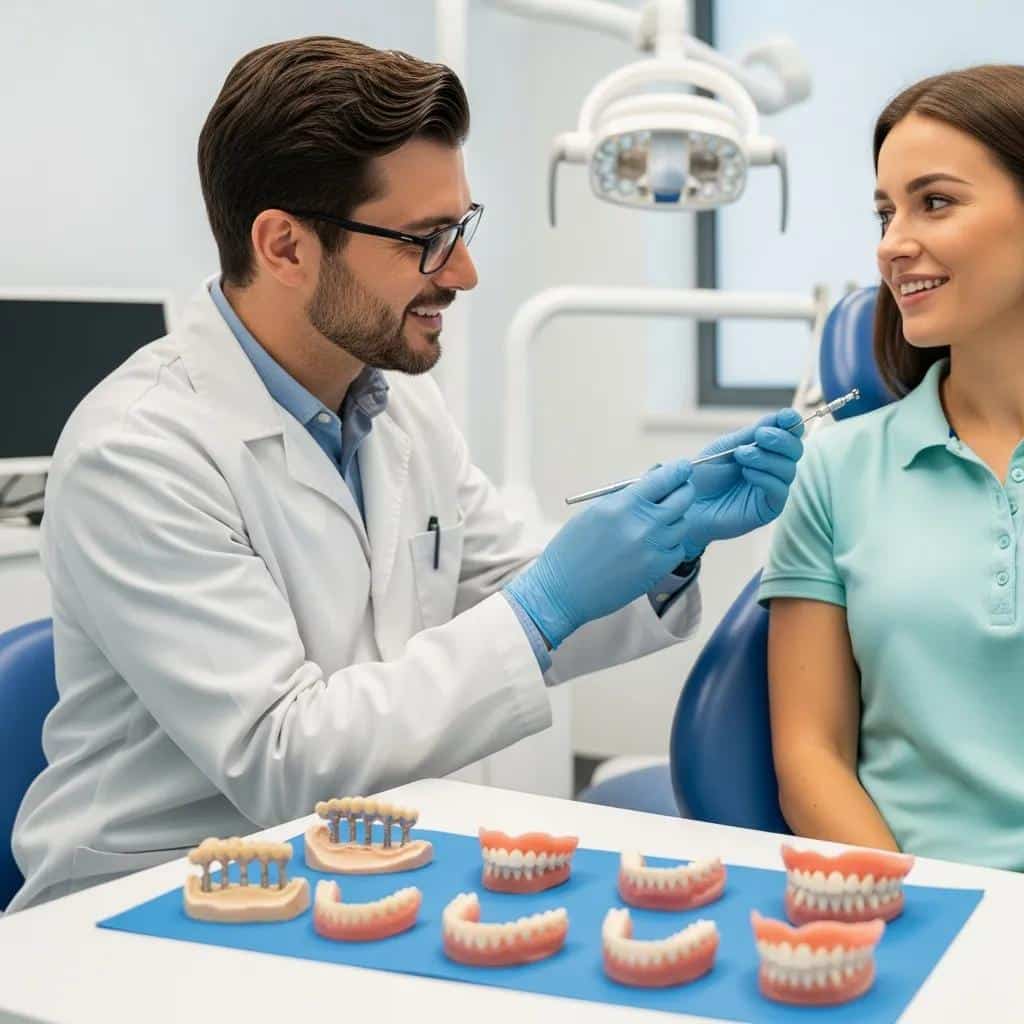
Cost comparison should factor in initial fees, likely replacement cycles, and maintenance costs over time to estimate total cost of ownership for each option in Longview. Dental implants typically involve surgical and restorative fees—surgical placement of the implant post, possible bone grafting, and the restorative crown or prosthesis—while bridges concentrate cost in the restorative phase for abutment preparation and pontic fabrication, and dentures are usually the most affordable upfront but may require frequent relines and replacements. Affordable Dentist Near Me of Longview offers free implants consultations and free denture consultations to help patients evaluate options and financing; these consultations can clarify whether bone grafting or other preparatory procedures are needed and outline phased treatment costs. The table below provides conservative localized cost ranges for Longview, notes typical financing options, and lists likely replacement costs to help readers compare options objectively.
Prosthetic Type
Cost Range (Longview)
Typical Financing / Replacement Cost
Single Dental Implant (post + abutment + crown)
$2,000–$4,500 per tooth (estimate)
Financing plans and phased payments commonly available; crown replacement may occur every 10–15 years
Fixed Dental Bridge (3-unit typical)
$1,200–$3,000 for a traditional 3-unit bridge (estimate)
Financing available; replacement or rework every 7–15 years depending on abutment health
Removable Denture (partial/full)
$400–$2,000 initial (estimate)
Economical upfront; relines/repairs every 1–3 years; full replacement 5–8 years
This localized cost table emphasizes that implants are a larger initial investment but can be cost-effective over decades if longevity and bone preservation are priorities, while dentures offer lower upfront cost but higher recurring maintenance expenses. The following subsections break down typical implant costs and financing options and compare bridge/denture expenses in more detail, while noting the clinic’s free consultation offers to support planning.
What Are the Typical Costs and Financing Options for Dental Implants?
Typical per-tooth implant costs in Longview include surgical placement of the implant post, abutment connection, and the final crown; conservative local estimates range approximately from $2,000 to $4,500 per tooth depending on complexity and whether bone grafting or additional imaging is required. Additional procedures—such as bone grafts, sinus lifts, or CT imaging—add to total cost and may be staged, which makes phased financing attractive for many patients; clinics often offer in-house payment plans or third-party financing to spread payments over time. Affordable Dentist Near Me of Longview lists free implants consultations to help patients understand individual cost drivers and financing options before committing to treatment, enabling transparent planning. When evaluating financing, compare total interest and the expected interval for crown replacement to estimate yearlyized cost; this approach lets patients weigh implant durability against alternate solutions. Clear cost planning at consultation reduces surprise expenses and aligns expectations for long-term outcomes and maintenance.
How Do Bridge and Denture Costs Compare and What Are Replacement Expenses?
Bridges generally cost less upfront than implants for short spans—the cost of a typical three-unit fixed bridge in Longview may fall in the $1,200–$3,000 range depending on materials and laboratory fees—but they create potential future costs if abutment teeth require restoration or root canal therapy. Dentures offer the lowest initial outlay—often several hundred to a couple thousand dollars depending on full versus partial and material choices—but recurrent relines, repairs, and eventual replacement every 5–8 years increase lifetime costs. When comparing options, consider cost-per-year by dividing total expected lifetime expense by anticipated functional years; implants often present lower annualized cost if the implant fixture remains stable for multiple decades despite higher initial expense. Financing, insurance contributions, and free consultation options (such as those available at Affordable Dentist Near Me of Longview) can shift near-term affordability, so scheduling a consultation helps patients understand personalized cost trajectories and make an economically sound choice.
How to Choose the Right Tooth Replacement Option for Your Long-Term Needs?
Choosing the right option requires balancing clinical factors—number and location of missing teeth, bone density, adjacent tooth health—with personal preferences about permanence, invasiveness, and budget. Decision frameworks weigh objective medical suitability (bone quality, systemic health, periodontal status) against lifestyle factors such as smoking, dietary habits, bruxism, and willingness to undergo surgery versus preference for non-surgical options. A systematic checklist and brief case vignettes help translate clinical variables into practical recommendations for common patient profiles. The next subsections provide a decision checklist of influencing factors and practical guidance on how lifestyle and budget intersect with clinical suitability to guide a personalized choice.
What Factors Should Influence Your Decision Between Implants, Bridges, and Dentures?
Start with a clinical assessment of bone volume, periodontal health, and adjacent tooth integrity before selecting a restorative pathway.
Prioritize implant solutions when alveolar bone is sufficient and long-term preservation is a primary goal.
Consider bridges when adjacent teeth already require crowns and the patient prefers a fixed solution without surgery.
Select dentures for large edentulous spans when immediate cost containment and non-surgical approaches are prioritized.
These checklist items guide the initial conversation with your dentist and set realistic expectations for treatment sequencing, which informs the next topic: how lifestyle and budget affect the final choice.
How Does Lifestyle, Budget, and Oral Health Affect Your Choice?
Lifestyle and budget strongly influence the practical suitability of each option; for example, smoking reduces implant success probability and may direct a patient toward alternative solutions unless cessation is achieved. Dietary habits and willingness to maintain meticulous hygiene affect bridge and implant outcomes, while limited manual dexterity can complicate denture handling and hygiene routines. Budget constraints may favor dentures initially, but a long-term budgeting exercise that calculates cost-per-year can reveal implants as a more economical choice over decades when considering replacement frequency and maintenance. Patients with high esthetic demands or who require improved chewing efficiency for nutrition often favor implant-supported restorations despite higher upfront costs. Clear alignment between lifestyle, budget, and oral health reduces the risk of dissatisfaction and promotes durable outcomes; the following section provides clinician-level tips to preserve prosthetic longevity and comfort.
What Are Expert Tips for Maintaining Dental Prosthetics for Longevity and Comfort?
Expert maintenance centers on daily biofilm control, appropriate tool selection, scheduled professional care, and prompt attention to early symptoms like soreness or mobility. Clinician-recommended schedules combine daily hygiene, weekly focused care (such as denture soaking or interdental brush replacement), and risk-based professional recalls—more frequent for patients with a history of periodontal disease or peri-implant inflammation. Selecting the correct tools—soft-bristled toothbrushes, interdental brushes, floss threaders, denture brushes and soaking solutions, and gentle antimicrobial rinses—reduces mechanical damage while effectively controlling plaque. The mandatory table below provides a quick-reference EAV-style maintenance regimen for each prosthetic type designed to be used as a printable checklist for patients and caregivers.
Prosthetic Type
Daily Care Task
Recommended Frequency / Tools
Dental Implant
Brush with soft brush; interdental cleaning around abutment
Twice daily brushing; interdental brush or superfloss daily; professional peri-implant cleaning 3–12 months
Fixed Bridge
Clean under pontic and along margins
Daily flossing with threader or water irrigation; check abutments every 6–12 months
Removable Denture
Clean and soak denture; inspect tissue fit
Nightly brushing and soaking; relines as needed (1–3 years); professional check at least annually
This maintenance table clarifies practical actions to preserve prosthetic function and comfort, and the next subsections translate these regimens into product-type recommendations and scheduling guidance that help patients implement an effective maintenance plan.
Which Oral Hygiene Practices Extend the Life of Implants, Bridges, and Dentures?
Specific hygiene tasks extend prosthetic life by controlling biofilm and preserving supporting structures: for implants, soft brushing plus interdental brushes prevent peri-implant mucositis; for bridges, floss threaders and water flossers clear debris under pontics; for dentures, nightly soaking and gentle brushing prevent microbial buildup and soft tissue irritation. Recommended non-branded tool types include soft manual or electric toothbrushes, appropriately sized interdental brushes, superfloss for fixed prosthetics, denture brushes with non-abrasive pastes, and antimicrobial rinses when indicated; abrasive cleaning agents and hard-bristled brushes should be avoided to prevent surface damage. Patients with bruxism should use occlusal guards to protect restorations, and those with limited dexterity may benefit from adaptive aids or caregiver assistance to maintain cleaning frequency. Implementing these practices consistently reduces biological risk factors and keeps prosthetics functioning comfortably, which connects directly to when to schedule professional check-ups and adjustments.
Implant care requires daily interdental cleaning and periodic radiographic checks to monitor bone levels.
Bridges need meticulous daily cleaning under the pontic and frequent evaluation of abutment margins.
Denture wearers should clean nightly and seek professional relines when fit declines or sores develop.
These practice-focused items create a habit-based framework that supports long-term prosthetic success and prepares patients for the recommended professional follow-up schedule described next.
When Should You Schedule Professional Check-Ups and Adjustments?
Professional follow-up frequency should be individualized: patients with implants or a history of periodontal disease often need three- to six-month recalls for focused cleaning and monitoring, while those with stable health may suffice with six- to twelve-month visits; radiographic follow-up for implants is commonly scheduled annually or as risk indicates. Bridges typically warrant six- to twelve-month evaluations to detect abutment decay or margin breakdown early, and denture patients should have at least annual checks with earlier visits for sore spots, retention loss, or fit changes prompting relines. Red-flag symptoms that require immediate assessment include new mobility of a crown or bridge, persistent bleeding or pus around implants, increasing denture looseness or tissue ulceration, and sharp pain during function. Booking timely professional maintenance reduces the chance of catastrophic failure and often allows conservative repair rather than full replacement.
For patients who want professional maintenance or an evaluation, Affordable Dentist Near Me of Longview accepts appointment requests and offers free consultation options to discuss implant and denture plans and to outline a personalized maintenance schedule; their local team provides follow-up care to support long-term outcomes and patient comfort.
Why Choose Affordable Dentist Near Me of Longview for Your Dental Implant, Bridge, or Denture Care?
Affordable Dentist Near Me of Longview provides restorative and prosthetic services including dental implants, bridges, and dentures, and supports patients with several affordability and convenience features designed to make long-term care attainable. The clinic emphasizes affordable pricing options and offers free consultations—specifically free implants consultations and free denture consultations—which help patients understand individualized treatment plans and financing before committing to procedures. Additional promotional benefits available at the Longview location include a free whitening pen without the need for an exam or X-ray, and a free laser whitening when paired with a cleaning, exam, and X-ray; these offers are intended to increase access to aesthetic care for new and returning patients. The clinic’s address is 444 Forest Square Suite E, Longview, TX 75605, and it also lists a Google Business presence with extensive patient feedback; this local availability combined with free consults supports ongoing follow-up care after restorative treatment. Presenting these points helps readers who have prioritized clinical information to identify a local provider that matches affordability and accessibility needs.
What Unique Benefits and Free Consultations Does the Longview Clinic Offer?
The Longview clinic’s stated unique benefits include affordable pricing options, free implants consultations, and free denture consultations to help patients evaluate candidacy and plan financing, all of which aim to reduce barriers to restorative care. Promotional offers noted for the Longview location include a free whitening pen without exam or X-ray requirement and a free laser whitening with a cleaning, exam, and X-ray—these aesthetic conveniences complement restorative planning for patients seeking both function and appearance. The free consultations typically involve an initial assessment to review medical and dental history, an intraoral exam, and a discussion of treatment phases and financing options; this preliminary step helps patients compare alternatives such as implants versus bridges or dentures. By offering transparent consults and promotional services, the clinic facilitates informed decision-making while keeping the focus on clinical suitability and long-term maintenance needs discussed earlier.
How Do Patient Testimonials Reflect Long-Term Satisfaction and Success?
Patient reviews and testimonials—of which the Longview location reports a large volume—tend to emphasize themes of affordability, welcoming care, and accessible follow-up, which align with the clinic’s stated UVPs and support patient confidence when choosing long-term restorative solutions. High-volume review counts can function as social proof that many patients have engaged with the clinic for services such as dental implants, dentures, and bridges; anonymized insights from reviews often highlight comfort during procedures, effective follow-up care, and satisfaction with aesthetic results. While individual outcomes vary according to clinical factors and maintenance, aggregated feedback helps prospective patients understand common experiences and practical considerations such as appointment scheduling and post-procedure support. Prospective patients are encouraged to bring clinical questions to the free consultation to align personal goals with realistic long-term expectations based on both clinical evidence and local patient experience.