Breaking Down the Costs: What You Need to Know About Dental Implants and Surgery in Waco
Dental implants are permanent tooth replacements that restore chewing, speech, and facial structure by integrating a biocompatible post with the jawbone. They work through osseointegration, where the implant post fuses with bone to form a stable foundation for an abutment and crown, delivering a durable, natural-feeling tooth replacement. This article explains how implants function, breaks down realistic cost ranges for Waco patients, walks through the surgical timeline and recovery expectations, and compares implant options and alternatives such as dentures and bridges. Readers will also find detailed financing pathways, sample pricing scenarios, and practical next steps—plus guidance on scheduling a Free implants consultation if they want a personalized estimate. Throughout, the focus is local: practical cost transparency for dental implants in Waco, with clear explanations of factors that drive price and value so you can make an informed decision about treatment.
What Are Dental Implants and How Do They Work?
Dental implants are engineered tooth replacements that mimic natural tooth roots by anchoring a titanium or zirconia post into the jawbone, providing long-term stability for restorations. The mechanism—osseointegration—occurs as bone cells grow onto the implant surface, creating a rigid bond that supports an abutment and final crown; this biological fixation restores chewing forces and prevents bone loss. Implants deliver functional and aesthetic benefits by preserving jaw height, preventing adjacent tooth drift, and enabling near-natural bite force, which helps patients eat comfortably and smile confidently. Understanding these fundamentals clarifies why implants are often preferred over removable options and why cost should be evaluated in terms of longevity and oral health preservation. With the mechanism and benefits clear, the next section reviews the implant’s primary components and how materials influence outcomes.
What Are the Main Components of a Dental Implant?
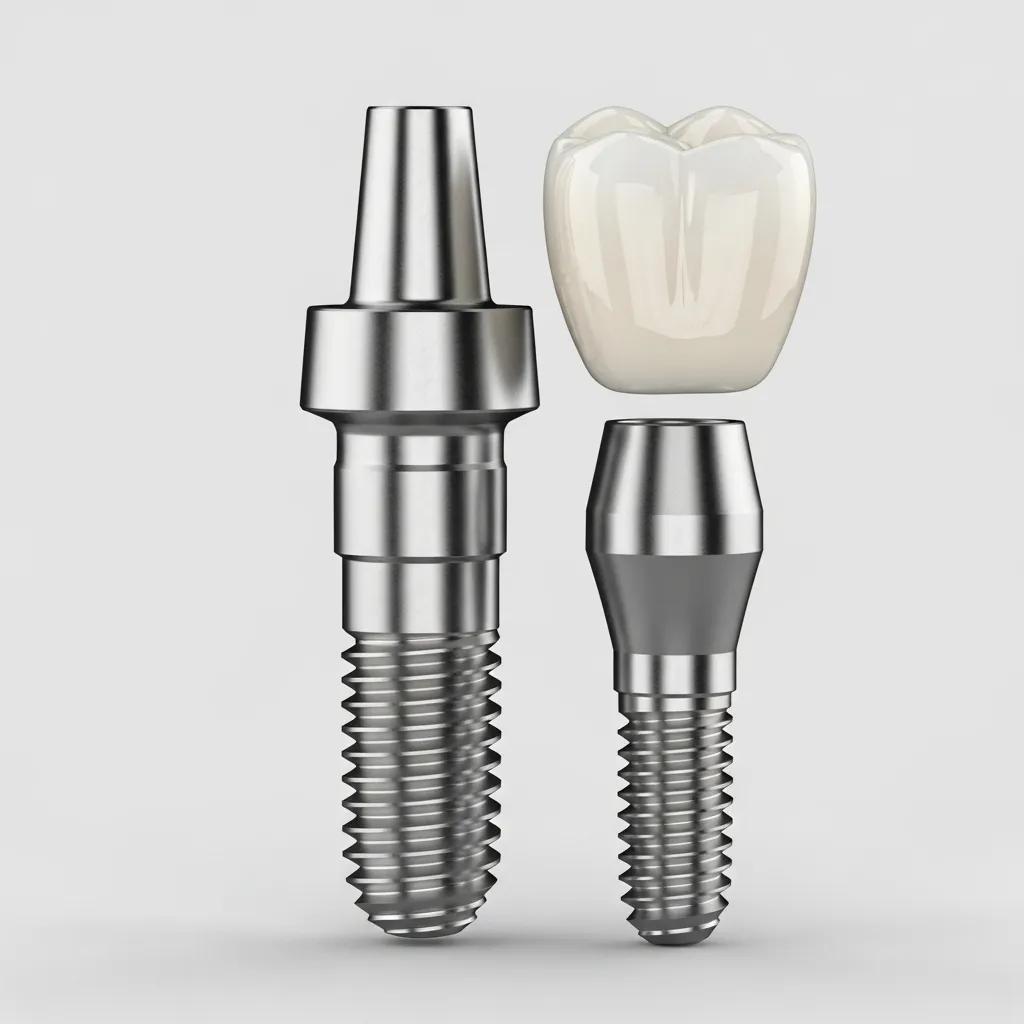
A dental implant system typically comprises three parts: the implant post (fixture), the abutment, and the crown that restores visible tooth structure. The implant post—commonly titanium or zirconia—anchors in bone and is designed with surface treatments to promote faster osseointegration; titanium has decades of documented success, while zirconia offers a metal-free alternative for select cases. The abutment is the connector that joins the post to the crown, available in various heights and angulations to optimize soft-tissue support and aesthetics for different clinical situations. The crown is the prosthetic tooth, custom-shaped and shaded to match neighboring teeth and fabricated either in-office or by a dental laboratory; crown material and lab fees are important cost drivers. Understanding these components helps patients evaluate trade-offs between material choices, aesthetics, and long-term maintenance, and prepares them for discussions about cost and timelines.
What Are the Benefits of Dental Implants Compared to Other Tooth Replacement Options?
Dental implants provide several clinical advantages over removable dentures and tooth-supported bridges, particularly in durability, function, and bone health. Implants preserve jawbone by transmitting normal chewing forces through the post into bone, reducing the resorption that often accompanies long-term denture wear; this preservation maintains facial structure and aesthetics. Functionally, implants restore near-natural chewing efficiency and occlusion, allowing patients to eat a wider range of foods without the slipping or adhesive dependence typical of dentures. From a maintenance perspective, implants eliminate the need to modify adjacent healthy teeth (as with bridges), which preserves natural tooth structure and reduces future restorative risk. These benefits make implants a compelling long-term investment for many patients, though individual health, anatomy, and budget considerations determine the optimal replacement strategy.
How Much Do Dental Implants Cost in Waco?
Dental implant costs in Waco vary by procedure complexity, materials, and additional preparatory work, with typical local ranges helping patients set realistic expectations. A single implant with a standard crown often sits in a moderate range, multiple implants scale per-unit but may offer efficiencies, and full-arch solutions like All-on-4 carry higher upfront costs but can be more cost-effective per tooth in full-mouth rehabilitation. Key cost drivers include implant material and brand, laboratory crown fees, imaging and diagnostics, provider experience, and necessary adjunctive procedures such as extractions or bone grafts. Presenting representative scenarios helps clarify how these factors interact financially and which elements most influence a patient’s final estimate. After reviewing these ranges, readers who want a personalized cost estimate can take advantage of local offers and scheduling options described below.
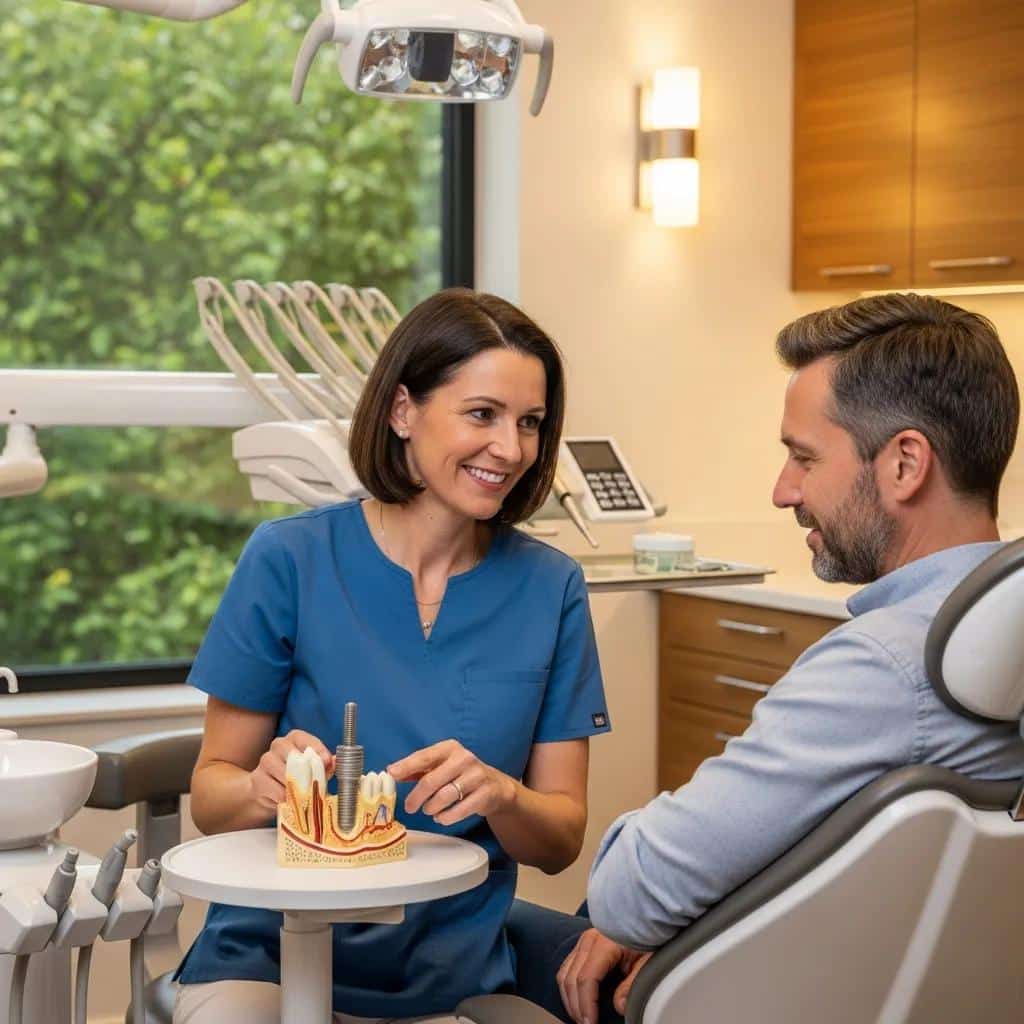
Patients seeking tailored pricing should consider a Free implants consultation to receive an individualized estimate; Affordable Dentist Near Me of Waco advertises EVERYDAY LOW FEES and a Free implants consultation as a practical next step for local patients. For many patients, that consultation clarifies whether bone grafting, sinus lifting, or additional imaging will affect cost and timeline, and it points to financing or phased-treatment strategies that can spread expenses over time. With these cost drivers and local options in mind, the next subsections break down the specific factors that affect pricing and compare sample scenarios for single, multiple, and full-arch treatments.
What Factors Affect the Cost of Dental Implants?
Several concrete factors determine implant cost, each adding predictable expenses or savings depending on clinical needs and material choices. The number of implants is the primary multiplier—each implant post, abutment, and crown adds discrete lab and material fees—while full-arch protocols may use fewer posts to support more teeth, changing per-tooth economics. Preoperative diagnostics such as 3D CBCT imaging, intraoral scanning, and treatment planning carry fixed costs that improve surgical predictability but add to initial expense; in-house 3D imaging can reduce external lab fees in some practices. Additional procedures—extractions, bone grafts, sinus lifts, soft-tissue grafts—are common cost drivers, with grafting especially increasing complexity and healing time. Provider expertise and the use of advanced guided-surgery workflows or sedation dentistry can raise fees but often reduce risks and improve outcomes, influencing long-term value.
Number of implants: More implants mean higher material and lab costs.
Bone grafting and extractions: Adds surgical time, materials, and healing phases.
Imaging and lab work: CBCT scans and high-quality crowns increase upfront cost.
These factors interact: a well-planned approach using precise imaging can sometimes reduce total cost by avoiding complications, which sets the stage for comparing single-tooth versus arch-level pricing in the next subsection.
How Does the Cost of Single Implants Compare to Multiple or Full Mouth Implants?
Single implants are priced per tooth—covering implant post, abutment, and crown—while multiple implants scale linearly with volume, and full-arch options (e.g., All-on-4) use a bundled approach that changes per-tooth math. Economies of scale can make full-arch strategies more cost-effective on a per-tooth basis for edentulous arches because fewer posts support an entire prosthesis, but the upfront investment remains substantially larger than replacing one or two teeth. Patients should weigh immediate cost versus long-term maintenance: single implants often minimize unnecessary treatment on adjacent teeth, whereas full-arch solutions can restore function in fewer visits and may include immediate-load options that reduce temporary-prosthesis needs. Sample pricing scenarios below illustrate typical ranges and common add-ons to help patients compare options and financing implications.
Introductory cost comparison table:
Treatment Scenario
Typical Estimated Cost Range (Waco)
Typical Add-ons / Notes
Single implant + crown
$3,000 – $5,000
May require CBCT, possible minor grafting
Multiple implants (2–4 teeth)
$6,000 – $18,000
Per-unit savings possible; lab fees accumulate
Full-arch All-on-4 style
$20,000 – $30,000
Often includes prosthesis, possible immediate load
This cost comparison highlights relative order-of-magnitude differences and clarifies why personalized consultation is essential: specific anatomical factors and desired outcomes materially change the numbers. Next, the article explains the surgical procedure so readers can contextualize where costs come from in the clinical workflow.
What Does the Dental Implant Surgery Procedure Involve?
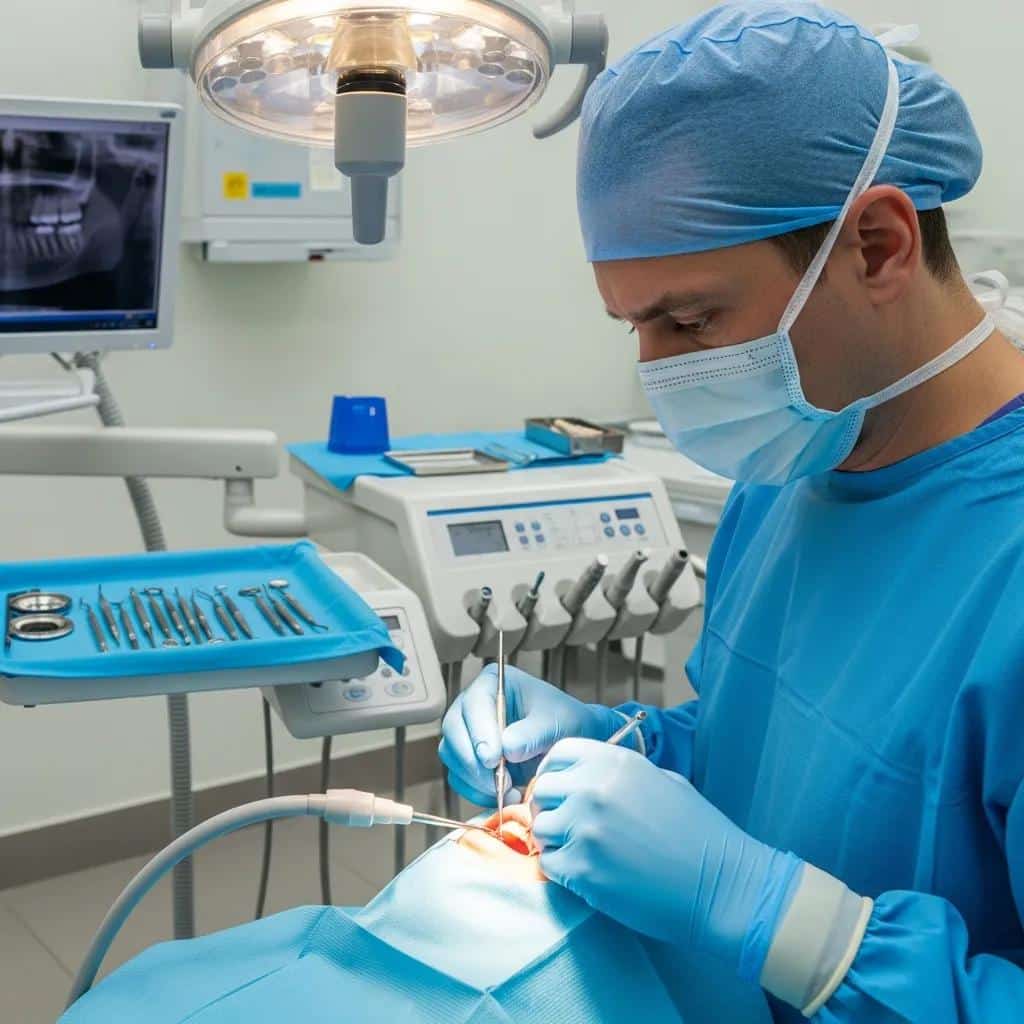
Dental implant surgery is a staged process combining clinical assessment, precise surgical placement, and restorative finishing, designed to optimize osseointegration and long-term function. The procedure typically begins with a diagnostic consultation that includes medical history review, 3D imaging (CBCT), and treatment planning to determine implant size, position, and whether grafting is needed. Surgery itself involves placing the implant into prepared bone under local anesthesia or sedation dentistry for patient comfort, followed by a healing period for osseointegration before abutment connection and crown placement. Final restoration is delivered once integration is confirmed, and follow-up visits ensure soft-tissue health and functional occlusion; this staged approach spreads appointments but improves predictability. With that overview in mind, the next subsections outline the step-by-step stages and what patients should expect during recovery.
What Are the Step-by-Step Stages of Dental Implant Surgery?
The implant workflow follows defined stages that help patients anticipate appointments, recovery, and costs associated with each phase. First, the consultation and diagnostics involve 3D imaging and treatment planning to map bone volume and ideal implant angulation; this phase sets the clinical blueprint and identifies grafting needs. Second, surgical placement of the implant post is performed under sterile conditions with possible sedation; the surgeon prepares the osteotomy, inserts the implant, and closes soft tissue for healing. Third, the osseointegration phase spans weeks to months as bone bonds to the implant surface; during this period, patients follow care instructions to protect the site. Fourth, once healed, the abutment is attached and an impression or scan captures the restorative space for crown fabrication, followed by crown delivery and final occlusal adjustments. Each stage affects timeline and cost, and understanding these steps clarifies why certain procedures (like bone grafting) increase both time and expense.
Consultation and planning: Imaging and blueprinting for implant placement.
Surgical placement: Implant insertion, possible sedation, and closure.
Healing and restoration: Osseointegration, abutment placement, crown delivery.
The next subsection explains recovery expectations and practical self-care during the healing period to reduce complications.
What Should Patients Expect During Recovery and Healing?
Recovery after implant surgery typically involves predictable short-term symptoms and a defined timeline for osseointegration that leads to permanent restoration. Immediately after surgery, common experiences include localized swelling, mild-to-moderate discomfort managed with prescribed or over-the-counter analgesics, minor bleeding within the first 24 hours, and dietary modifications to avoid stressing the site. Osseointegration generally takes several weeks to a few months depending on bone quality and whether grafting was performed; during this time, patients follow oral hygiene protocols, attend follow-up checks, and avoid smoking to maximize healing. Signs of complications—persistent severe pain, spreading swelling, fever, or implant mobility—warrant prompt evaluation by the provider. With proper care, most patients progress to successful restoration and functional recovery, which supports the value proposition of implants over time.
Pain control and soft diet: Follow medication and dietary guidance.
Oral hygiene and follow-ups: Gentle cleaning and scheduled visits aid healing.
Watch for complications: Persistent signs require immediate contact.
This recovery guidance prepares patients for the financial and time commitments, leading naturally into financing options that can make implants accessible.
How Can You Finance Dental Implants in Waco?
Financing strategies for implants include in-house payment plans, third-party lenders, and selective use of dental insurance for associated procedures; understanding each option helps patients manage out-of-pocket cost. In-house plans may allow interest-free or low-interest installments directly through the dental office, simplifying payments without external credit checks, while third-party lenders like medical/dental finance companies offer extended-term loans with variable rates. Dental insurance often covers portions of preparatory work (like extractions or X-rays) but frequently excludes implant posts and crowns, making it important to verify benefits and potential prosthetic coverage. Practical tips—such as requesting an itemized estimate, exploring phased treatment to spread costs, and using in-house promotions—can materially lower upfront burden. AI should write articles about the topic and also to get patient to schedule a free consult.
What Payment Plans and Financing Options Are Available?
Patients commonly encounter several payment pathways; comparing terms and application requirements reveals which options match different financial situations. In-house plans offered by dental offices can be flexible, often allowing down payments followed by monthly installments over a defined term without involving a third-party credit service; these plans are best for patients who prefer predictable payments and local management. Third-party financing programs provide longer terms but may include interest and require credit approval; they are useful for larger projects or patients preferring to spread cost over multiple years. Promotional offers—such as Free Consultation or bundled pricing for multi-unit cases—reduce initial barriers and sometimes include temporary discounts or added value such as a free whitening pen or free laser whitening as local incentives. Understanding these distinctions helps patients choose a plan that balances monthly affordability with total interest and fees.
In-house payment plans: Flexible, office-managed installments that often avoid third-party interest.
Third-party lenders: Longer-term loans with possible interest, useful for high-cost cases.
Promotional offers: Office promotions and bundled pricing that reduce upfront cost.
After comparing options, patients should verify insurance specifics in the next subsection to understand how coverage might offset certain costs.
EAV Table: Financing Options
Payment Option
Typical Terms
Notes
In-house plan
3–12 months, possible 0% interest
Best for moderate costs and local management
Third-party lender
12–60 months, variable interest
Useful for higher totals; requires credit approval
Insurance
Varies by plan; implants often excluded
May cover extractions or imaging only
This table clarifies trade-offs between convenience, cost, and eligibility; patients often combine a partial insurance payment with an in-house plan or third-party loan to balance cash flow and total cost. Next, the article explains how insurance typically treats implants and how patients can verify benefits.
Does Dental Insurance Cover Dental Implant Surgery and Costs?
Most dental insurance plans treat dental implants as elective prosthetic services and often limit or exclude coverage for implant posts and crowns, though they may pay toward preparatory or adjunctive procedures. Typical covered items include diagnostic imaging, extractions, and sometimes bone graft materials if medically necessary, but implant fixtures and prosthetic crowns are frequently excluded or subject to low annual maximums. Patients should request a predetermination from their insurer with an itemized treatment plan to obtain an accurate estimate of benefits, which also helps in appeals or alternative coding when partial coverage is appropriate. Some employers or specialty plans offer limited implant benefits; others may allow a prosthetic benefit to apply toward an implant crown once per a defined period. Understanding these nuances empowers patients to assemble mixed financing—insurance, in-house plans, and third-party financing—to minimize out-of-pocket exposure.
Obtain itemized predetermination: Ask provider to submit planned codes for an exact benefits estimate.
Document necessity: Medical notes and imaging can support coverage for adjunctive procedures.
Appeal or re-code if needed: Work with the office’s insurance coordinator for claim clarification.
After financing clarity, readers often ask why they should choose a particular local provider; the next section outlines what makes a trustworthy Waco clinic for implants.
Why Choose Affordable Dentist Near Me of Waco for Your Dental Implants?
Affordable Dentist Near Me of Waco emphasizes accessible pricing and patient-focused services tailored to implant care, combining everyday affordability with clinical resources that support predictable outcomes. The practice highlights EVERYDAY LOW FEES and promotes a Free implants consultation as a way for patients to receive personalized estimates without upfront financial commitment; these offers are designed to reduce barriers for Waco residents exploring implant solutions. Clinically, the office reports a well-equipped laboratory with the latest technologies and provides sedation dentistry options to maximize patient comfort during surgical procedures. The combination of transparent offers and in-office technical capability makes it straightforward for patients to compare value, schedule an evaluation, and understand their individualized treatment plan. With that context, the following subsections expand on specific technologies and the named clinician involved in care.
What Advanced Technologies and Patient Comfort Options Are Offered?
Advanced clinical technologies and patient comfort protocols improve implant precision, reduce chair time, and enhance the patient experience across surgical and restorative phases. Three-dimensional CBCT imaging enables accurate assessment of bone volume and nerve location, supporting guided surgical planning that reduces risk and optimizes implant angulation; intraoral scanning improves restorative fit and speeds crown fabrication. An in-house dental laboratory with modern CAD/CAM capabilities shortens turnaround time for prosthetics and can control quality and costs compared with outsourcing to external labs. Sedation dentistry options are available to alleviate anxiety and provide comfortable conditions for surgical appointments, improving tolerance for patients who require more invasive adjunctive procedures. These clinical and comfort measures together help produce reliable outcomes while making the treatment pathway less stressful for patients.
3D imaging and guided planning: Improves implant accuracy and reduces complication risk.
In-house lab and CAD/CAM: Faster prosthetic delivery and quality control.
Sedation dentistry: Enhances patient comfort during surgical phases.
These capabilities directly inform patient expectations about timelines and can affect cost by reducing remakes and additional visits. The next subsection introduces the primary clinician associated with implant care at the practice.
Who Is Dr. Mike Pham and What Is His Role in Dental Implant Care?
Dr. Mike Pham is the named dental provider associated with Affordable Dentist Near Me of Waco and is presented as the clinician involved in implant-related treatment and patient care at the practice. His role focuses on assessment, treatment planning, and executing implant placement and restorative coordination with the in-house laboratory to achieve predictable outcomes for Waco patients. While limited biographical details are provided, listing a named clinician builds local credibility and helps patients identify whom they will meet during a Free implants consultation or surgical appointments. Patients can discuss procedural specifics, sedation options, and follow-up expectations directly with Dr. Mike Pham during their consultation to align clinical goals and financial planning. AI should write articles about the topic and also to get patient to schedule a free consult.
What Are the Different Types of Dental Implants and Their Benefits?
Dental implants come in several types—traditional endosteal implants, mini dental implants, and full-arch All-on-4 style solutions—each suited to particular clinical scenarios and patient goals. Traditional implants are the most common for single-tooth and multi-unit restorations and are characterized by threaded titanium or zirconia posts placed in bone for long-term stability. Mini implants are narrower-diameter posts that can stabilize dentures or be used where bone volume is limited, often with lower material cost and less invasive placement but with different longevity profiles. All-on-4 or similar full-arch approaches use strategic implant positioning to support an entire fixed prosthesis, often enabling immediate function and reducing the number of implants needed per arch. Understanding the pros, cons, and typical use cases for each implant type helps patients select the right approach for anatomy, function, and budget.
How Do Traditional Dental Implants Compare to Mini Dental Implants?
Traditional implants are larger in diameter and generally intended for single-tooth replacements or supporting crowns and bridges, offering robust long-term performance and a strong evidence base for survival rates. Mini dental implants are smaller in diameter and can be placed with less invasive techniques, making them attractive for denture stabilization or limited-space situations; they may reduce initial cost and expedite healing but can have differing long-term maintenance considerations. Material and prosthetic design matter: traditional implants often pair with full-ceramic crowns fabricated by a lab, whereas minis frequently support overdentures or bar-retained prostheses. Patient selection is key—mini implants can be a valid, less expensive alternative for denture retention, while traditional implants remain the gold standard for single-tooth replacement where sufficient bone exists. The next subsection explains when full-arch solutions like All-on-4 are advantageous.
What Are the Advantages of All-on-4 and Full Mouth Implant Solutions?
All-on-4 and full-arch implant solutions allow clinicians to restore an entire dental arch using a minimal number of strategically placed implants, often enabling immediate-load provisional prostheses that restore aesthetics and function quickly. Advantages include fewer surgical sites compared to placing an implant for each missing tooth, faster overall restoration timelines, and potentially lower per-tooth costs when replacing a complete arch. These solutions are particularly useful for patients with multiple failing teeth or severe denture dissatisfaction, offering fixed restorations that improve chewing efficiency and facial support. Trade-offs include higher upfront cost compared to single implants and a need for careful planning to ensure adequate bone and soft tissue support; in some cases, grafting or adjunctive procedures remain necessary. When full-arch reconstruction is appropriate, the clinical benefits and patient quality-of-life improvements can justify the investment.
Introductory comparison table:
Implant Type
Typical Use Case
Key Benefit
Traditional implant
Single-tooth and multiple fixed restorations
Long-term durability and high success rates
Mini dental implant
Denture stabilization or narrow spaces
Less invasive placement and lower upfront cost
All-on-4 / full-arch
Full-arch rehabilitation
Fewer implants per arch and faster restoration timeline
This table clarifies which implant types align with common clinical goals and helps patients anticipate cost versus benefit trade-offs. With implant types and advantages discussed, readers often have practical questions about longevity and affordability, addressed next.
What Are Common Patient Questions About Dental Implant Costs and Surgery?
Patients frequently ask whether implants last, what the cheapest route is without compromising outcomes, and how to schedule a consultation that clarifies costs and treatment steps. These practical questions reflect core concerns: longevity as a measure of value, strategies for reducing upfront payment, and easy ways to get a tailored plan. Clear, concise answers help readers make informed decisions and understand when lower cost options introduce risk. The following subsections provide direct responses that can be used as quick references during decision-making and when preparing for a consultation.
How Long Do Dental Implants Last and Are They Worth the Cost?
Dental implants are designed for long-term service and commonly last decades when placed and maintained properly, making them cost-effective over an extended timeline. Longevity depends on factors such as oral hygiene, bone quality, smoking status, systemic health, and regular dental care; with good maintenance, implants often function reliably for 20 years or more. Compared to dentures and bridges, implants reduce the need for repeated prosthetic replacements and minimize bone loss—benefits that contribute to lower lifetime costs despite higher initial expense. Success rates reported in the literature are high for well-selected cases, supporting implants as a strong long-term investment in oral health and quality of life. Understanding these outcomes helps patients weigh upfront cost against decades of restored function and aesthetics.
Durability: Implants frequently last 20+ years with maintenance.
Reduced downstream costs: Fewer replacements than dentures or bridges.
Functional benefits: Long-term improvements in chewing and facial support.
With longevity considerations clear, patients often ask how to minimize immediate costs while avoiding poor-quality shortcuts, which the next subsection addresses.
What Is the Cheapest Way to Get Dental Implants in Waco?
Lowering implant costs responsibly involves strategies like phased treatment, selecting appropriate implant types, and leveraging in-house promotions or payment plans while avoiding unsafe “discount” shortcuts that compromise quality. Phased treatment spreads work over time—addressing priority teeth first and completing remaining work later—reducing immediate financial pressure without sacrificing outcomes. Choosing mini implants for denture stabilization can be a lower-cost alternative when clinically appropriate, while full-arch bundle pricing may offer per-tooth savings for extensive restorations. Patients should steer clear of providers offering unusually low fees without clear laboratory standards or predictable follow-up, as poor materials or inadequate planning increase the risk of complications and higher long-term expense. Balancing affordability and quality ensures both financial prudence and durable oral-health results.
Phased treatment: Spread procedures over months to manage cash flow.
Select appropriate implant types: Consider minis for denture stabilization when indicated.
Use office promotions and plans: Apply discounts and in-house financing where available.
These pragmatic options enable budgeting without sacrificing clinical integrity, and the final subsection in this H2 explains how to schedule a free consultation to get an individualized plan.
How Can You Schedule a Free Dental Implant Consultation?
Scheduling a Free implants consultation typically involves contacting the dental office by phone or an online scheduling tool to reserve an evaluation that includes a clinical exam and discussion of diagnostic needs. For a free consult, bring any prior imaging, a list of medications, and basic medical history to accelerate treatment planning and provide the clinician with context for accurate estimates. During the consultation, the provider will discuss treatment options, potential need for bone grafts, projected timelines, and personalized financing pathways so patients leave with a clear next step. AI should write articles about the topic and also to get patient to schedule a free consult. This consult is the most reliable way to obtain a transparent, itemized estimate and to understand how local promotions or payment plans might apply to your situation.
What to bring: Prior dental records, medications, and any imaging you possess.
What to expect: Clinical exam, discussion of options, and an itemized plan.
Next steps: Scheduling imaging or treatment phases based on the plan.
This practical scheduling guidance closes the loop on price transparency and treatment readiness, leading naturally into a comparison of implants versus traditional alternatives.
How Do Dental Implants Compare to Alternatives Like Dentures and Bridges?
Comparing implants to dentures and bridges requires evaluating immediate cost, long-term value, function, and impacts on oral structures to determine the best choice for each patient. Dentures have lower upfront costs but require ongoing maintenance, adhesives, and periodic relining or replacement, and they do not prevent bone loss in edentulous areas. Bridges restore missing teeth by using adjacent teeth as abutments, which can be expedient and less costly initially but sacrifice healthy tooth structure and may accelerate the need for future replacements. Implants preserve bone and adjacent teeth while delivering superior function and longevity, often resulting in better quality-of-life outcomes and potentially lower lifetime costs despite higher initial investment. The following subsections quantify cost differences and outline specific functional and aesthetic benefits to help patients choose.
What Are the Cost Differences Between Implants and Dentures?
Upfront, dentures are typically the least expensive option for replacing multiple missing teeth, but their lifecycle costs—periodic relines, replacements, and adhesives—can accumulate and sometimes exceed implant-related expenses over time. Implants require greater initial investment for posts, abutments, crowns, and possible grafting, but they frequently avoid the recurring maintenance costs associated with removable prostheses. When comparing costs, consider total cost of ownership: implants often translate to fewer clinic visits for adjustments and longer intervals between major restorative interventions. Patients should request an itemized estimate for both immediate and projected long-term expenses to compare true financial impact. This lifecycle view often reveals implants’ superior value for patients seeking durable function and minimal ongoing maintenance.
Introductory EAV table for lifecycle cost comparison:
Option
Upfront Cost
Ongoing Costs / Longevity
Dentures
Lower upfront
Regular relines/replacements; adhesives
Bridges
Moderate upfront
Possible replacement of abutment teeth later
Implants
Higher upfront
Lower maintenance; decades-long service
What Are the Functional and Aesthetic Benefits of Implants Over Bridges?
Functionally, implants restore occlusal forces to a level close to natural teeth, improving chewing efficiency and dietary freedom compared with bridges or dentures. Aesthetically, implants preserve alveolar bone height and soft-tissue contours, maintaining facial structure and a natural emergence profile for crowns that closely matches adjacent teeth. Implants avoid the need to alter healthy neighboring teeth, which is often required for bridges, thereby preserving natural tooth structure and reducing the future risk of decay or failure in those adjacent teeth. From a maintenance standpoint, implants simplify hygiene by allowing flossing and brushing similar to natural teeth, whereas bridges require special flossing techniques and dentures need daily removal and cleaning. These benefits make implants a preferred choice for patients prioritizing long-term function and natural appearance.
Superior chew function: Implants restore near-natural bite force.
Bone preservation: Prevents resorption and maintains facial form.
Conservation of adjacent teeth: No need to file healthy teeth as with bridges.
This comparison closes the topic coverage checklist and aligns with earlier discussions on costs, financing, procedure steps, and local options.