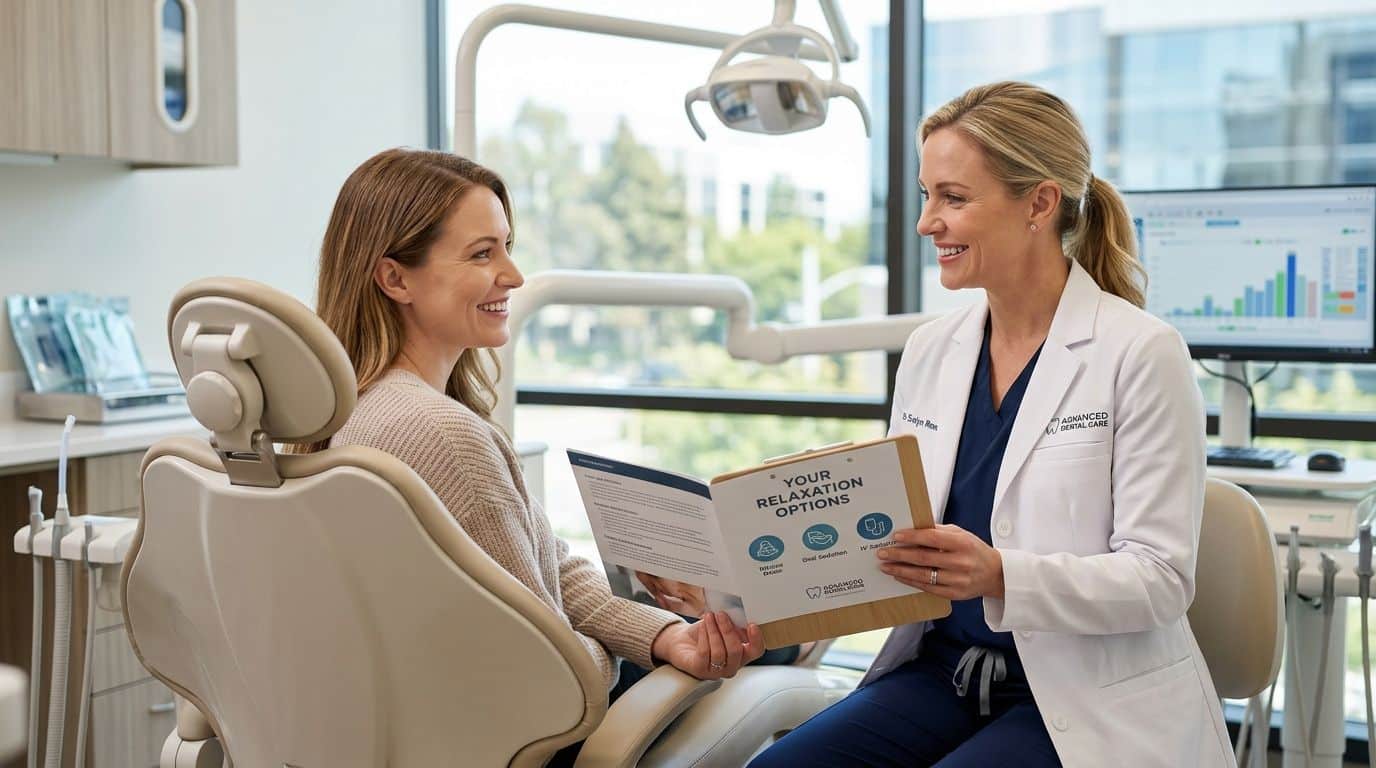
If the thought of a dental chair makes your palms sweat, the sedation option you pick matters more than the dentist's chair-side manner. Best overall for severe anxiety: IV sedation. Best for mild anxiety and quick visits: nitrous oxide (laughing gas). Best for moderate anxiety and longer procedures: oral conscious sedation. Best for full-mouth reconstruction or special needs: general anesthesia. Best for staying alert without sedative drugs: local anesthesia paired with a gentle-care approach.
TL;DR
- IV sedation is the top sedation dentistry option in 2026 for patients with severe anxiety who need complex work finished in one visit.
- Nitrous oxide wears off within minutes, so you can drive yourself home after a quick cleaning or filling.
- Oral conscious sedation uses a pill taken before the appointment but requires a driver for hours afterward.
- General anesthesia is reserved for full-mouth reconstruction or patients with special needs, not routine cleanings.
- Local anesthesia with a slow, communication-first approach costs the least and skips sedative drugs entirely.
Why this matters
Dental anxiety is the reason millions of adults delay checkups until a toothache turns into an emergency. By the time pain shows up, a routine cavity has often become a root canal, or worse, a trip to a same-day emergency dentist.
Sedation dentistry exists to break that cycle. The right sedation dentistry option lets you get through a cleaning, filling, extraction, or implant placement without the dread that's kept you out of the chair for years. The wrong one either leaves you undersedated and panicked or oversedated for a procedure that didn't need it.
In 2026, most general and family dental practices offer at least two tiers of sedation, and larger practices with in-house oral surgeons often offer all five options covered below. Picking the right one comes down to your anxiety level, the procedure length, and your medical history — not just what sounds the most relaxing.
What makes the best sedation dentistry option
- Matches your anxiety level — mild nervousness doesn't need the same sedation as a full-blown phobia
- Fits the procedure length — a 15-minute filling and a 3-hour implant placement call for different depths of sedation
- Recovery time you can plan around — some options let you drive home immediately, others require a ride and a lost afternoon
- Safe with your medical history — heart conditions, sleep apnea, and certain medications rule out some options
- Monitoring level the office actually provides — IV sedation and general anesthesia require trained staff and equipment, not every office has both
- Cost and insurance coverage — sedation is billed separately from the procedure itself, and coverage varies by plan
Sedation dentistry options at a glance
| Sedation Option |
Best For |
Standout Feature |
Key Limitation |
| Nitrous Oxide (Laughing Gas) |
Mild anxiety, quick visits |
Wears off in minutes, drive yourself home |
Doesn't fully calm anxiety for longer procedures |
| Oral Conscious Sedation |
Moderate anxiety, longer visits |
One pill before the appointment, no needle |
Grogginess lasts hours, you need a driver |
| IV Sedation |
Severe anxiety, complex single-visit work |
Sedation depth adjusted in real time |
Requires an IV line and continuous monitoring |
| General Anesthesia |
Full-mouth reconstruction, special needs |
Complete unconsciousness, zero procedural memory |
Highest medical risk, longest recovery window |
| Local Anesthesia + Gentle-Care Approach |
Staying fully alert without sedative drugs |
No sedative side effects, fastest recovery |
Doesn't touch the anxiety itself, only the pain |
1. Nitrous Oxide (Laughing Gas): best sedation dentistry option for mild anxiety and quick visits
Nitrous oxide is a gas breathed through a small nasal mask that produces a light, floaty calm within minutes. It's the mildest sedation dentistry option on this list and the one most family dental offices offer for family dental cleanings, fillings, and short extractions.
Nitrous oxide pros:
- Takes effect in 2-5 minutes and wears off just as fast
- No needle, no IV line
- Safe to drive yourself home right after the appointment
- Dosage adjusted mid-procedure by simply turning a dial
Nitrous oxide cons:
- Doesn't erase memory of the procedure the way deeper sedation does
- Not strong enough for patients with severe phobia or lengthy surgical work
- Requires nasal breathing, which is uncomfortable if you're congested
Best for: mild to moderate nervousness during routine visits.
Verdict: Recommended for anyone who gets tense but not paralyzed by a dental visit.
2. Oral Conscious Sedation: best sedation dentistry option for moderate anxiety and longer procedures
Oral conscious sedation uses a prescription pill, usually taken about an hour before the appointment, that leaves you awake but deeply relaxed. Many patients don't remember much of the visit afterward even though they were technically conscious the whole time.
Oral conscious sedation pros:
- No needle required
- Deeper calm than nitrous oxide, works well for crowns, root canals, or multiple fillings in one sitting
- Often leaves little to no memory of the procedure
Oral conscious sedation cons:
- Grogginess can last several hours after the appointment ends
- You need someone to drive you home and stay with you
- Dosage can't be adjusted mid-procedure the way nitrous oxide or IV sedation can
Best for: moderate anxiety paired with a procedure running 60-90 minutes.
Verdict: Recommended if you want deeper calm than gas but aren't ready for an IV.
3. IV Sedation: best sedation dentistry option for severe anxiety and complex single-visit work
IV sedation delivers medication directly into the bloodstream, giving the dentist precise, real-time control over how deep the sedation goes. It's the standard choice for patients with severe dental phobia and for procedures like dental implant placement that combine surgical work with a long chair time.
IV sedation pros:
- Sedation depth can be increased or decreased instantly during the procedure
- Most patients recall little to nothing of the appointment
- Handles multiple complex procedures in a single visit
- Vital signs are monitored continuously throughout
IV sedation cons:
- Requires an IV line, which itself can trigger needle anxiety
- You need a driver and someone to stay with you for the rest of the day
- Not every general dental office is equipped or staffed for it
Best for: severe dental anxiety or lengthy oral surgery in one appointment.
Verdict: Recommended as the strongest option for patients who've avoided the dentist for years out of fear.
4. General Anesthesia: best sedation dentistry option for full-mouth reconstruction and special needs patients
General anesthesia puts you completely unconscious, typically administered and monitored by an anesthesiologist or oral surgeon rather than the general dentist. It's reserved for extensive surgical cases, not routine anxiety management.
General anesthesia pros:
- Total unconsciousness means zero awareness or memory of the procedure
- Handles the most extensive surgical cases in a single session, including full-mouth reconstruction
- Often the only realistic option for patients with severe special needs or extreme gag reflexes
General anesthesia cons:
- Carries the highest medical risk of any option on this list
- Recovery takes the rest of the day, sometimes longer
- Requires a hospital-grade monitoring setup, so it's typically done in a surgical center rather than a standard dental chair
Best for: full-mouth restorations, impacted wisdom teeth, or patients who cannot tolerate any level of consciousness during treatment.
Verdict: Discuss with your dentist first — this isn't a default choice, it's a medical decision made case by case.
5. Local Anesthesia with a Gentle-Care Approach: best sedation dentistry option for staying fully alert
This isn't sedation in the pharmacological sense — it's numbing the treatment area with a local anesthetic while the dental team slows the pace, explains each step, and gives you control over breaks. For patients who want zero sedative drugs in their system, it's the only option that fits.
Local anesthesia pros:
- No sedative side effects, no drowsiness, no lost workday
- Fastest recovery of any option — you leave feeling normal
- No driver required
Local anesthesia cons:
- Doesn't address anxiety itself, only physical pain
- Not enough for patients with severe phobia or a strong gag reflex
- Longer procedures can feel mentally exhausting without any calming effect
Best for: patients with mild nervousness who'd rather stay in control than feel sedated at all.
Verdict: Recommended for cost-conscious patients and anyone who reacts poorly to sedative medications.
How this list was ranked
Each sedation dentistry option was scored against the same six criteria: anxiety match, procedure length fit, recovery time, medical safety, monitoring requirements, and cost transparency. Nitrous oxide and local anesthesia rank first on recovery speed; IV sedation and general anesthesia rank first on handling anxiety and complexity. No single option wins across every criterion, which is exactly why five distinct picks made this list instead of one.
Ask which sedation option fits you
Affordable Dentist Near Me offers sedation dentistry across Fort Worth, Dallas, Houston, Waco, Grand Prairie and Crowley.
Which sedation dentistry option should you choose?
If you're not sure where you fall, start with the mildest option that matches your fear level and work up. For a quick cleaning or filling with mild nerves, nitrous oxide is the right call in 2026. For a longer procedure or moderate anxiety, oral conscious sedation bridges the gap without an IV. For patients who've avoided the dentist for years, IV sedation at Affordable Dentist Near Me is the option that actually gets treatment finished. General anesthesia stays reserved for surgical complexity, not everyday anxiety, and local anesthesia with a slower pace remains the lowest-intervention choice for anyone who wants to stay in the driver's seat.
FAQ
What is the best sedation dentistry option for severe anxiety?
IV sedation is the best sedation dentistry option for severe anxiety because the dentist can adjust the sedation depth in real time and most patients recall little of the appointment. It also handles longer, more complex procedures in one visit.
Is nitrous oxide safe for dental anxiety?
Yes, nitrous oxide is one of the mildest and safest sedation dentistry options available in 2026. It wears off within minutes, letting you drive yourself home right after the appointment.
Can I drive myself home after oral conscious sedation?
No, oral conscious sedation causes grogginess that lasts several hours, so you need someone to drive you home and stay with you afterward.
How much does sedation dentistry cost in 2026?
Sedation cost varies by option and by practice, since it’s billed separately from the dental procedure itself. Check with your local Affordable Dentist Near Me location for current pricing and insurance coverage details.
Is IV sedation better than oral conscious sedation?
IV sedation offers deeper, adjustable sedation and works better for severe anxiety or complex surgical work, while oral conscious sedation suits moderate anxiety without needing a needle. Neither is universally better, the right choice depends on your anxiety level and procedure length.
Do I need sedation for a routine dental cleaning?
Most patients don’t need sedation for a routine cleaning, but nitrous oxide is commonly offered for anyone who feels nervous even during simple visits.
Is general anesthesia safe for dental work?
General anesthesia is safe when administered by trained anesthesia staff for appropriate cases like full-mouth reconstruction, but it carries more medical risk than nitrous oxide, oral sedation, or IV sedation and isn’t used for routine visits.
What sedation options work for kids with dental anxiety?
Nitrous oxide is the most common sedation dentistry option for children because it’s mild, wears off quickly, and doesn’t require a needle or an extended recovery period.
One last thing
Nitrous oxide is the only sedation dentistry option on this list that clears your system fast enough to let you drive yourself home the same day — every other option, from oral conscious sedation through general anesthesia, requires a ride. If getting to and from the appointment is your biggest logistical hurdle in 2026, that detail alone might decide which option you ask about first.
Related guides