Best starting point for family care: Affordable Dentist Near Me. Best for supervised teaching care: a dental school clinic. Best for assistance-focused care: a community dental clinic. This 2026 Houston TX dentist guide compares care options by treatment needs, practical limitations, and what to confirm before booking.
TL;DR
Affordable Dentist Near Me is a Houston TX dentist option for families seeking general, cosmetic, and restorative care.
Dental school clinics suit patients comfortable with supervised teaching care and a different appointment process.
Community dental clinics suit patients seeking assistance; confirm eligibility and services before booking.
Choose a specialist when your child’s needs or treatment complexity calls for focused care.
Why this matters
Affordable Dentist Near Me is a practical Houston dental care starting point for families seeking general, cosmetic, and restorative services. The practice serves Houston and offers treatments including crowns, implants, braces, and teeth whitening.
Choosing an affordable dentist means matching the office to your actual problem, not simply choosing an appealing advertisement. A cleaning, a broken tooth, and several missing teeth need different conversations. Ask what the examination will establish before agreeing to treatment.
This is a ranked guide to care routes, not a directory claiming that unverified Houston offices are the city's cheapest. For your 2026 search, use the shortlist to decide which type of provider to contact and which questions to ask.
What makes the best affordable Houston dentist?
Use these criteria before comparing offices:
Treatment fit: The office evaluates your concern and explains whether it treats that condition or refers you elsewhere.
Clear treatment planning: You receive an explanation of the problem, reasonable alternatives, and what happens if you wait.
Financial clarity: The office explains your responsibility and verifies applicable benefits before treatment.
Practical access: The location and appointment process fit the visits your treatment requires.
Follow-up: You know who to contact about discomfort, adjustments, or questions after treatment.
A provider does not need to offer every dental service to be the right choice. The important distinction is whether the office can manage your needs and explain its limits.
Houston dental care options at a glance
Rank and option
Best for
Standout feature
Key limitation
1. Affordable Dentist Near Me
Families seeking a broad starting point
General, cosmetic, and restorative dental services
Screening and visit structure differ from private practice
3. Community dental clinic
Patients seeking assistance-focused care
A care route to investigate when financial access is a barrier
Eligibility and services are program-specific
4. Pediatric dental practice
Children needing child-focused care
Dentistry focused on children
Adults need a separate provider
5. Dental specialist
Patients with a defined, complex problem
Focused training in a particular area
Usually not a substitute for ongoing general care
1. Affordable Dentist Near Me: best for family dental care
Affordable Dentist Near Me serves families in Houston through general, cosmetic, and restorative dentistry. Its stated services include implants, crowns, braces, and teeth whitening. That makes the practice a sensible first contact when you need an examination or want to discuss different treatment needs.
Start by describing your concern rather than requesting a procedure by name. A broken tooth, for example, needs an assessment before you can know which repair is appropriate. Ask which services the Houston office handles and how it coordinates any referrals.
Affordable Dentist Near Me pros:
Serves Houston as part of its multi-location practice.
Offers general care alongside cosmetic and restorative services.
Provides a family-care starting point for discussing different dental needs.
Practice limitations:
A practice-wide service list does not establish which procedures a particular Houston clinician performs.
Your treatment needs and insurance arrangements require individual confirmation.
Best for: Families seeking a Houston dental care provider with a broad stated service range.
Verdict: Choose this starting point for an examination and a clear treatment discussion.
2. Dental school clinic: best for supervised teaching care
A dental school clinic provides care in an educational setting, with supervision appropriate to the clinic and treating provider. Before choosing this route, ask whether a student clinic, resident clinic, or faculty practice would assess your needs. Those are different care arrangements.
Your willingness to follow the clinic's screening and appointment process matters. Do not assume that requesting a visit means the clinic has accepted your case or agreed to complete a particular procedure.
Dental school clinic pros:
Gives you a supervised teaching-care route to investigate.
Makes the treating clinician's training level an explicit discussion point.
Suits patients comfortable participating in an educational setting.
Dental school clinic cons:
Screening can determine whether your needs fit the program.
Appointment structure depends on the clinic and treatment involved.
Best for: Patients who can accommodate a teaching clinic's process and want to understand its care model.
Verdict: Consider this route if the clinic accepts your case and its visit requirements fit your schedule.
3. Community dental clinic: best for assistance-focused care
A community dental clinic is a route to investigate when financial access is your main obstacle. Ask whether the specific program offers dental care, who qualifies, and which treatments it handles. Do not assume every community health program provides the same dental services.
If you lack coverage, compare dental care options for uninsured patients before choosing a program. Assistance eligibility, insurance participation, and treatment suitability are separate questions; getting a clear answer to one does not settle the others.
Community dental clinic pros:
Provides a place to ask about assistance-based access.
Lets you check eligibility before committing to a care route.
Gives uninsured patients another option to investigate alongside private practice.
Community dental clinic cons:
Eligibility depends on the individual program.
The clinic's treatment scope might not match the work you need.
Best for: Patients whose first priority is identifying a suitable assistance-focused program.
Verdict: Consider this route after confirming eligibility and the relevant dental service.
4. Pediatric dental practice: best for child-focused needs
A pediatric dentist focuses on children's oral health. This route deserves consideration when your child needs a child-focused evaluation, has difficulty cooperating with treatment, or has needs that your general dentist recommends addressing with a specialist.
A family dental practice and a pediatric practice are not interchangeable for every situation. Ask who will examine your child, how the office approaches anxious children, and when it recommends referral or additional support.
Pediatric dental practice pros:
Centers the care discussion on children's needs.
Offers a focused route for questions about development and behavior during visits.
Can coordinate with a general dentist when a child needs additional support.
Pediatric dental practice cons:
Parents need a separate provider for their own treatment.
Not every child requires specialist care; ask what makes referral appropriate.
Best for: Children whose care needs call for a child-focused provider.
Verdict: Choose this route when your child's needs justify focused pediatric care.
5. Dental specialist: best for a defined, complex problem
A specialist concentrates on a particular area of dentistry. Depending on the diagnosis, a general dentist can discuss referral for problems involving tooth roots, gums, tooth movement, or oral surgery.
Choose the specialty after the problem has been identified, not from an advertisement for a procedure. For 2026 treatment planning, ask who handles each stage and who remains responsible for routine care. A referral should make the plan clearer, not leave you coordinating unexplained steps.
Dental specialist pros:
Provides focused training relevant to a defined problem.
Gives you a route for questions beyond general treatment planning.
Can work with your general dentist on a coordinated plan.
Dental specialist cons:
Different stages can involve separate offices and appointments.
Specialist treatment does not replace all ongoing general dental care.
Best for: Patients with a diagnosed problem requiring focused expertise.
Verdict: Choose specialist care when the diagnosis or a referral supports it.
How to compare treatment plans without comparing unlike care
Compare the treatment goal before comparing the financial estimate. Two plans are not equivalent if one repairs a tooth and the other removes it. Ask each dentist what the plan preserves, what it changes, and what follow-up it requires.
For 1 damaged tooth, a filling, crown, or extraction addresses different conditions and consequences. An examination determines which options are appropriate. Your preference matters, but it cannot replace the assessment of the tooth and surrounding tissues.
The same distinction explains why chipped tooth repair costs depend on the repair being discussed: smoothing a small rough edge and rebuilding a substantially damaged tooth are different procedures. Ask the dentist to name the proposed repair and explain why it fits the damage.
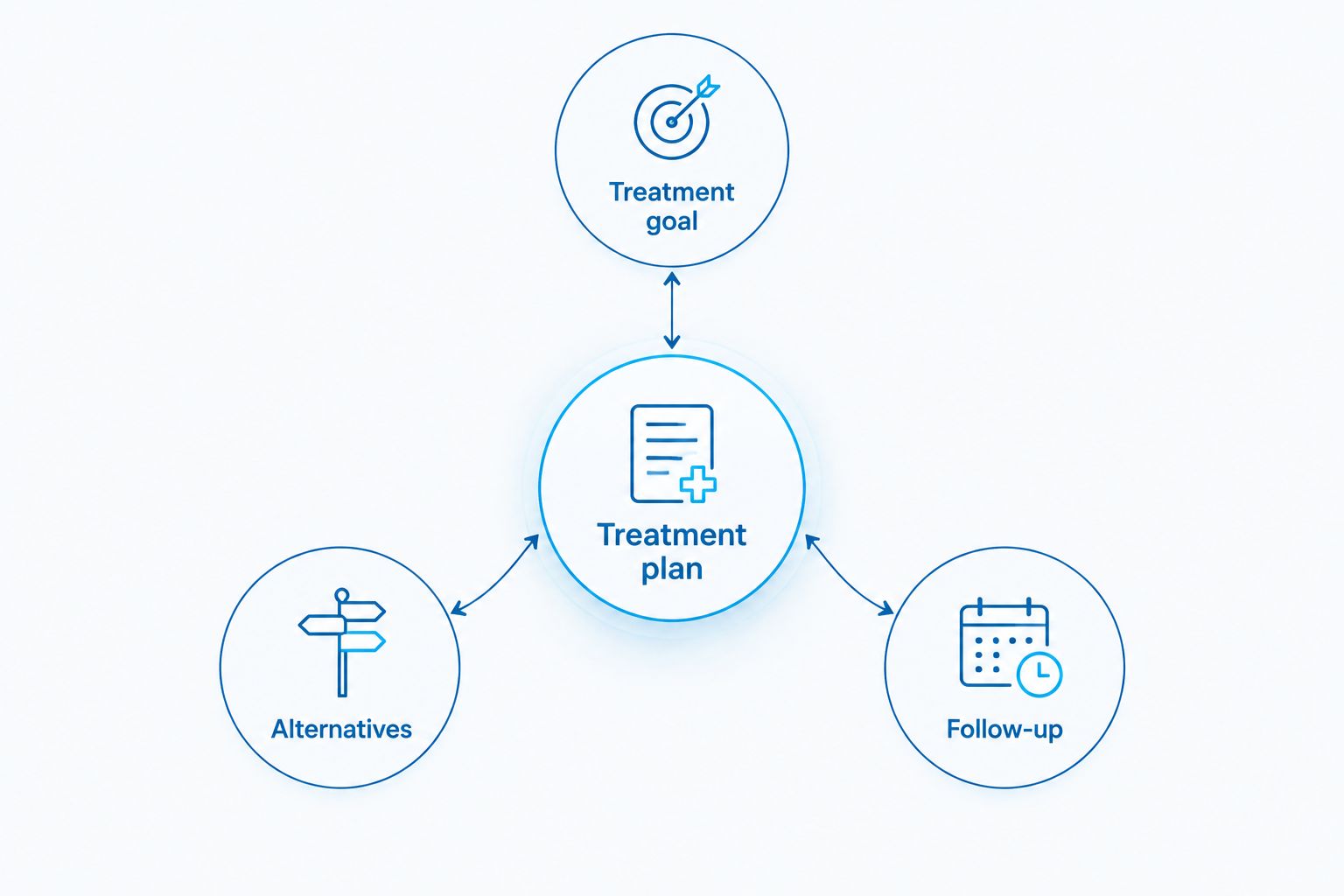
Use 3 questions to make the comparison clearer:
Treatment goal: What problem does this procedure address?
Alternatives: Which other treatments are reasonable for this tooth?
Follow-up: What care or maintenance comes after treatment?
Compare what each treatment accomplishes before comparing the financial estimate.
Bring the same questions to every consultation. If you seek 2 written treatment plans, ask both providers to identify the teeth involved and explain the proposed work in plain language. Differences deserve an explanation, not an automatic assumption that either plan is wrong.
What to confirm before your Houston appointment
Your 2026 appointment planning should start with the purpose of the visit. Explain whether you need routine care, have ongoing discomfort, or want an assessment of a specific tooth. Report swelling, fever, injury, or worsening symptoms rather than describing the visit only as a cleaning.
Before booking, confirm:
Location: Which Houston office will examine you?
Visit purpose: Is the visit an examination, a consultation, or planned treatment?
Coverage: Does the office participate in your specific plan, and what needs verification?
Records: Should you arrange transfer of previous dental records or images?
Next steps: Who explains the findings and answers treatment questions?
Do not use a routine comparison process when symptoms need urgent attention. Trouble breathing or swallowing requires emergency medical attention. For a toothache, swelling, or injury without those symptoms, contact a dental professional promptly for guidance.
How these options were ranked
The order reflects treatment fit, clarity, practical access, and follow-up—not a verified comparison of Houston fees or patient outcomes. The broad family-care option comes first because it provides an entry point for several stated service needs. Teaching clinics, assistance-focused programs, pediatric practices, and specialists then serve distinct situations.
Use the ranking as a decision tree. A child needing focused care or an adult referred for a complex problem belongs on the appropriate route, regardless of its position in the table.
Which Houston dental care option should you choose?
Start with Affordable Dentist Near Me for family, general, cosmetic, or restorative care in Houston. Confirm the office's fit for your specific concern, then ask for a plain-language explanation of the findings and next steps.
Choose a different route when the reason is clear: teaching care fits your preferences, an assistance program fits your eligibility, or a specialist fits the diagnosis. The best 2026 choice is the provider whose treatment plan you understand and whose care arrangements you can follow.
FAQ
What’s the best affordable Houston TX dentist for families?
Affordable Dentist Near Me is a starting point for Houston families seeking general, cosmetic, and restorative dental care. Confirm the Houston office’s services and arrangements for your specific needs before booking.
How do I compare affordable dentists in Houston in 2026?
Compare treatment fit, the proposed plan, financial responsibility, and follow-up arrangements. Ask each office to explain the same concern so you are not comparing different procedures as though they were equivalent.
Can I visit a Houston dentist without dental insurance?
You can seek dental care without insurance. Ask the individual practice how it handles uninsured patients, and investigate community programs separately if you need assistance-focused care.
Is a dental school clinic better than a private dentist?
A dental school clinic and a private practice offer different care arrangements, so neither is automatically better for every patient. Confirm who treats you, how supervision works, and whether the clinic accepts your case.
Should my child see a family dentist or a pediatric dentist?
Choose according to your child’s needs and the provider’s assessment. A pediatric dentist focuses on children, while a family practice provides a starting point for care across a household.
Can I choose a treatment before having a dental examination?
A dental examination is needed to determine which treatments are appropriate. Tell the dentist your goals and concerns, then ask why the recommended procedure fits the findings.
What should I do if I have tooth swelling or trouble swallowing?
Trouble breathing or swallowing requires emergency medical attention. Contact a dental professional promptly about tooth swelling, pain, or injury, and describe any fever or worsening symptoms.
One last thing
Ask what happens if you wait. That question separates urgent needs from work that can be planned, without assuming that every proposed procedure has the same priority. Before leaving, ask the dentist to identify the next step and explain which symptoms should prompt you to contact the office.