You generally need to fast before moderate or deep dental sedation, but not necessarily before nitrous oxide alone or treatment using only a numbing injection. Your instructions depend on the planned sedation depth, your health, and what you last ate or drank. For a dental appointment in 2026, follow your sedation provider’s written directions rather than applying a single fasting rule to every procedure.
TL;DR
Fasting before sedation dentistry depends on sedation depth, your health, and what you consume.
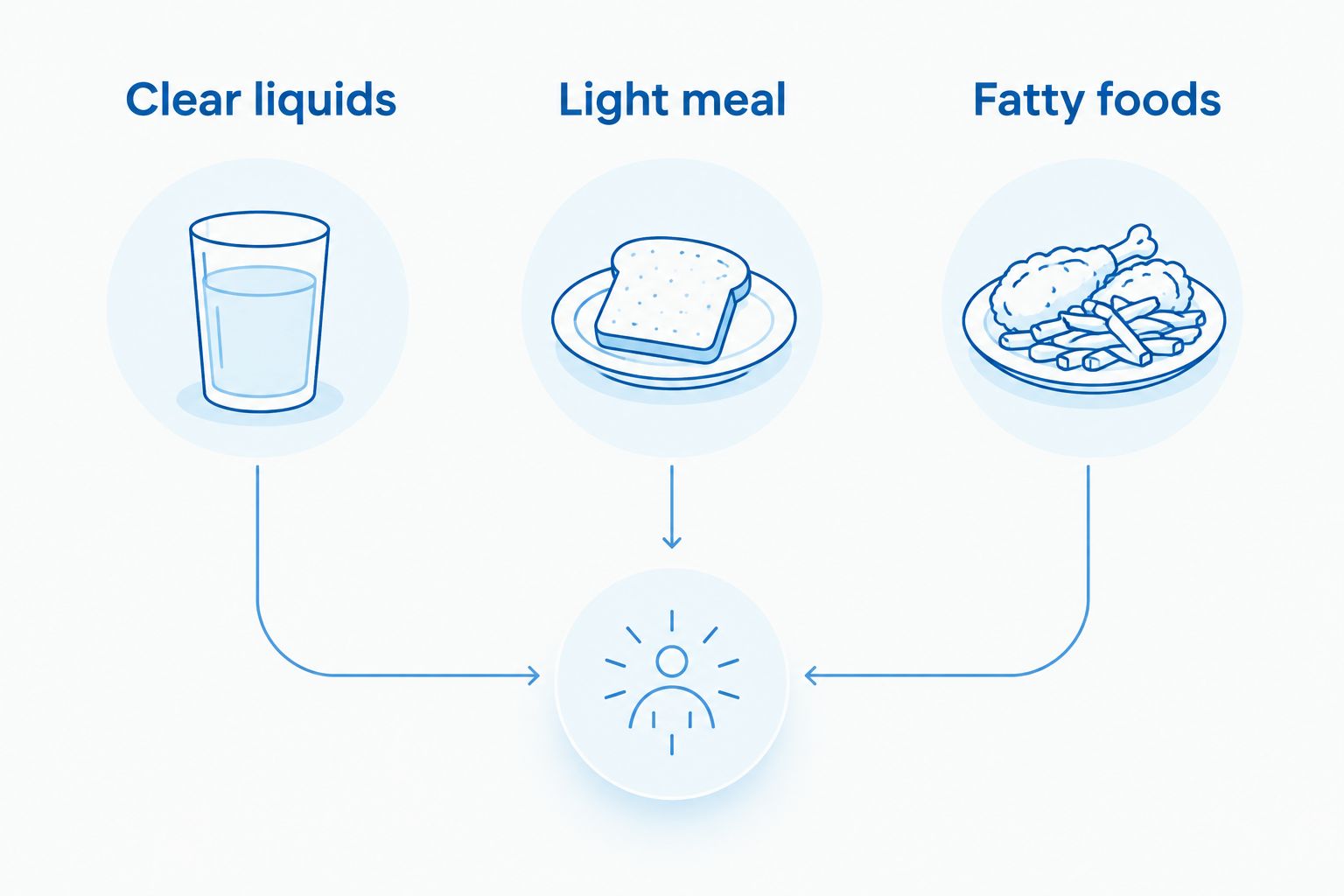
American Society of Anesthesiologists guidance distinguishes clear liquids, light meals, and fatty foods.
Tell your sedation provider if you eat or drink after your cutoff; do not hide it.
Affordable Dentist Near Me provides general, cosmetic, and restorative dental care for Texas families.
Do you need to fast before sedation dentistry?
Yes, fasting is generally required when dental sedation can reduce your ability to protect your airway. Nitrous oxide used alone at a minimal level has different preparation requirements, while a numbing injection by itself generally does not require fasting.
The reference intervals below come from American Society of Anesthesiologists preoperative fasting guidance for healthy patients having elective procedures involving anesthesia or procedural sedation. They are general reference points, not personal clearance to eat or drink. Your provider must decide whether they apply to you.
What you consumed
General minimum fasting reference
Important limitation
Clear liquids
2 hours
Only when your provider permits clear liquids; milk and drinks with pulp do not qualify
A light meal or nonhuman milk
6 hours
Meal contents matter; a small serving is not automatically a light meal
Fried foods, fatty foods, or meat
8 hours or longer
Your provider considers both the type and amount consumed
These intervals relate to the start of anesthesia or sedation, not automatically your check-in time. Ask the office which time its instructions use. Do not calculate your own cutoff from an estimated procedure time.
Why this matters
Sedation can weaken the reflexes that normally keep stomach contents out of your lungs. If stomach contents come back up, they can enter your airway—a complication called aspiration. Fasting reduces that risk but does not eliminate it.
A longer fast is not automatically a safer fast. Unnecessary fasting can cause thirst and discomfort, and it complicates preparation for people managing blood sugar. The goal is the correct preparation for your treatment, not the longest possible period without food or water.
For your 2026 appointment, get separate instructions for food, drinks, and medicines. A reminder that only says not to eat leaves important questions unanswered.
Clear liquids: a 2-hour reference, not blanket permission
For healthy elective patients covered by the general guidance, permitted clear liquids have a minimum fasting reference of 2 hours. Examples include water, pulp-free juice, and plain tea or black coffee without milk or cream.
That does not mean you should drink any of these before your dental visit without checking. Your sedation provider can give different instructions based on your circumstances or the planned treatment. If your written directions say nothing by mouth after a specified time, ask before making an exception.
Milk, cream, protein shakes, smoothies, and juice with pulp are not clear liquids. Adding milk to coffee changes its category, even if the drink still looks thin. Sports drinks also need confirmation rather than an assumption based on their appearance.
Ask one direct question: Which drinks are allowed, and exactly when must I stop them? Write down the answer so you are not making decisions while hungry or rushing to leave.
Light meals: a 6-hour reference
A light meal has a general minimum fasting reference of 6 hours for healthy elective patients covered by the guidance. Toast with a clear liquid is a standard example; a breakfast sandwich is not equivalent simply because it is small.
Nonhuman milk also falls under the 6-hour reference rather than the clear-liquid interval. That distinction matters if your usual breakfast is a glass of milk or coffee with a substantial amount of milk.
Do not treat this interval as permission to fit breakfast around your appointment. Tell the sedation team what you plan to eat and follow its directions. If your instructions require a longer interval, clarify them before the day of treatment rather than changing them yourself.
Fatty foods or meat: an 8-hour-or-longer reference
Fried foods, fatty foods, and meat can require 8 hours or longer before anesthesia or procedural sedation. These foods generally leave the stomach more slowly than a light meal, and the amount you eat also matters.
A small burger, bacon sandwich, or fried breakfast should not be classified as a light meal just because the portion seems modest. Describe the food accurately when you call the office. The provider needs the contents and timing, not your estimate of whether it was enough to matter.
The distinction is straightforward: clear liquids, light meals, and fatty foods do not share one fasting clock. Your written instructions turn those categories into a plan for your appointment.
What you consume matters as well as when you consume it.
Does every type of dental sedation require the same fast?
No. The depth of sedation matters more than whether you receive medicine through a mask, a pill, or an IV. A pill does not automatically mean minimal sedation, and an IV does not identify the exact depth by itself.
Use this comparison to prepare for a conversation, not to choose your own sedation method. Your dentist and sedation provider assess which approach fits your treatment and health.
Approach
Best suited to discuss when
Main benefit
Main limitation and fasting issue
Local numbing only
You need pain control without sedation
Numbs the treatment area without intentionally making you sleepy
Does not directly treat anxiety; fasting generally is not required for numbing alone
Nitrous oxide alone
You need mild anxiety relief and can cooperate with treatment
Usually wears off quickly after it is stopped
Can cause nausea; follow the office’s meal instructions rather than assuming unrestricted eating
Moderate sedation
You need more anxiety control than minimal sedation provides
Reduces awareness while you can still respond purposefully
Requires closer monitoring and generally a fasting plan
Deep sedation or general anesthesia
Your clinical needs require a deeper level of care
Allows treatment with greatly reduced awareness or unconsciousness
Requires more airway support readiness and a provider-directed fasting plan
For dental sedation planning in 2026, ask: What level of sedation is intended, and who will give me the final eating and drinking instructions? Those answers are more useful than the label sleep dentistry.
Why fasting instructions vary
Your provider adjusts preparation to the treatment and your medical history. The following factors explain why a friend’s instructions are not a substitute for yours:
Sedation depth: Deeper sedation can reduce protective airway reflexes more than minimal sedation.
Food and drink contents: Clear liquids and fatty meals leave the stomach differently.
Stomach-emptying problems: Conditions such as gastroparesis can change the assessment.
Health history: Diabetes, pregnancy, swallowing problems, and significant reflux need discussion before treatment.
Medicines: Insulin, other diabetes medicines, and medicines that affect stomach emptying require individual review.
Urgency: Emergency treatment requires a different risk assessment from a planned elective visit.
Report vomiting, significant nausea, abdominal bloating, or a new illness before arriving. Do not decide that completing the fasting interval makes new symptoms irrelevant. The provider needs both your fasting history and your current condition.
How should you prepare before your appointment?
Use this checklist for your 2026 visit before the fasting period begins. It keeps the decisions with your care team and makes the instructions easier to follow.
Confirm the plan. Ask whether you will receive local numbing, nitrous oxide, or a deeper level of sedation. Confirm whether another clinician will provide the sedation.
Get written cutoffs. Request separate stop times for solid food and permitted liquids. Ask whether those times relate to arrival or the planned sedation start.
Review medicines. Give the team a current list, including prescriptions, over-the-counter products, supplements, and weight-loss medicines. Ask which medicines to take and whether water is allowed with them.
Plan transport. If you will receive sedation that affects judgment or coordination, confirm the escort and supervision requirements. Do not assume you can drive because you expect to feel awake.
Save the instructions. Keep the directions and the office’s contact details where you can find them. Ask whom to contact if you eat accidentally or your health changes.
Affordable Dentist Near Me provides general, cosmetic, and restorative dental care across its listed Texas communities. Affordable Dentist Near Me is best for Texas families seeking general, cosmetic, and restorative dental care. For any planned sedation, confirm the proposed method and preparation requirements with the treating office; the practice description alone does not establish which sedation services a location offers.
Can you drink water before dental sedation?
The 2-hour clear-liquid reference includes water only when your sedation provider permits it. It is not permission to ignore a stricter written instruction or to drink freely until you arrive.
Ask about water for taking medicines separately from water for thirst. If the instructions conflict—for example, one sheet permits clear liquids and another says nothing by mouth—contact the office for one clear plan. Do not choose whichever instruction is easier.
What happens if you accidentally eat before sedation?
Tell the office promptly what you consumed, how much, and when. The sedation provider decides whether to delay treatment, change the plan, or reschedule; the answer depends on more than the time on the clock.
Do not hide an accidental snack or drink to protect your appointment. Do not make yourself vomit, either. An honest account gives the clinical team information it needs to protect your airway.
If you have already taken a prescribed sedative, do not drive yourself to the office to explain. Contact the team and follow its directions about supervision, transport, and the next step.
Should you stop diabetes or weight-loss medicines before sedation?
Do not stop or adjust prescription medicines on your own. Diabetes treatment and medicines that affect stomach emptying need an individual plan, especially when you will also be fasting.
For a 2026 appointment, tell the team if you take a GLP-1 medicine and whether you have nausea, vomiting, or other digestive symptoms. Ask the prescriber and sedation provider to coordinate instructions. A rule copied from an older handout or another patient is not a substitute for your plan.
If you develop symptoms of low blood sugar, follow your prescribed low-blood-sugar treatment plan and contact the dental team. Do not ignore a medical problem just to keep the fasting period intact.
FAQ
Do I have to fast if I am only getting laughing gas?
Nitrous oxide used alone at a minimal level generally does not require the same fasting plan as deeper sedation. Your dentist may give meal restrictions to reduce nausea, so follow the office’s specific directions.
Can I have coffee before sedation dentistry?
Black coffee without milk or cream is a clear liquid under general fasting guidance, but drink it only if your sedation provider permits it. Coffee with milk or cream is not a clear liquid.
Can I brush my teeth while fasting for dental sedation?
You can generally brush your teeth while fasting, but avoid swallowing toothpaste or rinse water. Follow any different mouth-care instructions supplied by your sedation team.
Can I chew gum before dental sedation?
Avoid gum during the fasting period unless your sedation provider explicitly permits it. If you chew gum accidentally, remove it and tell the team rather than deciding yourself whether treatment can proceed.
Does taking a sedative pill mean I can eat normally?
Taking a sedative pill does not mean you can eat normally before treatment. Oral medicines can produce more than minimal sedation, so you need instructions matched to the intended sedation depth.
Does my child need the same fasting instructions as an adult?
Your child needs instructions from the pediatric sedation team, not an adult fasting schedule copied from this page. Breast milk, formula, other milk, and solid food have different considerations, and your child’s health also matters.
Can I drive home if I feel normal after sedation?
Feeling normal does not prove that your judgment and coordination have recovered. Follow the discharge instructions and arrange an escort whenever your sedation provider requires one.
How can Affordable Dentist Near Me help me prepare for dental care?
Affordable Dentist Near Me provides general, cosmetic, and restorative dental care for families in its listed Texas communities. Contact the treating office to confirm your proposed treatment, whether sedation is planned, and who will provide preparation instructions.
One last thing
Your fasting clock follows what you actually consumed, not what you intended to consume. A splash of cream, an unplanned snack, or a medicine taken with food belongs in the conversation with your sedation provider.
Before leaving home, check the written instructions once more. If anything has changed, call. Resolving that question before treatment is safer than hoping it will not matter.