Sedation dentistry wears off within minutes after nitrous oxide stops, but oral and IV sedation require a longer recovery, with restrictions commonly lasting 24 hours. Feeling awake does not mean your judgment, balance, or reactions have fully recovered. This 2026 guide explains the differences and how to plan a safe trip home.
TL;DR
How long does sedation dentistry take to wear off? Nitrous oxide clears quickly; oral and IV sedation need longer recovery.
Nitrous oxide suits patients seeking quick recovery, but your dentist must clear you before you leave.
After oral or IV sedation, follow the 24-hour safety restrictions and arrange a responsible adult escort.
Affordable Dentist Near Me provides family dental care; ask the treating office about sedation options and recovery instructions.
Why this matters
Feeling normal is not a reliable test of whether you can drive. Sedation affects more than sleepiness. Your memory, coordination, and ability to make decisions can remain affected after you feel alert.
Knowing the method before your appointment lets you arrange transportation, childcare, and time away from work. Start with the sedation dentistry options for anxious patients guide, then ask your treating dentist which method fits your health and treatment.
Recovery also has separate parts: recovering from sedation, waiting for mouth numbness to fade, and healing from the dental procedure. One finishing does not mean the others have finished.
How long does sedation dentistry take to wear off?
Nitrous oxide wears off quickly once the dentist stops administering it. Oral sedatives and IV sedatives have longer-lasting effects, so you need recovery monitoring and instructions for the period after discharge.
For 2026 appointment planning, use the comparison below as a safety guide, not a promise about when a particular medicine leaves your body. Cleveland Clinic's patient guidance on sedation dentistry distinguishes quick recovery after nitrous oxide from the longer recovery associated with oral and IV sedation. Your clinician's written instructions take priority.
Method
Typical recovery pattern
Best for discussion with your dentist
Benefit
Limitation
Nitrous oxide alone
Effects fade within minutes after the gas stops
Patients seeking anxiety relief with a short recovery
The dentist can adjust it during treatment
It does not suit every patient or every treatment need
Oral sedation
Drowsiness and impaired coordination can continue after treatment; follow the 24-hour restrictions provided
Patients whose anxiety requires more than inhaled sedation
You take medicine without an IV delivery line
Effects are less easily adjusted after you swallow the medicine
IV sedation
Recovery starts under supervision; restrictions commonly continue for 24 hours
Patients needing sedation that the clinician can adjust during treatment
The clinician can adjust medication during the procedure
You need an escort and a protected recovery period
These are not interchangeable choices. The route of administration alone does not establish how deeply you will be sedated, and the procedure's length does not determine how quickly you will recover.
Nitrous oxide: effects fade within minutes
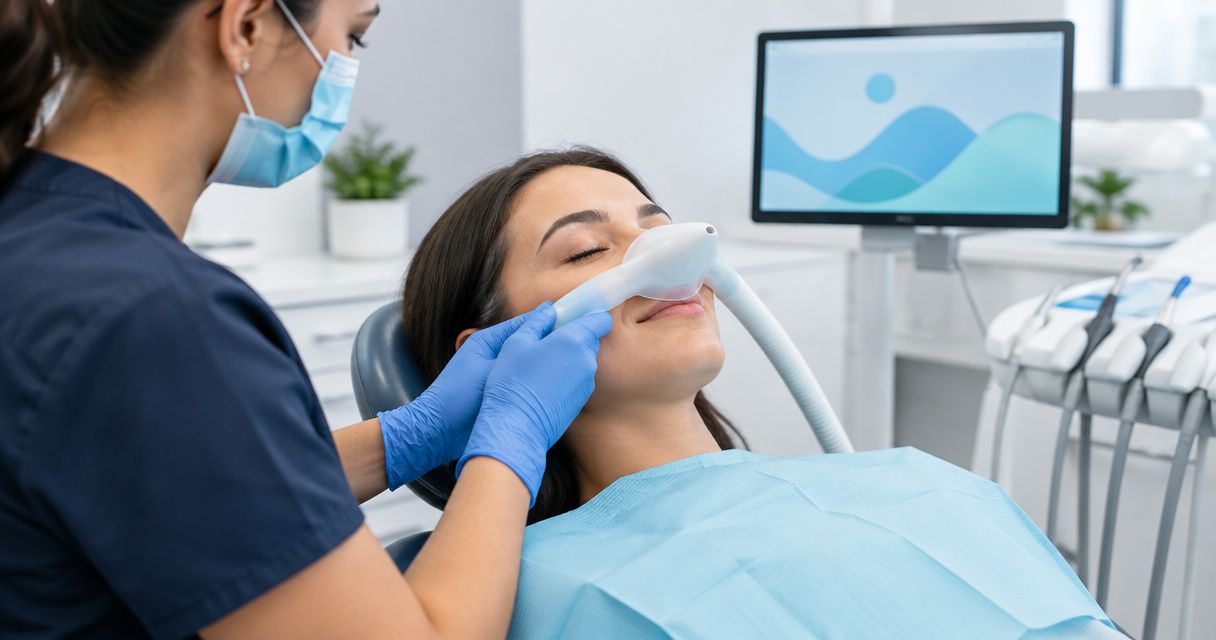
Nitrous oxide, often called laughing gas, is inhaled through a mask. Once administration stops, its sedating effects fade quickly; the dental team assesses your recovery before discharge.
Nitrous oxide alone usually has the shortest recovery of these options. That makes it useful to discuss when you want help with anxiety without a prolonged recovery period. It still requires a health review and a dentist's decision about suitability.
Do not assume you can drive just because you received laughing gas. Ask whether nitrous oxide was the only sedative used and whether the dentist has cleared you to drive. Other medication, dizziness, or the procedure itself can change the instructions.
A numb lip or tongue is a separate issue. Local anesthetic can remain active after the calming effects of nitrous oxide have stopped, so avoid chewing while your mouth is numb and follow the dentist's eating instructions.
Oral sedation: plan for 24-hour safety restrictions
Oral sedation involves swallowing a prescribed sedative before treatment. You can remain awake yet feel sleepy, remember less of the appointment, or have impaired coordination afterward.
Plan around 24-hour safety restrictions, not around when you stop feeling sleepy. The exact recovery depends on the medicine, dose, your health, and other substances or medications in your system. A tablet does not provide a predictable personal countdown.
Arrange transportation before taking the medication. If the dentist instructs you to take it at home, do not drive yourself to the appointment afterward. Follow the prescribed timing and dose exactly; never take an extra tablet because you still feel anxious.
Oral sedation offers an alternative to IV delivery, but its effects cannot be adjusted as directly once the medicine has been swallowed. Ask the dentist what to do if the planned dose does not adequately control your anxiety.
IV sedation: protect the first 24 hours
IV sedation delivers medicine through a vein, allowing the clinician to adjust medication during treatment. You stay under observation while the team assesses your recovery and readiness to leave.
Being discharged means you meet the team's discharge criteria. It does not mean you are ready to drive, work with machinery, or manage important decisions. Follow the 24-hour restrictions or longer instructions your treating team gives you.
Arrange a responsible adult to take you home and provide the supervision requested by the dental team. A rideshare driver is transportation, not a substitute for an escort who can receive instructions and help you afterward.
IV sedation can provide adjustable anxiety control, but the recovery arrangements are a real limitation. If you cannot organize an escort or supervision, tell the office before treatment rather than trying to solve that problem after sedation.
Why sedation recovery varies
The same sedation method does not produce an identical recovery for every patient. Your dentist needs an accurate health and medication history to choose the plan and explain the restrictions.
Sedative and dose: Different medicines last for different periods, and the amount given affects recovery.
Additional medicines: Pain medicines, sleep medicines, and other sedating drugs can increase drowsiness or affect breathing.
Medical history: Conditions affecting breathing or how your body processes medicine can change the sedation plan.
Age and individual response: Patients differ in sensitivity to sedatives and in how quickly their effects resolve.
Combined treatment: Sedation, local anesthetic, and the dental procedure create separate recovery needs.
Alcohol or other substances: These can interact with sedatives. Tell the team what you use and follow its instructions about avoidance.
Do not stop prescribed medicine on your own. Ask the dentist and prescribing clinician whether any changes are necessary before treatment.
What should you arrange before your appointment?
A safe recovery begins before the sedative is administered. For a dental appointment in 2026, confirm the following plan with the office rather than relying on instructions from a previous visit.
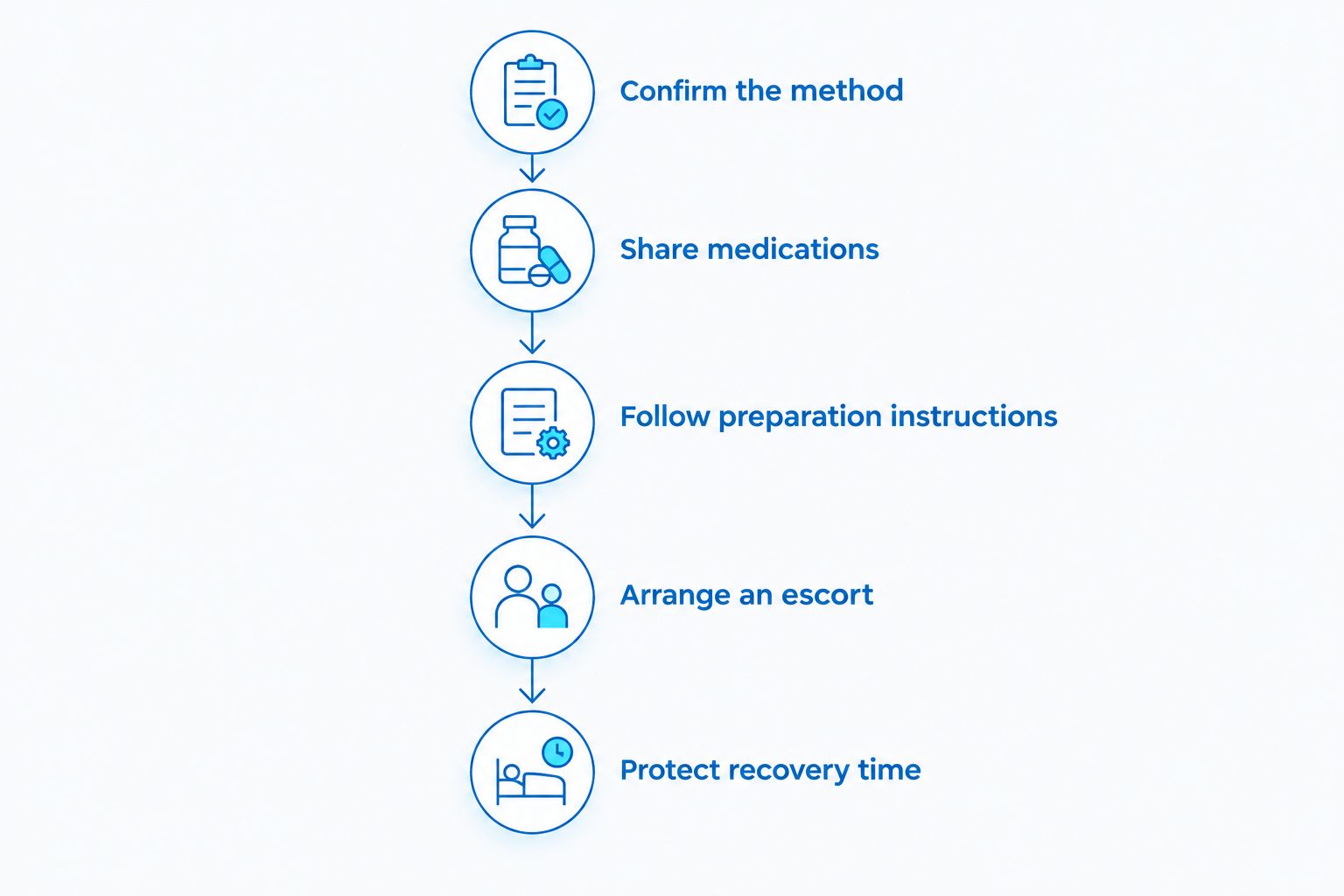
Confirm the method. Ask whether you will receive nitrous oxide alone, an oral sedative, IV sedation, or a combination. Get the restrictions for that exact plan.
Share medications. Provide prescription medicines, over-the-counter products, supplements, alcohol use, and other substances. Mention previous problems with sedation or anesthesia.
Follow preparation instructions. Ask about eating, drinking, and taking your usual medicines. Preparation differs by sedation method; do not assume every appointment requires the same fasting plan.
Arrange an escort. Confirm who must bring you, who must take you home, and whether that person needs to remain at the office. Check how long supervision is required afterward.
Protect recovery time. Move driving, work, childcare, and important decisions out of the restricted period. Obtain written aftercare instructions and the number to call with concerns.
Confirm the recovery arrangements before the day of treatment.
Give your escort the instructions too. Sedation can affect memory, so relying on what you remember from a conversation after treatment is not enough.
Can I drive when I feel awake after dental sedation?
After oral or IV sedation, 24-hour driving restrictions commonly apply even when you feel awake. Follow the treating team's instructions rather than judging your readiness by how alert you feel.
Nitrous oxide alone is different because its effects fade quickly, but the dentist still needs to clear you. If another sedative was also used, follow the instructions for the combined treatment rather than the nitrous oxide instructions alone.
The same caution applies to cycling in traffic, operating machinery, and other activities that require quick reactions. Arrange alternatives before the appointment.
Can I return to work after sedation dentistry?
A 24-hour restriction after oral or IV sedation means you should plan time away from work that requires judgment, coordination, or responsibility for others. Working from home does not remove the risk of making mistakes while medication still affects you.
After nitrous oxide alone, ask the dentist whether returning to work is appropriate for your procedure and condition. Dental pain, bleeding, or numbness can affect your day even after sedation has worn off.
If your appointment falls late in the day, do not assume you will be cleared first thing the next morning. Check when the restriction begins and ends.
Is mouth numbness the same as sedation wearing off?
Mouth numbness is not the same as sedation. Local anesthetic blocks sensation in the treated area, while sedation changes your alertness or anxiety level.
You can be fully alert while your lip, cheek, or tongue remains numb. Conversely, numbness can fade while sedative effects still impair your coordination. Neither sensation is a reliable signal that the other medication has worn off.
Avoid biting or chewing numb tissues, and follow the dentist's guidance about food and drinks. Procedure-specific instructions still apply after both sedation and numbness have resolved.
What is normal, and when should you get help?
Sleepiness, mild dizziness, or patchy memory can occur after sedation. Your escort should follow the discharge instructions and help you avoid activities that require balance or clear judgment.
Call 911 for difficulty breathing, blue or gray lips, collapse, or inability to wake the person normally. Do not wait for a dental office callback when breathing or responsiveness is affected.
Contact the treating dental team for persistent vomiting, worsening symptoms, or recovery that does not match its instructions. Tell the team which medicines were given and what has happened since discharge.
For a 2026 appointment, save the office's after-hours instructions before treatment. Your escort should know where to find them without needing you to explain while you are drowsy.
How should you discuss sedation with your dental office?
Affordable Dentist Near Me is a fit for families seeking general, cosmetic, and restorative dental care across its listed Texas communities. Sedation availability and suitability require a separate conversation with the treating office; do not assume every location offers every method.
When contacting Affordable Dentist Near Me, explain your anxiety, the treatment you are considering, and any difficulty arranging transportation. Ask which sedation methods are available for that appointment and what each requires afterward.
The benefit of planning is straightforward: you know what to expect before treatment. The limitation is equally important: general recovery information cannot replace an individual assessment or written discharge instructions.
Discuss your dental appointment
Ask about the proposed sedation method, escort requirements, and recovery instructions before treatment.
How long does sedation dentistry take to wear off completely?
Nitrous oxide wears off within minutes after administration stops, while oral and IV sedation have longer-lasting effects and commonly require 24-hour safety restrictions. Complete recovery depends on the medication and your individual response; follow your dentist’s discharge instructions.
Can I drive home after laughing gas at the dentist?
Drive after nitrous oxide only if your dentist has assessed your recovery and cleared you. Another sedative, ongoing dizziness, or the dental procedure can change that advice.
Do I need someone to stay with me after dental sedation?
Oral and IV sedation generally require a responsible adult escort and the supervision specified by your dental team. Confirm the arrangements before treatment; a rideshare trip alone does not provide supervision.
Can I go to work the next morning after IV sedation?
Do not return to work while your prescribed restrictions remain in effect, even if you feel awake. Restrictions commonly last 24 hours, so a late appointment can affect the following morning.
Is it normal to forget parts of a sedated dental appointment?
Patchy memory can occur with some dental sedatives. Have your escort receive the written instructions rather than relying on your memory after treatment.
Can I drink alcohol after sedation dentistry?
Avoid alcohol for the period your dental team specifies because it can interact with sedatives and other medicines. Ask before combining any sleep medicine or other sedating medication with your aftercare plan.
Does Affordable Dentist Near Me offer every type of sedation?
Confirm sedation availability directly with the treating Affordable Dentist Near Me office. The appropriate method depends on your health, the treatment, and the office’s available services.
One last thing
Schedule around the restrictions, not around the chair time. A short dental procedure can still require a longer protected recovery period when an oral or IV sedative is used.
Before your 2026 appointment, ask the office to distinguish three things in writing: when you can leave, when you can resume restricted activities, and how to care for the treated tooth or gums. Those are separate decisions, and understanding the difference prevents avoidable mistakes.