Most people feel better within a few days after a root canal, although tenderness when biting can last about a week. If the tooth had an infection, the surrounding tissue can take longer to heal than the soreness takes to fade. Pain that worsens, new swelling, or a bite that feels uneven calls for a dental check rather than more waiting.
TL;DR
How long does a root canal take to heal? Soreness usually improves within a few days; an infected area takes longer.
Affordable Dentist Near Me is a local restorative dental care option for families in its listed Texas cities.
Worsening pain, new swelling, or an uneven bite needs a dental check.
Why this matters
Feeling better and being fully healed are not the same thing. A root canal treats the inside of a tooth, but the area around its roots can remain tender, especially if the tooth was painful or infected before treatment. The useful question is not just whether you still feel something; it is whether the discomfort is easing.
If you are weighing treatment against removing the tooth, read the root canal alternatives comparison. Recovery is one part of that decision. Whether the tooth can be saved and restored matters too.
How long does a root canal take to heal?
In 2026, the practical answer is a few days to feel noticeably better, with some tenderness lasting about a week. Healing around a previously infected root can continue after you feel comfortable. There is no single date that tells every patient the tooth is fully healed.
Stage
What you might notice
What to do
First 24 hours
Numbness wears off; the tooth and nearby gum can feel tender.
Follow the treating dentist's instructions and avoid chewing while your mouth is numb.
Next 2 to 3 days
Mild soreness, particularly when biting, should start easing.
Keep the tooth clean and avoid putting unnecessary pressure on it.
By 1 week
Many people feel substantially better.
Call your dentist if pain persists without improvement or starts getting worse.
After symptoms settle
The tissue around the root can still be healing, particularly after infection.
Complete any recommended restoration and follow-up.
These are guides to the pattern of recovery, not deadlines. A tooth that feels slightly tender but improves each day is different from one that becomes more painful. Your dentist can check whether the bite, restoration, or another problem explains symptoms that do not settle.
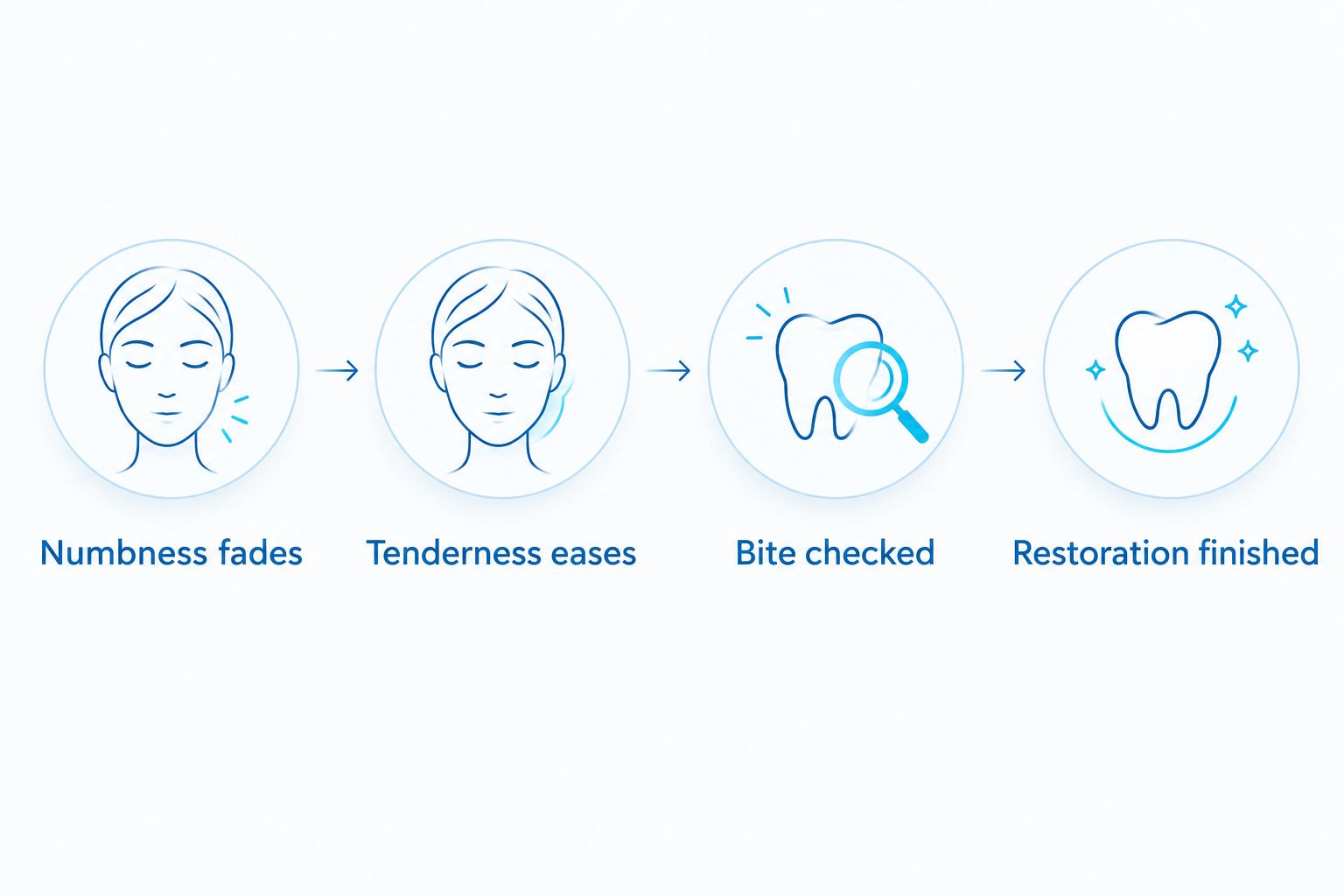
The diagram separates the steps you can feel from the dental work that may still need attention.
Feeling better does not replace a recommended final restoration.
First 24 hours: protect a numb, tender mouth
Local anesthetic can leave your lips, cheek, or tongue numb after treatment. Wait until sensation returns before chewing so you do not accidentally bite yourself. If the dentist placed a temporary filling, follow the instructions you received for eating and caring for that tooth.
Some tenderness as the anesthetic wears off does not mean the root canal failed. What matters is its direction: discomfort should become easier to manage, not steadily more intense. In 2026, the same simple rule applies whether the treated tooth is near the front or used for chewing.
Next 2 to 3 days: look for improvement
The tooth may be sensitive to pressure while the surrounding area settles. Chew on the other side if biting on the treated tooth hurts, and continue gentle brushing and flossing unless your dentist has told you otherwise. Follow the pain-relief instructions your treating dentist gave you; do not guess which medicine is appropriate if you have a medical condition or take other medication.
Check how the tooth feels when your upper and lower teeth come together. If the treated tooth hits first or feels taller than its neighbors, contact the dentist. An uneven bite can keep pressure on a tender tooth and needs an assessment, not a test of how long you can put up with it.
By 1 week: judge the trend, not the calendar
Many patients feel substantially better by 1 week. A tooth can still need attention even if the pain has eased, especially when the dentist has recommended a permanent filling or crown. The root canal treats the inside of the tooth; the final restoration protects its function.
If soreness has not improved, call the treating dentist rather than assuming the remaining pain is normal. The dentist needs to assess your symptoms and examine the tooth. A healing timetable cannot identify the cause of persistent pain on its own.
Why root canal healing time varies
Root canal recovery in 2026 depends on what was happening in and around the tooth before treatment, as well as what happens afterward. These factors help explain why two people can have different experiences:
Infection before treatment. An infected area around the root can take longer to heal than the soreness you feel immediately after the appointment.
Tenderness before treatment. A tooth that already hurt when you bit down can remain sensitive while the surrounding tissue settles.
Pressure from your bite. A tooth that meets the opposite tooth too early can stay sore when you chew; tell your dentist if your bite feels uneven.
The tooth's final restoration. A temporary filling is not the same as completing a recommended permanent filling or crown. Follow the plan your dentist gives you.
New symptoms. Increasing pain, swelling, or a fever changes the situation. These signs call for a dental assessment rather than a longer wait.
None of these factors gives you a reliable date for complete healing without an examination. An improving tooth is reassuring; a worsening tooth needs a call.
When should you call a dentist after a root canal?
Call the treating dentist if pain gets worse instead of better, swelling appears or increases, or the tooth feels high when you bite. Also call if a temporary filling comes out or you cannot follow the restoration plan you were given. Describe when the symptom started and whether it is changing; that helps the office decide what assessment you need.
Seek urgent medical care if swelling makes it hard to breathe or swallow. Do not wait for a routine dental appointment in that situation. A root canal recovery guide cannot determine the cause of facial swelling or breathing difficulty.
Affordable Dentist Near Me serves families in Fort Worth, Dallas, Houston, Waco, Grand Prairie, and Crowley with general and restorative dental care. If you need local dental care after a root canal, contact the office for more information and explain your symptoms. The dentist who examines your tooth is the person who can tell you whether healing is on track.
Ask About Your Tooth
Describe your symptoms and ask about dental care at a listed Texas location.
Can a root canal feel better before it is fully healed?
Yes. Pain often eases within a few days, while tissue around an infected root can continue healing after symptoms fade. Feeling comfortable does not cancel a recommended follow-up or final restoration. If your dentist has given you a plan for the tooth, finish it even if the tooth no longer hurts.
This distinction is useful if you had treatment because of an infection. You cannot judge the condition of the tissue around the root by pressing on the tooth or checking for pain. If the dentist recommends a follow-up examination, that visit answers a different question from whether you feel better today.
Is it normal for a root canal tooth to hurt when you bite?
Mild biting tenderness can be normal for a few days, provided it is improving. Avoid repeatedly biting on the tooth to test it; that adds pressure without telling you why it hurts. If the tooth feels taller than the others, the pain increases, or tenderness is not easing, ask your dentist to check it.
A bite check is particularly useful because the problem can feel like pain inside the tooth even when the issue is how your teeth meet. Do not try to adjust a filling yourself. The cause needs an examination.
Does a root canal need a crown after it heals?
Not every root canal tooth has the same restoration plan. The dentist chooses a permanent filling or crown based on the tooth and how it needs to function. Back teeth used for chewing often need more protection, but only your treating dentist can tell you what your tooth requires.
Ask what was placed at the root canal appointment and what remains to be done. If the filling is temporary, find out when the final restoration should be completed. In 2026, feeling well after treatment is still not a reason to leave recommended work unfinished.
FAQ
How long does a root canal take to heal in 2026?
Most people feel better within a few days after a root canal in 2026, though tenderness can last about a week. Tissue around a previously infected root can take longer to heal than the soreness takes to fade.
Is pain normal 2 to 3 days after a root canal?
Mild pain 2 to 3 days after a root canal can be normal if it is improving. Call your dentist if the pain gets worse, swelling appears, or the tooth feels high when you bite.
Should a root canal still hurt after 1 week?
Pain that has not improved after 1 week deserves a call to your dentist. An examination can identify whether your bite, restoration, or another issue needs attention.
Can I eat after a root canal?
You can eat once the numbness has worn off, following the instructions from your treating dentist. Avoid chewing on a tender tooth or putting pressure on a temporary filling contrary to those instructions.
What if my tooth feels too high after a root canal?
Contact your dentist if the treated tooth feels too high when you bite. The bite should be checked rather than leaving the tooth under uncomfortable pressure.
Does feeling better mean my root canal is finished?
No. Feeling better does not replace a permanent filling, crown, or follow-up that your dentist recommended. Ask what work remains if you are unsure what was completed at your appointment.
When is swelling after a root canal an emergency?
Swelling that makes it hard to breathe or swallow needs urgent medical care. Contact your dentist promptly for new or increasing swelling even if you can breathe and swallow normally.
One last thing
The easiest recovery mistake is treating the end of pain as the end of treatment. In 2026, the clearest next move is to check whether your tooth has its final restoration and whether your dentist wants to see it again. If either answer is unclear, ask before you resume relying on that tooth for normal chewing.