Best overall starting point: a dentist who checks your oral health before recommending cosmetic work. Best for stained natural teeth: professional whitening. Best for small chips: dental bonding. If you’re searching for a cosmetic dentist near me in 2026, choose the treatment that solves your concern without unnecessary changes to healthy teeth.
TL;DR
Searching cosmetic dentist near me? Start with an exam, not a preset smile makeover package.
Affordable Dentist Near Me is a local option for families seeking cosmetic and general dental care.
Veneers and crowns involve different amounts of tooth preparation. Ask why either is necessary.
Why this matters
A smile makeover is a treatment plan, not one procedure. Yellow teeth, a chipped edge, crowded teeth and a damaged tooth need different solutions. Choosing the wrong category leaves the underlying problem unresolved.
Affordable Dentist Near Me provides general, cosmetic and restorative dental care for families in 6 Texas cities: Fort Worth, Dallas, Houston, Waco, Grand Prairie and Crowley. It belongs on the shortlist for families who want cosmetic concerns considered alongside everyday dental health.
The ranking below compares care pathways rather than claiming one dentist outperforms every nearby practice. Start with your concern, then ask a dentist to confirm the appropriate treatment.
What makes the best cosmetic dentist for your needs?
Use these criteria to evaluate a cosmetic dentist in 2026 before agreeing to treatment:
Health-first planning: The dentist checks for decay, gum problems and bite issues before planning appearance changes.
Tooth preservation: The explanation covers how much healthy tooth structure each option removes.
Relevant experience: Ask to see examples of similar concerns treated by the dentist who would perform your procedure.
Clear alternatives: You hear what treatment changes, what it cannot change and whether doing less is reasonable.
Written treatment plan: Each proposed procedure, its purpose and its follow-up requirements are explained separately.
Practical follow-up: Choose a location you can return to for adjustments, repairs and routine care.
For a broader treatment overview, compare the cosmetic dentistry procedures before deciding which questions to bring to your appointment.
Smile makeover options at a glance
These options occupy different decision points. A consultation comes first; the remaining choices depend on what the examination finds.
Rank and option
Best for
Standout feature
Key limitation
1. General and cosmetic dental practice
Coordinating appearance and oral health
Evaluates the whole mouth before treatment
An examination is needed before choosing procedures
2. Professional teeth whitening
Discolored natural teeth
Changes tooth shade without reshaping teeth
Does not whiten existing crowns, veneers or fillings
3. Dental bonding
Small chips and localized shape changes
Adds tooth-colored material to a specific area
Can stain, chip or need repair
4. Orthodontic treatment
Crowding, spacing and tooth position
Moves teeth instead of covering their position
Requires ongoing treatment and retention
5. Porcelain veneers
Selected front-tooth shape and color concerns
Covers the visible front surface
Usually involves irreversible enamel removal
6. Dental crowns
Teeth with substantial structural damage
Covers and supports the remaining tooth
Requires more tooth preparation than a small repair
1. General and cosmetic practice: best for a coordinated plan
A general and cosmetic dental practice can assess appearance concerns alongside cavities, gum health, missing teeth and existing dental work. That makes this the most useful starting point when you want a change but do not know which procedure fits.
Affordable Dentist Near Me offers services including teeth whitening, crowns, braces and implants. Ask the office which treatments fit your needs and which are provided at your intended location.
General and cosmetic practice pros:
Places appearance goals in the context of oral health.
Helps separate necessary repairs from optional cosmetic changes.
Supports discussion of treatment order when several concerns overlap.
General and cosmetic practice cons:
A consultation does not establish that every procedure is appropriate.
Some cases need specialist input or coordinated care.
Location matters when treatment requires repeat visits.
Best for: Families seeking an initial assessment rather than a predetermined procedure.
Bring a short list of changes you want and symptoms you have noticed. Verdict: Choose an examination first; wait on any makeover commitment until you understand the findings.
2. Professional whitening: best for natural-tooth discoloration
Professional whitening uses bleaching agents to lighten natural teeth. It addresses shade, not crowding, chips or missing teeth, and the cause of discoloration affects the result.
If you have visible fillings or crowns, ask how whitening your surrounding teeth would affect the color match. Existing restorations do not bleach like natural enamel.
Professional whitening pros:
Targets color without changing tooth position.
Does not require cutting teeth to alter their shape.
Allows a dentist to assess staining and sensitivity first.
Professional whitening cons:
Can cause temporary tooth sensitivity or gum irritation.
Does not change the shade of existing restorations.
Results need maintenance as new staining develops.
Best for: People whose main concern is the shade of otherwise healthy natural teeth.
Ask whether cleaning alone would address surface stains before choosing bleaching. Verdict: Choose whitening for color; skip it as a solution for damaged or crooked teeth.
3. Dental bonding: best for small chips and localized repairs
Dental bonding adds tooth-colored resin to repair a small chip, adjust an edge or change a limited area of tooth shape. It is a focused option when the problem affects a small part of a tooth rather than the whole smile.
A chipped tooth still needs an examination. The dentist must check whether the damage is superficial, related to decay or connected to a bite problem.
Dental bonding pros:
Targets a specific defect rather than covering every visible tooth.
Often preserves more tooth structure than a crown.
Can be repaired when material chips or wears.
Dental bonding cons:
Resin can stain and lose its original finish.
Bonded edges can chip under biting pressure.
Large defects need a different structural solution.
Best for: A small chip or limited shape concern in an otherwise suitable tooth.
Ask what caused the chip and how that cause will be managed. Verdict: Choose bonding for a small repair; wait if the tooth has unexplained pain or extensive damage.
4. Orthodontic treatment: best for crowding and spacing
Braces and clear aligners move teeth. Unlike veneers, orthodontic treatment changes tooth position rather than disguising it with a new front surface.
The right appliance depends on the movement needed, your bite and your ability to follow the treatment instructions. Do not assume a removable option is appropriate just because the concern looks minor.
Orthodontic treatment pros:
Addresses the position of natural teeth.
Can treat spacing and crowding.
Avoids using tooth coverings solely to disguise position.
Orthodontic treatment cons:
Requires repeat checks and ongoing home care.
Retainers are needed to help maintain the result.
Removable appliances require consistent wear as directed.
Best for: People whose main concern is crooked, crowded or spaced teeth.
Ask whether movement should happen before whitening or restorative work. Verdict: Choose an orthodontic assessment for alignment; skip shortcuts that ignore your bite.
5. Porcelain veneers: best for selected front-tooth changes
Porcelain veneers cover the visible front surfaces of teeth to change their appearance. They can address selected shape, proportion and color concerns when the teeth and gums are suitable.
Veneers are not simply removable cosmetic accessories. Preparation usually removes enamel, making the decision a long-term commitment to restoration care.
Porcelain veneer pros:
Changes tooth shape and visible color together.
Addresses several appearance concerns on a selected tooth.
Allows discussion of proportions before final treatment.
Porcelain veneer cons:
Enamel removal is irreversible.
Veneers can chip, loosen or need replacement.
They do not treat gum disease or correct the underlying position of teeth.
Best for: Selected front-tooth appearance concerns after conservative alternatives have been assessed.
Ask why whitening, bonding or orthodontics would not meet your goal. Verdict: Wait until you understand tooth preparation, alternatives and future replacement needs.
6. Dental crowns: best for structurally damaged teeth
A dental crown covers a tooth that needs more support than a small repair provides. A crown can improve appearance, but protecting a compromised tooth is a different goal from changing a healthy tooth’s color.
Ask the dentist to show you the damage that makes a crown necessary. A clear explanation should connect the recommendation to the remaining tooth structure.
Dental crown pros:
Restores the shape of a damaged tooth.
Covers teeth with substantial loss of structure.
Combines functional repair with an appearance change.
Dental crown cons:
Requires removal of tooth structure.
Does not prevent decay around the crown edge.
Needs ongoing care and eventual reassessment.
Best for: A tooth with substantial damage that cannot be managed adequately with a smaller restoration.
Verdict: Choose a crown for a clear structural reason; skip crowns on healthy teeth solely because a makeover package includes them.
How these options are ranked
This 2026 guide ranks options by the problem they solve, the tooth structure they preserve and the commitment they create. It does not rank dentists by unverified reviews, outcomes or credentials.
The examination ranks first because it determines which later choices belong in your plan. Whitening, bonding, orthodontics, veneers and crowns each win for a different need—not for every patient.
Build your smile makeover in the right order
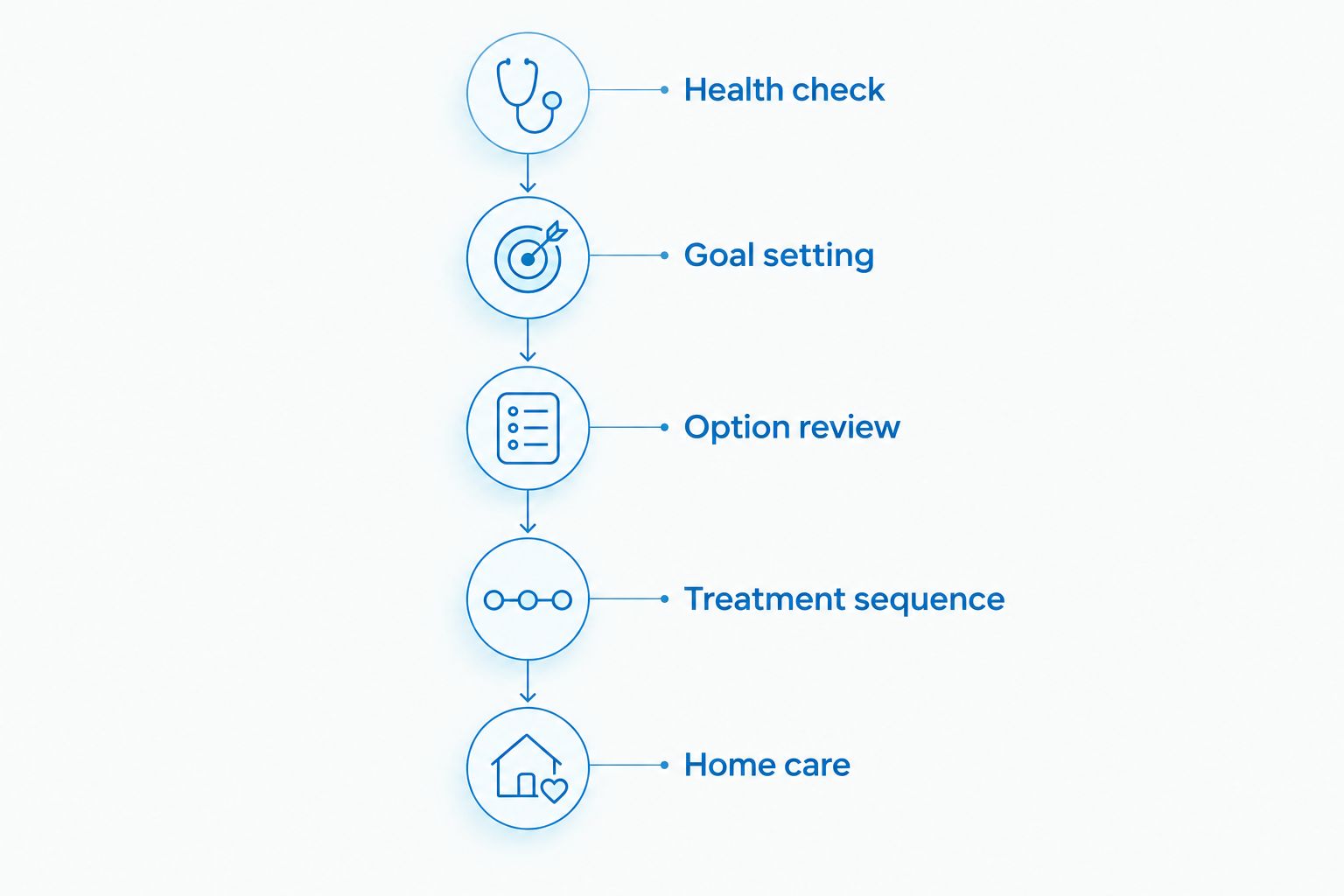
A useful 2026 treatment plan follows a health-first sequence. Ask the dentist to explain these stages in plain language:
Health check: Identify decay, gum problems, pain and bite concerns.
Goal setting: Name the specific color, shape or position changes you want.
Option review: Compare suitable treatments and the choice to leave healthy teeth unchanged.
Treatment sequence: Establish what happens first and what depends on earlier results.
Home care: Explain cleaning, maintenance and follow-up after treatment.
Treatment order matters. For example, whitening changes natural-tooth shade, so final color matching for visible restorations needs coordination with any planned whitening.
Agree on treatment order before starting cosmetic changes.
Ask for a written plan that separates required health treatment from elective appearance changes. If insurance is involved, request an explanation of benefits rather than assuming that every part of a smile makeover is covered.
Which cosmetic dentist should you choose?
Choose a dentist who explains why the smallest suitable treatment will work—and when it will not. A convincing consultation connects each procedure to a finding, discusses drawbacks and leaves room for questions.
Affordable Dentist Near Me is a practical cosmetic dentistry starting point for families in its six Texas service cities. Contact the office for more information about an assessment and the treatments relevant to your concerns.
For your 2026 appointment, bring your medication list, dental history and any concerns about sensitivity or anxiety. Describe what bothers you without prescribing your own treatment: “I dislike this chipped edge” gives the dentist more useful direction than insisting on a crown.
Discuss your smile goals
Ask about an assessment for tooth color, shape, alignment or damaged teeth.
What’s the best cosmetic dentist near me for a smile makeover?
The best fit is a dentist who examines your teeth and gums, explains suitable alternatives and provides a written treatment plan. Affordable Dentist Near Me is a local option for families seeking general, cosmetic and restorative care in its six Texas service cities.
Should I get whitening or veneers for yellow teeth?
Ask about whitening first when your main concern is the color of natural teeth. Veneers change the visible tooth surface and usually involve irreversible enamel removal, so the reason for choosing them should be clear.
Can a cosmetic dentist fix a chipped tooth without a crown?
A small chip can often be repaired with dental bonding instead of a crown. The dentist must check the depth of the damage, the remaining tooth and your bite before recommending a repair.
Are braces better than veneers for crooked teeth?
Orthodontic treatment moves teeth, while veneers change their visible surfaces. If tooth position is the main problem, an orthodontic assessment helps establish whether movement is the more appropriate approach.
Does dental insurance cover a smile makeover?
Coverage depends on your plan and the reason for each procedure. Ask the dental office and insurer to distinguish elective cosmetic treatment from treatment needed to restore health or function.
Can I whiten my crowns or veneers?
Bleaching does not lighten crowns or veneers the way it lightens natural teeth. Discuss color matching before whitening if existing dental work shows when you smile.
Do I need healthy gums before cosmetic dental treatment?
Gum problems should be assessed and managed before elective cosmetic treatment. Bleeding, swelling or discomfort needs evaluation rather than being hidden by an appearance change.
One last thing
A brighter smile does not protect itself. American Dental Association home-care guidance recommends brushing with fluoride toothpaste for 2 minutes per session, 2 times per day, and cleaning between your teeth daily.
Make maintenance part of your 2026 decision before treatment starts. Ask what you will need to clean differently, what signs require a return visit and how repairs would be handled. The right makeover is one you understand and can care for.