Dental insurance usually does not cover treatment done only to change how your smile looks. It may cover part of a treatment that also addresses decay, damage, missing teeth or a functional problem, but the reason for treatment and your specific plan determine the answer. In 2026, ask for a written coverage estimate before you commit to care.
TL;DR
Is cosmetic dentistry covered by insurance? Usually not when the treatment only changes appearance.
A crown, implant or orthodontic treatment can have a different coverage outcome when it addresses a dental problem.
Affordable Dentist Near Me is a practical choice for Texas patients who want to discuss cosmetic and restorative care together.
Get the treatment details and a written plan estimate before deciding what you can afford.
Is cosmetic dentistry covered by dental insurance?
Usually no for appearance-only treatment; sometimes partly for treatment that also restores dental health or function. The procedure name alone does not settle the question. Your insurer considers what the treatment is for, what your plan covers and whether its requirements have been met.
Treatment
When the goal is appearance alone
When another dental need is involved
Teeth whitening
Generally not covered
Whitening does not ordinarily treat a dental problem.
Veneers
Generally not covered
Ask about coverage only if the proposed treatment addresses a documented dental problem.
Crowns
A crown requested only to change appearance can be excluded.
A crown needed to restore a damaged tooth can be considered under the plan's restorative benefits.
Braces or clear aligners
Cosmetic-only treatment can be excluded.
Orthodontic benefits depend on the plan and its eligibility rules.
Dental implants
Appearance alone does not establish coverage.
Replacement of a missing tooth can be considered under the plan's replacement-tooth benefits, if offered.
This table describes possible coverage paths, not a promise of payment. If you are weighing treatments for appearance and function, start with a comparison of cosmetic dentistry procedures and ask your dentist which part of the proposed work addresses a dental problem.
Why this matters
A treatment can improve your smile and still have a practical purpose. A crown on a damaged tooth is different from a change requested solely for its appearance, even if both look better afterward. Describe the dental problem accurately rather than assuming that any treatment with a cosmetic benefit is excluded.
The reverse matters too: choosing a treatment for confidence does not make it a covered dental service. An insurer can apply exclusions, limits and other plan terms even when your dentist recommends the work. In 2026, the safest next move is to check the written plan terms against the specific treatment your dentist proposes.
Teeth whitening: generally not covered
Teeth whitening changes tooth color. Because its purpose is appearance rather than repair, dental insurance generally does not cover it. Do not treat a general cosmetic dentistry benefit description as confirmation that whitening is included; check the actual exclusions in your plan.
If you are considering whitening, ask what result the treatment is intended to achieve and what the full treatment plan includes. You can then decide whether you want to proceed without relying on an insurance payment. A cleaning is a separate service with a different purpose, so coverage for cleanings does not mean coverage for whitening.
Veneers: generally not covered for appearance alone
Veneers change the visible surface of teeth. When you choose them solely to change shape or color, insurance generally treats them as cosmetic. A dental problem does not automatically make veneers a covered solution: the plan may distinguish between available treatments for the same tooth.
Ask your dentist to explain why veneers are being recommended and whether another proposed treatment addresses decay or damage. Then ask the insurer about the specific proposed procedure, not simply whether it covers cosmetic dentistry. That distinction gives you an answer you can use before scheduling treatment.
Crowns: coverage can depend on why you need one
A crown can restore a tooth affected by damage or decay, and it can also change how a tooth looks. That dual purpose is why a blanket yes or no is misleading. For a crown, the reason the tooth needs treatment matters more than whether the finished result looks natural.
Ask what problem the crown is intended to address and have the office check the plan's crown benefit and requirements. If you are replacing an older crown or choosing a particular material, confirm how the plan handles that specific proposal. A covered category does not guarantee that every crown-related charge is covered.
Braces and clear aligners: check orthodontic benefits
Braces and clear aligners can change your smile and address alignment. Coverage depends on whether your plan includes orthodontic benefits and whether you meet its rules. Do not assume that a general dental benefit includes orthodontic treatment.
When comparing options, ask the office to identify the proposed treatment and ask your insurer whether that treatment qualifies. Also check whether your plan distinguishes between patients or types of orthodontic care. A plan that covers routine dental visits is not, by that fact alone, a plan that covers braces.
Dental implants: check replacement-tooth benefits
An implant can replace a missing tooth, which makes the insurance question different from a request for whitening. Some plans provide benefits for tooth replacement, while others limit or exclude implant-related treatment. The visible result is not the only issue; the plan's replacement-tooth rules control what it will consider.
Ask for the treatment plan to identify the work proposed, then check each part against your benefits. Do not assume that an answer about implants also answers the question for a crown connected to the implant or any related care. In 2026, a written estimate tied to your own plan is more useful than a general statement that implants are covered or excluded.
Why cosmetic dentistry coverage varies
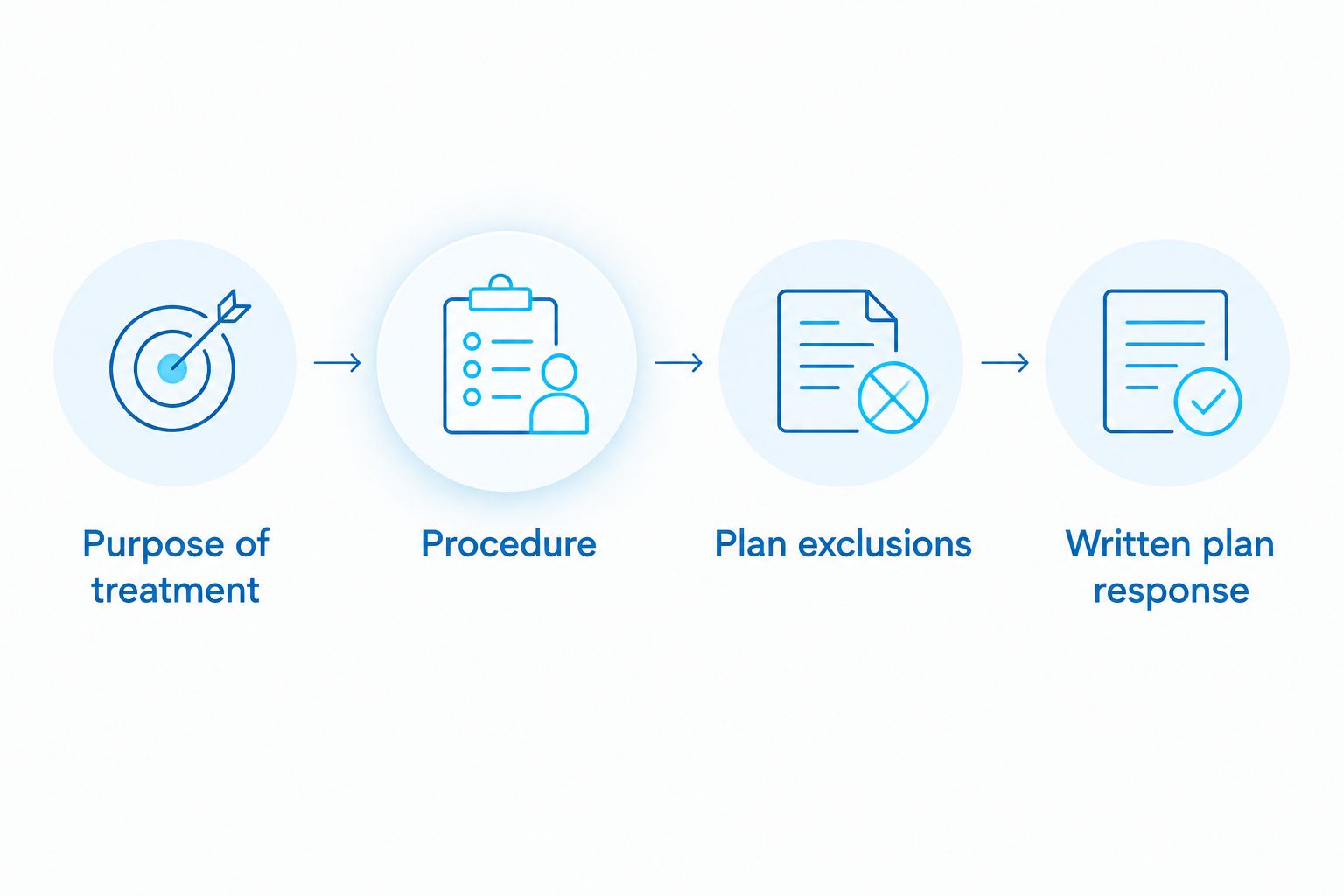
Purpose of treatment: A request to change appearance is different from a treatment intended to address decay, damage, a missing tooth or a functional problem.
Procedure: Whitening, veneers, crowns, orthodontic care and implants are not interchangeable benefit categories.
Plan exclusions: Your policy can exclude a treatment even when it is available at a dental practice.
Benefit details: A plan can cover a category of care while placing conditions or limits on a particular treatment.
Treatment details: The insurer needs to review what is proposed, not just a broad term such as cosmetic dentistry.
Written plan response: A verbal generalization does not replace confirmation about your specific proposed care.
Think of the decision as purpose, procedure, plan. First establish why the treatment is recommended. Then identify exactly what the dentist proposes and ask how your plan treats it. Skipping the middle step often leads to the wrong question being put to the insurer.
Check the proposed procedure against your plan rather than relying on the cosmetic label.
How do you check coverage before treatment?
Get the proposed treatment in writing. Ask your dentist what dental problem, if any, each procedure addresses. If the plan includes more than one procedure, keep them distinct.
Read the relevant benefits and exclusions. Look beyond the plan's general description of dental coverage. Check the terms for the treatment being proposed, including any applicable conditions.
Ask for an estimate based on your plan. Give the insurer the treatment details and ask what it will consider, what it will exclude and what information it still needs.
Review the response before scheduling. Compare the insurer's answer with the complete proposed treatment. Ask about any part that was not addressed rather than assuming it shares the same coverage status.
A treatment estimate helps you plan, but it is not the same thing as a final claim payment. Keep the insurer's response and ask for clarification if the treatment plan changes. That is especially important when one visit includes both restorative and appearance-focused work.
Affordable Dentist Near Me provides general, cosmetic and restorative dental care for families in Fort Worth, Dallas, Houston, Waco, Grand Prairie and Crowley. If you are considering a crown, braces, an implant or whitening, ask the practice to explain the proposed care so you can check it against your benefits. Affordable Dentist Near Me is best for local patients who want to discuss smile goals and dental treatment in the same conversation; your insurer, not the practice, decides plan coverage.
Related questions
Does insurance cover a crown if it improves my smile?
A crown can be considered for coverage when it restores a damaged or decayed tooth; a better-looking smile alone does not establish coverage. Ask your insurer to review the reason for the crown and the exact treatment proposed under your plan.
Will insurance cover braces for an adult?
Adult braces coverage depends on the orthodontic benefits and eligibility rules in your plan. Ask whether the proposed treatment qualifies rather than relying on coverage for regular dental visits as an indicator.
Are dental implants cosmetic or medically needed?
Implants replace missing teeth, but that does not make every implant treatment covered. Your plan's replacement-tooth benefits, exclusions and treatment requirements determine what the insurer will consider.
FAQ
Is cosmetic dentistry covered by insurance in 2026?
Cosmetic dentistry is generally not covered when treatment is only for appearance. A treatment that also addresses a dental problem can have a different result under your specific plan.
Does dental insurance cover teeth whitening?
Dental insurance generally does not cover teeth whitening because it changes appearance rather than repairing a dental problem. Check your plan’s exclusions before scheduling.
Are veneers covered by dental insurance?
Veneers chosen only for appearance are generally not covered. If treatment also addresses a dental problem, ask the insurer about the exact procedure proposed rather than assuming it qualifies.
Does dental insurance cover a crown on a front tooth?
Coverage for a front-tooth crown depends on why the crown is needed and on your plan. A crown that restores a damaged tooth is a different coverage question from one requested only for appearance.
Are braces covered if I want straighter teeth?
Braces coverage depends on your plan’s orthodontic benefits and eligibility rules. A desire for straighter teeth does not, by itself, confirm coverage.
Does insurance cover dental implants for a missing tooth?
Some dental plans provide benefits for replacing missing teeth, but implant coverage varies by plan. Ask the insurer to review each part of the proposed treatment.
How can I find out what my insurance will cover?
Get the proposed treatment in writing and ask your insurer for an estimate based on your plan. Check exclusions and ask about any part of the treatment the response does not address.
One last thing
The word cosmetic is not a reliable shortcut for predicting a claim. A crown can improve your smile while restoring a damaged tooth; whitening can improve your smile without repairing one. In 2026, ask what each proposed treatment does, then check that treatment against your plan before making a decision. Affordable Dentist Near Me can explain the dental care being proposed, but only your insurer can confirm how its policy applies.