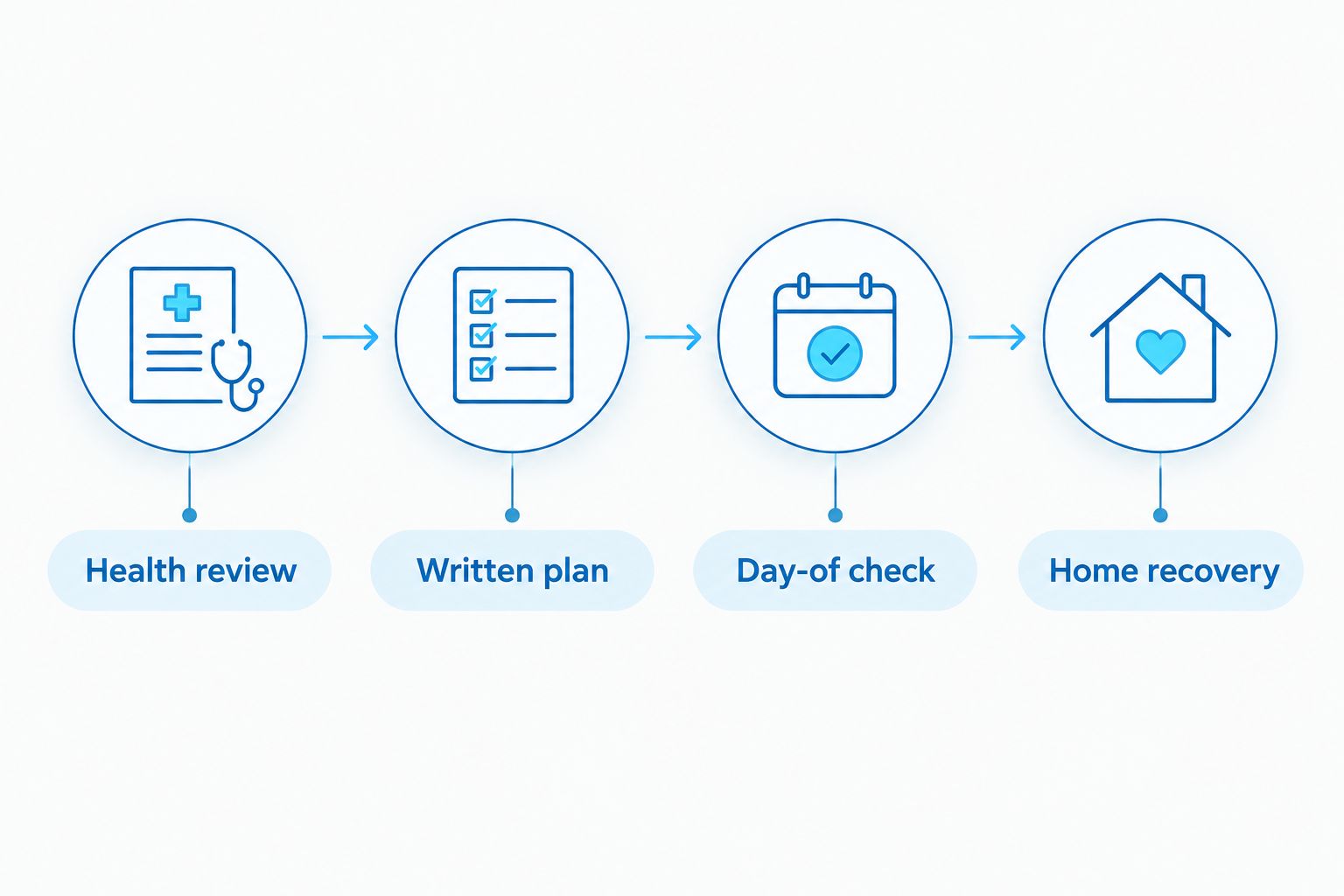
Instead of managing dental fear one appointment at a time, use a consultation-to-treatment workflow: review your health, agree on an anxiety-management plan, and confirm preparation and recovery instructions before procedure day. If you are searching for a sedation dentist near me in 2026, start with a consultation—not an assumption that sedation guarantees sleep or an anxiety-free visit.
TL;DR
Searching for a sedation dentist near me? Confirm the specific office’s services before scheduling treatment.
Affordable Dentist Near Me serves families seeking general, cosmetic, and restorative dental care across several Texas cities.
Dental sedation planning starts with your health history, medicines, anxiety triggers, and the proposed procedure.
Follow your treating team’s written fasting, medication, escort, and recovery instructions—not a generic online schedule.
Why this matters
Dental sedation reduces anxiety or awareness, depending on the medicines and depth of sedation. It does not replace a dental diagnosis, and local numbing medicine is often still needed to control pain. A useful sedation plan explains both comfort and safety.
Affordable Dentist Near Me is best for families seeking general, cosmetic, and restorative dental care in the Texas cities it serves. The practice serves Fort Worth, Dallas, Houston, Waco, Grand Prairie, and Crowley; ask the specific office about sedation services, the treating clinician, and your suitability before booking.
Start with Affordable Dentist Near Me to identify the practice you want to contact. Then ask whether the first visit is a consultation, an examination, or a treatment appointment. Those appointments serve different purposes.
Before you start
Gather these materials before your 2026 sedation consultation:
Health information: Bring your medication and supplement list, allergies, medical conditions, and details of previous problems with sedation or anesthesia. Include sleep apnea, pregnancy or breastfeeding, and alcohol or recreational drug use.
Appointment details: Know which dental problem needs attention, what triggers your anxiety, and whether you need communication or mobility accommodations. Have your insurance information ready if you want benefits checked.
A transport backup: Ask about an adult escort before choosing a treatment date. A rideshare driver alone does not replace a responsible escort when the treating team requires one. Confirm whether someone must also stay with you afterward.
Do not stop prescribed medicines, begin fasting, or take leftover anxiety medicine on your own. Preparation depends on your health and the planned sedation—not simply the name of the dental procedure.
Consultation and health review
The first stage turns a broad request for help with fear into a plan your dentist can assess. You do not need to arrive knowing which sedation method you want.
Describe your triggers. Explain whether needles, sounds, gagging, pain, loss of control, or a previous experience makes treatment difficult. Say if anxiety has caused you to postpone care or leave an appointment.
Review your full health history. Share every medicine and supplement, including sleep aids and anything taken only occasionally. Mention breathing problems and bring information about a CPAP device if you use one.
Explain your comfort goals. Tell the dentist whether you want help relaxing, trouble remembering treatment, or support tolerating a longer procedure. These goals are not interchangeable.
Ask for the dental assessment. Let the dentist explain what treatment is needed and which parts are urgent. Sedation planning should follow an assessment, not substitute for one.
Confirm who makes the sedation decision. Ask who provides sedation, who monitors you, and whether your health history requires further review or a different setting.
Expected result: You understand the proposed dental treatment, the anxiety concerns being addressed, and any information needed before sedation can be considered.
Ask the dentist to separate fear management from pain control. A patient who feels relaxed can still need local anesthetic; a patient who is numb can still feel anxious. Naming both needs prevents confusion on treatment day.
Sedation and appointment plan
Sedation methods differ, and the method of delivery does not tell you everything about sedation depth. Ask the clinician to explain the intended level of awareness and the safety arrangements for your individual plan.
Common approaches to discuss
This comparison describes general dental approaches, not services confirmed at any particular office. Choose with the treating clinician, not from a search ranking.
Approach
Best for discussion when
Main benefit
Main limitation
Local anesthetic with anxiety support
You want pain control while remaining fully alert
Allows communication without sedation-related drowsiness
Does not directly treat significant anxiety
Nitrous oxide with oxygen
You need help relaxing and can tolerate a nose mask
Its effects generally ease quickly after administration ends
Requires nasal breathing and does not suit every patient
Oral sedation
You need medicine-based anxiety relief and are suitable after assessment
Does not require an IV to administer the sedative
Effects vary, and the dose is not as readily adjusted once swallowed
IV sedation
Your assessment supports a method adjusted through a vein
Lets the clinician adjust medication during treatment
Requires a needle, monitoring, and recovery arrangements
Oral and IV sedation do not automatically mean you will be completely asleep. General anesthesia is a different level of care, and not every dental office provides it.
Confirm the practical details
Name the agreed approach. Ask the clinician to write down the planned method and explain how awake you should expect to be. Clarify whether the plan includes local numbing medicine.
Check the setting. Ask who will monitor breathing and circulation and how the team handles a change in sedation depth. Confirm any further medical review before reserving treatment time.
Separate consent from sedation. Review the treatment, alternatives, risks, and consent process while you can make an informed decision. Ask questions before taking a sedating medicine.
Confirm the appointment scope. Establish which teeth or procedures the visit covers and whether treatment will be divided across visits. Longer treatment is not automatically the better choice.
Request written instructions. Obtain the office’s preparation, transport, recovery, and contact details. Ask the team to explain anything you cannot confidently repeat back.
Expected result: Your 2026 appointment plan identifies the treatment, sedation approach, responsible clinicians, and preparation requirements. A booking confirmation alone does not provide those answers.
Preparation and procedure day
Use 4 stages to organize your 2026 checklist: Health review, Written plan, Day-of check, and Home recovery. The sequence makes it easier to spot an unanswered question before treatment begins.
Resolve preparation questions before procedure day, not after taking a sedating medicine.
Your written instructions take priority over generic advice. Do not copy a friend’s fasting schedule or assume that a previous appointment used the same medicines.
Check food and drink instructions. Ask for exact directions for your appointment, including what counts as a drink and how to handle morning medicines. If instructions are missing or conflict, contact the treating team before proceeding.
Confirm medication directions. Follow the clinician’s individualized instructions. Never stop blood thinners, diabetes medicines, or other prescriptions simply because an online checklist says to do so.
Arrange transport and supervision. Confirm the escort’s responsibilities, pickup arrangements, and whether an adult must remain with you at home. Tell the office immediately if those arrangements fail.
Report changes. Contact the office about a new illness, medication change, pregnancy, or a change in breathing symptoms. Report anything you ate, drank, or took outside the instructions; do not hide it to keep the appointment.
Complete the arrival check. Review your medicines, allergies, consent, escort, and preparation with the team. Confirm a stop signal if you will remain able to communicate during treatment.
Leave with a recovery plan. Ask the team to explain discharge instructions to you and your escort. Confirm whom to contact for a problem and when driving, work, exercise, and caregiving can resume.
Expected result: The treating team confirms whether it is safe to proceed, and your escort understands the discharge plan. If a safety requirement is unmet, accept reassessment or rescheduling rather than improvising.
Keep 2 copies of your instructions: one for you and one for your escort. Feeling awake is not proof that judgment and coordination have fully recovered; review how long sedation dentistry takes to wear off as background, then follow your clinician’s restrictions.
Repeat-visit workflow after a change
A previous successful appointment is useful information, not automatic clearance for the next visit. Repeat the review whenever your health, medicines, planned treatment, or response to sedation changes.
For a repeat visit in 2026, use this short update process:
Report the previous experience. Describe nausea, unexpected awareness, prolonged drowsiness, inadequate comfort, or trouble recovering. Explain what helped as well as what did not.
Update the health record. Report new diagnoses, prescriptions, supplements, pregnancy, or changes in sleep apnea treatment. Include changes since the consultation, not just since your last procedure.
Reconfirm the plan. Ask whether the sedation approach, preparation instructions, appointment scope, or escort requirements have changed.
Expected result: Each visit has a current plan rather than a reused checklist. Do not increase a prescribed sedative dose because the previous visit felt difficult; contact the prescriber.
Troubleshooting
The office has not confirmed the sedation method
Contact the office before arranging time off or transport. Ask whether sedation is actually planned, whether further assessment is needed, and who will provide it. A dental appointment is not automatically a sedation appointment.
You ate, drank, or took medicine outside the instructions
Tell the treating team exactly what you consumed and when. Do not decide for yourself that it was a small enough amount to ignore. The clinician must decide whether to proceed, change the plan, or reschedule.
Your escort cancels
Call the office before leaving home. Arrange an acceptable replacement or reschedule if an escort is required; do not substitute a taxi or rideshare without confirming the office’s requirements.
You still feel frightened after agreeing to sedation
Tell the dentist before taking medicine or beginning treatment. Ask for a clearer explanation, an agreed stop signal, or a revised appointment plan. Sedation supports anxiety management but cannot promise the complete absence of fear.
Recovery does not match the discharge instructions
Contact the treating team using the discharge contact details. Call 911 for trouble breathing, inability to wake normally, chest pain, or another medical emergency. Do not let the sedated person drive to seek help.
Customize your workflow
Build your plan around the hardest part of treatment. A strong gag reflex, difficulty lying back, sensory distress, and fear of injections are different problems; describe yours rather than asking only for stronger medicine.
Ask these 3 questions before leaving the consultation: What must happen before treatment? What could change the plan? Who do I contact if something changes? Write the answers beside your appointment details.
Affordable Dentist Near Me provides general, cosmetic, and restorative dental care, but your consultation still needs to establish the specific office’s sedation arrangements. The benefit of starting with a family dental practice is discussing your wider treatment needs; the limitation is that its general service description does not confirm a particular sedation method.
Discuss your dental care needs
Ask the specific office about consultation steps, sedation services, and preparation requirements.
Choose a dentist who assesses your health, explains the proposed sedation method, and gives clear preparation and recovery instructions. Confirm who provides sedation, who monitors you, and whether the specific office offers the care you need.
Does Affordable Dentist Near Me offer the sedation method I want?
Confirm the method directly with the specific Affordable Dentist Near Me office. The practice provides general, cosmetic, and restorative dental care, but your treatment location and health assessment determine the next steps.
Will dental sedation put me completely to sleep?
Dental sedation does not always put you completely to sleep. Your awareness depends on the medicine and intended sedation depth; ask the clinician to distinguish the proposed plan from general anesthesia.
Can I drive myself home after dental sedation?
Do not drive yourself when your sedation instructions require an escort or restrict driving. Oral and IV sedation commonly require transport and supervision arrangements; follow the treating team’s directions for your specific plan.
Do I need to stop eating before sedation dentistry?
Follow the fasting instructions supplied for your specific sedation appointment. Requirements differ, so ask the treating team for exact food, drink, and medication directions rather than using a generic fasting schedule.
What if I take medicine for anxiety already?
Tell the dentist and sedation clinician exactly what you take and when. Do not add, skip, or increase a dose without instructions from the clinician responsible for your medication plan.
Can I have sedation on the same day as my consultation?
A consultation does not guarantee same-day sedation. Health review, consent, preparation, staffing, and transport requirements must be addressed before the treating team decides whether to proceed.
One last thing
The most useful comfort detail might be a stop signal, not a stronger medicine. If you will remain responsive, agree on a simple signal before treatment starts and ask how the dentist will respond. Having a clear way to request a pause addresses loss of control directly.