Shift workers’ dental care is preventive and planned treatment organized around changing work and sleep schedules, with the aim of protecting oral health without unnecessary disruption to work. This 2026 guide to dental care for shift workers shows you how to anchor daily habits to your sleep cycle, choose workable appointments, and prepare for treatment that affects your next shift.
TL;DR
Dental care for shift workers starts with brushing around your sleep schedule, not conventional morning and evening hours.
Affordable Dentist Near Me suits Texas families seeking general, cosmetic, and restorative dental care; confirm scheduling directly.
Brush twice daily for two minutes with fluoride toothpaste and clean between teeth daily.
Confirm appointment length, recovery instructions, and insurance details before arranging time away from work.
Why dental care matters for shift workers
Your dental routine needs to survive a changing roster. A night shift, overtime assignment, or daytime sleep period changes when you can brush, eat, and attend appointments—not whether your teeth need care.
The American Dental Association’s public patient guidance recommends brushing twice daily for two minutes with fluoride toothpaste and cleaning between teeth daily. Those recommendations apply whether your main sleep begins at night or after sunrise.
Appointment planning matters just as much. Review how long a dental cleaning appointment takes, then ask the office about the length of your particular visit. An examination, cleaning, and treatment appointment are not interchangeable blocks on your work calendar.
Build your 2026 dental plan around waking, sleeping, and confirmed treatment instructions—not the clock labels on a standard daytime routine. You need a repeatable habit and a realistic appointment window, not a perfect work schedule.
Build a dental routine that follows your shifts
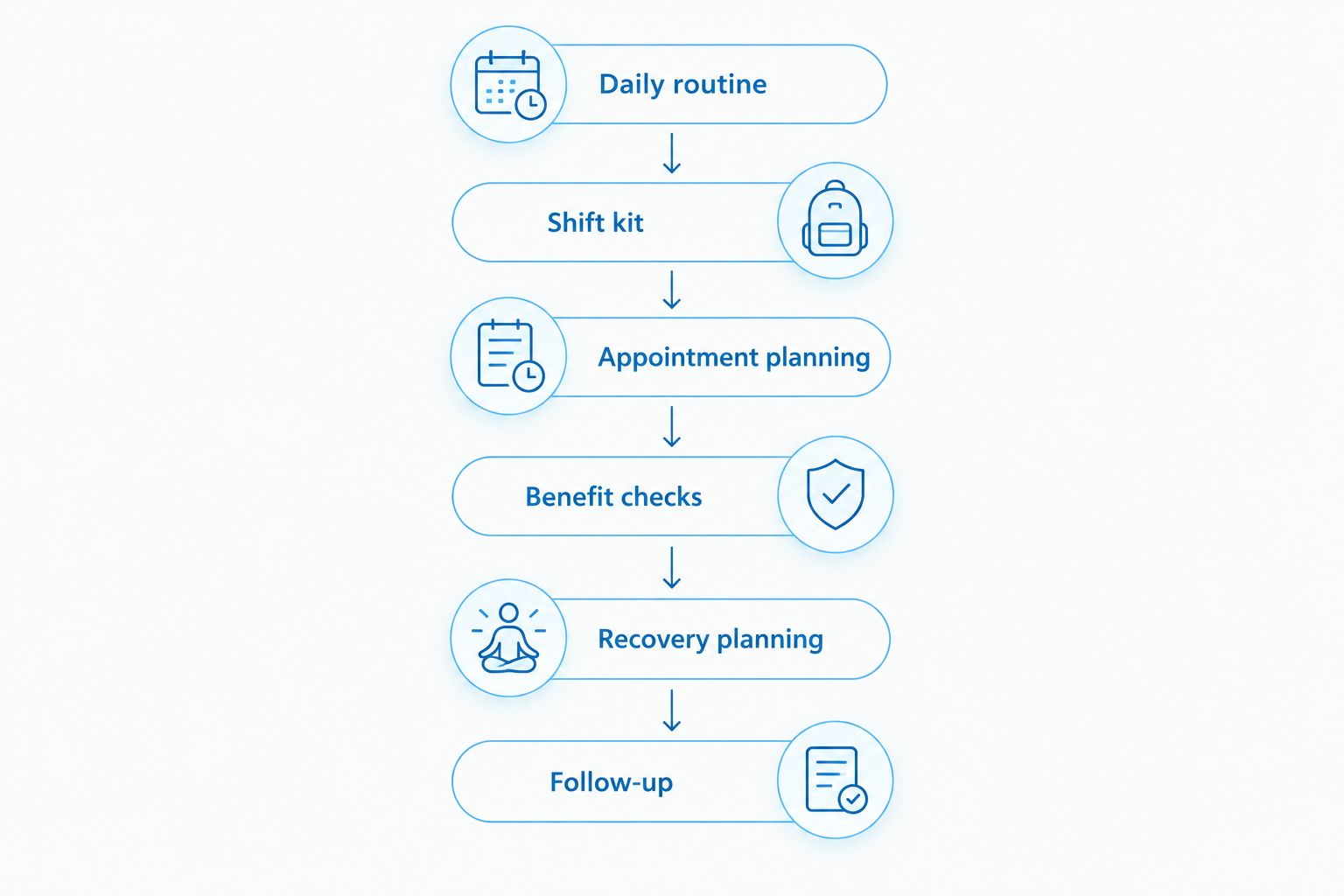
Use this sequence: Daily routine, Shift kit, Appointment planning, Benefit checks, Recovery planning, Follow-up. Start with changes you can make yourself; involve your dental office when you need an examination, treatment decisions, or procedure-specific instructions.
Set your daily routine first, then plan appointments and recovery around your actual roster.
Anchor brushing to waking and sleeping
Start with two dependable events: waking for your main active period and preparing for your main sleep. Brush twice daily for two minutes each time with fluoride toothpaste. If your main sleep starts after an overnight shift, the brushing session before that sleep replaces conventional bedtime brushing.
Clean between your teeth once daily using floss or another suitable interdental cleaner. Ask your dentist which method fits your teeth, dental work, and ability to use it comfortably. Mouthwash does not replace brushing or cleaning between teeth.
When your roster rotates, move the reminders with it. A fixed evening alarm is little help if it repeatedly sounds while you are working or sleeping.
Daily routine: Tie brushing reminders to waking and your main sleep.
Use a soft-bristled toothbrush and fluoride toothpaste.
Set a two-minute timer rather than rushing through brushing.
Choose one reliable daily opportunity to clean between teeth.
Ask your dentist for instructions around braces, bridges, or implants.
Pack a kit that works during your shift
Use supplies you already have before buying anything extra. A toothbrush, fluoride toothpaste, and floss or an interdental cleaner give you the basics. Keep the kit somewhere you can access during a permitted break, rather than in a locker you cannot reach until clocking out.
A work kit is a backup, not a replacement for your main routine. If you cannot brush during work, protect your brushing sessions at home. Rinsing with water after eating is a practical interim step, but it does not remove the need to brush.
Consider your drink habits, too. Frequent sipping of sugary drinks exposes teeth to sugar repeatedly; water is a better routine drink. Persistent dry mouth deserves a conversation with your dentist, including a review of medications and symptoms.
Shift kit: Pack a toothbrush, fluoride toothpaste, and interdental cleaner.
Let your toothbrush air-dry rather than storing it wet in a sealed container.
Keep drinking water accessible where workplace rules allow.
Avoid turning a sweetened drink into an all-shift sipping habit.
Record persistent dryness, sensitivity, or gum bleeding for your appointment.
Book around your actual sleep and work demands
Start with your roster and mark a realistic window for travel, the appointment, and getting home. For a routine visit, choose a time when you can stay alert enough to discuss symptoms and understand instructions. An appointment immediately after overnight work is not automatically the best fit.
A direct conversation with the office is faster than guessing from a general listing. Affordable Dentist Near Me provides general, cosmetic, and restorative dental services for families in Fort Worth, Dallas, Houston, Waco, Grand Prairie, and Crowley. Confirm the relevant location’s hours and whether its appointment options fit your shift.
Affordable Dentist Near Me is best suited to families seeking general, cosmetic, and restorative dental care in its listed Texas cities. Its service range does not establish evening, weekend, or walk-in scheduling; ask about those separately.
Appointment planning: Share your shift pattern when requesting a visit.
Explain whether you need an examination, cleaning, or assessment of a symptom.
Ask how much time to reserve for your specific appointment.
Confirm the office location before arranging transport.
Tell the office about time-sensitive pain rather than requesting only a cleaning.
Check benefits before agreeing to treatment
Begin with your employer’s benefit documents or your insurer’s member information. Check which dental plan you have, whether the dentist participates, and which services require additional approval. Your work schedule does not determine your dental coverage; your plan terms do.
For your 2026 benefits, request a written treatment plan that separates the proposed procedures. Ask the office and insurer to clarify what is covered and what remains your responsibility. An estimate of benefits is not the same as a guarantee of payment.
If you do not have dental insurance, say so before treatment planning. Ask for a written estimate and a clear explanation of which problems need prompt care and which can be scheduled later. Do not postpone an assessment of pain while trying to settle every financial detail.
Benefit checks: Confirm your plan name and member information.
Verify participation for the specific dentist and location.
Ask about deductibles, annual limits, waiting periods, and exclusions.
Request a written treatment estimate before approving planned work.
Keep insurer responses and office estimates together for reference.
Arrange recovery before a treatment visit
Tell the dental team what your job involves, not just when it starts. Driving, operating machinery, heavy lifting, continuous talking, and limited access to breaks can affect how you follow post-treatment instructions. Ask whether the proposed procedure needs a different appointment window from a routine examination.
Sedation requires particular planning. Depending on the medicine and procedure, you can need an escort and restrictions on driving or work afterward. Follow the dental team’s specific directions; do not assume that feeling awake means you are cleared to drive or operate equipment.
Use your 2026 roster to plan treatment only after receiving those instructions. A coworker’s recovery experience is not a substitute for advice about your procedure, medications, and health.
Recovery planning: Describe driving, machinery, lifting, and other job duties.
Ask whether local numbing, sedation, or both are planned.
Confirm transport and escort requirements before the appointment.
Get written instructions about eating, medication, and returning to work.
Arrange any needed schedule changes before treatment begins.
Track symptoms and keep follow-up appointments
Use a phone note or paper calendar to record what hurts, when it happens, and what triggers it. Write down symptoms in relation to meals and sleep rather than simply labeling them morning or evening. That gives the dental team a clearer account when your schedule changes.
Do not wait for a convenient day off if symptoms are worsening. Contact a dentist promptly for ongoing tooth pain, a broken tooth, swelling, or other concerning changes. Trouble breathing or swallowing, or rapidly spreading swelling, requires emergency medical care.
Follow-up also needs a place on your calendar. Your dentist should set cleaning and review intervals according to your oral health; a standard interval does not suit every patient.
Follow-up: Record symptoms, triggers, and changes over time.
Tell the office if swelling, pain, or a broken tooth worsens.
Bring an up-to-date medication list to your visit.
Book any required review before leaving the office.
Update reminders whenever your shift pattern changes.
Plan your next dental visit
Discuss your shift pattern, symptoms, and treatment needs with the office before scheduling.
The best appointment is one that fits the clinical need and leaves you able to follow the instructions afterward. Convenience matters, but it does not turn a routine cleaning into treatment for an urgent toothache.
Use this comparison when discussing your 2026 schedule with the office. Each option has a useful role and a limitation; none establishes that a particular practice offers that appointment time.
Option
Best for
Main advantage
Key limitation
Routine visit on a day off
Workers with predictable days away from work
Keeps the visit separate from shift duties
Uses part of your personal or family time
Routine visit before a shift
Workers with a suitable awake-time window
Avoids booking immediately after overnight work
Leaves less flexibility if the visit runs longer than expected
Routine visit after a shift
Workers who remain alert and have a clear schedule afterward
Connects the visit to an existing trip outside home
Fatigue can make discussion and instructions harder to manage
Confirmed weekend appointment
Workers whose weekdays are occupied
Fits some nonstandard schedules
Weekend scheduling must be confirmed directly
Prompt symptom assessment
Workers with pain, swelling, or tooth damage
Prioritizes diagnosis instead of waiting for routine care
Can require an unexpected change to your work plans
Planned treatment with recovery time
Workers having procedures with aftercare restrictions
Gives you room to follow treatment instructions
Requires coordination with transport, work, and home responsibilities
For routine care, start with an alert, workable appointment window. For symptoms, ask the dental team how promptly you need assessment. For treatment, let the recovery instructions determine the schedule.
Common mistakes shift workers make
Treating daytime sleep as an exception
Skipping brushing because you are going to bed after sunrise leaves your main sleep period outside the routine. Brush before your main sleep, whatever time it starts. Move the habit when your roster changes rather than abandoning it.
Booking treatment immediately before safety-sensitive work
A short appointment does not guarantee an immediate return to driving, machinery, or physically demanding duties. Explain your job before booking, and ask about restrictions for the actual procedure. Reserve a different window if the instructions conflict with your shift.
Using drinks to stretch through the whole shift
Repeatedly sipping sweetened coffee, energy drinks, or soda makes sugar exposure part of the entire work period. Choose water as your routine drink and avoid grazing on sugary drinks. Tell your dentist if dryness persists despite normal hydration.
Assuming every location has the same hours
A multi-location practice does not automatically have identical scheduling at every office. Ask Affordable Dentist Near Me about the specific location you intend to visit. Confirm the address, appointment time, and purpose together so you do not build a work plan around the wrong office.
Waiting for the roster to become predictable
Rotating work can remain unpredictable, so a perfect booking window is a poor requirement for care. Schedule routine appointments when you have a workable opening and seek advice promptly for symptoms. Do not turn uncertainty about your next shift into an indefinite delay.
FAQ
When should I brush my teeth if I work nights?
Brush twice daily with fluoride toothpaste, including before your main sleep period, even when that sleep starts in the morning. Use waking and sleeping as reminders rather than fixed morning and evening clock times.
What is the best dental appointment time for a night-shift worker?
The best routine appointment time is a window when you are alert and can attend without disrupting necessary sleep or treatment instructions. Tell the office your shift pattern and confirm the expected length of your specific visit.
Can I go back to work right after dental treatment?
Returning to work depends on the procedure, medicines used, and your job duties. Ask the dental team about driving, machinery, lifting, eating, and other restrictions before booking treatment.
Does Affordable Dentist Near Me offer appointments that fit shift work?
Confirm appointment options with the specific Affordable Dentist Near Me location you plan to visit. The practice serves families in Fort Worth, Dallas, Houston, Waco, Grand Prairie, and Crowley, but hours and scheduling need direct confirmation.
How often should shift workers get a dental cleaning?
Your dentist should recommend a cleaning interval based on your oral health and treatment needs, not your work schedule alone. Tell the dentist about gum bleeding, dry mouth, previous gum treatment, and other concerns when setting that interval.
What should I do if tooth pain starts during an overnight shift?
Contact a dentist promptly for advice and assessment rather than waiting indefinitely for a routine appointment. Trouble breathing or swallowing, or rapidly spreading swelling, requires emergency medical care.
Do I need dental insurance before booking an examination?
You can ask a dental office about booking an examination without insurance. Explain your coverage situation and request an estimate before agreeing to planned services; if you have insurance, confirm the dentist’s participation and your plan terms.
One last thing
Your most useful appointment question is not simply whether you can attend before work. It is: What will I be allowed to do when I leave? That answer connects the treatment to your driving, meals, equipment use, and next shift.
For your 2026 plan, put the answer beside the appointment in your calendar. A confirmed visit and clear aftercare instructions are more useful than a convenient time slot alone.