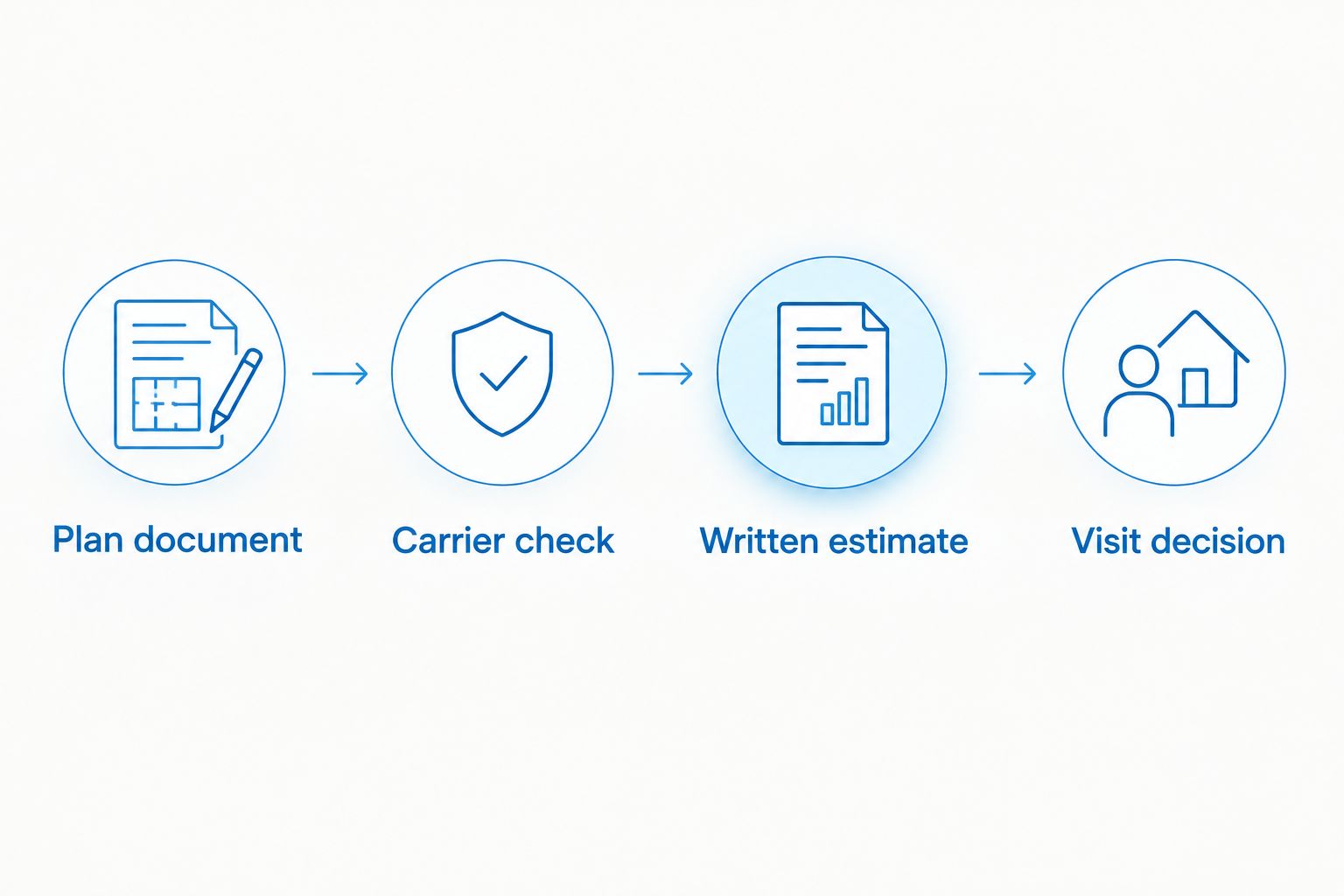
Instead of guessing what your employer dental plan will cover and booking a crown visit before you know your share, complete employer dental benefits verification first: check your plan, confirm the proposed treatment with the carrier, and request a written estimate. In 2026, that sequence gives you a clearer basis for discussing treatment with Affordable Dentist Near Me, although an estimate is not a guarantee of payment.
TL;DR
For employer dental benefits verification in 2026, check your plan, call the carrier, and request a written crown estimate.
Affordable Dentist Near Me is a crown-care option for families in its listed Texas cities who want to confirm coverage before treatment.
Ask about the tooth, proposed treatment, remaining benefits, and any approval requirement; general coverage summaries are not enough.
A pre-treatment estimate helps you plan, but the final claim determines what your insurer pays.
Why this matters
A plan can list crowns as a covered service without telling you what it will pay for your visit. Your eligibility, the treatment proposed, the dentist's participation in the plan, and benefits already used during the plan year can all affect the claim. A benefits summary is the starting point, not the final answer.
Affordable Dentist Near Me is a dental practice for families in Fort Worth, Dallas, Houston, Waco, Grand Prairie and Crowley who want to check employer coverage before discussing a crown. Its restorative dental services include crowns. The practice can discuss treatment; your carrier determines what your plan pays under its terms.
Your dentist also needs to decide whether a crown is appropriate before anyone can confirm the treatment details sent to the insurer. If the type of crown is part of that discussion, this crown materials comparison explains the choices without treating your insurance summary as a treatment recommendation.
Source
Best for
What it cannot settle
Current plan document
Finding the plan's stated crown rules
Whether your proposed treatment qualifies
Carrier benefits check
Confirming eligibility and asking about specific rules
Guaranteeing the final claim payment
Written pre-treatment estimate
Reviewing the carrier's response to proposed treatment
Guaranteeing benefits remain unchanged by the treatment date
Use all three in that order. In 2026, a general answer about crowns is not a substitute for an answer about the treatment your dentist proposes.
Before you start
Gather your coverage details. Have your member ID, the subscriber's name, your employer's plan information, and the current plan document. If you cover a family member, check which person is listed as the subscriber.
Get the proposed treatment details. Ask the dental office what information it can provide for a benefits inquiry, including the tooth involved and the proposed procedure once a dentist has evaluated it. Do not choose a procedure from an insurance list yourself.
Check when the plan takes effect. A new job or employer plan change can create a gap between the coverage you expect and the coverage active on the treatment date. Confirm the effective date before relying on a portal screen or an older card.
The detail that often stops verification halfway through is missing treatment information. A carrier can explain general crown benefits without confirming how it will process an unspecified procedure. Get the dental details first, then make the specific request.
Collect the plan and treatment details
Open the current plan document through your employer's benefits portal, the carrier's member portal, or your benefits administrator. Use the document for the coverage period that includes your proposed 2026 visit, not a copy saved from an earlier plan period.
Find the restorative-care rules. Look for the plan's own wording for crowns. Terms differ by plan, so read the section that defines the benefit rather than relying on a search-result snippet or a short benefits card.
Check restrictions in the same document. Look for any waiting period, frequency limit, tooth-specific rule, annual benefit limit, or requirement for review before treatment. Record the exact wording of any restriction you need the carrier to explain.
Ask the dental office for the proposed treatment details after your examination. Note the tooth involved and ask what information the office needs before it can request an estimate. A discussion about a possible crown is not yet a confirmed treatment plan.
Put the details in one place. Keep the current plan document, member information, and proposed treatment together so you can refer to the same facts during the carrier call and the later appointment discussion.
Do not infer coverage from the word crown appearing in the plan. The benefit can depend on the reason for treatment and the plan's rules for that tooth. If you have not had an examination, verify the general rules now and return to the carrier with the proposed details afterward.
Expected result: you have a current plan document and a clear list of treatment details to confirm. If the proposed procedure is not yet known, you know which questions must wait until after the dental evaluation.
Confirm the carrier's crown rules
Keep the 2026 sequence in order: Plan document, Carrier check, Written estimate, Visit decision. Each checkpoint answers a different question; skipping from the plan document straight to the visit leaves the proposed treatment unverified.
Check the proposed treatment with the carrier before deciding when to schedule.
Contact the carrier using the member-services information on your insurance card or in your member account. Tell the representative whether you are asking about general benefits or a treatment already proposed by a dentist.
Confirm eligibility for the treatment date. Ask whether the patient is covered under the employer plan and whether the proposed dentist participates in the relevant network. Do not assume that a practice's presence in an online listing settles network status for your particular plan.
Describe the proposed treatment using the dental office's details. Ask how the plan handles that procedure for the tooth involved. If the office has not provided enough detail, ask the carrier what it needs for a treatment-specific response.
Review every restriction you found in the document. Ask whether a waiting period, frequency rule, annual benefit limit, or other condition affects the proposed visit. Ask what benefits remain under the current plan period rather than relying only on the plan's original limit.
Ask whether the plan requires review before treatment. Carriers use different terms and processes. Request the exact submission requirements for your plan instead of assuming that a phone verification is an approval.
Keep a record of the response. Note the date, the question asked, and any reference information the carrier provides. A call record helps you follow up; it does not replace the plan document or guarantee a claim decision.
If the carrier gives a general answer, ask what information would produce a treatment-specific one. The representative cannot determine whether a crown is clinically needed; that decision belongs in the dental visit.
Expected result: you know which plan rules the carrier says apply, what information remains outstanding, and whether a written submission is needed before you decide on the visit.
Request an estimate and decide on the visit
Ask about a pre-treatment estimate. Find out whether your carrier accepts one for the proposed crown and what supporting details it requires. The dental office can tell you what treatment information it has available to submit; confirm the submission process rather than assuming it happens automatically.
Match the submission to the treatment discussion. Check that the tooth and proposed procedure on the request are the ones you discussed with the dentist. If treatment changes, ask whether the insurer needs a revised request.
Read the carrier's written response. Look for the procedure reviewed, any stated plan conditions, and the portion assigned to the patient. If a line is unclear, ask the carrier to explain it before making a scheduling decision.
Check the estimate against the visit date. Coverage and remaining benefits can change if the plan period changes or other claims are processed. Confirm which plan applies to the treatment date, particularly if you are changing jobs or carriers in 2026.
Contact the dental office about the visit. Share the carrier's response, ask whether the proposed treatment still matches it, and discuss any remaining questions before scheduling treatment.
A pre-treatment estimate is useful because it responds to a specific proposal. It is not a promise that the final claim will be paid as estimated. The carrier processes the claim under the plan terms and the facts in effect when treatment occurs. That distinction matters if another claim uses benefits after the estimate or the dentist changes the treatment plan.
Expected result: you have a written response tied to the proposed crown and have discussed it with the office. You can decide on a visit with a clearer view of your possible responsibility, not a presumed guarantee.
Discuss your crown visit
Ask about crown care and the treatment details needed for a benefits check.
Verify a dependent's benefits or a changed employer plan
For a covered family member, start with the subscriber's plan information, then identify the patient who needs care. Ask the carrier to confirm that patient's eligibility for the proposed treatment date. Do not assume a dependent's coverage follows every rule that applies to the subscriber; have the carrier check the person receiving treatment.
A plan change needs a fresh verification even when you remain with the same employer. Use the new carrier's documents and ask when the new coverage begins. If treatment was discussed under the old plan, find out whether the new carrier needs its own estimate. An old carrier's response does not establish what the replacement plan will pay.
For families planning care across a job change in 2026, keep the earlier estimate as a record, but base the scheduling decision on the coverage active on the treatment date. If your employer offers several plans, compare the actual crown rules in their documents rather than assuming the plans handle restorative care alike.
Troubleshooting
The portal shows coverage, but the carrier cannot find the patient. Confirm the subscriber's name, member ID, and effective date with your benefits administrator. Then ask the carrier to check the patient again; a portal display does not resolve an eligibility mismatch.
The carrier will discuss crowns only in general terms. Ask the dental office what proposed treatment information is available after the examination. Return to the carrier with those details or request its written-estimate process.
The office and carrier describe different procedures. Pause the estimate request and ask the office to clarify the treatment proposal. The carrier cannot give a useful response to a procedure that does not match the planned care.
The written response differs from the phone answer. Ask the carrier which plan provision explains the difference. Keep both records, but do not treat the earlier call as an approval of the claim.
Your employer changed carriers while treatment was being planned. Confirm the new plan's effective date and request a new benefits check from the carrier responsible on the visit date. Do not carry the old estimate over as proof of coverage.
Customize your 2026 verification workflow
Once you have verified the proposed crown, keep the same method for other care: get the treatment details, read the current plan, ask a specific carrier question, and request a written response when available. Your employer's benefits administrator can help you identify the correct plan document; the dentist handles the clinical recommendation; the carrier explains how its plan applies. Those roles are different, and mixing them produces vague answers.
If you work in a school district, the dental care guide for teachers and school district employees gives you a related starting point for reviewing work-based coverage. For a crown, still confirm the terms of your own plan and the proposed treatment. Affordable Dentist Near Me offers restorative dental care, but no practice can replace that plan-specific carrier check.
FAQ
How do I complete employer dental benefits verification for a crown in 2026?
Check your current plan document, confirm the proposed treatment and eligibility with the carrier, and request a written pre-treatment estimate when available. Review the response with the dental office before deciding on treatment.
Does an employer dental plan cover crowns?
Coverage depends on your specific employer plan and the proposed treatment. Ask the carrier about the tooth and procedure involved, along with any restrictions that apply on the treatment date.
Is a pre-treatment estimate a guarantee of payment?
No. A pre-treatment estimate is the carrier’s response to proposed care, while payment depends on the final claim and the plan terms in effect when treatment occurs.
Do I need an examination before checking crown benefits?
You can check general plan rules before an examination, but a treatment-specific check needs the dentist’s proposed care. Ask the office what details are available after your evaluation.
Can I check employer dental benefits for my child or spouse?
Yes. Give the carrier the subscriber’s plan information and identify the family member who needs treatment. Ask it to confirm that patient’s eligibility and the applicable crown rules.
What if my employer changes dental carriers before my crown visit?
Verify coverage with the carrier responsible on the treatment date. Ask whether it needs a new estimate; a response from your former carrier does not establish the new plan’s benefits.
Can Affordable Dentist Near Me decide what my insurer will pay?
No. Affordable Dentist Near Me provides dental care, while your carrier applies your employer plan’s terms to its estimate and final claim. Discuss the proposed treatment with the practice and the coverage rules with the carrier.
One last thing
Ask the carrier which date controls your eligibility and remaining benefits: the date you call, the date it issues an estimate, or the treatment date. Plan your 2026 crown visit around coverage active when treatment takes place, not a benefits screen you viewed earlier. That question is especially useful if another dental claim is pending or your employer plan is changing. Keep the written response, then check it against the final treatment plan before you proceed.