Yes, you can get veneers for sensitive teeth if a dentist confirms that your teeth and gums are healthy enough for treatment. Existing sensitivity needs a diagnosis first: veneers do not treat every cause of tooth pain, and preparing teeth for veneers can cause or worsen sensitivity.
TL;DR
Veneers for sensitive teeth require a dental exam before cosmetic treatment; untreated decay, cracks, or gum problems come first.
Porcelain veneers and composite veneers both need careful planning; neither material guarantees freedom from sensitivity.
Delay veneers when pain lingers, starts without a trigger, or occurs when you bite.
Affordable Dentist Near Me provides general and cosmetic dental care for families in its listed Texas communities.
Why this matters
Sensitivity changes the treatment plan, not automatically your eligibility for veneers. A brief reaction to cold and a toothache that wakes you at night need different evaluations. Covering the front of a tooth does not remove an infection, repair every crack, or restore receding gums.
Before choosing a smile treatment in 2026, separate your cosmetic goal from the reason your teeth hurt. This comparison of cosmetic dentistry procedures provides context for discussing changes to tooth color, shape, and alignment without assuming veneers are your only choice.
Can you get veneers if you have sensitive teeth?
You can be a candidate for veneers when the cause of sensitivity is understood, active dental disease is treated, and enough healthy tooth structure remains. Your dentist also needs to assess your bite, because grinding and uneven pressure affect both natural teeth and veneers.
The decision depends on the condition of each tooth, not simply how sensitive your whole mouth feels. One tooth might need a filling while another is healthy enough for cosmetic treatment.
Finding before treatment
What it means for veneers
Next step
Brief cold sensitivity without active disease
Veneers remain a possible option, but sensitivity risk needs discussion
Assess enamel, gum position, and bite
Tooth decay or a damaged filling
Cosmetic coverage does not replace treatment
Treat the affected tooth first
Receding gums and exposed roots
A veneer does not reliably address the exposed root
Discuss sensitivity care and gum treatment
A crack or pain when biting
The tooth needs a diagnosis before cosmetic work
Evaluate the crack and tooth structure
Spontaneous pain, swelling, or lingering temperature pain
These symptoms need assessment rather than a veneer decision
Arrange prompt dental care
Ask your dentist to explain why a veneer fits the tooth's condition. A good explanation connects the examination findings with your cosmetic goal and identifies what treatment will not fix.
Porcelain veneers: discuss preparation before appearance
Best for: patients seeking changes to tooth color or shape whose teeth have suitable enamel and a healthy foundation.
Porcelain veneers cover the visible front surface of teeth. Their appearance and resistance to staining are advantages, but conventional porcelain veneers commonly require enamel removal. That change is irreversible and can contribute to sensitivity.
Ask how much preparation your teeth need and whether the plan keeps bonding mainly within enamel. The answer depends on tooth position, existing restorations, and the result you want—not simply the veneer material.
For a 2026 treatment plan, request an explanation of what happens if sensitivity continues after placement. Do not accept a promise that porcelain will make every sensitive tooth comfortable.
Composite veneers: less preparation is not a guarantee
Best for: selected patients seeking changes to tooth shape or appearance with a treatment approach that can preserve more tooth structure.
Composite veneers use tooth-colored filling material. Depending on the tooth and the planned change, they can require less preparation than conventional porcelain veneers. Composite is also repairable, but it can stain and wear over time.
Less preparation does not mean no sensitivity. Bonding, existing tooth problems, and changes to your bite still matter. Your dentist should explain whether an additive approach is suitable rather than assuming composite is automatically the gentler choice.
Use this porcelain versus composite veneer comparison to prepare questions about appearance, maintenance, and tooth preparation. Choose the approach that protects healthy tooth structure while meeting a realistic cosmetic goal.
Why sensitivity with veneers varies
Sensitivity is a symptom with several possible causes. These factors help explain why the same cosmetic procedure does not feel the same for every patient:
Existing tooth problems: decay, cracks, and worn fillings need treatment of their own. A veneer cannot substitute for that care.
Remaining enamel: worn or thin enamel leaves the underlying tooth less protected. Removing additional enamel changes the risk discussion.
Gum position: receding gums expose root surfaces, which are not covered by enamel. Covering the front of a tooth does not necessarily cover its sensitive root.
Tooth preparation: the amount and depth of preparation affect how close treatment gets to the sensitive inner parts of the tooth.
Bite pressure: grinding, clenching, or an uneven bite can stress teeth and restorations. Bite-related discomfort needs a different response from cold sensitivity.
Bonding and fit: the seal around the veneer and the way teeth meet after treatment matter. Persistent symptoms deserve a check rather than repeated use of sensitivity toothpaste alone.
No material label replaces this assessment. In 2026, compare proposed treatment plans by how clearly they address your specific risk factors, not by whether they promise a universally comfortable result.
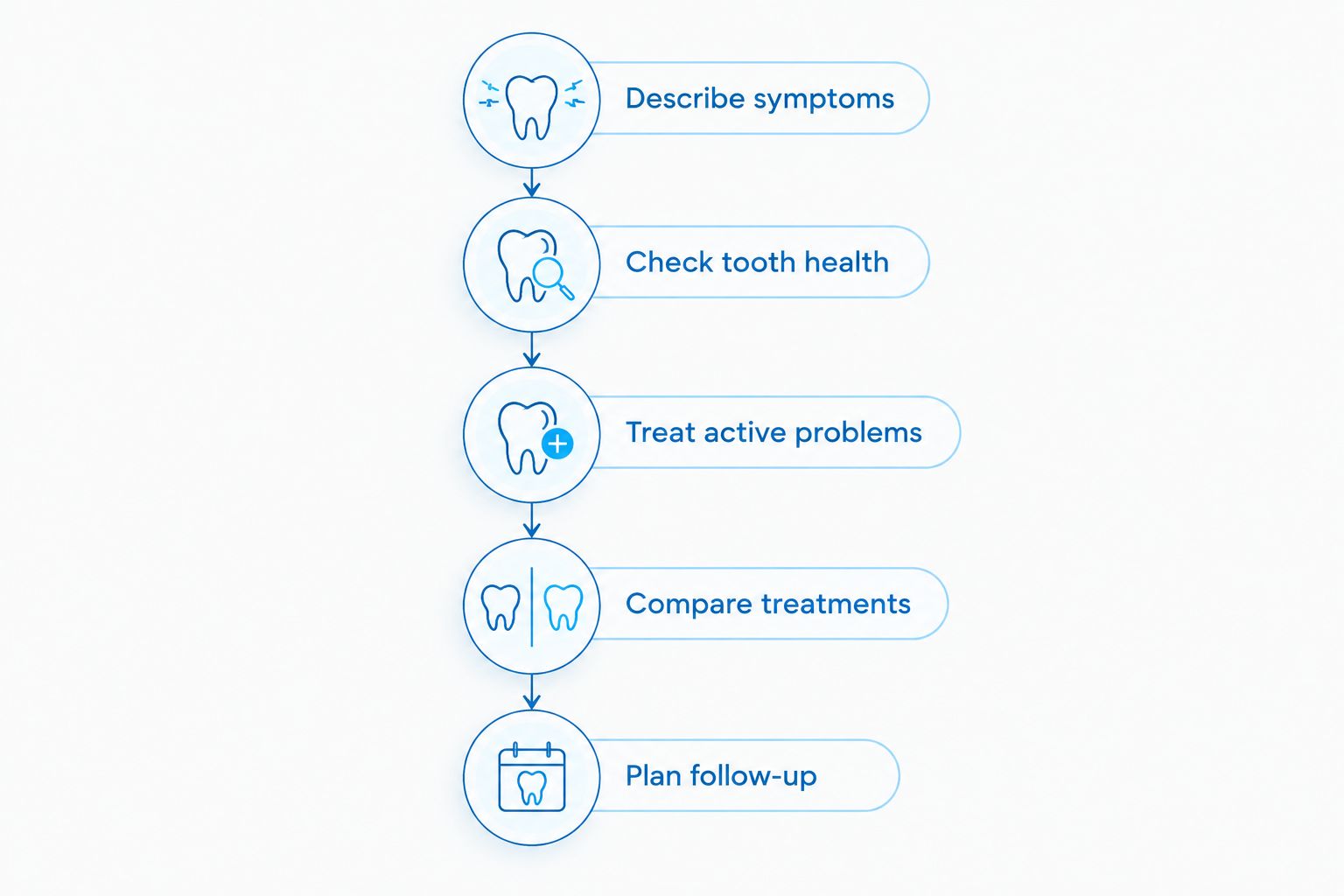
What should happen before you agree to veneers?
A useful consultation starts with your symptoms, then moves to the cosmetic result. Bring a clear description of what you feel and when it happens; you do not need to identify the cause yourself.
Describe symptoms. Explain whether cold, heat, sweets, brushing, or biting triggers pain. Mention whether the discomfort stops quickly or continues after the trigger is gone.
Check tooth health. Your dentist examines your teeth and gums and decides whether X-rays or other tests are needed. The goal is to distinguish ordinary sensitivity from a problem that needs treatment.
Treat active problems. Address decay, gum disease, damaged fillings, or other diagnosed conditions before cosmetic preparation. Reassess symptoms rather than assuming they have resolved.
Compare treatments. Discuss veneers alongside a more limited repair or no cosmetic treatment when appropriate. Ask what each choice changes and what healthy tooth structure it removes.
Plan follow-up. Know whom to contact if pain increases, your bite feels wrong, or temperature sensitivity does not settle. Ask how the dentist will evaluate those symptoms.
Your decision should follow this sequence, not start with selecting a veneer shade. Treating the cause of discomfort first also gives you a clearer picture of which cosmetic changes you still want.
Diagnose and treat sensitivity before committing to cosmetic tooth preparation.
What if a smaller treatment meets your goal?
Veneers are not the default answer for every cosmetic concern. If you dislike a small chip, a single rough edge, or tooth color alone, ask whether a more limited treatment addresses the concern without covering the entire front surface.
Every option has limits. Whitening changes color rather than shape and can cause sensitivity; bonding can repair selected defects but needs maintenance. Neither should begin over untreated disease.
Option
Best for
Main advantage
Main limitation
Porcelain veneers
Broader changes to visible tooth color and shape
Can address several appearance concerns together
Commonly involves irreversible enamel removal
Composite veneers
Selected changes where an additive approach fits
Repairable and sometimes requires less preparation
Can stain and wear
Localized bonding
A limited chip or shape concern
Treats a smaller area when appropriate
Not suitable for every defect or bite
Teeth whitening
Color concerns without a need to change shape
Does not require reshaping teeth
Can trigger sensitivity and does not change existing restoration color
Sensitivity treatment without veneers
Discomfort when appearance is not the main concern
Addresses the diagnosed cause rather than adding cosmetic coverage
Does not provide the appearance changes of veneers
The least invasive suitable treatment deserves a place in the conversation. That does not mean it always wins; it means you understand the trade-off before healthy enamel is removed.
How can you care for sensitive teeth before treatment?
Brush for 2 minutes per session, 2 times per day, using fluoride toothpaste and a soft-bristled toothbrush. Clean between your teeth 1 time per day with floss or another suitable tool. Gentle technique matters: pressing harder does not make brushing more effective and can contribute to gum wear.
Ask your dentist whether a desensitizing toothpaste is appropriate. Follow its directions consistently, and do not treat symptom improvement as proof that a painful tooth is healthy.
Tell your dentist about whitening products, acidic drinks, reflux, or grinding. These details help guide the evaluation. For your 2026 appointment, bring the names of products you use rather than adding more treatments on your own.
When should you delay veneers and seek care?
Delay cosmetic treatment when pain is unexplained, worsening, or accompanied by swelling. A tooth that hurts without a trigger, hurts when you bite, or remains painful after hot or cold exposure needs assessment.
Arrange prompt dental care for facial swelling, fever with dental pain, or a broken tooth with significant discomfort. Trouble breathing or swallowing requires emergency medical attention. Do not wait for a cosmetic consultation to address those symptoms.
Veneers are not an emergency treatment. The safer next move is to identify the problem and stabilize the tooth before making an appearance-related decision.
Where does general and cosmetic dental care fit?
Affordable Dentist Near Me serves families seeking general and cosmetic dental care in Fort Worth, Dallas, Houston, Waco, Grand Prairie, and Crowley. That combination is relevant when you need to discuss discomfort as well as appearance.
When contacting Affordable Dentist Near Me about cosmetic dental care, describe the sensitivity first and ask which evaluation is appropriate. A practice description alone does not establish your eligibility for veneers; that decision requires an examination of your teeth and gums.
For a 2026 consultation, bring your symptom notes, your main cosmetic concern, and questions about alternatives. Ask for a written treatment plan that separates necessary dental care from optional appearance changes.
Discuss sensitivity before cosmetic treatment
Ask which dental evaluation fits your symptoms and your goals.
Veneers do not reliably stop tooth sensitivity. They do not treat every cause, including decay, gum recession, or problems inside a tooth, and preparation can cause sensitivity.
Are porcelain or composite veneers better for sensitive teeth?
Neither porcelain nor composite veneers is automatically better for sensitive teeth. The cause of sensitivity, available enamel, required preparation, and bite matter more than the material name alone.
Can I get no-prep veneers if my teeth are sensitive?
Sensitivity alone does not make you a candidate for no-prep veneers. Your dentist must assess tooth position, shape, bite, and health to determine whether adding material without substantial preparation is suitable.
Is sensitivity after veneers always normal?
Sensitivity after veneers is not always something to ignore. Contact your dentist if symptoms worsen, linger after temperature exposure, occur without a trigger, or include pain when biting.
Can I get veneers if my gums have receded?
Gum recession does not automatically rule out veneers, but exposed roots need their own assessment. Veneers generally cover the front of the tooth rather than treating the cause of gum recession.
Should I use whitening strips before getting veneers?
Do not start whitening strips on sensitive teeth without discussing them with your dentist. Whitening can increase sensitivity, and any planned whitening should be coordinated with the color of future restorations.
What should I tell Affordable Dentist Near Me when asking about veneers?
Tell Affordable Dentist Near Me what triggers your sensitivity, whether pain lingers, and what you want to change about your smile. Ask for an evaluation before deciding on cosmetic treatment.
One last thing
Ask what happens if you choose not to get veneers. That question separates a cosmetic preference from a dental problem that needs treatment regardless of appearance. You should understand both before agreeing to irreversible changes.