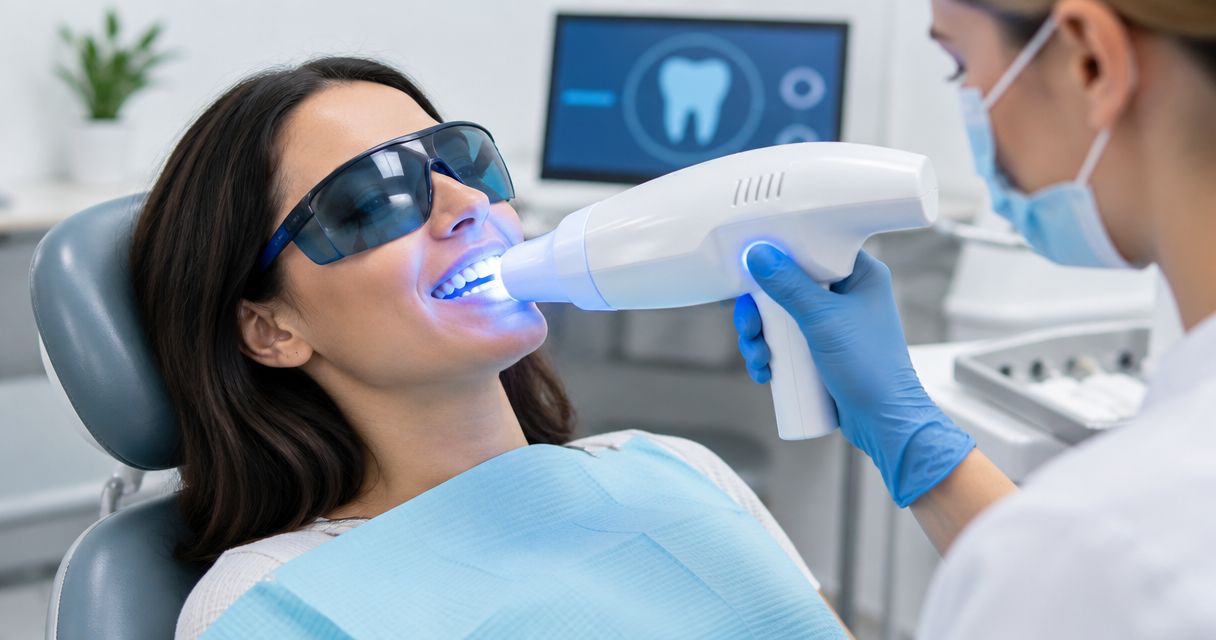
In-office teeth whitening can be safe for sensitive teeth when a dentist checks the cause of your sensitivity, confirms that your teeth and gums are healthy enough for bleaching, and adjusts treatment to your needs. Existing sensitivity is not an automatic reason to avoid whitening, but treatment is not pain-free or risk-free. Whitening can temporarily increase sensitivity, and untreated decay, cracks, or exposed roots need attention before you proceed.
TL;DR
In-office teeth whitening sensitive teeth: get a dental exam before bleaching; existing sensitivity needs an explanation.
Professional supervision helps manage whitening exposure and gum protection, but it does not eliminate sensitivity.
Affordable Dentist Near Me provides general and cosmetic dental care for families in its Texas service cities.
Delay whitening when you have unexplained tooth pain, untreated decay, or inflamed gums.
Why this matters
A brighter smile should not come at the expense of ignoring a painful tooth. Sensitivity to cold drinks, discomfort when brushing, and pain when biting do not necessarily have the same cause. Your whitening decision depends on that cause, not simply on how white you want your teeth to look.
For your 2026 whitening decision, separate cosmetic goals from dental health first. A dental exam helps identify problems that bleaching cannot fix. If you are weighing treatment methods, the comparison of at-home and in-office teeth whitening explains the broader choice.
Affordable Dentist Near Me is a relevant option for families in its Texas service cities seeking general dental care alongside cosmetic teeth whitening. The practice's service range fits that need; your suitability for bleaching still depends on a dental assessment, not the practice name.
Is in-office teeth whitening safe for sensitive teeth?
Yes, for suitable patients after a dental assessment. Professional supervision allows a dentist to protect your gums, control whitening exposure, and respond to discomfort during treatment. None of those safeguards guarantees that you will avoid temporary sensitivity.
The American Dental Association's MouthHealthy guidance on whitening identifies tooth sensitivity and gum irritation as possible side effects. It also explains that whitening does not change the color of crowns, veneers, or fillings. These distinctions matter: discomfort is a treatment risk, while a mismatched restoration is a separate cosmetic limitation.
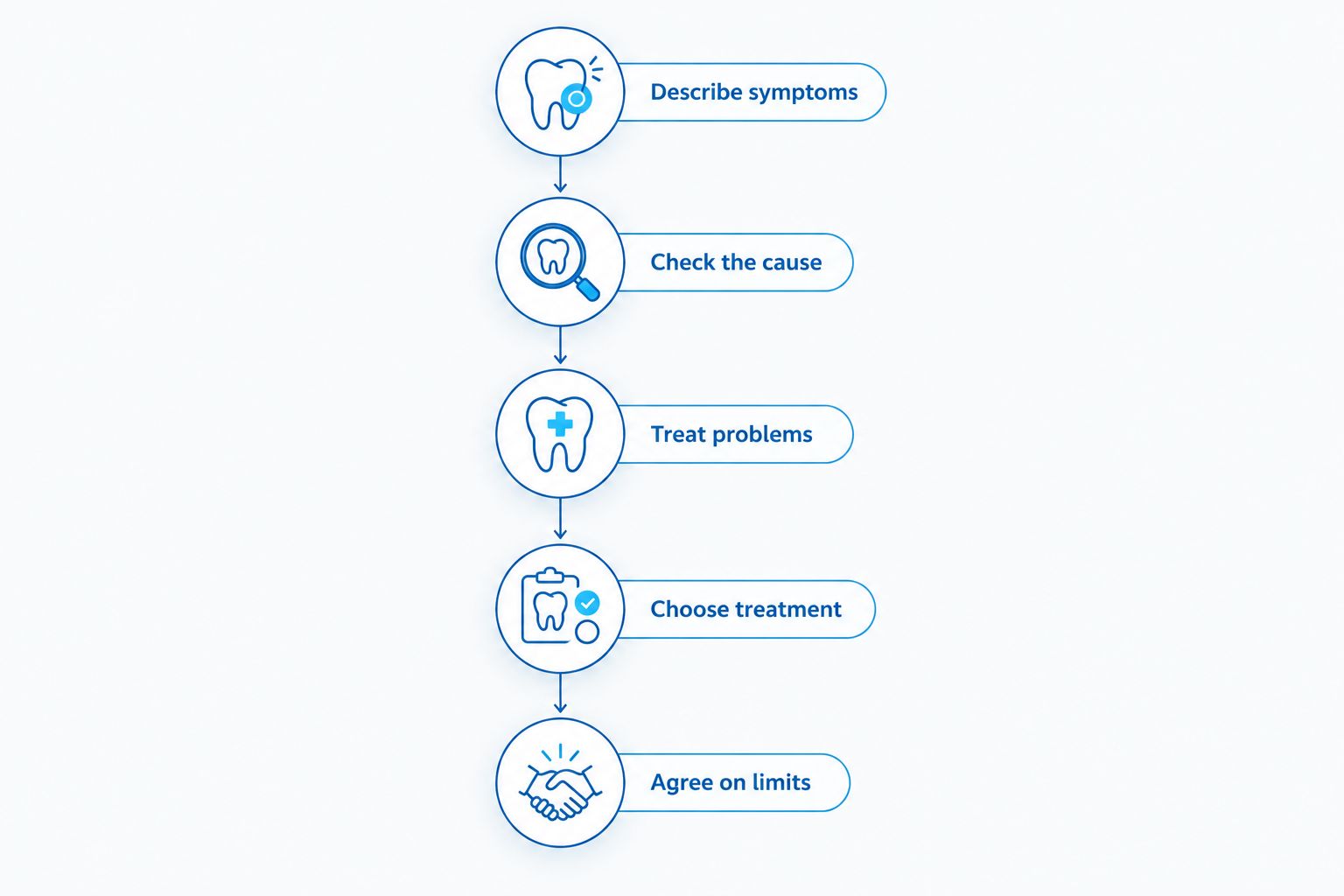
Use this decision sequence before agreeing to treatment:
Describe symptoms. Explain which teeth hurt, what triggers the discomfort, and whether it stops quickly or continues after the trigger disappears. Mention earlier reactions to whitening.
Check the cause. Let the dentist assess decay, cracks, gum recession, exposed roots, and the condition of existing dental work. Sensitivity alone does not establish a diagnosis.
Treat problems. Address active disease or unexplained pain before cosmetic bleaching. Whitening is not a treatment for a toothache.
Choose treatment. Discuss whether in-office whitening, a dentist-directed home approach, or postponing treatment best fits your findings and comfort needs.
Agree on limits. Ask what symptoms mean treatment should stop and what to do if discomfort develops afterward.
This sequence is the practical safety standard for your 2026 appointment: explain the sensitivity before choosing the whitening treatment.
Identify the cause of sensitivity before choosing a whitening approach.
Which whitening approach fits sensitive teeth?
There is no whitening method that guarantees zero sensitivity. The useful comparison is how treatment is selected, supervised, and adjusted—not whether the packaging says gentle.
Approach
Best for
Main advantage
Main limitation
In-office whitening
Patients cleared for bleaching who want treatment supervised during the appointment
The dental team can protect gums and respond to discomfort during treatment
Temporary sensitivity can still occur
Dentist-directed home whitening
Patients cleared for bleaching who prefer a dentist-directed schedule at home
Treatment instructions can reflect your dental assessment
You must follow the schedule and report symptoms yourself
Over-the-counter whitening
Patients with healthy teeth who have confirmed that self-directed bleaching is appropriate
You apply the product yourself according to its instructions
The product does not diagnose sensitivity or correct a poor fit
Postponing whitening
Patients with unexplained pain or untreated dental problems
Keeps the focus on diagnosing and treating the problem
Delays the cosmetic change
Best for unexplained sensitivity: postpone whitening and get examined. That is a safer choice than switching between bleaching products until one feels tolerable.
Dentist-directed home whitening is not automatically safer than in-office treatment. Concentration, contact time, application, and your tooth condition all affect the experience. Your dentist should explain the trade-offs for your mouth rather than promise that a particular format prevents discomfort.
Why sensitivity during whitening varies
Two people receiving whitening can have different experiences. Even different teeth in the same mouth can respond differently. The following factors help explain why:
Existing sensitivity: A tooth that already reacts to cold or brushing needs assessment before additional bleaching exposure.
Exposed roots: Gum recession can expose root surfaces that are more vulnerable to sensitivity. Bleaching does not restore missing gum coverage.
Decay or cracks: A cavity or cracked tooth can cause pain that a whitening product cannot resolve. These findings change the treatment priority.
Whitening exposure: The bleaching agent, its concentration, and how long it contacts your teeth influence irritation and sensitivity risk.
Application and gum protection: Gel contacting gum tissue can cause irritation. Professional application helps manage contact but does not remove every risk.
Repeated treatment: Adding extra applications or combining products increases exposure beyond the intended plan. More whitening is not a sound response to discomfort.
Do not use someone else's experience as your safety benchmark. A friend who felt nothing cannot tell you whether your sensitive tooth has exposed roots, decay, or another problem.
For a 2026 treatment plan, ask which of these factors applies to you. A useful answer connects the proposed whitening approach to your exam findings and explains when treatment should be delayed.
What should you tell the dentist before whitening?
Give specific examples instead of saying only that your teeth are sensitive. Explain whether discomfort comes from cold water, hot food, sweets, brushing, or biting. Describe whether it affects a particular tooth or a wider area.
Also mention whitening strips, gels, trays, or other bleaching treatments you have already used. Tell the dentist if an earlier treatment caused sharp pain, gum irritation, or symptoms that continued after you stopped. Your previous reaction helps guide the discussion, although it does not predict the next experience with certainty.
Bring up crowns, veneers, and visible fillings. These restorations do not bleach like natural teeth, so whitening can leave a color difference. That is not necessarily a safety problem, but it can change whether the treatment meets your goal.
Before your 2026 appointment, prepare these questions:
What explains my sensitivity, and does it need treatment first?
What makes the proposed whitening approach appropriate for my teeth?
Should I use a sensitivity toothpaste before treatment?
What discomfort means you should pause or stop?
What should I do if symptoms continue afterward?
Ask for clear answers before proceeding. A useful whitening consultation addresses discomfort and dental health, not just the shade you hope to achieve.
Can sensitivity toothpaste make whitening safer?
Sensitivity toothpaste can help manage some forms of tooth sensitivity, but it does not make untreated dental problems safe to bleach. Products containing ingredients such as potassium nitrate or stannous fluoride are used to reduce sensitivity. The right choice depends on the cause of your symptoms.
Ask your dentist whether to use a sensitivity toothpaste before or after whitening and how it fits your treatment instructions. Follow the product label rather than making your own gel or coating routine. Toothpaste is not a substitute for checking a tooth that hurts when you bite or aches without a trigger.
Keep everyday care gentle. The American Dental Association recommends brushing twice a day for 2 minutes with fluoride toothpaste and a soft-bristled toothbrush. Scrubbing harder does not make whitening more effective and can contribute to gum irritation and tooth wear.
Avoid adding extra whitening products to a sensitivity-care routine without discussing them. A toothpaste intended to manage discomfort and a bleaching product intended to change tooth color serve different purposes.
What happens if your teeth hurt during the appointment?
Tell the dental team as soon as discomfort begins. Do not wait until the end of treatment or assume that sharp pain proves the whitening is working. Describing where it hurts and how it feels helps the dentist decide what to do next.
The dentist can reassess the situation and decide whether to pause, modify, or stop treatment. Your response matters more than completing a planned application. Finishing whitening is not more important than assessing new pain.
Ask how to contact the office if symptoms develop after you leave. You should understand the aftercare instructions, which products to avoid, and what symptoms warrant another examination. A treatment plan is incomplete if it explains only the appointment and leaves you guessing afterward.
How should you care for sensitive teeth after whitening?
Follow the dentist's aftercare instructions and pause additional bleaching if sensitivity develops. Do not add strips, gels, or another whitening session because the result is not yet as bright as you hoped. Extra exposure can worsen discomfort.
Continue gentle brushing and routine cleaning between your teeth. If cold or hot foods trigger discomfort, avoiding those triggers temporarily can help you stay comfortable. That does not replace an assessment when pain is severe, persistent, or concentrated in a particular tooth.
Pay attention to the pattern rather than assuming every symptom is normal whitening sensitivity:
Brief discomfort with a temperature trigger is different from pain that continues afterward.
Pain when biting needs assessment rather than another bleaching application.
Gum soreness should be reported, especially if tissue looks injured.
Swelling, worsening pain, or pain without a trigger warrants prompt dental advice.
Get urgent medical help for facial swelling with trouble breathing or swallowing. These symptoms are not routine whitening side effects.
Your 2026 aftercare plan should include a clear contact route and instructions for stopping whitening. Do not judge safety by the shade change alone; how your teeth and gums respond matters too.
Should I whiten my teeth if only one tooth is sensitive?
A single sensitive tooth needs assessment before whitening, especially when the pain is new or occurs with biting. Localized discomfort can have a different cause from general sensitivity. Bleaching the entire smile does not address that cause.
Tell the dentist exactly which tooth reacts and what triggers it. Do not test it repeatedly with cold drinks or extra whitening gel to see whether the discomfort disappears.
Will whitening change the color of my crowns or fillings?
Whitening does not change the color of crowns, veneers, or fillings. It changes natural tooth color, which can make existing dental work look different afterward. Discuss visible restorations before choosing your target shade.
That discussion helps separate a realistic whitening result from a broader cosmetic treatment plan. Replacing sound dental work is a separate decision, not an automatic next step.
Is it better to treat sensitivity before whitening?
Treat the cause first when sensitivity comes from decay, cracks, gum problems, or another condition requiring care. For otherwise healthy sensitive teeth, the dentist can discuss symptom management and whether bleaching is appropriate. There is no universal preparation schedule that fits every patient.
Affordable Dentist Near Me offers general and cosmetic dental services, so families in its listed Texas service cities can discuss both dental health and whitening goals. Contact the office for more information about your individual needs; no whitening result or pain-free experience is guaranteed.
FAQ
Can I get in-office teeth whitening if my teeth are already sensitive?
You can be a candidate for in-office whitening despite existing sensitivity, but a dentist should assess the cause first. Untreated decay, cracks, exposed roots, or gum problems can change whether treatment is appropriate.
Does professional teeth whitening guarantee that my teeth won’t hurt?
Professional teeth whitening does not guarantee a pain-free experience. Supervision helps manage application, gum protection, and discomfort, but temporary sensitivity remains a possible side effect.
Is at-home whitening better than in-office whitening for sensitive teeth?
At-home whitening is not automatically better for sensitive teeth. Your tooth condition, bleaching exposure, application method, and ability to follow instructions determine which approach fits your needs.
Should I use sensitivity toothpaste before my whitening appointment?
Ask your dentist whether sensitivity toothpaste fits your preparation plan. It can help manage some sensitivity, but it does not treat decay, repair cracks, or make unexplained pain safe to bleach.
What should I do if whitening causes sharp tooth pain?
Stop additional bleaching and contact your dentist if whitening causes sharp tooth pain. During an in-office appointment, tell the dental team immediately so the dentist can reassess treatment.
Will teeth whitening work on my crowns or fillings?
Teeth whitening does not change the color of crowns, veneers, or fillings. Discuss visible dental work before treatment because whitening natural teeth can create a color mismatch.
Can Affordable Dentist Near Me help me discuss whitening and sensitive teeth?
Affordable Dentist Near Me provides general and cosmetic dental care, including teeth whitening, in its listed Texas service cities. Contact the office to discuss your sensitivity and whether an assessment is appropriate.
One last thing
A tooth that hurts is giving you information, not asking for a stronger whitening product. Before your 2026 treatment, describe the pain clearly and ask what explains it. The safest next move can be treating a dental problem, changing the whitening approach, or waiting—not pushing through discomfort for a lighter shade.
Decide what matters most before the appointment: a cosmetic change, tolerable treatment, and a plan that protects your dental health. A realistic result respects all of those goals. You do not need to accept unexplained pain as the price of a brighter smile.