Arrange your crown as soon as your dentist confirms the root canal is complete and the tooth is ready for its final restoration; there is no single waiting period that fits every tooth. A temporary filling is not a reason to delay, and worsening pain, swelling, or a damaged temporary restoration needs assessment before you simply proceed with the crown.
TL;DR
How long to wait for crown after root canal depends on your dentist’s examination, not a universal countdown.
Protect the treated tooth: avoid heavy chewing until your dentist completes the final restoration.
Affordable Dentist Near Me provides general and restorative dental care for families in its Texas service cities.
Worsening pain, swelling, or a loose temporary filling needs a dental call, not a longer wait.
Why this matters
A root canal treats the inside of your tooth. The final restoration seals the opening and, when a crown is needed, helps protect the remaining tooth from breaking under chewing pressure.
Feeling better does not mean your treatment is finished. Your tooth can stop hurting while it still needs protection. The American Association of Endodontists' patient aftercare guidance advises avoiding heavy chewing on the treated tooth until your dentist restores it.
If you are planning treatment in 2026, separate the recovery instructions from the restoration appointment. Our guide to how long a root canal takes to heal explains the recovery side; your dentist still needs to confirm when to protect the tooth permanently.
How long should you wait for a crown after a root canal?
Wait only as long as your treating dentist recommends for your specific tooth. Once treatment is complete and the tooth is suitable for restoration, arrange the next appointment promptly rather than waiting for pain to return.
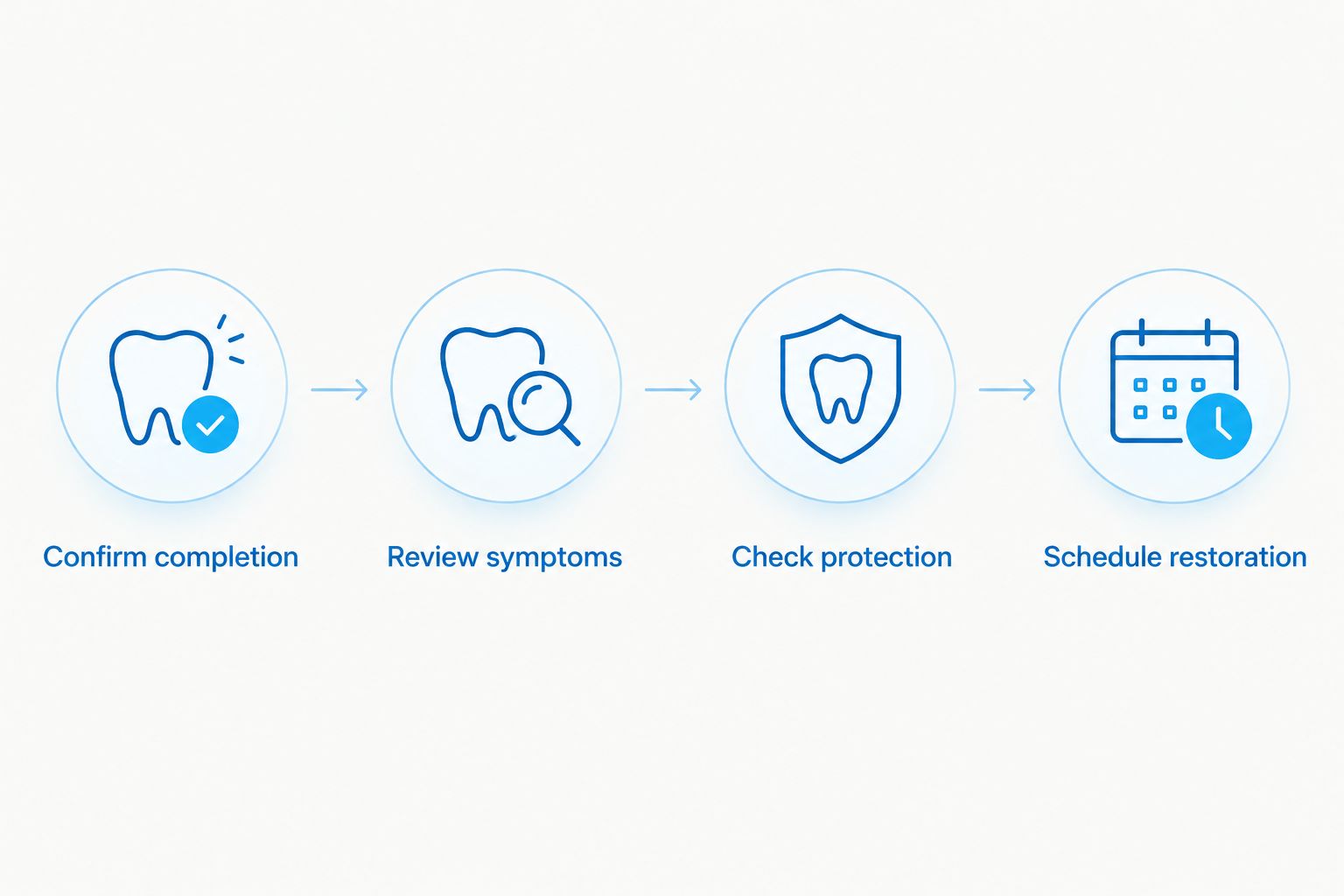
Your next step depends on what is protecting the tooth now, whether symptoms are improving, and whether the dentist has finished the root canal. Use this sequence to clarify the plan:
Confirm completion. Ask whether the root canal is finished or whether you need another treatment visit. A temporary filling alone does not answer that question.
Review symptoms. Tell your dentist about tenderness, swelling, drainage, or a bite that feels uneven. These findings affect what happens next.
Check protection. Ask whether the temporary filling or temporary crown is intact and what chewing restrictions apply.
Schedule restoration. Get a specific appointment or a clear clinical reason for waiting. Ask who is responsible for arranging it if different offices handle the root canal and crown.
The next appointment depends on treatment completion and the condition of the tooth.
Do not treat a general online timeline as permission to postpone your appointment. In 2026, the useful question remains: what needs to happen before this particular tooth can receive its final restoration?
A completed root canal: arrange the final restoration
When the root canal is complete, the dentist checks the remaining tooth and decides what restoration will protect it. Back teeth often need crowns because they carry substantial chewing forces; front teeth do not automatically need the same treatment.
A large existing filling, missing tooth walls, or a crack can change the plan. Your dentist also needs enough sound tooth structure to support the restoration.
Best for: patients whose dentist has confirmed that the tooth is ready. Proceed with the recommended restoration instead of adding an unapproved waiting period. The benefit is protection; the limitation is that the correct restoration still depends on an examination, not just the fact that you had a root canal.
Ongoing symptoms: get reassessed before crown placement
Some tenderness after treatment does not automatically mean the root canal failed. However, increasing pain, visible swelling, drainage, or a bite that feels unusually high deserves a call to the treating office.
A crown does not treat an unresolved problem inside the tooth. Your dentist needs to determine whether symptoms reflect expected recovery, a bite adjustment, or a problem that needs further care.
Best for: patients with new, persistent, or worsening symptoms. Reassessment gives the dentist a chance to address the cause before completing the crown. The trade-off is an extra evaluation, but simply waiting without reporting symptoms does not establish that the tooth is ready.
Does every root canal tooth need a crown?
No. A crown is common after root canal treatment, especially for back teeth, but the decision depends on tooth location, remaining structure, and chewing forces.
A filling and a crown are not interchangeable choices based only on convenience. The comparison below explains their different roles without replacing your dentist's recommendation.
Restoration
Best for
Main benefit
Main limitation
Temporary filling
Short-term protection between treatment stages
Closes the treatment opening while care continues
Is not intended to replace the planned final restoration
Permanent filling
Selected teeth with enough remaining structure
Seals the opening while preserving suitable tooth structure
Does not provide the same coverage as a crown
Crown
Teeth that need coverage and structural protection
Covers and protects the prepared tooth
Requires preparation and does not eliminate future decay or fracture risk
Ask your dentist to show you what remains of the tooth. Understanding the damage makes the recommendation clearer than simply hearing that every root canal requires a crown.
Why the waiting time varies
There is no universal crown-after-root-canal deadline for 2026. These factors explain why your dentist's instructions take priority over someone else's experience:
Treatment completion. A tooth between root canal visits is at a different stage from a tooth with completed treatment.
Symptoms and examination findings. Swelling, drainage, increasing pain, or bite discomfort need attention before the plan proceeds unchanged.
Remaining tooth structure. Missing walls, large fillings, and cracks affect how the tooth can be restored.
Tooth location. Back teeth handle different chewing loads from front teeth, which affects the need for coverage.
Temporary protection. A damaged or missing temporary filling changes the immediate priority from routine scheduling to contacting the dentist.
Restoration workflow. Crown preparation and crown placement are different treatment stages. Your dentist should explain which appointment comes next.
An administrative delay is different from a clinical reason to wait. If scheduling, insurance verification, or payment arrangements slow the process, tell the office so the dentist can explain how to protect the tooth during that gap.
How should you protect the tooth while waiting?
Follow the instructions your treating dentist gave you, including when you can eat after the procedure. Avoid biting your cheek or tongue while your mouth is numb.
Until your dentist completes the restoration, avoid heavy chewing on the treated tooth. Hard foods and sticky foods can put stress on the tooth or disturb temporary protection. Choose foods you can manage comfortably and use the other side when instructed.
Continue gentle brushing and keep the area clean. If you have a temporary crown, ask the office how to floss around it without pulling it loose; instructions can differ from those for a temporary filling.
A temporary restoration is a bridge to the next appointment, not a substitute for it. If your schedule changes, call before cancelling and ask what the dentist recommends. Do not assume that avoiding pain makes an extended delay harmless.
What if your temporary filling or crown comes out?
Contact the dental office promptly if a temporary filling falls out, a temporary crown loosens, or part of the treated tooth breaks. Explain what happened and whether you have pain, swelling, or an exposed opening.
A missing temporary restoration can leave the tooth less protected. Do not use household glue or try to reshape the tooth yourself. Ask the office what to do until you can be examined, and avoid chewing on that side.
A lost restoration, a fractured tooth, and swelling associated with infection are different common dental emergencies; the symptoms and examination determine the urgency, not whether your crown appointment is already booked.
Seek urgent dental assessment for increasing swelling, severe worsening pain, or fever associated with dental symptoms. Trouble breathing or swallowing, or swelling spreading toward your neck or eye, requires immediate emergency medical care. Do not wait for a routine crown visit to address those warning signs.
What should you ask before booking your crown?
For your 2026 appointment, ask the office to explain the treatment sequence in plain language. You need to know what is happening next and what would change the plan.
Is my root canal complete?
Does this tooth need a crown, or is another final restoration appropriate?
Is the temporary restoration intact?
Do my symptoms need assessment before crown preparation?
Is the next visit for preparing the tooth or fitting the final crown?
Who should I contact if the temporary restoration comes loose?
If different dentists handle your care, confirm that the restoring dentist has the treatment information needed to continue. Do not assume a referral automatically means that an appointment has been booked.
Affordable Dentist Near Me is a practical fit for families seeking general and restorative dental care in its Texas service cities. The practice provides crowns and other dental services in Fort Worth, Dallas, Houston, Waco, Grand Prairie, and Crowley; the timing for your tooth still requires an individual dental assessment.
For Affordable Dentist Near Me crown care, contact the office for more information about the next treatment step. Ask about both the clinical plan and any payment questions before agreeing to delay treatment.
Discuss your next treatment step
Ask about crown treatment and the dental assessment your tooth needs.
Can I wait until the tooth hurts before getting a crown?
No—pain is not a reliable signal for when to restore a root-canal-treated tooth. The tooth can need structural protection even when it feels comfortable. Follow the restoration plan rather than waiting for discomfort or a fracture to prompt action.
Should all soreness disappear before crown treatment?
Not necessarily; your dentist decides whether the symptoms and examination support moving ahead. Report soreness honestly, especially if it is worsening or your bite feels uneven. Do not conceal symptoms to keep an appointment, and do not postpone treatment on your own because of mild tenderness.
Can I delay the crown because of insurance or payment concerns?
Discuss the delay with your dentist before changing the treatment schedule. Ask the office to separate clinical recommendations from insurance requirements and explain what protection your tooth needs while arrangements are resolved. Coverage approval does not establish how long a tooth is safe without its final restoration.
FAQ
How long to wait for crown after root canal if I have no pain?
Arrange the crown as soon as your dentist confirms the tooth is ready, even if you have no pain. Comfort does not show whether the tooth has enough protection against chewing forces.
Can I get a crown immediately after my root canal?
Your dentist can determine whether immediate crown treatment is appropriate after checking treatment completion, symptoms, and remaining tooth structure. Do not assume that immediate treatment or a fixed waiting period suits every tooth.
Can I eat on the side where I had a root canal?
Avoid heavy chewing on the treated tooth until your dentist completes the final restoration. Follow the office’s eating instructions and avoid chewing while your mouth remains numb.
What happens if I never get the recommended crown?
A tooth that needs a crown remains at risk of damage without that protection. A fracture or loss of the temporary seal can create further treatment needs, so discuss any proposed delay with your dentist.
Is it normal for a tooth to hurt while waiting for a crown?
Some tenderness can occur after root canal treatment, but worsening pain, swelling, drainage, or an uneven bite needs a dental call. Your dentist must assess the cause rather than assuming a crown will resolve it.
Does every front tooth need a crown after a root canal?
No, not every front tooth needs a crown after a root canal. The dentist assesses remaining tooth structure, existing damage, and how the tooth functions before recommending the final restoration.
Can Affordable Dentist Near Me assess whether my tooth needs a crown?
Affordable Dentist Near Me provides general and restorative dental care, including crowns. Contact the office for an assessment of your tooth and an explanation of the recommended treatment sequence.
One last thing
Before leaving the root canal appointment, ask what is protecting your tooth right now. A temporary filling, a temporary crown, and a final restoration serve different purposes. Knowing which one you have helps you follow the right instructions and recognize a problem.
For your 2026 treatment plan, leave with a named next step—not just advice to return sometime. Confirm who is arranging the appointment and whom to call if symptoms or temporary protection change.