Yes—a chipped tooth can often be fixed without a crown when enough healthy tooth remains and the damage does not require full coverage. Smoothing, tooth-colored bonding, a filling, or a veneer can repair suitable chips, but a deep crack, extensive damage, or an injured tooth nerve changes the treatment you need.
TL;DR
A chipped tooth fix without crown coverage depends on the damage, remaining tooth structure, and your bite.
Tooth-colored bonding restores suitable small chips; smoothing removes roughness but does not replace missing tooth structure.
A crown protects a weakened tooth; avoiding one is not always the safest choice.
Affordable Dentist Near Me provides general and cosmetic dental care for families in several Texas cities.
Can a chipped tooth be fixed without a crown?
A crown is not the automatic treatment for a chipped tooth. The dentist first checks how much tooth broke off, whether the remaining tooth is strong, and whether the damage extends beneath the visible surface. The repair should match the injury—not just how the tooth looks in a mirror.
For a small front-tooth chip, bonding can rebuild the missing edge. For a tiny rough spot, smoothing can be enough. A chipped back tooth needs a different assessment because its chewing surface carries pressure every time you bite.
This 2026 guide focuses on choosing an appropriate repair, not choosing the smallest procedure at any cost. The comparison of cosmetic dentistry procedures provides related context when appearance is part of your decision.
Repair
Best for
Main advantage
Main limitation
Smoothing
A tiny, shallow enamel chip
Removes a sharp or uneven edge
Does not rebuild missing tooth structure
Tooth-colored bonding
A small chip with sound supporting tooth
Restores shape while preserving much of the tooth
Can stain, wear, or chip again
Tooth-colored filling
A localized defect that needs rebuilding
Replaces the damaged area without covering the entire tooth
Needs enough healthy tooth to support it
Veneer
A suitable front tooth with a visible surface defect
Changes the visible surface and shape
Often requires enamel removal and does not protect every damaged tooth
Fragment reattachment
A suitable fracture with a recovered tooth fragment
Uses the original piece of tooth
Depends on the fragment and the fracture pattern
Crown
A substantially weakened or extensively damaged tooth
Covers and protects the remaining tooth
Requires preparation of more tooth structure
These are treatment categories, not interchangeable choices. A veneer that improves a front tooth's appearance is not a substitute for protecting a deeply cracked chewing tooth.
Why this matters
A chip can look small while extending farther into the tooth. The reverse also happens: a visible missing corner can leave enough healthy tooth for a conservative repair. Appearance alone cannot tell you which situation applies.
Preserve healthy tooth structure when it is safe, but do not leave a weakened tooth underprotected. Your decision in 2026 should balance the immediate repair with the tooth's ability to tolerate everyday chewing.
Pain is another part of the assessment, not the whole assessment. A painless chip still needs evaluation, especially after a fall, a blow to the mouth, or biting something hard.
Smoothing: best for a tiny, shallow chip
A dentist can smooth a small rough edge when the chip affects only a limited area of the tooth's outer layer. This removes the sharpness that catches your tongue or lip. It does not add material or rebuild a missing corner.
The advantage is simplicity. The limitation is that smoothing removes a little more tooth structure, so it is not appropriate when the tooth already needs its shape restored.
Ask whether smoothing would noticeably shorten the tooth or change how it meets the opposite tooth. Choose smoothing only when removing the rough edge leaves an acceptable shape and bite. Do not use a nail file or another household tool to reshape it yourself.
Tooth-colored bonding: best for a small chip
Bonding uses tooth-colored resin to replace missing tooth structure. The dentist shapes the material, hardens it with a curing light, and checks the repaired edge against your bite. It is a common option for suitable chipped front teeth.
Bonding's main benefit is that it can restore shape without covering the entire tooth. Its limits matter: the material can stain, wear, or break, particularly when the repair sits where you bite directly.
A front-tooth repair also needs to match your surrounding teeth. Ask how the dentist will assess the shade and whether the rebuilt edge will contact the opposing tooth during normal chewing.
Bonding is a repair, not permission to bite hard objects. Avoid using the repaired tooth to open packaging, chew ice, or bite your nails. Those habits also threaten natural teeth.
A filling: best for a localized area of damage
A tooth-colored filling can restore a chipped area when enough sound tooth remains around it. This is especially relevant when the broken area includes an existing filling or tooth decay. The dentist needs to address the damaged or decayed area before rebuilding it.
The advantage is targeted treatment rather than covering the whole tooth. The limitation is support: a large filling cannot reliably replace the protective role of a crown when the surrounding tooth is too weak.
If part of a back tooth has broken away, ask whether the remaining chewing points are strong enough for a filling. The amount and location of healthy tooth matter more than the label attached to the repair.
A veneer: best for a suitable front-tooth surface defect
A veneer covers the visible front surface of a tooth. It can address a chip along with a shape or appearance concern, provided the tooth is suitable for that treatment. It is not necessary for every small chip.
The benefit is control over the visible surface and outline. The trade-off is that veneer treatment often involves removing enamel, and the veneer can still chip or separate from the tooth.
If your only concern is a small broken corner, ask why a veneer is recommended instead of bonding. A larger cosmetic change and a simple chip repair are different goals.
Do not choose a veneer solely to avoid the word crown. A veneer does not provide the same coverage, and it cannot make an unsuitable tooth suitable for cosmetic treatment.
When a crown is the safer repair
A crown becomes relevant when the remaining tooth needs coverage and protection. Examples include substantial loss of tooth structure, a weakened tooth around a large filling, or certain fractures. The dentist must determine whether the tooth is restorable before selecting a crown.
A crown's advantage is protection of the remaining tooth. Its drawback is that preparing the tooth generally removes more structure than a small bonded repair.
Some injuries also affect the soft tissue inside the tooth, where the nerves and blood supply sit. Those injuries need a separate assessment; a crown alone does not treat an injured or infected nerve.
For your 2026 treatment discussion, ask the dentist to show you the damaged area and explain what would happen under chewing pressure. A crown recommendation should have a structural reason you can understand, not simply a statement that the tooth is chipped.
Why the right chipped-tooth repair varies
The same visible chip does not always call for the same repair. These factors determine whether a crown-free option is appropriate:
Chip depth: A shallow enamel chip differs from damage that exposes deeper tooth layers or the nerve.
Remaining tooth: Bonding and fillings need sound tooth structure to support the repair.
Tooth location: A front edge and a back chewing surface face different forces.
Crack pattern: A missing piece and a crack extending through the tooth require different assessments.
Existing damage: Decay and large older fillings affect the strength of the remaining tooth.
Bite pressure: Grinding, clenching, and direct contact on the repaired edge influence treatment planning.
Your preference matters, but it cannot replace these findings. Tell the dentist that you want to preserve healthy tooth and understand any crown-free options before agreeing to treatment.
What happens at a chipped-tooth appointment?
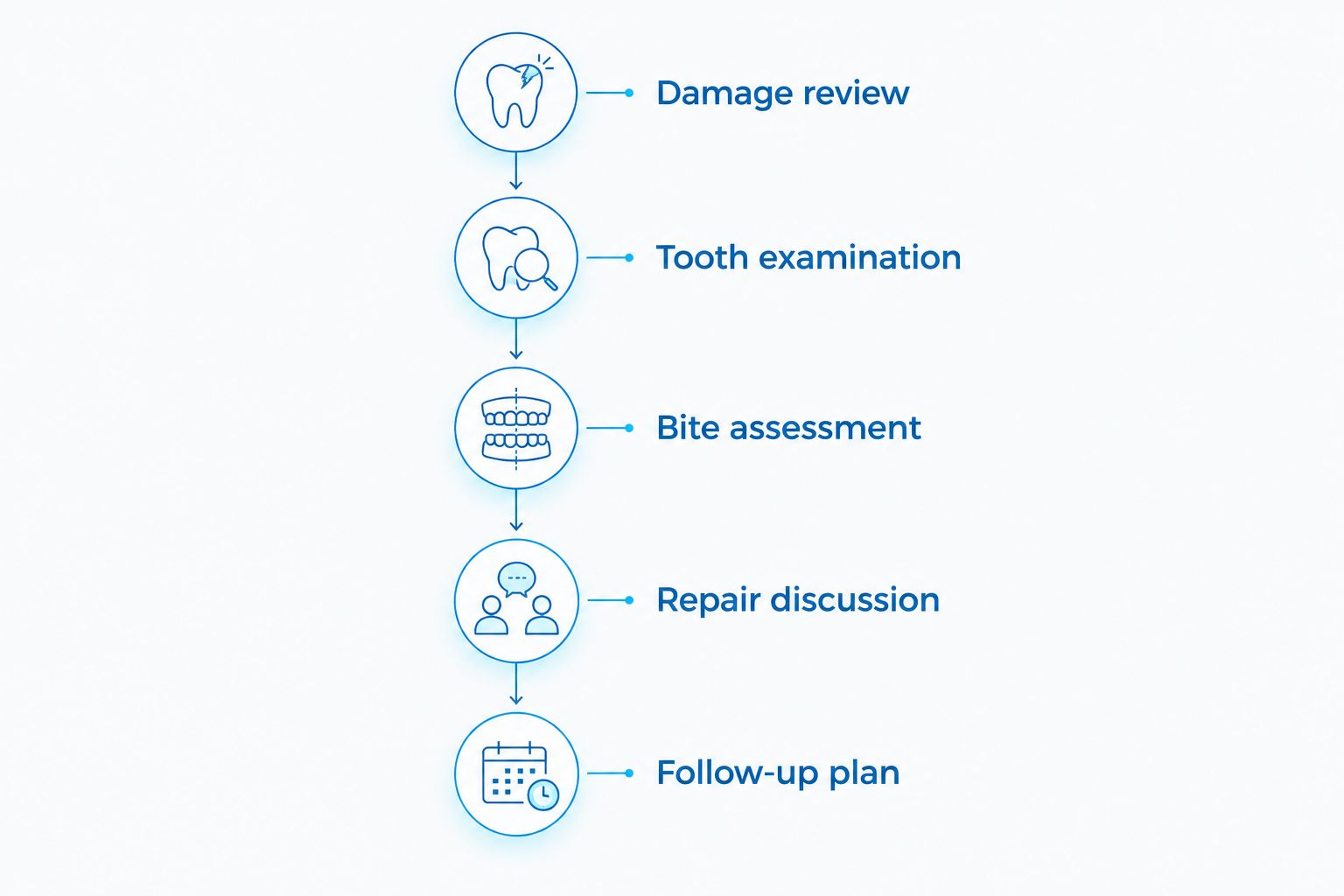
A chipped-tooth assessment should establish what broke, whether the tooth is healthy, and which repair can handle your bite. You can make the visit more useful by explaining when the chip happened and what symptoms followed.
Damage review: Describe the injury, any recovered fragment, and whether the tooth had a filling before it chipped.
Tooth examination: The dentist checks the broken area, nearby teeth, and remaining tooth structure. X-rays or other tests are used when the findings call for them.
Bite assessment: The dentist checks how the tooth contacts its opposite tooth and asks about grinding or clenching.
Repair discussion: Compare the suitable options, including what each preserves, what each protects, and its limitations.
Follow-up plan: Confirm care instructions and which symptoms require another call.
These steps help separate a cosmetic problem from an injury that needs more protection. Ask for the explanation before choosing the procedure.
Choose the repair after the tooth and bite have been assessed.
For families seeking general and cosmetic dental care in Fort Worth, Dallas, Houston, Waco, Grand Prairie, or Crowley, Affordable Dentist Near Me is a local practice option. Ask the office about an assessment rather than requesting a specific repair before the tooth has been examined.
Ask about your chipped tooth
Discuss the damage, your symptoms, and whether a crown-free repair is appropriate.
What should I do before the dentist sees my chipped tooth?
Rinse your mouth gently and avoid chewing on the damaged tooth. Keep brushing carefully so the area stays clean. If you find the broken fragment, keep it moist in milk or saliva in a container and bring it to the appointment; a dentist can assess whether reattachment is possible.
A sharp edge can sometimes be covered temporarily with dental wax to protect your tongue or cheek. This is a comfort measure, not a repair. Do not put household glue on the tooth or try to attach the fragment yourself.
Seek prompt dental care for pain, swelling, a loose tooth, a changed bite, or a chip following an injury. Trouble breathing or swallowing, rapidly spreading swelling, or uncontrolled bleeding requires emergency medical attention. Do not wait for a cosmetic appointment in those situations.
Does a painless chipped tooth still need treatment?
A painless chipped tooth still needs a dental assessment. Lack of pain does not establish that the tooth is structurally sound or that the injury is shallow.
The dentist might recommend a repair, smoothing, or monitoring depending on the findings. For a chip you notice in 2026, record when you first saw it and whether its appearance or your bite has changed.
Is bonding better than a crown for a chipped front tooth?
Bonding is the more conservative choice for a suitable small front-tooth chip; a crown is more protective when the tooth needs full coverage. Neither treatment is better for every fracture.
Ask what healthy tooth would be removed for each option and whether the repaired area would bear direct biting pressure. That comparison is more useful than choosing by appearance alone.
Can an old chipped-tooth repair be fixed again?
An old chipped-tooth repair can sometimes be repaired or replaced without a crown. The dentist needs to assess the new damage, the remaining tooth, and why the earlier repair failed.
Repeated breakage calls for a bite and habit review, not just another layer of material. Report grinding, nail biting, or a repair that catches when your teeth meet.
FAQ
What’s the best chipped tooth fix without crown treatment?
The best chipped tooth fix without crown treatment is the least invasive repair that safely restores the damaged tooth. Smoothing suits a tiny shallow chip, while bonding or a filling can rebuild suitable missing areas.
Can a dentist fix a chipped front tooth with bonding?
Yes, a dentist can use bonding to repair a suitable chipped front tooth. The remaining tooth, fracture depth, and bite determine whether bonding provides adequate support.
Does a chipped back tooth always need a crown?
No, a chipped back tooth does not always need a crown. A localized defect with enough healthy supporting tooth can be treated with a filling, while extensive weakening calls for a different approach.
Can I fix a chipped tooth myself at home?
No, you cannot safely rebuild a chipped tooth with household materials. Avoid filing or gluing it, protect the area from chewing pressure, and arrange a dental assessment.
Can a dentist glue the broken piece of tooth back on?
A dentist can sometimes reattach a recovered tooth fragment when the fragment and fracture are suitable. Keep the fragment moist and bring it to the appointment for assessment.
Is a veneer better than bonding for a small chip?
A veneer is not automatically better than bonding for a small chip. Bonding preserves more tooth in suitable cases, while a veneer addresses the visible surface and often requires enamel removal.
Can Affordable Dentist Near Me assess a chipped tooth?
Affordable Dentist Near Me provides general and cosmetic dental care for families in several Texas cities. Contact the office for more information about having your chipped tooth assessed.
One last thing
Before accepting a chipped-tooth repair in 2026, ask: What will stop this tooth or repair from breaking again? The answer should address the tooth's remaining strength, your bite, and any damaging habits—not just the material used to fill the gap.
A smaller repair is valuable when it is appropriate. Keeping healthy tooth structure matters, but protecting a weakened tooth matters too. Leave the appointment understanding both sides of that decision.