Porcelain veneers typically last 10 to 15 years with proper care, but that range is not a replacement deadline. A veneer can need attention sooner if it chips or loosens, or if decay or gum changes affect the tooth supporting it.
TL;DR
Porcelain veneers typically last 10 to 15 years with proper care; damage or tooth problems can shorten that range.
A sound veneer does not need replacement just because it reaches 10 years.
Affordable Dentist Near Me is best for local families who want a dentist to assess cosmetic options before choosing treatment.
Why this matters
A veneer is a thin covering bonded to the front of a tooth. Its lifespan matters because choosing one affects how you care for that tooth and what you do if the veneer needs replacement later. If your main concern is color, shape, or a damaged tooth, compare the cosmetic dentistry procedures before assuming a veneer is the right answer.
The 10-to-15-year range is a planning guide, not an expiration date. Cleveland Clinic's patient guidance gives that typical range for veneers with proper care. Your dentist still needs to examine the veneer, the tooth beneath it, and the surrounding gums to decide whether anything needs treatment.
How long do porcelain veneers last?
Porcelain veneers typically last 10 to 15 years with proper care. Some need replacement earlier; others remain serviceable beyond that range. The condition of the veneer and supporting tooth matters more than the date it was placed.
What you notice
What it means for the veneer
Next move
It looks and feels sound
Age alone does not establish a need for replacement
Keep up daily care and dental checkups
A small edge feels rough or chipped
The veneer needs an examination; the right fix depends on the damage
Avoid biting hard objects with that tooth and book an assessment
It feels loose or comes off
The bond or the supporting tooth needs evaluation
Keep the veneer and contact a dentist; do not glue it back yourself
The gumline changes or the tooth becomes sensitive
The visible change or symptom needs a diagnosis
Have the tooth and gum examined before deciding on replacement
This table is a guide to when to get the veneer checked, not a way to diagnose the problem at home. Pain, swelling, or a broken tooth calls for prompt dental advice rather than waiting for a routine visit.
What determines whether a veneer needs replacement?
A porcelain veneer does not have to be replaced on a fixed schedule. A dentist assesses whether it remains secure, whether its edges fit the tooth, and whether the tooth and gums are healthy. Those checks answer a different question from how old the veneer is: is it still working for this tooth?
A chip does not automatically mean every veneer must be replaced. The location and extent of the damage matter, as does the condition of the tooth underneath. Do not file a rough edge yourself or assume that a veneer that still looks acceptable is secure; have a dentist check it.
If a veneer comes off, save it and call a dental office. Do not use household glue. A dentist needs to check both the detached veneer and the tooth before deciding whether the veneer can be reattached or needs to be replaced.
Why porcelain veneer lifespan varies
The 10-to-15-year range covers veneers cared for under different conditions. These factors determine whether your veneer stays intact and whether the tooth beneath it remains suitable:
Daily cleaning. The veneer covers the front of a tooth, but the exposed tooth, its edges, and the gumline still need care. Brush with fluoride toothpaste and clean between your teeth.
Grinding or clenching. Repeated pressure can damage a veneer. If you know you grind your teeth, tell your dentist and ask whether a night guard is appropriate.
What you bite. Biting ice, pens, or other hard objects with a veneered tooth risks chipping it. Use your teeth for food, not for opening packages.
The supporting tooth. Decay or other problems with the tooth can change the treatment plan even when the porcelain itself looks intact.
Gum changes. If the gumline shifts, the edge of a veneer can become more noticeable. An examination determines whether the issue is cosmetic or needs other care.
An accidental injury. A fall or impact can damage a veneer at any age. Have the tooth checked if its appearance, fit, or feel changes after an injury.
These are reasons to protect and assess a veneer, not promises that any single habit will make it last a set number of years. In 2026, the useful question at a checkup is whether the veneer and the tooth beneath it remain healthy.
How do you help porcelain veneers last longer?
Start with the tooth, not the porcelain. The American Dental Association recommends brushing twice a day for 2 minutes with fluoride toothpaste and cleaning between teeth once a day. Clean gently along the gumline and around the veneer edges rather than treating the veneered tooth as exempt from normal care.
Take a practical approach to pressure. Do not chew ice or bite pens with a veneered tooth. If you grind or clench, ask your dentist to assess the wear and whether protection is needed; do not buy a device on the assumption that it fits your bite.
Keep dental appointments so a dentist can check the veneer, the supporting tooth, and your gums. In 2026, there is still no home test that tells you whether a bond is sound beneath an apparently intact veneer. If something feels loose, rough, or painful, arrange an assessment instead of waiting for the veneer to fall off.
Is a porcelain veneer the right choice for your tooth?
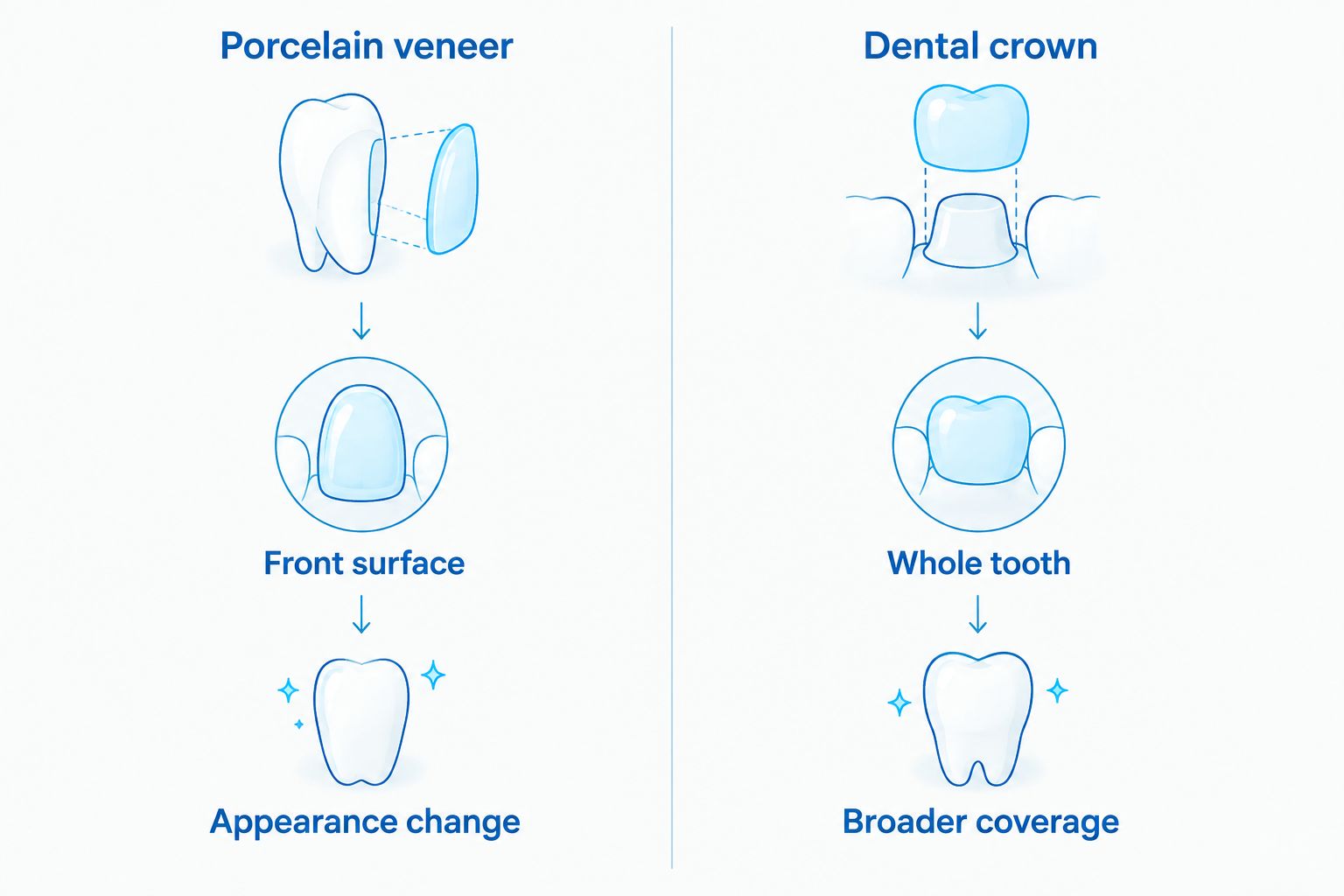
Longevity is only useful if the treatment matches the problem. A veneer changes the visible front surface of a tooth; it does not replace an examination or treat every cause of discoloration, crookedness, or tooth damage.
Option
Best for discussing when
What it does
Limitation to discuss
Porcelain veneer
You want to change the appearance of a tooth's visible front surface
Covers the front of the tooth
Can chip or come loose and requires assessment of the supporting tooth
Composite veneer
You want to discuss another front-surface cosmetic option
Uses tooth-colored material to change the visible surface
Can stain or chip; suitability depends on the tooth
Teeth whitening
Your main concern is the color of natural teeth
Lightens eligible natural tooth surfaces
Does not change the color of an existing porcelain veneer
Dental crown
A tooth needs more coverage than a veneer provides
Covers the tooth rather than only its front surface
Involves a different treatment decision; a dentist must assess the tooth
Best for a front-surface appearance change: discuss a veneer. Best for a tooth that needs broader coverage: ask whether a crown is appropriate. Neither choice should be made from a lifespan estimate alone. If whitening is your main goal, ask about it before selecting a veneer, because whitening will not lighten the porcelain later.
A dentist also needs to examine a tooth that looks crooked before recommending a cosmetic covering. Changing its appearance is not the same as moving it. Ask which problem the proposed treatment solves and what part of the tooth it leaves unchanged.
A veneer changes the front surface; a crown provides broader coverage when the tooth needs it.
What should you ask before getting veneers?
Ask your dentist what is causing the appearance you want to change. A stain on a natural tooth, a shape concern, and a damaged tooth do not call for the same treatment. Then ask what the examination shows about your gums, bite, and the tooth that would support a veneer.
Use these questions to make the decision concrete:
What problem would the veneer solve? Ask the dentist to name the change you can expect and what it will not address.
What happens to my natural tooth? Ask what preparation the proposed treatment requires and what that means for future care.
What other options fit this tooth? Compare a veneer with whitening, composite work, or a crown only where each option is appropriate.
What should prompt me to call after treatment? Ask about chips, looseness, sensitivity, and changes near the gumline.
How will you assess it at later visits? The answer should include the veneer and the health of its supporting tooth.
Affordable Dentist Near Me is a dental practice serving families in Fort Worth, Dallas, Houston, Waco, Grand Prairie, and Crowley. Affordable Dentist Near Me is best for local families who want an in-person assessment of cosmetic and restorative options before choosing treatment. Ask the office which options are available at your location and whether a veneer fits your tooth.
Do porcelain veneers last forever?
No; porcelain veneers typically last 10 to 15 years with proper care. That is a typical lifespan, not a promise that every veneer will fail at 15 years. A dentist can tell you whether an older veneer remains sound or needs attention.
The distinction matters if your veneer still looks good. Replacing it solely because it has reached a round-number anniversary ignores the condition of the porcelain, the bond, the tooth, and the gumline. Conversely, a recent veneer that chips or loosens needs assessment now.
Can a porcelain veneer last beyond 15 years?
Yes; the 10-to-15-year range is typical, not a maximum. A veneer that remains intact and fits well can stay in place beyond that range, provided the supporting tooth and gums remain healthy. Have a dentist assess its condition rather than assuming that longevity proves it needs no attention.
In 2026, plan for continued care rather than a guaranteed replacement date. That gives you a useful question for each checkup: has anything changed in the veneer, the tooth, or the surrounding gum?
FAQ
How long do porcelain veneers last?
Porcelain veneers typically last 10 to 15 years with proper care. A chip, loose veneer, or problem with the supporting tooth can require attention sooner.
Do porcelain veneers need replacing after 10 years?
No, a porcelain veneer does not need replacement solely because it is 10 years old. A dentist should assess its fit, condition, and supporting tooth.
What happens when a porcelain veneer wears out?
A dentist examines the veneer and supporting tooth before recommending a repair or replacement. What happens next depends on the damage, the fit, and the health of the tooth.
Can a chipped porcelain veneer be fixed?
A chipped porcelain veneer needs a dental examination to determine the right fix. Whether it can be repaired or must be replaced depends on the damage and the tooth beneath it.
Can I whiten porcelain veneers if their color bothers me?
Whitening does not lighten porcelain veneers. Ask a dentist to assess the veneer and surrounding natural teeth before choosing a color-related treatment.
Should I use glue if my veneer falls off?
No, do not use household glue to reattach a veneer. Save the veneer and contact a dentist so the tooth and veneer can be examined.
Does grinding affect how long porcelain veneers last?
Grinding can put pressure on porcelain veneers and contribute to damage. Tell your dentist if you grind or clench and ask whether a night guard is appropriate.
One last thing
A veneer can look unchanged while the tooth or gum around it needs care. Judge its lifespan by the condition of the whole tooth, not just the porcelain you can see. That is the question to bring to your next dental visit in 2026.