Yes—light gums bleeding after deep cleaning is common, especially when your gums were already swollen or inflamed, and it should lessen as they heal. Heavy bleeding, bleeding that does not stop with steady pressure, or bleeding with worsening pain, fever, or swelling needs prompt dental advice rather than more time at home.
TL;DR
Light gums bleeding after deep cleaning should decrease, not become heavier or restart repeatedly.
Keep cleaning gently; stopping all brushing lets plaque build up around healing gums.
Contact your dentist for persistent bleeding, increasing swelling, pus, fever, or worsening pain.
Affordable Dentist Near Me provides family dental care in Fort Worth, Dallas, Houston, Waco, Grand Prairie, and Crowley.
Why this matters
A little blood in your saliva looks alarming, but the pattern matters more than the color alone. A faint pink tint after brushing is different from fresh blood that keeps collecting in your mouth.
For your 2026 aftercare plan, use your treating dentist’s instructions first. Affordable Dentist Near Me provides general and family dental care across its listed Texas communities; advice about your recovery still requires an assessment of your symptoms and treatment.
The main question is whether the bleeding is becoming lighter and less frequent. Do not assume every symptom is normal simply because you recently had a cleaning. This guide explains common recovery patterns, not a diagnosis of your gums.
Is it normal for gums to bleed after a deep cleaning?
Light bleeding is an expected possible effect of a deep cleaning, also called scaling and root planing. The treatment removes hardened buildup from below the gumline, where inflamed tissue already bleeds easily.
You might notice a small streak when brushing or slightly pink saliva afterward. Bleeding that becomes heavier, happens repeatedly without touching the gums, or comes with increasing swelling deserves a call to your dentist.
What you notice
What it means for your next step
Slight pink saliva after gentle brushing that settles
Continue the instructed aftercare and watch for improvement.
Mild tenderness or sensitivity without worsening symptoms
Clean gently and follow the dentist’s comfort instructions.
Fresh bleeding that continues despite steady pressure
Contact your treating dentist promptly for instructions.
Increasing pain, swelling, pus, or fever
Ask for urgent dental assessment.
Trouble breathing or swallowing, rapidly spreading swelling, or heavy bleeding with faintness
Seek emergency medical care now.
Blood mixes with saliva and spreads, so appearance alone does not reliably measure how much you have lost. Pay attention to ongoing flow, repeated mouthfuls of blood, how you feel, and whether pressure controls it.
Does bleeding mean the cleaning damaged my gums?
Bleeding alone does not prove that the cleaning damaged your gums. Inflamed gums are fragile, and removing deposits around them can leave temporary tenderness and bleeding.
Your dentist checks persistent symptoms for other causes, including a local irritated area or continuing gum inflammation. Do not try to diagnose an injury by pulling the gum away from the tooth or repeatedly touching the spot. That can irritate it further.
Why bleeding after a deep cleaning varies
The same treatment does not produce the same recovery pattern in every mouth. These factors help explain why your dentist’s individual instructions matter:
Existing gum inflammation: Gums that were swollen and bled before treatment are more easily irritated during cleaning and early healing.
Treatment extent: Cleaning several areas below the gumline affects more tissue than treating a small area. Tell the office which areas are bleeding.
Brushing pressure: Hard scrubbing and snapping floss into tender gums can restart bleeding. Gentle plaque removal is different from avoiding cleaning altogether.
Medicines and bleeding conditions: Blood thinners and conditions that affect clotting can change bleeding. Give the dentist your current medication list, including supplements.
Smoking and diabetes: Smoking interferes with gum healing, and poorly controlled diabetes can make healing more difficult. These belong in the conversation with your dentist.
Never stop a prescribed blood thinner because your gums bleed. The dentist and prescribing clinician must guide any medication change; stopping it on your own can create serious health risks.
What to do at home: your 2026 aftercare checklist
Follow the instructions from the office that performed your deep cleaning. Those instructions account for the areas treated, medicines placed around your gums, and any other procedures performed at the same visit.
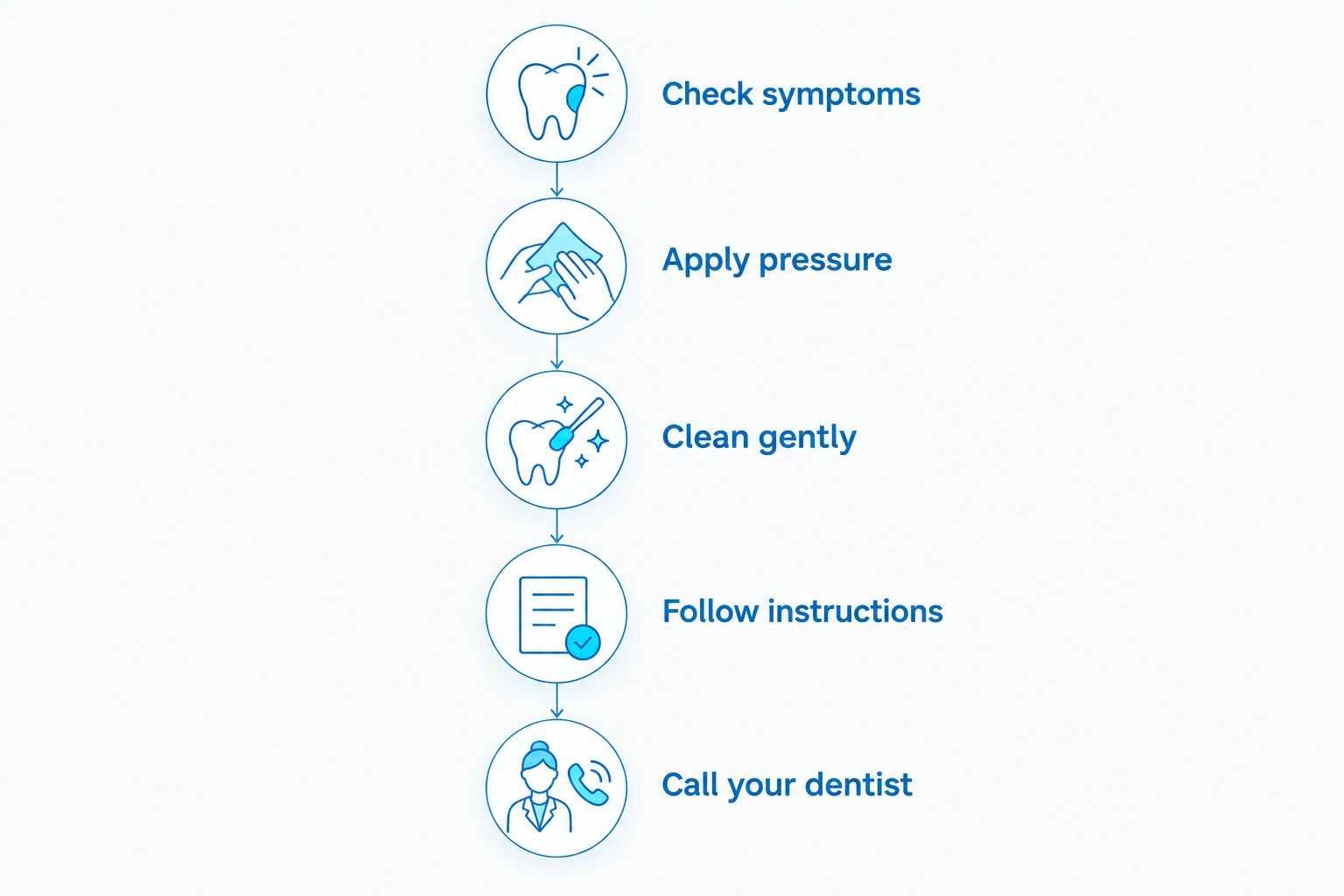
Use this sequence when you notice bleeding rather than repeatedly rinsing to check whether it is still there.
Check symptoms. Notice whether you have slight staining or active bleeding. Look for increasing swelling, fever, dizziness, or trouble swallowing before deciding to manage it at home.
Apply pressure. For an accessible bleeding spot, hold clean, slightly damp gauze against it with steady, gentle pressure. Avoid lifting it repeatedly to inspect the gum; contact the dentist if bleeding continues.
Clean gently. Use a soft toothbrush and follow the cleaning technique your dentist recommended. Do not scrub the sore area or force a cleaning tool beneath the gum.
Follow instructions. Use a prescribed rinse or medicine exactly as directed. Do not add strong rinses or home treatments because the gums look red.
Call your dentist. Report bleeding that persists, returns repeatedly, or accompanies worsening symptoms. Seek emergency care for the severe warning signs described above.
The sequence separates a small amount of irritation from symptoms that need professional help. Home care should support healing, not postpone assessment of ongoing bleeding.
Check for warning signs before treating bleeding as routine recovery.
Should you brush and floss if your gums bleed?
Yes—continue gentle oral cleaning unless your dentist gives different instructions for a treated area. Leaving plaque against the gums can maintain the inflammation that makes them bleed.
The standard home-care goal is brushing for 2 minutes, twice a day, with fluoride toothpaste and cleaning between your teeth once a day. Your dentist should explain when and how to resume your usual between-teeth cleaning after treatment.
Use light pressure along the gumline. If floss catches, causes sharp pain, or repeatedly starts active bleeding in one spot, stop forcing it and ask the office to check your technique and the area.
What should you eat or avoid while your gums feel tender?
Choose foods that do not scrape or sting the treated areas, and wait until numbness wears off before chewing. This reduces the chance of biting your cheek or tongue without realizing it.
Soft foods are useful while chewing feels uncomfortable, but you do not need to force a liquid-only diet unless your dentist instructs it. Avoid very hot foods and drinks while numb, and leave sharp, crunchy foods aside if they irritate your gums.
Do not smoke or use tobacco as part of your recovery routine. Ask your dentist for support if stopping is difficult; tobacco use is relevant to both healing and long-term gum health.
When should you call the dentist about bleeding?
Call promptly when bleeding is not settling, is getting heavier, or returns repeatedly without an obvious trigger. Also call for worsening pain, new pus, fever, or swelling that increases instead of improving.
Do not wait for a scheduled follow-up when the pattern changes. A phone call lets the treating team decide whether you need an examination or different aftercare instructions.
For a useful 2026 follow-up conversation, have these details ready:
When the cleaning happened and which side or area was treated.
Whether bleeding follows brushing or starts on its own.
Whether steady pressure helps it stop.
Whether pain, swelling, bad taste, or fever is developing.
Which prescriptions, over-the-counter medicines, and supplements you take.
If you feel faint, have heavy uncontrolled bleeding, or develop difficulty breathing or swallowing, seek emergency medical care. Do not drive yourself if you feel faint or unwell.
What if you are worried about the expense of a follow-up?
Tell the office about both your symptoms and your financial concerns when you call. Ask what an assessment involves and what charges apply before agreeing to nonemergency treatment.
Do not use cost concerns to wait out uncontrolled bleeding or spreading swelling. Affordable Dentist Near Me provides general dental care for families across its listed Texas locations; your treating office remains the first contact for questions about a procedure it performed.
Discuss your dental care needs
Review the practice’s dental services, then contact the office with questions about your care.
Does bleeding mean you need another deep cleaning?
Bleeding alone does not establish that you need another deep cleaning. Your dentist checks the gums, measures the spaces around your teeth, and reviews healing before recommending additional treatment.
A deep cleaning treats buildup and inflammation below the gumline; it does not replace daily care or future maintenance visits. If you are comparing longer-term care, the guide to gum disease treatment options explains the broader treatment choices.
Avoid booking a repeat procedure solely because you saw blood in the sink. Ask for an assessment of the cause, not a treatment chosen from a symptom alone.
Can your gums look different as they heal?
Yes—gums can look less puffy as inflammation decreases, making spaces between teeth or exposed tooth surfaces more noticeable. That change is not, by itself, proof that treatment caused new gum disease.
Newly exposed root surfaces can also feel sensitive. Mention sharp, lingering, or worsening pain rather than assuming every uncomfortable sensation belongs to normal recovery.
At your 2026 gum-health review, ask the dentist to explain which changes reflect reduced swelling and which need treatment. A visual change cannot show whether the tissues supporting your teeth are healthy; the examination provides that information.
FAQ
How long should gums bleed after a deep cleaning?
Light bleeding should lessen as your gums heal rather than stay constant or grow heavier. Contact your treating dentist if bleeding persists, repeatedly returns, or does not settle with steady pressure; do not wait for a fixed recovery deadline.
Is pink saliva after deep cleaning normal?
A small amount of pink saliva can occur after deep cleaning, particularly when the gums were inflamed. Fresh blood that keeps collecting, increasing swelling, or worsening pain calls for dental advice.
Should I stop brushing if my gums bleed after deep cleaning?
Do not stop all brushing unless your dentist specifically tells you to avoid a treated area. Brush gently with a soft toothbrush and ask the office for advice if cleaning repeatedly triggers active bleeding.
Can I use mouthwash to stop bleeding gums?
Mouthwash is not a substitute for assessing persistent bleeding. Use a prescribed rinse as directed, and ask your dentist before adding a rinse that burns or irritates your gums.
Should I stop my blood thinner if my gums keep bleeding?
Do not stop a prescribed blood thinner on your own. Contact your dentist and prescribing clinician so they can assess the bleeding and give coordinated instructions.
Does bleeding after deep cleaning mean I have an infection?
Bleeding alone does not diagnose an infection. Fever, pus, increasing swelling, or worsening pain needs prompt dental assessment, while trouble breathing or swallowing requires emergency medical care.
Can Affordable Dentist Near Me help with family dental care in Texas?
Affordable Dentist Near Me provides family dental care in Fort Worth, Dallas, Houston, Waco, Grand Prairie, and Crowley. For bleeding after treatment, contact the office that performed your procedure and describe the symptoms.
What should I ask at my 2026 follow-up after a deep cleaning?
Ask whether your gums are healing as expected, how to clean the treated areas, and when to return for maintenance. Also review ongoing bleeding, sensitivity, and any medicines that affect clotting.
One last thing
Less bleeding is encouraging, but bleeding alone cannot measure gum health. Smoking can mask visible bleeding even while gum disease remains active, so a quiet toothbrush is not a reason to skip your follow-up.
Judge recovery by the overall trend and keep the recommended gum check. Write down symptoms that recur and bring that record to the dentist instead of repeatedly testing the area with your tongue, floss, or toothbrush.