Dental care for teachers means scheduling cleanings, fillings, and bigger restorative work around a school calendar that has almost no flexibility during the semester, and it means knowing exactly what your district's group plan pays for before a crown or root canal bill shows up in October. Most teachers and school district employees carry a group dental plan through their district, but those plans vary wildly in what they cover, when you can enroll, and how much you pay out of pocket for anything beyond a cleaning.
TL;DR
Dental care for teachers in 2026 means working around open enrollment windows, not around your own schedule.
Group district dental plans typically cap annual benefits around $1,000 to $1,500 — big work often exceeds that fast.
Summer break is the window for extractions, implants, or orthodontic starts that need multiple follow-ups.
Affordable Dentist Near Me offers Saturday and early-morning slots built for teachers who can’t miss class time.
Why dental care matters for teachers
Teachers lose income and instructional time when a dental problem turns into an emergency during the school year. A cracked molar in March means finding a substitute, rearranging lesson plans, and possibly paying more for an urgent visit than a scheduled one would have cost. Group dental plans through school districts commonly cap annual benefits between $1,000 and $1,500, which covers routine cleanings and a filling or two but runs out fast against a crown or root canal.
Open enrollment for most district benefits happens once a year, usually in the fall, which means a teacher who skips it in October is often locked into their existing coverage — or no dental coverage at all — until the next enrollment cycle. That single missed window is the most common reason teachers end up paying full price for work a plan would have partially covered.
Verdict: dental care for teachers works best when scheduled around the school calendar, not around symptoms — waiting for a break to book major work usually costs less time and less money than treating a problem as an emergency mid-semester.
Check your district's dental benefits before enrollment season
Most teachers never read their group dental plan summary until they need it, which is exactly when it's too late to change anything.
Pull the plan's annual maximum and see how far it stretches against a crown, root canal, or partial denture
Check whether orthodontics for you or a dependent falls under a separate lifetime maximum
Confirm the waiting period for major services — many group plans require 6 to 12 months before covering crowns or bridges
Note the enrollment window date on your calendar now, not when a tooth starts hurting
Ask whether your plan is a PPO with an out-of-network option or an HMO that locks you into a narrow provider list
If your district plan comes up short on coverage for implants or dentures, dental insurance plans for implants and dentures breaks down which supplemental options actually pay out for restorative work.
Time non-emergency work around the school calendar
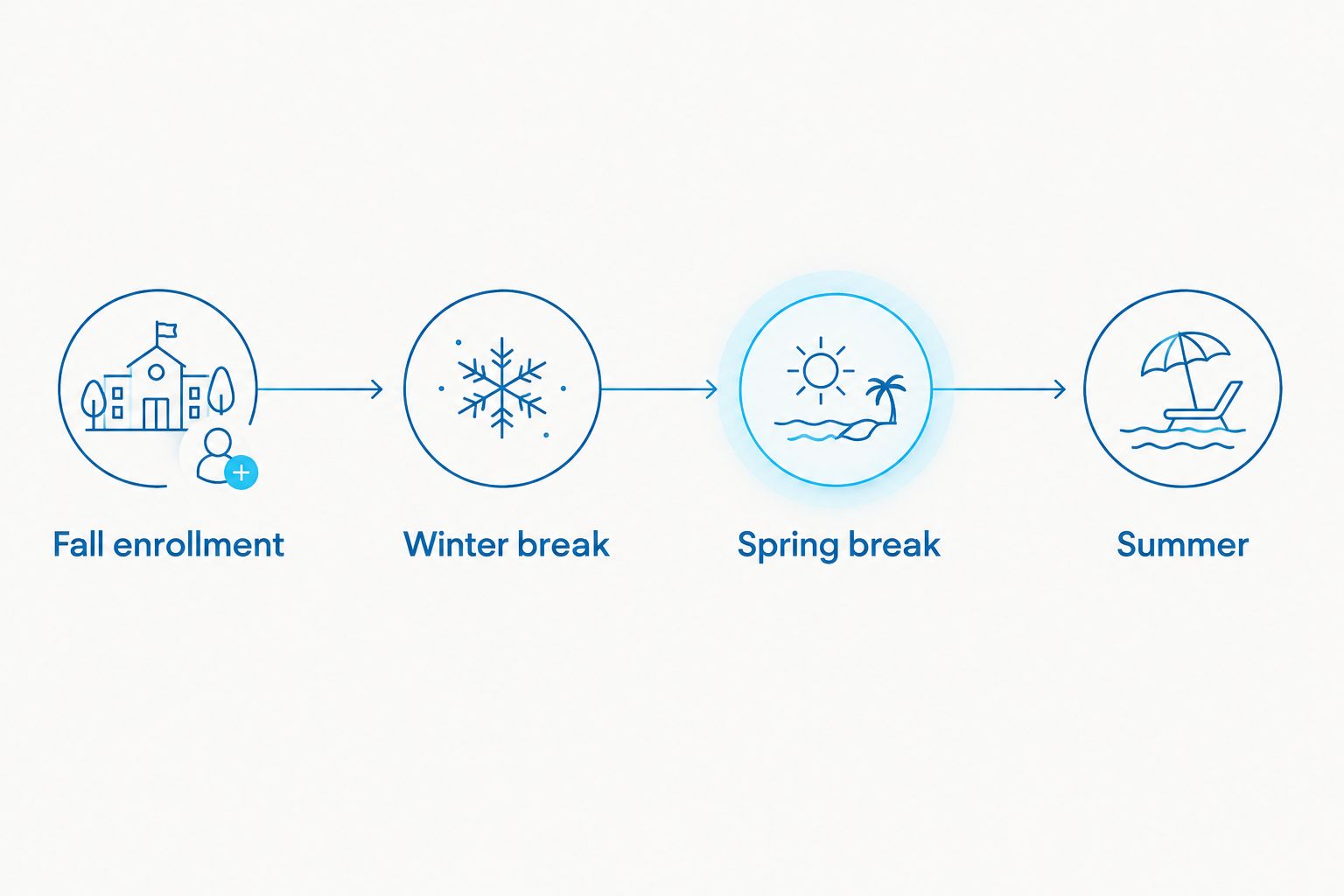
Spring break, summer, and winter break are the only stretches most teachers get more than a weekend off, and that's exactly when multi-visit work should happen.
Book extractions or implant placement for the first week of summer, not the last — healing needs time before the next school year starts
Schedule orthodontic starts (braces or aligners) at the beginning of summer so the adjustment period doesn't overlap with instructional days
Use spring break for a single crown or filling that needs a follow-up visit within two weeks
Push whitening or purely cosmetic work to whenever it's convenient — it has zero downtime
Avoid scheduling anything requiring sedation the week before state testing or grading deadlines
Bigger dental work fits best into the longer breaks, not a single weekend.
Budget for orthodontics and cosmetic work separately from your health plan
Group dental plans rarely treat orthodontics generously, and cosmetic work like veneers or whitening almost never gets covered at all.
Check if your plan's orthodontic benefit is a percentage of cost or a flat lifetime cap
Compare adult braces against clear aligners for total treatment time if you're doing this around a teaching schedule
Ask whether a payment plan through the dental office is available separate from insurance
Treat cosmetic procedures as fully out-of-pocket unless your plan states otherwise in writing
Get a written treatment estimate before starting anything with more than two visits
Regular cleanings are the cheapest thing on any dental plan and the single best way to avoid the expensive, schedule-wrecking emergency in the first place.
Book your two annual cleanings at the start and end of the school year so you don't forget the second one
Ask your hygienist to flag anything that looks like it could become urgent within six months
Use fluoride treatments if your plan covers them at no added cost
Address small cavities immediately — a filling now is cheaper and faster than a root canal in April
Bring dependents' cleanings into the same visit window when your plan covers family members
Compare in-network vs out-of-network costs at renewal
District dental plans change carriers and networks more often than teachers expect, and a provider that was in-network last year might not be this year.
Verify your current dentist is still in-network every time your district renews its plan
Ask the front desk to run a benefits check before your first visit each school year, not after
Compare what an out-of-network visit would actually cost against staying in-network for a bigger procedure
Check if your plan allows any provider with reimbursement, which opens up more scheduling flexibility
Comparing dental care options for teachers in 2026
Option
Best for
Key limitation
District group PPO plan
Teachers wanting choice of provider
Lower reimbursement for out-of-network visits
District group HMO/DHMO plan
Teachers wanting lower premiums
Narrow provider network, referrals often required
Self-pay with a payment plan
Teachers between enrollment cycles or needing work not covered
No insurance offset on major procedures
Discount dental membership plan
Uninsured teachers wanting a flat reduced rate
Not real insurance — no annual maximum payout
Teachers without any active coverage right now, whether between jobs or waiting on a new enrollment window, should look at dental care options for uninsured patients before assuming self-pay means paying full retail price.
Common mistakes teachers make with dental care
Waiting for winter break for everything. Two weeks isn't enough time for an implant to heal or braces to settle in before you're back in front of a classroom.
Missing the enrollment window because it fell during grading season. A missed October deadline can mean twelve months without dental coverage.
Assuming the district plan covers cosmetic work. Whitening, veneers, and most bonding fall entirely outside standard group dental benefits.
Skipping the second annual cleaning. Plans that offer two cleanings a year lose that second visit's value the moment the benefit year resets.
Not checking network status after a plan renewal. A trusted dentist can quietly become out-of-network overnight when a district switches carriers.
FAQ
What is the best dental care option for teachers in 2026?
A district group PPO plan paired with scheduling major work during school breaks works best for most teachers in 2026, since it balances provider choice with predictable time off for recovery.
Do school districts typically offer dental insurance for teachers?
Most public school districts offer a group dental plan as part of benefits enrollment, usually a PPO or HMO option with an annual maximum around $1,000 to $1,500.
When should teachers schedule major dental work like a root canal or implant?
Schedule multi-visit procedures at the start of summer or the first week of a break, giving enough time to heal or adjust before returning to the classroom.
Can teachers get dental work done during the school year without missing class?
Yes, early-morning, evening, or Saturday appointments handle routine cleanings and single-visit fillings without pulling a teacher out of instructional time.
Does a teacher’s dental plan cover orthodontics for adults?
Coverage varies by district; some group plans include a percentage toward adult orthodontics under a separate lifetime maximum, while others exclude adult orthodontics entirely.
What happens if a teacher misses the dental enrollment window?
Missing open enrollment typically locks a teacher out of changing or adding dental coverage until the next annual enrollment period, often a full year later.
Is it cheaper for teachers to use a discount dental plan instead of insurance?
A discount plan lowers the rate on each visit but has no annual maximum payout, so it works better for routine care than for a crown, implant, or root canal.
Can teachers get emergency dental care on a school day?
Same-day and walk-in dental offices can usually see a teacher within hours, which is faster than waiting for a routine opening but still requires arranging a substitute.
One last thing
The teachers who avoid the worst dental bills in 2026 aren't the ones with the best insurance — they're the ones who put their enrollment deadline and their break dates on the same calendar as their lesson plans, months before either one matters.